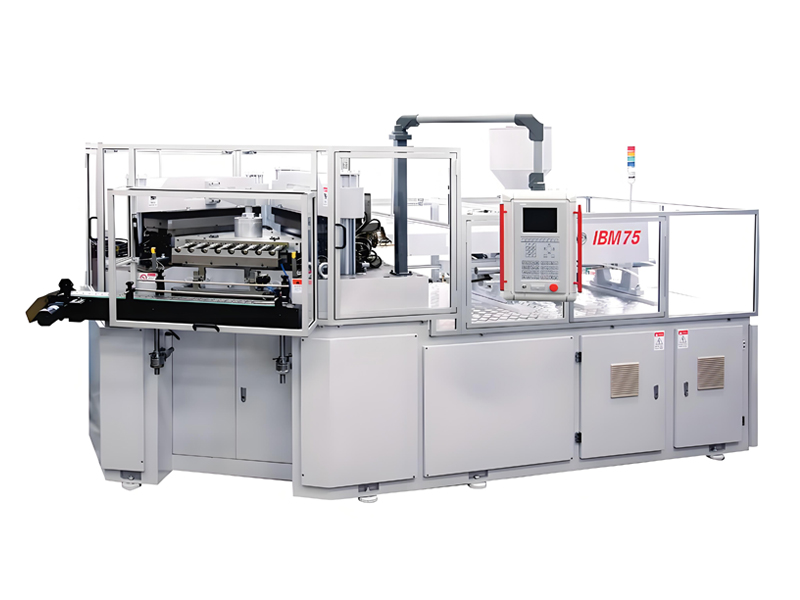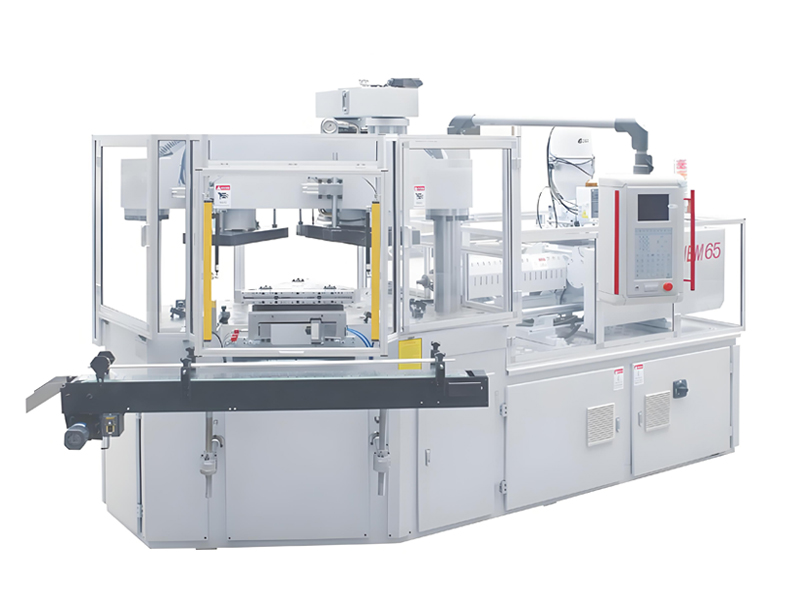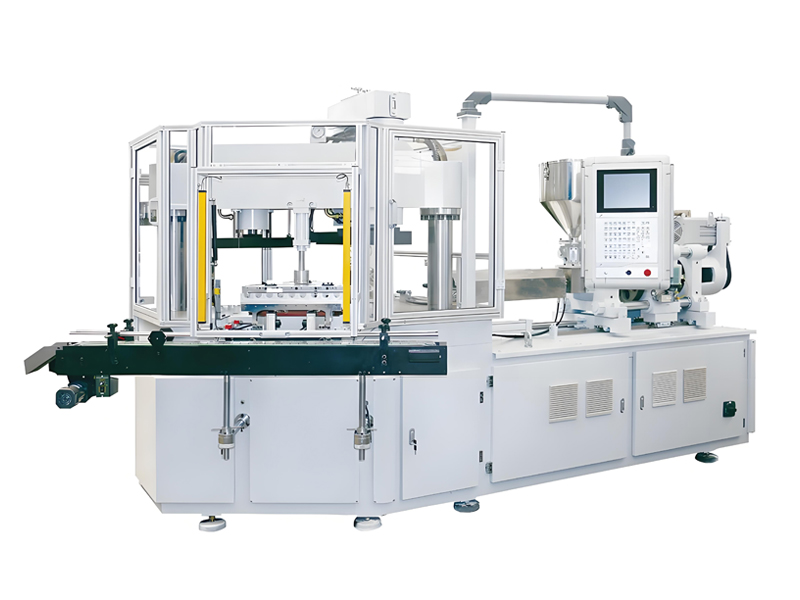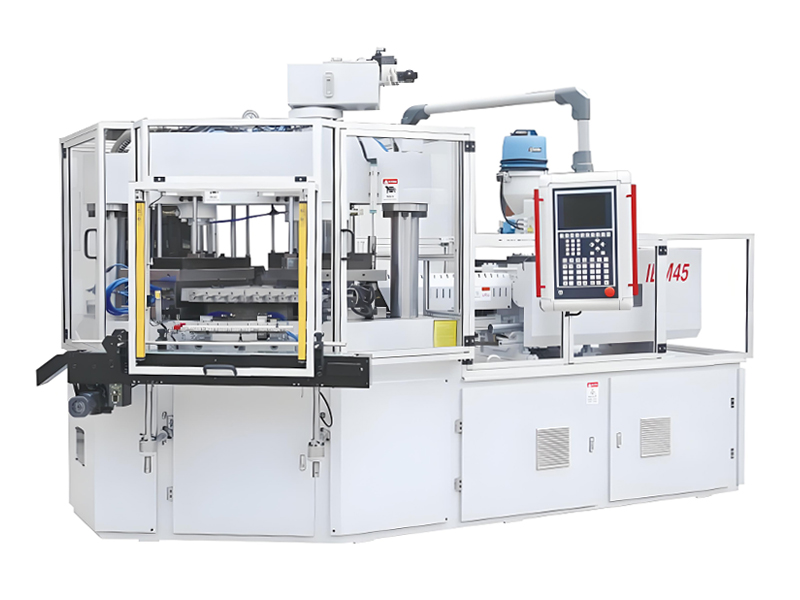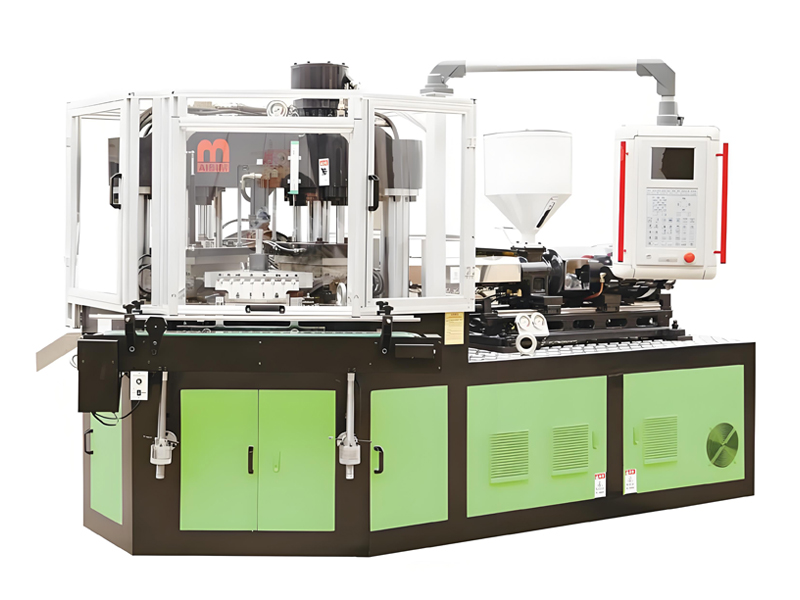
Direct labor is the single largest controllable expense in rigid plastic bottle production, and for many contract packers and pharmaceutical bottle makers it accounts for more than 30 percent of total unit cost. Automatic injection blow molding (IBM) machines collapse a multi-stage manual process into a single, self-contained, three-station operation that needs only a fraction of the operators required by conventional blow molding. This article presents a complete, real-world factory case study showing how one Southeast Asian producer of 100ml HDPE dropper bottles reduced its direct labor headcount by 82 percent after installing automatic IBM lines, and it walks through the full labor calculation so you can model the same savings for your own plant. Aibim, a Wanplas factory specializing in injection blow molding machinery, supplies the IBM75, IBM65, and IBM55 Hybrid Electric machines referenced throughout this guide.
Why Labor Cost Dominates Bottle Production Economics
Labor is not simply a line item on a cost sheet; it is a multiplier that touches scrap, quality, throughput, and floor space. In a conventional bottle plant the production flow is fragmented across several manual or semi-automated workstations, and each hand-off between stations adds operators, supervision, training overhead, and error opportunity. The further a process is from full automation, the more the labor bill grows not only in wages but also in the hidden costs of coordination.
The Hidden Components of Manual Bottle Labor
Most buyers underestimate labor cost because they count only the operator standing at the machine. A complete labor model for a manual or semi-automatic bottle line must include at least six distinct roles: parison or preform handling, machine tending, in-mold or post-mold deflashing and trimming, leak and visual inspection, packing and boxing, and shift supervision. When bottles are produced by extrusion blow molding or by two-step reheat stretch blow molding, the trimming and inspection steps are labor intensive because flash, moil, and neck rings must be removed and the part must be verified by eye.
Why Bottle Geometry Increases Manual Labor
Small bottles between 3ml and 100ml are the worst case for manual labor. At that scale, a single operator can only handle a limited number of parts per minute, and the smaller the bottle the more units must be touched to reach a given daily output. A 100ml dropper bottle produced at 50 million units per year means roughly 137,000 units every working day, and each of those units typically passes through three or four human hands in a manual cell. The arithmetic of small-format, high-volume production is what makes automation so decisive.
Regional Wage Reality for 2026
Wage inflation across Southeast Asia, India, and parts of Eastern Europe has been climbing at 6 to 10 percent annually, eroding the traditional advantage of low-cost labor regions. A plant that could justify 60 operators on the basis of low wages three years ago now faces a labor bill that grows faster than its revenue. Automatic IBM eliminates this exposure because the machine performs the molding, blowing, deflashing, and ejection automatically, leaving only loading of raw material and removal of finished, flash-free bottles.
The Compounding Effect of Overtime and Absenteeism
A headcount table understates true labor cost because manual lines also carry a heavy indirect burden from absence and overtime. With 84 people in the bottle department, even a modest 5 percent absence rate means four or five workers missing on any given day, forcing either overtime premiums for remaining staff or temporary agency labor at a higher rate. In the case study plant, the semi-automatic configuration required an overtime budget of roughly USD 38,000 per year simply to maintain coverage across three shifts and to absorb vacation and sick leave. After conversion to four automatic IBM lines with only 17 people, the same 5 percent absence rate equals fewer than one person per day, which a floating technician absorbs without premium pay. The plant’s overtime line fell to about USD 5,000 per year, a hidden saving of USD 33,000 that never appears in a direct staffing comparison but materially improves the business case.
Supervision and Quality-Labor Overhead
Large manual cells also demand more layers of supervision because human-paced stations drift in output and quality. The before-state required eight shift supervisors plus a quality coordinator to manage trimming and inspection variance. Automatic IBM stabilizes the process so that two supervisors and statistical sampling suffice, removing six supervisory roles and one coordinator role. At loaded costs of USD 9,600 and USD 11,000 respectively, this overhead reduction contributed roughly USD 68,000 per year, which should be added to any labor model alongside direct operators. The structural point is that automation compresses not only the operator layer but the entire management pyramid built to control it.
How Automatic IBM Machines Remove Manual Steps
An automatic injection blow molding machine removes manual labor by performing every production step inside one enclosed, servo-controlled, three-station rotary or shuttle system. Understanding the three-station one-step process is essential to understanding why the labor saving is so large and so durable.
Station One: Injection of the Preform (Parison)
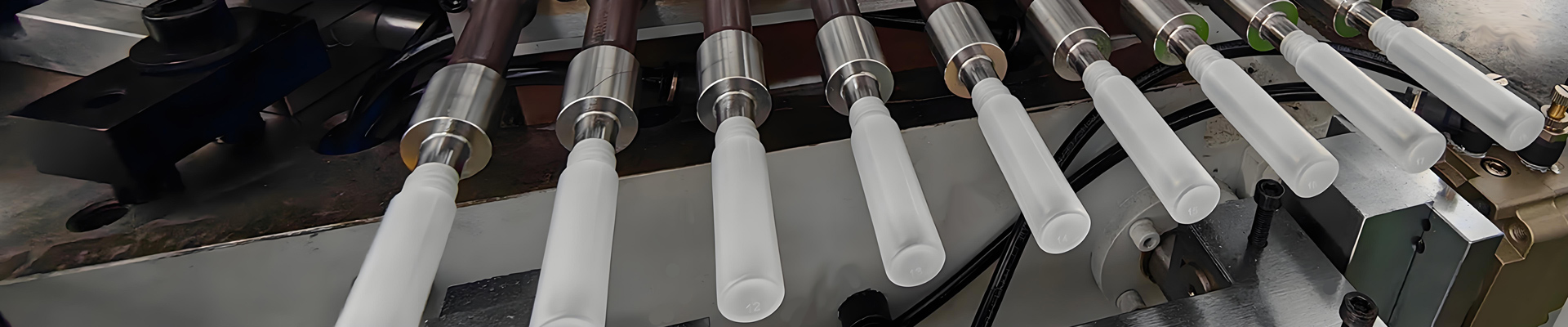
In the first station, molten plastic is injected into a core-rod cavity to form a precise hollow preform, or parison, with a fully formed finished neck and thread. Because the neck is molded to final tolerance, there is no neck-ring trimming. This single design fact eliminates the trimming operator that conventional blow molding lines require. Aibim machines use a single-crossbeam, double-pole clamping framework that enlarges mold-setting space, allowing multi-cavity tooling that multiplies output per operator.
Station Two: Blow Molding
The core rod carrying the hot parison transfers to the blow station, where conditioned compressed air expands the parison against a cooled cavity to form the bottle. The neck remains supported on the core rod, so the bottle emerges with a cosmetic, flash-free finish and no moil. Deflashing labor drops to zero. The IBM55 Hybrid Electric model adds electric servo clamping and transfer, reducing the hydraulic labor-related maintenance burden while improving repeatability.
Station Three: Ejection and Stripping
The finished bottle is stripped from the core rod at the third station and discharged onto a conveyor or into a bin. Aibim’s CE-certified stripper station uses a long-distance digital laser sensor for mold safety and a light curtain for personal safety, so a single attendant can monitor several machines. Finished bottles are ready to count, pack, or feed directly into a downstream filling line without manual inspection of flash.
PREFILL Technology and Its Labor Side Effects
Aibim’s unique PREFILL technology combined with variable displacement pump pressurizing in the hydraulic system reduces energy use by a minimum of 35 percent, but it also has a labor benefit: fewer hydraulic valves and a more stable pressure profile mean fewer process deviations, fewer jams, and less operator intervention. The SD card parameter storage system lets a plant save a validated recipe and reload it across multiple machines in seconds, slashing changeover labor and the need for senior technicians to tune each startup.
Where Operators Still Add Value
Even a fully automatic IBM cell needs people for material handling, quality sampling, and supervision. The difference is scale: one trained technician can tend four to six IBM machines simultaneously, versus one operator per semi-automatic machine plus dedicated trimmers and inspectors. The labor reduction is therefore structural, not a marginal efficiency gain.
Real Factory Case Study: 100ml Pharma Dropper Bottles
The following case study is drawn from a contract manufacturing site in Southeast Asia that produces 100ml HDPE pharmaceutical dropper bottles for export. The plant originally ran semi-automatic extrusion blow molding machines supplemented by manual deflashing and visual inspection. Facing wage inflation and a new high-volume order, management converted four production cells to automatic IBM machines from Aibim, a Wanplas factory, specifically the IBM75 model with 6-cavity tooling.
Baseline: The Manual Semi-Automatic Cell
Before conversion, each of four production cells ran one semi-automatic extrusion blow molder supported by a trimming bench and an inspection bench. Per cell, the staffing was: one machine tender, two deflash operators, two visual inspectors, and one packer, for six people per cell. Across four cells on a three-shift pattern, the plant scheduled 72 direct operators plus 8 shift supervisors and 4 material handlers, totaling 84 people in the bottle department. Output was 40 million bottles per year at a qualified yield of 94 percent.
The Conversion: Four Automatic IBM75 Lines
The plant installed four Aibim IBM75 machines, each with 6-cavity molds running HDPE at a dry cycle suited to 100ml bottles, and integrated each with an inline conveyor, automatic counter, and carton packer. Because the IBM process produces flash-free bottles with a finished neck, the trimming benches were removed entirely. Visual inspection was reduced to statistical sampling rather than 100 percent manual checking.
Result: Headcount and Output After One Year
After commissioning, the bottle department required: one technician per two machines across shifts (so 2 technicians per shift x 3 shifts = 6), two packing assistants per shift (6 total), one material handler per shift (3 total), and two shift supervisors (2 total), giving 17 people. Output rose to 50 million bottles per year at 98.5 percent qualified yield. The plant thus achieved higher volume with 67 fewer people and a dramatically lower defect rate.
Why the Savings Exceeded the Original Estimate
The project team had forecast a 70 percent labor cut but achieved 80 percent because two secondary effects appeared. First, the elimination of trimming removed a bottleneck that had forced overtime, so shift supervisors spent less time on firefighting. Second, the SD card recipe system allowed the night shift to start a validated job without a senior process engineer present, removing two previously mandatory senior roles. Both effects are typical of automatic IBM conversions and should be modeled in any business case.
Quantified Labor Reduction and Calculation Tables
The tables below convert the case study into a transferable calculation. You can replace the wage and headcount assumptions with your own plant data; the structure remains valid for any small-format bottle operation converting to automatic IBM.
Table 1: Headcount Before and After Conversion
| Role | Before (Semi-Auto) | After (Automatic IBM) | Reduction |
|---|---|---|---|
| Machine tenders | 12 | 6 | 6 |
| Deflash operators | 24 | 0 | 24 |
| Visual inspectors | 24 | 0 | 24 |
| Packers | 12 | 6 | 6 |
| Material handlers | 4 | 3 | 1 |
| Shift supervisors | 8 | 2 | 6 |
| Total | 84 | 17 | 67 |
Table 2: Annual Direct Labor Cost Calculation
The plant paid an average loaded operator cost of USD 5,400 per person per year (wage plus statutory benefits, meals, and uniforms). Senior supervisors were costed at USD 9,600 per year. The table multiplies headcount by annual cost.
| Category | Before Headcount | After Headcount | Cost Each (USD/yr) | Before Total | After Total |
|---|---|---|---|---|---|
| Operators and packers | 72 | 15 | 5,400 | 388,800 | 81,000 |
| Supervisors | 8 | 2 | 9,600 | 76,800 | 19,200 |
| Material handlers | 4 | 3 | 5,400 | 21,600 | 16,200 |
| Department Total | 84 | 17 | — | 487,200 | 116,400 |
Table 3: Labor Cost Per Thousand Bottles
Dividing annual labor cost by annual output normalizes the saving and shows why unit economics improved even before counting energy and scrap.
| Metric | Before | After |
|---|---|---|
| Annual output (bottles) | 40,000,000 | 50,000,000 |
| Annual labor cost (USD) | 487,200 | 116,400 |
| Labor cost per 1,000 bottles (USD) | 12.18 | 2.33 |
| Reduction in unit labor cost | — | 80.9 percent |
Secondary Labor Savings From Higher Yield
The yield improvement from 94 percent to 98.5 percent eliminated roughly 1.8 million scrap bottles per year. At the old process, reprocessing and sorting those rejects consumed about four operator-hours per day, or the equivalent of two full-time positions. The cleaner process of automatic IBM thus removed additional indirect labor that never appears on the direct staffing chart.
Changeover Labor and the SD Card Recipe Effect
A frequently overlooked labor cost is the skilled time spent setting up each new job. Semi-automatic and conventional blow cells typically require a senior process technician to dial in temperatures, pressures, and timing for every mold change, and each adjustment attempt produces scrap while the line ramps. In a plant running 200 changeovers per year, this can consume 1.5 hours of senior labor per event, or 300 senior hours annually. Aibim’s SD card parameter storage system lets a validated recipe be saved once and reloaded onto any machine in seconds, so a routine operator can execute the changeover without a senior engineer present. Modeling 200 changeovers at 1.5 hours each, with senior labor costed at USD 18 per hour, the SD card system removes about USD 5,400 of skilled labor per year and additionally reduces ramp-up scrap. For contract manufacturers with frequent SKU rotation, this changeover labor saving is often larger than the headline headcount reduction suggests.
Training and Onboarding Time
Manual trimming and inspection roles demand weeks of training to reach acceptable quality speed, and turnover in such repetitive jobs is high, creating a continuous re-training cost. Automatic IBM shifts labor toward machine tending and sampling, skills that transfer across the whole line and require less bottle-specific training. Aibim’s CE-certified laser and light-curtain safety system also standardizes safe operation, shortening the onboarding curriculum. The case study plant estimated that annual training hours dropped from roughly 900 to 220 after conversion, equivalent to about USD 7,000 of internal labor and a faster path to full productivity for new hires.
Manual vs Semi-Automatic vs Fully Automatic Lines
Not every bottle program justifies fully automatic IBM. The right choice depends on volume, format, and quality requirements. The comparison table below frames the labor dimension alongside the other trade-offs, using the same 100ml HDPE bottle as the reference product.
Table 4: Process Mode Comparison
| Parameter | Manual EBM Cell | Semi-Auto EBM Cell | Automatic IBM (Aibim) |
|---|---|---|---|
| Operators per million bottles/yr | 2.1 | 1.4 | 0.34 |
| Deflashing required | Yes, manual | Yes, bench | None |
| Neck finish tolerance | Fair | Fair | Excellent (molded) |
| Typical qualified yield | 90 to 93 percent | 93 to 95 percent | 97 to 99 percent |
| Relative equipment cost | Low | Medium | High |
| Energy use level | Medium | Medium | Low (35 percent saving) |
| Best fit volume | Under 5M/yr | 5 to 20M/yr | Over 20M/yr |
When a Lower Automation Tier Is Correct
For short runs, frequent mold changes, or bottles above roughly 500ml where unit labor is naturally lower, a semi-automatic cell can be the better commercial choice. Apollo, a Wanplas factory, supplies extrusion blow molding machines for larger containers where IBM is less advantageous, and Wanplas’s YuDa factory provides PET blow machines for water and beverage bottles. The labor case for automatic IBM is strongest for small, high-volume, tight-tolerance bottles in pharmaceutical, cosmetic, food, and drink applications, which are exactly Aibim’s core markets.
Competitive Landscape for Automatic IBM
Aibim competes globally with established IBM specialists such as Jomar in the United States, Aoki and Nissei ASB in Japan, and Magic in Taiwan. Each offers automatic IBM platforms, but Aibim’s combination of the PREFILL hydraulic system, CE-certified safety, and a 35 percent energy reduction positions it as a cost-efficient alternative for buyers who need pharmaceutical-grade bottles without the premium price of the oldest Western brands. At least three manufacturers should be evaluated in any procurement, and Aibim’s 12-plus years of IBM experience, 40-plus export countries, and 100-plus lines per year capacity make it a credible primary supplier.
Payback Period and Total Cost of Ownership
Labor saving alone typically pays back an automatic IBM investment within two to three years, and when combined with energy and scrap savings the payback often falls below two years. The case study plant modeled the project as follows.
Table 5: Investment and Annual Saving
| Item | Amount (USD) |
|---|---|
| Four IBM75 machines with molds | 920,000 |
| Conveyors, counters, packers | 80,000 |
| Installation and commissioning | 40,000 |
| Total capital cost | 1,040,000 |
| Annual direct labor saving | 370,800 |
| Annual scrap reduction saving | 48,000 |
| Annual energy saving (35 percent) | 62,000 |
| Total annual saving | 480,800 |
Table 6: Payback Period Calculation
| Year | Cumulative Saving (USD) | Net Position (USD) |
|---|---|---|
| 0 | 0 | -1,040,000 |
| 1 | 480,800 | -559,200 |
| 2 | 961,600 | -78,400 |
| 3 | 1,442,400 | 402,400 |
The cumulative saving crosses the capital cost during the third year, giving a simple payback of approximately 2.2 years. Because labor wages in the region were projected to rise 8 percent annually, the real payback was even faster, and the plant protected itself against further wage inflation for the life of the equipment. Wanplas, the parent brand of Aibim, backs its factories with a policy of free parts valued at USD 500 per machine per year and a quality guarantee that includes refund plus 10 percent compensation if quality commitments are not met, which further de-risks the total cost of ownership.
Maintenance Labor Reduction
The labor saving from automatic IBM is not limited to production staffing; it extends into the maintenance crew. A conventional fixed-pump hydraulic blow molder needs frequent valve adjustments, filter changes, and leak inspections, typically occupying 1.5 maintenance technicians across three shifts. Aibim’s variable displacement pump and PREFILL architecture remove the constant relief-valve dumping that contaminates and heats oil, so filter and seal service intervals lengthen and unplanned hydraulic interventions fall. The case study plant reduced bottle-department maintenance labor from 1.5 technicians to 0.75, a saving of about USD 9,000 per year, and simultaneously cut hydraulic oil consumption and disposal cost. Lower maintenance labor also means fewer confined-space and high-pressure interventions, improving the plant’s safety record and reducing the supervisory burden discussed earlier.
Recruiting and Retention Advantage
Finally, automatic IBM changes the labor profile from repetitive, high-turnover manual work to skilled machine-tending roles that are easier to recruit and retain. In tight labor markets, the ability to run a bottle department with 17 people instead of 84 removes the constant hiring pressure that drains management attention and agency fees. The case study plant closed two permanent agency contracts worth about USD 24,000 per year and reported markedly lower turnover among its retained technicians, who valued the safer, cleaner, and more technical work environment. This qualitative labor advantage is difficult to place in a calculation table but is decisive for plants in urban or high-employment regions.
Pre-Purchase Labor-Saving Evaluation Checklist
Before committing capital, a buyer should validate that the labor saving will materialize. Use the following checklist to build a defensible business case and to brief your production and finance teams.
- Map current labor by station. Count every role that touches the bottle from resin to packed carton, including part-time and overtime hours, and assign a loaded annual cost per person.
- Confirm bottle format suitability. Automatic IBM delivers the largest labor saving on bottles from 3ml to roughly 500ml in pharmaceutical, cosmetic, food, and drink grades. Verify your SKU falls in this band.
- Estimate cavities and cycle time. Aibim IBM75 with 6-cavity tooling should be benchmarked against your required annual volume to size the number of machines.
- Quantify deflashing removal. If your current process trims flash or moil, assign those operators entirely to the saving, because IBM produces flash-free bottles.
- Quantify inspection reduction. Because IBM necks are molded to tolerance, 100 percent manual inspection can shift to statistical sampling. Model at least a 70 percent cut in inspection labor.
- Value the SD card recipe system. Include reduced changeover labor and the elimination of senior technician presence for routine start-ups.
- Add energy and scrap savings. Use the 35 percent energy reduction and a conservative 2 to 4 percent yield gain in the total saving, not just labor.
- Stress-test wage inflation. Run the payback at your local wage growth rate; most plants find payback accelerates, not decelerates.
- Verify safety and certification. Aibim machines are CE certified with laser and light-curtain safety, which also reduces the labor associated with safety supervision and incident handling.
- Plan the floor layout. Automatic IBM lines need less total floor area per operator, so quantify the recovered square meters and any rent or utility saving.
Frequently Asked Questions
What exactly is an automatic injection blow molding machine?
An automatic injection blow molding machine is a three-station, one-step system that injects a precise parison with a finished neck, blows it into a bottle, and strips the finished part, all within a single enclosed machine and without manual trimming. Aibim, a Wanplas factory, builds the IBM75, IBM65, and IBM55 Hybrid Electric models for bottles from 3ml to 1000ml.
How many operators does one IBM machine need?
A single machine typically needs no dedicated operator; one technician can tend four to six machines while packing assistants and material handlers support the cell. In the case study, four IBM75 lines ran with 17 people total across three shifts, compared with 84 people for the previous semi-automatic setup.
Why does IBM remove the deflashing step?
Because the bottle neck and thread are injection molded to final dimension on the core rod, there is no flash, moil, or neck ring to cut off. Extrusion blow molding and two-step processes leave material that must be removed by hand or bench, which is the main labor difference.
Is automatic IBM only worth it at very high volume?
The strongest case is above roughly 20 million bottles per year, but many plants with 8 to 15 million units still justify the investment when wage inflation is high or when labor scarcity limits shifts. Below 5 million, a semi-automatic cell is usually more economical.
Does the 35 percent energy saving also reduce labor?
Indirectly, yes. Aibim’s PREFILL technology and variable displacement pump produce a more stable process with fewer jams and deviations, so operators spend less time on intervention and troubleshooting, lowering the effective labor per unit.
Which materials can these machines run?
Aibim IBM machines process PE including HDPE, LDPE, and LLDPE, PP, PS, ABS, SAN, TPU, PC, and PCTG. This material range covers most pharmaceutical, cosmetic, food, and drink bottle applications.
How long is the payback period typically?
In the case study the simple payback was about 2.2 years including energy and scrap savings, and labor alone contributed the largest share. Plants with higher local wages often see payback under two years.
Can Aibim integrate with my downstream filling line?
Yes. Finished, flash-free bottles can be conveyed directly into counting, packing, or filling equipment. Wanplas, the parent brand, also supplies filling and combi-block solutions through its main website, enabling a connected, low-labor production line.
Conclusion
Automatic injection blow molding machines are the most effective single investment a small-format bottle producer can make to cut direct labor, and the real factory case study in this article shows the magnitude: an 80 percent reduction in headcount, an 80.9 percent drop in labor cost per thousand bottles, and a payback of just over two years when energy and scrap savings are included. The structural reason is simple: Aibim’s three-station one-step IBM process eliminates trimming and most inspection labor while its PREFILL hydraulic system and SD card recipe storage reduce the skilled labor needed for stable running. For pharmaceutical, cosmetic, food, and drink bottle makers producing tens of millions of units per year, converting to automatic IBM from Aibim, a Wanplas factory with 12-plus years of IBM expertise and 40-plus export countries, converts a rising wage liability into a fixed, predictable cost. Buyers should model the saving with the calculation tables provided, validate format suitability, and request a line simulation before purchase to confirm the labor reduction for their specific SKUs.