The demand for high-quality plastic canisters continues to grow across industries ranging from household storage to industrial packaging. Manufacturers worldwide are seeking efficient, cost-effective solutions for producing durable, stackable plastic containers that meet rigorous quality standards. An injection blow molding machine offers the precision, efficiency, and versatility required to produce premium plastic canisters optimized for storage applications. This comprehensive guide explores how injection blow molding technology transforms plastic canister production, delivering exceptional quality, design flexibility, and economic advantages for manufacturers seeking to expand their production capabilities.
What is an Injection Blow Molding Machine?
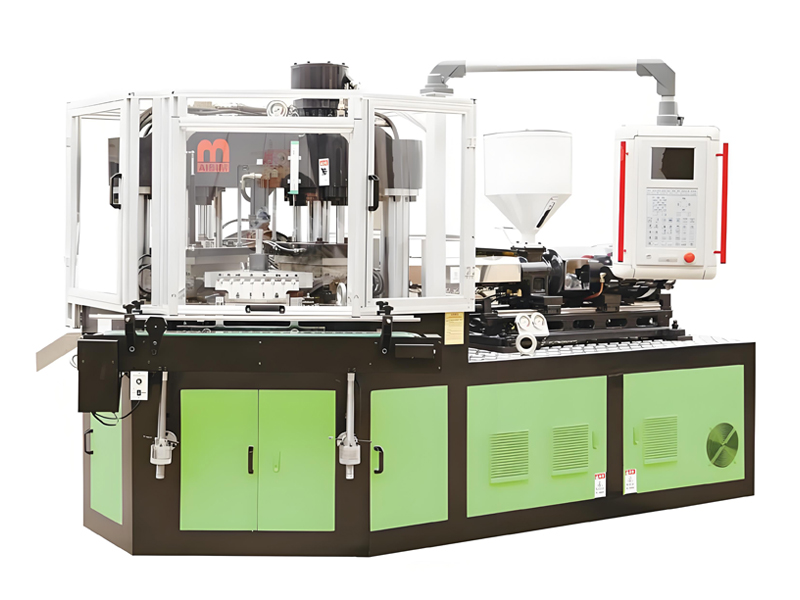
An injection blow molding machine represents advanced manufacturing technology that combines injection molding and blow molding processes to create hollow plastic containers with exceptional precision and quality. Unlike traditional blow molding methods that use extruded parisons, an injection blow molding machine injects molten plastic into a core rod inside a split cavity, creating a preform with precise wall thickness distribution. This preform is then transferred to a blow molding station where compressed air expands it against cool cavity walls, resulting in containers with uniform wall thickness, excellent dimensional accuracy, and superior surface finish.
The technology has evolved significantly since its development, with modern IBM machines incorporating advanced control systems, energy-efficient designs, and versatile capabilities that make them suitable for producing containers ranging from small pharmaceutical vials to large industrial canisters. Zhangjiagang AiBiM Plastics Machinery Co., Ltd specializes in manufacturing injection blow molding machines that deliver consistent quality, energy savings of up to 35 percent compared to conventional machines, and production speeds that meet the demands of high-volume manufacturing operations.
Key Components of an Injection Blow Molding Machine
The injection blow molding machine consists of several essential components that work together to produce high-quality plastic containers. The injection unit melts and injects plastic material into the preform mold, ensuring precise material distribution and melt quality. The core rod assembly holds the preform during the injection and transfer phases, maintaining dimensional stability throughout the process. The blow molding station features cooled cavity plates that shape the final container while ensuring rapid production cycles. The hydraulic and control systems coordinate all machine functions, enabling operators to monitor and adjust parameters for optimal performance.
Evolution of Injection Blow Molding Technology
The injection blow molding process originated in the 1930s but gained significant commercial importance in the 1970s when advances in polymer technology and machine design made it more practical for mass production. Today, hybrid electric models like the AiBiM IBM55 represent the latest generation of this technology, combining servo-driven movements with advanced control algorithms to achieve unprecedented energy efficiency and production consistency. Modern IBM machines can produce containers in cycle times as short as 2 to 3 seconds for small parts, making them highly competitive with other molding technologies for suitable applications.
Working Principle of Injection Blow Molding
Understanding the working principle of an injection blow molding machine helps manufacturers appreciate why this technology excels at producing plastic canisters with specific characteristics. The process consists of three primary phases: injection molding of the preform, transfer of the preform to the blow station, and blow molding of the final container. Each phase contributes to the unique properties that make injection blow molded canisters ideal for stackable storage applications.
Phase One: Preform Injection
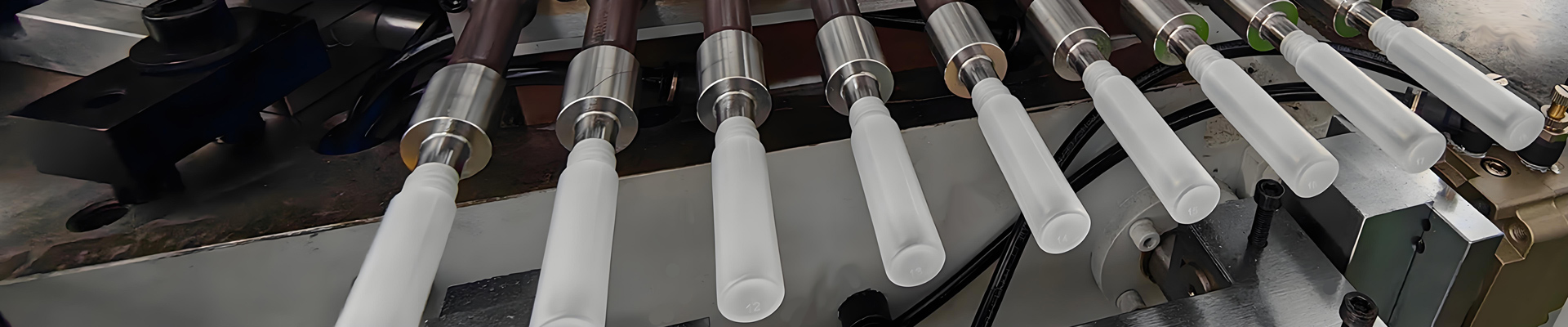
During the injection phase, plastic material in pellet form is melted in the injection unit and forced into a closed split cavity surrounding a cooled core rod. The injection pressure, typically ranging from 500 to 1500 bar depending on material and part requirements, ensures complete filling of the cavity and precise replication of the preform geometry. The preform inherits the thread configuration of the finished container directly from the mold, eliminating secondary operations that would be required with other molding methods. Material distribution is carefully controlled to achieve the desired wall thickness profile, which determines the final container’s strength and weight characteristics.
Phase Two: Preform Transfer
After the preform has cooled sufficiently to maintain its shape, the mold opens and the core rod assembly transfers the preform to the blow molding station. This transfer occurs while the preform remains at elevated temperature, allowing it to be readily expanded in the subsequent blow phase. The timing of this transfer is critical, as the preform must retain sufficient heat for uniform expansion while having cooled enough to prevent deformation during handling. Modern IBM machines use servo-driven transfer mechanisms that ensure precise positioning and rapid cycle times.
Phase Three: Blow Molding and Ejection
In the blow molding station, the preform is positioned within a cooled cavity that defines the final container shape. High-pressure air, typically 8 to 25 bar depending on material and part geometry, is introduced through the core rod, causing the preform to expand against the cavity walls. The expansion follows the pre-determined wall thickness distribution programmed into the process, resulting in containers with consistent wall thickness throughout. After the container has cooled sufficiently to maintain its shape, the mold opens and the finished canister is ejected, ready for any required secondary operations or directly for packaging and shipment.
Plastic Canister Applications and Market Demand
Plastic canisters produced on injection blow molding machines serve diverse applications across multiple industries. The stackable design characteristic that makes these containers particularly valuable for storage applications results from careful attention to container geometry during mold design and process optimization. Manufacturers value the consistency and quality that IBM technology delivers, enabling them to meet demanding specifications for food contact, pharmaceutical, and industrial applications.
Household and Consumer Storage
The household storage market represents a significant application area for injection blow molded plastic canisters. Consumers demand containers that stack securely, resist impacts during handling, and maintain their appearance through repeated use. IBM technology produces canisters with precise dimensional control that ensures consistent stacking performance across production batches. The excellent surface finish achieved through injection blow molding enhances product aesthetics, while the ability to incorporate colored concentrates enables attractive, fade-resistant pigmentation that appeals to retail consumers.
Industrial Packaging Solutions
Industrial applications require plastic canisters that withstand demanding handling conditions while providing reliable containment for various products. Injection blow molded canisters offer the impact resistance and structural integrity necessary for industrial environments, where containers may be subject to rough handling, stacking in warehouse configurations, and exposure to temperature variations. The uniform wall thickness achievable with IBM technology ensures consistent performance across the entire container surface, reducing weak points that could lead to failure under stress.
Food and Beverage Storage
The food and beverage industry requires plastic containers that meet stringent safety regulations while providing practical storage solutions. Injection blow molding accommodates food-grade materials including high-density polyethylene, polypropylene, and polyethylene terephthalate, enabling production of canisters suitable for storing various food products. The one-piece construction of IBM containers eliminates seams or joints that could harbor bacteria or leak, while the excellent barrier properties of suitable materials preserve product freshness and quality during storage and distribution.
Benefits and Advantages of Injection Blow Molding for Canister Production
Manufacturers choosing injection blow molding for plastic canister production gain numerous advantages that contribute to operational efficiency, product quality, and competitive positioning. These benefits span technical performance, economic considerations, and practical advantages that affect day-to-day manufacturing operations.
Superior Dimensional Accuracy
Injection blow molding produces canisters with exceptional dimensional accuracy that ensures consistent fit with closures and compatibility with automated filling and capping equipment. The injection-molded preform establishes precise thread dimensions that mate perfectly with standard closures, eliminating the thread fitting issues common with other blow molding technologies. This dimensional consistency extends to overall container dimensions, ensuring predictable stacking behavior and efficient use of storage and shipping space.
Uniform Wall Thickness Distribution
The IBM process enables precise control over wall thickness distribution throughout the container, allowing designers to optimize material usage while achieving required strength characteristics. By programming the injection phase to deposit material strategically within the preform mold, manufacturers can ensure that the final container has adequate thickness in high-stress areas while avoiding excess material in regions that require less strength. This optimization reduces material costs without compromising container performance or durability.
Excellent Surface Finish
Containers produced on injection blow molding machines exhibit superior surface finish compared to those from conventional blow molding processes. The injection-molded preform has a smooth, defect-free surface that carries through to the finished container, requiring no additional finishing operations. This quality advantage is particularly important for retail products where container appearance influences purchasing decisions, as well as for applications requiring printing, labeling, or other decoration processes that perform better on smooth surfaces.
High Production Efficiency
Modern injection blow molding machines achieve production rates that make them highly competitive for medium to high-volume canister production. The integrated process eliminates separate preform manufacturing and reheating steps, reducing cycle time and energy consumption. Advanced control systems enable rapid product changeovers, allowing manufacturers to produce multiple canister designs on the same equipment without extensive reconfiguration. This flexibility supports just-in-time manufacturing strategies and enables producers to respond quickly to changing market demands.
Material Versatility
Injection blow molding accommodates an extensive range of thermoplastic materials, enabling manufacturers to select the optimal polymer for each application. Common materials include high-density polyethylene for excellent chemical resistance and impact strength, polypropylene for high-temperature applications and stiffness, polystyrene for clarity and rigidity, and specialized resins like polycarbonate and Tritan for demanding applications requiring exceptional clarity or durability. This material flexibility enables producers to serve diverse market segments using common equipment configurations.
AiBiM Injection Blow Molding Machine Specifications and Features
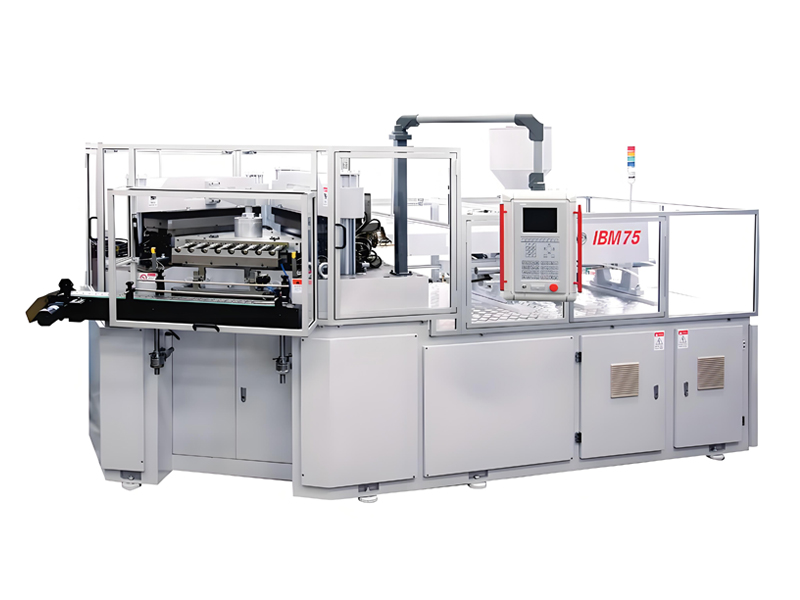
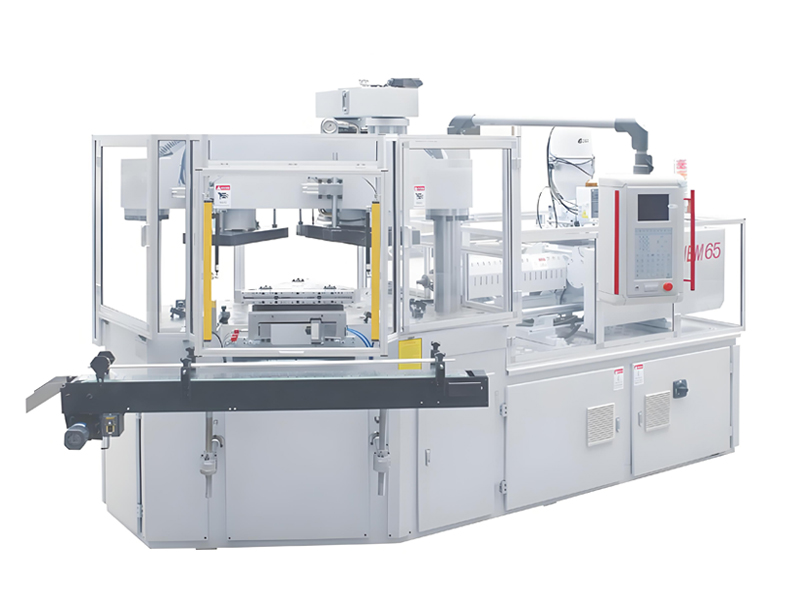
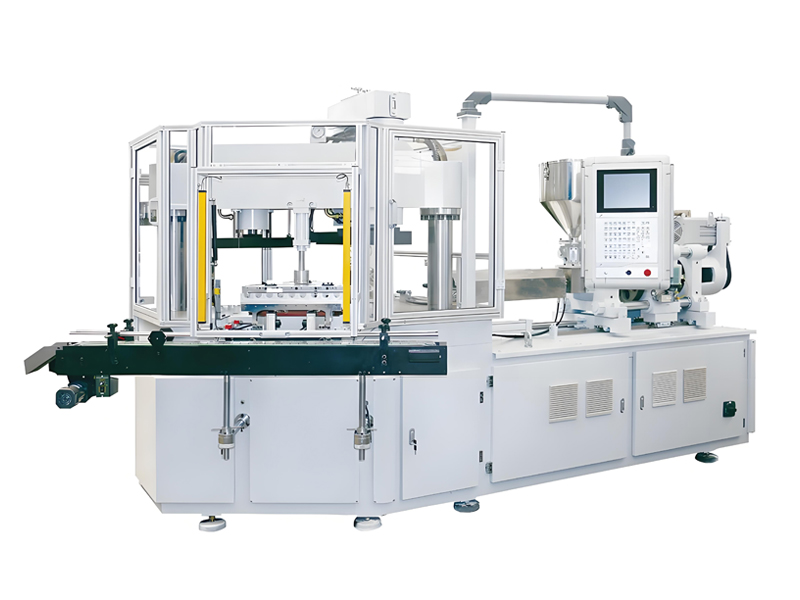
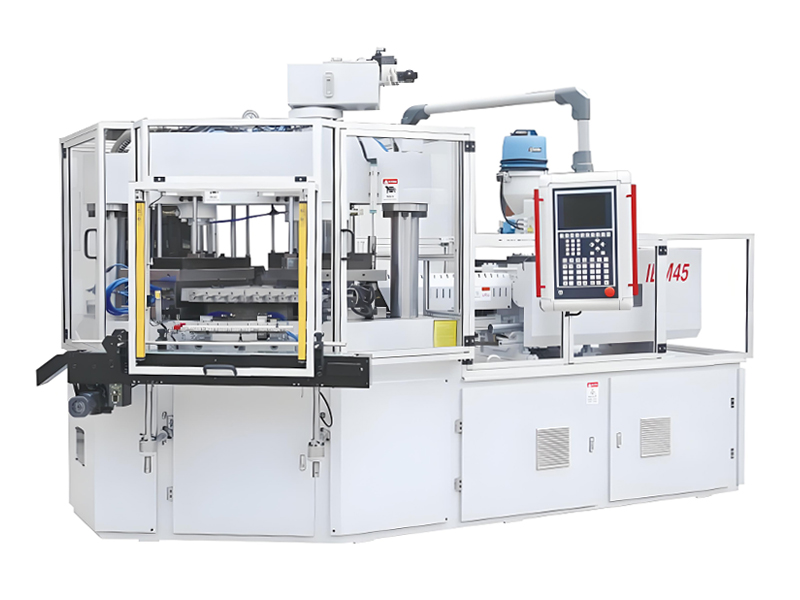
Zhangjiagang AiBiM Plastics Machinery Co., Ltd manufactures injection blow molding machines designed specifically for producing high-quality plastic containers. The company offers several models including the IBM75, IBM65, and IBM55 Hybrid Electric, each engineered to deliver exceptional performance, reliability, and value for manufacturers seeking competitive production capabilities.
IBM75: High-Capacity Production
The AiBiM IBM75 represents the company’s largest production model, designed for manufacturers requiring high-volume output of plastic canisters. This machine features a robust clamping system capable of handling large mold sets, enabling production of canisters with volumes up to 1000 milliliters or larger depending on configuration. The IBM75 incorporates advanced servo-driven hydraulic systems that deliver rapid cycle times while maintaining precise control over all process parameters. The machine’s generous platen dimensions accommodate complex mold designs with multiple cavity configurations for maximizing production efficiency.
IBM65: Versatile Mid-Range Performance
The IBM65 occupies the middle position in the AiBiM product range, offering an attractive balance of production capacity, flexibility, and cost-effectiveness. This model handles the broadest range of container sizes, making it suitable for manufacturers producing diverse product portfolios or those transitioning from smaller equipment. The IBM65 features the same advanced control systems and quality construction as the larger IBM75, ensuring consistent production quality across the machine range. Its moderate footprint and power requirements make it accessible for facilities with space or utility constraints.
IBM55 Hybrid Electric: Energy-Efficient Excellence
The AiBiM IBM55 Hybrid Electric represents the company’s most advanced technology, incorporating servo-electric drive systems for energy-intensive movements while retaining hydraulic power for injection and clamping functions. This hybrid architecture delivers energy savings of up to 35 percent compared to conventional hydraulic machines, reducing operating costs and environmental impact. The electric servo drives enable faster, more precise movements, contributing to shorter cycle times and improved container quality. The IBM55 Hybrid Electric exemplifies AiBiM’s commitment to providing manufacturers with production technology that addresses both economic and sustainability objectives.
Advanced Control Features
AiBiM injection blow molding machines incorporate sophisticated control systems that enhance operational efficiency and product quality. The PREFILL technology optimizes material distribution during the injection phase, ensuring consistent preform quality across all mold cavities. The convenient SD card parameter storage system allows operators to save and recall optimized process settings for different products, enabling rapid changeovers and reducing operator error. The single-beam dual-column design provides exceptional structural rigidity, maintaining precise alignment throughout the production cycle for consistent container dimensions.
CE Certification and Quality Assurance
All AiBiM injection blow molding machines carry CE certification, confirming compliance with European Union safety, health, and environmental protection requirements. This certification provides manufacturers with confidence that the equipment meets internationally recognized quality standards and can be operated safely in facilities worldwide. The company maintains rigorous quality control procedures throughout manufacturing, with each machine undergoing comprehensive testing before shipment to ensure proper function and performance.
Cost and Price Analysis for Injection Blow Molding Machines
Understanding the investment required for injection blow molding equipment helps manufacturers make informed decisions about production capabilities and capacity planning. The total cost of ownership extends beyond the initial machine purchase to include tooling, installation, operation, and maintenance expenses that affect long-term profitability.
Machine Price Ranges
Injection blow molding machine prices vary significantly based on capacity, features, and manufacturer. Entry-level single-station machines suitable for small-scale production typically range from 30,000 to 60,000 USD. Mid-range machines with larger clamping forces and more advanced features, such as the AiBiM IBM65, generally fall in the 80,000 to 150,000 USD range depending on configuration. High-capacity production machines like the IBM75 with advanced control systems and automation capabilities may cost 150,000 to 300,000 USD or more. The IBM55 Hybrid Electric commands a premium over conventional hydraulic models due to its energy efficiency advantages, typically adding 15 to 25 percent to the base price.
Tooling Investment
Mold costs represent a significant portion of the total investment required to begin production with a new injection blow molding machine. Single-cavity molds for basic canister designs typically cost 15,000 to 40,000 USD depending on complexity and material requirements. Multi-cavity molds that increase production output can range from 50,000 to 150,000 USD or more for complex designs with sophisticated features. While these mold costs may seem substantial, their durability often exceeds one million cycles, spreading the investment across millions of containers over the tool life.
Operating Cost Considerations
Energy consumption constitutes the largest ongoing operating expense for injection blow molding operations. The 35 percent energy savings achieved by AiBiM Hybrid Electric machines translate directly to reduced electricity costs over the production life. For a machine operating continuously in a three-shift environment, energy savings can exceed 20,000 USD annually compared to conventional equipment. Labor costs vary based on location and automation level, but modern IBM machines require minimal operator intervention once processes are established, enabling efficient production with small crews.
Return on Investment Analysis
Manufacturers evaluating injection blow molding investment should consider the return on investment timeline based on production volume and margin. For a typical mid-range machine producing canisters at full capacity, payback periods of 18 to 36 months are achievable depending on market conditions and pricing. The extended tool life and low maintenance requirements of well-built machines like those from AiBiM contribute to favorable long-term economics, with many facilities operating their equipment profitably for 10 years or more before considering replacement.
Production Process for Plastic Canisters
The production of plastic canisters on injection blow molding machines follows a carefully orchestrated sequence of operations that transform raw polymer pellets into finished containers ready for use. Understanding this process helps manufacturers optimize production efficiency and troubleshoot issues that may arise during operation.
Material Preparation and Handling
Production begins with proper material selection and preparation. Plastic resin in pellet form is typically supplied in sealed containers or bulk bags that protect against contamination and moisture absorption. Before processing, many materials require drying to remove absorbed moisture that could cause defects in the finished containers. Drying conditions vary by material, with hygroscopic resins like polycarbonate requiring several hours at temperatures exceeding 120 degrees Celsius. Material handling systems transport pellets from storage to the injection unit, maintaining cleanliness and preventing contamination throughout.
Machine Setup and Optimization
New product introduction requires careful machine setup including mold installation, process parameter development, and quality verification. Initial setup involves mounting the mold on the machine platen, connecting cooling lines and air circuits, and configuring the control system for the specific product requirements. Process engineers then develop optimized parameters for injection pressure, injection speed, melt temperature, blow pressure, and cooling time through systematic experimentation. Once parameters are established, the SD card storage feature allows rapid recall for future production runs, ensuring consistent quality across production batches.
Continuous Production Operations
During continuous production, the machine operates automatically after initial setup and parameter loading. The control system monitors all process parameters and adjusts them as needed to maintain consistent quality. Operators periodically verify container quality through visual inspection and dimensional measurement, making parameter adjustments when necessary to address any deviations. Regular maintenance activities including lubrication, cleaning, and component inspection ensure continued reliable operation and prevent unplanned downtime.
Quality Control and Testing
Quality control procedures verify that produced canisters meet all specification requirements before release for shipment. Typical quality checks include visual inspection for surface defects, weight measurement to confirm material distribution, dimensional verification using gauges or coordinate measuring machines, and functional testing of closure fit. For applications with regulatory requirements such as food or pharmaceutical packaging, additional testing may include extractables studies, leak testing, and compliance verification with applicable standards. Statistical process control techniques help identify trends before they result in out-of-specification product, enabling proactive adjustment of process parameters.
Technical Parameters for Plastic Canister Production
Understanding the technical parameters that define injection blow molding operations helps manufacturers specify equipment correctly and optimize production processes. These parameters encompass machine capabilities, material requirements, and container characteristics that influence the feasibility and economics of specific applications.
Container Size and Volume Range
AiBiM injection blow molding machines accommodate a broad range of container sizes to serve diverse market requirements. The IBM series machines produce containers with volumes from 3 milliliters for small pharmaceutical vials up to 1000 milliliters for standard canister sizes. Larger containers up to several liters can be produced on appropriate equipment configurations, though cycle times and production economics may differ from smaller containers. The effective production range depends on cavity configuration, with single-cavity molds enabling larger sizes while multi-cavity arrangements maximize output for smaller containers.
Material Compatibility
Injection blow molding processes accommodate numerous thermoplastic materials, each offering specific property combinations suited to different applications. Polyethylene materials including HDPE, LDPE, and LLDPE provide excellent chemical resistance, impact strength, and moisture barrier properties suitable for household and industrial containers. Polypropylene offers higher temperature resistance and stiffness, enabling use in applications requiring sterilization or hot filling. Polystyrene provides clarity and rigidity for applications where product visibility is important. Engineering resins including ABS, SAN, TPU, PC, and PCTG address demanding applications requiring enhanced performance characteristics.
Production Rate Specifications
Production rates for injection blow molding depend on container size, material, and mold configuration. Small containers in the 10 to 50 milliliter range may achieve cycle times of 2 to 3 seconds in multi-cavity production, yielding output rates exceeding 5000 containers per hour. Medium containers in the 100 to 500 milliliter range typically operate with cycle times of 4 to 6 seconds, producing 1000 to 3000 containers per hour depending on cavity count. Large canisters in the 500 to 1000 milliliter range require longer cycle times of 6 to 10 seconds, with output rates of 500 to 1000 containers per hour for single-cavity molds.
Power and Utility Requirements
Facility planning for injection blow molding equipment requires consideration of power supply, compressed air, and cooling system requirements. Standard electrical configurations for mid-range IBM machines typically require three-phase power at 380 to 480 volts with capacity of 50 to 100 kilowatts. Compressed air supply at 8 to 10 bar is required for the blow molding function, with consumption varying based on container size and production rate. Cooling system capacity depends on production rate and ambient conditions, with water-cooled models requiring flow rates of 30 to 60 liters per minute for optimal temperature control.
Market Trends and Industry Outlook
The plastic canister market continues to evolve in response to changing consumer preferences, regulatory requirements, and manufacturing technology advances. Understanding these trends helps manufacturers position their businesses competitively and identify opportunities for growth and differentiation.
Sustainability Driving Innovation
Environmental concerns increasingly influence plastic packaging decisions, driving demand for lighter weight containers, recycled material content, and improved recyclability. Injection blow molding technology contributes to sustainability objectives through material efficiency achieved through precise wall thickness control and uniform distribution. Manufacturers can reduce material usage without sacrificing container performance, decreasing both resource consumption and transportation emissions. The growing availability of recycled and bio-based materials compatible with IBM processes supports circular economy objectives while meeting consumer expectations for environmentally responsible packaging.
Automation and Industry 4.0 Integration
Manufacturing facilities increasingly incorporate automation and digital connectivity to improve efficiency and quality consistency. Modern injection blow molding machines like those from AiBiM feature network connectivity enabling integration with manufacturing execution systems and enterprise resource planning platforms. Real-time monitoring of production parameters, quality metrics, and equipment status enables data-driven decision making and predictive maintenance that minimize unplanned downtime. These capabilities align with Industry 4.0 principles and support the connected manufacturing environments that increasingly define competitive production operations.
Global Market Expansion
The global market for plastic containers continues to expand, with particularly strong growth in developing regions where rising living standards increase demand for packaged goods. Export-oriented manufacturers like those served by AiBiM, which supplies equipment to more than 40 countries across Southeast Asia, the Middle East, Europe, the Americas, and Africa, are well-positioned to capture this growth. The combination of competitive Chinese manufacturing capabilities with reliable equipment like AiBiM machines enables producers to compete effectively in international markets while maintaining quality standards required by sophisticated buyers.
Why Choose AiBiM for Injection Blow Molding Equipment
Selecting the right equipment supplier requires evaluation of multiple factors beyond initial price, including quality, reliability, service, and long-term partnership potential. AiBiM Plastic Machinery Co., Ltd offers compelling advantages that distinguish the company as a preferred partner for manufacturers investing in injection blow molding capabilities.
Proven Technology and Quality Construction
AiBiM machines embody decades of experience in injection blow molding technology, incorporating design features that ensure reliable performance in demanding production environments. The single-beam dual-column construction provides exceptional rigidity and alignment precision that contributes to consistent container quality and extended mold life. The PREFILL technology optimizes material distribution for superior preform quality, while advanced control systems enable precise management of all process parameters. CE certification confirms compliance with international safety and quality standards, providing confidence for buyers worldwide.
Energy Efficiency Leadership
AiBiM’s commitment to energy efficiency delivers tangible economic benefits for production facilities. The Hybrid Electric technology incorporated in the IBM55 model achieves energy savings of up to 35 percent compared to conventional hydraulic machines. These savings accumulate over the production life of the equipment, significantly reducing operating costs and improving competitiveness. As energy prices continue to rise and environmental regulations tighten, the efficiency advantage of AiBiM equipment becomes increasingly valuable for maintaining profitable operations.
Global Service and Support Network
With equipment operating in over 40 countries, AiBiM has established service and support capabilities that enable customers worldwide to maintain productive operations. The company’s export experience ensures that machines are properly configured for international use, including appropriate electrical standards, documentation, and compliance certifications. Remote diagnostic capabilities allow AiBiM technical specialists to assist customers in troubleshooting issues without requiring on-site visits, minimizing downtime and support costs. When physical service is required, the company’s logistics capabilities enable efficient delivery of parts and support personnel to customer locations globally.
Value Proposition for Global Importers
For international buyers seeking injection blow molding equipment, AiBiM offers an attractive combination of quality, capability, and value that addresses common concerns about sourcing manufacturing equipment internationally. Transparent pricing without hidden costs enables accurate budgeting and financial planning. The SD card parameter storage system simplifies operator training and reduces dependency on specialized knowledge. Comprehensive documentation and training materials support successful implementation in facilities around the world. These practical advantages, combined with reliable equipment performance, make AiBiM a smart choice for manufacturers investing in injection blow molding capabilities.
Maintenance and Operation Best Practices
Proper maintenance and operation procedures maximize the value of injection blow molding equipment investments by ensuring reliable performance, consistent quality, and extended equipment life. Implementing comprehensive maintenance programs prevents unexpected downtime and maintains production efficiency over the equipment lifecycle.
Preventive Maintenance Schedule
Preventive maintenance activities should follow a structured schedule based on operating hours and production volume. Daily tasks include visual inspection of machine condition, verification of cooling system function, and confirmation of proper lubrication. Weekly activities include more thorough inspection of hydraulic systems, verification of control system calibration, and cleaning of mold contact surfaces. Monthly maintenance encompasses detailed inspection of wearing components, verification of safety system function, and review of production data for any concerning trends. Annual comprehensive maintenance should include thorough cleaning, calibration verification, and replacement of components approaching the end of their service life.
Operator Training and Best Practices
Well-trained operators contribute significantly to equipment performance and product quality. Initial training should cover machine operation, parameter adjustment, quality monitoring, and basic troubleshooting procedures. Ongoing training keeps operators current with new capabilities and best practices as equipment and processes evolve. Operators should understand the relationship between process parameters and product quality, enabling informed adjustment when conditions change. Good housekeeping practices maintain clean, organized work areas that support quality production and safety.
Troubleshooting Common Issues
Understanding common injection blow molding issues and their remedies helps operators maintain production quality efficiently. Wall thickness variations often indicate process parameter issues requiring adjustment of injection timing, pressure, or blow pressure. Surface defects may result from material contamination, excessive moisture, or mold surface condition problems. Dimensional variations can indicate temperature control issues, mold wear, or improper clamping. When troubleshooting, systematic approaches that change one variable at a time help identify root causes efficiently without creating new problems.
Parts Management and Inventory
Maintaining appropriate inventory of spare parts minimizes downtime when maintenance or repairs are required. Critical wearing parts should be stocked based on consumption rates and supplier lead times. Non-critical parts can be ordered as needed without maintaining inventory. Establishing relationships with reliable suppliers ensures timely availability of quality replacement parts. For AiBiM machines, the company can provide guidance on recommended spare parts inventories based on production volume and operating conditions.
Frequently Asked Questions
What is the minimum order quantity for custom plastic canister production on IBM machines?
Minimum order quantities for custom canisters depend on the specific product and manufacturer capabilities. Generally, production economics favor larger volumes, with many manufacturers establishing minimum orders of 5000 to 10,000 units for custom designs to justify mold investment. However, AiBiM can recommend equipment configurations and production approaches suitable for lower-volume requirements, and some contract manufacturers offer small-batch production services for product development or market testing.
How long does it take to produce a new mold for plastic canisters?
Mold production timelines typically range from 6 to 12 weeks depending on complexity and manufacturer workload. Simple single-cavity molds may be completed in 4 to 6 weeks, while complex multi-cavity molds with sophisticated features may require 10 to 16 weeks. Design review, sample approval, and any required modifications extend the total timeline. Early engagement with the mold manufacturer during the design phase helps ensure timely delivery and reduces the risk of costly modifications during production.
What certifications do AiBiM injection blow molding machines carry?
AiBiM injection blow molding machines carry CE certification, confirming compliance with European Union safety, health, and environmental protection requirements. This certification is accepted in most international markets and provides assurance of quality construction and safe design. For specific application requirements such as food or pharmaceutical packaging, additional testing or certification of the produced containers may be required from relevant regulatory authorities.
What is the typical service life of an injection blow molding machine?
Well-maintained injection blow molding machines commonly operate productively for 15 to 20 years or more, with many facilities continuing to use equipment that has produced hundreds of millions of containers. Regular preventive maintenance, prompt repair of issues, and periodic upgrades keep equipment productive over extended periods. Technology advances may eventually make newer equipment more attractive economically, but quality construction and proper maintenance enable long service lives that maximize return on investment.
Can injection blow molding use recycled materials?
Yes, injection blow molding can accommodate recycled materials including post-consumer recycled content. Material requirements include consistent melt behavior, adequate mechanical properties, and freedom from contamination. recycled materials may require additional processing considerations such as enhanced drying and filtration to achieve quality results. The uniform wall thickness achievable with IBM technology helps maximize the properties of materials with potentially more variable characteristics than virgin resins.
What is the difference between injection blow molding and extrusion blow molding?
Injection blow molding injects material into a preform mold to create a precisely shaped preform that is then blown into the final container shape. Extrusion blow molding extrudes a parison that is captured in a mold and blown into shape. IBM produces containers with more precise dimensions, better thread accuracy, and superior surface finish. Extrusion blow molding offers advantages for very large containers and multi-layer applications. The choice depends on container size, requirements, and production volume.
How do I determine the right machine size for my canister production needs?
Selecting the appropriate machine size requires evaluation of container volume range, production volume requirements, and available facility space. The IBM55 suits smaller containers and moderate volumes with its compact footprint. The IBM65 handles the broadest range of sizes and volumes. The IBM75 provides maximum capacity for high-volume production of larger containers. AiBiM technical specialists can help analyze specific requirements and recommend appropriate equipment configurations.
What support does AiBiM provide for international customers?
AiBiM provides comprehensive support for customers worldwide, including pre-sales technical consultation, installation guidance, operator training materials, and ongoing technical support. Remote diagnostic capabilities enable efficient troubleshooting without requiring on-site visits. The company maintains relationships with shipping and logistics providers experienced in international equipment transport, ensuring reliable delivery. Documentation including operation manuals, maintenance guides, and electrical drawings supports proper installation and ongoing operation.
What payment terms does AiBiM offer for equipment purchases?
Payment terms vary based on order value, customer location, and established relationship. Standard terms for international orders typically include a deposit with order placement and balance payment before shipment. Letter of credit arrangements are available for qualified buyers. For larger orders, progressive payment tied to production milestones may be possible. AiBiM sales representatives can discuss specific terms based on individual customer requirements.
How does the PREFILL technology improve container quality?
The PREFILL technology optimizes the injection phase of the IBM process, ensuring consistent material distribution within the preform regardless of cavity variations or material characteristics. This optimization results in more uniform wall thickness in the finished container, which translates to improved mechanical properties, better dimensional consistency, and reduced material waste. The technology adapts automatically to different products and materials, simplifying process development and ensuring consistent quality across production runs.
Conclusion
Injection blow molding technology offers compelling advantages for manufacturers seeking to produce high-quality plastic canisters optimized for stackable storage applications. The precision, consistency, and versatility of the IBM process enable production of containers meeting demanding quality requirements across diverse market segments. AiBiM Plastic Machinery Co., Ltd provides the equipment, expertise, and support that enable manufacturers worldwide to capitalize on these advantages.
The combination of advanced technology including the Hybrid Electric platform with 35 percent energy savings, CE certification ensuring international compliance, and the convenience of SD card parameter storage makes AiBiM machines attractive for both new entrants and experienced manufacturers expanding their capabilities. The proven reliability and global service network provide confidence for long-term investment in injection blow molding production.
Whether producing small pharmaceutical containers, household storage canisters, or industrial packaging solutions, manufacturers benefit from understanding the technology, processes, and considerations presented in this guide. Thoughtful evaluation of equipment options, production requirements, and partnership opportunities positions manufacturers for success in competitive global markets for plastic containers.