1. Introduction to Injection Blow Molding for Food-Grade Honey Jar Production
Honey packaging requires specialized food-grade containers that prioritize hygienic safety, chemical stability, structural durability, and user-friendly usability. As a natural supersaturated sugar solution, raw honey features strong viscosity, weak acidity, and high hygroscopicity, which places strict requirements on plastic packaging materials and molding quality. Wide-mouth honey jars are the most mainstream packaging form for bulk honey, organic honey, and gift honey products, facilitating honey filling, scooping, and daily consumer use. Unlike narrow-mouth plastic bottles, wide-mouth honey containers demand uniform mouth diameter, smooth inner walls, excellent sealing performance, and zero chemical precipitation to ensure long-term honey freshness and storage stability.
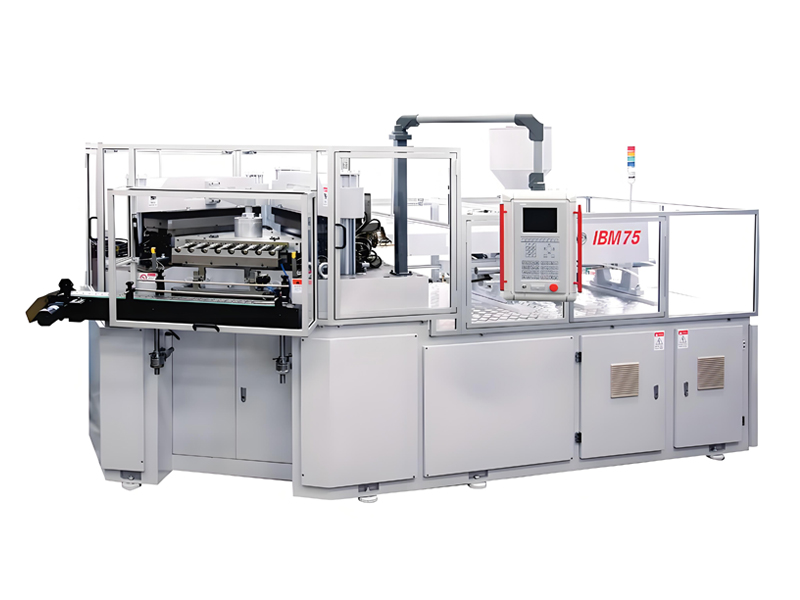
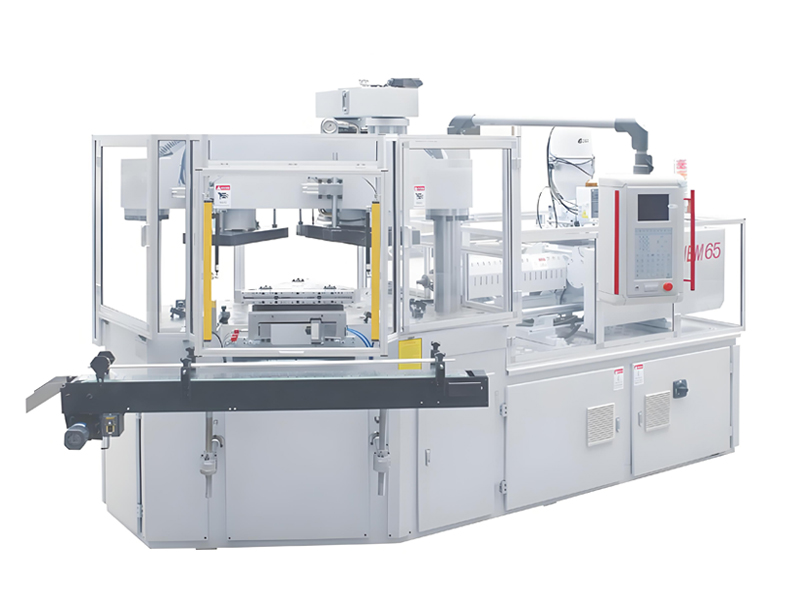
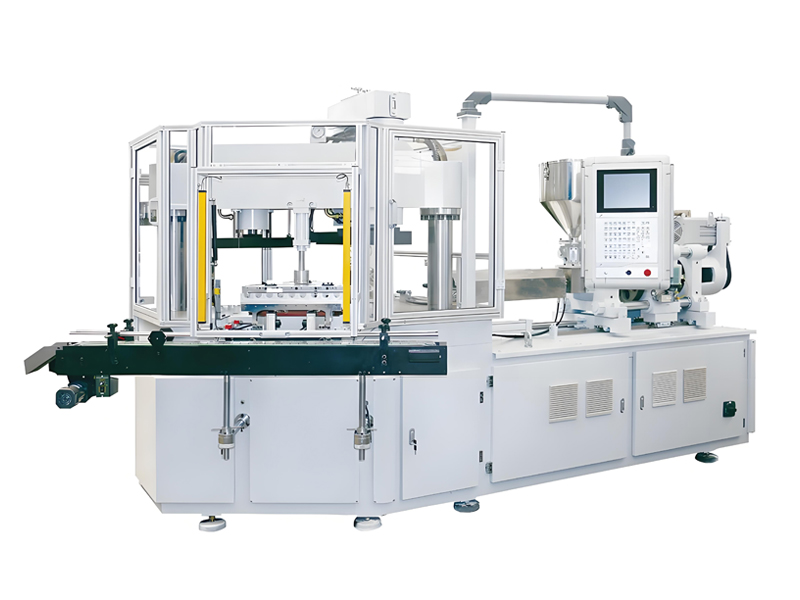
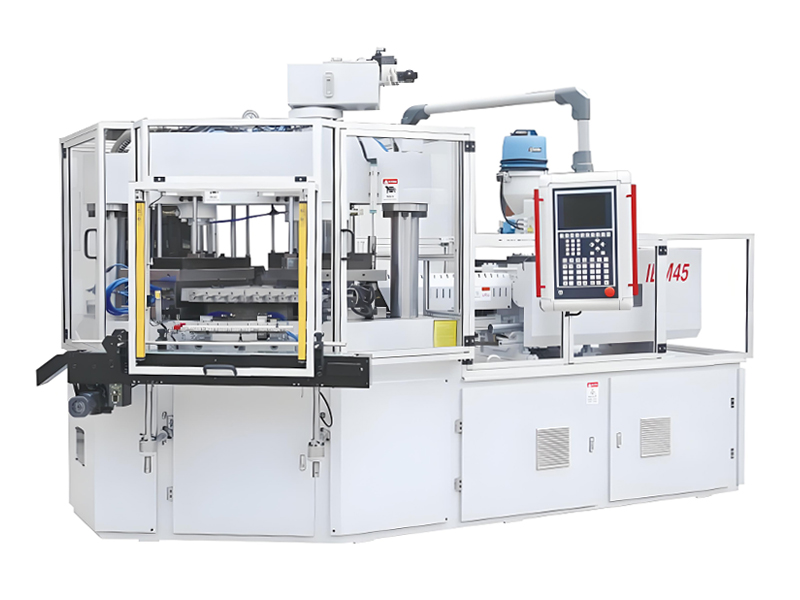
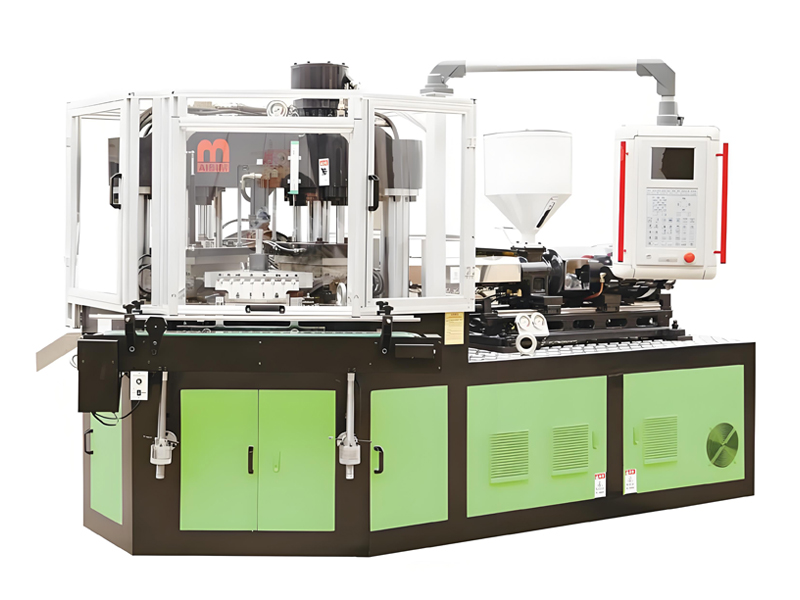
Injection blow molding technology has become the optimal manufacturing solution for high-quality food-grade wide-mouth honey jars, outperforming traditional extrusion blow molding and injection molding processes. An Injection Blow Molding Machine integrates preform injection, thermal stretching, and high-pressure blowing shaping into one fully automated continuous process, delivering seamless, burr-free, high-precision wide-mouth containers with consistent wall thickness and stable structural performance. This one-step molding process completely eliminates splicing gaps, residual flashes, and dimensional inconsistencies common in traditional two-step production, fully meeting the stringent food safety and structural standards of honey packaging containers.
AiBiM is a professional manufacturer of high-precision food-grade injection blow molding equipment, dedicated to developing customized machine solutions for food container production scenarios. AiBiM Injection Blow Molding Machine is specially optimized for wide-mouth honey jar molding characteristics, adapting to food-grade PP, HDPE, and PET raw material processing requirements. The equipment achieves ultra-high dimensional accuracy, full hygienic compliance, and stable batch production, perfectly solving the common defects of traditional honey jars such as uneven mouth size, rough inner walls, poor sealing, and easy deformation. This article comprehensively elaborates on honey jar packaging requirements, equipment working principles, standardized production processes, raw material matching, project cost and price analysis, defect optimization, and industry application advantages, providing systematic technical and commercial guidance for food packaging enterprises engaged in honey container production.
2. Core Packaging Requirements for Food-Grade Wide-Mouth Honey Jars
2.1 Food-Grade Safety and Chemical Stability Standards
Honey is a direct edible food product, so all honey jar packaging materials and finished products must comply with global food contact safety regulations, including FDA food-grade material standards, EU food packaging safety specifications, and national food plastic container hygiene standards. Qualified honey jar materials must feature non-toxic formula, zero heavy metal precipitation, low volatile organic compound content, and strong chemical inertia, avoiding chemical reactions with acidic honey components that cause odor, discoloration, or quality deterioration of stored honey.
Long-term storage of honey usually lasts 12 to 24 months, requiring plastic containers to maintain stable physical and chemical properties under normal temperature and humid storage environments. No aging, cracking, or material precipitation is allowed during the shelf life. The integrated molding advantage of AiBiM Injection Blow Molding Machine ensures no residual processing impurities or secondary pollution in finished honey jars, achieving full compliance with food-grade hygienic standards for direct food contact packaging.
2.2 Wide-Mouth Structural Precision and Usability Requirements
Wide-mouth honey jars are defined by their large-caliber bottle mouth design, which differentiates them from ordinary plastic bottles. The bottle mouth diameter ranges from 60mm to 120mm for mainstream honey packaging specifications, suitable for manual and mechanical filling, as well as daily honey scooping by consumers. The core structural requirement lies in the flatness and dimensional consistency of the bottle mouth. Uneven bottle mouth edges and diameter deviations will lead to poor cap fitting, insufficient sealing, and air and moisture penetration, resulting in honey fermentation, crystallization deterioration, and shelf-life shortening.
In addition, the inner wall of honey jars must be ultra-smooth without pores, scratches, or concave-convex defects. Rough inner walls will adhere to residual honey, breed bacteria, and cause cleaning difficulties during container recycling and reuse. AiBiM injection blow molding equipment realizes micron-level precise molding of wide-mouth structures through customized professional molds and stable process parameters, ensuring flat bottle mouth sections, uniform caliber size, and mirror-level smooth inner and outer walls of finished honey jars.
2.3 Sealing and Barrier Performance Requirements
Honey is highly hygroscopic and susceptible to deterioration after absorbing external moisture and air. High-quality wide-mouth honey jars must have excellent air tightness, moisture barrier performance, and oxidation resistance to isolate external air, moisture, and dust. The matching of bottle mouth threads and sealing gaskets directly determines the overall barrier performance of the container. Standard honey jar threads need uniform tooth spacing and depth to achieve tight fitting with food-grade plastic caps and aluminum foil gaskets, realizing fully sealed packaging effects.
Finished honey jars also need moderate structural toughness and pressure resistance to avoid deformation and sealing failure during stacking, transportation, and shelf display. The stable stretching and blowing process of AiBiM equipment optimizes the molecular arrangement of food-grade raw materials, forming a dense and uniform bottle wall structure that significantly improves the barrier performance and structural stability of honey containers.
2.4 Appearance and Batch Consistency Standards
Commercial honey products have high requirements for packaging appearance. Transparent and translucent honey jars need high light transmittance without haze, crystal points, or black spots, which can clearly display the color and texture of internal honey and improve product grade. Opaque food-grade honey jars require uniform color and smooth surface without color difference or deformation. Batch production requires 100% consistent bottle shape, size, and appearance to meet standardized brand packaging and market sales requirements.
3. Working Principle and Core Advantages of AiBiM Injection Blow Molding Machine for Honey Jars
3.1 One-Step Integrated Injection Blow Molding Working Process
The AiBiM Injection Blow Molding Machine adopts an advanced one-step three-station integrated molding process, independently completing preform injection molding, constant-temperature thermal stretching blowing, and cooling shaping demolding in a single automated cycle. The entire production process is closed and continuous without manual preform transfer or secondary processing, fundamentally avoiding secondary pollution and dimensional errors caused by manual intervention, which is the core guarantee for high-precision and high-hygiene production of food-grade wide-mouth honey jars.
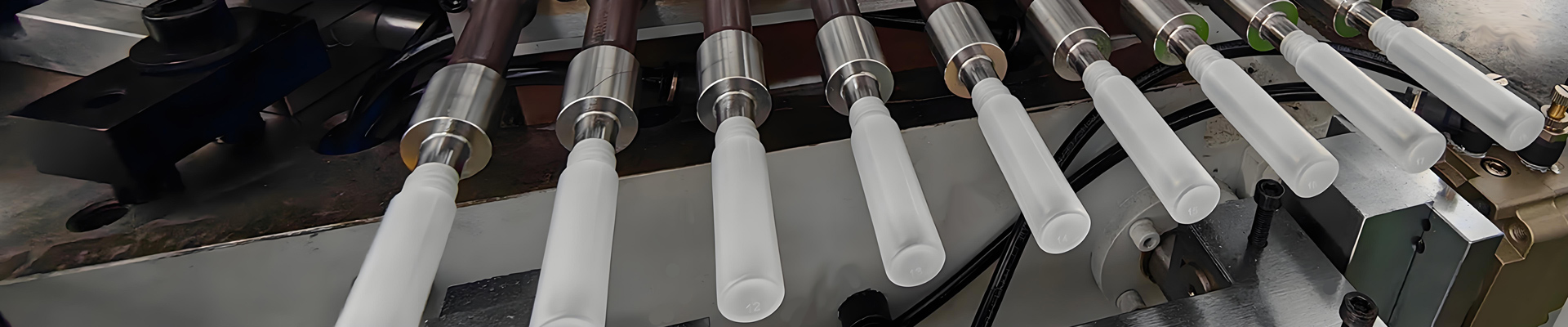
In the first injection station, food-grade plastic raw materials are heated and melted evenly, then injected into a customized wide-mouth honey jar mold to form high-precision preforms with complete bottle mouth threads and standard wide-caliber structures. In the second heating and blowing station, the rotating turntable accurately transfers the preforms to the constant-temperature heating area for uniform softening, then completes vertical stretching and high-pressure air blowing to make the preforms fully fit the mold cavity and form a complete jar shape. In the third cooling demolding station, graded constant-temperature cooling is implemented to eliminate internal stress, and finished honey jars are automatically demolded with complete structures and stable sizes.
3.2 Unique Advantages for Wide-Mouth Honey Jar Molding
Compared with traditional extrusion blow molding machines and two-step blow molding equipment, AiBiM professional injection blow molding machine has targeted technical advantages in wide-mouth container production. First, it solves the industry-wide problem of difficult precise molding of large-caliber bottle mouths. Traditional equipment is prone to mouth deformation, edge warping, and caliber deviation when producing wide-mouth jars, while AiBiM equipment adopts fixed mold locking and precise servo positioning technology to control wide-mouth dimensional tolerance within ±0.03mm, ensuring perfect matching with standard sealing caps.
Second, the one-step closed production mode meets food-grade clean production standards. The fully enclosed material pipeline and molding system prevent dust and bacterial contamination, ensuring that finished honey jars meet food direct contact hygiene requirements. Third, the equipment realizes uniform wall thickness molding of wide-mouth jars, effectively avoiding thin wall and insufficient strength at the bottle mouth and bottom of large-caliber containers, improving the overall pressure resistance and falling resistance of honey jars.
In terms of production efficiency and stability, AiBiM equipment adopts intelligent parameter locking and closed-loop feedback control systems. All process parameters including injection pressure, heating temperature, stretching speed, and blowing pressure are intelligently stabilized, with a batch product qualification rate of up to 99.7%, far exceeding the industry average level. The modular structure design reduces equipment failure rate and supports long-term uninterrupted mass production of honey jars.
3.3 Food-Grade Raw Material Adaptability for Honey Packaging
AiBiM Injection Blow Molding Machine is perfectly adapted to three mainstream food-grade plastic raw materials for honey jar production, covering all commercial honey packaging scenarios. Food-grade high-density polyethylene (HDPE) is the most commonly used raw material for ordinary honey jars, featuring excellent moisture resistance, chemical stability, and low cost, suitable for daily bulk honey packaging. Food-grade polypropylene (PP) has high temperature resistance and toughness, supporting high-temperature disinfection and repeated use, applicable to high-end reusable honey containers.
Food-grade PET raw materials have ultra-high transparency and beautiful appearance, which can fully display the texture of high-quality honey, widely used in gift box honey and high-end organic honey packaging. AiBiM equipment can independently adjust segmented temperature, injection parameters, and blowing pressure according to different raw material characteristics, ensuring that each food-grade material achieves the best molding state, without material decomposition, precipitation, or appearance defects, fully meeting food safety production standards.
4. Standardized Full Production Process of Food-Grade Wide-Mouth Honey Jars
4.1 Pre-Production Raw Material Purification and Drying Treatment
Food-grade honey jar production has strict requirements on raw material purity and dryness. Before production, all food-grade plastic particles need to be screened to remove impurity particles and deteriorated materials, avoiding surface black spots and impurities on finished products. Raw materials must be dried by constant-temperature low-humidity drying equipment to control internal moisture content below 0.02%. Excessive raw material moisture will cause bubble defects on the jar wall during high-temperature melting and molding, destroying the barrier performance and appearance of honey jars, and even causing hidden dangers of food safety.
Meanwhile, the equipment’s material pipeline, screw, and mold cavity need to be thoroughly cleaned and disinfected before startup to remove residual old materials and dust, ensuring a pure molding environment. Standardized preprocessing is the basic premise to ensure the food safety and stable quality of honey jars.
4.2 Precision Preform Injection Molding Process
The preform injection stage determines the structural foundation of wide-mouth honey jars, especially the precision of the bottle mouth and thread structure. AiBiM equipment uses high-precision screw uniform injection technology to ensure consistent melt density and injection volume for each preform. The customized wide-mouth mold adopts integral precision processing technology, with smooth thread grooves and flat mouth forming positions, ensuring that the preform forms a complete and standard wide-mouth structure at one time.
The equipment intelligently locks injection pressure and speed parameters to avoid preform weight deviation and structural differences caused by pressure fluctuation. Stable preform quality lays a solid foundation for subsequent stretching and blowing molding, effectively preventing batch defects such as uneven bottle mouth and deformed threads.
4.3 Segmented Heating and High-Pressure Blowing Shaping
Different from narrow-mouth bottles, wide-mouth honey jars have large structural differences between the bottle mouth and bottle body, requiring segmented targeted heating. AiBiM equipment adopts independent zoning temperature control technology, setting low and stable temperature for the thick bottle mouth area to prevent structural deformation, and uniform softening temperature for the bottle body area to ensure sufficient stretching toughness. This targeted heating mode solves the common problem of inconsistent softening degree of wide-mouth preforms in traditional production.
After uniform heating and softening, the high-precision stretching rod drives vertical uniform stretching, and high-pressure clean air blows the preform to fully fit the mold cavity. The graded blowing pressure ensures dense and uniform molecular arrangement of the jar wall, smooth and flat inner and outer surfaces, and stable dimensional accuracy of the wide-mouth structure. The entire blowing process is completed in a closed environment, ensuring product hygiene and structural integrity.
4.4 Graded Cooling and Automatic Demolding
AiBiM equipment is equipped with a constant-temperature circulating cooling system, adopting graded cooling strategies for different parts of honey jars. The wide-mouth bottle mouth area with complex structures is cooled slowly to eliminate internal molding stress and prevent later deformation and cracking; the bottle body adopts rapid uniform cooling to improve production efficiency while ensuring flat shaping. The graded cooling technology effectively improves the structural stability and yield of wide-mouth honey jars.
After cooling and shaping, finished honey jars are automatically demolded without manual contact, avoiding secondary pollution. The demolded products have no burrs, no deformation, uniform wall thickness, and standard wide-mouth size, which can directly enter the quality inspection and packaging process.
4.5 Finished Product Inspection and Quality Screening
To ensure 100% compliance of food-grade honey jars, AiBiM production lines support docking with automatic visual inspection systems. The system automatically detects appearance defects including haze, black spots, deformation, and thread abnormalities, as well as dimensional errors of wide-mouth calibers. Unqualified products are automatically screened out to ensure that all delivered finished products meet food safety and dimensional standard requirements. Strict post-production inspection standards guarantee the long-term stable storage performance of honey jars.
5. Project Cost and Comprehensive Price Analysis of Honey Jar Production
5.1 AiBiM Injection Blow Molding Machine Procurement Price
AiBiM food-grade injection blow molding machines for honey jar production are priced based on automation configuration, mold cavity quantity, and production capacity, with high cost performance in the food packaging equipment market. The standard single-cavity food-grade model suitable for small-batch honey jar production is priced from $36,000 to $43,000. This model is compact in structure, stable in operation, with a daily output of 7,000 to 14,000 standard wide-mouth honey jars, perfectly matching the production needs of small and medium-sized food packaging factories and honey processing enterprises.
The dual-cavity high-efficiency mass production model is priced from $46,000 to $54,000, with a daily output of 18,000 to 32,000 honey jars, realizing efficient batch production while maintaining ultra-high product qualification rate. The multi-cavity intelligent customized model for large-scale standardized production is priced from $56,000 to $65,000, supporting 24-hour uninterrupted operation, with intelligent parameter self-correction and fault self-detection functions, suitable for large food packaging industrial production lines.
5.2 Raw Material and Unit Production Cost Analysis
The unit raw material cost of food-grade honey jars varies with different materials. Conventional food-grade HDPE raw materials cost $1.8 to $2.1 per kilogram, and the raw material cost of a standard 500ml wide-mouth honey jar is about $0.07 to $0.10. High-transparency food-grade PET raw materials for high-end honey packaging cost $2.2 to $2.5 per kilogram, with a single product raw material cost of $0.11 to $0.14. High-temperature resistant food-grade PP raw materials cost $2.0 to $2.3 per kilogram, suitable for reusable honey jar production.
Benefiting from AiBiM equipment’s high-precision molding technology, the raw material utilization rate reaches 98.8%, which is 6% to 8% higher than the industry average of traditional equipment. The fully automated production mode reduces manual intervention, and the unit labor cost of each honey jar is controlled below $0.012. Compared with traditional blow molding equipment, the comprehensive unit production cost of AiBiM equipment is reduced by 13% to 19%, with significant cost advantages in long-term mass production.
5.3 Operation and Maintenance Cost Budget
AiBiM Injection Blow Molding Machine adopts servo energy-saving design, which reduces power consumption by 22% to 26% compared with traditional hydraulic blow molding equipment. The daily power consumption cost of a single standard model is controlled within $16 to $22. The equipment adopts a modular detachable structure, with simple daily maintenance and low wearing part loss. The annual comprehensive maintenance cost including lubrication, precision calibration, and vulnerable part replacement is about $1,100 to $1,700, avoiding high later operation and maintenance investment.
In terms of workshop investment, the equipment can adapt to ordinary dust-proof food-grade workshops without the need for high-standard ultra-clean workshops, greatly reducing enterprise plant renovation and daily operation costs. The overall investment recovery cycle of the honey jar production project is 11 to 15 months, with stable and sustainable profit space.
5.4 Hidden Loss Cost of Non-Professional Equipment Production
Using ordinary blow molding equipment to produce food-grade wide-mouth honey jars will bring huge hidden economic losses. Traditional equipment has low wide-mouth molding precision, unstable product quality, and a defective rate of 4% to 7%, resulting in a large amount of raw material waste and product scrap. Unqualified honey jars with unsmooth inner walls and poor sealing cannot meet food safety standards, leading to order return and rejection losses.
In addition, unqualified packaging products will affect the brand reputation of honey manufacturers and reduce long-term customer cooperation credibility. Taking an annual output of 6 million honey jars as an example, the annual comprehensive hidden loss caused by non-professional equipment production is as high as $32,000 to $48,000. Adopting AiBiM professional food-grade injection blow molding equipment can completely avoid these quality risks and hidden losses, ensuring stable project revenue.
6. Common Production Defects and Professional Optimization Solutions for Honey Jars
6.1 Wide-Mouth Deformation and Caliber Inconsistency
Wide-mouth deformation and uneven caliber size are the most typical defects in honey jar production, mainly caused by unstable mold locking force, unreasonable heating temperature, and unbalanced blowing pressure. Deformed bottle mouths cannot be tightly matched with sealing caps, resulting in air leakage and moisture penetration, which accelerates honey deterioration. Caliber inconsistency leads to poor product batch uniformity and affects brand packaging standardization.
AiBiM equipment solves this problem through dual optimization of mechanical structure and process parameters. The high-rigidity hydraulic mold locking system provides stable and uniform locking force to avoid mold displacement during molding. The intelligent zoning temperature control system matches the optimal heating parameters for wide-mouth structures, and the constant-pressure blowing system ensures uniform stress on the bottle mouth. After optimization, the wide-mouth flatness and caliber consistency of finished honey jars reach industry-leading standards.
6.2 Jar Wall Bubbles, Haze and Poor Transparency
Bubble defects on the jar wall and reduced transparency are mainly caused by insufficient raw material drying and unreasonable melting temperature. Residual moisture in raw materials vaporizes at high temperature to form bubbles inside the jar wall, while excessive melting temperature causes material aging and haze, affecting the appearance and barrier performance of honey jars. Such defective products cannot be used for high-end honey packaging and can only be scrapped or downgraded.
AiBiM equipment supports matched raw material deep drying process parameters to ensure zero moisture in raw materials before molding. The segmented precise temperature control system avoids local overheating and material aging, maintaining the original transparency and purity of food-grade raw materials. The finished honey jars have clear texture, smooth surfaces, and no internal bubbles, fully meeting high-end food packaging appearance standards.
6.3 Uneven Wall Thickness and Insufficient Structural Strength
Uneven wall thickness of wide-mouth honey jars easily causes local thin walls and insufficient structural strength, leading to deformation and cracking during stacking and transportation. The core reasons include inconsistent preform heating and unreasonable stretching and blowing parameter matching. Traditional equipment cannot achieve targeted parameter adjustment for large-caliber containers, resulting in unstable wall thickness uniformity.
AiBiM equipment’s independent stretching and blowing parameter adjustment function can fine-tune the stretching speed and blowing air volume according to the structural characteristics of wide-mouth honey jars, realizing uniform stretching of the entire jar body. The molded products have uniform wall thickness, dense structure, strong pressure resistance and falling resistance, and can adapt to long-distance transportation and high-stack storage environments.
6.4 Poor Sealing Performance and Easy Air Leakage
Poor sealing is mainly caused by incomplete bottle mouth threads and uneven bottle mouth end faces. Thread defects lead to loose cap assembly, while uneven end faces cannot fit closely with sealing gaskets, resulting in air and moisture penetration. AiBiM equipment adopts one-step integral molding of bottle mouth threads and end faces, with precise thread spacing and flat end faces. The finished honey jars have a 100% fitting rate with standard food-grade sealing accessories, realizing excellent sealing and fresh-keeping effects.
7. Food Safety Compliance Standards for Honey Jar Production
7.1 International Food Contact Safety Specifications
All honey jars produced by AiBiM Injection Blow Molding Machine comply with international food safety standards including FDA food contact regulations and EU LFGB food-grade material specifications. The food-grade raw materials and molding process ensure zero toxic substance precipitation, zero heavy metal residue, and zero volatile harmful substances in finished products. The products can pass international food-grade testing and certification, supporting export-oriented honey packaging production and global market sales.
7.2 Domestic Food Packaging Hygiene Standards
The equipment’s standardized production process fully meets domestic food plastic container safety standards. The closed production environment avoids microbial and dust pollution in the production process, and the product hygiene indicators fully meet the requirements of direct food contact packaging. Enterprises using AiBiM equipment can quickly pass food packaging production qualification certification and meet the standardized production requirements of domestic honey processing and food packaging industries.
7.3 Batch Quality Stability and Traceability
AiBiM Injection Blow Molding Machine supports real-time recording and storage of production process parameters, realizing full-process traceability of each batch of honey jar products. The locked intelligent parameter system ensures consistent molding standards for each batch of products, avoiding batch quality fluctuations. This standardized production mode meets the quality supervision and traceability requirements of modern food industry packaging.
8. Application Scenarios and Market Advantages of AiBiM Honey Jar Production Equipment
8.1 Daily Bulk Honey Packaging
Food-grade HDPE wide-mouth honey jars produced by AiBiM equipment are cost-effective and stable in quality, widely used in daily bulk honey and ordinary honey product packaging. The products have excellent moisture resistance and sealing performance, which can effectively prolong the shelf life of honey and meet the mass production and sales needs of ordinary honey brands.
8.2 High-End Organic Honey and Gift Packaging
High-transparency PET and high-grade PP honey jars produced by AiBiM equipment have beautiful appearance, high clarity, and safe and stable performance, suitable for high-end organic honey, boutique honey, and gift box honey packaging. The high-precision wide-mouth structure and flawless appearance significantly improve product grade and market competitiveness, favored by high-end food brands.
8.3 Reusable Food-Grade Honey Container Packaging
The high-toughness food-grade PP honey jars produced by the equipment have high temperature resistance and corrosion resistance, supporting high-temperature cleaning and repeated use. They are suitable for household reusable honey storage containers and high-quality customized food storage packaging, expanding the diversified application scope of products.
8.4 Core Market Competitive Advantages
Compared with universal blow molding equipment on the market, AiBiM professional injection blow molding machine has targeted customization advantages for wide-mouth food containers. The equipment is optimized for the structural molding difficulties of large-caliber honey jars, with higher product precision, better hygienic performance, lower defective rate, and more comprehensive cost control advantages. It is the preferred professional equipment for standardized, high-quality, and low-cost production of food-grade wide-mouth honey jars.
9. Standard Operation and Maintenance Specifications for Long-Term Stable Production
9.1 Daily Standard Operation Procedures
Before daily startup, operators need to check the equipment’s temperature control system, pressure system, mold fastening status, and material pipeline cleanliness to ensure no abnormal parameters and residual impurities. During production, real-time monitoring of product appearance, dimensional accuracy, and molding status is required, with regular sampling and testing to ensure stable batch quality. After shutdown, thoroughly clean the mold cavity and material pipeline to prevent residual material carbonization from affecting subsequent product quality.
9.2 Regular Equipment Calibration and Maintenance
Regularly calibrate the equipment’s temperature control accuracy, blowing pressure stability, and servo positioning precision every month to maintain long-term molding precision. Regularly replace aging vulnerable parts such as sealing rings and stretching components to avoid equipment failure. Regularly clean internal dust and oil stains to maintain a clean production environment and ensure food-grade product hygiene standards.
9.3 Professional Mold Maintenance Management
The wide-mouth honey jar mold is a high-precision customized component. After daily use, it needs cleaning, anti-rust treatment, and precision inspection to ensure that the wide-mouth forming groove and thread groove are free from wear and residue. Standardized mold maintenance can effectively extend mold service life, reduce mold replacement costs, and ensure long-term consistent product dimensional accuracy.
10. Industry Development Trends of Food-Grade Honey Packaging and Injection Blow Molding Equipment
With the continuous upgrading of global food safety supervision standards and consumer demand for high-quality food packaging, the food container industry is developing towards higher hygiene, higher precision, environmental protection, and diversification. Traditional low-precision, easy-deformation, and poor-sealing honey jars are gradually eliminated by the market, and standardized high-precision food-grade wide-mouth containers have become the industry mainstream.
Accordingly, food packaging production equipment is also transforming from universal ordinary equipment to professional customized intelligent equipment. Ordinary blow molding equipment can no longer meet the high-precision and high-hygiene production needs of food-grade wide-mouth containers. Professional food-specific injection blow molding machines with targeted process optimization have become the mainstream procurement direction of food packaging enterprises.
As a professional supplier of food-grade injection blow molding equipment, AiBiM continues to iterate molding technology for wide-mouth food containers. By optimizing equipment precision control, energy-saving performance, and clean production capacity, AiBiM helps global food packaging enterprises improve product quality, reduce comprehensive production costs, and adapt to the increasingly stringent food safety market environment.
11. Conclusion
Food-grade wide-mouth honey jars are essential safe packaging carriers for honey storage, transportation, and sales, and high-precision injection blow molding technology is the core guarantee for producing qualified honey containers. The professional AiBiM Injection Blow Molding Machine adopts one-step integrated molding technology, specially optimized for the structural characteristics, food safety standards, and mass production requirements of wide-mouth honey jars, solving various quality defects and cost problems existing in traditional equipment production.
This equipment has outstanding advantages in molding precision, food hygiene compliance, production efficiency, and comprehensive cost control. It can stably produce various specifications of high-standard wide-mouth honey jars that meet international and domestic food safety certifications, covering ordinary bulk honey, high-end gift honey, and reusable food container production scenarios. Standardized operation and scientific maintenance ensure long-term stable and low-cost operation of the production line, bringing stable economic benefits to enterprises.
For food packaging and honey processing enterprises, selecting AiBiM professional food-grade injection blow molding equipment is an effective way to improve product market competitiveness, meet food safety supervision standards, and realize standardized and efficient production. With the continuous upgrading of the food packaging industry, professional customized injection blow molding equipment will become the core production configuration of more food packaging enterprises, promoting the standardized and high-quality development of the entire food container packaging industry.