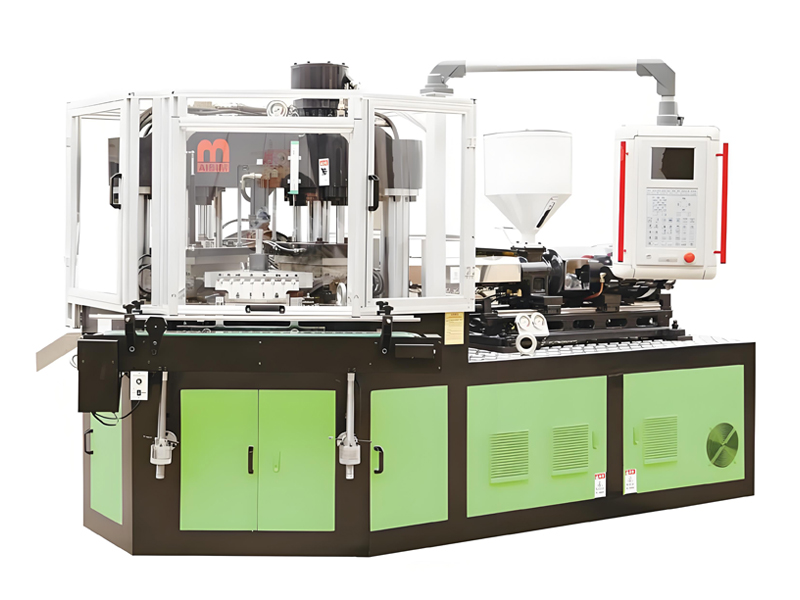
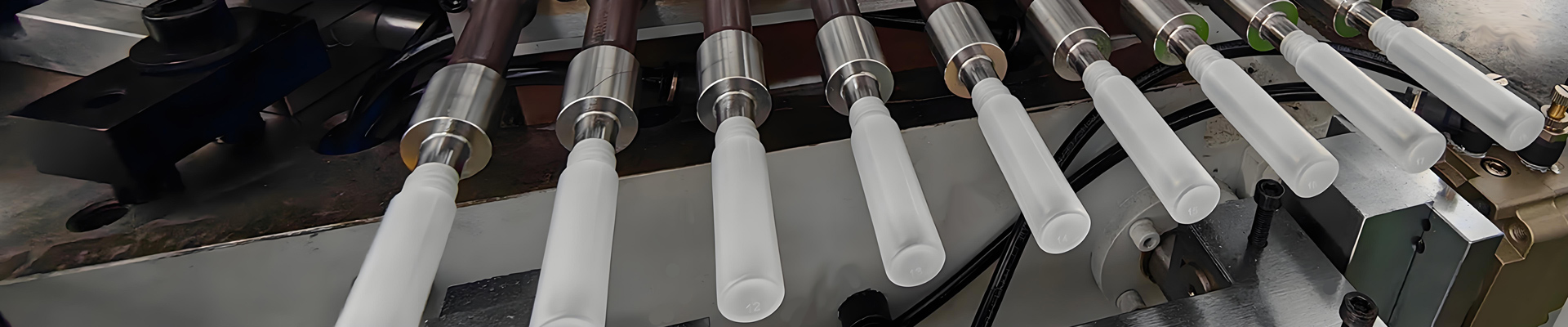
Importing a used injection blow molding (IBM) machine from China can look like a fast route to bottle production at a fraction of the cost of a new line. For pharmaceutical vials, cosmetic jars, and other small-precision containers, a second-hand IBM press is attractive because the three-station, one-step process already delivers flash-free necks, consistent bottle weight, and tight dimensional control. The real difficulty is not the purchase price. It is the layered web of destination regulations, the hidden technical condition of an aging machine, and the due diligence required to avoid buying a non-compliant or non-productive asset. This guide walks through the global compliance map, the residual-value assessment, the technical risk checklist, and a repeatable inspection workflow so that procurement and engineering teams can decide with confidence.
Why Buyers Consider a Used IBM Machine
The injection blow molding process produces bottles without a scrap tail or flash, which is why it dominates pharmaceutical and high-cosmetic-quality small containers. A used IBM machine appeals to a clear set of buyer profiles, each with a different motivation and a different tolerance for risk. Understanding which profile you fit determines how much compliance and retrofit work you should expect.
The Start-Up Bottler
A new bottling operation with limited capital often views a used IBM machine as the lowest barrier to entry. The motivation is simple: produce a first commercial batch, validate the market, and defer a large capital outlay. The risk is that a start-up usually has the least in-house engineering capability to handle obsolescence, rewiring, or safety upgrades, so the apparent saving can evaporate in unforeseen integration work.
The Capacity-Expansion Transition Buyer
An established bottle maker may need extra capacity while waiting for a new machine to be built. A used IBM machine becomes a bridge asset. Here the buyer usually has strong engineering support, spare parts, and matching molds, so the transaction risk is moderate. The machine is often a temporary addition rather than a permanent fixture.
The Legacy-Bottle-Shape Continuation Buyer
Some bottle designs were tooled years ago and the original mold set only fits a specific machine generation. When the sole machine breaks beyond economic repair, the buyer hunts for the same model on the second-hand market to keep a long-running product alive. This is one of the most defensible reasons to buy used, provided the replacement is mechanically sound.
The Backup-Machine Buyer
High-volume pharmaceutical and cosmetic lines cannot tolerate downtime. A backup IBM machine sitting in the warehouse protects against a single point of failure. For this buyer, the machine may run only a few hundred hours per year, so absolute energy efficiency matters less than availability and spare-parts interchangeability.
New Versus Used: The Trade-off Dimensions
When evaluating a used IBM machine against a new one, compare on dimensions that are independent of sticker price. Lead time is usually the strongest argument for used equipment: a new machine can carry a long wait, while a used machine may be available immediately. Availability of spare parts is the strongest argument against used equipment, especially when the original control platform is discontinued. Energy consumption favors new all-electric or hybrid designs; a hydraulic used machine typically draws more power per bottle. Control-system capability favors new machines with modern recipe management and data acquisition. Compliance is the decisive factor for regulated applications, because a used machine rarely arrives with a current, complete technical file.
Cost should never be the first variable. For a used IBM machine, the first variables are compliance eligibility, control-system survivability, and spare-parts availability. Price is only the fourth consideration.
Relative cost posture across these dimensions, expressed without currency, can be summarized as: new-machine procurement cost is High to Premium, used-machine procurement cost is Low to Medium, used-machine hidden integration cost is Medium to Very High, new-machine lead time is Medium to High, used-machine lead time is Low, new-machine compliance readiness is High, and used-machine compliance readiness is Low to Medium until proven otherwise.
Global Import Regulation Map for Used IBM Machines
Every destination market treats a used IBM machine differently. The single most important concept is whether the market considers a used import a “first placing on the market.” Many jurisdictions do, which means the importer inherits the full conformity and safety obligations as if the machine were brand new. The summaries below describe requirements only; they do not state any fees, duties, or monetary thresholds.
European Union
The EU framework is built on the Machinery Directive 2006/42/EC, which is transitioning to the Machinery Regulation (EU) 2023/1230. A used IBM machine entering the EU and placed on the market or put into service for the first time is generally treated as a first placing on the market, triggering the need for CE conformity assessment. The responsible economic operator must ensure the machine meets the essential health and safety requirements, prepare or refresh the technical file, and issue a declaration of conformity. Supporting legislation includes the EMC Directive 2014/30/EU and the Low Voltage Directive 2014/35/EU for the electrical scope. Relevant harmonized standards are EN ISO 12100 for risk assessment, EN 60204-1 for electrical safety of machinery, and the EN 415 series for packaging-machine safety. A used machine that left the factory before current standards may need upgrading to meet them.
United States
The United States has no single mandatory type-certification scheme for industrial machinery at the federal level. Instead, the machine must be safe to operate under OSHA 29 CFR 1910.212, which governs general machine guarding. The electrical design is expected to follow NFPA 79, the electrical standard for industrial machinery, and control panels are commonly built to UL 508A. Blow molding machines are addressed by ANSI B151.15, while injection molding machines are addressed by ANSI B151.1; because an IBM machine combines both functions, both safety philosophies are relevant. Beyond federal rules, state-level requirements and the buyer’s insurance carrier, sometimes referencing FM Global or similar property-loss prevention guidance, can impose additional guarding, interlock, and electrical inspections before the machine is allowed to run.
Canada
Canada expects industrial machinery to meet recognized safety certification, typically CSA, or to undergo a “special inspection” route under the SPE-1000 framework when a standard certification mark is not present. A used IBM machine without a current certification will usually require a field evaluation or special inspection by an accredited body before it can be energized, and provincial occupational-health-and-safety regulations add workplace guarding obligations.
Brazil
Brazil applies INMETRO certification requirements and the NR-12 machinery-safety regulation, which is notably strict for used and imported machinery. A used IBM machine typically requires a local engineer’s ART report, the Anotação de Responsabilidade Técnica, confirming the safety adaptation and compliance work. Importers should expect a detailed technical dossier and on-site verification.
India
India regulates used-machinery imports through DGFT许可 requirements and commonly requires a Chartered Engineer Certificate that assesses residual value and remaining useful life. Electrical safety and environmental considerations apply, and depending on the product contact scope, additional documentation may be needed. The chartered engineer’s report is the central document used by customs and the importer to justify the transaction.
Indonesia, Vietnam, and Thailand
Several Southeast Asian markets restrict the age of imported used machinery, often applying ceilings in the range of ten to twenty years, and require pre-shipment inspection (PSI) together with a surveyor report. The exact age limit and inspection scope vary by country and by commodity code, so the current rule must be confirmed with the destination authority before purchase.
Middle East, Russia and EAEU, and Africa
Saudi Arabia requires SASO conformity, increasingly handled through the SABER platform, while the United Arab Emirates uses ECAS. The Eurasian Economic Union, covering Russia and partner states, applies TR CU 010/2011, the technical regulation on machinery safety. In Africa, Nigeria uses SONCAP and Kenya uses PVoC, both requiring conformity assessment and inspection before shipment or on arrival. Each of these routes produces a certificate that customs uses to clear the machine.
China Export Side
From the Chinese supply side, the export of a used IBM machine typically involves commodity inspection, pre-shipment inspection, customs declaration, and a certificate of origin. The machine is normally classified under HS 8477.30, the heading that covers blow molding machines. The seller’s export documents and the buyer’s import documents must align on model, year, serial number, and declared condition.
The following table consolidates the major markets, the governing requirement, the typical restriction on used machines, and the documents an importer should prepare.
| Market / Region | Core Requirement for Used IBM Machine | Typical Used-Machine Restriction | Key Documents to Prepare |
|---|---|---|---|
| European Union | Machinery Directive 2006/42/EC transitioning to Machinery Regulation (EU) 2023/1230; CE conformity, EMC 2014/30/EU, Low Voltage 2014/35/EU; EN ISO 12100, EN 60204-1, EN 415 | Treated as first placing on the market; full technical file and CE marking required | Technical file, declaration of conformity, risk assessment, electrical schematics, EMC evidence |
| United States | OSHA 29 CFR 1910.212 guarding; NFPA 79; UL 508A panels; ANSI B151.15 and ANSI B151.1 | No federal type certification; insurer and state inspections apply | Machine guarding review, electrical panel documentation, safety interlock description |
| Canada | CSA certification or special inspection under SPE-1000 | Field evaluation or special inspection if no certification mark | Special inspection report, electrical conformance file, provincial OH&S declaration |
| Brazil | INMETRO and NR-12 machinery safety | Strict for used machines; local engineer ART report mandatory | ART report, NR-12 adaptation dossier, INMETRO conformity evidence |
| India | DGFT许可 for used machinery; chartered engineer assessment; electrical safety | Chartered Engineer Certificate required for valuation and life | Chartered Engineer Certificate, DGFT permit, electrical safety declaration |
| Indonesia / Vietnam / Thailand | Pre-shipment inspection (PSI) and surveyor report | Machine-age ceiling commonly ten to twenty years | Surveyor report, pre-shipment inspection certificate, age declaration |
| Saudi / UAE | SASO through SABER; ECAS | Conformity certificate before clearance | SABER or ECAS certificate, technical specification sheet |
| Russia / EAEU | TR CU 010/2011 machinery safety | EAC conformity required | EAC certificate, safety justification, technical passport |
| Nigeria / Kenya | SONCAP; PVoC | Conformity assessment before shipment or arrival | SONCAP or PVoC certificate, inspection report |
| China (export side) | Commodity inspection, pre-shipment inspection, customs declaration, certificate of origin | HS 8477.30 classification for blow molding machines | Commercial invoice, packing list, certificate of origin, export declaration |
Machine Age Limits and Pre-Shipment Inspection Requirements
Age limits and pre-shipment inspection are the two mechanisms that most directly block or delay a used IBM machine import. They are distinct: an age limit is a hard eligibility rule, while a pre-shipment inspection is a verification step that confirms the machine’s declared condition, safety, and productivity before it leaves the origin country.
Why Age Limits Exist
Destinations impose age ceilings because older machinery tends to carry obsolete controls, degraded safety systems, and unknown wear. A ceiling of ten to twenty years, applied in several Asian markets, is a crude filter that removes the highest-risk assets. Importers should treat any machine near or beyond such a ceiling as ineligible unless a specific exemption or a chartered-engineer exception applies.
The Role of Pre-Shipment Inspection
Pre-shipment inspection, often performed by an independent surveyor, checks the machine against the commercial description, verifies the manufacturing year and serial number, confirms basic safety features, and sometimes witnesses a short running test. The resulting surveyor report becomes part of the customs and conformity file. For the buyer, a PSI witnessed by a trusted third party is valuable evidence, but it is not a substitute for a full technical due diligence, because a short visual check cannot reveal hidden control-system obsolescence or partial wear.
Coordinating the Inspection With the Export Declaration
The Chinese export side also relies on inspection and declaration. The declared manufacturing year, model, and condition on the export documents must match the surveyor findings and the machine nameplate. Any mismatch between the export declaration and the destination inspection can trigger a hold, a re-assessment, or a rejection. Buyers should insist that the seller’s export paperwork and the surveyor report describe the same serial number, year, and configuration.
An age limit is a gate; pre-shipment inspection is a checkpoint. Both must be cleared, and both depend on the machine’s nameplate and export documents being consistent with reality.
Assessing Machine Age and Residual Value
The single most abused number in a used-machine transaction is the “running hours.” Sellers sometimes report calendar age or a rough estimate. A rigorous buyer rebuilds the true usage picture from independent, tamper-resistant sources and then estimates the remaining life of the parts that actually wear.
Reading True Running Hours
Three sources should be cross-checked. First, the PLC total power-on time records how long the controller has been energized. Second, the servo motor operating-hour log records actual axis run time, which is closer to mechanical wear than mere power-on time. Third, the production counter or cycle counter shows how many bottles or cycles the machine has completed. A consistent story across these three logs is a positive signal. A mismatch, such as low logged hours but heavily worn screws, is a red flag that the logs were reset or the machine was run with the counters disabled.
Overhaul and Maintenance Records
Ask for the full maintenance history: which components were replaced, when, and by whom. A machine with documented hydraulic overhauls, screw-and-barrel refurbishment, and periodic servo-valve servicing is worth more than a machine with only oil changes. The absence of records does not prove poor care, but it shifts the risk entirely onto the buyer and justifies a deeper physical inspection and a lower valuation.
Remaining Life of Key Components
The components that drive residual value on an IBM machine are the clamping mechanism, the injection screw and barrel, the servo valves, the heater bands or cartridge heaters, and the mold set. The clamping mechanism, whether toggle or hydraulic, experiences fatigue in links and bushings; platen parallelism and tie-bar stretch are the measurable symptoms. The injection screw and barrel wear changes plasticizing stability and shot-weight consistency. Servo valves drift and leak internally, hurting repeatability. Heater bands age and develop hot spots. The mold set, especially the core rod and blow cavity, defines bottle quality and is expensive to rework.
Quantitative Judgement Thresholds
Residual value is best expressed in percentages of remaining useful life rather than currency. A machine with less than twenty percent remaining life on the injection screw, or with platen repeatability worse than the ±0.05 mm band expected of a healthy IBM press, should be valued as a rebuild candidate rather than a ready-to-run asset. Bottle-weight variation, measured as the coefficient of variation across a production sample, should sit well below a few percent for a capable machine; a higher spread indicates drifting process control.
| Component | What Healthy Looks Like | Remaining-Life Estimate Method | Rebuild vs Replace Signal |
|---|---|---|---|
| Injection screw and barrel | Stable plasticizing, consistent shot weight | Wear measured by screw-barrel clearance check versus new spec | Clearance beyond spec: rebuild or replace |
| Clamping mechanism | Parallel platens, no tie-bar stretch | Parallelism and repeatability measurement | Repeatability worse than ±0.05 mm: rework |
| Servo valves | Stable velocity and pressure | Drift and internal-leakage test under load | Excessive drift: rebuild or replace |
| Heater bands | Uniform temperature, no hot spots | Zone temperature spread under setpoint | Wide spread: replace bands and sensors |
| Mold set (core rod, blow cavity) | Clean neck finish, no flash, good surface | Visual and dimensional check of sample bottles | Worn cavity: refurbish or new mold |
Technical Risk Checklist for Second-Hand IBM Machines
The technical risks of a used IBM machine are predictable. Most failures at commissioning trace back to one of the items below. Addressing each before purchase turns an unknown asset into a quantified one.
Control-System Obsolescence
The most common and most dangerous risk is a discontinued control platform. An older PLC family, an obsolete HMI panel, or an end-of-life servo drive can leave the buyer with no spare parts. When a single I/O module fails and none is available, the machine is idle until a donor board is found or the entire control system is replaced. Buyers should identify the exact PLC, HMI, and drive models and confirm whether the OEM or aftermarket still supports them.
Servo-Drive Retirement
Even when the PLC is current, the servo drives and motors may be discontinued. Matching replacement servo motors require the correct feedback type, winding, and mechanical interface. A retired servo platform forces either a full drive-train modernization or a search for refurbished units of unknown history.
Voltage and Frequency Mismatch
Chinese IBM machines are commonly built for 380 V at 50 Hz. Many destinations use 480 V or 208/240 V at 60 Hz, and some use 415 V at 50 Hz. A mismatch requires a transformer, a motor rewind or replacement, and verification of heaters, contactors, and cooling fans rated for the new frequency. A 60 Hz supply driving a 50 Hz-designed cooling fan or pump can over-speed and fail. This is a Medium to High effort item that is easy to overlook in a purchase order.
Missing Safety Guarding and Light Curtains
A used IBM machine may have had its safety light curtain removed, its interlocked guards defeated, or its stripper-station sensor disabled. Modern standards expect a guarded clamping area, an interlocked access door, and a presence-sensing device at the ejection station. Without these, the machine cannot be commissioned legally in most regulated markets.
Missing CE Technical File and Electrical Schematics
The CE technical file includes the risk assessment, the declaration of conformity, the electrical schematics, the hydraulic diagrams, and the operation manual. A used machine frequently arrives with none of these, or with a generic manual that does not match the actual build. Recreating a technical file from scratch is a Medium to High effort task and may require an on-site survey by a qualified engineer.
Mold and Machine Mismatch
An IBM machine is defined by its mold interface: core-rod pitch, blow-station platen dimensions, and transfer-station geometry. A mold set from a different builder or a different generation may not fit without rework. Buyers should confirm the mold station dimensions and the core-rod specification against the machine before assuming the existing tooling is usable.
Hydraulic and Mechanical Degradation
Cylinder leakage, degraded seals, platen deformation, and tie-bar stretch all reduce repeatability and increase scrap. Oil contamination from worn pumps accelerates further wear. A used hydraulic IBM machine should have its oil sampled and its cylinders pressure-tested before acceptance.
Precision Decay
The defining advantage of IBM is precision. A healthy machine holds repeatability around ±0.05 mm and produces bottles with low weight variation. Precision decay shows up as drifting bottle weight, inconsistent neck finish, and rising scrap. If the measured repeatability is outside the expected band, the machine needs rework before it can serve a pharmaceutical or cosmetic application.
Obsolescence is the silent killer of used-machine projects. A machine that runs perfectly in the seller’s video can become a permanent paperweight the day a discontinued servo drive fails and no spare exists.
Used IBM Machine Inspection Checklist
A structured inspection checklist converts the risk list into a pass-or-fail table. The thresholds below use reject criteria rather than currency, so they apply in any market. Use this table during the on-site or video inspection and record the actual finding for each line.
| Subsystem | Inspection Item | Reject Threshold (Do Not Accept As-Is) |
|---|---|---|
| Identification | Nameplate serial, year, voltage, frequency | Mismatched or missing nameplate versus export documents |
| Control system | PLC, HMI, servo drive model and support status | Any discontinued platform with no spare supply |
| Running hours | PLC, servo log, production counter agreement | Logs disagree with visible wear by a wide margin |
| Clamping | Platen parallelism and repeatability | Repeatability worse than ±0.05 mm |
| Injection unit | Screw-barrel clearance, plasticizing stability | Clearance beyond new-machine specification |
| Safety | Light curtain, interlocks, guarded access | Any missing or defeated safety device |
| Electrical | Schematics, panel build, grounding | No electrical schematics or non-compliant panel |
| Hydraulic | Cylinder leakage, oil cleanliness | Visible leakage or heavily contaminated oil |
| Heaters | Zone temperature uniformity | Wide spread indicating failed bands or sensors |
| Mold interface | Core-rod pitch, station dimensions | Mold does not fit machine interface |
| Product quality | Bottle weight CV, neck finish, flash | Weight CV above a few percent or visible flash |
| Documents | Manual, schematics, program backup, CE file | No program backup or no operation manual |
A Practical Due Diligence Process
Due diligence for a used IBM machine should be staged so that the buyer spends money on travel and third-party fees only after cheaper remote steps have passed. The process below is a repeatable sequence used by experienced importers.
Step 1: Remote Video Verification
Begin with a live video walkaround. Ask the seller to show the nameplate, the control cabinet, the clamping area, the safety devices, and a short unedited running cycle. Request screen shares of the PLC diagnostics showing total power-on time and the servo hour log. This step costs almost nothing and eliminates obviously misrepresented machines early.
Step 2: On-Site Powered Test
If the remote step passes, send an engineer or hire a local inspector for a powered test. Run the machine empty for a short period to check motion, alarms, and guarding, then run a production trial with the mold installed for thirty to one hundred twenty minutes. A trial shorter than thirty minutes hides warm-up drift; a trial near two hours reveals thermal stability and consistency.
Step 3: Critical Dimensions and Bottle-Weight CV Test
During the trial, sample bottles at intervals and measure critical dimensions such as neck finish, body diameter, and height. Weigh a statistical sample and compute the coefficient of variation. A low CV and tight dimensions confirm process control; a drifting CV confirms decay. Record the actual values against the ±0.05 mm repeatability expectation for the mechanism.
Step 4: Electrical and Safety Review
Open the control cabinet and verify the panel build against NFPA 79 or EN 60204-1 expectations as relevant to the destination. Confirm grounding, protective devices, and cable condition. Verify that safety light curtains, interlocks, and the stripper-station sensor are present and functional. Photograph every anomaly.
Step 5: Spare-Parts and Document Reconciliation
Check the spare-parts inventory against the machine configuration and confirm the document set: operation manual, electrical schematics, hydraulic diagrams, PLC and HMI program backup, maintenance records, and any original declaration of conformity or CE technical file. A missing program backup is a serious gap because it prevents disaster recovery.
Step 6: Independent Third-Party Surveyor
For higher-value transactions, engage an independent surveyor such as a global inspection organization to witness the test and issue a condition report. The surveyor’s findings support the destination pre-shipment inspection, the chartered-engineer assessment where required, and the buyer’s internal acceptance decision. The surveyor acts as an impartial check on both seller claims and the buyer’s own inspector.
Never skip the production trial. A used IBM machine can look perfect at idle and reveal drifting weight, rising scrap, or overheating within the first hour of continuous running.
Retrofit and Modernization Path
Many used IBM machines are bought not as ready-to-run assets but as platforms for modernization. A planned retrofit converts an obsolete, non-compliant machine into a productive, conformant one. The work falls into four common packages, each with a relative cost and downtime profile.
Safety Upgrade Package
The safety package adds or restores light curtains, interlocked guards, emergency stops, and a stripper-station presence sensor, then documents the risk assessment to the relevant standard such as EN ISO 12100. Relative cost is Low to Medium. Downtime is Low because much of the work is additive and can be done alongside commissioning.
Control-System Replacement
Replacing the PLC, HMI, and possibly the servo drives brings the machine onto a supported platform with recipe management and data acquisition. Relative cost is High to Very High. Downtime is Medium to High because it requires rewiring, parameter tuning, and re-validation of the process. This is the single largest retrofit expense for an obsolete machine.
Servo Energy-Saving Retrofit
Converting a hydraulic power unit to a servo-driven pump, similar in philosophy to the PREFILL and variable-displacement-pump concepts used on newer IBM designs, reduces energy consumption. Relative cost is Medium to High. Downtime is Medium. The payback is strongest on machines that run long hours, which is the opposite of a backup machine.
Take-Out Robot and Automation Add-On
Adding a take-out robot or conveyor integration improves handling and reduces labor. Relative cost is Medium. Downtime is Low to Medium. This is often added when the used machine becomes a permanent production asset rather than a bridge or backup.
When the summed retrofit cost and downtime approach the profile of a new machine, the decision should flip to new. A new IBM machine from a current builder such as Aibim, a Wanplas factory, arrives CE-ready, with a supported control system, energy-efficient hydraulics, and a complete technical file, eliminating most of the hidden work described above.
| Dimension | Used IBM Machine | New IBM Machine |
|---|---|---|
| Procurement cost | Low to Medium | High to Premium |
| Lead time | Low (often immediate) | Medium to High |
| Spare-parts availability | Low to Medium, uncertain if obsolete | High, OEM-supported |
| Energy consumption | Medium to High | Low (all-electric or hybrid) |
| Control system | Unknown, possibly discontinued | Current, supported, connected |
| Compliance readiness | Low to Medium until upgraded | High, with technical file |
| Precision / repeatability | Variable, must be verified | Consistent, factory-validated |
| Hidden integration cost | Medium to Very High | Low |
| Best fit | Backup, bridge, legacy shape | Regulated, high-volume, long-life |
Used Versus New IBM Machine: Multi-Dimension Comparison
The comparison table above frames the trade-off in relative terms. The decision ultimately depends on application criticality. A pharmaceutical vial line under regulatory oversight should default to new because compliance readiness and validated process control are non-negotiable. A cosmetic jar for a short promotional run may justify used if the mold fits and the machine passes inspection. A backup machine for an existing line is a reasonable used purchase because it runs rarely and shares spares with the primary line.
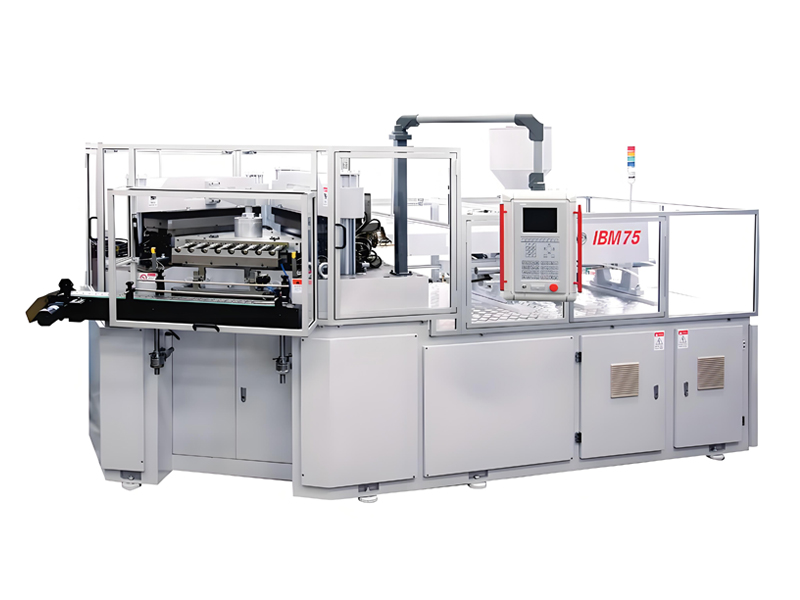
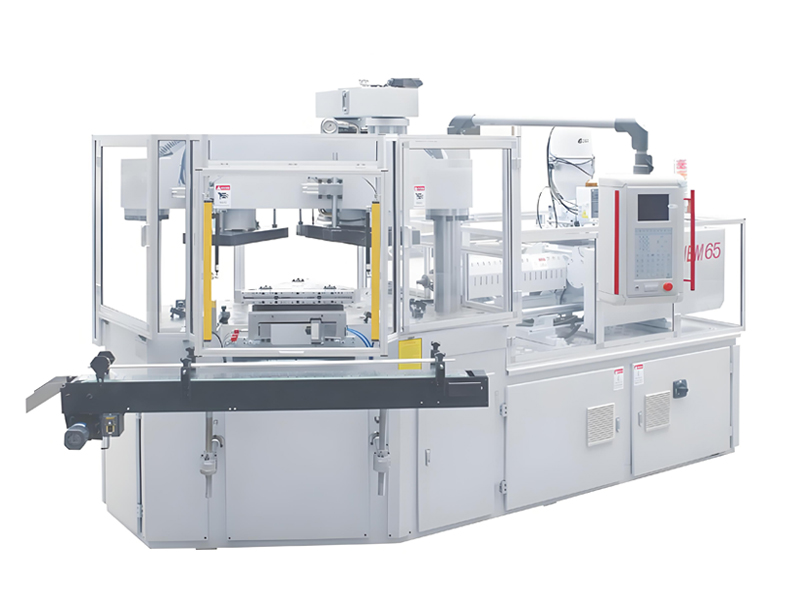
The Wanplas brand, with its network of specialized factories, offers a useful reference point here. Aibim, a Wanplas factory focused on injection blow molding, builds the IBM75, IBM65, and IBM55 Hybrid series covering containers from a few milliliters up to one liter, serving pharmaceutical, food, drink, and cosmetic applications. For buyers who want the used-machine price but the new-machine certainty, Wanplas’s YuDa factory covers PET stretch blow molding needs and Wanplas’s Apollo factory covers extrusion blow molding, so a group discussion can match the right process and machine age to the product.
Risk Matrix and Decision Guidance
The final tool is a risk matrix that pairs the likelihood of each risk with its impact and a concrete mitigation. Use it to decide whether to proceed, to renegotiate, or to walk away.
| Risk | Probability | Impact | Mitigation |
|---|---|---|---|
| Control-system obsolescence, no spares | Medium to High on old machines | Very High (line stoppage) | Confirm model support; budget control replacement; walk away if discontinued |
| Voltage or frequency mismatch | High for cross-region import | Medium | Specify transformer, motor check, frequency-rated auxiliaries |
| Missing safety devices | Medium | High (illegal to run) | Safety upgrade package; risk assessment to EN ISO 12100 |
| No CE technical file or schematics | Medium to High | Medium to High | Recreate file via qualified engineer; include in price |
| Hidden wear, overstated hours | Medium | High | Cross-check logs; production trial; third-party surveyor |
| Mold incompatible with machine | Low to Medium | Medium | Verify core-rod pitch and station dimensions before purchase |
| Destination age limit exceeded | Low to Medium by market | Very High (rejected) | Confirm current age rule; obtain surveyor age declaration |
| Customs hold from document mismatch | Low to Medium | Medium to High | Align export docs, nameplate, and surveyor report |
When Used Is the Right Call
Choose used when the machine is for backup capacity, a bridge during new-machine lead time, a legacy bottle shape with matching tooling, or a short-life promotional product; when the control platform is still supported; when safety devices are present or cheaply added; and when the summed retrofit cost stays well below a new machine.
When New Is the Right Call
Choose new when the application is regulated, when the control system is discontinued, when safety guarding is missing, when the required retrofit and downtime approach a new machine, or when long-term, high-volume production demands validated precision and OEM spare-part support. For these cases, engaging a current builder such as Aibim, a Wanplas factory, removes the compliance and obsolescence burden entirely.
Frequently Asked Questions
Does a used IBM machine need CE marking to be imported into the European Union?
Yes. When a used IBM machine is brought into the EU and placed on the market or put into service for the first time there, it is treated as a first placing on the market. The importer or installer must ensure conformity with the applicable Machinery legislation, prepare or update the technical file, and affix CE marking supported by a declaration of conformity.
How can I verify the real running hours of a second-hand IBM machine?
Cross-check three independent sources: the PLC total power-on time, the servo motor operating-hour log, and the production counter or cycle counter. Compare these against maintenance records and the physical condition of wear parts such as the injection screw, barrel, clamping toggle and tie bars. Large mismatches between logged hours and visible wear are a strong warning sign.
What is the most common technical risk with older IBM control systems?
Obsolescence. PLCs, HMIs and servo drives from discontinued product families often have no spare parts, so a single fault can stop production indefinitely. Voltage and frequency mismatch, missing electrical schematics, absent safety light curtains and missing CE technical files are also frequent issues on used machines.
Are there machine-age limits when importing a used IBM machine?
Several markets impose age ceilings or require pre-shipment inspection. Some Southeast Asian markets apply limits in the range of ten to twenty years, while others rely on a surveyor report and a chartered engineer certificate. Always confirm the current rule with the destination authority before committing.
Should I always choose a new IBM machine over a used one?
Not always. A used IBM machine can be justified for backup capacity, a short-life product, a legacy bottle shape, or a transitional capacity boost when new-machine lead time is unacceptable. It becomes risky when the application is regulated, the control system is obsolete, safety guarding is missing, or the required retrofit cost approaches the cost of a new machine.
What documents should I request from the seller of a used IBM machine?
Request the original operation manual, complete electrical schematics, hydraulic diagrams, the PLC and HMI program backup, spare-parts list, maintenance and overhaul records, the original declaration of conformity or CE technical file if available, and photographs of nameplates showing voltage, frequency, manufacturing year and serial number.
Conclusion
Importing a used injection blow molding machine from China is a legitimate strategy for the right buyer and the right application, but it succeeds only when compliance, condition, and cost are evaluated in that order. Start with the destination regulation map: confirm whether the market treats the import as a first placing on the market, whether an age limit applies, and which certificate or inspection the customs authority requires. Then assess the machine’s true running hours and residual component life, using independent logs and physical thresholds rather than the seller’s word. Run a staged due diligence from remote video to an on-site production trial, and engage an independent surveyor for higher-value deals. Finally, price the unavoidable retrofit work, especially safety upgrades and any control-system replacement, and compare that total against a new, compliant, supported machine.
For buyers whose application is regulated, high-volume, or long-life, a new IBM machine from a current builder such as Aibim, a Wanplas factory, is usually the lower-risk path because it arrives with a supported control system, energy-efficient hydraulics, complete documentation, and conformity readiness. For backup, bridge, or legacy-shape needs, a carefully inspected used machine can deliver strong value. The difference between the two outcomes is the discipline of the process described above.