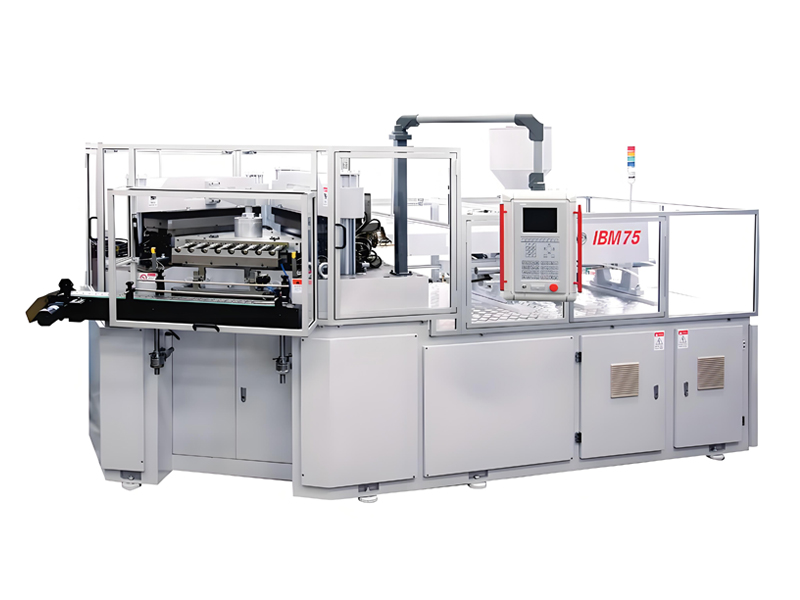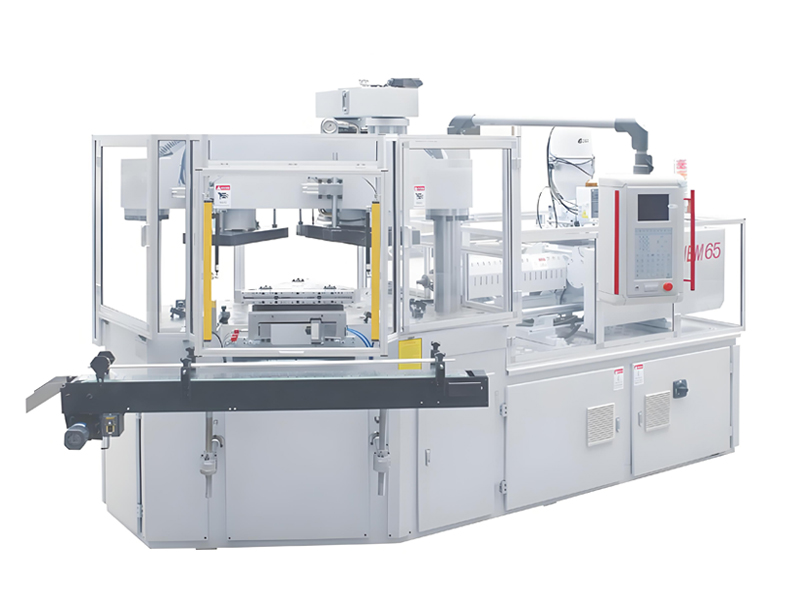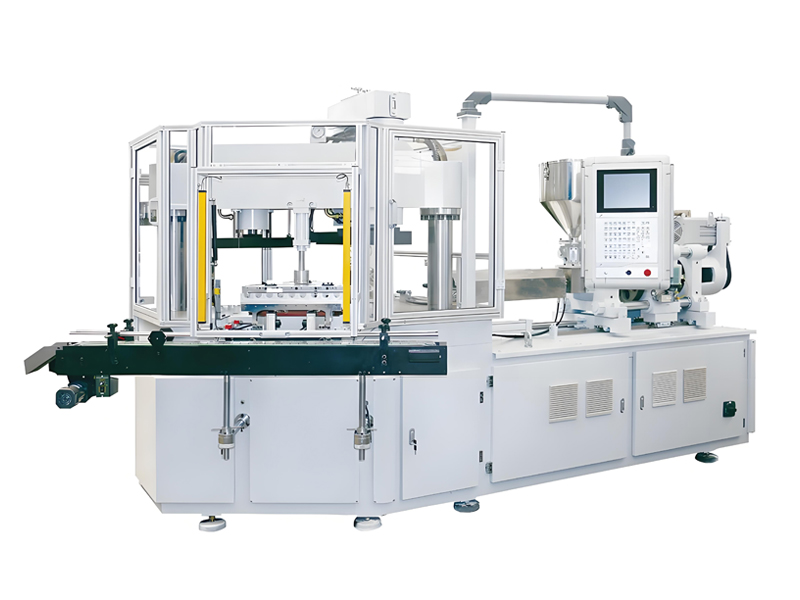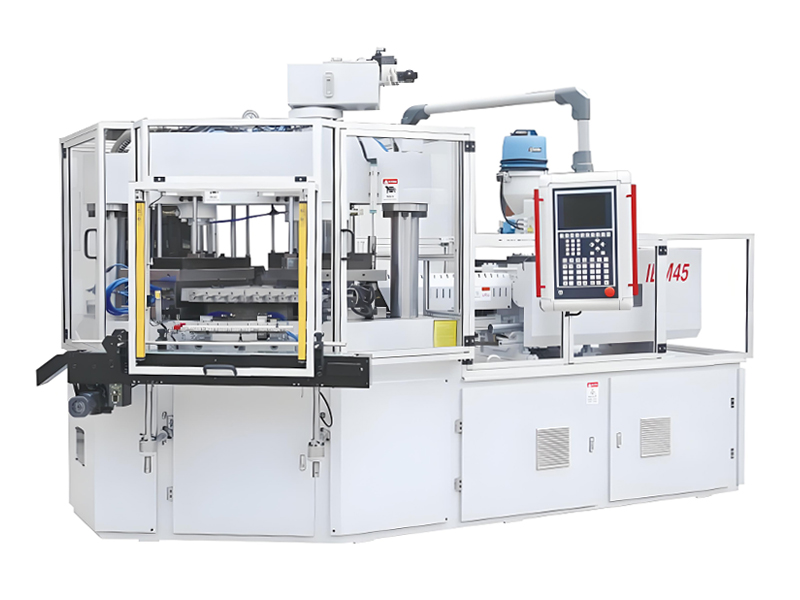
As the global packaging industry continues to pursue higher product precision, cleaner appearance and lower production loss, injection blow molding technology has become the preferred solution for high-end hollow packaging products due to its unique molding advantages. Different from traditional extrusion blow molding processes, injection blow molding first produces a precise preform through injection molding, then transfers the preform to a blow mold for inflation and shaping. This process can achieve extremely high wall thickness uniformity, accurate weight control and seamless mouth finish, and almost no secondary trimming is required after molding. For industries with strict quality requirements such as pharmaceuticals, food, high-end cosmetics and precision chemical packaging, injection blow molding equipment has become an indispensable core production asset. Among many medium-sized injection blow molding equipment, the IBM75 model has become a widely recognized star product in the industry due to its balanced performance, wide applicability and excellent cost performance.
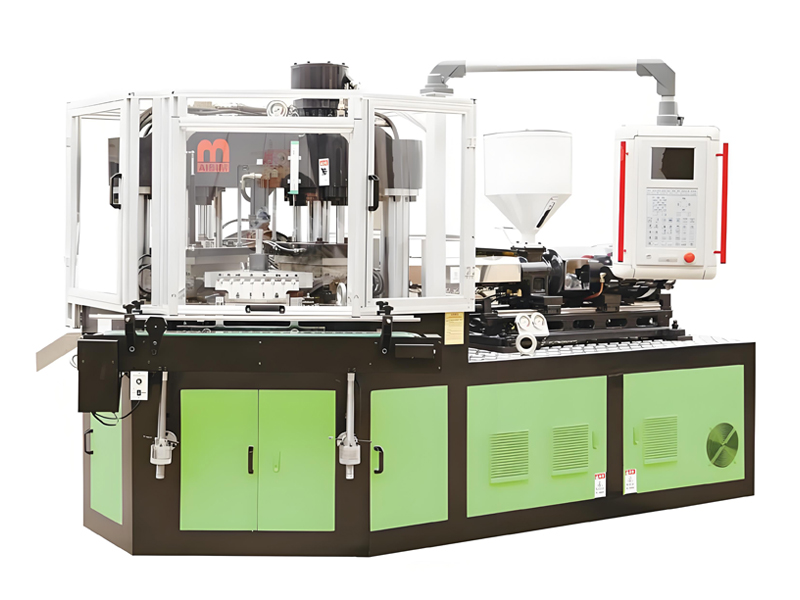
The IBM75 injection blow molding machine is a classic three-station rotary injection blow molding equipment, which is positioned to meet the production needs of small and medium batch precision hollow products ranging from 5ml to 1000ml. It not only retains the high precision advantage of injection blow molding process, but also takes into account production efficiency and floor space, and is very suitable for growing packaging enterprises and supporting production workshops of daily chemical and pharmaceutical enterprises. For buyers who are preparing to purchase injection blow molding equipment, fully understanding the technical specifications, production capacity, configuration options and investment return of the IBM75 model is the premise of making a scientific procurement decision. A clear understanding of equipment parameters can help enterprises accurately match their own product process requirements and avoid unnecessary configuration waste or insufficient performance.
As a professional manufacturer focusing on the R&D and manufacturing of injection blow molding equipment, AiBiM has carried out in-depth optimization and upgrading of the IBM75 model based on years of industry experience and global user feedback. The equipment adopts a high-precision rotary indexing system, a servo energy-saving drive system and an intelligent control platform, and its stability, product qualification rate and energy consumption level have reached the advanced level of similar equipment in the industry. This guide will comprehensively and systematically introduce the technical specifications, production capacity performance, applicable materials, configuration options, investment cost analysis and operation and maintenance guidelines of the IBM75 injection blow molding machine in all dimensions, so as to provide a complete decision-making reference for global packaging manufacturers to select and use equipment.
1. Product Overview and Market Positioning of IBM75 Injection Blow Molding Machine
1.1 Core Product Positioning and Design Concept
The IBM75 is a medium-tonnage three-station injection blow molding machine developed by AiBiM for the universal precision packaging market. Its model name comes from its nominal clamping force of 750kN, which is 75 tons. This tonnage design just covers the production demand of most small and medium-sized hollow packaging products on the market, and can balance mold opening force, equipment volume and procurement cost. The equipment adopts the classic three-station rotary working mode, and the three stations of injection molding, blow molding and demolding are carried out synchronously on the rotary table. While one set of molds is injecting the preform, the other set of molds is completing blow molding and demolding actions. This parallel working mode greatly improves the production beat and makes the equipment operation more efficient.
At the beginning of the design, the IBM75 model follows the design concept of high precision, high stability and low energy consumption. In terms of precision, the equipment adopts a high-rigidity clamping structure and a high-precision indexing system to ensure the repeatability of each mold closing and the consistency of product weight. In terms of stability, core hydraulic and electrical components are selected from international well-known brands to reduce the failure rate and extend the service life of the equipment. In terms of energy consumption, the standard configuration of the servo energy-saving system can automatically adjust the power output according to the load demand of different process stages, which greatly reduces the unnecessary energy consumption in the standby and pressure maintaining stages. This design concept makes the IBM75 not only have the precision performance of high-end equipment, but also maintain a reasonable procurement cost, which is very cost-effective for small and medium-sized enterprises.
1.2 Target Application Scenarios and Adaptable Products
The IBM75 injection blow molding machine has a wide range of applications and can cover the production of most small and medium-sized precision hollow products. In the pharmaceutical industry, this equipment can be used to produce oral solid medicine bottles, liquid medicine bottles, eye drop bottles, reagent bottles and other pharmaceutical packaging products. The products produced by injection blow molding have high mouth precision, good sealing performance and uniform wall thickness, which can meet the strict requirements of pharmaceutical packaging for cleanliness, sealing and dosage accuracy, and comply with GMP production standards. In the daily chemical and cosmetic industry, the equipment can produce essence bottles, cream jars, shampoo travel bottles and other high appearance requirements of packaging, the product surface is smooth and smooth, no obvious clamping line, no flash, can directly enter the filling and printing process, eliminating the secondary trimming and polishing process.
In the food packaging industry, the IBM75 can produce spice bottles, jam jars, candy cans and other food contact grade packaging. The products have good barrier performance and stable size, which can match the automatic filling production line. In the field of industrial and chemical packaging, the equipment can produce small reagent bottles, ink bottles, essential oil bottles and other products with high corrosion resistance requirements. In addition, the equipment can also be used to produce hardware accessories, toy hollow parts, automotive small hollow parts and other industrial products. In general, the IBM75 is especially suitable for enterprises that need to produce a variety of small and medium-sized precision products, and can flexibly switch between different orders by replacing molds, helping enterprises expand their business scope and improve market adaptability.
2. Detailed Technical Specifications of IBM75 Injection Blow Molding Machine
2.1 Injection Unit Technical Parameters
The injection unit is responsible for the plasticization and injection of raw materials, and its performance directly determines the plasticizing quality and preform molding accuracy. The IBM75 is equipped with a specially designed plasticizing screw for injection blow molding process, with a screw diameter of 45mm and a length to diameter ratio of 22:1. This long diameter ratio design can ensure that the material is fully sheared and mixed during the conveying process, achieve uniform plasticization and stable melt temperature, and avoid local overheating degradation of the material. The screw is made of high-quality alloy steel, and the surface is treated by nitriding and spraying wear-resistant alloy, which has high hardness and excellent wear resistance and corrosion resistance. It can adapt to the processing of various conventional plastics and engineering plastics, and has a long service life.
The theoretical maximum injection volume of the equipment is 780 cubic centimeters, and the maximum injection weight is about 700 grams when calculated by HDPE material density, which can meet the production of single or multi cavity products within 1000ml total volume. The maximum injection pressure can reach 160MPa, which can provide sufficient injection power to ensure that the melt can fill the mold cavity quickly and evenly, and avoid defects such as insufficient injection and fusion lines. The injection speed can be adjusted steplessly from 0 to 120mm per second, and different injection speed curves can be set according to different materials and product structures to achieve the best preform molding effect. The barrel is divided into 5 independent heating zones, each zone is controlled by an independent PID temperature controller, and the temperature control accuracy can reach ±0.5℃, which ensures the temperature uniformity of the melt in the axial direction and provides a stable melt state for subsequent blow molding.
2.2 Clamping and Rotary Blow Molding Unit Parameters
The clamping unit undertakes the functions of mold closing, locking and blow molding, and its rigidity and precision directly affect the product burr and dimensional accuracy. The nominal clamping force of the IBM75 injection station is 750kN, which can provide sufficient locking force to avoid mold expansion and flash during high-pressure injection. The size of the moving template and the fixed template is 720mm × 620mm, which can accommodate molds of different sizes. The maximum opening stroke of the injection station is 260mm, and the applicable mold thickness ranges from 150mm to 300mm, which can adapt to the production of products of different heights. The blow molding station is equipped with an independent clamping mechanism, and the clamping force can be adjusted steplessly according to the product process requirements to adapt to different blowing pressures.
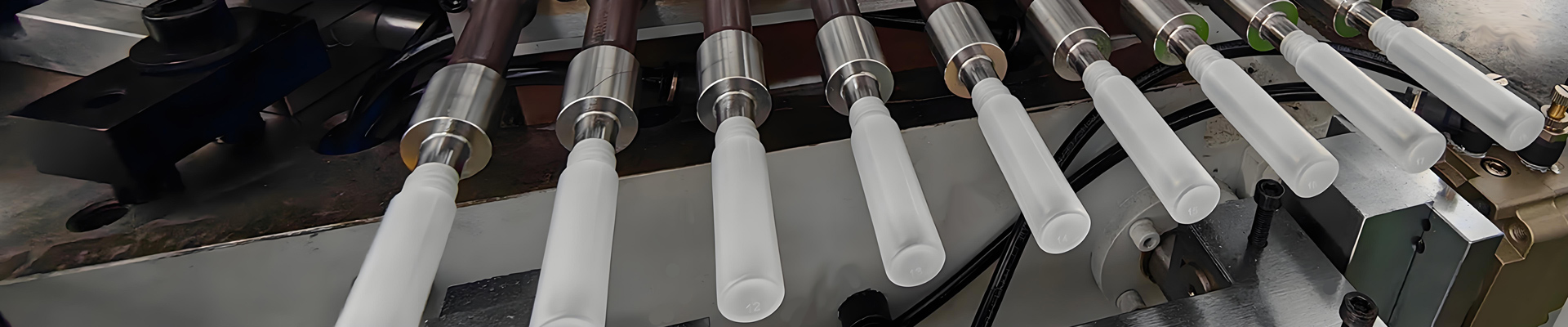
The equipment adopts a horizontal rotary indexing table structure, and the three stations are distributed at an included angle of 120 degrees. The indexing drive adopts a high-precision hydraulic servo indexing mechanism, with accurate indexing position and repeat positioning accuracy up to ±0.02mm, which ensures that the preform mandrel can accurately enter the blow mold every time. The blowing pressure range is 0.4MPa to 1.2MPa, and users can adjust it according to product size and material characteristics. For products with high requirements, an optional low-pressure pre blowing function can be configured to first blow the preform to a preliminary shape at low pressure, and then carry out high-pressure forming, which can improve the wall thickness uniformity and surface finish of the product. The demolding station adopts an automatic demolding mechanism, which can automatically push the product out of the mandrel after the blow molding is completed, and cooperate with the material slide to send the product out of the equipment, so as to avoid manual contact with the product and ensure the cleanliness of the product.
2.3 Drive System and Control System Configuration
The IBM75 standard is equipped with a servo energy-saving hydraulic drive system, which uses a high-performance servo motor to drive the hydraulic pump. Compared with the traditional quantitative pump hydraulic system, it can save 30% to 40% of electric energy. The servo system can quickly adjust the speed and output torque according to the pressure and flow demand of different process stages, with fast response speed and stable pressure output. It not only reduces energy consumption, but also reduces the oil temperature rise caused by throttling loss, extends the service life of hydraulic oil and seals, and reduces the later maintenance cost. The hydraulic valve group adopts an integrated modular design, with compact structure, few external pipelines and low failure rate. The core valve components are selected from international well-known brands, with sensitive action and reliable performance.
The electrical control system adopts a well-known brand PLC controller and a 10-inch color touch screen human-machine interface. The operation interface is intuitive and friendly, and all process parameters can be set and adjusted on the touch screen. The system can store 100 groups of process formulas. When changing products, you only need to call the corresponding formulas, without resetting parameters one by one, which greatly shortens the commissioning time after mold change. The control system has complete fault alarm and self-diagnosis functions. When the equipment is abnormal, it will automatically pop up fault information and prompt solutions, which is convenient for operators to quickly troubleshoot. The optional remote diagnosis module can realize remote online troubleshooting and program upgrading through the network, which greatly shortens the after-sales response time and reduces the downtime loss.
2.4 Overall Dimensions and Utility Requirements
The overall layout of the IBM75 injection blow molding machine is compact and reasonable, and the floor space is much smaller than that of the split injection blow molding production line. The overall dimensions of the main engine are 3800mm in length, 2200mm in width and 2600mm in height. The total weight of the whole machine is about 8500kg. The equipment does not need a special foundation, and can be installed and used on a flat and solid cement ground, which reduces the civil engineering cost in the early stage. When planning the plant, it is necessary to reserve 1 meter of operation and maintenance space on both sides and the front and rear sides of the equipment, so as to facilitate daily operation, mold replacement and maintenance operations.
In terms of public works, the equipment adopts three-phase four-wire power supply with rated voltage of 380V / 50Hz, and can also be customized according to the power supply standards of different countries. The total installed power of the whole machine is 68kW, and the average operating power is about 32kW to 38kW due to the adoption of servo energy-saving system. The cooling water system requires the inlet water temperature to be lower than 25℃, the working pressure to be 0.2MPa to 0.3MPa, and the cooling water flow to be no less than 8 cubic meters per hour. The compressed air system requires the air source pressure to be 0.6MPa to 0.8MPa, which is used for blowing action, pneumatic components and demolding mechanism. In addition, the equipment is equipped with a complete safety protection system, including safety protective doors, safety gratings, emergency stop buttons and overload protection devices, which fully comply with CE safety standards and ensure the safety of operators.
3. Production Capacity and Efficiency Performance Analysis
3.1 Cycle Time and Hourly Output for Different Products
The actual production capacity of the IBM75 injection blow molding machine will vary according to product volume, wall thickness, material type, mold cavity number and cooling conditions. For small pharmaceutical bottles of 5ml to 10ml made of HDPE, 8-cavity molds can be configured. The single cycle time is about 12 to 15 seconds, and the hourly output can reach 1920 to 2400 pieces. This output level can meet the production demand of most small and medium-sized pharmaceutical packaging enterprises, and the product weight consistency is high, which is very suitable for mass production of standardized pharmaceutical bottles. For 30ml to 50ml eye drop bottles and reagent bottles, 6-cavity molds are usually configured, the cycle time is 15 to 18 seconds, and the hourly output is about 1200 to 1440 pieces.
For 100ml to 200ml cosmetic bottles and daily chemical packaging bottles made of PP material, 4-cavity molds can be configured, the single cycle time is 18 to 22 seconds, and the hourly output is about 650 to 800 pieces. For 500ml wide mouth food cans and jam jars made of PETG material, 2-cavity molds are usually configured, the cycle time is 25 to 30 seconds, and the hourly output is about 240 to 288 pieces. For 1000ml large capacity plastic bottles, single cavity molds can be used, the cycle time is 30 to 35 seconds, and the hourly output is about 100 to 120 pieces. It should be noted that the above data are the conventional production level under standard configuration. If cooling measures are optimized or high-speed configuration is adopted, the cycle time can be further shortened and the output can be increased by about 10% to 15%. In actual production, enterprises can configure the number of mold cavities and process parameters according to their own product specifications and order volume to achieve the best production efficiency.
3.2 Product Precision and Yield Rate Advantage
Compared with the traditional extrusion blow molding process, the injection blow molding process represented by IBM75 has obvious advantages in product precision and yield. In terms of dimensional accuracy, the mouth size error of products produced by injection blow molding can be controlled within ±0.05mm, the thread is clear and complete, and the matching degree with the bottle cap is high, which can ensure the sealing performance of the product. The weight deviation of a single product can be controlled within ±0.5%, and the wall thickness uniformity can reach more than 90%, which is far better than the ±5% weight deviation level of extrusion blow molding. High weight consistency means that raw materials can be used more accurately, unnecessary material waste is reduced, and the unit product cost is reduced.
In terms of appearance quality, the injection blow molded product has a smooth surface, no obvious clamping line on the body, no flash and burr at the mouth and bottom, and can directly enter the subsequent printing, filling and assembly processes without secondary trimming and polishing. This not only saves the labor and equipment cost of post-processing, but also avoids the appearance defective rate caused by manual trimming. Under normal production conditions, the first pass yield of IBM75 products can reach more than 99%, which is much higher than the 85% to 90% yield of ordinary extrusion blow molding. For high value-added products such as medicine and cosmetics, the improvement of yield can save a lot of raw material costs and quality inspection costs every year, and the economic benefit is very significant.
3.3 Energy Consumption Level and Unit Production Cost
Thanks to the standard servo energy-saving hydraulic system, the IBM75 has excellent energy consumption performance. Under conventional production conditions, the comprehensive power consumption per hour of the whole machine is about 32 to 38 degrees. Calculated by 20 hours of production per day, the daily power consumption is about 640 to 760 degrees, and the annual power consumption calculated by 300 working days is about 192,000 to 228,000 degrees. Compared with the traditional quantitative pump injection blow molding machine of the same tonnage, it can save about 35% of electric energy, and save about 100,000 degrees of electricity every year. Calculated at the industrial electricity price of 0.1 US dollars per kilowatt hour, it can save about 10,000 US dollars in electricity bills every year.
From the perspective of unit product energy consumption, taking 10ml pharmaceutical bottles as an example, producing 2000 products per hour consumes about 35 degrees of electricity, and the power consumption per 10000 products is about 175 degrees, which is at the leading level among similar equipment. In addition to electricity costs, the savings in raw material losses and labor costs brought about by high yield also further reduce the unit production cost. Comprehensive calculation shows that although the one-time procurement cost of injection blow molding equipment is higher than that of extrusion blow molding equipment of the same output, the comprehensive unit cost is lower when considering the factors of yield, post-processing cost and energy consumption, especially for high value-added precision packaging products, the cost advantage of injection blow molding process is more obvious.
4. Compatible Materials and Industry Application Solutions
4.1 Wide Range of Processable Materials
The IBM75 injection blow molding machine has strong material adaptability and can process most common thermoplastic materials. Polyethylene materials including HDPE and LDPE are the most commonly used materials for injection blow molding, with good processability and excellent chemical corrosion resistance. They are widely used in pharmaceutical packaging, daily chemical packaging and chemical packaging. The equipment is equipped with a special polyethylene screw combination, which has good plasticizing effect and can ensure uniform melt temperature and stable product quality. Polypropylene PP material has the advantages of high temperature resistance, good gloss and high strength. It is often used in food packaging and high-temperature resistant packaging. The IBM75 can be equipped with a PP special screw to solve the problems of easy degradation and poor fluidity of PP material, and achieve stable production.
For the field of high-end transparent packaging, the equipment can process transparent materials such as PETG, PCTG and Tritan. These materials have high transparency, good chemical resistance and no bisphenol A, and are widely used in high-end cosmetics, food containers and medical device packaging. When processing such materials, the equipment can be equipped with a drying feeding system and a low shear screw to ensure the transparency and surface finish of products. In addition, the equipment can also process engineering plastics such as PC, ABS and POM, as well as flexible materials such as TPE and TPR, to meet the production needs of different industrial products. For customers with special material needs, AiBiM can also provide targeted screw optimization and process debugging services to help customers achieve stable production of special materials.
4.2 Targeted Solutions for Different Industries
For the pharmaceutical packaging industry, the IBM75 can provide a GMP compliant production solution. The whole machine is made of stainless steel in the product contact area, which is easy to clean and avoids material residue and cross contamination. The fully enclosed production process reduces manual contact and meets the requirements of pharmaceutical production for cleanliness. The equipment can be equipped with online weight detection and leak detection functions to ensure that each product meets the quality standard, and provides complete verification documents and qualification certificates to help enterprises pass pharmaceutical industry certification. For customers producing eye drops and sterile products, a clean room special model can also be provided to meet the requirements of clean production environment.
For the high-end cosmetics and daily chemical industry, the equipment can achieve high-gloss and traceless product surface, with clear thread and accurate size, which can be directly used for silk screen printing, hot stamping and other post-processing processes. The multi cavity high-efficiency production mode can meet the large-scale demand of cosmetic packaging, and the flexible mold change function can adapt to the characteristics of many styles and fast updating of cosmetic packaging. For the food packaging industry, all parts in contact with raw materials and products of the equipment adopt food contact grade materials, which are non-toxic and odorless, and meet the food safety standards of various countries. Stable product size can be perfectly connected with the automatic filling production line to improve the overall production efficiency of customers.
5. Standard Configuration and Optional Upgrade Solutions
5.1 Standard Configuration Content
The standard configuration of IBM75 injection blow molding machine covers all necessary functions to meet the basic production needs of conventional products. In terms of injection unit, it includes 45mm diameter standard screw, five zone independent temperature control barrel, servo injection mechanism and material hopper. In terms of clamping and rotary system, it includes 75 ton clamping mechanism, three-station rotary indexing table, blow molding station clamping mechanism and automatic demolding mechanism. In terms of drive system, it includes servo energy-saving hydraulic system, integrated valve group, hydraulic oil tank and cooling system. In terms of control system, it includes PLC controller, color touch screen operation interface, process formula storage function, fault self diagnosis function and complete safety protection system.
In addition, the standard configuration also includes a complete set of random tools, a spare parts package for vulnerable parts, an operation manual and a maintenance manual. After the equipment is delivered, it includes on-site installation and commissioning services and basic operation and maintenance training, as well as a 12-month free warranty service. The standard configuration model can meet the production needs of most conventional products, and is suitable for customers with limited budget and single product type. The price of IBM75 standard configuration ranges from 92,000 to 115,000 US dollars. The specific price will fluctuate according to the exchange rate, raw material price and customized requirements.
5.2 Optional Upgrade Modules and Value-Added Services
For customers with higher production requirements, the IBM75 provides a wealth of optional upgrade modules to choose from. In terms of raw material processing, customers can choose to configure a vacuum automatic feeding system and a dehumidification dryer. The automatic feeding system can realize unmanned feeding, reduce manual labor intensity and avoid dust pollution. The dehumidification dryer can fully dry hygroscopic materials such as PETG and PC, avoid product bubbles and silver lines, and improve product transparency. The price of this set of upgrade is about 4,500 to 7,500 US dollars.
In terms of quality testing, an online weight detection and automatic rejection system can be selected. The system can weigh each product online in real time, automatically identify and reject unqualified products whose weight exceeds the standard, ensure 100% qualified delivery rate of products, and save the labor cost of manual quality inspection. The price of this upgrade module is about 8,000 to 12,000 US dollars. In terms of intelligent management, a remote monitoring and diagnosis module can be selected to realize remote viewing of production data, fault early warning and program upgrading, which is convenient for multi equipment centralized management and remote after-sales service. The price of this module is about 2,500 to 4,000 US dollars.
In addition, there are optional configurations such as quick mold change system, automatic product conveying system and special screw for engineering materials. Customers can choose the matching configuration according to their actual needs. If all high-end configurations are selected, the total price of the equipment is about 125,000 to 150,000 US dollars. Although the high configuration model has higher one-time investment, it can bring higher production efficiency, lower labor cost and more stable product quality, and has higher return on investment for long-term mass production enterprises.
6. Investment Cost and Return on Investment Analysis
6.1 Initial Investment Cost Breakdown
The initial investment of purchasing IBM75 injection blow molding machine mainly includes three parts: equipment body cost, supporting auxiliary equipment cost and installation and commissioning cost. Taking the standard configuration model as an example, the equipment body cost is about 92,000 to 115,000 US dollars, accounting for the largest proportion of the total investment. Supporting auxiliary equipment includes cooling water tower, air compressor, material drying equipment, etc. If the customer does not have corresponding public facilities, the supporting investment is about 8,000 to 15,000 US dollars. The installation, commissioning and personnel training costs are usually included in the equipment quotation, and there is no additional charge. The initial mold cost needs to be calculated separately. The price of a set of injection blow mold varies from 8,000 to 25,000 US dollars according to the number of cavities, product complexity and material.
Comprehensive calculation shows that if the standard configuration equipment plus a set of conventional molds and basic supporting facilities are selected, the total initial investment is about 110,000 to 145,000 US dollars. If the high configuration scheme is selected and multiple sets of molds are equipped at the same time, the total initial investment is about 150,000 to 190,000 US dollars. Compared with imported injection blow molding equipment of the same grade, the price of IBM75 is only about 50% to 60% of imported equipment, but the performance can reach more than 85% of imported equipment. It has very obvious cost performance advantage and low investment threshold, which is very suitable for growing small and medium-sized enterprises.
6.2 Annual Operating Cost Estimation
Calculated on the basis of 300 working days per year and 20 hours of production per day, the annual effective production time is 6000 hours. The annual operating cost mainly includes electricity cost, labor cost, maintenance and spare parts cost and raw material loss cost. In terms of electricity cost, the average operating power of the standard configuration equipment is about 35kW, the industrial electricity price is calculated at 0.1 US dollars per kWh, and the annual electricity cost is about 6000 × 35 × 0.1 = 21,000 US dollars. If the servo energy-saving system is not used, the annual electricity cost will reach about 32,000 US dollars. It can be seen that the servo system can save a lot of electricity expenses.
In terms of labor cost, one equipment only needs 2 operators to be responsible for feeding, quality inspection and equipment patrol. Calculated by the annual salary of 6,000 US dollars per person, the annual labor cost is about 12,000 US dollars. If the automatic feeding and online testing system is configured, the number of operators can be reduced and the labor cost can be further saved. In terms of maintenance and spare parts cost, under normal use and standardized maintenance, the annual maintenance cost accounts for about 2% to 3% of the equipment price, about 2,500 to 3,500 US dollars. In terms of raw material loss, due to the high yield of injection blow molding, the loss rate is controlled below 1%. According to the annual processing of 600 tons of raw materials, the annual loss cost is about 8,000 to 12,000 US dollars, which is much lower than the 3% to 5% loss rate of extrusion blow molding.
Comprehensive calculation shows that the annual fixed operating cost excluding raw material procurement is about 43,500 to 48,500 US dollars. This cost level has obvious advantages compared with similar equipment, and can help customers maintain low-cost production and improve product price competitiveness.
6.3 Revenue Projection and Static Payback Period
Taking the production of 100ml PP high-end cosmetic bottles as an example, the equipment is configured with 4 cavities, with an hourly output of 700 pieces and an annual output of about 4.2 million pieces. The gross profit of each product is about 0.03 US dollars, and the annual gross profit is about 126,000 US dollars. After deducting the annual fixed operating cost of about 46,000 US dollars excluding raw materials, the annual net profit is about 80,000 US dollars. Calculated according to the initial investment of 110,000 US dollars for the standard configuration, the static investment payback period is about 16 to 17 months.
If the production is higher value-added pharmaceutical packaging bottles, the profit space will be larger. Taking 10ml HDPE pharmaceutical bottles as an example, the gross profit of each product is about 0.02 US dollars, the hourly output is 2200 pieces, the annual output is about 13.2 million pieces, the annual gross profit is about 264,000 US dollars, and the annual net profit after deducting operating costs is about 215,000 US dollars. The investment payback period can be shortened to about 7 to 8 months. Even under the conservative estimation, considering factors such as capacity climbing and order sufficiency in the initial stage, the investment can be recovered within about 18 to 24 months. This return on investment level is very attractive in the plastic machinery industry.
7. Installation, Operation and Daily Maintenance Guidelines
7.1 Site Preparation and Installation Process
Before the equipment arrives, the customer needs to complete the site preparation according to the equipment installation drawings provided by AiBiM. First, ensure that the ground is flat and solid, and the bearing capacity per square meter is not less than 5 tons. There is no need for special foundation embedded parts. Ordinary cement ground can meet the requirements. Second, reserve corresponding power supply, cooling water pipeline and compressed air pipeline interfaces near the equipment placement position to ensure stable supply of public utilities. Third, reserve enough operation and maintenance space to facilitate daily operation and later maintenance.
After the equipment arrives at the site, the after-sales engineer of AiBiM will guide the hoisting and positioning of the equipment, then complete the connection of water, electricity and gas pipelines, and then carry out equipment commissioning and trial production. The whole installation and commissioning cycle is about 7 to 10 working days. After the commissioning is completed and the trial production of qualified products is realized, the acceptance can be carried out. During the installation period, engineers will provide systematic operation and maintenance training for the customer’s operators and maintenance personnel to ensure that the personnel can master basic operation, simple fault handling and daily maintenance skills after the engineers leave.
7.2 Standard Operation and Daily Maintenance Specifications
Standardized operation and maintenance can not only ensure stable product quality, but also extend the service life of equipment. Before starting the machine every day, the operator should check the hydraulic oil level, cooling water condition, air source pressure and emergency stop device, and preheat the barrel according to the specified temperature curve. After the temperature reaches the set value, keep it warm for a period of time before starting production. During production, patrol the equipment every 1 to 2 hours, pay attention to temperature, pressure, sound and product quality, and make operation records. After shutdown, clean the equipment surface, arrange residual materials, and cut off the power supply and water and gas valves after the temperature drops to a safe range.
Weekly maintenance includes cleaning the equipment surface, checking the fastening of pipeline joints and supplementing lubricating grease. Monthly maintenance includes cleaning the hydraulic oil return filter element, checking the sealing of each oil cylinder and calibrating the temperature sensor. Quarterly maintenance includes sampling and testing the hydraulic oil to judge the oil quality, and checking the wear of the screw and barrel. Annual overhaul requires comprehensive replacement of hydraulic oil and filter elements, replacement of all aging seals, and comprehensive inspection and accuracy calibration of the whole machine. AiBiM will provide customers with a detailed maintenance manual, which clearly records the maintenance cycle, operation steps and inspection standards, so that customers can implement standardized maintenance.
8. AiBiM Full-Process Service and Technical Support
AiBiM always adheres to the service concept of customer first, and provides customers with full life cycle services from pre-sales consultation to after-sales maintenance. In the pre-sales stage, professional technical engineers will understand the customer’s product type, output demand and site conditions in detail, recommend the most appropriate equipment configuration and mold scheme for customers, and provide detailed output calculation and cost analysis. For customers with special process needs, free process testing can be provided to verify the feasibility of the scheme on the prototype, so that customers can rest assured of purchase.
In the after-sales stage, in addition to conventional installation, commissioning and training services, AiBiM also provides a 12-month free warranty period. During the warranty period, if there are quality problems under normal use, free on-site maintenance and parts replacement services are provided. After the warranty period, lifelong technical support and preferential supply of spare parts are provided. The after-sales team responds to customer fault feedback within 24 hours, gives priority to remote diagnosis to solve problems, and arranges on-site service if necessary. Sufficient spare parts warehouse ensures that commonly used vulnerable parts can be delivered quickly, shortening the waiting time for spare parts. In addition, AiBiM also provides equipment upgrading and transformation services. Customers can upgrade the function of old equipment according to development needs, improve equipment performance and extend the service life of equipment.
Conclusion
As a classic medium-sized injection blow molding equipment, the IBM75 injection blow molding machine has excellent comprehensive performance in technical specifications, production efficiency, material adaptability and investment return. Its 75 ton clamping force, 780cc injection volume and three-station rotary design can perfectly cover the production needs of 5ml to 1000ml precision hollow products, and is suitable for pharmaceutical, daily chemical, food and other industries with high quality requirements. Compared with imported equipment of the same grade, the IBM75 has outstanding cost performance advantages, lower later operation and maintenance costs, and faster investment return cycle, which is very suitable for growing small and medium-sized packaging enterprises and supporting workshops of brand enterprises.
As the manufacturer of this equipment, AiBiM not only provides high-quality hardware equipment, but also has complete process solutions and perfect after-sales service system, which can help customers quickly realize stable production and create benefits. Whether customers are just starting to contact the injection blow molding process or expanding production capacity, the IBM75 is a cost-effective choice worth considering. With the continuous upgrading of global packaging quality requirements, injection blow molding technology will be applied in more fields, and the IBM75, as a mature and stable general-purpose model, will also help more enterprises achieve high-quality production and gain competitive advantage in the high-end packaging market.