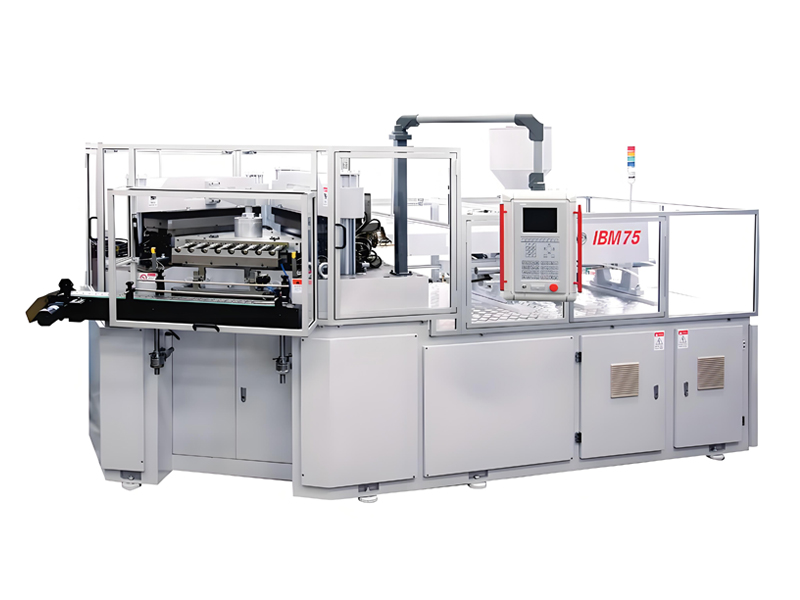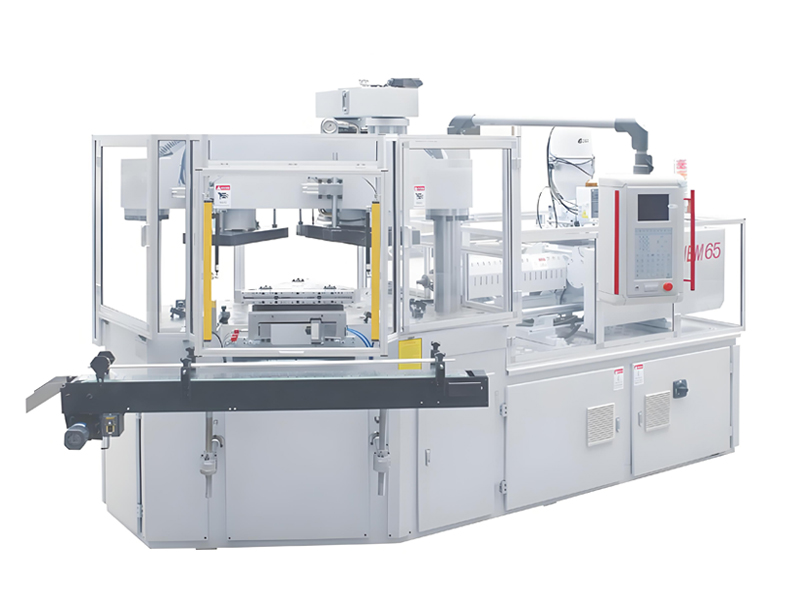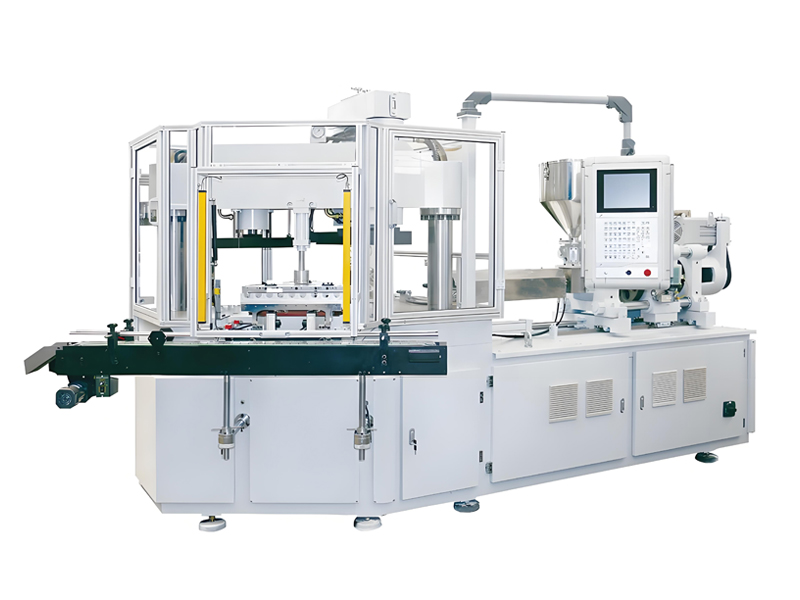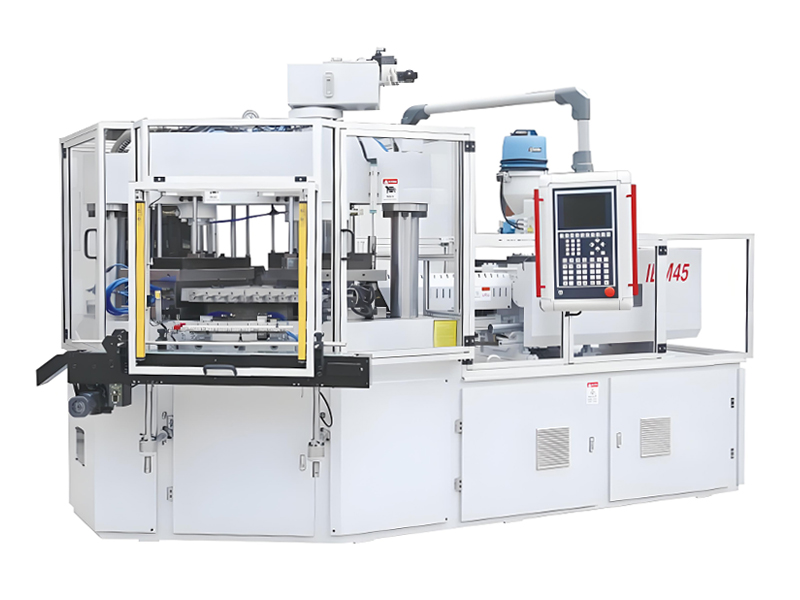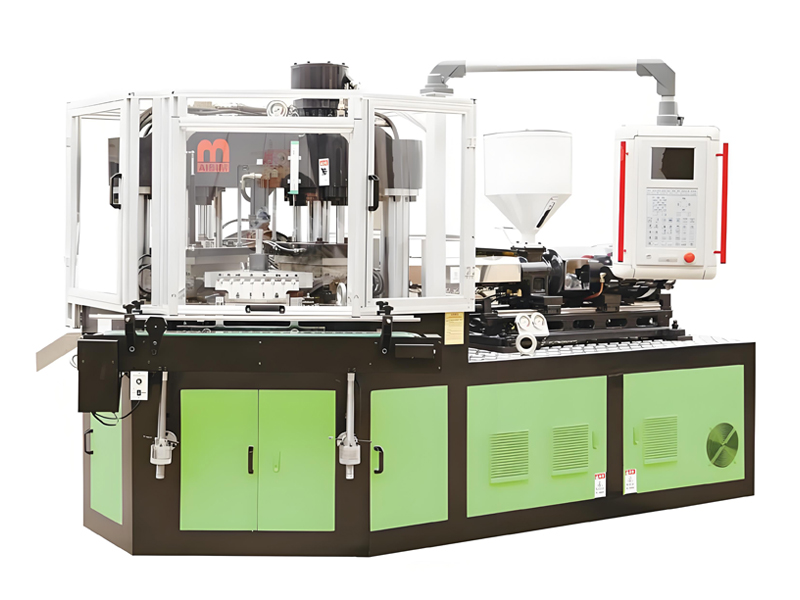
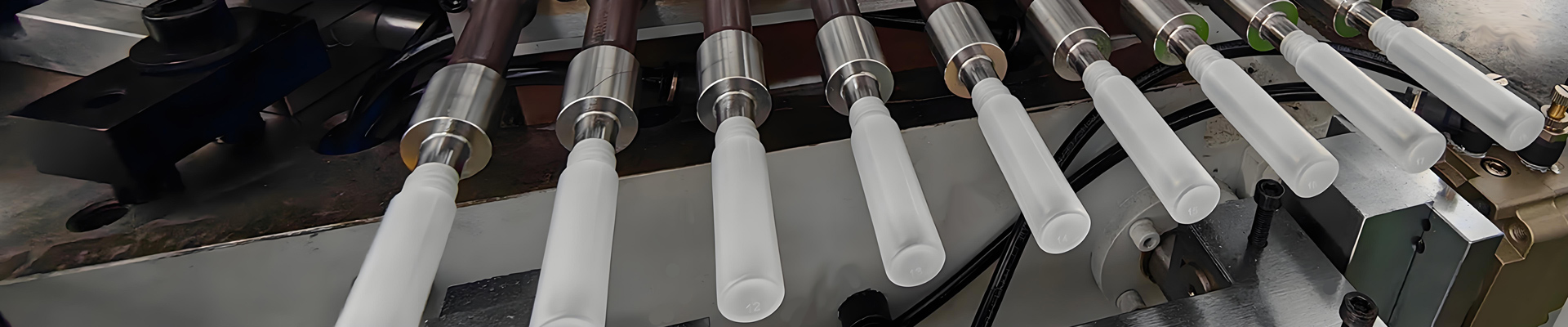
The IBM75 injection blow molding machine independently developed and manufactured by AiBiM is a high-precision, high-efficiency three-station injection blow molding equipment tailored for medium and large hollow plastic container mass production. As a core model of AiBiM’s mainstream injection blow molding machine series, the IBM75 machine balances large-volume molding capacity, multi-material adaptive performance and stable continuous production capability, solving the common pain points of traditional injection blow molding equipment such as single molding volume, poor material compatibility and low production flexibility. It is widely applied in food packaging, daily chemical containers, pharmaceutical packaging and industrial plastic hollow product manufacturing fields.
For plastic product manufacturers, equipment volume limit and single material adaptability are key factors restricting product line expansion and market order coverage. Most conventional injection blow molding machines on the market can only produce small-capacity plastic bottles below 500ml and are only compatible with single PP or PE materials, resulting in high equipment replacement costs and low project flexibility. The AiBiM IBM75 injection blow molding machine breaks through the volume limitation of traditional small and medium injection blow molding equipment, realizing ultra-large bottle volume molding while supporting the molding of multiple mainstream plastic raw materials, becoming a cost-effective core equipment for multi-specification and multi-product flexible production lines.
This article comprehensively elaborates the core parameter configuration, maximum bottle volume performance, full-range multi-material compatibility advantages, structural design principles, production performance, project price and cost-benefit analysis, fault maintenance and practical application cases of the AiBiM IBM75 injection blow molding machine. All content is based on AiBiM’s official equipment technical standards and actual industrial production verification, providing systematic and professional reference for enterprise equipment selection, production line upgrading and project investment planning.
1. Overview of AiBiM IBM75 Injection Blow Molding Machine
1.1 Equipment Positioning and Core Design Concept
The AiBiM IBM75 is a professional three-station rotary injection blow molding machine, positioned in medium and large-capacity precision hollow container production. Different from two-station intermittent blow molding equipment and small three-station high-speed micro-container molding machines, the IBM75 model focuses on balancing large-volume molding stability, multi-material processing adaptability and long-term continuous operation efficiency. It adopts an integrated rotary three-station design including injection molding preform, blow molding shaping and demoulding output, realizing fully automated one-time molding of hollow plastic bottles without secondary trimming, effectively improving product yield and production efficiency.
The whole machine follows industrial high-precision manufacturing standards, with optimized mechanical transmission structure and intelligent parameter control system. It abandons the single fixed parameter design of traditional equipment, and reserves flexible adjustment space for bottle volume, material formula and molding process, which can meet the diversified production needs of enterprises for large-capacity bottles and multi-specification plastic containers. It is the preferred mainstream model for medium-sized plastic packaging factories to achieve flexible production and capacity expansion.
1.2 Basic Core Technical Parameters of IBM75 Machine
The stable technical parameters of AiBiM IBM75 injection blow molding machine lay the foundation for large-volume molding and multi-material compatibility. The equipment adopts a 75mm diameter high-precision injection screw, matching high-efficiency plasticizing unit and high-stability rotary clamping system. The maximum mold opening stroke and mold installation space are optimized for large-size bottle molds, with a maximum mold thickness of 380mm and effective mold installation width of 420mm, which can adapt to the installation and production of various large-capacity bottle molds.
The equipment’s rated injection volume is 450g per single injection, the rotary station repetition positioning accuracy is controlled within ±0.01mm, and the whole machine’s stable cycle time ranges from 12s to 28s, which can be dynamically adjusted according to bottle volume and material characteristics. The rated system pressure is 140bar, with stable pressure output and no pressure drift during long-term high-load operation. The supporting power configuration and cooling system are fully upgraded to adapt to high-load plasticizing molding of large-volume containers and special materials, ensuring consistent product quality in batch production.
1.3 Main Application Industries and Product Types
Relying on its large-volume molding capacity and multi-material compatibility, the IBM75 injection blow molding machine covers multiple high-demand industries. In the food industry, it can produce large-capacity beverage bottles, edible oil packaging bottles, sauce storage bottles and dairy product packaging containers. In the daily chemical industry, it is suitable for large-capacity shampoo bottles, shower gel bottles, laundry detergent packaging bottles and household cleaning agent containers.
In the pharmaceutical industry, the equipment meets medical-grade production standards, capable of producing large-capacity medicinal liquid bottles, disinfectant packaging bottles and health product packaging containers. In the industrial field, it can process special material industrial hollow bottles, chemical reagent storage bottles and plastic packaging containers for agricultural supplies. The diversified product adaptability enables the IBM75 machine to meet the one-stop production needs of multi-industry and multi-specification plastic containers.
2. Max Bottle Volume Performance and Molding Technical Details of IBM75 Machine
2.1 Official Maximum Bottle Volume Parameters and Graded Production Capacity
The biggest performance advantage of the AiBiM IBM75 injection blow molding machine compared with ordinary small and medium injection blow molding equipment is its ultra-large bottle volume molding capacity. After factory precision calibration and long-term industrial verification, the maximum single bottle molding volume of the IBM75 machine reaches 1200ml, which fills the market gap that conventional injection blow molding machines can only produce bottles below 500ml. It supports full-range stable production from small-capacity 50ml precision bottles to large-capacity 1200ml large-size containers, realizing flexible switching of multiple volume specifications on one single device.
In actual industrial production, the IBM75 machine has graded stable production capacity for different volume specifications. For 50ml to 300ml small and medium bottles, the equipment can achieve high-speed cycle production with a minimum cycle of 12 seconds and an hourly output of more than 280 pieces. For 300ml to 800ml medium-large bottles, the stable cycle time is controlled at 16 to 22 seconds, with an hourly output of 180 to 220 pieces. For 800ml to 1200ml maximum-volume large bottles, the optimized cycle time is 22 to 28 seconds, with a stable hourly output of 130 to 160 pieces, realizing high-yield stable production of large-capacity containers.
2.2 Core Structural Design Supporting Large-Volume Bottle Molding
To realize stable molding of 1200ml ultra-large volume bottles, AiBiM has carried out targeted structural optimization on the IBM75 machine’s injection plasticizing system, mold clamping system and blow molding system. The equipment adopts an enlarged deep-groove alloy screw and thickened composite barrel structure, which increases the single-time melt plasticizing output by 65% compared with ordinary small injection blow molding machines, fully meeting the raw material melt demand of large-volume preforms and avoiding material shortage and incomplete molding of large bottles.
The three-station rotary mechanism is upgraded with high-precision servo positioning technology, which improves the bearing capacity of the rotary platform and ensures stable and accurate station switching under the load of large-size molds. The heavy-duty mold clamping mechanism increases the locking force to 180 tons, which can effectively resist the expansion pressure generated by high-pressure blow molding of large-volume preforms, eliminate mold gaps, and avoid flash, deformation and uneven wall thickness of large bottles.
In addition, the equipment is equipped with an enlarged high-flow blow molding air circuit system and multi-channel uniform cooling system. The high-pressure stable air supply ensures full expansion and uniform shaping of large-volume preforms, and the multi-area circulating cooling structure accelerates the heat dissipation speed of thick-walled large bottles, solves the problems of slow cooling and long molding cycle of large-capacity containers, and ensures the dimensional accuracy and structural stability of finished products.
2.3 Quality Standards for Finished Large-Volume Bottles
The large-capacity bottles produced by the IBM75 injection blow molding machine have strict and stable quality indicators. The wall thickness error of all finished bottles is controlled within ±0.1mm, realizing uniform wall thickness distribution of large-size bottle bodies, no thin-wall hidden dangers and local bulging defects. The dimensional tolerance of bottle height, bottle diameter and bottle mouth thread is within the national standard range, with high assembly consistency and good sealing performance.
The finished bottles have smooth surface without streaks, bubbles, flash and shrinkage depressions, excellent tensile strength and impact resistance, and no cracking or deformation after conventional drop tests and pressure resistance tests. For food and pharmaceutical grade large-capacity bottles, the equipment’s stable plasticizing temperature control avoids material decomposition and impurity generation, and the finished products meet food-grade and medical-grade safety standards, with high product qualification rate up to 99.7% in batch production.
3. Full-Range Multi-Material Compatibility Performance of IBM75 Machine
3.1 Compatible Mainstream Plastic Raw Material Types
Most traditional injection blow molding machines can only adapt to single PP material molding, with extremely low production flexibility. The AiBiM IBM75 injection blow molding machine achieves comprehensive compatibility of multiple mainstream plastic materials through optimized plasticizing structure and intelligent temperature adjustment system, covering food-grade, daily chemical-grade and industrial-grade common raw materials. The compatible core materials include PP, HDPE, LDPE, PET, PS, ABS and modified composite materials.
It supports stable molding of transparent PET large-capacity bottles for beverage packaging, high-toughness HDPE bottles for daily chemical and industrial packaging, high-hardness PS bottles for cosmetic packaging, and modified material bottles with anti-aging and corrosion-resistant functions. It can freely switch material formulas according to customer product demands, realizing multi-material and multi-product flexible production without replacing equipment core components, greatly reducing enterprise equipment investment and production line adjustment costs.
3.2 Adaptive Technology for Different Material Molding Characteristics
Different plastic materials have obvious differences in plasticization temperature, melt viscosity, molding shrinkage and blow molding pressure requirements. The IBM75 machine is equipped with an intelligent segmented precise temperature control system, with independent temperature adjustment modules for the barrel, die head and mold, and the temperature control accuracy reaches ±0.5℃. It can automatically match the optimal plasticization temperature range according to different material characteristics, solving the defects of insufficient plasticization of low-viscosity materials and overheating decomposition of high-viscosity modified materials.
The equipment’s servo hydraulic system supports stepless adjustment of injection pressure, blow molding pressure and mold clamping speed. For low-rigidity PE materials, low-pressure slow molding parameters are adopted to avoid bottle body deformation; for high-rigidity PET and ABS materials, high-pressure rapid plasticizing and uniform blow molding parameters are matched to ensure full material filling and stable molding. The built-in material parameter database solidifies the optimal process formulas of all compatible materials, realizing one-click parameter switching and rapid production debugging.
3.3 Advantages of Multi-Material Compatibility in Actual Production
The multi-material compatibility of the IBM75 injection blow molding machine brings extremely high production flexibility and economic benefits to manufacturing enterprises. Enterprises can use one device to produce transparent beverage bottles, tough daily chemical bottles, hard cosmetic bottles and industrial anti-corrosion bottles of different materials, avoiding the need to purchase multiple single-function equipment for different material products, greatly saving workshop space and equipment investment costs.
In terms of order response, the flexible material switching capability enables enterprises to quickly respond to customized orders of different materials from downstream customers, shorten production line adjustment cycle, improve order delivery efficiency, and effectively enhance market competitiveness. In addition, the equipment can adapt to recycled modified materials and new material mixed molding, meeting environmental protection production requirements and reducing raw material procurement costs.
4. Core Structural and Performance Advantages of AiBiM IBM75 Machine
4.1 High-Precision Plasticizing and Injection System
The IBM75 machine adopts a self-developed optimized screw and barrel combination, made of high-hardness nitrided alloy steel, with strong wear resistance and corrosion resistance, suitable for long-term processing of modified materials and mixed raw materials. The variable-pitch and variable-depth screw design realizes uniform plasticization and stable metering of different viscosity materials, avoiding melt unevenness and material degradation caused by inconsistent plasticization, and ensuring consistent product quality of different materials and different volume specifications.
The quantitative injection system adopts closed-loop servo metering control, with accurate single injection volume and no metering deviation in long-term batch production. It perfectly matches the raw material demand of 50ml to 1200ml variable-volume bottles, solving the problem of insufficient injection of large-volume bottles and excessive material waste of small-volume bottles in traditional equipment.
4.2 High-Stability Rotary Three-Station System
Different from the unstable intermittent rotary structure of ordinary equipment, the IBM75 machine adopts a continuous servo rotary three-station structure, with stable station switching and accurate positioning. The three stations of preform injection, blow molding shaping and automatic demoulding operate synchronously without mutual interference, realizing streamlined continuous production. The rotary platform undergoes strict stress relief treatment, with no deformation after long-term high-load operation, ensuring long-term positioning accuracy and production stability.
The fully automated station linkage design reduces manual intervention links. From raw material feeding to finished product output, the whole process is automated, which not only improves production efficiency, but also avoids product quality fluctuations caused by manual operation errors, and reduces enterprise labor costs.
4.3 Intelligent Energy-Saving Control System
The AiBiM IBM75 injection blow molding machine is equipped with an industrial-grade intelligent PLC control system, with a humanized touch screen operation interface, simple parameter setting and convenient equipment debugging. The system has built-in multi-material and multi-volume product parameter templates, supporting one-click calling and saving of production formulas, which greatly shortens the production line switching and debugging time.
The full servo energy-saving drive system only outputs power according to actual production load, eliminating the idle energy waste of traditional constant-power hydraulic equipment. Compared with ordinary injection blow molding machines of the same specification, the IBM75 machine reduces comprehensive energy consumption by 18% to 22%, with prominent energy-saving advantages in long-term continuous production. In addition, the system has automatic fault alarm and abnormal parameter correction functions, which can timely find equipment hidden dangers and reduce unplanned shutdown losses.
4.4 Durable and Stable Mechanical Structure
The whole machine frame of IBM75 adopts thickened integral welded steel structure, with high overall rigidity and strong anti-vibration ability, avoiding mechanical vibration and structural displacement during high-load production of large-volume bottles. Key moving parts and transmission components adopt imported high-precision accessories, with low wear rate and long service life. The whole machine has a stable service life of more than 12 years, and the annual failure rate is lower than 1%, far exceeding the industry average level of ordinary equipment.
5. IBM75 Machine Price and Comprehensive Project Cost Analysis
5.1 Official Equipment Price Estimation and Configuration Difference Pricing
The market price of the standard configuration AiBiM IBM75 injection blow molding machine is 42,000 to 48,000 US dollars. The standard configuration includes host equipment, intelligent control system, basic cooling system, automatic feeding device and standard blow molding air circuit system, which can meet the conventional production needs of multi-material and multi-volume bottles. It is the most cost-effective configuration for most medium and small plastic packaging enterprises.
For upgraded configurations with customized molds, medical-grade sterile production components, intelligent remote monitoring system and automatic finished product stacking device, the overall project price ranges from 49,000 to 55,000 US dollars. Enterprises can choose standard or upgraded configurations according to their own production standards and order demands to avoid redundant investment and insufficient functional configuration.
5.2 Daily Operation and Maintenance Cost Accounting
The daily operating cost of the IBM75 machine includes energy consumption cost, maintenance cost and raw material waste cost. In terms of energy consumption, the full servo energy-saving design makes the hourly power consumption of the equipment controlled within 18 kilowatts. Under 20-hour continuous production per day, the daily electricity cost is about 70 to 80 US dollars, and the annual electricity saving compared with ordinary equipment is more than 4,000 US dollars.
In terms of maintenance cost, due to the high wear-resistant structural design and high-quality accessories configuration, the annual replacement cost of vulnerable parts such as sealing rings and screws is controlled within 1,200 US dollars, which is 50% lower than the maintenance cost of traditional equipment of the same type. The equipment has low failure rate, basically no unplanned shutdown maintenance costs, and stable daily operation.
In terms of raw material cost, the precise injection metering and low defective rate control of the IBM75 machine reduce the raw material waste rate to below 0.3%, while the waste rate of ordinary equipment is generally above 3%, which can save a lot of raw material costs for enterprises in long-term batch production.
5.3 Labor and Site Cost Saving Advantages
The high degree of automation of the IBM75 injection blow molding machine realizes one-person on-duty production. A single production line only needs 1 operator to complete daily feeding, inspection and equipment monitoring work, while traditional semi-automatic injection blow molding equipment needs 2 to 3 operators. Calculated by annual labor cost, a single production line can save 25,000 to 35,000 US dollars in labor expenditure every year.
The integrated compact structural design saves workshop floor space. Compared with multiple single-function equipment required for multi-material and multi-volume production, the IBM75 machine integrates all production functions, reducing the occupied area by more than 40%, effectively saving factory site rental and layout transformation costs.
5.4 Investment Return Cycle and Project Benefit Evaluation
Taking the standard configuration IBM75 machine as an example, the daily net profit of the production line is stably maintained at 350 to 480 US dollars after deducting all operating costs. Calculated based on 300 effective production days per year, the annual net profit of the equipment is 105,000 to 144,000 US dollars. After offsetting the initial equipment investment and daily operating costs, the comprehensive investment return cycle is controlled within 13 to 16 months.
The equipment has a service life of more than 12 years, and can maintain stable high-efficiency and low-cost production for a long time. The multi-material and multi-volume flexible production capability can help enterprises expand product categories, receive high-value customized orders, and continuously improve profit margins, with long-term project investment benefits far exceeding traditional single-function blow molding equipment.
6. Common Production Problems and Solving Measures for IBM75 Machine
6.1 Quality Defects of Large-Volume Bottles and Optimization Methods
In the production process of 800ml to 1200ml large-capacity bottles, occasional problems such as uneven wall thickness and slow shaping may occur due to parameter mismatch. For uneven wall thickness, the servo wall thickness parameter template can be adjusted appropriately to increase the melt supply of the lower bottle body, balancing the gravity influence of large-volume preforms. For slow shaping and bottle body deformation, the mold cooling water flow and cycle time can be optimized to accelerate uniform heat dissipation and ensure full shaping of large bottles.
6.2 Material Adaptation Debugging Skills for Special Modified Materials
When processing high-viscosity modified materials and mixed recycled materials, properly increase the temperature of the extrusion barrel and extend the plasticizing time to ensure full melting and uniform mixing of materials. Appropriately reduce the injection speed and increase the injection pressure to avoid insufficient material filling. The built-in material debugging database of the equipment can provide targeted parameter reference for special materials, quickly complete production debugging and shorten the trial production cycle.
6.3 Daily Fault Prevention and Rapid Troubleshooting
The IBM75 machine has an intelligent fault self-diagnosis function, which can automatically identify abnormal temperature, pressure, station positioning and other problems and display fault codes. Operators can quickly eliminate minor faults according to the system prompt. Daily regular cleaning of the die head and mold residual materials, regular inspection of hydraulic oil and cooling water circulation can effectively avoid common faults such as material blockage and pressure instability, ensuring long-term stable operation of the equipment.
7. Standard Operation and Maintenance Specifications for IBM75 Injection Blow Molding Machine
7.1 Pre-Production Startup Inspection and Debugging Process
Before daily startup, check the equipment’s hydraulic oil level, cooling water circuit smoothness and air circuit pressure stability to ensure no leakage and blockage. Preheat the barrel and mold in sections according to the production material type, and start production after the temperature reaches the standard and stabilizes. Conduct 3 to 5 groups of trial production for target volume bottles, inspect the appearance, wall thickness and dimensional accuracy of finished products, and start formal batch production after all indicators are qualified.
7.2 Real-Time Production Parameter Monitoring
During continuous production, regularly monitor key parameters such as plasticizing temperature, injection pressure, blow molding pressure and cycle time. For multi-material switching production, recheck the parameter template matching degree to avoid quality defects caused by parameter confusion. Randomly sample finished products every two hours to ensure stable batch quality of large-volume bottles and multi-material products.
7.3 Regular Maintenance and Upgrading Standards
Complete daily cleaning of die head, mold and equipment surface residual materials, and lubricate moving parts to ensure flexible mechanical operation. Conduct weekly inspection of hydraulic seals, cooling filters and solenoid valves to replace aging accessories and clean filter scale. Conduct monthly comprehensive calibration of temperature sensors, pressure sensors and positioning systems to maintain high-precision operation of the equipment. Conduct annual overall equipment aging detection and performance debugging to extend equipment service life.
8. AiBiM Professional After-Sales Service and Technical Support
AiBiM provides full-cycle one-stop service for all sold IBM75 injection blow molding machines, covering pre-sales scheme customization, factory precision debugging, on-site installation and commissioning, technical training and long-term after-sales maintenance. The professional technical team formulates targeted production line schemes according to customers’ product specifications, material types and output demands, avoiding unreasonable equipment configuration and investment waste.
All IBM75 equipment completes no-load aging test and simulated production debugging in the factory before delivery to ensure stable performance. After equipment delivery, professional engineers provide on-site installation, commissioning and production trial run services to help the production line reach full production quickly. Provide free systematic operation and maintenance training for customer operators and maintenance personnel to realize independent daily operation and fault maintenance.
AiBiM provides 24-hour remote technical support and global after-sales service response, quickly solving equipment operation and product quality problems. Regular return visits and equipment performance calibration are carried out to ensure the long-term stable operation of the IBM75 machine and maximize customer production benefits.
Conclusion
The AiBiM IBM75 injection blow molding machine breaks through the volume limitation and single material defect of traditional injection blow molding equipment, with a maximum bottle volume of 1200ml and full-range multi-material compatibility capability, covering the production demands of small, medium and large-capacity plastic bottles of various mainstream materials. Its optimized mechanical structure, intelligent control system and energy-saving and high-efficiency performance ensure stable product quality, high production efficiency and low operating costs in batch production.
In terms of project investment, the IBM75 machine has reasonable pricing, low daily maintenance and labor costs, and short investment return cycle, with extremely high cost performance and project flexibility. It can help plastic packaging enterprises realize flexible production of multi-specification and multi-type products, expand market order coverage, and effectively improve market core competitiveness. For enterprises planning to upgrade injection blow molding production lines and invest in multi-functional large-capacity bottle production projects, the AiBiM IBM75 machine is a reliable and high-benefit preferred equipment solution.