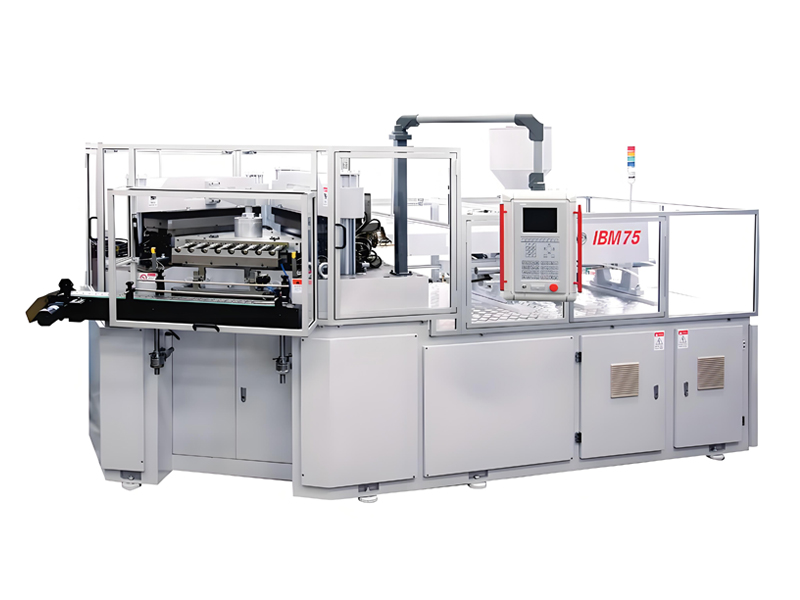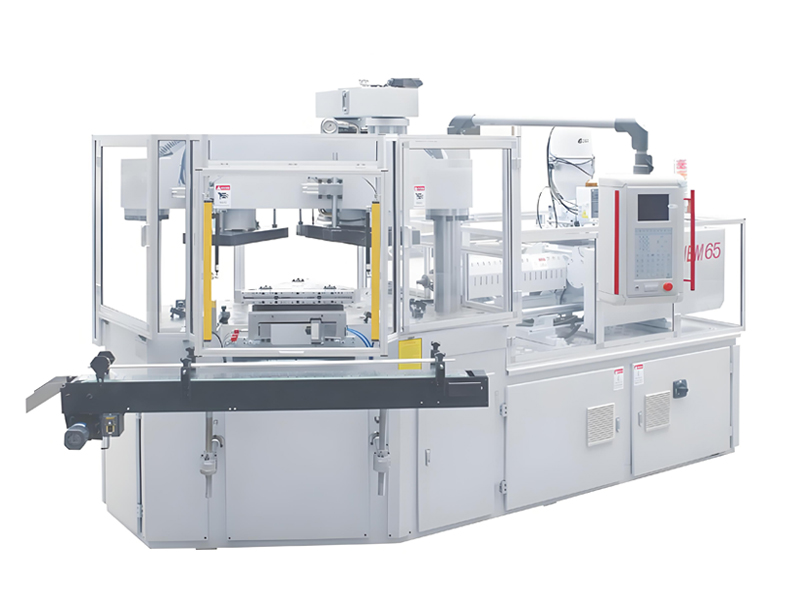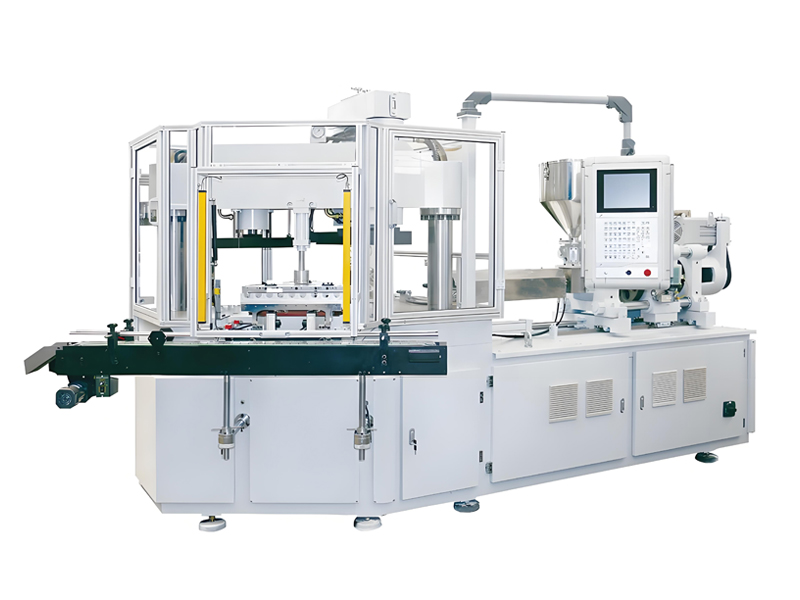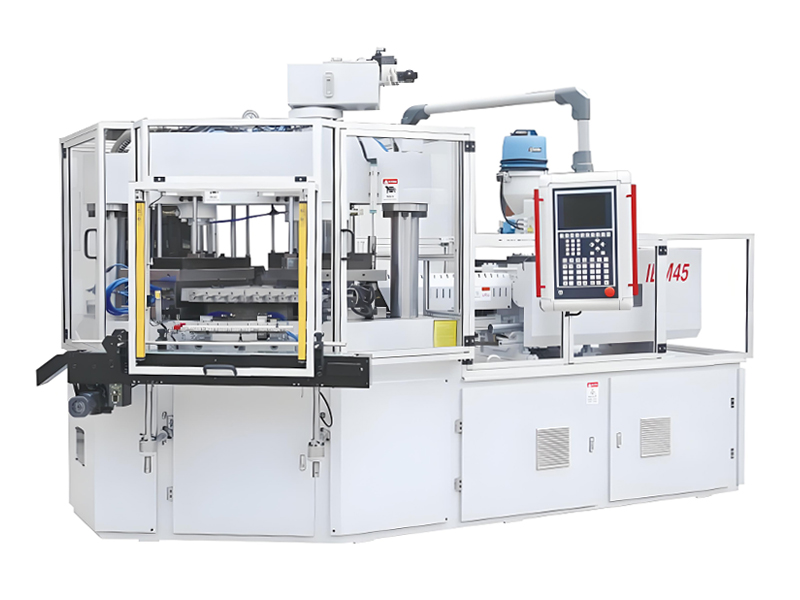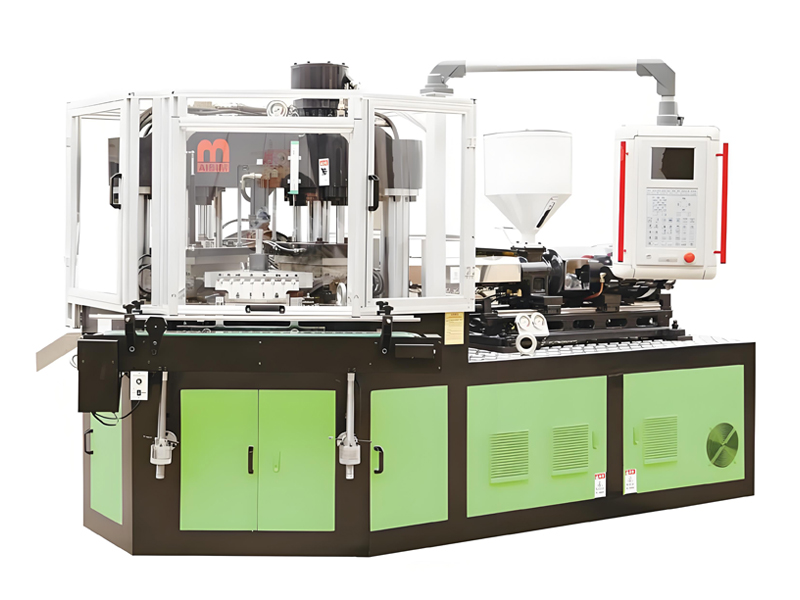
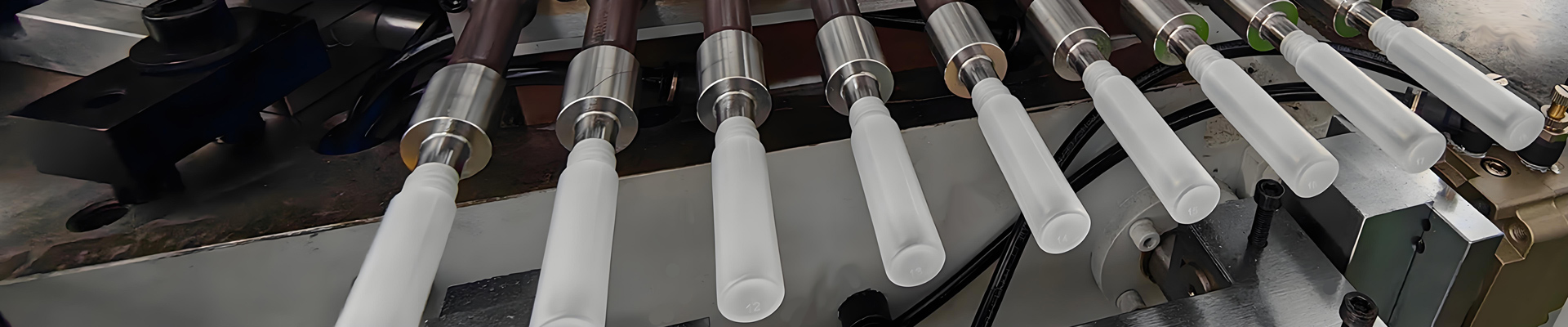
In the competitive world of plastic packaging, the ability to switch between different bottle sizes and designs quickly is a significant advantage. A Fast Changeover Injection Blow Molding Machine is engineered to minimize downtime during mold and product changeovers, allowing manufacturers to respond rapidly to market trends and short-run orders.
Traditional machines can take hours to change molds and recalibrate, but modern designs from AiBiM incorporate advanced clamping systems, automated adjustments, and modular components to reduce this time to minutes. This article explores the engineering behind fast changeover technology and its economic impact on production efficiency.
The Challenge of Mold Changeovers and Downtime Costs
Changing molds on an Injection Blow Molding Machine is a complex task. It involves disconnecting hydraulic lines, electrical connectors, and air hoses, followed by physically removing the heavy mold sets and installing new ones. The new molds must then be precisely aligned, and the machine parameters (such as stroke length, blow pressure, and heater settings) must be adjusted for the new bottle geometry.
In a traditional setup, this process can take anywhere from 2 to 6 hours, depending on the size of the machine and the complexity of the mold. For a factory running 24 hours a day, a 4-hour changeover represents a 17% loss of daily capacity.
If the factory produces 100,000 bottles per day, that is a loss of 17,000 bottles. At a profit margin of $0.02 per bottle, that is $340 lost per changeover. Over a year with weekly changes, this amounts to nearly $18,000 in lost revenue. The cost of the labor required for the changeover (often 2 to 3 technicians) adds another $200 to $500 per event. Therefore, reducing changeover time is a direct path to increased profitability.
Quick-Change Clamping Systems and Hydraulic Locking
The core innovation in a Fast Changeover Injection Blow Molding Machine is the clamping system. AiBiM utilizes toggle-less or servo-electric clamping units that allow for rapid opening and closing with high precision. Unlike hydraulic toggles which have fixed stroke lengths, servo-electric systems can be programmed to open just enough to remove the mold, saving time.
More importantly, these systems feature standardized mounting interfaces. Instead of bolting molds directly to the platen, molds are mounted onto a pallet or carrier system. The carrier is locked into the machine using a single hydraulic or mechanical latch.
To change the mold, the operator simply unlocks the carrier, slides it out on rails, and slides in a pre-set carrier with the new mold. This “slide-in/slide-out” mechanism can reduce mold change time from hours to less than 30 minutes. The carriers are pre-aligned off-line, so once locked into the machine, the mold is immediately ready for production without extensive re-leveling.
Automated Parameter Adjustment and Recipe Storage
Even with fast physical mold changes, the machine must be reprogrammed for the new bottle. This involves adjusting the injection volume, stretch rod position, blow timing, and oven temperature. Modern AiBiM machines feature advanced control systems with recipe management software.
Operators can store hundreds of recipes in the HMI, each corresponding to a specific mold number. When a new mold is installed, the operator simply selects the recipe number from a list. The machine automatically adjusts all parameters, including servo motor positions and heater setpoints.
Some advanced systems use RFID tags on the mold carriers. When the carrier is slid into the machine, the reader detects the tag and automatically loads the correct recipe. This eliminates human error in data entry and ensures that the machine starts producing good bottles immediately.
Modular Heating and Cooling Zones for Rapid Swaps
Different bottle sizes and shapes require different heating profiles. A small neck finish needs less heat than a wide body. Fast changeover machines feature modular heater bands that can be quickly removed and replaced.
Instead of rewiring fixed heater bands, quick-connect plugs are used. This allows maintenance teams to swap out a heater zone for a different wattage or size without using tools. Similarly, cooling water lines are equipped with quick-disconnect couplings (similar to those used in plastic injection molding).
This prevents water leaks and saves time during hose connection and disconnection. The modularity extends to the stretch rod assembly. For different bottle heights, the stretch rod length may need to change. AiBiM designs stretch rods with telescopic or modular sections that can be adjusted or swapped quickly.
Pre-Heating and Off-Line Preparation Strategies
A key strategy for fast changeover is to perform as many tasks as possible while the machine is still running (overlapping operations). This includes pre-heating the new mold to operating temperature before it is installed. Cold molds cause the first few hundred bottles to be hazy or have poor distribution.
AiBiM machines can be equipped with off-line mold pre-heaters. While the current mold is producing, the next mold is being heated in the pre-heater. When the changeover happens, the mold is already at the correct temperature (e.g., 120 degrees Celsius for PET blowing), eliminating the warm-up period.
Similarly, the preforms for the new job can be dried and loaded into the hopper in advance. The concept of Single Minute Exchange of Die (SMED), borrowed from the automotive industry, is applied here. By converting internal setup tasks (done while the machine is stopped) to external tasks (done while running), changeover time is drastically reduced.
Economic Analysis of Flexibility and ROI Calculation
The economic value of a Fast Changeover Injection Blow Molding Machine can be calculated by analyzing the increase in Overall Equipment Effectiveness (OEE). OEE is a metric that multiplies Availability, Performance, and Quality. Changeovers directly impact Availability.
By reducing changeover time from 4 hours to 1 hour, Availability increases. If a machine is scheduled to run 24 hours, and changeovers occur once per shift (3 times a day), the old machine loses 12 hours a day to changeovers (50% availability loss during those periods). The new machine loses only 3 hours. This recovers 9 hours of production time.
At a rate of 500 bottles per hour, that is 4,500 additional bottles per day. At a net profit of $0.02 per bottle, that is $90 per day, or $32,850 per year. The premium for a fast-changeover machine might be $15,000 over a standard model. The payback period is less than 6 months.
Furthermore, the ability to accept “rush orders” or small batches without disrupting the main production schedule allows the manufacturer to enter new market segments. For example, a cosmetic brand might need a special edition bottle for a holiday promotion with a lead time of only two weeks. A standard machine cannot handle this profitably due to downtime costs, but a fast-changeover machine can. This flexibility can increase total revenue by 20% to 30%.