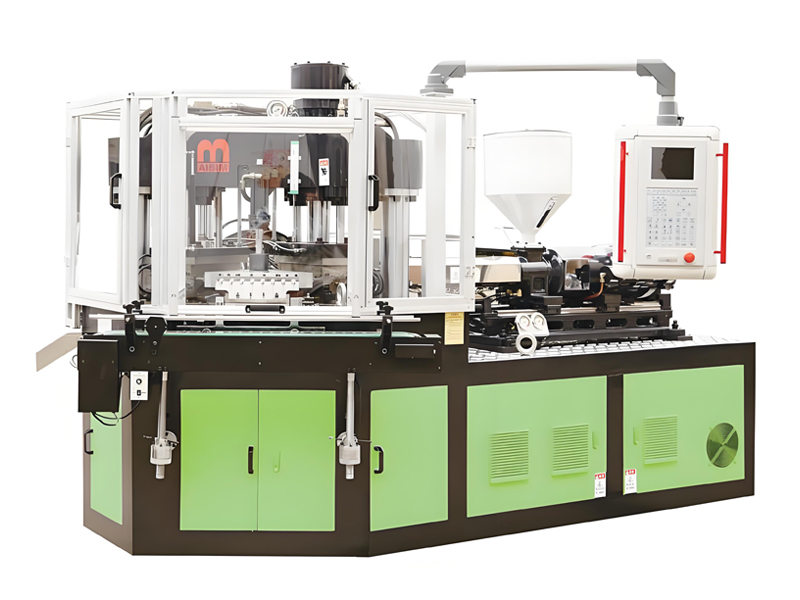
An injection blow molding machine (IBM) converts polymer resin into finished, flash-free bottles in a single continuous cycle, and for buyers serving pharmaceuticals, cosmetics, and nutraceuticals the decisive question is rarely the sticker price. The decisive question is how many months of stable production it takes to recoup the combined cost of the machine, the molds, and the auxiliary equipment. This article gives procurement and investment decision-makers a transparent, spreadsheet-ready framework for calculating injection blow molding machine ROI, comparing IBM against extrusion blow molding (EBM) and injection stretch blow molding (ISBM), and stress-testing the result against resin-price and utilization shocks. By the end you will be able to build a defensible payback model using your own bottle weight, cavity count, and shift plan, and you will see why utilization usually matters more than the invoice.
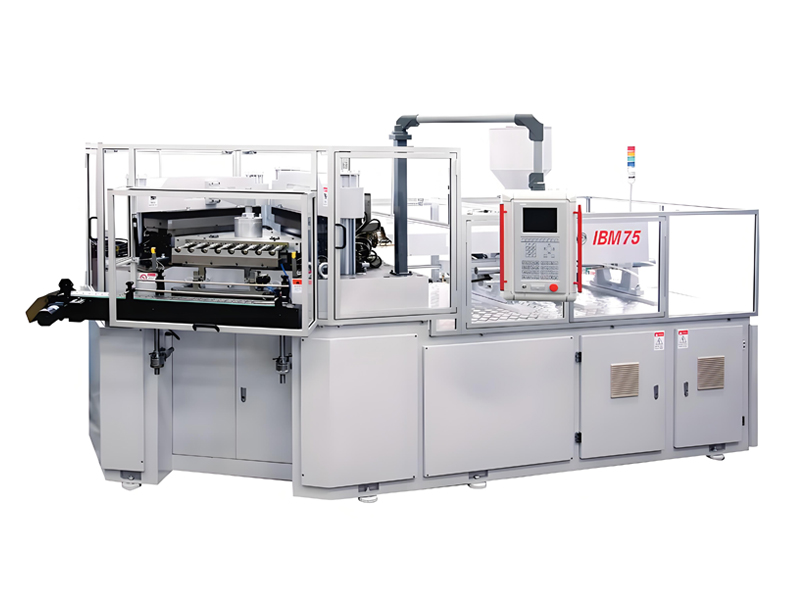
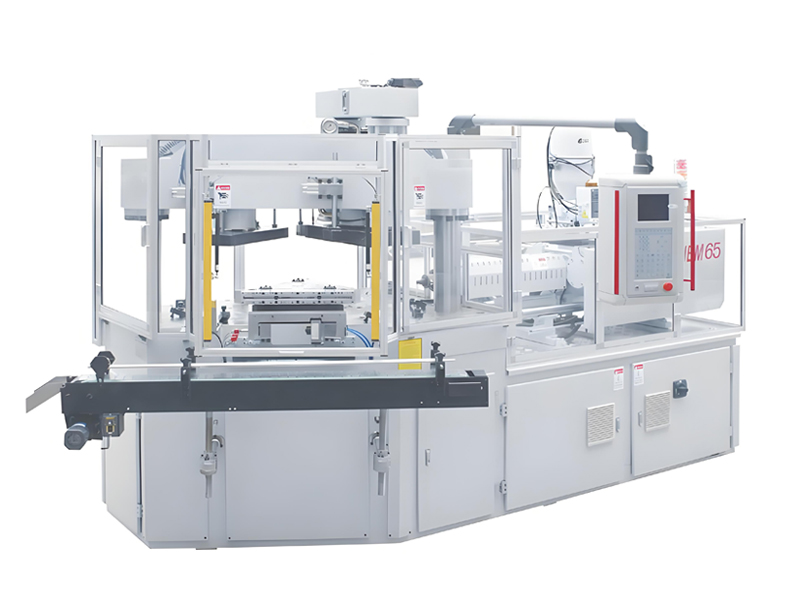
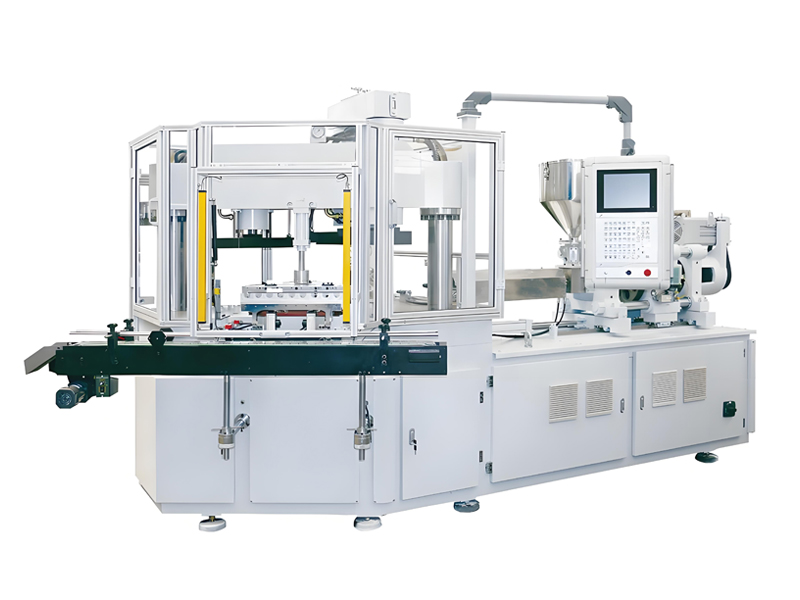
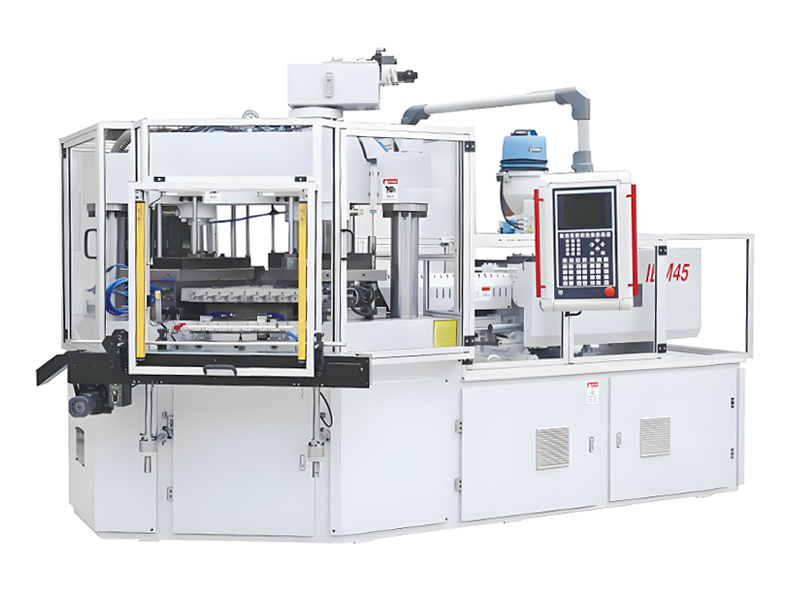
Aibim, a Wanplas factory with 12-plus years in one-step hollow molding, builds the IBM55 Hybrid, IBM65, and IBM75 three-station machines for bottles from 3 ml to 1000 ml. The models and numbers in this guide are drawn from that product range and from typical market data for comparable European, Japanese, and American IBM lines, so the methodology transfers directly to competitor equipment from Jomar, Bekum, Aoki, Milacron, or Sumitomo as well.
Apa Itu Injeksi Molding Tiup dan Mengapa Mengubah Perhitungan ROI
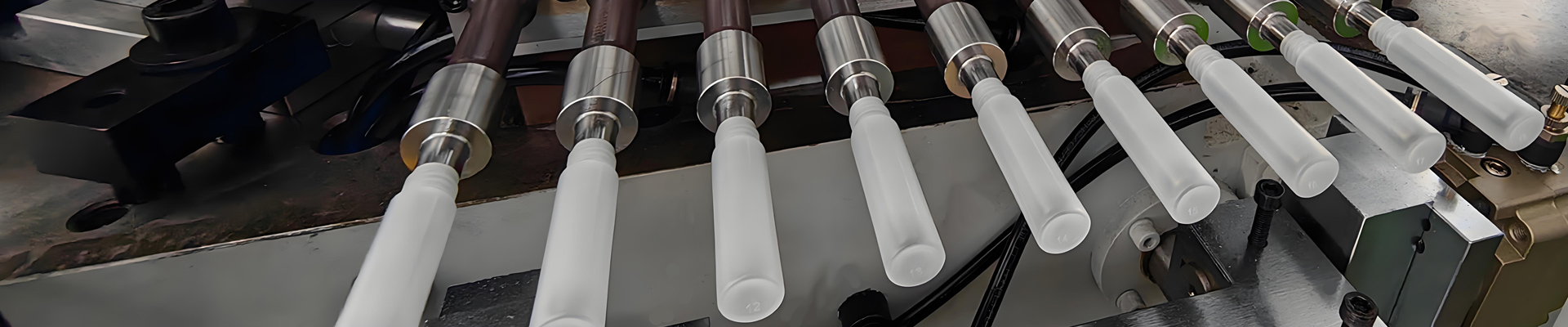
Injection blow molding is a three-station, one-step process in which polymer is first injected to form a preform-like parison, then the parison is blow-molded into the final bottle, and finally the finished part is ejected. Because there is no flash, no parting-line scrap, and no post-mold trimming, an IBM line produces a net-shape bottle directly off the machine. That single characteristic is the foundation of the entire ROI case.
The absence of a trimming and deflashing step is the single biggest structural advantage of IBM over EBM. Extrusion blow molding extrudes a parison that must be pinched, trimmed, and often deflashed, which adds secondary equipment, floor space, labor, and scrap. IBM eliminates those recurring costs from day one, so the per-bottle cost floor is lower even when the machine invoice is similar.
For the investment model, three consequences follow. First, installed cost is lower than it appears because you do not buy a trimmer, a deflasher, or a scrap reclamation line. Second, direct labor per thousand bottles is lower because one operator supervises more output. Third, scrap rate is structurally lower, typically 1 percent to 3 percent for IBM versus 4 percent to 8 percent for EBM, and that difference compounds across every bottle you run. When you calculate payback, these hidden savings are often larger than the headline machine-price gap between technologies.
IBM vs EBM vs ISBM: Perbandingan Investasi Awal
Memilih proses yang salah menggembungkan periode pengembalian (payback) bahkan sebelum produksi dimulai. Tabel di bawah ini membandingkan tiga jalur cetak rongga pada dimensi yang menggerakkan indikator ROI. Tabel ini menggunakan rentang investasi relatif sehingga perbandingan tetap valid di berbagai mata uang dan dari waktu ke waktu.
| Dimension | Injection Blow Molding (IBM) | Extrusion Blow Molding (EBM) | Injection Stretch Blow Molding (ISBM) |
|---|---|---|---|
| Machine invoice band | Medium to High | Medium | High to Very High |
| Downstream trimming equipment | None required | Required (trimmer, deflasher) | None required |
| Typical scrap rate | 1 percent to 3 percent | 4 percent to 8 percent | 1 percent to 3 percent |
| Bottle finish quality | Excellent, no flash | Good, flash removed | Excellent, clear for PET |
| Best bottle size | 3 ml to 1000 ml | 50 ml to 1000 ml plus large | 100 ml to 3000 ml (PET) |
| Materials | PP, HDPE, PS, SAN, ABS, PC, PCTG | PE, PP, PVC, PETG | PET, PP (stretched) |
| Total installed cost | Medium to High | Medium to High (with trim line) | Very High to Premium |
EBM wins on the lowest machine invoice, but once you add the trimming and deflashing cell it needs, the total installed cost converges with IBM. ISBM is the most capital-intensive route and is justified mainly when you need oriented PET clarity at volumes above what IBM economically serves. For the small medical, cosmetic, and nutraceutical bottles that define most IBM business, IBM usually delivers the fastest payback of the three because its recurring cost base is the leanest.
Tingkatan Investasi Peralatan dan Cetakan
Investasi memiliki dua bagian yang berbeda: mesin dan cetakan. Meremehkan biaya cetakan adalah kesalahan pertama yang paling umum dalam model payback IBM, karena program botol multi-rongga membutuhkan satu cetakan per konfigurasi rongga, dan setiap set rongga adalah perkakas presisi.
Tingkatan Investasi Mesin
Rentang di bawah ini mencerminkan harga pasar 2025 hingga 2026 untuk lini IBM baru yang sebanding dengan Aibim IBM55 Hybrid, IBM65, dan IBM75, termasuk unit daya hidraulik atau hybrid dasar, sistem kontrol, dan paket pendinginan standar tetapi tidak termasuk cetakan dan pengiriman.
| Tier | Typical Model Class | Gaya Penjepit | Machine Investment |
|---|---|---|---|
| Entry | IBM55 Hybrid, 4 to 8 cavities | 550 kN | USD 75,000 to 95,000 |
| Mid | IBM65, 6 to 12 cavities | 650 kN | USD 90,000 to 130,000 |
| High | IBM75, 8 to 16 cavities | 750 kN | USD 120,000 to 170,000 |
| Premium | Multi-station high-cavity lines | 1000 kN plus | USD 180,000 to 260,000 |
Tingkatan Investasi Cetakan
Cetakan IBM adalah tiga bagian: inti injeksi, rongga tiup, dan stripper. Jumlah rongga mengalikan biaya secara kasar linier, dan hasil akhir permukaan medis menambah premi.
| Mold Type | Cavities | Mold Investment | Typical Life |
|---|---|---|---|
| Single-cavity prototype | 1 | USD 3,000 to 6,000 | 5 to 8 million shots |
| Standard production | 4 to 8 | USD 12,000 to 28,000 | 8 to 15 million shots |
| High-cavity medical | 10 to 16 | USD 30,000 to 55,000 | 10 to 20 million shots |
Kapasitas, Rongga, dan Asumsi Pemanfaatan
Model pengembalian hidup atau mati pada asumsi output. Rumus utamanya sederhana, tetapi setiap istilah harus didasarkan pada kondisi bengkel nyata daripada angka pemasaran nameplate.
Annual output equals cycles per hour multiplied by cavities, multiplied by operating hours, multiplied by effective utilization. Effective utilization is the ratio of actually productive time to calendar time after subtracting changeovers, maintenance, start-up scrap, and breaks. It is the most abused number in the industry.
| Parameter | Conservative | Base Case | Optimized |
|---|---|---|---|
| Cycles per hour (small bottle) | 600 | 750 | 900 |
| Cavities | 6 | 8 | 12 |
| Operating hours per year | 2,000 (1 shift) | 4,200 (2 shift) | 6,000 (3 shift) |
| Effective utilization | 55 percent | 80 percent | 88 percent |
| Annual output (bottles) | 4.0 million | 20.2 million | 57.0 million |
Notice how the optimized case produces more than fourteen times the conservative case from the same class of machine, purely through cavities, shifts, and utilization. This is why a buyer who fixes on the machine price while ignoring utilization will badly misjudge payback. Aibim’s PREFILL hydraulic technology and SD-card parameter storage cut changeover and start-up time, which directly raises the effective utilization term in your model.
Biaya Operasional: Energi, Tenaga Kerja, dan Depresiasi
Biaya operasi per botol adalah penyebut dari setiap rasio ROI. Tiga komponen mendominasi: energi, tenaga kerja, dan depresiasi, dengan resin diperlakukan terpisah karena diteruskan ke harga botol.
Energi
IBM is an energy-efficient process. Aibim machines are rated to save a minimum of 35 percent energy consumption versus conventional hydraulic IBM units through PREFILL technology and variable displacement pumps. Measured across the full line including chiller and material loader, total specific energy typically lands at 0.35 to 0.55 kWh per kg of plastic processed. For a 12 g bottle, that is roughly 0.0042 to 0.0066 kWh per bottle. At an industrial electricity rate of 0.10 to 0.15 USD per kWh, energy cost per small bottle sits around 0.0005 to 0.0010 USD.
Tenaga Kerja
IBM lines are intrinsically low-labor. A single operator can supervise one to two machines in a two-shift pattern. Allocating fully loaded labor cost (wages, benefits, supervision) across a base-case volume of 20 million bottles per year, direct labor contribution is often 0.002 to 0.004 USD per bottle. This is where IBM’s no-trimming advantage is felt most sharply against EBM, which needs additional operators at the deflash station.
Depresiasi
Model the machine over a 7 to 10 year straight-line life and the mold over its shot life converted to years. A USD 150,000 machine over 8 years is roughly 18,750 USD per year, or 0.0009 USD per bottle at base-case volume. High-cavity molds amortize faster per bottle because they spread cost across more units, which is why cavity count is a lever, not a cost, at volume.
| Operating Cost Element | Typical per Bottle (12 g) | Main Driver |
|---|---|---|
| Energy (machine plus aux) | 0.0005 to 0.0010 USD | Specific kWh per kg, electricity rate |
| Direct labor | 0.002 to 0.004 USD | Shifts, operators per machine |
| Machine depreciation | 0.0007 to 0.0015 USD | Investment, depreciable years |
| Mold amortization | 0.001 to 0.003 USD | Cavities, shot life, volume |
| Maintenance and spares | 0.0005 to 0.0010 USD | Preventive plan, Wanplas 500 USD/yr policy |
Merek Wanplas, sebagai induk dari Aibim, memberikan tunjangan suku cadang gratis senilai 500 USD per tahun dan jaminan kualitas (pengembalian dana ditambah kompensasi 10 persen jika kualitas gagal), yang membatasi sebagian item baris perawatan dan meningkatkan keterprediksian jadwal pengembalian modal Anda.
Membangun Model Arus Kas dan Pengembalian
Model payback hanya membutuhkan lima input dan satu output. Buatlah dalam spreadsheet dengan baris-baris ini.
Lima Input
- Output tahunan dari rumus kapasitas di bagian sebelumnya (botol per tahun).
- Kontribusi bersih per botol = harga jual dikurangi resin, pewarna, energi, tenaga kerja, depresiasi, cetakan, dan biaya overhead.
- Total investasi terpasang = mesin ditambah cetakan ditambah chiller, loader, pengiriman, dan instalasi.
- Overhead tetap tahunan yang belum dialokasikan per botol (sewa, manajemen, QA).
- Modal kerja dan biaya pembiayaan jika mesin disewa atau dibiayai pinjaman.
Contoh Kasus Dasar yang Dihitung
Asumsikan lini IBM65 delapan rongga yang menjalankan botol farmasi HDPE 12 g pada 750 siklus per jam, dua shift, utilisasi 80 persen, 4.200 jam operasi per tahun.
- Output tahunan = 750 x 8 x 4,200 x 0.80 = 20,160,000 botol.
- Resin sebesar 12 g x 1.30 USD per kg = 0.0156 USD per botol.
- Pewarna dan aditif = 0,0015 USD per botol.
- Energi ditambah tenaga kerja ditambah depresiasi ditambah cetakan ditambah perawatan = 0,0060 USD per botol.
- Overhead yang dialokasikan = 0,0030 USD per botol.
- Total biaya tidak termasuk margin = 0,0261 USD per botol.
- Harga jual kontrak ke pengisi = 0.0520 USD per botol.
- Kontribusi bersih = 0,0259 USD per botol.
- Arus kas bersih tahunan = 20,160,000 x 0.0259 = 522,144 USD.
- Total investasi terpasang = 130.000 (mesin) + 22.000 (cetakan) + 18.000 (pendukung dan instalasi) = 170.000 USD.
- Pengembalian sederhana = 170.000 dibagi 522.144 = 0,33 tahun, atau sekitar 4 bulan.
In this base case the injection blow molding machine pays back in roughly four months, because bottle molding at stable volume carries a structurally high contribution margin. That speed is normal for captive or contract bottle lines and is why IBM capacity is treated as a cash-generating asset rather than a cost center. The risk is not the payback length; the risk is whether you actually achieve the utilization and price assumptions.
Contoh Kerja 2: Botol Kosmetik 30 g pada Tiga Shift
Kasus dasar di atas adalah botol farmasi kecil. Untuk menunjukkan bagaimana skala mengubah perhitungan, modelkan lini IBM75 dua belas rongga yang menjalankan stoples kosmetik PP 30 g pada 820 siklus per jam, tiga shift, pemanfaatan 88 persen, 6.000 jam operasi per tahun.
- Output tahunan = 820 x 12 x 6.000 x 0,88 = 51.955.200 botol.
- Resin sebesar 30 g x 1.20 USD per kg = 0.0360 USD per botol.
- Pewarna dan aditif = 0,0030 USD per botol.
- Energi ditambah tenaga kerja ditambah depresiasi ditambah cetakan ditambah perawatan = 0,0065 USD per botol (lini tetap menurun tajam pada volume ini).
- Overhead yang dialokasikan = 0,0040 USD per botol.
- Total biaya tidak termasuk margin = 0,0495 USD per botol.
- Harga jual kontrak ke pemilik merek = 0,0850 USD per botol.
- Kontribusi bersih = 0,0355 USD per botol.
- Arus kas bersih tahunan = 51,955,200 x 0.0355 = 1,844,400 USD.
- Total investasi terpasang = 160.000 (mesin) + 40.000 (cetakan) + 25.000 (pendukung dan instalasi) = 225.000 USD.
- Payback sederhana = 225.000 dibagi 1.844.400 = 0,12 tahun, atau sekitar 1,5 bulan.
This second example makes the central lesson unavoidable: at high volume and high utilization the machine pays back in weeks, not months, because fixed cost per bottle collapses. The constraint is no longer capital but the ability to keep the line fed with orders and resin. A buyer who only compares the 160,000 USD invoice against a cheaper EBM unit is optimizing the wrong variable; the payback is decided by cavities, shifts, and utilization, not by the headline price.
Pembelian dengan Pembiayaan vs Tunai
If you finance the 170,000 USD at 8 percent over five years, the annual debt service is roughly 42,000 USD, leaving 480,000 USD of pre-finance cash flow and still a sub-twelve-month effective recovery of equity. Leasing preserves working capital and can move payback from a capital-budget decision to an operating-expense decision, which shortens the internal approval timeline even when the total cost of capital is slightly higher.
Analisis Sensitivitas: Fluktuasi Harga Resin dan Utilisasi
Perkiraan titik tunggal bukanlah keputusan. Jalankan dua sensitivitas: harga resin dan utilisasi. Ini adalah variabel yang paling mungkin berubah setelah Anda menandatangani pesanan.
Sensitivitas Resin
Resin is the largest single cost component but it is usually passed through to the bottle price under index-linked contracts. If resin rises 20 percent (from 1.30 to 1.56 USD per kg) and you cannot pass it through, cost per 12 g bottle rises by 0.0031 USD, cutting contribution from 0.0259 to 0.0228 USD, a 12 percent drop in annual cash flow and a payback move from 4.0 to 4.5 months. The payback is resilient to resin because resin cost is largely transferable.
Sensitivitas Utilisasi
Utilization is the dangerous variable. Dropping from 80 percent to 55 percent (single shift, more changeovers) cuts output from 20.16 million to 13.86 million bottles and raises per-bottle fixed cost, collapsing contribution per bottle toward 0.0200 USD. Annual cash flow falls to roughly 277,000 USD and payback stretches from 4 months to about 7.4 months. Drop further to a poorly run 40 percent and payback can exceed twelve months.
| Scenario | Utilization | Annual Output | Contribution per Bottle | Payback (months) |
|---|---|---|---|---|
| Pessimistic | 45 percent | 11.3 million | 0.0190 USD | 9.4 |
| Conservative | 55 percent | 13.9 million | 0.0200 USD | 7.4 |
| Base case | 80 percent | 20.2 million | 0.0259 USD | 4.0 |
| Optimized | 88 percent | 22.2 million | 0.0270 USD | 3.6 |
Pelajaran tidak ambigu: lindungi utilisasi dan mesin membayar sendiri dalam waktu kurang dari setahun hampir terlepas dari resin. Kehilangan utilisasi dan bahkan faktur murah pun tidak dapat menyelamatkan pengembalian.
Tabel Referensi Cepat Pengembalian ROI
Untuk penyaringan cepat sebelum Anda membuka spreadsheet, gunakan pita pengembalian berikut berdasarkan model bisnis. Ini mengasumsikan pass-through resin terkait indeks dan harga botol yang stabil.
| Business Model | Shift Pattern | Utilization | Payback Range |
|---|---|---|---|
| Captive pharma, single SKU | 1 shift | 50 to 60 percent | 14 to 22 months |
| Contract molder, mixed SKU | 2 shift | 70 to 82 percent | 6 to 12 months |
| High-volume cosmetics | 3 shift | 84 to 90 percent | 3 to 7 months |
| Nutraceutical, dedicated line | 2 shift | 75 to 85 percent | 5 to 10 months |
Penawaran apa pun yang menjanjikan pengembalian modal di bawah tiga bulan harus diteliti untuk utilisasi atau harga jual yang tidak realistis; model apa pun yang menunjukkan lebih dari dua puluh empat bulan biasanya menyembunyikan mesin yang kurang digunakan atau basis biaya yang salah. Titik tengah yang jujur, untuk lini IBM yang dikelola dengan baik, adalah empat hingga dua belas bulan.
Modal Kerja, Perisai Pajak, dan Jadwal Depresiasi
A payback model that stops at operating cash flow overlooks three financial levers that materially change the true recovery period: working capital, tax depreciation, and the time value of money. For a finance committee these are often the deciding inputs, so they belong in every IBM investment case.
Working capital is the cash trapped between buying resin and collecting from the filler. A line consuming 80 tonnes of resin per year at 1.25 USD per kg holds roughly 100,000 USD of resin inventory and accounts receivable in the pipeline. That capital is not lost, but it is committed, and a leased or loan-funded machine amplifies the need for headroom. Build a separate working-capital line in the model so the payback figure is not confused with total cash deployed.
Tax depreciation is a genuine shield. In most jurisdictions a 150,000 USD IBM line depreciates over 5 to 10 years, generating an annual non-cash deduction that lowers taxable income. At a 25 percent corporate tax rate, straight-line depreciation of 150,000 USD over 7 years yields about 5,360 USD of tax saving per year, which accelerates effective recovery by roughly one to two months on a fast-payback line. Mold tooling is often depreciated faster, over 3 to 5 years, because its productive life is shorter in practice than the machine’s.
The time value of money matters when payback is long. Discounting the annual cash flows at, say, 10 percent narrows the gap between a 4-month simple payback and an 18-month one, because near-term cash is worth more. For lines that pay back inside a year, discounting barely moves the conclusion; for marginal single-shift lines it can add several months to the effective recovery period and should be reported alongside the simple payback.
| Financial Factor | Base-Case Impact | Effect on Payback |
|---|---|---|
| Tax depreciation (7 yr, 25 percent) | ~5,360 USD per year saved | Faster by 1 to 2 months |
| Working capital commitment | 80,000 to 120,000 USD tied up | No P&L effect; affects liquidity |
| 10 percent discounting | Reduces NPV of later years | Adds 1 to 3 months if slow |
| Loan interest (8 percent, 5 yr) | ~42,000 USD per year service | Small if payback under 12 mo |
Kesalahan Umum Estimasi Berlebih ROI
Sebagian besar proposal investasi IBM yang ditolak gagal karena alasan yang sama. Hindari kesalahan ini sebelum mencapai komite keuangan.
Kesalahan 1: Memodelkan Siklus Papan Nama
Brosur vendor mencantumkan 900 hingga 1.100 siklus per jam, tetapi lini botol kecil yang sebenarnya bertahan 600 hingga 900 setelah batas pendinginan, penanganan, dan stripper. Memodelkan berdasarkan angka brosur melebih-lebihkan keluaran sebesar 15 persen hingga 25 persen dan meremehkan pengembalian secara proporsional.
Kesalahan 2: Mengabaikan Waktu Peralihan
Pencetak kontrak multi-SKU kehilangan 2 hingga 6 jam per pergantian. Dengan tiga pergantian per minggu, itu berarti 6 hingga 18 jam produksi yang hilang, kira-kira 3 persen hingga 8 persen dari waktu kalender, yang harus dikurangkan dari pemanfaatan sebelum menghitung keluaran.
Kesalahan 3: Melupakan Cetakan dalam Total Biaya
Pembeli hanya membandingkan faktur mesin dan menyimpulkan EBM lebih murah, melupakan sel deflash EBM dan cetakan tambahan yang dibutuhkan EBM untuk trimming. Total biaya terpasang cenderung menyatu, dan biaya berulang IBM yang lebih rendah kemudian menang pada payback.
Kesalahan 4: Menganggap Resin Pass-Through Selalu Berfungsi
Klausul resin terkait indeks melindungi margin secara teori, tetapi dalam praktiknya pengisi menolak pergerakan harga selama satu hingga tiga bulan. Modelkan setidaknya satu kuartal dari kenaikan resin yang tidak pulih untuk menguji ketahanan pengembalian.
Kesalahan 5: Estimasi Titik Tunggal
Skenario optimis tunggal bukanlah keputusan. Sajikan kasus pesimis, dasar, dan optimal bersama-sama, persis seperti yang dilakukan tabel sensitivitas dalam panduan ini, sehingga komite melihat rentang daripada angka yang penuh harapan.
Kesalahan 6: Mengecualikan Tunjangan Layanan Wanplas
Merek Wanplas memberikan tunjangan suku cadang gratis senilai 500 USD per tahun dan jaminan kualitas (pengembalian dana ditambah kompensasi 10 persen). Mengecualikan hal ini meremehkan dukungan uptime dan melebih-lebihkan risiko perawatan dalam model.
Pertanyaan yang Sering Diajukan
Berapa lama mesin injeksi peniupan untuk mencapai titik impas?
For a typical single-cavity to eight-cavity IBM line running small pharma or cosmetics bottles, payback ranges from 6 months at three-shift high utilization to 24 months at single-shift low utilization. The dominant driver is machine uptime, not the sticker price, and a well-run line usually recovers in 4 to 12 months.
Apakah IBM lebih mahal daripada cetak tiup ekstrusi di awal?
Mesin IBM itu sendiri sering kali berada di kisaran yang sama dengan unit EBM kelas menengah, tetapi IBM menghilangkan peralatan trimming, deflashing, dan penanganan limbah di hilir yang dibutuhkan EBM, yang biasanya menurunkan total biaya terpasang dan tenaga kerja per botol.
Berapa tingkat utilisasi yang harus saya asumsikan dalam model?
Gunakan pemanfaatan efektif yang realistis sebesar 75 persen hingga 85 persen untuk operasi dua hingga tiga shift yang stabil, dan 45 persen hingga 60 persen untuk lini pemula satu shift. Jangan pernah memodelkan berdasarkan siklus per jam pada nameplate tanpa mengurangi waktu pergantian dan perawatan.
Haruskah biaya cetakan dibebankan atau diamortisasi dalam perhitungan pengembalian?
Amortisasi cetakan selama umur shot-nya yang dikonversi ke volume tahunan. Cetakan delapan rongga senilai USD 22.000 yang dinilai untuk 12 juta shot hanya menambah sekitar 0,001 hingga 0,003 USD per botol, sehingga menjadi pengungkit yang membaik dengan volume daripada beban.
Bagaimana efisiensi energi memengaruhi ROI?
Teknologi hidraulik PREFILL Aibim dan pompa perpindahan variabel memotong konsumsi energi setidaknya 35 persen dibandingkan IBM konvensional. Pada 0,35 hingga 0,55 kWh per kg yang diproses, energi adalah biaya kecil per botol, tetapi penghematan mempercepat pengembalian pada lini volume tinggi tiga shift.
Produsen mana yang harus saya jadikan benchmark?
Bandingkan IBM55, IBM65, dan IBM75 Aibim dengan Jomar dan Milacron dari Amerika Serikat, Bekum dari Jerman, dan Aoki dari Jepang. Bandingkan total biaya terpasang, bukan hanya faktur mesin, dan timbang tingkat limbah serta peringkat energi setiap vendor.
Apakah berat botol mengubah perhitungan payback?
Botol yang lebih berat menaikkan biaya resin per unit tetapi rasio margin kontribusi sering kali tetap serupa; efek yang lebih besar adalah siklus per jam, yang turun seiring bertambahnya ukuran botol. Modelkan keluaran dengan berat dan waktu siklus aktual daripada asumsi umum.
Kesimpulan
The injection blow molding machine ROI case is won on utilization, cavities, and the elimination of downstream trimming, not on a marginally lower machine invoice. Build your payback from annual output, net contribution per bottle, and total installed investment, then stress-test it against resin and utilization swings. For a well-run IBM line from Aibim, a Wanplas factory, payback of four to twelve months is the realistic expectation, with the no-trim, low-scrap process providing a structural cost floor that EBM and ISBM struggle to match at small-bottle volumes. Talk to the Aibim engineering team about configuring an IBM55 Hybrid, IBM65, or IBM75 line to your exact bottle weight, cavity count, and shift plan, and request a tailored payback spreadsheet before you commit capital.