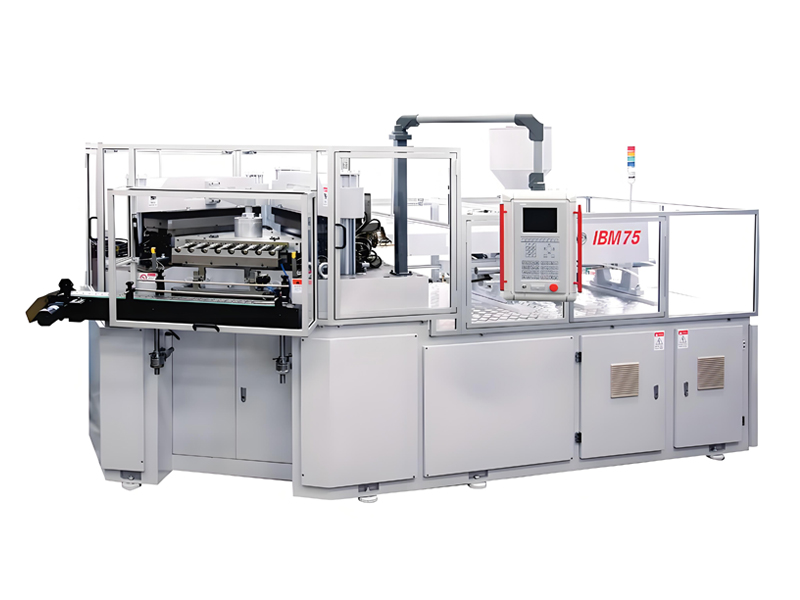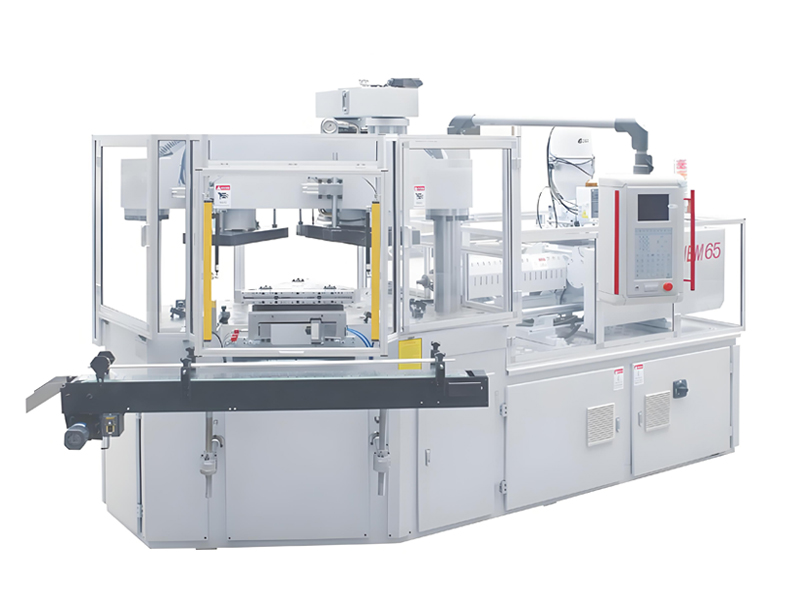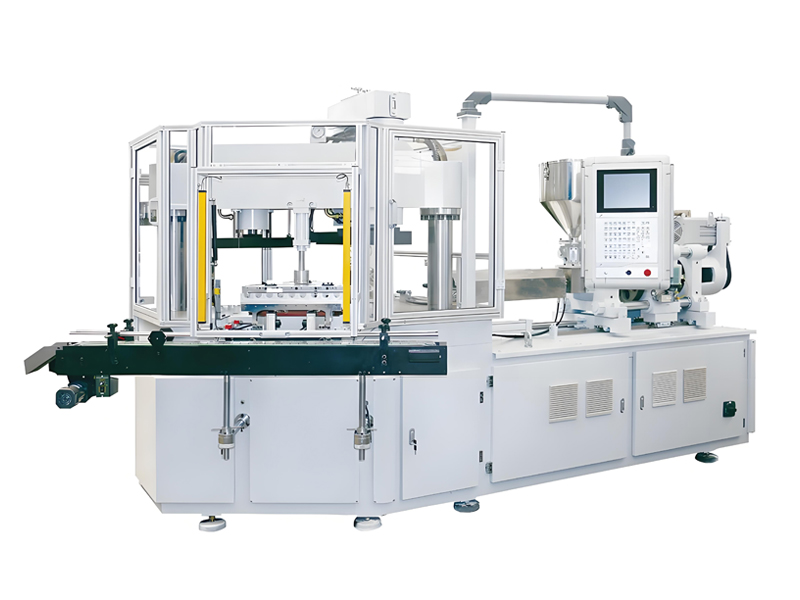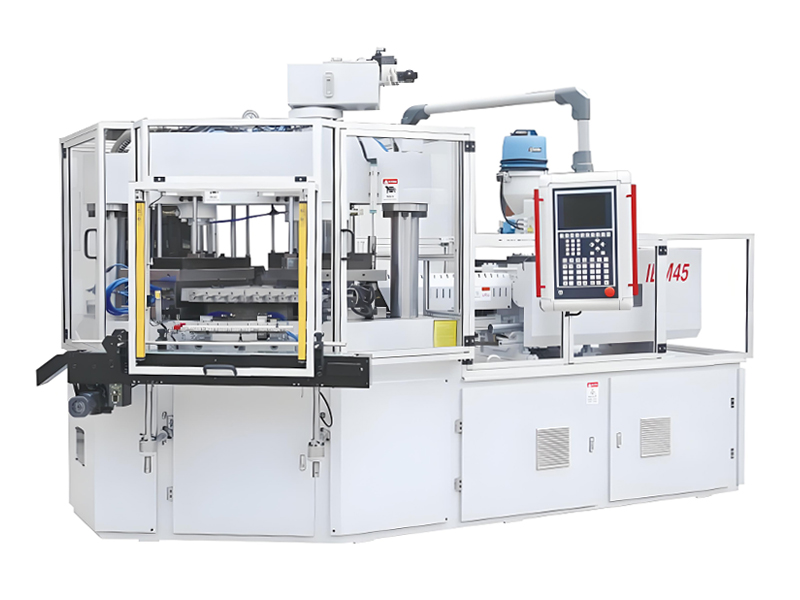
Medium volume cosmetic and pharmaceutical packaging sits in a demanding sweet spot. The bottles are too large and too high value for low-cavity manual lines, yet too small and too specification-sensitive for the heavy-duty machines built for drums and jerry cans. Between roughly 10ml and 500ml, brands need consistent neck finish, tight wall thickness control, clean processing, and a cycle that still delivers competitive output. That is exactly where the IBM65 injection blow molding machine earns its place on the production floor. Aibim, a Wanplas factory with more than 12 years of experience in plastic machinery manufacturing and a presence in more than 40 countries, developed the IBM65 to serve cosmetic serum bottles, essence droppers, lipstick and lip balm tubes, pharmaceutical vials, oral liquid bottles, and personal-care jars in the 10ml to 500ml range. Built on a three-station, one-step hollow molding process, the IBM65 turns resin pellets into finished, flash-free bottles without secondary trimming, giving contract manufacturers and brand owners a stable platform for both color-rich cosmetic packaging and regulated pharma containers. This article explains how the machine works, what it can do, which materials and cavity layouts make sense, and how Aibim supports a validated, low-risk deployment.
Qu'est-ce que le moulage par injection-soufflage et pourquoi il convient aux cosmétiques et à la pharma
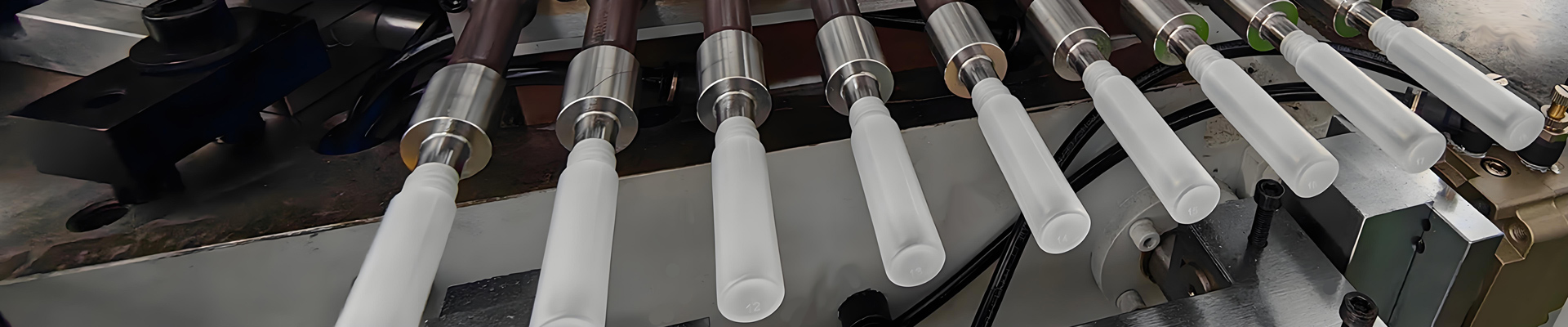
Injection blow molding combines two proven operations into a single, continuous, three-station cycle. In the first station, the injection unit plasticizes the resin in the barrel, then injects a precise parison (also called a preform) around a core rod inside an injection mold. In the second station, the hot parison on its core rod is transferred to the blow mold, where compressed air expands it against the cooled cavity wall to form the bottle shape. In the third station, the finished bottle is stripped from the core rod and ejected. Because the parison is injected rather than extruded, the neck finish, thread, and sealing surface are formed with injection-molded accuracy, which is why injection blow molding is the preferred route for containers that must close tightly, look clean, and meet cosmetic or pharmaceutical tolerance.
The one-step, three-station layout removes the flash and the tail pinch that appear in extrusion blow molding. There is no scrap tail to trim, no post-molding deflashing, and no regrind loop to manage for food- or pharma-contact parts. The bottle leaves the machine ready for filling, capping, and labeling. For cosmetic brands that care about a crisp neck ring and a uniform surface, and for pharmaceutical producers who need a clean, controlled process, that difference is decisive.
From a process-engineering perspective, the IBM65 controls the variables that decide bottle quality. The barrel temperature profile, screw rotation speed, back pressure, injection speed, holding pressure, blow air pressure, mold temperature, and cooling time are all independently adjustable. The plasticizing unit prepares a homogeneous melt, the core rod carries a uniform parison, and the blow station sets the final wall distribution. Because every station runs as part of one indexed cycle, the machine produces repeatable bottles hour after hour, which is the foundation of stable output and reliable validation.
The IBM65 specifically targets the medium volume band. Larger pharmaceutical and cosmetic bottles above 500ml are better served by Aibim’s larger model in the same family, while very small 3ml to 10ml precision parts can shift toward the hybrid electric model described later in this article. The 10ml to 500ml window is where IBM65 is most balanced: enough clamping and plasticizing capacity for four- to eight-cavity molds on small bottles, and enough cavity flexibility for two-cavity production of 500ml jars.
Présentation de la machine IBM65 et spécifications techniques
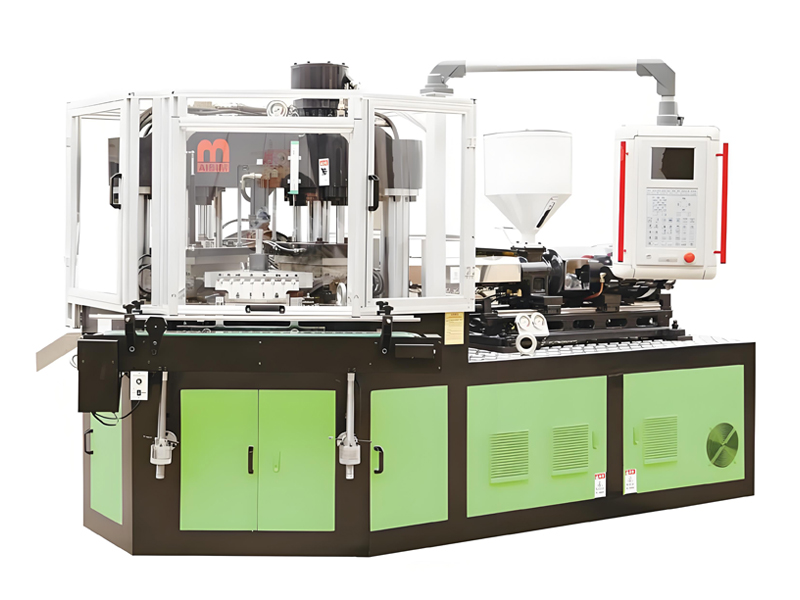
The IBM65 is a three-station injection blow molding machine built around a 650 kN clamping system, a single-crossbeam double-pole clamping framework, and Aibim’s PREFILL hydraulic technology. The structural design enlarges the mold setting space, which makes it easier to install multi-cavity molds and to service the tooling. The machine is CE certified, with a stripper station protected by a long-distance digital laser sensor and a light curtain for personal safety. Across its product family, Aibim reports a minimum 35 percent energy saving compared with conventional hydraulic injection blow molding machines, largely driven by the PREFILL technology and variable displacement pump pressurizing in the hydraulic system.
Operation and changeover are simplified by an SD card parameter storage system. A validated process recipe can be saved on an SD card and re-installed across multiple machines, which keeps Cavity 1 on Line A identical to Cavity 1 on Line B. For contract manufacturers running the same bottle for different clients, this repeatability shortens requalification and reduces operator error.
Spécifications clés de l'IBM65
| Parameter | IBM65 Value | Notes |
|---|---|---|
| Clamping force | 650 kN | Single-crossbeam, double-pole framework |
| Number of stations | 3 (injection / blow / ejection) | One-step continuous index |
| Max cavities | Up to 8 | Depends on bottle size and neck pitch |
| Screw diameter | 45 mm | Plasticizing unit in barrel |
| Shot size (PS) | 180 g | Covers multi-cavity parison weight |
| Plasticizing capacity | approx. 60 g/s | PS reference, material dependent |
| Mold platen size | 420 x 420 mm | Enlarged mold setting space |
| Max mold size (L x H x D) | 400 x 400 x 280 mm | Injection and blow molds |
| Opening stroke | 200 mm | Mold opening for part release |
| Heating power | 12 kW | Barrel and hot runner zones |
| Installed power | 42 kW | Hydraulic PREFILL system |
| Machine dimensions | 3.6 x 1.5 x 2.1 m | Length x width x height |
| Poids de la machine | approx. 5,800 kg | Stable, low-vibration base |
These figures describe the machine as a production tool rather than a laboratory device. The 650 kN clamping force holds the blow mold firmly while the bottle forms, the 45 mm screw delivers enough melt for eight small cavities or two large jars, and the enlarged platen makes mold changes practical for manufacturers that rotate several SKUs. All numbers are reference values for standard configuration; final specification is confirmed against the customer’s bottle drawing and material during project engineering.
Planification de la capacité : nombre de cavités, temps de cycle et production
Output from an injection blow molding machine is governed by a simple relationship: bottles per hour equal cavity count multiplied by 3,600 and divided by the cycle time in seconds. The limiting factor is usually the blow and cooling stage, because the parison must solidify enough to hold shape before ejection. For the IBM65, cycle time scales with bottle size and wall thickness, so cavity strategy must match the target volume.
For small 10ml to 30ml bottles, thin walls cool quickly and eight cavities are realistic, pushing output toward the high end of the range. For 250ml to 500ml jars, thicker walls and longer cooling force a two-cavity layout, but each bottle still leaves the machine finished and flash-free. The table below gives a planning reference for the IBM65 running typical cosmetic and pharma resins such as PP and PETG.
Production IBM65 par gamme de volumes
| Volume Range | Suggested Cavities | Cycle Time (s) | Output (bottles/hour) |
|---|---|---|---|
| 10 – 30 ml | 8 | 10 | approx. 2,880 |
| 30 – 100 ml | 6 | 12 | approx. 1,800 |
| 100 – 250 ml | 4 | 14 | approx. 1,030 |
| 250 – 500 ml | 2 | 16 | approx. 450 |
Real output depends on resin melt flow, mold cooling design, blow air pressure, and ambient conditions. A PETG jar with thick walls cools slower than a thin-wall PP vial, so the same cavity count can yield different hourly numbers. Aibim’s project engineers verify the cycle against the actual bottle and material during trial runs, and the SD-card recipe system then locks the optimized parameters so production repeats the qualified result.
For capacity planning, manufacturers should also reserve allowance for mold cleaning, color changeover, and preventive maintenance. A realistic utilization of about 85 percent to 90 percent of nominal output is a sound basis for annual volume forecasts, and the IBM65’s CE-certified laser safety on the stripper station helps keep unplanned stops low.
Sélection des matériaux pour les bouteilles cosmétiques et pharmaceutiques
Resin choice decides appearance, chemical resistance, barrier, regulatory compliance, and cost. The IBM65 processes a broad set of thermoplastics used in cosmetic and pharmaceutical packaging: PP, HDPE, LDPE, PS, SAN, PETG, PCTG, ABS, PC, and TPU. Each brings different behavior in the barrel and different end-use properties, so material selection should start from the product requirement rather than from habit.
Polypropylène (PP) is the workhorse for both cosmetic and pharma bottles. It offers good chemical resistance, low cost, and easy processing, and grades meeting USP Class VI, FDA, and EU 10/2011 are widely available for food and pharmaceutical contact. PETG and PCTG deliver clarity closer to glass, excellent impact resistance, and a premium cosmetic look, which makes them popular for serums, essences, and high-end personal care. Polystyrene (PS) and SAN give rigidity and gloss at low cost for secondary or promotional packaging, while PC and ABS serve specialized durable or tinted containers. TPU is used where soft-touch or flexible applicator components are molded in the same family of processes.
Comparaison des matériaux pour les bouteilles IBM65
| Material | Clarity | Résistance chimique | Typical Use | Relative Cost |
|---|---|---|---|---|
| PP | Translucent to opaque | Good | Pharma vials, cream jars | Low |
| HDPE | Opaque | Very good | Personal-care bottles | Low |
| PETG / PCTG | High clarity | Good | Premium serum bottles | Medium |
| PS / SAN | Clear to glossy | Moderate | Promotional, secondary | Low |
| PC / ABS | Clear to tinted | Good | Specialty, durable | High |
For pharmaceutical applications, material must be selected and documented against the applicable regulation: USP Class VI for elastomeric and plastic components in contact with bodily fluids or drug products, FDA CFR Title 21 for food and drug contact, and EU 10/2011 for food contact in the European market. Aibim supports material qualification by processing the customer’s nominated grade during factory acceptance and recording the process window, which becomes part of the validation package. Color masterbatch and additive levels should stay within the resin supplier’s approved range to protect compliance and optical quality.
Industries d'application et produits finis
The IBM65 serves four core application fields that Aibim targets with its injection blow molding line: pharmaceutics, food, drink, and cosmetic. Within the 10ml to 500ml band, the most common end products are precision small bottles where neck accuracy and surface quality decide the brand experience.
In cosmetics and personal care, the IBM65 produces serum bottles, essence droppers, toner bottles, lotion and cream jars, lipstick and lip balm tubes, mascara barrels, and sample vials. The flash-free neck and uniform wall let brands use standard closures, pumps, and crimp caps without rework. For color cosmetics, the same machine can run opaque, translucent, or masterbatch-colored resin, and the SD-card recipe system keeps color and weight consistent across production lots.
In pharmaceuticals, the machine produces oral liquid bottles, tablet vials, nasal spray bodies, eye-drop bottles, and single-dose containers in PP or PETG that meet USP Class VI and FDA expectations. Because injection blow molding avoids flash and regrind, the process is friendly to cleanroom or controlled-environment layouts, and Aibim can advise on machine placement, air handling, and material path to support a validated pharma line.
In food and drink, the 10ml to 500ml range covers condiment bottles, flavor samples, edible-oil mini bottles, and beverage shot containers, typically in PP or PETG qualified to EU 10/2011 or FDA. The absence of a trim tail means no plastic scrap re-enters the food-contact stream, an advantage for brands with strict contamination controls.
Dans toutes ces industries, l'argument économique de l'IBM65 est le même : une seule famille de machines couvre une large gamme de SKU avec un changement de moule rapide, une qualité stable et un processus propre qui satisfait à la fois les exigences marketing et réglementaires.
IBM55 hybride électrique : le compagnon économe en énergie
Within the same Aibim product family, the IBM55 Hybrid Electric injection blow molding machine complements the IBM65 for lower-volume and higher-precision work. Where the IBM65 uses a hydraulic PREFILL system, the IBM55 applies a hybrid electric drive that reduces installed power and energy draw, which matters for manufacturers running small bottles around the clock or operating in regions with high electricity cost. The IBM55 fits the 3ml to roughly 200ml range most comfortably, making it a natural partner when a line needs both a medium-volume workhorse and a precision small-part machine.
The IBM55 keeps the same three-station, one-step philosophy, the same flash-free bottle output, and the same CE-certified safety concept. Its all-electric or hybrid injection and clamping motion improves repeatability for very small parisons, where subtle variations in injection speed and holding pressure have a larger relative effect on wall distribution.
Spécifications clés de l'IBM55 hybride électrique
| Parameter | IBM55 Value | Notes |
|---|---|---|
| Clamping force | 550 kN | Hybrid electric drive |
| Number of stations | 3 (injection / blow / ejection) | One-step continuous index |
| Max cavities | Up to 6 | Optimized for small bottles |
| Screw diameter | 40 mm | Precision plasticizing |
| Shot size (PS) | 140 g | Small parison control |
| Installed power | 30 kW | Lower than hydraulic class |
| Poids de la machine | approx. 4,600 kg | Compact footprint |
For a single brand owner, pairing the IBM65 and the IBM55 inside one Wanplas-supported factory means one supplier, one service policy, and one recipe philosophy across the volume range. The IBM65 carries the medium-volume 10ml to 500ml load, while the IBM55 handles the smallest, most precise items and protects energy budget on long runs.
IBM65 vs unités hydrauliques conventionnelles et unités importées d'entrée de gamme
Buyers often compare the IBM65 against conventional hydraulic machines and entry-level imported units. The right comparison is technology against technology, not brand against brand. The IBM65’s differentiators are energy efficiency, process consistency, and clean-output design rather than a single headline number.
Comparaison des technologies
| Aspect | IBM65 (PREFILL hydraulic) | Conventional hydraulic units | Entry-level imported units |
|---|---|---|---|
| Énergie consumption | Min. 35% saving | Higher baseline | Moderate |
| Parison consistency | High (injected parison) | Variable | Moderate |
| Flash / trim scrap | None | Possible tail flash | Possible flash |
| Wall thickness control | Tight | Looser | Contactez aibimable |
| Changeover (SD recipe) | Fast | Manual | Manual |
| Initial cost level | Premium | Medium | Low to Medium |
| Service network | Wanplas global support | Local dependent | Region dependent |
Total cost of ownership favors the IBM65 when energy, scrap, rework, and downtime are counted, not just the purchase price. The 35 percent energy saving compounds over years of operation, and the flash-free process removes a hidden labor and quality cost that cheaper machines pass downstream to the filling line.
Comment sélectionner la bonne configuration
Choosing an injection blow molding configuration starts from the bottle, not from the machine catalog. Define the target volume, the resin, the annual quantity, and the regulatory class, then map those to cavity count, cycle time, and model. The table below gives a decision starting point for the Aibim medium-volume range; Aibim engineers finalize the layout after reviewing the bottle drawing.
Du besoin à la recommandation de configuration
| Requirement (volume / material / output) | Recommended Model | Cavities | Expected Cycle |
|---|---|---|---|
| 10 – 100 ml PP cosmetic, ~1,500 bph | IBM65 | 6 | approx. 12 s |
| 100 – 500 ml PETG pharma, ~600 bph | IBM65 | 2 – 4 | 14 – 16 s |
| 3 – 30 ml high-end, energy saving | IBM55 Hybrid Electric | 6 – 8 | 10 – 12 s |
| 250 – 500 ml opaque HDPE personal care | IBM65 | 2 | approx. 16 s |
| Above 500 ml larger jars (separate project) | Aibim larger model in same family | 1 – 2 | Longer cooling |
When annual volume is high and the bottle is stable, maximize cavities on the IBM65 to lower unit cost. When the SKU mix is wide and batches are short, favor faster mold change and the SD-card recipe system over raw cavities. Aibim’s project team models both paths during quotation so the buyer sees the trade-off in numbers rather than guesswork.
Service, assistance et validation
Buying a machine is the start of a multi-year relationship, so Aibim backs the IBM65 with the Wanplas group service standards. Every machine undergoes factory acceptance testing before shipment, where the nominated material is run and the bottle is inspected against the customer’s drawing. Engineers then perform on-site installation and commissioning, train operators and maintenance staff, and hand over a documented process recipe.
For pharmaceutical customers, Aibim supports IQ (Installation Qualification) and OQ (Operational Qualification) with machine documentation, parameter records from factory acceptance, and guidance for material qualification. This gives the customer a traceable foundation to build their own validation package without starting from a blank page.
The Wanplas group policy of USD 500 free spare parts every year helps keep the IBM65 running through its warranty period, and the open-factory policy welcomes customers to visit the production site, inspect the CNC center, and review quality control before and after purchase. Remote monitoring support lets Aibim engineers read PLC data and assist with abnormal events, reducing response time when a process drifts.
Combiné avec la certification CE, la sécurité laser sur la station d’éjection et le système de recettes sur carte SD, le package de service est conçu pour les fabricants qui ne peuvent pas se permettre des arrêts non planifiés : les marques cosmétiques protégeant les dates de lancement et les producteurs pharmaceutiques protégeant l’état validé.
Règles de conception des bouteilles : épaisseur de paroi, goulot et bouchage
Good bottles start on the drawing board, not on the production floor. Because injection blow molding forms the parison by injection, the neck finish and the internal core-rod diameter are fixed by the mold, so the closure system must be defined before tooling is cut. The most common mistake buyers make is selecting a closure after the bottle is built, then discovering the neck thread pitch or seal land does not match. Aibim’s project engineers review the closure specification together with the bottle drawing so the IBM65 mold produces a neck that seats the cap, pump, or crimp ring on the first qualified run.
Wall thickness is the second design lever. Thin walls cool faster and allow more cavities, but they reduce drop resistance and barrier life. Thick walls improve durability and chemical barrier but extend cycle time and raise resin use. For the 10ml to 500ml band on the IBM65, a practical guideline is 0.6mm to 1.2mm for small vials and 1.0mm to 2.0mm for jars, with local reinforcement near the neck and base. The blow pressure and mold temperature should be tuned so the wall stays even around the circumference, because uneven distribution causes leaning bottles and weak spots at the heel.
Draft angle and part release also matter. Although IBM bottles are stripped from the core rod rather than ejected from a cavity, a small taper on the body helps the finished bottle slide cleanly during the stripping station. Sharp corners and undercuts should be avoided unless the mold is purpose-built, since they increase stress and slow the cycle. Surface finish is controlled by the blow mold polish: a high polish gives a glossy cosmetic look, while a matte or micro-textured surface hides fingerprints on personal-care jars.
Référence volume/paroi et goulot
| Volume | Typical Wall (mm) | Common Neck (mm) | Closure Type |
|---|---|---|---|
| 10 – 30 ml | 0.6 – 1.0 | 13 / 15 / 18 | Dropper, screw cap |
| 30 – 100 ml | 0.8 – 1.2 | 18 / 20 / 24 | Pump, screw cap |
| 100 – 250 ml | 1.0 – 1.6 | 20 / 24 / 28 | Disc-top, screw cap |
| 250 – 500 ml | 1.4 – 2.0 | 24 / 28 / 33 | Wide-mouth jar, pump |
For pharmaceutical bottles, the neck and seal land should be designed for tamper-evidence and child-resistance where required, and the wall must stay uniform enough to pass leak and drop testing. Aibim can simulate the blow distribution during mold design so the qualified bottle meets the customer’s filling line and regulatory expectations without repeated tool revisions.
Prévention des défauts et dépannage des processus
Even a well-built machine drifts when material, ambient, or setting changes, so operators need a clear map from symptom to root cause. The IBM65’s process is stable, but the usual injection molding and blow molding defects still apply if parameters wander. The most useful habit is to lock a validated recipe on the SD card and change one variable at a time when tuning.
Silver streak or splay usually points to moisture in the resin or excess back pressure heating the melt; PETG and PC are hygroscopic and must be dried before plasticizing. A short or incomplete parison indicates low injection speed, low barrel temperature, or insufficient shot size, while a burnt mark signals overheating in a barrel zone or stalled material near a dead spot. Eccentric or uneven walls come from unbalanced blow air, worn core rod, or uneven mold temperature between cavities. Dimensional drift across a long run often traces to cooling water temperature variation, so a stable chiller setpoint protects both quality and cycle.
Référence symptôme-action
| Symptom | Likely Cause | Corrective Action |
|---|---|---|
| Silver streak on surface | Moisture, high back pressure | Dry resin, lower back pressure |
| Short or thin parison | Low barrel temp, slow injection | Raise zone temp, increase speed |
| Uneven wall thickness | Unbalanced blow, core wear | Check air, inspect core rod |
| Burn mark | Overheating, dead spot | Lower zone temp, clean barrel |
| Dimensional drift over run | Cooling water variation | Stabilize chiller setpoint |
Operators should record the recipe actually running, not the recipe on paper, because small field adjustments accumulate. The IBM65’s SD-card system helps here: download the live recipe after a good run, name it by bottle and material, and reload it for the next production of the same item. This discipline is especially valuable in pharmaceutical environments where process drift must be caught and documented.
Maintenance, nettoyage et changement de format des moules
The mold and core rods are the precision heart of the IBM65, and a short daily routine protects output far more than occasional major repair. After each production run, the core rods should be cleaned of residual resin and inspected for scoring, because a damaged core rod transfers defects to every bottle in that cavity. The blow mold cooling channels should be checked for scale, since restricted flow raises mold temperature and lengthens cycle time without any obvious alarm.
A practical maintenance cadence separates daily, weekly, and monthly tasks. Daily work covers visual inspection, core-rod wipe, and verification of the laser safety sensor on the stripper station. Weekly work covers mold temperature balance across cavities, lubrication of the clamping guide, and backup of the running recipe to SD card. Monthly work covers deeper cleaning of cooling circuits, torque check of mold bolts, and a full test cycle with the qualified bottle to confirm dimensions. This cadence keeps the Wanplas group promise of reliable production and shortens any warranty claim if a part fails.
Changeover between SKUs is where most unplanned time hides. The IBM65’s enlarged mold setting space and SD-card recipe system reduce this: the physical mold swap is faster, and the process parameters reload exactly instead of being re-tuned by hand. To keep changeover short, manufacturers should stage the next mold, pre-heat it where possible, and prepare the material dryer before the current run ends. Aibim trains customers in this routine during commissioning so the IBM65 reaches its nominal output in practice, not only on paper.
Spare parts strategy also supports uptime. Under the Wanplas group policy, USD 500 free spare parts every year covers wear items within warranty, and Aibim recommends keeping a small stock of core rods, seals, and sensors on site for the most-run molds. Combined with remote monitoring, where Aibim engineers can read PLC data and flag abnormal trends, this approach turns maintenance from a surprise into a scheduled task.
Parcours réglementaire et de conformité
Emballage that touches cosmetic, food, or pharmaceutical product must satisfy a chain of regulations that begins with the resin and ends with the finished bottle. The IBM65 supports compliance by offering a clean, flash-free, closed process, but the manufacturer still owns material selection, documentation, and validated production. Aibim’s role is to provide the machine evidence and the process records that make the customer’s own submission straightforward.
For food and drink contact in the European market, bottles in PP, HDPE, or PETG must meet EU 10/2011, which limits overall and specific migration from plastic materials. In the États-Unis, food and drug contact follows FDA regulations under CFR Title 21, and plastic components intended for bodily contact or drug delivery are often evaluated against USP Class VI for biocompatibility. Emballage pharmaceutique may additionally reference ISO 10993 for biological evaluation and the relevant pharmacopeia requirements for container closure integrity. None of these standards is issued by the machine builder, so Aibim supplies material qualification support, IQ and OQ records, and process traceability rather than the certifications themselves.
The practical pathway is to fix the resin grade first, request the supplier’s compliance documentation, then run that exact grade on the IBM65 during factory acceptance so the process window is captured on the nominated material. The SD-card recipe then preserves that window, and the customer can repeat it for every validated lot. For brands exporting to multiple regions, the same bottle can be qualified against more than one framework by keeping material and process identical and presenting the relevant dossiers per market.
Référence de conformité par marché
| Market / Use | Typical Standard | What Aibim Provides |
|---|---|---|
| EU food contact | EU 10/2011 | Process records, material run data |
| US food / drug contact | FDA CFR Title 21 | Factory acceptance, recipe capture |
| Pharma biocompatibility | USP Class VI | IQ / OQ support, traceability |
| Device biological eval | ISO 10993 | Documented process window |
Garder le processus documenté dès la première course qualifiée protège la marque lorsque les auditeurs demandent comment la bouteille a été fabriquée, et pas seulement de quoi elle est faite. C'est pourquoi le système de recettes de l'IBM65 et les tests d'acceptation d'Aibim comptent autant que la force de serrage ou le temps de cycle.
Questions fréquemment posées
Quelle gamme de volumes la machine de moulage par injection-soufflage IBM65 couvre-t-elle ?
L'IBM65 est conçu pour une production de volume moyen de 10 ml à 500 ml. Les bouteilles plus petites telles que les tubes de rouge à lèvres et les flacons de sérum utilisent un nombre d'empreintes plus élevé, tandis que les pots de 250 ml à 500 ml utilisent deux à quatre empreintes pour un contrôle de cycle stable et une épaisseur de paroi constante.
Quels matériaux l'IBM65 peut-elle traiter pour les bouteilles cosmétiques et pharmaceutiques ?
La machine traite PP, HDPE, LDPE, PS, SAN, PETG, PCTG, ABS, PC et TPU. Pour le contact pharmaceutique et alimentaire, les qualités PP et PETG ou PCTG répondant aux exigences USP Classe VI, FDA et UE 10/2011 sont couramment sélectionnées avec une qualification de matériau documentée.
En quoi le moulage par injection-soufflage diffère-t-il du moulage par extrusion-soufflage ?
Le moulage par injection-soufflage injecte une paraison précise à l'intérieur d'une tige noyau puis la souffle, offrant une finition de col précise, sans bavures et une épaisseur de paroi constante. Le moulage par extrusion-soufflage extrude une paraison et pince la queue, ce qui est mieux pour les poignées et les très grands contenants mais laisse un rebut de découpe.
Quel est le rendement typique de la IBM65 par heure ?
La production varie d'environ 450 bouteilles par heure pour des séries à deux cavités de 250 ml à 500 ml jusqu'à environ 2 880 bouteilles par heure pour des séries à huit cavités de 10 ml à 30 ml, selon le matériau, le refroidissement du moule et le réglage du cycle. Les chiffres réels sont confirmés lors des essais.
Aibim fournit-elle un support de validation pour la production pharmaceutique ?
Oui. Aibim prend en charge la documentation IQ et OQ, des conseils d'agencement de machine adaptés à la salle blanche et des conseils de qualification des matériaux afin que les clients puissent construire une ligne de bouteilles pharmaceutiques validée avec des enregistrements de processus traçables dès la réception en usine.
Quel service après-vente est inclus avec la IBM65 ?
Le service comprend les tests de réception en usine, l'installation et la mise en service sur site, la formation des opérateurs, le support de surveillance à distance, et la politique du groupe Wanplas de 500 USD de pièces de rechange gratuites chaque année pendant la garantie, plus un accueil usine ouverte pour les audits clients.
Les IBM65 et IBM55 peuvent-elles partager la même philosophie de production ?
Oui. Les deux machines utilisent le même processus de moulage par injection-soufflage en une seule étape à trois stations, la même sortie sans bavures et le même système de recettes sur carte SD. Une marque peut produire des bouteilles de volume moyen sur l’IBM65 et des articles de précision de petite taille sur l’IBM55 avec un seul fournisseur et une seule politique de service.
Conclusion
The IBM65 injection blow molding machine is Aibim’s answer to the 10ml to 500ml medium volume challenge in cosmetic and pharmaceutical packaging. Its three-station, one-step process delivers flash-free bottles with accurate necks and tight wall control, the PREFILL hydraulic system cuts energy consumption by at least 35 percent, and the SD-card recipe system keeps production repeatable across lines and shifts. With a 650 kN clamp, up to eight cavities, and a broad material range from PP through PETG and PCTG, the IBM65 covers serum bottles, lipstick tubes, pharma vials, and personal-care jars from a single platform. Backed by Wanplas group service standards, USD 500 free spare parts every year, IQ and OQ support, training, remote monitoring, and an open-factory policy, it is built for manufacturers who need both marketing-grade appearance and regulatory-grade process control.
If you are planning a 10ml to 500ml cosmetic or pharmaceutical bottle project, share your bottle drawing, target material, and annual volume with the Aibim team. We will model the right cavity layout and cycle, run your nominated resin at factory acceptance, and prepare a configuration you can audit at our factory before commitment. Reach out to discuss a tailored IBM65 or IBM55 configuration, request a sample trial run, or schedule a factory visit to see the process for yourself.
Choosing the IBM65 is less about buying a single machine and more about installing a repeatable, documented bottle-making capability inside the Wanplas network. The same three-station process, the same SD-card recipe discipline, and the same service promise scale from a first line to a multi-machine plant, so your second and third lines behave like the first. For brand owners balancing appearance, compliance, and cost in the medium-volume band, that consistency is the real advantage, and it is what lets a cosmetic launch or a pharmaceutical qualification move from pilot to full production without relearning the process each time. When you compare total cost of ownership rather than sticker price, the energy saving, the removed flash scrap, and the shorter changeover usually repay the difference faster than buyers expect, which is why the IBM65 has become a standard choice for medium-volume bottle programs.