Introduction: Aibim, a Wanplas Factory for Ultra-Small Vials
A 3ml injection blow molding machine is the most reliable way to manufacture ultra-small eye drop vials with the wall-thickness uniformity, neck precision, and cosmetic surface quality that ophthalmic packaging demands. Aibim, a Wanplas factory, has spent more than twelve years building injection (stretch) blow molding machines and molds, and its three-station, one-step IBM series covers the full volume range from 3ml up to 1000ml. For pharmaceutical and eye-care producers who need millions of identical small dropper bottles every month, the difference between a good machine and a great one shows up at the 3ml scale, where a fraction of a millimeter of wall variation can change the drop size, the seal integrity, and the patient experience.
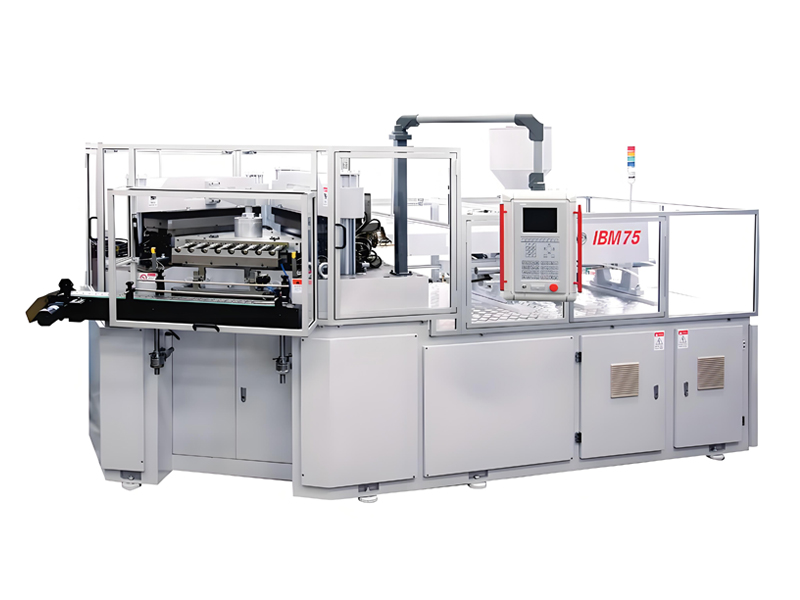
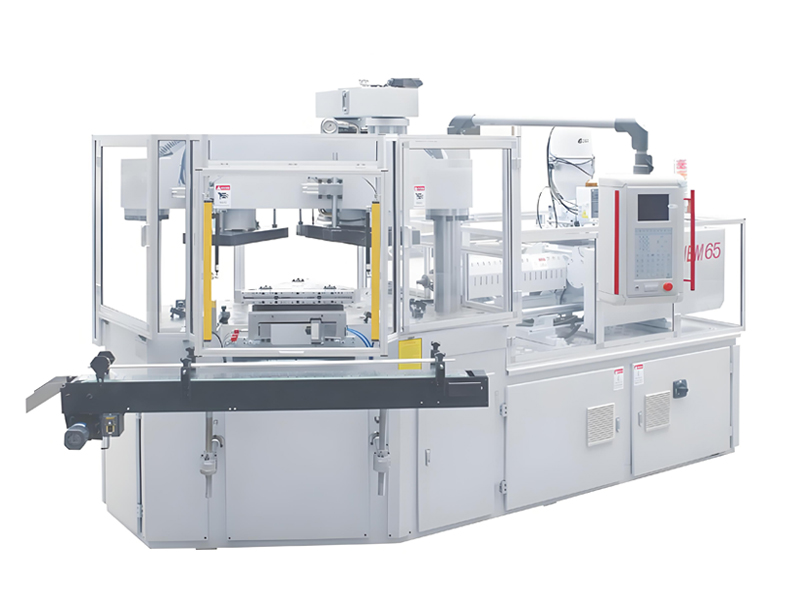
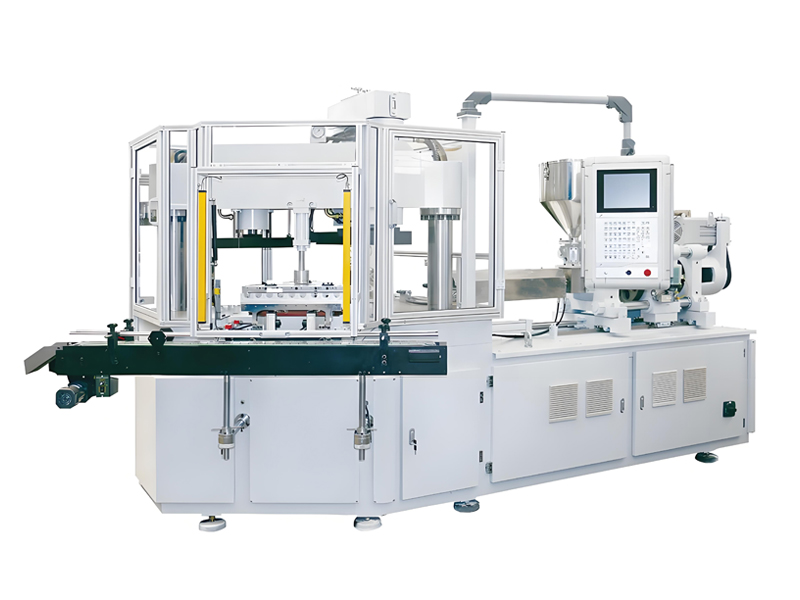
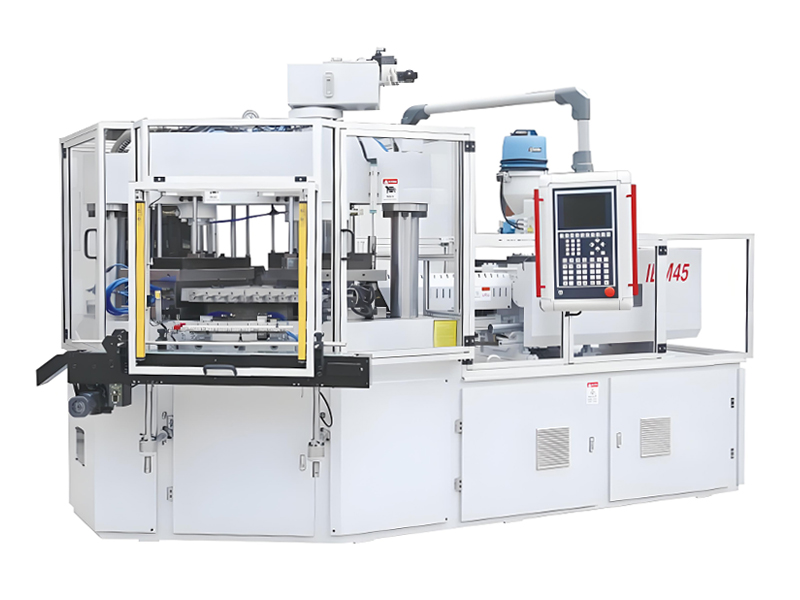
This guide explains how a 3ml injection blow molding machine works, why injection blow molding beats extrusion blow molding for eye drop vials, which Aibim models fit a small-vial line, what tolerances and outputs you should expect, which materials are qualified, and how Aibim backs the equipment with Wanplas group service. By the end you will be able to specify a machine configuration, choose cavity count, and request a tailored quotation with confidence. We reference the real IBM55 Hybrid Electric, IBM65, and IBM75 machines, their standard specifications, and the Wanplas shared policy of USD 500 free parts per year.
The ophthalmic market keeps growing as populations age and self-administered treatments expand, so the 3ml dropper bottle has become one of the highest-volume small containers in the pharmaceutical supply chain. Producing it well requires repeatable precision at a scale where conventional blow molding struggles. Aibim solves this with a purpose-built IBM platform that injects a parison, conditions it, and blows it in a single indexed cycle, eliminating the flash, weld line, and wall-thickness drift that plague smaller hollow parts made on other processes.
Aibim brings more than twelve years of plastic machine manufacturing experience to this niche, with roughly twenty years of accumulated know-how in injection blow molding specifically. The factory serves more than forty countries, builds above one hundred IBM lines per year, and runs its own CNC center so that machine parts and tooling are made in-house rather than outsourced. A new production facility purchased in 2022 expanded capacity and let Aibim standardize the single-crossbeam, double-pole clamping framework across the IBM55, IBM65, and IBM75. As part of the Wanplas group, Aibim also inherits the parent brand’s shared quality promises and its open-factory, customer-first service culture, which matters when a pharmaceutical buyer must audit a supplier before awarding a qualified container contract.
What Is a 3ml Injection Blow Molding Machine?
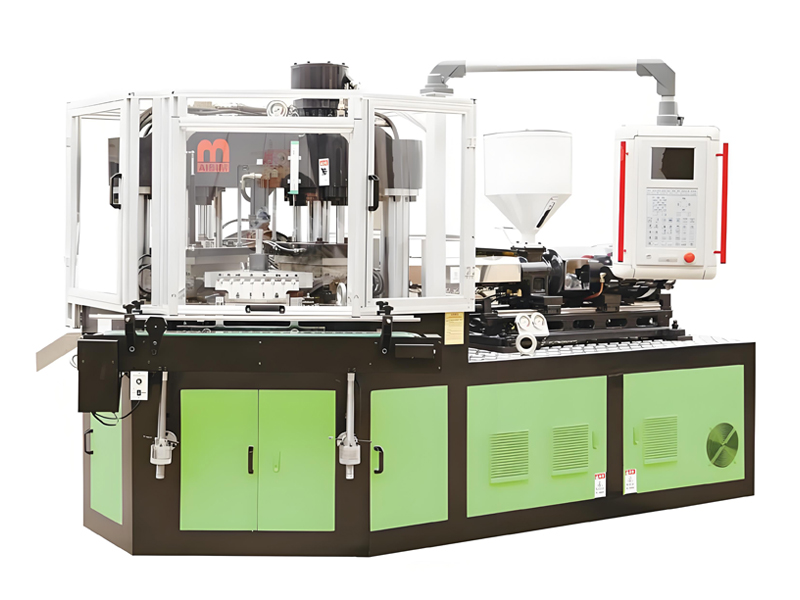
A 3ml injection blow molding machine is a three-station, one-step hollow molding system that first injects a precise parison (a threaded, pre-shaped tube) and then blows it into a finished 3ml bottle inside the same machine, without reclosing, reheating, or secondary trimming. It is purpose-built for containers where neck finish accuracy and uniform wall thickness matter more than maximum output volume.
The Three-Station One-Step IBM Process
Injection blow molding combines injection molding and blow molding into a single indexed sequence. The machine rotates a core rod through three stations so that each part is handled in a controlled, repeatable way:
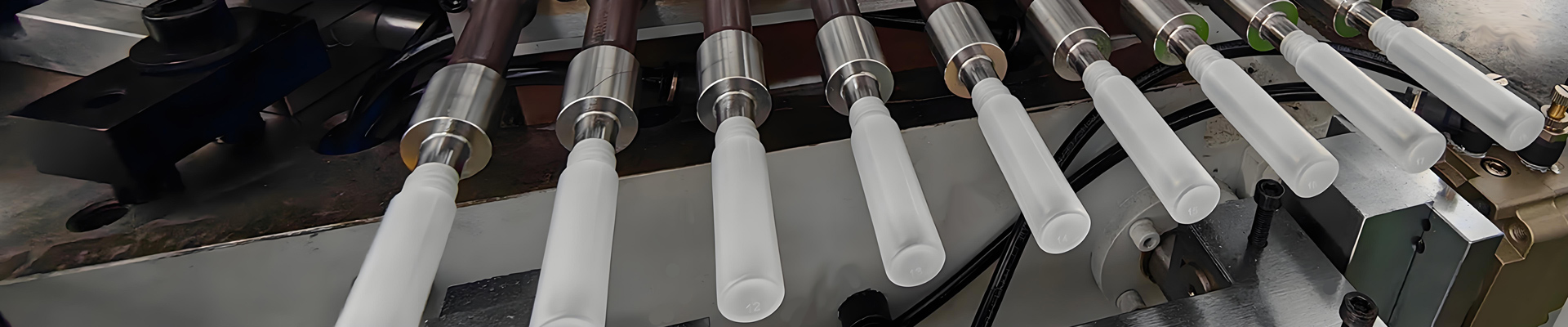
- Station 1 — Injection: The plastic melt is injected around a temperature-controlled core rod to form a parison with the finished bottle neck, threads, and a small tubular body. Because the neck is molded, not cut or blown, the thread and sealing surface are net-shape and dimensionally tight.
- Station 2 — Conditioning and transfer: The parison on the core rod is transferred to the blow station. For an IBM machine the parison temperature is already correct, so there is no separate reheating step as in stretch blow molding. This is what makes the process truly one-step.
- Station 3 — Blow: Compressed air expands the parison against a cooled blow cavity to form the 3ml body. The finished vial is then stripped from the core rod. Aibim uses a long-distance digital laser sensor at the stripper station to confirm safe mold position before ejection.
Because the bottle is created entirely inside a closed mold set, there is no flash to trim, no scrap neck, and no handled bottle neck to distort. For a 3ml eye drop vial this is decisive: the dropper tip and the threaded closure seat must be concentric and smooth, and only an injected neck delivers that consistently.
Why IBM for Ultra-Small Vials (Compared With Other Blow Processes)
Compared with extrusion blow molding, injection blow molding removes the parison cut and the flash line, so the 3ml bottle keeps a clean, flash-free body and a precise neck. Compared with injection stretch blow molding, IBM needs no preform reheating and handles wider materials including LDPE and PP, which do not orient well in stretch processes. The trade-off is that IBM is best for small, neck-critical containers rather than very large bottles, which is exactly the 3ml to 1000ml range Aibim targets.
| Process | Neck finish accuracy | Flash / scrap | Best volume range | Typical materials |
|---|---|---|---|---|
| Injection blow molding (IBM) | Very High | None (flash-free) | 3ml to 1000ml | LDPE, HDPE, PP, PS, SAN, PC, PCTG, TPU |
| Extrusion blow molding (EBM) | Medium | Flash at parting line, neck trim | 20ml to 1500L | PE, PP, PVC, PC, TPU |
| Injection stretch blow molding (ISBM) | High | None | 10ml to 3000ml | PET, PP, PA (needs orientation) |
The table above is a technology comparison only. Aibim positions IBM for the small, precise, neck-critical container where ophthalmic and pharmaceutical quality rules apply. From a total-cost view, IBM carries a Medium to High acquisition level against a cost index where the IBM55 Hybrid Electric is set at 100 as the baseline, the IBM65 sits slightly above it, and the IBM75 reflects its larger frame and higher output class. What offsets that level is the elimination of flash and neck-trim scrap, the Very High neck consistency that cuts inspection load, and the at-least 35 percent energy saving that lowers the per-vial operating cost. For a 3ml program running two shifts, the saved material and energy typically move the machine from a Premium first-cost perception to a Low lifetime cost-per-unit outcome.
Key Specifications for 3ml Eye Drop Vial Production
Choosing a 3ml injection blow molding machine means reading the specification sheet against three real constraints: the vial must be tiny yet consistent, the neck must seal a dropper cap, and the line must run at pharmaceutical hygiene and traceability levels. The four specifications below decide whether a machine will deliver.
Clamping Force and Mold Setting Space
Clamping force holds the blow and injection molds closed against melt and air pressure. Aibim uses a single-crossbeam, double-pole clamping framework that enlarges mold setting space, which matters for multi-cavity small-vial tooling. For 3ml vials, clamping force of 55 to 75 metric ton covers single to multi-cavity layouts without over-sizing the footprint. The enlarged platen space also simplifies cooling-line routing and robot take-out for clean-room integration.
Cavity Count and Shot Control
The injection unit must deliver a precise, repeatable shot to each cavity. Because a 3ml vial uses only a few grams of material, shot-to-shot consistency drives wall uniformity. Aibim machines use a servo-driven plasticizing and injection control with an SD card for recipe storage, so a validated 3ml parameter set can be copied across machines without re-tuning. Cavity count for 3ml vials typically runs from 4 up to 16 depending on the model, which is detailed in the cavity and output section below.
Injection Precision and Pressure Control
Precision begins at the parison. Aibim’s PREFILL hydraulics and variable displacement pump pressurizing reduce pressure shock and improve repeatability, which keeps the parison weight within a tight band. Tighter parison weight control means tighter finished-wall control, and that is the core of high-precision 3ml production. Combined with closed-loop temperature control on the core rod and cavity, the machine holds the drop-to-drop consistency that ophthalmic filling lines require.
Dimensional Tolerance Capability
A 3ml eye drop vial is judged on neck inner diameter, thread pitch, body diameter, and wall thickness. Aibim IBM machines routinely hold neck-related features to a few hundredths of a millimeter and body wall thickness variation within a low single-digit percentage of nominal wall. The tolerance table in the vial specification section translates these into concrete numbers you can put on a drawing.
Aibim Small-Vial Machine Lineup: IBM55, IBM65, IBM75
Aibim offers three core IBM models that all serve the 3ml to 1000ml range. The numbering reflects the clamping framework class, and each model scales cavity count and output for different production volumes. All three share the Wanplas-built quality standard, the PREFILL hydraulic concept, CE-certified safety, and at least 35 percent energy saving versus conventional hydraulic machines.
IBM55 Hybrid Electric Injection Blow Molding Machine
The IBM55 Hybrid Electric is Aibim’s most efficient small-vial platform. Its hybrid electric servo drive reduces energy use and improves repeatability, which is valuable for 3ml eye drop vials produced in long, uninterrupted campaigns. It is the right choice when clean energy use, low heat load, and tight shot control matter most.
| Specification | IBM55 Hybrid Electric |
|---|---|
| Clamping framework class | 55 ton (single-crossbeam, double-pole) |
| Container volume range | 3ml to 500ml |
| Typical 3ml cavity count | 8 to 16 cavities |
| Drive type | Hybrid electric servo (hydraulic assist) |
| Processable materials | LDPE, HDPE, PP, PS, SAN, PC, PCTG, TPU |
| Energy saving versus conventional hydraulic | Minimum 35 percent |
| Parameter storage | SD card recipe transfer across machines |
| Safety | CE certified, light curtain, laser stripper sensor |
| Best fit | High-volume 3ml eye drop and ophthalmic vials |
IBM65 Injection Blow Molding Machine
The IBM65 is the balanced mid-class workhorse. It carries more clamping and platen space than the IBM55, supporting more cavities or larger multi-cavity 3ml to 250ml tooling, and it remains compact enough for a pharmaceutical clean-room cell. It suits producers scaling from pilot to full commercial volume.
| Specification | IBM65 |
|---|---|
| Clamping framework class | 65 ton (single-crossbeam, double-pole) |
| Container volume range | 3ml to 500ml |
| Typical 3ml cavity count | 8 to 16 cavities |
| Drive type | Servo-hydraulic with PREFILL pump |
| Processable materials | LDPE, HDPE, PP, PS, SAN, PC, PCTG, TPU |
| Energy saving versus conventional hydraulic | Minimum 35 percent |
| Parameter storage | SD card recipe transfer across machines |
| Safety | CE certified, light curtain, laser stripper sensor |
| Best fit | Mid-volume 3ml to 100ml pharmaceutical and cosmetic vials |
IBM75 Injection Blow Molding Machine
The IBM75 is the largest of the three and the most flexible for multi-cavity small vials or mixed 3ml to 1000ml production. Its bigger platens accept wider mold bases, useful when you run several vial sizes on one frame. It is the preferred model for contract manufacturers serving many pharmaceutical customers from one line.
| Specification | IBM75 |
|---|---|
| Clamping framework class | 75 ton (single-crossbeam, double-pole) |
| Container volume range | 3ml to 1000ml |
| Typical 3ml cavity count | 10 to 16 cavities |
| Drive type | Servo-hydraulic with PREFILL pump |
| Processable materials | LDPE, HDPE, PP, PS, SAN, PC, PCTG, TPU |
| Energy saving versus conventional hydraulic | Minimum 35 percent |
| Parameter storage | SD card recipe transfer across machines |
| Safety | CE certified, light curtain, laser stripper sensor |
| Best fit | Multi-product lines, 3ml to 1000ml flexibility |
All three models are built in Aibim’s own factory, which operates a CNC center for machine parts production and moved into a new production facility in 2022 with an annual capacity above 100 lines. The models share mold-standard dimensions where practical, so a validated 3ml tool can often be transferred between frames with minimal rework.
3ml Eye Drop Vial Specifications and Quality Targets
A 3ml eye drop vial is a precision dispensing container, not a simple bottle. The dropper tip, the thread, and the body wall must meet targets that protect the drug, control the drop, and survive filling and capping. The table below lists typical 3ml vial characteristics a buyer should specify when ordering tooling.
| Vial characteristic | Typical 3ml target | Why it matters |
|---|---|---|
| Nominal fill volume | 3ml (often 5ml overflow) | Matches ophthalmic dose regimen |
| Body diameter | 18mm to 22mm | Fits hand, label, and carton |
| Body height | 45mm to 60mm | Shelf and shipper fit |
| Neck finish | Injected screw thread, 13mm to 18mm | Seals dropper or CRC closure |
| Nominal wall thickness | 0.5mm to 0.8mm | Strength vs material use |
| Surface | Flash-free, gloss or matte | Brand and inspection |
| Closure type | Dropper cap or tamper-evident screw | Controlled dispensing |
Wall Thickness and Dimensional Tolerance
For a 3ml vial, wall uniformity is the single most important quality metric because it governs drop size and burst resistance. The tolerance table below shows the capability Aibim IBM machines deliver on a well-designed 3ml tool. These are machine-process capabilities; the final number depends on mold quality, material, and cooling.
| Dimension | Process capability | Note |
|---|---|---|
| Neck inner diameter | plus or minus 0.05mm | Closure seal critical |
| Thread pitch and profile | plus or minus 0.03mm | Injected net-shape |
| Body outer diameter | plus or minus 0.10mm | Label and carton fit |
| Wall thickness variation | within 8 percent of nominal | Controlled by parison weight |
| Part weight (3ml LDPE) | plus or minus 2 percent | Material and cost control |
| Concentricity (neck to body) | plus or minus 0.15mm | Dropper alignment |
These tolerances are achieved through injected-neck IBM geometry plus Aibim’s PREFILL pressure control and closed-loop core-rod temperature. They are the reason an ophthalmic filler can run a 3ml vial without 100 percent neck inspection.
Material Options for 3ml Eye Drop Vials (LDPE, PP and More)
Aibim IBM machines process a broad resin set, which lets a pharmaceutical packer match material to drug compatibility, drop feel, and cost. For 3ml eye drop vials the two most common choices are LDPE and PP, with specialty resins used for premium or regulated packs. The wide compatibility is a direct benefit of the one-step IBM cycle: because there is no stretch orientation step, materials that do not draw well in stretch blow molding, such as LDPE, run naturally and keep their soft squeeze. A packer can therefore choose the polymer for the drug and the patient rather than for the limitations of the machine, which is the opposite of the constraint imposed by orientation-based processes.
| Material | Squeeze and drop feel | Clarity | Chemical resistance | Typical use in 3ml vials |
|---|---|---|---|---|
| LDPE | Soft, easy squeeze | Hazy | Good for many actives | Standard eye drop and nasal dropper |
| HDPE | Firmer squeeze | Hazy | Very good | Light-sensitive or robust packs |
| PP | Firmer, springy | Hazy to clear | Excellent, higher temperature | Sterilizable, autoclave-adjacent packs |
| PS | Rigid | Clear | Moderate | Sampling and diagnostic vials |
| PC / PCTG | Rigid, tough | Clear | Good | Premium clear ophthalmic |
| SAN | Rigid | Clear | Good | Diagnostic and lab droppers |
LDPE vs PP for Ophthalmic Packaging
LDPE is the traditional eye drop material because its low modulus gives a soft, controlled squeeze and a consistent drop. PP is chosen when higher temperature resistance, better barrier, or autoclave compatibility is needed, and it can be clarified for a more premium look. Both run well on Aibim IBM machines; the choice is driven by the drug master file and the filling line rather than by machine limitation.
Regulatory and Compliance Notes
Ophthalmic containers are medical-grade packaging, so material selection should follow the relevant pharmacopoeia and food-contact rules. Common references include United States Pharmacopeia Class VI, ISO 10993 for biological evaluation of medical devices, FDA food-contact provisions, and EU 10/2011 for plastic materials intended to contact food or similar simulants. Aibim supplies machines and tooling advice; the material grade and the extractable-leachable study remain the packer’s responsibility and must be confirmed with official test reports before commercial use.
Cavity Configuration and Output for 3ml Vials
Output for a 3ml injection blow molding machine is set by cavity count and cycle time. Because the part is tiny, cycle time is short, and multi-cavity tooling drives hourly volume. The table below shows representative output for Aibim models at a typical 3ml cycle; actual numbers depend on material, wall, cooling, and automation.
| Model | 3ml cavities | Typical cycle (seconds) | Estimated vials per hour | Estimated vials per year (two-shift) |
|---|---|---|---|---|
| IBM55 Hybrid Electric | 8 | 9 to 12 | 2,400 to 3,200 | 12M to 16M |
| IBM55 Hybrid Electric | 16 | 10 to 13 | 4,400 to 5,800 | 22M to 29M |
| IBM65 | 12 | 9 to 12 | 3,600 to 4,800 | 18M to 24M |
| IBM75 | 16 | 10 to 13 | 4,400 to 5,800 | 22M to 29M |
These figures assume a two-shift operation and standard cooling; they are planning estimates, not guarantees, and Aibim validates output during a factory acceptance trial on the customer’s mold and resin. Cavity count also affects scrap and tooling cost, so the selection section below maps requirement to model. Beyond raw volume, the cavity decision changes validation effort: an 8-cavity mold is cheaper to prove and spare, while a 16-cavity mold halves the number of machines needed for the same annual output and therefore halves the floor space, utilities, and operator roles. For a greenfield ophthalmic line, the 16-cavity choice on an IBM55 or IBM75 is usually the more efficient plant, provided cooling capacity and clean-room air handling are sized for the higher machine count per square meter.
Precision Technology: PREFILL Hydraulics, Energy Saving, CE Safety
Aibim’s precision reputation rests on three bundled technologies. Together they keep the 3ml vial consistent, the line efficient, and the operator safe.
PREFILL Technology and Variable Displacement Pump
Aibim uses a unique PREFILL technology together with a variable displacement pump pressurizing system in the hydraulic circuit. The PREFILL function pre-fills the clamp cylinder at low pressure so the high-pressure pump only does the final tonnage work, cutting pressure shock and energy spikes. The result is smoother clamp motion, less parison distortion, and repeatable shot control, which is exactly what a 3ml vial needs.
Energy Saving: Minimum 35 Percent Reduction
Compared with conventional hydraulic IBM machines, Aibim’s servo-hydraulic and hybrid-electric designs save at least 35 percent of energy. On a 3ml line running continuously, that reduction lowers the cost per vial and the heat load on the room, which helps clean-room and air-conditioning budgets. The IBM55 Hybrid Electric leads on this metric because the electric servo replaces hydraulic flow during idle and metering phases.
CE Certified Safety: Light Curtain and Laser Sensor
Safety is built into the machine, not added later. The stripper station uses a long-distance digital laser sensor to confirm mold and stripper position before ejection, and a light curtain guards the operator zone. The machine is CE certified, which supports export and pharmaceutical site qualification in regulated markets. Because the three-station index moves a hot core rod between stations, the laser and light-curtain combination prevents a misfeed from becoming a pinch or a burn, and it also protects the tooling from a clash that would otherwise scrap a multi-cavity mold. For a 3ml line the protected asset is small but the downtime from a damaged 16-cavity set is not, so the safety system doubles as a production safeguard.
Application Industries: Pharmaceutical and Eye Care
Aibim IBM machines serve the fields the factory was built for: pharmaceutics, food, drink, and cosmetic. The 3ml vial is strongest in pharmaceutical and eye care, but it also serves adjacent small-dose markets. In practice the same machine that makes an eye drop bottle in the morning can make an oral-dose dropper or a diagnostic vial in the afternoon, because the process family stays identical and only the mold and resin change. That flexibility is why a single IBM line can serve a diversified packer without re-qualifying a new technology for every product, and why contract manufacturers value the 3ml to 1000ml range when bidding for multiple pharmaceutical customers from one validated cell.
Pharmaceutical Packaging: Ophthalmic, Oral, and Nasal
The dominant use of a 3ml injection blow molding machine is ophthalmic solution in dropper bottles, but the same precision serves oral drops, pediatric doses, and nasal sprays where a small, accurate, sealed container is required. The flash-free injected neck accepts tamper-evident and child-resistant closures that regulators expect for medicines.
Eye Care and Ophthalmic Dropper Bottles
Eye drop vials demand a soft, repeatable squeeze and a clean dropper tip. LDPE on an Aibim IBM machine delivers both, with wall uniformity that keeps drop volume stable across a batch. For preservative-free formats, the same line can produce unit-dose or low-volume packs by changing cavity and volume settings rather than the process family.
Cosmetic and Personal Care Samples
Beyond pharma, 3ml to 10ml IBM vials are used for serum samples, travel eyelash serum, and premium single-dose skincare. The clear PC, PCTG, or SAN options give a high-value look, while the process keeps the bottle flash-free and ready to fill without trimming.
Quality Control and Defect Prevention for 3ml Vials
At the 3ml scale, quality control is less about catching bad parts and more about preventing variation at the source. Because the vial wall is thin and the neck is the sealing surface, a small process drift becomes a visible defect quickly. Aibim’s IBM architecture prevents most defects by design: the injected parison removes flash, the single indexed core rod removes orientation error, and the closed mold removes post-mold handling. The remaining risks are material, cooling, and pressure related, and they are managed with in-process monitoring rather than end-of-line sorting.
In-Process Monitoring and Metrology
A production-ready 3ml line pairs the IBM machine with weighing, vision, and leak checks. The SD card recipe lock keeps the parison weight steady, an in-line checkweigher confirms part weight per cavity, and a vision station inspects the injected neck and dropper tip. For ophthalmic packs, a statistical sampling of closure torque and drop volume validates the container before filling. Because the neck is molded net-shape, vision concentrates on the thread and the tip rather than on trimming defects that do not exist on an IBM part.
Common Defects and Their Root Causes
Even on a precise IBM machine, a few defects can appear if the process window is not held. The table below maps the usual 3ml vial problems to their causes and the Aibim-corrective action, so a technician can resolve them without trial and error.
| Defect | Likely cause | Corrective action on Aibim IBM |
|---|---|---|
| Wall thickness drift | Parison weight variation, uneven core-rod heat | Re-lock SD recipe, check closed-loop core-rod temperature |
| Neck ovality | Core rod misalignment, low clamp tonnage | Verify double-pole clamp setting, inspect core rod |
| Dropper tip blemish | Blow air contamination, cavity deposit | Filter compressed air, clean and polish cavity |
| Surface splay or silver | Moisture in resin, over-high melt heat | Pre-dry material, lower barrel temperature zone |
| Part sticking at stripper | Stripper timing, ejector sensor fault | Confirm laser sensor signal, adjust stripper stroke |
Clean Manufacturing and Documentation
Pharmaceutical vials are often filled in controlled environments, so the container process should support that standard. Aibim machines run without flash and without trim dust, which lowers particulates at the press. Recipe documentation, cavity mapping, and the factory acceptance report form the baseline dossier a quality team needs for change control. When a second line is added, copying the validated recipe by SD card keeps both lines within the same process window, which simplifies ongoing qualification and audit.
How to Choose the Right 3ml IBM Machine
Selection starts from volume, material, and site constraints. The table below maps a typical requirement to an Aibim model so you can shortlist before requesting a quote.
| Requirement | Recommended Aibim model | Reason |
|---|---|---|
| Pilot or low volume, 3ml to 100ml | IBM55 Hybrid Electric | Lowest energy, compact, clean |
| Mid commercial volume, mixed small vials | IBM65 | Balanced clamp and platen space |
| High volume, single 3ml SKU | IBM55 or IBM75, 16 cavities | Max cavities, max uptime |
| Contract manufacture, many sizes | IBM75 | 3ml to 1000ml flexibility |
| Clean-room, energy-first site | IBM55 Hybrid Electric | Hybrid drive, low heat load |
Decision Checklist
- Confirm annual volume and shifts to set cavity count (8, 12, or 16).
- Fix the material (LDPE default, PP if heat or barrier needed, clear resin for premium).
- Define the neck finish and closure so the injected thread matches your cap.
- Choose model by platen space and energy target, not just price.
- Plan clean-room integration, take-out, and inline inspection early.
- Ask Aibim for a factory acceptance trial on your resin and mold.
Common Mistakes to Avoid
- Over-sizing clamping force, which wastes floor space and energy without improving the 3ml part.
- Choosing a process by price alone and accepting flash or neck trim that raises inspection cost.
- Forgetting material qualification; the machine is capable, but the resin grade must be approved.
- Under-specifying cooling, which limits cycle time and therefore output on a tiny part.
- Skipping recipe documentation; use the SD card to lock the validated 3ml parameter set.
Service and Support from Aibim (Wanplas)
Because Aibim is a Wanplas factory, every machine carries the Wanplas group service promises as well as Aibim’s own IBM expertise. The support model is built for pharmaceutical buyers who need documentation, training, and continuity.
Warranty and Free Parts Policy
Aibim provides Wanplas’s shared after-sales policy, including USD 500 free parts per year and free replacement of damaged parts within the warranty period. This lowers the cost of ownership for a 3ml line that runs long campaigns and keeps a spare-parts buffer without a large upfront spend. The Wanplas quality standard also includes a production-capacity guarantee and a quality standard commitment.
Installation, Commissioning, and Training
Aibim engineers support installation and commissioning, help validate the first commercial run on your resin and mold, and train operators and maintenance staff. Because Aibim runs its own CNC center and builds the IBM machines in-house, spare parts and tooling follow-up are fast. Recipe transfer via SD card shortens changeover when you add a second line.
Open Factory and Trial Runs
Following the Wanplas open-factory policy, Aibim welcomes customer visits to inspect the build, watch a 3ml trial, and audit the production system before purchase. A witnessed factory acceptance test on your actual mold and material is the best way to confirm tolerance and output claims before shipment.
Frequently Asked Questions
How does a 3ml injection blow molding machine work?
It injects a parison with the finished neck around a core rod, transfers the core rod to the blow station, and expands the parison with compressed air into a cooled 3ml cavity, all in one indexed, three-station cycle. The bottle is stripped flash-free, so there is no trimming or neck scrap.
Why choose IBM over extrusion blow molding for eye drop vials?
IBM molds the neck net-shape, so the thread and sealing surface are precise and repeatable, and the body is flash-free. For a 3ml ophthalmic vial this removes the flash line and neck trim that extrusion blow molding leaves, improving seal reliability and lowering inspection cost.
Which Aibim model is best for 3ml eye drop vials?
The IBM55 Hybrid Electric is best for high-volume, energy-first 3ml production, the IBM65 fits mixed small-vial programs, and the IBM75 suits contract manufacturers running many sizes from 3ml to 1000ml. All three cover the 3ml range with multi-cavity tooling.
What materials can be used for 3ml ophthalmic vials?
Aibim IBM machines process LDPE, HDPE, PP, PS, SAN, PC, PCTG, and TPU. LDPE is the standard for eye drops because of its soft squeeze, while PP is used when higher temperature or barrier performance is needed. Material grade and compliance still require the packer’s validation.
What dimensional tolerances can the machine hold?
On a well-designed 3ml tool, Aibim IBM machines hold neck inner diameter within plus or minus 0.05mm, thread features within plus or minus 0.03mm, body diameter within plus or minus 0.10mm, and wall thickness variation within about 8 percent of nominal. Final figures depend on mold and material.
How many cavities and what output can I expect for 3ml vials?
A 3ml line typically runs 8 to 16 cavities. A 16-cavity Aibim machine at a 10 to 13 second cycle yields an estimated 4,400 to 5,800 vials per hour, or roughly 22M to 29M vials per year on two shifts. Output is confirmed during a factory acceptance trial.
Is the Aibim IBM machine CE certified and safe?
Yes. Aibim IBM machines are CE certified and use a long-distance digital laser sensor at the stripper station plus a light curtain for personnel safety. The safety features are integrated into the machine design and support qualification in regulated markets.
What after-sales support and free parts does Aibim provide?
As a Wanplas factory, Aibim provides USD 500 free parts per year, free replacement of damaged parts within warranty, installation and commissioning, operator training, and an open-factory policy for audits and trial runs. Spare parts are supported by Aibim’s in-house CNC center.
Conclusion
A 3ml injection blow molding machine is the correct technology when an ultra-small eye drop vial must be precise, flash-free, and consistent at volume. Aibim, a Wanplas factory, delivers this through its three-station, one-step IBM platform: the IBM55 Hybrid Electric, IBM65, and IBM75, all built with PREFILL hydraulics, at least 35 percent energy saving, CE-certified safety, and an injected-neck geometry that holds tight tolerances on 3ml to 1000ml containers.
For ophthalmic and pharmaceutical producers, the practical path is clear: choose cavity count by annual volume, select LDPE or PP by drug and filling needs, and validate the tool on an Aibim factory acceptance trial. Backed by the Wanplas group policy of USD 500 free parts per year and full installation, training, and open-factory support, a 3ml IBM line is a low-risk route to high-precision small vial production.
If you are planning a 3ml eye drop vial project, send your target volume, material, and closure drawing to Aibim for a tailored machine and mold configuration, a factory visit, and a sample trial run on your resin. The Aibim and Wanplas teams will help you specify the right IBM model and confirm tolerance and output before you commit.