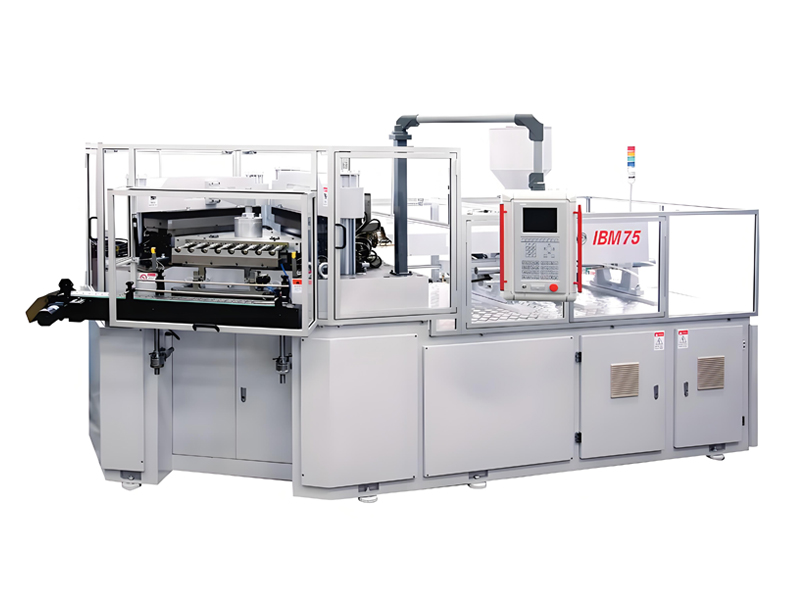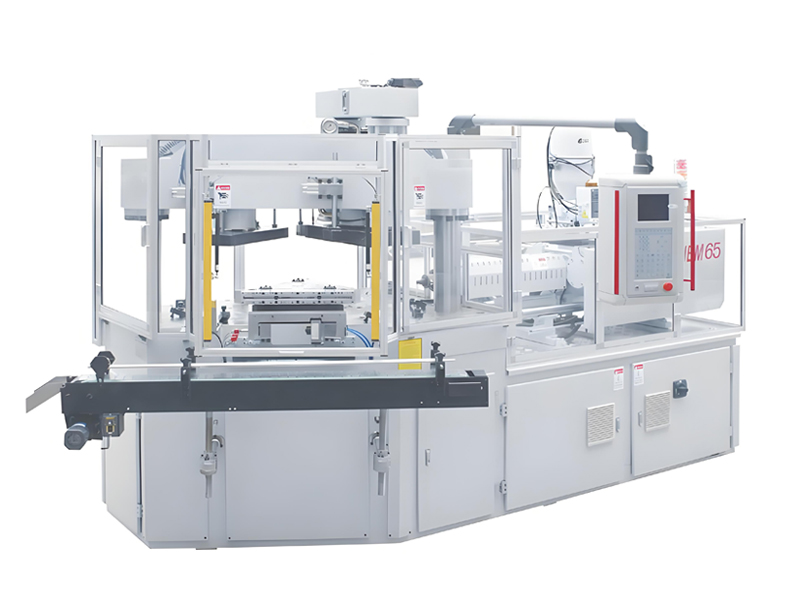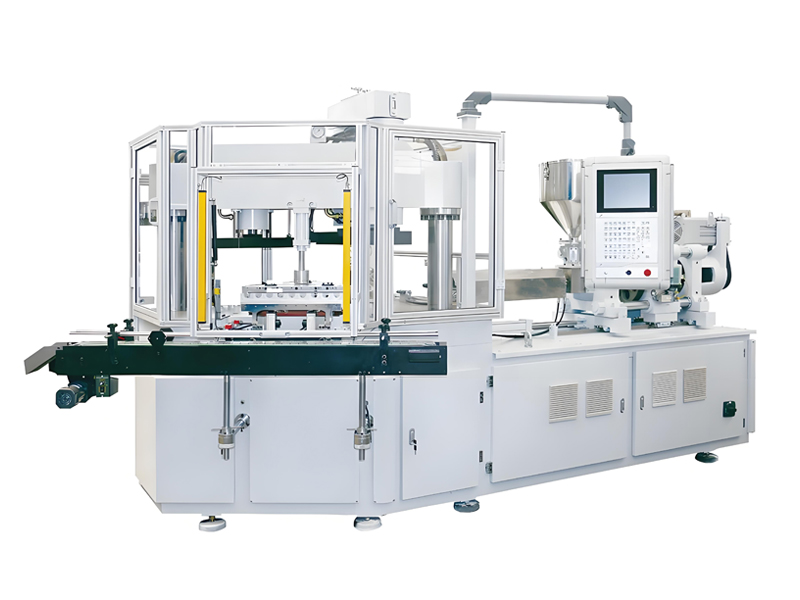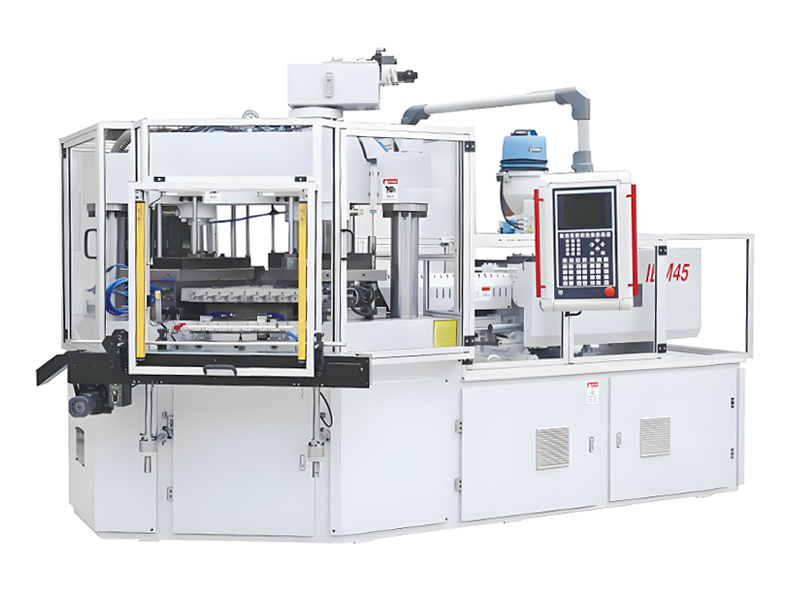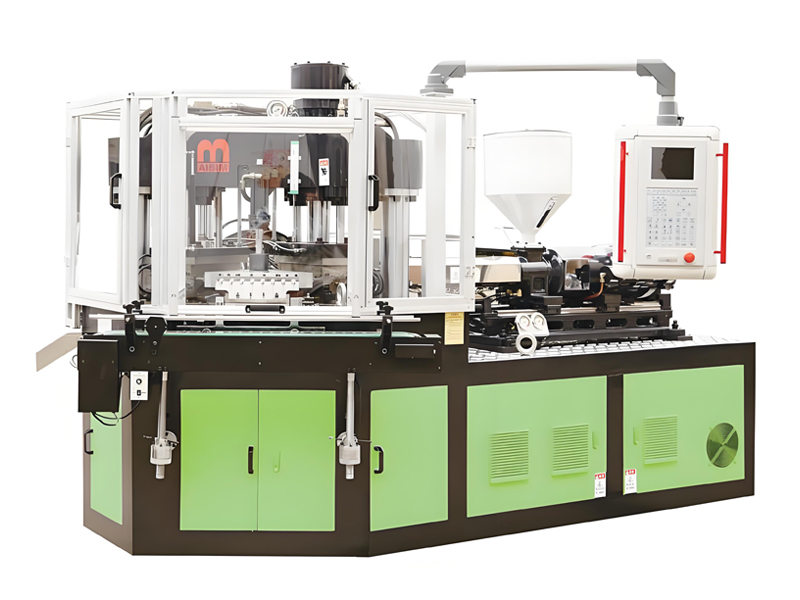
In the competitive world of plastic packaging, the ability to switch between different bottle sizes and designs quickly is a significant advantage. A Fast Changeover Injection Blow Molding Machine is engineered to minimize downtime during mold and product changeovers, allowing manufacturers to respond rapidly to market trends and short-run orders.
Traditional machines can take hours to change molds and recalibrate, but modern designs from AiBiM incorporate advanced clamping systems, automated adjustments, and modular components to reduce this time to minutes. This article explores the engineering behind fast changeover technology and its economic impact on production efficiency.
El desafío de los cambios de molde y los costes de tiempo de inactividad
Changing molds on an Injection Blow Molding Machine is a complex task. It involves disconnecting hydraulic lines, electrical connectors, and air hoses, followed by physically removing the heavy mold sets and installing new ones. The new molds must then be precisely aligned, and the machine parameters (such as stroke length, blow pressure, and heater settings) must be adjusted for the new bottle geometry.
En una configuración tradicional, este proceso puede tomar de 2 a 6 horas, según el tamaño de la máquina y la complejidad del molde. Para una fábrica que opera 24 horas al día, un cambio de 4 horas representa una pérdida del 17% de la capacidad diaria.
If the factory produces 100,000 bottles per day, that is a loss of 17,000 bottles. At a profit margin of $0.02 per bottle, that is $340 lost per changeover. Over a year with weekly changes, this amounts to nearly $18,000 in lost revenue. The cost of the labor required for the changeover (often 2 to 3 technicians) adds another $200 to $500 per event. Therefore, reducing changeover time is a direct path to increased profitability.
Sistemas de cierre de cambio rápido y bloqueo hidráulico
The core innovation in a Fast Changeover Injection Blow Molding Machine is the clamping system. AiBiM utilizes toggle-less or servo-electric clamping units that allow for rapid opening and closing with high precision. Unlike hydraulic toggles which have fixed stroke lengths, servo-electric systems can be programmed to open just enough to remove the mold, saving time.
Más importante aún, estos sistemas cuentan con interfaces de montaje estandarizadas. En lugar de atornillar los moldes directamente al plato, los moldes se montan en un sistema de palé o portador. El portador se bloquea en la máquina usando un único pestillo hidráulico o mecánico.
To change the mold, the operator simply unlocks the carrier, slides it out on rails, and slides in a pre-set carrier with the new mold. This “slide-in/slide-out” mechanism can reduce mold change time from hours to less than 30 minutes. The carriers are pre-aligned off-line, so once locked into the machine, the mold is immediately ready for production without extensive re-leveling.
Ajuste automático de parámetros y almacenamiento de recetas
Incluso con cambios físicos rápidos de molde, la máquina debe reprogramarse para la nueva botella. Esto implica ajustar el volumen de inyección, la posición de la varilla de estiramiento, los tiempos de soplado y la temperatura del horno. Las máquinas AiBiM modernas cuentan con sistemas de control avanzados con software de gestión de recetas.
Los operadores pueden almacenar cientos de recetas en la HMI, cada una correspondiente a un número de molde específico. Cuando se instala un molde nuevo, el operador simplemente selecciona el número de receta de una lista. La máquina ajusta automáticamente todos los parámetros, incluidas las posiciones de los motores servo y los puntos de ajuste de los calentadores.
Algunos sistemas avanzados utilizan etiquetas RFID en los portamoldes. Cuando el portamolde se desliza en la máquina, el lector detecta la etiqueta y carga automáticamente la receta correcta. Esto elimina el error humano en la entrada de datos y garantiza que la máquina comience a producir buenas botellas de inmediato.
Zonas modulares de calentamiento y enfriamiento para cambios rápidos
Los diferentes tamaños y formas de botella requieren diferentes perfiles de calentamiento. Un acabado de cuello pequeño necesita menos calor que un cuerpo ancho. Las máquinas de cambio rápido cuentan con bandas calefactoras modulares que pueden retirarse y reemplazarse rápidamente.
Instead of rewiring fixed heater bands, quick-connect plugs are used. This allows maintenance teams to swap out a heater zone for a different wattage or size without using tools. Similarly, cooling water lines are equipped with quick-disconnect couplings (similar to those used in plastic injection molding).
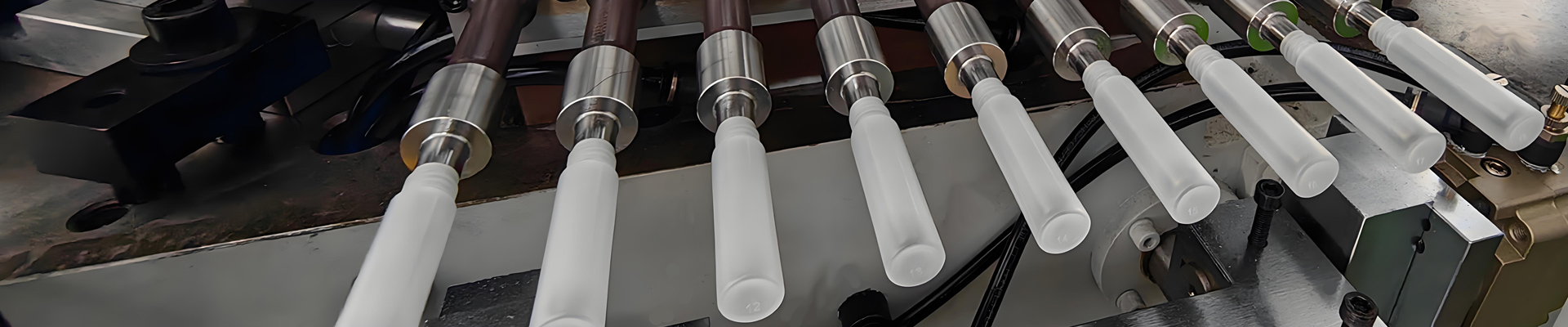
This prevents water leaks and saves time during hose connection and disconnection. The modularity extends to the stretch rod assembly. For different bottle heights, the stretch rod length may need to change. AiBiM designs stretch rods with telescopic or modular sections that can be adjusted or swapped quickly.
Estrategias de precalentamiento y preparación fuera de línea
A key strategy for fast changeover is to perform as many tasks as possible while the machine is still running (overlapping operations). This includes pre-heating the new mold to operating temperature before it is installed. Cold molds cause the first few hundred bottles to be hazy or have poor distribution.
AiBiM machines can be equipped with off-line mold pre-heaters. While the current mold is producing, the next mold is being heated in the pre-heater. When the changeover happens, the mold is already at the correct temperature (e.g., 120 degrees Celsius for PET blowing), eliminating the warm-up period.
Similarly, the preforms for the new job can be dried and loaded into the hopper in advance. The concept of Single Minute Exchange of Die (SMED), borrowed from the automotive industry, is applied here. By converting internal setup tasks (done while the machine is stopped) to external tasks (done while running), changeover time is drastically reduced.
Análisis económico de la flexibilidad y cálculo del ROI
El valor económico de una máquina de moldeo por inyección y soplado de cambio rápido puede calcularse analizando el aumento en la Eficiencia General de los Equipos (OEE). La OEE es una métrica que multiplica Disponibilidad, Rendimiento y Calidad. Los cambios de molde impactan directamente la Disponibilidad.
By reducing changeover time from 4 hours to 1 hour, Availability increases. If a machine is scheduled to run 24 hours, and changeovers occur once per shift (3 times a day), the old machine loses 12 hours a day to changeovers (50% availability loss during those periods). The new machine loses only 3 hours. This recovers 9 hours of production time.
A una tasa de 500 botellas por hora, eso son 4,500 botellas adicionales por día. Con un beneficio neto de $0.02 por botella, eso son $90 por día, o $32,850 por año. La prima por una máquina de cambio rápido podría ser de $15,000 sobre un modelo estándar. El período de retorno es de menos de 6 meses.
Furthermore, the ability to accept “rush orders” or small batches without disrupting the main production schedule allows the manufacturer to enter new market segments. For example, a cosmetic brand might need a special edition bottle for a holiday promotion with a lead time of only two weeks. A standard machine cannot handle this profitably due to downtime costs, but a fast-changeover machine can. This flexibility can increase total revenue by 20% to 30%.