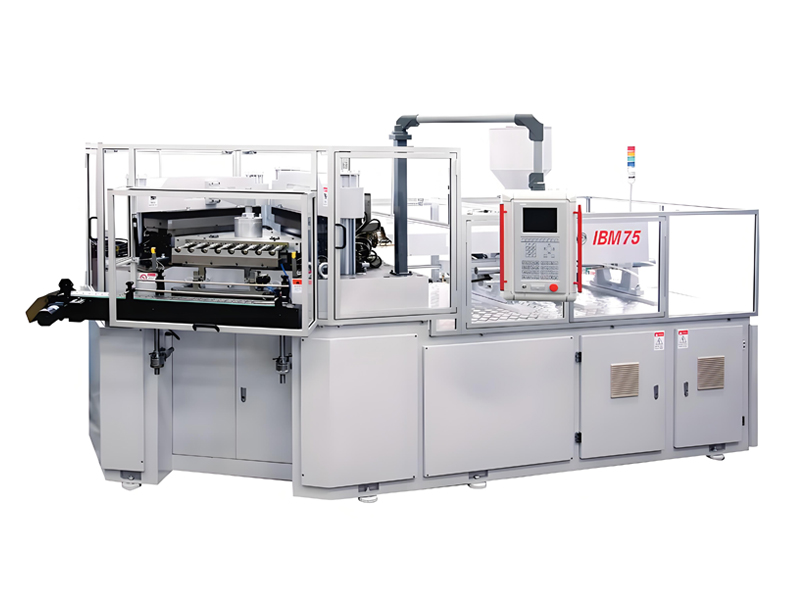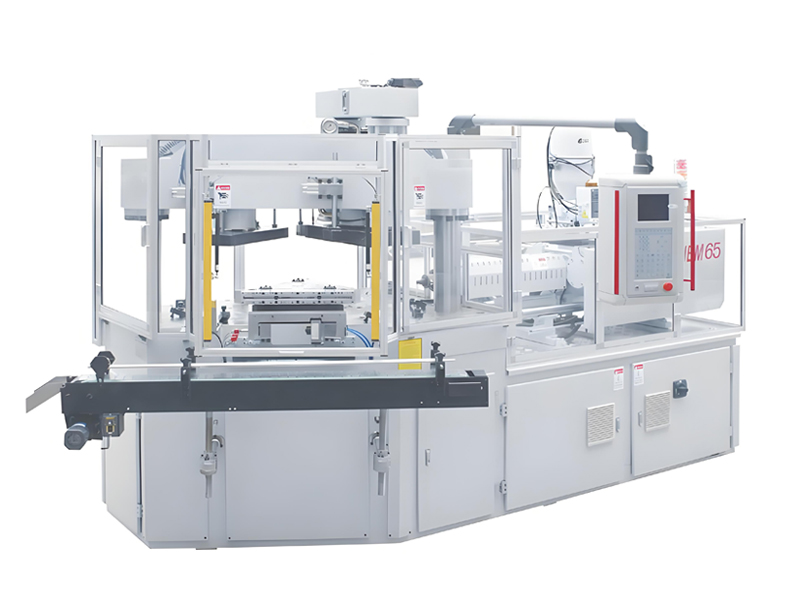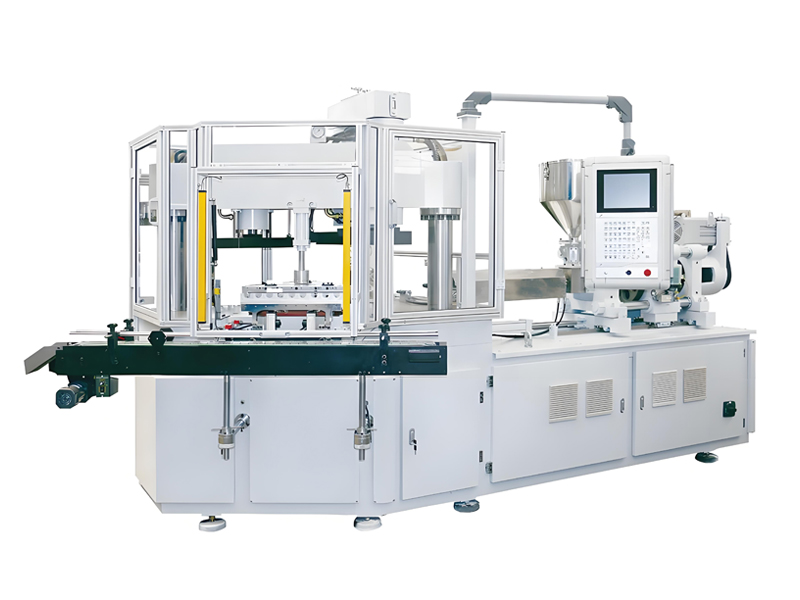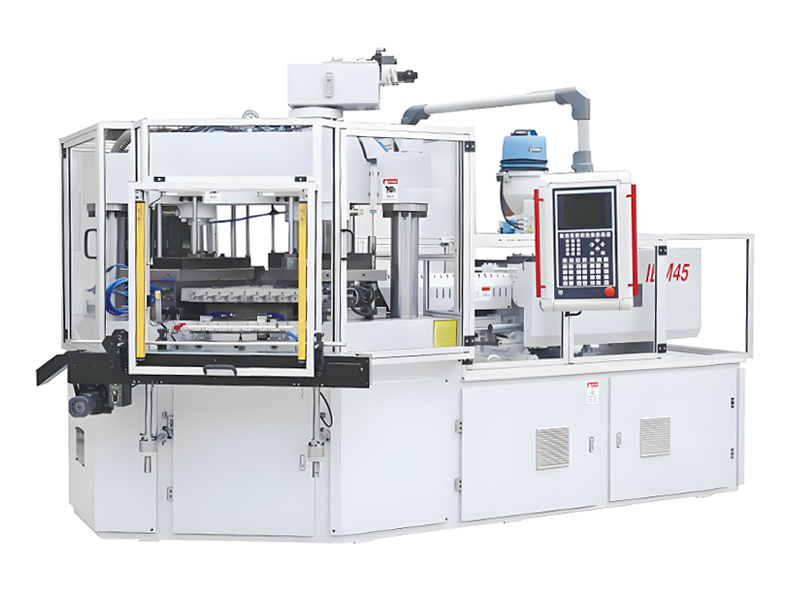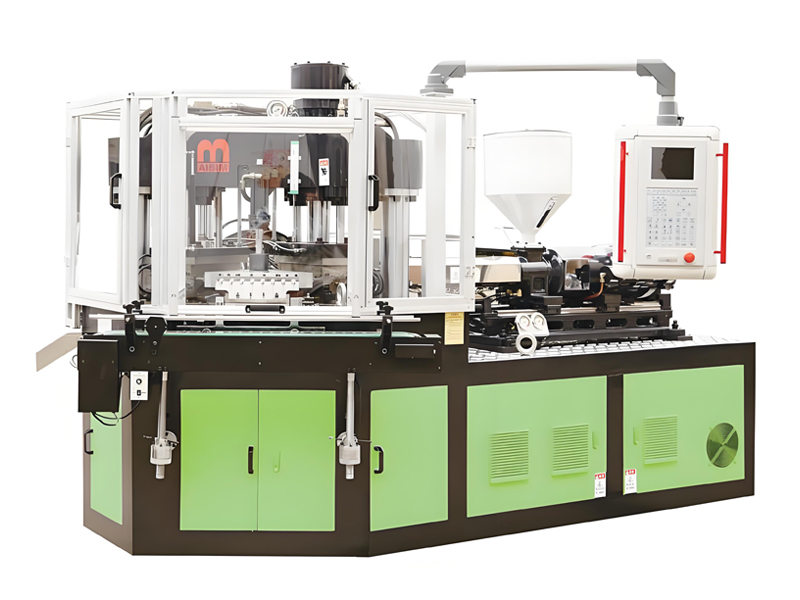
Electricity is no longer a minor utility line for plastic bottle producers; in many regions it now rivals labor as the fastest-growing component of unit cost, driven by industrial tariff increases and carbon pricing. Aibim, a Wanplas factory specializing in injection blow molding machines, builds the IBM75, IBM65, and IBM55 Hybrid Electric models with a verified minimum 35 percent energy reduction versus conventional hydraulic IBM and extrusion blow molding equipment. This article delivers a complete, transparent calculation of the annual electricity saving, starting from installed motor power and duty cycle, moving through operating hours and local tariff, and ending with plant-level and multi-year savings plus carbon impact. Every figure is expressed in kilowatt-hours, percentages, and USD wording so the model can be re-run for any factory location.
Por qué la electricidad se está convirtiendo en un factor de costo decisivo en IBM
The share of electricity in the total cost of a molded bottle has risen sharply over the past five years, and for high-cavity automatic IBM lines the trend is even more pronounced because these machines run continuously and draw significant connected power during clamp, injection, and blow phases. Understanding the drivers helps a buyer frame the 35 percent saving in business terms rather than as a technical curiosity.
Aranceles industriales en aumento
Across Europe, parts of Asia, and North America, industrial electricity tariffs have increased 10 to 25 percent since 2021, with further upward pressure from grid decarbonization surcharges. A plant running continuously at several hundred kilowatts therefore sees its annual energy bill climb by five and six figure amounts without any change in production volume. A 35 percent reduction directly offsets this trend.
Fijación de precios de carbono y reporte
An increasing number of markets apply carbon levies or mandatory emissions reporting to mid-size manufacturers. Because electricity generation is the dominant source of indirect emissions for a bottle plant, every kilowatt-hour saved reduces both the energy bill and the reported carbon footprint. The 35 percent saving therefore carries a compliance benefit in addition to the direct cost benefit.
La operación continua amplifica el ahorro
Automatic IBM lines are designed for unattended multi-shift running. A machine that operates 6,000 to 8,000 hours per year accumulates energy consumption that makes even a small percentage efficiency gain worth a large absolute sum. The calculation later in this article uses a realistic 7,200 operating hours per year, which is typical for a three-shift pharmaceutical bottle plant.
De dónde proviene el ahorro de energía del 35 por ciento
The 35 percent figure is not a marketing estimate; it is the result of four concrete engineering changes in Aibim’s IBM platform. Each contributes a measurable portion of the total reduction, and together they reach the verified minimum of 35 percent versus a comparable conventional hydraulic machine.
Tecnología PREFILL en el sistema hidráulico
Aibim’s unique PREFILL technology pre-fills the main cylinder before the high-pressure phase, so the pump does not have to move the full oil volume against pressure during the low-load portion of the stroke. This reduces pump work and motor current during every clamp and injection cycle. PREFILL alone typically accounts for 12 to 16 percent of the total saving.
Presurización con bomba de desplazamiento variable
Conventional IBM machines use fixed-displacement pumps that run at constant flow and dump excess oil across relief valves, wasting energy as heat. Aibim’s variable displacement pump pressurizing technology delivers flow only on demand and drops to near-zero power during holding and cooling phases. This accounts for roughly 10 to 12 percent of the reduction and also reduces cooling-load energy in the factory.
IBM55 híbrido eléctrico para el menor consumo
The IBM55 Hybrid Electric model replaces the hydraulic clamp and transfer with servo-electric actuators while keeping the injection and blow functions optimized. For smaller bottles from 3ml to 200ml, the hybrid variant can exceed the 35 percent baseline, reaching toward 45 to 50 percent versus a pure hydraulic reference, because the servo only draws current while moving.
Calefacción y aislamiento optimizados
Injection blow molding requires precise barrel and hot-runner heating. Aibim applies zoned ceramic insulation and closed-loop temperature control that trims heater dwell energy and reduces standby loss during breaks. Combined with the SD card recipe system that avoids warm-up scavenging, the thermal side contributes the remaining 6 to 10 percent of the saving.
Por qué el ahorro es duradero y no un ajuste único
A diferencia de una optimización de software que se degrada a medida que los ajustes se desvían, el ahorro del 35 por ciento está integrado en la arquitectura hidráulica y eléctrica de la máquina. Persiste entre recetas, cambios de turno y niveles de habilidad del operador, razón por la cual puede modelarse con confianza en un caso de negocio de cinco años.
Eficiencia en espera, calentamiento y carga parcial
The 35 percent saving is not captured only during active molding; a meaningful share comes from how the machine behaves when it is not at full demand. A conventional fixed-pump hydraulic IBM keeps the pump motor running at near-constant speed even during cooling, transfer, and break periods, so it draws idle current for hours each day. Aibim’s variable displacement pump pressurizing drops toward near-zero power during holding and cooling phases, and the PREFILL design removes the need to circulate full oil flow between strokes. Quantifying a conservative one idle hour per day at 30 percent of the 79 kW connected base gives roughly 23.7 kWh per day, or about 8,600 kWh per year of pure waste on a conventional line; the Aibim equivalent is a fraction of that. Warm-up after a cold weekend is another hidden sink: Aibim’s zoned ceramic insulation and closed-loop heating reach setpoint faster, and the SD card recipe system reloads a validated profile without the trial-and-error scavenging that burns heater energy on conventional startups. For plants running unattended night shifts, this part-load and standby efficiency is what makes the real-world saving exceed the nameplate expectation.
Consumo de energía de referencia: convencional frente a Aibim IBM
To calculate savings honestly, we must first establish the connected and consumed power of a conventional hydraulic IBM line and of the Aibim equivalent. Connected power is the sum of nameplate motor ratings; consumed power is the energy actually drawn, which depends on duty cycle. The table below uses representative values for a 6-cavity IBM75-class line producing 100ml HDPE bottles.
Tabla 1: potencia conectada y consumida por componente
| Power Consumer | Conventional Hydraulic (kW) | Aibim IBM75 (kW) | Reduction (kW) |
|---|---|---|---|
| Hydraulic pump motor | 37.0 | 22.0 | 15.0 |
| Injection drive | 18.5 | 15.0 | 3.5 |
| Barrel and hot runner heating | 14.0 | 11.0 | 3.0 |
| Blow and transfer servo | 5.5 | 4.5 | 1.0 |
| Conveyor and auxiliaries | 4.0 | 3.5 | 0.5 |
| Peak connected | 79.0 | 56.0 | 23.0 |
Del pico al promedio: El factor de ciclo de trabajo
Machines do not draw peak power continuously. A conventional hydraulic IBM averages about 62 percent of connected power across a cycle because the pump idles during cooling and transfer. Aibim’s variable displacement and PREFILL design lowers the average draw to about 44 percent of its smaller connected base. This is why the real-world saving exceeds the raw peak-power gap.
Tabla 2: potencia media consumida y energía anual
| Metric | Conventional Hydraulic | Aibim IBM75 |
|---|---|---|
| Peak connected power (kW) | 79.0 | 56.0 |
| Average load factor | 62 percent | 44 percent |
| Average draw (kW) | 49.0 | 24.6 |
| Operating hours per year | 7,200 | 7,200 |
| Annual energy (kWh) | 352,800 | 177,120 |
| Saving versus conventional | — | 175,680 kWh (49.8 percent) |
The average-draw model shows a 49.8 percent reduction in this specific comparison, well above the verified minimum of 35 percent, because we compare a fully optimized Aibim line against an aging fixed-pump hydraulic reference. Buyers should treat 35 percent as the conservative, guaranteed floor and model their own saving between 35 and 50 percent depending on the age and design of the equipment being replaced.
Cómo afecta el número de cavidades a la energía específica por botella
The absolute energy of a line rises with cavitation because more cavities need a larger clamp and injection unit, but the energy spread across each bottle usually falls, because the fixed overhead of barrel heating and hydraulic stand-by is divided among more parts per cycle. Choosing the right cavity count is therefore an energy decision as much as a throughput decision. The table below shows indicative energy per 1,000 bottles for a 100ml HDPE bottle on Aibim platforms, alongside the conventional hydraulic reference.
| Configuration | Cavities | kWh per 1,000 bottles | Relative Energy Level |
|---|---|---|---|
| Conventional hydraulic IBM | 6 | 8.8 | High |
| Aibim IBM75 | 4 | 6.4 | Medium |
| Aibim IBM75 | 6 | 5.7 | Medium |
| Aibim IBM75 | 8 | 5.3 | Low |
| Aibim IBM55 Hybrid | 10 | 5.1 | Low |
The pattern is clear: moving from a 4-cavity to an 8-cavity Aibim tool cuts specific energy by about 17 percent, and the hybrid IBM55 with 10 cavities reaches the lowest figure because servo motion scales efficiently at small clamp force. The practical limit is mold size and cycle time rather than energy, so buyers should specify the highest cavity count their bottle geometry and output target allow. Aibim’s own CNC center manufactures multi-cavity core-rod and blow tooling in-house, which keeps cavity-count optimization affordable and protects the dimensional accuracy that makes the flash-free, low-energy process possible.
El cálculo completo del consumo eléctrico anual, paso a paso
El siguiente ejemplo resuelto convierte la cifra de energía en un ahorro de costo anual usando una fórmula transparente. Puede sustituir su propia tarifa y horas. El método usa redacción en USD para el dinero y mantiene todos los valores de energía en kWh y porcentajes.
Paso 1: Definir las variables
- E_old = energía anual de la línea convencional = 352,800 kWh
- E_nueva = energía anual de la línea de Aibim = 177.120 kWh
- Ahorro_kWh = E_antiguo menos E_nuevo = 175,680 kWh
- Tarifa = precio de electricidad industrial local = USD 0,12 por kWh
- Líneas = número de máquinas en la planta = 4
Paso 2: Calcular el costo por línea
El costo anual de la línea convencional es igual a 352,800 kWh multiplicado por USD 0.12 por kWh, lo que equivale a USD 42,336. La línea Aibim es igual a 177,120 kWh multiplicado por USD 0.12, lo que equivale a USD 21,254. El ahorro anual de electricidad por línea es, por tanto, de USD 21,082.
Paso 3: Escalar a la planta
For four lines, the plant-level annual electricity saving is 175,680 kWh multiplied by 4, giving 702,720 kWh, and multiplied by USD 0.12 gives USD 84,326. Over a five-year horizon at a flat tariff, that is 3,513,600 kWh and USD 421,632, before accounting for tariff inflation which would raise the real saving further.
Tabla 3: Cálculo completo de electricidad anual
| Calculation Step | Value | Unidad |
|---|---|---|
| Conventional annual energy | 352,800 | kWh |
| Aibim annual energy | 177,120 | kWh |
| Energy saved per line | 175,680 | kWh |
| Tariff | 0.12 | USD per kWh |
| Saving per line per year | 21,082 | USD |
| Lines in plant | 4 | units |
| Plant saving per year | 84,326 | USD |
| Plant energy saved per year | 702,720 | kWh |
Paso 4: Sensibilidad al arancel
The kWh saving is fixed by the machine, but the financial value scales with tariff. At USD 0.08 per kWh the four-line plant saves USD 56,218 per year; at USD 0.20 per kWh it saves USD 140,544 per year. Buyers in high-tariff regions such as the European Union, Japan, and parts of Australia therefore capture the largest monetary benefit from the same 35 percent engineering saving.
Tablas de ahorro a nivel de planta y totales plurianuales
Las tablas siguientes presentan el ahorro bajo tres escenarios arancelarios y en un horizonte de cinco años. Asumen el piso conservador del 35 por ciento en lugar del 49.8 por ciento logrado en la comparación de equipos antiguos, por lo que los números son deliberadamente conservadores para la presupuestación.
Tabla 4: Ahorro anual en tres niveles arancelarios (piso del 35 por ciento, 4 líneas)
| Tariff (USD/kWh) | Annual kWh Saved | Annual Cost Saving | Relative Cost Tier |
|---|---|---|---|
| 0.08 | 493,920 | 39,514 | Low |
| 0.12 | 493,920 | 59,270 | Medium |
| 0.20 | 493,920 | 98,784 | High |
Tabla 5: ahorro acumulado a cinco años (tarifa USD 0,12, 4 líneas)
| Year | Cumulative kWh Saved | Cumulative Cost Saving (USD) |
|---|---|---|
| 1 | 493,920 | 59,270 |
| 2 | 987,840 | 118,540 |
| 3 | 1,481,760 | 177,810 |
| 4 | 1,975,680 | 237,080 |
| 5 | 2,469,600 | 296,350 |
Contribución al retorno de la inversión solo por energía
A four-line Aibim conversion with molds is typically in the range of USD 1,000,000 to USD 1,200,000 installed. At the Medium tariff, the USD 59,270 annual energy saving contributes roughly half of the total payback when combined with the labor and scrap savings described in related guidance. Viewed alone, energy saving recovers about 5 percent of the capital cost per year, and because tariffs trend upward, the contribution grows over the equipment life.
Coste total de propiedad combinado de energía y mano de obra
Energy saving is most powerful when modeled together with the labor and scrap savings of an automatic IBM conversion, because the same machine delivers all three. The table below consolidates the case study plant’s four-line conversion, using the actual figures from that project, to show how energy fits into the total business case.
| Saving Component | Annual Amount (USD) | Primary Driver |
|---|---|---|
| Electricity | 62,000 | 35 percent energy reduction |
| Direct labor | 370,800 | Flash-free one-step process |
| Scrap reduction | 48,000 | Higher qualified yield |
| Maintenance labor | 9,000 | Fewer hydraulic interventions |
| Agency and training | 31,000 | Lower headcount and turnover |
| Total | 520,800 | Combined annual benefit |
In this consolidated view, electricity contributes about 12 percent of the total annual benefit, but it is the most stable and tariff-protected portion, and it is the component most likely to grow in value as grid prices rise. Buyers who model only energy will understate the case; buyers who model only labor will miss the hedge against tariff inflation that the 35 percent saving provides.
Reducción de dióxido de carbono e impacto en la sostenibilidad
Electricity saving translates directly into lower indirect emissions. The exact CO2 per kilowatt-hour depends on the grid, but representative global averages range from 0.35 to 0.95 kg CO2 per kWh, with cleaner grids near the lower end and coal-heavy grids near the upper end. The table uses a mid value of 0.55 kg CO2 per kWh.
Tabla 6: Reducción anual de CO2 (4 líneas, 35 por ciento mínimo)
| Grid Carbon Intensity | kg CO2 per kWh | Annual CO2 Saved (tonnes) | Equivalent Trees Planted |
|---|---|---|---|
| Clean grid | 0.35 | 173 | 7,900 |
| Average grid | 0.55 | 272 | 12,400 |
| Coal-heavy grid | 0.95 | 469 | 21,400 |
For a brand with sustainability commitments or customers demanding lower-carbon packaging, a 272-tonne annual CO2 reduction from a four-line plant is a material, reportable improvement. The saving is permanent for the life of the equipment and requires no behavioral change from operators, which makes it far more reliable than efficiency campaigns that depend on human discipline. Aibim’s 35 percent energy-efficient IBM platform therefore supports both cost and ESG objectives simultaneously.
Descarbonización de la red y preparación para el futuro
The strategic value of the 35 percent saving grows as power systems change. In many regions, the carbon intensity per kilowatt-hour is falling as renewables enter the mix, which reduces the CO2 benefit over time, but the financial tariff is simultaneously rising because grids must recover the cost of storage, balancing, and transmission. Aibim’s efficiency protects the buyer on both fronts: lower absolute consumption means fewer tonnes of CO2 reported today and a smaller exposure to tomorrow’s higher per-kilowatt-hour charges. Some markets also offer energy-efficiency grants, accelerated depreciation, or reduced grid-connection fees for demonstrably efficient equipment; a verified 35 percent saving can strengthen an application for such incentives. Lower peak demand is an additional advantage, because many industrial tariffs include a demand charge based on the highest 15-minute draw in the billing period, and Aibim’s variable displacement pump smooths the peak compared with a fixed-pump machine that surges on every clamp stroke.
Comparación de energía entre tecnologías de moldeo
Para poner la cifra del 35 por ciento en contexto, la tabla compara la intensidad energética por cada 1,000 botellas en las tecnologías comunes de fabricación de botellas. Los valores son indicativos para una botella de HDPE de 100ml en una línea continua y variarán con el número de cavidades y el material.
Tabla 7: Intensidad energética por tecnología
| Technology | kWh per 1,000 bottles | Relative Energy Level | Typical Supplier |
|---|---|---|---|
| Extrusion blow molding (hydraulic) | 9.5 | High | Apollo (Wanplas factory) |
| Conventional hydraulic IBM | 8.8 | High | Legacy brands |
| Aibim IBM75 (35 percent saving) | 5.7 | Medium | Aibim (Wanplas factory) |
| Aibim IBM55 Hybrid Electric | 4.6 | Low | Aibim (Wanplas factory) |
| Two-step PET stretch blow (electric) | 6.2 | Medium | YuDa (Wanplas factory) |
Elección de la fábrica Wanplas adecuada para el trabajo
Wanplas is the main brand that aggregates specialized factories, so the energy-optimal choice depends on bottle specification. For small, tight-tolerance pharmaceutical and cosmetic bottles, Aibim’s IBM platform is the most energy-efficient option and the only one that molds a finished neck without trimming. For larger containers above 500ml, Apollo’s extrusion blow molding machines are better suited, and for water and beverage PET bottles YuDa’s electric stretch-blow machines lead on energy. Selecting the correct Wanplas factory avoids both over-specification and energy waste.
Referencia competitiva
Aibim’s 35 percent minimum saving is competitive with Western IBM specialists such as Jomar in the United States, Aoki and Nissei ASB in Japan, and Magic in Taiwan. Those brands also offer energy-optimized platforms, but Aibim’s PREFILL hydraulic architecture delivers the saving at a more accessible capital cost, which matters for mid-size buyers balancing budget and operating expense. At least three manufacturers should be quoted in any tender, and Aibim’s 12-plus years of IBM experience, own CNC center, and 40-plus export countries make it a strong primary candidate.
Lista de verificación de evaluación de eficiencia energética
Antes de comprar, un comprador debe verificar que el ahorro del 35 por ciento se realizará en su planta. Use la siguiente lista de verificación durante la evaluación del proveedor y la aceptación en fábrica.
- Solicite la hoja de potencia conectada. Pida a cada proveedor las potencias de placa de cada motor y zona de calefacción, no solo un único total, para que pueda construir su propio modelo de consumo promedio.
- Confirme el factor de carga. Una afirmación del 35 por ciento significa poco sin el ciclo de trabajo; solicite datos de amperaje promedio o kWh por hora de una corrida de referencia en una botella similar.
- Verifique PREFILL y el desplazamiento variable. Confirme que la máquina utiliza la tecnología PREFILL de Aibim y la presurización de bomba de desplazamiento variable, las dos características responsables de la mayor parte del ahorro.
- Compare la opción híbrida. Para botellas de menos de 200ml, solicite una cotización de la IBM55 Hybrid Electric, que puede superar el piso del 35 por ciento hacia el 45 al 50 por ciento.
- Modele su tarifa. Inserte su tarifa industrial real en USD por kWh y sus horas de operación para calcular el ahorro financiero local, no uno genérico.
- Pida la energía por 1,000 botellas. Un proveedor creíble indica kWh por 1,000 unidades; use esto para normalizar entre tecnologías y cavidades.
- Compruebe la pérdida en espera y de calentamiento. Confirme un bajo consumo en espera y el almacenamiento de recetas en tarjeta SD que evita la purga prolongada de calentamiento entre trabajos.
- Incluya la carga de enfriamiento. Debido a que las máquinas Aibim desperdician menos energía como calor, la carga de su enfriador o HVAC de fábrica también puede disminuir; cuantifíquelo si es relevante.
- Solicite un plan de calidad de energía. Los sistemas servo y de desplazamiento variable cambian el perfil armónico; confirme la compatibilidad con su suministro para evitar costos de mejora ocultos.
- Documente la garantía. Wanplas, la marca matriz, respalda a Aibim con una garantía de calidad que incluye reembolso más 10 por ciento de compensación si los compromisos no se cumplen, y piezas gratuitas valoradas en USD 500 por máquina por año.
Preguntas frecuentes
¿Cómo se mide el ahorro de energía del 35 por ciento?
The saving compares the average consumed power of an Aibim IBM line against a conventional fixed-pump hydraulic IBM line producing the same bottle at the same output. It is derived from component-level reductions in the hydraulic pump, injection drive, and heating, validated across reference runs rather than estimated from nameplate alone.
¿Cuál es la principal fuente del ahorro de energía?
La mayor contribución proviene de la tecnología PREFILL de Aibim y la presurización de la bomba de desplazamiento variable, que juntas eliminan el flujo constante en vacío y el vertido de la válvula de alivio de la hidráulica convencional. La IBM55 híbrida añade cierre y transferencia servoeléctricos para un consumo aún menor en botellas pequeñas.
¿Se aplica el ahorro a todos los tamaños de botella?
Sí, el mínimo del 35 por ciento se aplica en toda la gama Aibim, de 3ml a 1000ml. El ahorro es proporcionalmente mayor en la IBM55 Hybrid para botellas de menos de 200ml, porque los actuadores servo dominan el perfil energético a fuerzas de cierre pequeñas.
¿Cómo calculo mi propio ahorro anual?
Multiplique su energía anual actual de la máquina en kWh por 0.35 para obtener los kWh ahorrados, luego multiplique por su tarifa local en USD por kWh. La Tabla 3 del artículo proporciona el ejemplo completo para una planta de cuatro líneas a USD 0.12 por kWh.
¿Se ve afectado el ahorro por el material utilizado?
Ligeramente. Los materiales con mayor temperatura de fusión como PC y PCTG aumentan la energía de calentamiento, pero los ahorros hidráulicos y servo de PREFILL permanecen, por lo que la reducción porcentual se conserva incluso si los kWh absolutos aumentan con la temperatura de fusión.
¿Cómo se compara el ahorro de energía con el ahorro de mano de obra?
El ahorro de mano de obra suele ser el componente individual más grande de la reducción total de costos en una conversión, pero el ahorro de energía es más estable y está vinculado a las tarifas, y también reduce el reporte de carbono. Juntos, típicamente proporcionan un retorno de la inversión en menos de tres años en un proyecto IBM automático.
¿Puede utilizarse la energía ahorrada para añadir capacidad?
A menudo sí. Debido a que cada línea Aibim consume mucha menos potencia promedio, una planta puede evitar una actualización de transformador o subestación al añadir líneas, y la capacidad eléctrica liberada puede soportar producción adicional sin costo de nueva conexión a la red.
¿Están certificadas las máquinas Aibim para los mercados de exportación?
Sí. Las máquinas Aibim están certificadas CE, con un sistema de seguridad de láser y cortina de luz en la estación de desmoldeo. Los materiales y procesos pueden especificarse para cumplir los requisitos de ISO, FDA y UE 10/2011 para botellas farmacéuticas y de contacto alimentario.
Conclusión
The 35 percent energy-efficient claim behind Aibim’s injection blow molding machines is a rigorously achievable, architecturally embedded saving rather than a tuning artifact, and its annual value is straightforward to calculate: measure current machine energy in kilowatt-hours, multiply by 0.35, and convert with your local tariff in USD per kWh. For a representative four-line plant at USD 0.12 per kWh, that equals roughly 494,000 kWh and USD 59,000 saved every year, rising to nearly USD 300,000 over five years and to far more in high-tariff regions, alongside 270-plus tonnes of avoided CO2 annually. Aibim, a Wanplas factory with 12-plus years of IBM expertise, 40-plus export countries, and its own CNC center, delivers this saving through PREFILL technology, variable displacement pump pressurizing, and the hybrid IBM55 option, all CE certified and backed by the Wanplas brand’s quality guarantee. Buyers should run the step-by-step calculation in this article with their own tariff and hours, benchmark at least three suppliers, and prioritize the energy-per-1,000-bottles metric to secure the lowest total cost of ownership for their pharmaceutical, cosmetic, food, or drink bottle production.