Einführung: Warum das Spritzgußblasformen mit geringer Kapazität für Mini-Vials gewinnt
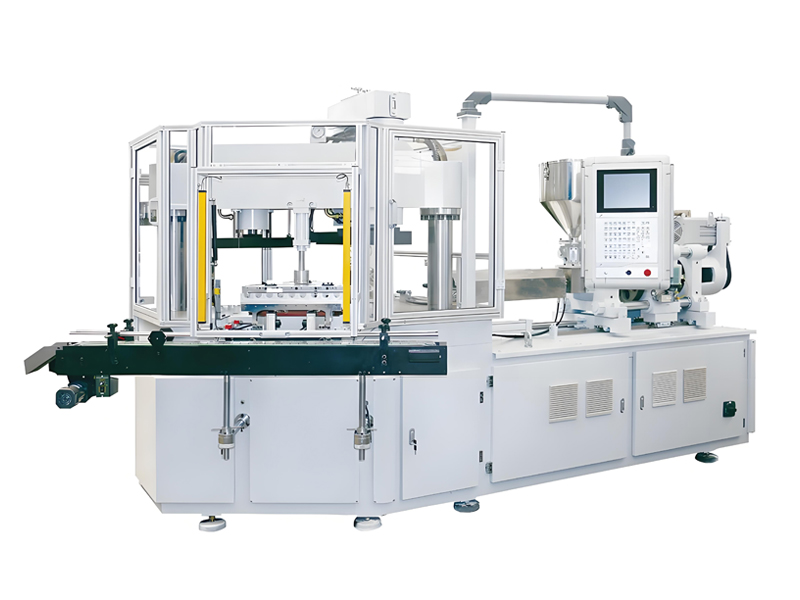
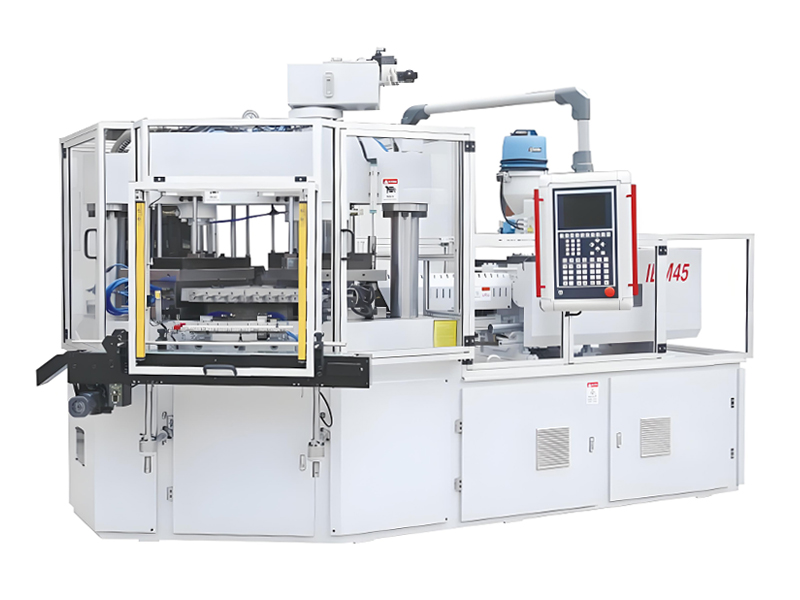
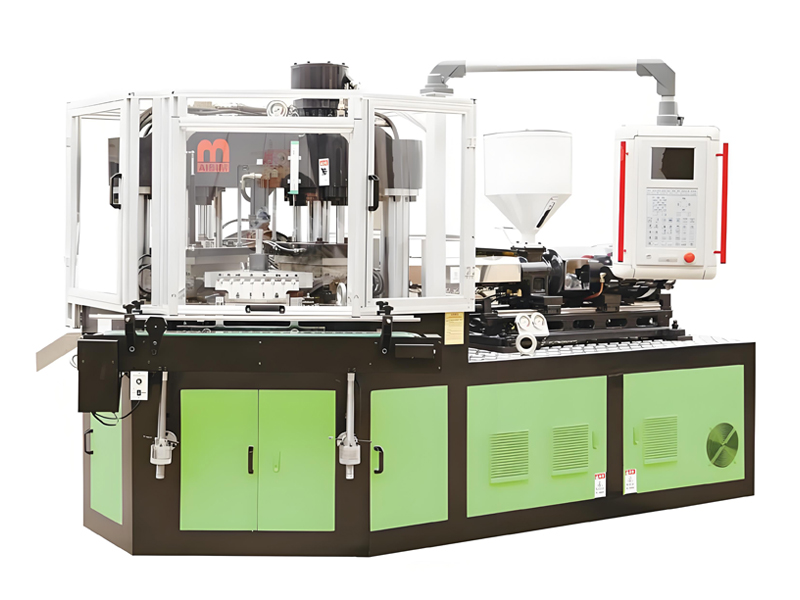
Aibim, a Wanplas factory, builds injection blow molding (IBM) machines purpose-engineered for the smallest, most demanding containers in the packaging world: the 3 ml to 50 ml mini vials, dropper bottles, oral-liquid tubes, eye-drop bottles, and cosmetic sample jars that pharmaceutical and personal-care brands ship by the millions. The IBM55 small capacity IBM machine sits at the heart of this program. It is the right-sized answer when a producer needs consistent neck finish, zero flash, and clean-room-compatible part quality at volumes that do not justify a massive industrial line.
Mini vials are unforgiving. A 10 ml eye-drop bottle has a finished neck of only a few millimeters, a thread that must seal against a dropper cap, and walls thin enough to stay light yet strong enough to survive filling, capping, and transit. Extrusion blow molding (EBM) can make bigger bottles cheaply, but it leaves a flash line and a trimmed tail that must be removed, and its neck precision is limited. Stretch blow molding serves PET water bottles well, but it is wrong for the polyethylene, polypropylene, and specialty copolymer vials that pharma and cosmetics prefer for chemical resistance and barrier. Spritz blow molding fills exactly this gap, and the IBM55 is the machine that makes it practical at the small end of the range.
Global demand for unit-dose and sample-size containers keeps rising as pharmaceutical brands shift toward patient-friendly dosing and cosmetic brands expand travel-size and trial-size lines. That shift puts pressure on the molding process: small containers must be produced in large numbers, at consistent quality, and with the documentation that regulated industries require. A machine that is merely “small” is not enough; it must be small and precise, small and clean, and small and economical. The IBM55 small capacity IBM machine is engineered around that combination, which is why it has become a reference choice for producers whose entire product sits in the 3-50 ml band. Understanding the machine means understanding the process, the specification, and the compliance logic that together make mini vials reliable.
In diesem Leitfaden erklären wir, was die IBM55-Maschine mit kleiner Kapazität von IBM ist, wie ihr dreistufiger, einstufiger Prozess funktioniert, welche Spezifikationen für 3-50 ml-Vials wichtig sind, wie Sie die Maschine für jede Vialgröße konfigurieren, welches Material Sie wählen sollten und wie Sie die Maschine dafür einstellen, wie sie sich im Vergleich zur EBM für kleine Vials verhält, wie sie den pharmazeutischen und kosmetischen Compliance entspricht, wie Sie das richtige Modell auswählen und wie die größeren IBM65 und IBM75 es Ihnen ermöglichen, bei steigender Nachfrage auf die nächste Stufe zu gehen. Am Ende werden Sie verstehen, warum eine dedizierte IBM-Maschine mit kleiner Kapazität eine große Maschine mit verkleinerter Größe für Mini-Pharma- und Kosmetik-Vials übertrifft.
Wanplas, the parent brand, unites a network of specialized factories, and Aibim is its dedicated injection blow molding factory with more than 12 years of machinery manufacturing experience and two decades of accumulated know-how in this process. Aibim products cover containers from 3 ml to 1000 ml and are running in more than 40 countries, supported by an in-house CNC center and a new factory established in 2022 with an annual capacity of over 100 lines.
Was ist Spritzblasformen und der dreistufige Ein-Schritt-Prozess?
Das Spritzblasformverfahren ist ein einstufiges, flussfreies Verfahren, das einen hohlen Behälter bildet, indem zunächst ein präzises Parison gespritzt und anschließend geblasen wird, ohne dass eine Vorform erneut erhitzt oder ein Abfallende entsteht. Die IBM55-Maschine mit kleiner Kapazität verwendet ein dreistufiges, rotierendes oder queres Transferlayout: eine Spritzstation, eine Blasstation und eine Auswurf- oder Transferstation. Der Behälter verlässt die Maschine nie als heißes, abgeschnittenes Abfallstück; er wird fertig geblasen geboren.
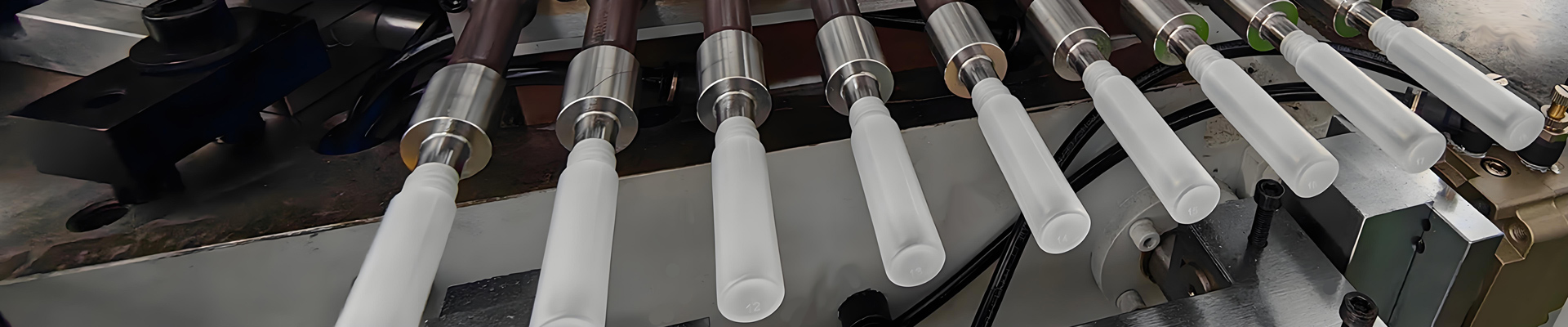
Die drei Stationen arbeiten in Abfolge. An der Einspritzstation wird eine gemessene Schuss Schmelze in eine Parisonform (Kernstange) um einen hohlen Stahlkernstift injiziert. Dadurch entsteht eine rohrförmige Vorform mit einer bereits geformten, präzisen Halsabschluss, da der Hals durch die Einspritzkammer geformt wird und nicht geschnitten oder geblasen wird. Die Kernstange, die den heißen Parison trägt, bewegt sich zur Blasstation. Dort dehnt sich komprimierter Luft den Parison gegen die Blasungskammer, wodurch die Wandscheibe der Flasche geformt wird und die Flasche ihre endgültige Form und Oberfläche erhält. Die fertige Flasche bewegt sich dann zur Ejektionsstation, wo die Kernstange zurückgezogen wird und die Flasche von der Form entfernt wird, ohne dass es zu einer Flaschenbildung kommt, und ist bereit für die Inspektion.
Diese Architektur ist der Grund, warum IBM die Referenzverarbeitung für pharmazeutische Flaschen und Kosmetikgläser ist. Der Hals ist nicht geschnitten, sondern formgeschmiedet, sodass der Gewinde und das Dichtungsloch mit hoher Genauigkeit reproduzierbar sind. An der Flaschenkappe gibt es keine Partienrandspalte, sodass keine Nachspülung erforderlich ist. Die Partienrandspalte ist auf der Basis begrenzt, und die Flasche hat keinen Griff, keine Abfallende und keine Schweißnaht, die Kontamination begünstigen könnte. Für Flaschen für orale Flüssigkeiten und Augentropfen, die durch saubere Befüllungsleitungen passieren müssen, ist diese Sauberkeit ein entscheidender Vorteil.
A practical note for new users: the core rod is the heart of IBM quality. The parison is formed around the core rod at the injection station, and the same rod carries the hot parison to the blow station and then strips the finished bottle at ejection. Any variation in core-rod temperature, surface finish, or concentricity shows up directly as neck eccentricity or wall variation in the final vial. Aibim controls this through a single-crossbeam, double-pole clamping framework that keeps the core-rod transfer stable, and through independent mold-temperature control on both the parison cavity and the blow cavity. For mini vials, even a few microns of core-rod drift is visible at the neck, so the machine’s rigidity and repeatable indexing are not optional extras — they are the foundation of consistent quality. Cooling is equally important: the thin parison and small container cool quickly, but the blow cavity temperature must be held steady so that cycle after cycle the wall sets at the same dimension. Stable cooling is what lets the IBM55 hold a high bottles-per-hour rate without sacrificing the neck accuracy that pharma and cosmetic lines demand.
Because the parison is injection-molded, wall distribution is controlled by the parison geometry and the blow pressure rather than by extrusion swell and pinch-off luck. The result is uniform wall thickness, predictable weight, and low material usage — important when you are molding millions of 5 ml units and every gram of resin is a recurring cost. The IBM55 pairs this process with Aibim’s PREFILL hydraulic technology and a hybrid-electric drive that reduces energy consumption by at least 35 percent compared with conventional hydraulic machines, while preserving the high, stable clamping needed for clean neck molding.
IBM55 Small Capacity IBM-Maschine: Vollständige Spezifikation
The IBM55 small capacity IBM machine is the entry and small-format model of Aibim’s IBM series, sized for 3 ml to 50 ml containers with the option to run slightly larger volumes at reduced cavitation. The figures below are representative configuration values for the standard IBM55 Hybrid Electric configuration; final values are confirmed against the latest factory quotation and the chosen mold set.
| Parameter | IBM55 Wert (repräsentativ) | Warum es für Mini-Vials wichtig ist |
|---|---|---|
| Schraubendurchmesser | 38 mm | Passt in die 35-45 mm kleine Maschinenbänder; genügend Plastifizierung für Mehrkammerformteile ohne Überhitzung von hitzeempfindlichen Harzen. |
| L/D ratio | 20:1 | Es gewährleistet eine Gleichmäßigkeit der Homogenisierung und eine ausreichende Verweilzeit, um die Abbau von PP, PS und klaren Copolymeren zu begrenzen. |
| Spritz shot volume | 200 cc | Bereitet die Parisonmasse für 4-12 Hohlräume von 3-50 ml Behältern in einem indexierten Zyklus vor. |
| Spritz pressure | 160 MPa | Füllt dünne Halsdetails und lange Parierungen bei stabilem Viskositätsgrad aus. |
| Spannkraft (Blasen/Spannen) | 250 kN | Hält die Blaskerne und die Kernstangenformen gegen den Blaskreislaufdruck geschlossen, ohne dass es zu Flaschenbildung am Boden kommt. |
| Process stations | Drei-Stationen, ein Schritt | Spritz, Blas-und Ejektionsprozess in einem einzigen kontinuierlichen Zyklus; kein Nacherhitzen, kein Abfallende. |
| Neck finish precision | ± 0,05 mm (typisch) | Reproduzierbarer Gewinde und Dichtfläche für die Passform von Tropfer und Deckel. |
| Container volume range | 3 ml bis 50 ml | Erfasst Flüssigkeiten für die Orale, Augentropfen, Proben und Mini-Kosmetikgläser. |
| Cavity count | 4 bis 12 (volumenabhängig) | Für kleinere Volumina mehr Kavitäten; für 50 ml weniger. |
| Output | Bis zu ~3000 BPH (typisch, 50 ml weniger Kavitäten) | Die stündliche Flaschenzählung hängt vom Kavitätenzahl und dem Zyklus ab; kleine Vials erreichen höhere BPH. |
| Drive system | Hybridelektrisch mit PREFILL-Hydraulik | Energiesparung von mindestens 35 Prozent im Vergleich zu herkömmlichen Hydraulikanlagen. |
| Control and storage | PLC mit HMI, Speicherung von Rezepten auf SD-Karte | Rezepte werden von Maschine zu Maschine übertragen; der Wechsel erfolgt schnell, und die Einstellungen sind revisionssicher. |
| Safety and certification | CE-zertifiziert, Lichtvorhang, Lasersensor für Formen | Personen- und Schimmelschutz für den kontinuierlichen Betrieb. |
| Processable materials | PE, PP, PS, ABS, SAN, TPU, PC, PCTG | Matches pharma and cosmetic resin choices. |
The 38 mm screw and 20:1 L/D ratio are deliberate small-machine choices. A larger screw would over-plasticize a low-throughput parison and risk thermal degradation of clear, heat-sensitive materials; a smaller screw would starve multi-cavity tools. The 250 kN clamp is sized to the blow load of mini containers, keeping the machine compact, fast-cycling, and economical on floor space and utilities. Combined with the hybrid-electric drive and PREFILL pressure technology, the IBM55 delivers the stable, repeatable clamping that clean neck molding demands while cutting energy use.
Beyond the headline numbers, the IBM55 is designed for fast changeover between vial programs. Because the neck is molded, switching from a 10 ml dropper to a 30 ml jar mainly means swapping the parison and blow mold sets and loading the matching SD-card recipe, rather than re-engineering the process. Aibim’s enlarged mold-setting space, part of the single-crossbeam double-pole framework, gives tooling engineers room to mount multi-cavity molds without cramping cooling lines or ejector mechanisms. For contract manufacturers that run dozens of SKUs per year, this serviceability translates directly into higher overall equipment effectiveness, since changeover time is a large share of lost production on small specialty lines. The CE-certified safety package — a light curtain for personnel and a long-distance digital laser sensor at the stripper station for mold protection — keeps both operator and tooling safe during these frequent changeovers, which is when accidents and tool damage are most likely.
Configuring the IBM55 for 3, 10, 30, and 50 ml Vials
Mini-Vial-Programme unterscheiden sich hauptsächlich durch den Volumen, und der Volumen bestimmt die Anzahl der Kavitäten, die Parison-Masse, die Zykluszeit und die stündliche Leistung. Die IBM55 mit kleiner Kapazität ist nicht als eine feste Konfiguration ausgeführt, sondern nach Volumen konfiguriert. Die folgende Tabelle zeigt repräsentative Konfigurationen für vier gängige Mini-Vial-Größen.
| Vial Volume | Typical Cavities | Parison / Shot Use | Zyklus (typisch) | Output (typical BPH) | Typical End Product |
|---|---|---|---|---|---|
| 3 ml | 10-12 | Niedrige pro-Kammer-Masse; vollständiger 200-cc-Schuss | ~8-10 s | ~3600-4300 | Einzeldosis-Augentropfen, Parfumsamples |
| 10 ml | 8-10 | Mittleres Parieren; stabiler Schuss | ~9-11 s | ~2600-3600 | Oralflüssigkeit, Essenzien-Droger |
| 30 ml | 6-8 | Höhere Vergleichsmasse pro Kavität | ~10-12 s | ~1800-2600 | Kosmetikserum-Gläser, Lotion-Minibehälter |
| 50 ml | 4-6 | Größtes Bild im Bereich; fast vollständiges Bild | ~11-13 s | ~1100-1800 | Schaumbeschichtungsgläser, Tonikflaschen, Probenbehälter |
The pattern is intuitive: smaller vials support more cavities and higher hourly counts, while 50 ml units use fewer cavities but still benefit from IBM’s flash-free neck and consistent wall. A 3 ml eye-drop bottle can be run at over 4000 bottles per hour on a single IBM55, which is ample for most specialty pharma and cosmetic sample lines. A 50 ml cream jar at 4-6 cavities still clears four-figure hourly output with far better neck quality than a trimmed EBM part.
Die Zykluszeit wird von der Einspritzung, dem Kühlen und dem Transport bestimmt. Da der Parison dünn ist und der Behälter klein, erfolgt das Kühlen schnell, und die Drei-Stand-Layout ermöglicht es, den nächsten Parison einzuspritzen, während der vorherige Teil abbläst und aus dem Mold entfernt wird. Die praktische Obergrenze stellen die Kühlung des Molds und die indexierte Transportgeschwindigkeit dar, die Aibim durch die Mould-Designs und den hybride-elektrischen Indexierantrieb optimiert. Bei der Planung einer Linie sollten die BPH-Werte als Planungsgrundlage verwendet und gegen die genaue Harzzusammensetzung, die Wanddicke und die Mould-Spezifikation bestätigt werden.
Wählen Sie nur die deutsche Übersetzung aus. Fügen Sie keine Erläuterungen, Zitate oder Beschreibungen hinzu.
Mini-Pharma- und Kosmetik-Vials werden meist aus Polypropylen (PP), Polyethylen (HDPE/LDPE/LLDPE), Polystyrol (PS), SAN, ABS, TPU, PC oder dem klarem Copolymer PCTG geformt. Jedes dieser Materialien hat ein anderes Schmelzverhalten, eine andere Schrumpfung und ein anderes Temperaturfenster, und die IBM55-Maschine für kleine Kapazitäten ist entsprechend eingestellt. Die folgende Tabelle ist eine Einstellungsanleitung für gängige Mini-Vial-Materialien.
| Material | Fülltemperatur (typisch) | Formtemperatur (typisch) | Spritz Pressure | Notes for Mini Vials |
|---|---|---|---|---|
| PP (homopolymer) | 200-230 °C | 20-40 °C | Medium-High | Günstig, chemikalienbeständig, gut für Mundtropfen; beachte die Schrumpfung am Nackenfaden. |
| HDPE | 190-220 °C | 15-35 °C | Medium | Hervorragende Feuchtigkeitsbarriere; druckbare Tropftuben. |
| LDPE / LLDPE | 180-210 °C | 15-30 °C | Medium-Low | Weich, kompressionsfreundlich; geringere Steifigkeit für ein erstklassiges Gefühl. |
| PS (general) | 190-220 °C | 30-50 °C | Medium-High | Klare und steife Struktur für das Abtasten; spröde, vermeiden Sie Sturzschäden. |
| SAN | 210-240 °C | 40-70 °C | High | Klar, steif, chemikalienbeständig; gut für Kosmetikgläser. |
| ABS | 210-240 °C | 50-80 °C | High | Robust, hochwertige Oberfläche; höhere Energie- und Formtemperatur. |
| PC | 280-310 °C | 80-120 °C | High | Hohe Klarheit und Wirkung; benötigt trockenes Harz und eine strenge Temperaturregelung. |
| PCTG | 250-280 °C | 40-70 °C | High | Klar, robust, kosmetisch geeignet; hervorragende Oberfläche und Glanz. |
| TPU | 190-220 °C | 30-60 °C | Medium | Soft-touch-Spezialverschlüsse und Squeeze-Glühbirnen. |
For pharmaceutical contact, PP and HDPE are the workhorses because they resist a wide range of active ingredients and survive sterilization and filling without leaching. Kosmetik brands often choose SAN, PCTG, or PS where clarity and a premium look matter more than squeeze. PC brings clarity and impact resistance but requires careful drying and a higher barrel temperature, which the IBM55 supports within its 35-45 mm screw band and stable clamp. The key is that Aibim’s recipe system stores each material’s parameters on an SD card, so once a resin is validated, every machine in a fleet runs the identical setup — critical for multi-site pharma and cosmetic production.
Shrinkage deserves special attention on mini vials. Neck threads must stay within tolerance after cooling, so mold temperature and hold pressure are tuned per resin. PP shrinks more than SAN or PC, so the neck cavity is cut to compensate. Getting this right is the difference between a cap that seats on the first try and one that cross-threads on the filling line. The IBM55’s precise injection and consistent clamp make this compensation repeatable across millions of cycles.
Resin handling also shapes mini-vial quality. Hygroscopic materials such as PC and PCTG must be dried before they enter the barrel, because moisture turns to steam in the melt and creates splay or silver streaks on a clear cosmetic surface. The IBM55’s 20:1 L/D barrel gives enough residence for uniform plasticizing without over-shearing, but drying remains the operator’s responsibility at the material infeed. Regrind from neck gates is minimal because there is no flash tail, yet any approved in-house regrind should be metered at a controlled ratio to protect color and mechanical consistency. Color masterbatch, when used for branded cosmetic jars, is dosed at the feeder so that shade stays uniform across a multi-million-piece run — a key reason IBM beats EBM on appearance for premium products. Because the parison mass is metered by the injection unit rather than by extrusion swell, the masterbatch let-down ratio is stable from shot to shot, which prevents the shade banding that occasionally appears on extrusion-blown small parts.
IBM vs. EBM für kleine pharmazeutische und kosmetische Fläschchen
Buyers often ask why not simply use a small extrusion blow molding (EBM) machine for mini vials. The two processes serve different needs, and for 3-50 ml pharma and cosmetic containers the differences are decisive. The comparison below is technology-versus-technology, based on the inherent characteristics of each process.
| Attribute | IBM55 (Spritz Blasformen) | Conventional EBM (small format) |
|---|---|---|
| Neck finish precision | Formgepresst, ±0.05 mm typisch; Gewindefertig | Geschnitten oder geblasen; größere Toleranz, muss zugeschnitten werden |
| Flash | Keine auf dem Körper; flaschenfreie Komponente | Trennlinie-Fläche und Heckabfall; Deflashing erforderlich |
| Wall uniformity | Hervorragendes, kontrolliertes Parison | Variabel, abhängig vom Vergleichswellenhöhe |
| Material efficiency | Hohe; minimaler Abfall | Niedriger; Schwanz und Blitz werden neu bearbeitet |
| Cleanliness for pharma | Hohe; kein loser Schrott, kein Schwanz | Niedriger; Schrottbehandlung und Trimmen |
| Material range | PP, PE, PS, SAN, ABS, PC, PCTG, TPU | PE, PP, PVC und viele andere, aber schwach auf klare, stabile Copolymeren |
| Best volume range | 3-50 ml (und höher über IBM65/75) | Schreibe nur die deutsche Übersetzung. Füge keine Erklärungen, Zitate oder Beschreibungen hinzu. |
| Decorative surface | Scharf, unversehrt von Flecken außen | Kann eine Vergleichsschweiß oder einen Schwanzmarkierung aufweisen |
| Durchsatz passen | Hoher BPH bei kleinen Volumina über mehrere Kavitäten | Bei größeren Volumen konkurrenzfähig |
For eye drops, oral liquids, and premium cosmetic jars, IBM wins on neck quality, cleanliness, and scrap reduction. EBM remains a strong choice for larger, squeezable bottles where a precise thread is less critical and lower tooling cost matters. The right question is not “which process is best” but “which process fits 3-50 ml pharma and cosmetic vials” — and for that band, the IBM55 small capacity IBM machine is the technically superior answer.
Der Kostenrahmen spricht auch IBM im kleinen Bereich zugute, wenn der gesamte Lebenszyklus berücksichtigt wird. EBM mag einen niedrigeren anfänglichen Werkzeugkostenfaktor aufweisen, aber die wiederkehrenden Kosten für das Entfernen von Flash, die Handhabung von Schrott, die Regrind-Verarbeitung und die höhere Abfallquote aufgrund von Halsvariationen untergraben diesen Vorteil bei hochvolumigen Mini-Fläschchen. Die IBM55 eliminiert diese wiederkehrenden Kosten: Es gibt keinen Rest, der wieder zu bearbeiten ist, kein Flash, das entfernt werden muss, und der formgebundene Hals passt die Kappen beim ersten Versuch in weit höherem Maße. Wenn ein Unternehmen ein mehrjähriges Programm mit Millionen von Einheiten plant, sind die Gesamtbetriebskosten einer Flash-freien IBM-Linie häufig niedriger als die einer getrimmten EBM-Linie, auch bevor die Qualitäts- und Compliance-Vorteile berücksichtigt werden. Deshalb bewerten erfahrene Käufer aus der Pharma- und Kosmetikbranche den Prozess nach den Kosten pro gutem Fläschchen und nicht nur nach dem Maschinenpreis.
Mündungsgenauigkeit, Flash-freie Verformung und pharmazeutische/ kosmetische Konformität
Mini vials live or die by the neck. A 10 ml dropper bottle must accept a crimp or screw dropper assembly with a leak-free seal, and the thread must be repeatable across millions of units so the capping machine does not reject parts. The IBM55 small capacity IBM machine delivers this through molded neck geometry: the neck, thread, and sealing land are formed by the injection cavity, not cut after blowing, so tolerances stay tight and consistent.
Flash is the enemy of clean pharma and cosmetic lines. On EBM, the parting line and tail produce flash that must be trimmed, handled, and reground — a contamination and labor risk. The IBM55 produces flash-free bodies; the only parting line is at the base, and there is no scrap tail at all. That reduces the number of touching operations between molding and filling, which directly supports cleaner downstream handling and simpler cleanroom integration.
Compliance ist in die Material- und Prozessauswahl integriert und nicht erst später hinzugefügt. Für Behälter, die mit pharmazeutischen Produkten in Berührung kommen, umfasst der relevante Referenzrahmen die guten Herstellungsverfahren (GMP) für die Produktionsumgebung, Vorschriften für Lebensmittel- und Arzneimittelkontaktmaterial wie die FDA-Vorschriften in den Vereinigten Staaten und die EU 10/2011 in Europa sowie die ISO 15378, den internationalen Standard für Primärverpackungsmaterialien für Arzneimittel (der selbst auf die guten Herstellungsverfahren für Verpackungen basiert). Kosmetische Behälter verweisen auf die gleichen FDA- und EU 10/2011-Kontaktrahmen sowie auf kosmetische Anforderungen an die gute Herstellung. Die IBM55 unterstützt dies durch:
- Nur validierte, kontaktfähige Harze (PP, HDPE, SAN, PCTG und andere) mit dokumentierter Konformität für den Zielmarkt verwenden.
- Die Herstellung von flussfreien, kontaktarmen Bauteilen, die die Reinigungsvalidierung vereinfachen und das Risiko von Fremdstoffen reduzieren.
- Speichern von Prozessrezepturen auf SD-Karten, damit jede Kavität und jedes Gerät das validierte Parameter-Set reproduziert.
- Arbeitet unter CE-zertifizierter Sicherheit mit einer Lichtvorhänge und einem Lasersensor für die Form, um ein discipliniertes, auditierbares Produktionsumfeld zu gewährleisten.
Note that the machine enables compliance; the finished container’s certification depends on the resin supplier’s documentation, the filling site’s GMP, and the brand’s validation program. Aibim supplies the process and the equipment; the regulatory dossier is completed by the brand and its material partners. What the IBM55 guarantees is the process consistency that makes validation repeatable.
From a quality-system standpoint, the flash-free, low-scrap nature of IBM also simplifies environmental monitoring and cleaning validation. In a pharmaceutical filling suite, every extra handling step and every loose plastic scrap is a potential source of particulate contamination. By delivering a finished, flash-free vial straight from the machine, the IBM55 reduces the surface area and the operation count between molding and filling. Brands building an ISO 15378 quality system can document the molding parameters through the SD-card recipe log, demonstrate process capability on neck dimensions using the machine’s consistent output, and reduce the deviation investigations that a flash-trimming step would otherwise require. The machine does not replace the quality system, but it removes a class of variability that makes validation harder. For cosmetic sites following good manufacturing practice, the same logic lowers the risk of foreign-material complaints and supports clean, auditable production records that buyers and regulators increasingly expect.
Auswahlhinweise: Anforderung an das Modell
Choosing the right Aibim IBM model starts with volume range, output target, and material. The IBM55 covers 3-50 ml; the IBM65 and IBM75 extend upward for larger vials and higher output. The table below maps common requirements to the recommended model.
| Requirement | Recommended Model | Rationale |
|---|---|---|
| 3-50 ml Pharma- oder Kosmetikfläschchen, Einstiegs- oder Speziallinie | IBM55 | Kompakte Größe mit geringer Kapazität; flussfreier Hals; geringster Platzbedarf und Energieverbrauch. |
| Bis zu ~250 ml Behälter, höherer Output | IBM65 | Größere Schraube und Klemme; mehr Kavitäten für mittelgroße Fläschchen. |
| Bis zu 1000 ml, maximales Reichweite und Leistung | IBM75 | Größter der Serie; deckt Flaschen, Flaschen und Behälter mit breitem Mund ab. |
| Reinigen Sie kosmetische Flaschen aus SAN/PCTG/PC | IBM55 oder IBM65 | Genaues Formen von klarem Copolymer; hochwertige Oberfläche. |
| Hoher Volumen oraler Flüssigkeit oder Augentropfen | IBM55 Multi-Kavität | 4000+ BPH bei 3-10 ml mit Multi-Kavitäten-Werkzeug. |
| Künftige Skalierung vom Pilotprojekt zur Serienproduktion | IBM55 jetzt, IBM65/75 später | Gleicher Prozessfamilie; Formen und Rezepturen werden innerhalb der Serie übertragen. |
Der Vorteil des Verbleibens innerhalb der Aibim IBM-Familie liegt in der Konsistenz. Ein Pilotlauf, der auf einer IBM55 validiert wurde, verwendet die gleiche dreistufige Ein-Schritt-Logik, das gleiche Prinzip der Halsformung und das gleiche Rezeptsystem wie die IBM65 und IBM75. Wenn die Produktion zunimmt, skalieren Sie die Maschine, nicht den Prozess, und Ihre Validierungs- und Werkzeugkenntnisse werden übernommen. Wanplas, als Muttermarke, sorgt dafür, dass die gleichen Qualitätsstandards und Servicepolitik für das gesamte IBM-Sortiment gelten.
Skalierung mit IBM65 und IBM75
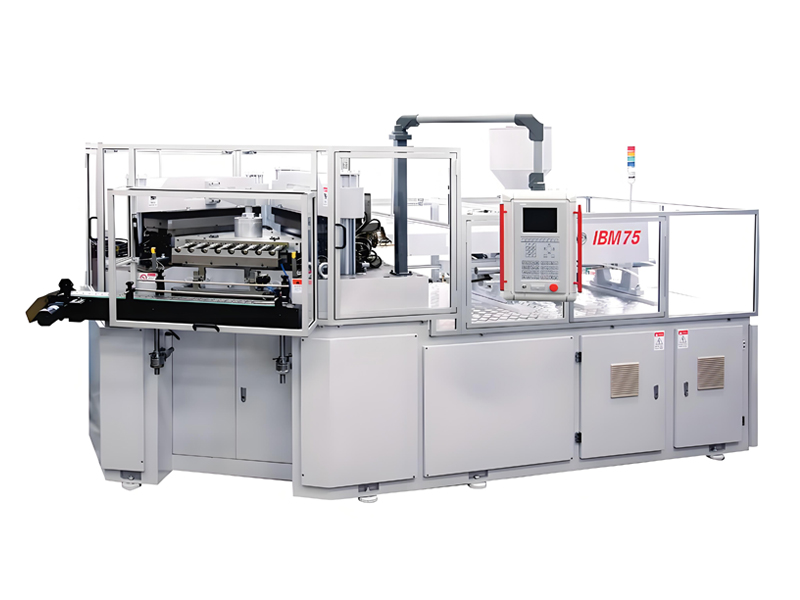
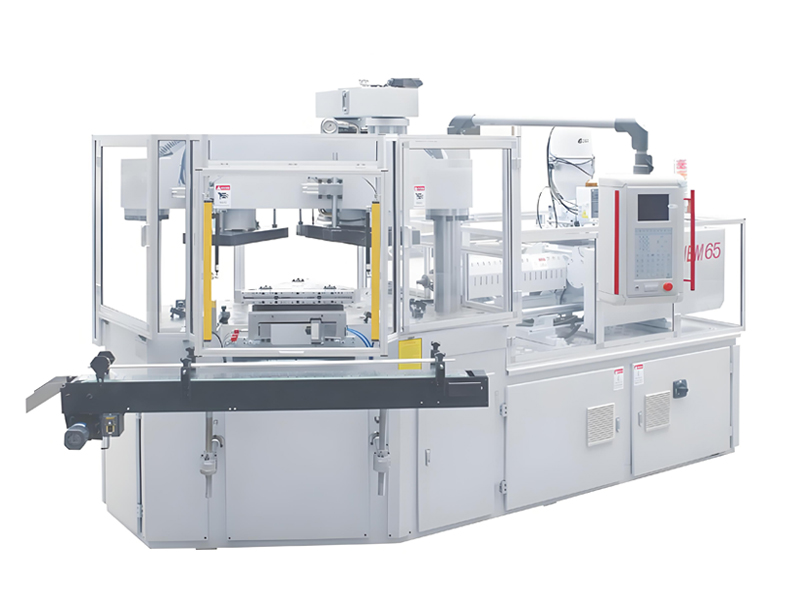
The IBM55 small capacity IBM machine is the starting point, but Aibim’s IBM series also includes the IBM65 and IBM75 for larger containers and higher output. These are the scale-up models referenced from the Aibim product line, and they share the same three-station one-step architecture, PREFILL hydraulics, hybrid-electric drive, SD-card recipe system, and CE-certified safety.
| Parameter | IBM55 | IBM65 | IBM75 |
|---|---|---|---|
| Schraubendurchmesser | 38 mm | 45 mm | 50 mm |
| L/D ratio | 20:1 | 20:1 | 22:1 |
| Spritz shot volume | 200 cc | 350 cc | 500 cc |
| Clamping force | 250 kN | 400 kN | 550 kN |
| Max container volume | 50 ml (typische Spanne) | ~250 ml | 1000 ml |
| Cavity range | 4-12 | bis zu 16 | bis zu 24 |
| Best for | 3-50 ml Mini-Vials | Mittegroße Fläschchen und Gläser | Large jars and bottles |
The IBM65 and IBM75 are not different technologies; they are the same proven process scaled to a bigger screw, longer clamp, and more cavities. A brand that starts with the IBM55 for 10 ml eye drops can later add an IBM65 for 100 ml lotion bottles or an IBM75 for 500 ml jars without re-learning the process or requalifying the molding principle. This upward path protects the investment in molds, recipes, and operator training that the IBM55 program establishes.
Anwendungen: Pharmazeutische und kosmetische Endprodukte
The IBM55 small capacity IBM machine serves the application fields Aibim is built for: pharmaceutics, food, drink, and cosmetic. Within the 3-50 ml band, the concrete end products are numerous and demanding.
In pharmaceuticals, the IBM55 produces single-dose and multi-dose oral-liquid vials, eye-drop bottles, ear-drop bottles, nasal spray bodies, and unit-dose diagnostic containers. These require tight neck sealing, clean flash-free surfaces, and consistent wall to protect the active ingredient. The molded neck accepts dropper assemblies, crimp caps, and child-resistant closures without rework. For contract manufacturers running multiple SKUs, the SD-card recipe system lets one IBM55 switch between a 5 ml and a 30 ml vial in minutes.
In der Kosmetik fertigt die gleiche Maschine hochwertige Probenbehälter, Lippenbalsampotten, Serum-Tropfflaschen, Foundation-Miniflasken, Gehäuse für feste Parfums und Reisegrößen für Cremebehälter. Hier ist die Oberflächenqualität und Klarheit entscheidend: SAN, PCTG und PS, die in der IBM55 geformt werden, bieten scharfe, unversehrte Oberflächen, die für hochwertige Marken geeignet sind, während PP und HDPE die chemische Beständigkeit bieten, die für aktive Formulierungen erforderlich ist. Farbmasterbatch kann konsistent dosiert werden, da der Spritzparison genau dosiert wird und eine einheitliche Farbe über den gesamten Produktionslauf gewährleistet.
In food and drink, the 3-50 ml range covers condiment mini bottles, flavor sample vials, and single-serve shot bottles, where FDA and EU 10/2011 contact compliance and clean molding matter. The common thread across all these applications is that small containers punish inconsistency, and the IBM55’s molded-neck, flash-free, multi-cavity process is exactly the consistency these markets require.
Across all three sectors, the IBM55’s strength is multi-SKU flexibility. A contract packer serving both a pharmaceutical client and a cosmetic brand can run a 5 ml eye-drop vial in the morning and a 20 ml serum dropper in the afternoon on the same machine, simply by changing molds and recipes. The flash-free, high-surface-quality output also accepts downstream decoration well: silk-screen printing, hot stamping, and labeling adhere cleanly to a blemish-free molded surface, which protects brand appearance on the shelf. For travel-size and sample programs where the container is the brand’s first physical impression, that surface integrity is a marketing asset, not just a production metric. The same consistency that satisfies a quality auditor also satisfies a brand manager, which is why one machine can serve both audiences at once.
Service und Support
Der Kauf einer IBM55-IBM-Maschine kleiner Kapazität ist der Beginn einer unterstützten Partnerschaft. Als Wanplas-Werk wendet Aibim die gemeinsamen Servicezusagen und Qualitätsstandards der Gruppe auf jede IBM-Linie an. Der Support beginnt vor dem Versand und setzt sich über die gesamte Lebensdauer der Maschine fort.
Every IBM55 is tested at the factory before delivery, with molds mounted and a trial run producing sample vials so the customer validates neck quality, wall, and output before the line ships. Aibim engineers handle installation and commissioning on site, tuning the machine to the customer’s resin and mold and confirming cycle time and BPH. The Wanplas group policy provides USD 500 free parts every year, plus free replacement of damaged parts within the warranty period, which keeps a small specialty line running without surprise spare-part expense.
Operator training covers machine operation, recipe management on the SD-card system, mold changeover, and basic maintenance, so the customer’s team can run multi-cavity changeovers confidently. Remote operation and monitoring let Aibim’s engineers check PLC data and support troubleshooting from the factory, shortening response time when a parameter drifts. The open-factory policy welcomes customers to visit, audit the production, and review quality controls in person — a practical step for pharmaceutical and cosmetic brands that qualify their supply base.
Gemeinsam bedeuten diese Services, dass die IBM55 keine Black Box ist, sondern ein unterstütztes Produktionsgerät: Sie wurde im Werk validiert, wurde von Spezialisten installiert, wird durch jährliche kostenlose Ersatzteile unterstützt, wurde Ihren Mitarbeitern beigebracht, wird ferngesteuert überwacht und ist für Ihre Audits offen.
For small and specialty producers, the annual USD 500 free parts allowance is more than a cost saving; it removes a common barrier to preventive maintenance. Wear items such as seals, heaters, and core-rod bushings can be replaced on schedule rather than after failure, protecting neck consistency. Aibim’s training is repeated for new shifts and refresher visits, so process knowledge does not leave when an operator changes role. Combined with remote monitoring that reads PLC data from the Wanplas group’s China base, a distant customer gets fast diagnostic support without waiting for an international service trip. This continuity is especially valuable for pharmaceutical and cosmetic sites that must keep validation status intact across personnel changes, because a stable, well-documented process is easier to keep qualified than one that depends on a single experienced operator.
Häufig gestellte Fragen
Welche Behältergrößen kann die IBM55 mit kleiner Kapazität der IBM-Maschine produzieren?
The IBM55 is designed for 3 ml to 50 ml containers, including eye-drop bottles, oral-liquid vials, sample jars, and mini cosmetic pots. It can run slightly larger volumes at reduced cavitation, and the IBM65 and IBM75 extend the range up to 1000 ml. The right model depends on your target volume and output, as shown in the selection table above.
Warum ist das Spritzblasformen besser als das Extrusionsblasformen für Mini-Vials?
IBM molds the neck with the injection cavity, giving a precise, thread-ready finish with no flash and no scrap tail. EBM leaves a parting-line flash and a trimmed tail that must be handled, which adds labor and contamination risk. For 3-50 ml pharma and cosmetic vials where neck sealing and cleanliness matter, IBM is the stronger process.
Welche Materialien kann die IBM55-Mould für pharmazeutische und kosmetische Anwendungen verwenden?
Die Maschine verarbeitet PE (HDPE/LDPE/LLDPE), PP, PS, ABS, SAN, TPU, PC und PCTG. PP und HDPE sind für pharmazeutische Anwendungen üblich, während SAN, PCTG und PS für klare Kosmetikgläser bevorzugt werden. Jedes Material hat eine gespeicherte Rezeptur, sodass die Einstellung auf allen Maschinen und in allen Schichten wiederholbar ist.
Entspricht die IBM55 den pharmazeutischen und kosmetischen Compliance-Standards?
The machine enables compliance through flash-free molding, consistent neck geometry, validated contact-grade resins, and auditable recipe storage. Relevant frameworks include GMP, FDA and EU 10/2011 contact rules, and ISO 15378 for pharmaceutical primary packaging. Final container certification depends on resin documentation and the filling site’s GMP, which the customer completes with material partners.
Wie viele Flaschen pro Stunde kann die IBM55 produzieren?
Output scales with cavity count and vial volume. A 3 ml vial on a 10-12 cavity tool can exceed 4000 bottles per hour, while a 50 ml jar at 4-6 cavities reaches four-figure hourly output. The figures in this article are planning baselines; confirm exact BPH against your resin, wall thickness, and mold specification.
Welche Unterstützung erhalten Sie bei einem Kauf der IBM55?
Support includes pre-shipment factory testing with sample vials, on-site installation and commissioning, the Wanplas group’s USD 500 free parts per year plus warranty replacement, operator training, remote monitoring and troubleshooting, and an open-factory policy for customer audits. The same service applies across the IBM55, IBM65, and IBM75.
Kann ich später von der IBM55 auf eine größere Maschine umstellen?
Ja. Die IBM65 und IBM75 verwenden das gleiche dreistufige, einstufige Verfahren, das gleiche Rezeptsystem und das gleiche Prinzip der Halsformung. Wenn die Nachfrage steigt, können Sie die Kapazität ohne erneutes Lernen des Verfahrens oder die Umqualifizierung der Formlogik erhöhen, und Ihre Formen und Rezepturen können innerhalb der Aibim IBM-Familie übertragen werden.
Fazit
The IBM55 small capacity IBM machine is the purpose-built answer for 3-50 ml pharmaceutical and cosmetic vials. Its three-station one-step process molds a precise, flash-free neck, controls wall uniformity, and eliminates scrap tails — exactly the qualities that eye drops, oral liquids, and premium cosmetic mini jars demand. With a 38 mm screw, 20:1 L/D, 250 kN clamp, hybrid-electric PREFILL drive, and SD-card recipe storage, it delivers clean, repeatable small-container molding while cutting energy use by at least 35 percent.
For brands evaluating the right process, the comparison is clear: against conventional EBM, IBM wins on neck precision, cleanliness, and material efficiency for mini vials, while the IBM65 and IBM75 provide a built-in scale-up path to 1000 ml without changing the underlying process. Backed by Aibim, a Wanplas factory with more than 12 years of machinery experience and two decades in injection blow molding, and supported by factory testing, installation, training, remote monitoring, USD 500 free parts per year, and an open-factory policy, the IBM55 is a low-risk, high-consistency choice.
If you are planning a 3-50 ml pharma or cosmetic vial program, send Aibim your target volume, material, and output requirement. The team will recommend the right IBM configuration, prepare a validated trial run, and invite you to the factory to audit the process firsthand. Consistent mini vials start with the right small-capacity IBM machine, and the IBM55 is engineered to deliver them.
The business case for the IBM55 rests on three recurring advantages: material saved by flash-free molding, energy saved by the hybrid-electric PREFILL drive, and labor saved by eliminating deflashing and trimming. Over the life of a high-volume mini-vial program, these recur on every bottle and compound the machine’s initial value. Because the same process family scales into the IBM65 and IBM75, the learning curve and tooling approach you build on the IBM55 continue to pay back as the business grows, lowering the total cost of ownership across the whole container range. For a brand entering the 3-50 ml vial market, the IBM55 is not merely a machine purchase — it is the foundation of a consistent, compliant, and scalable container program.