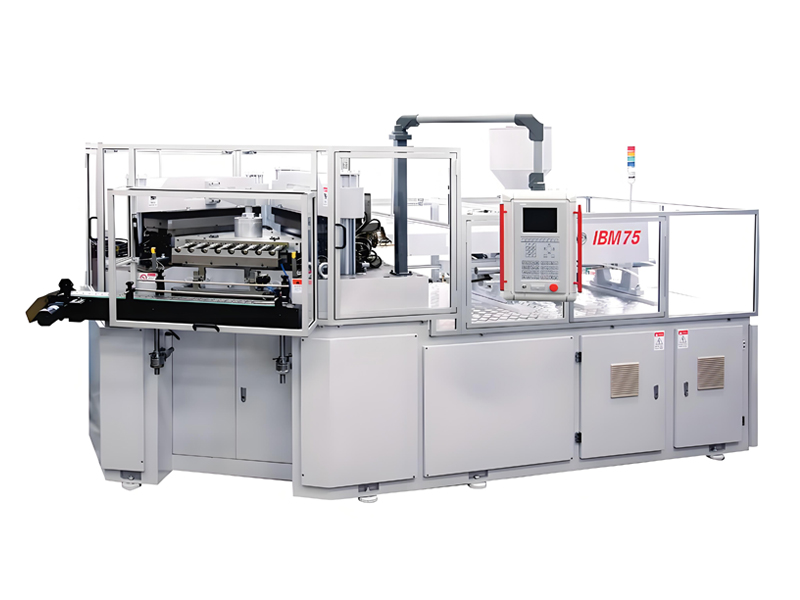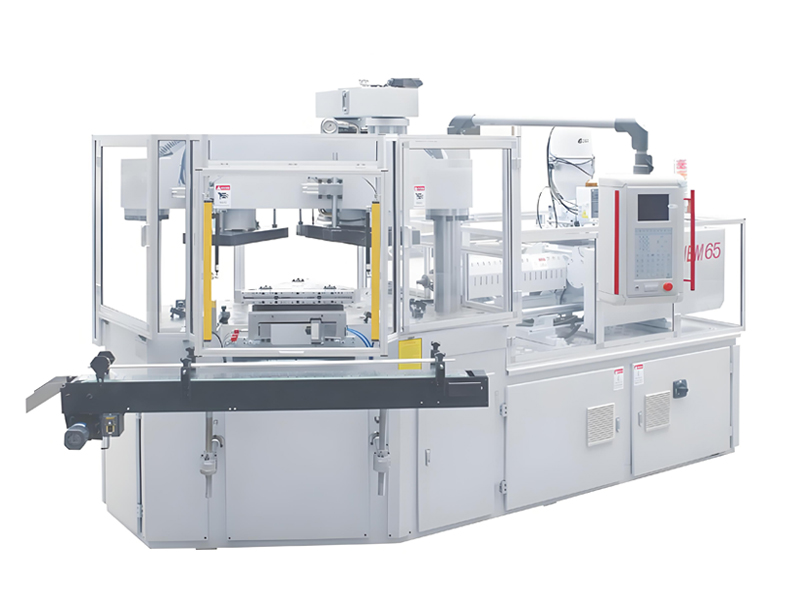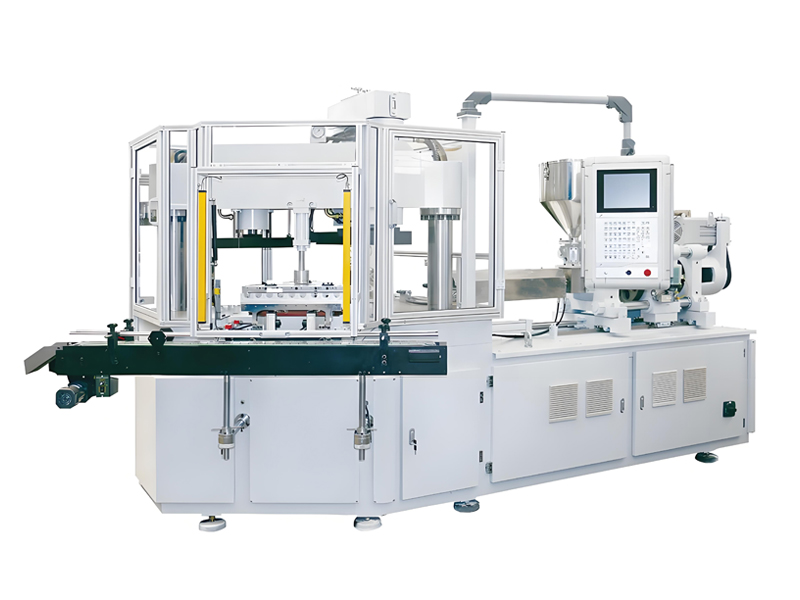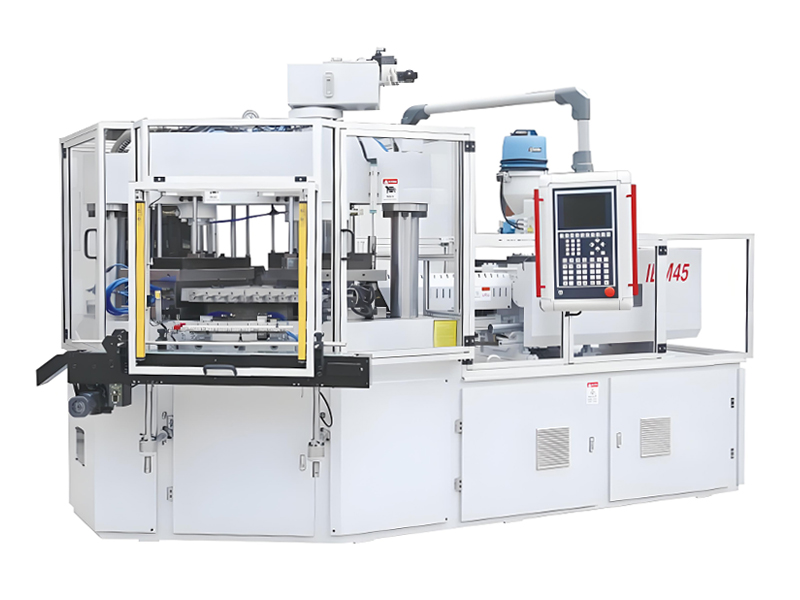
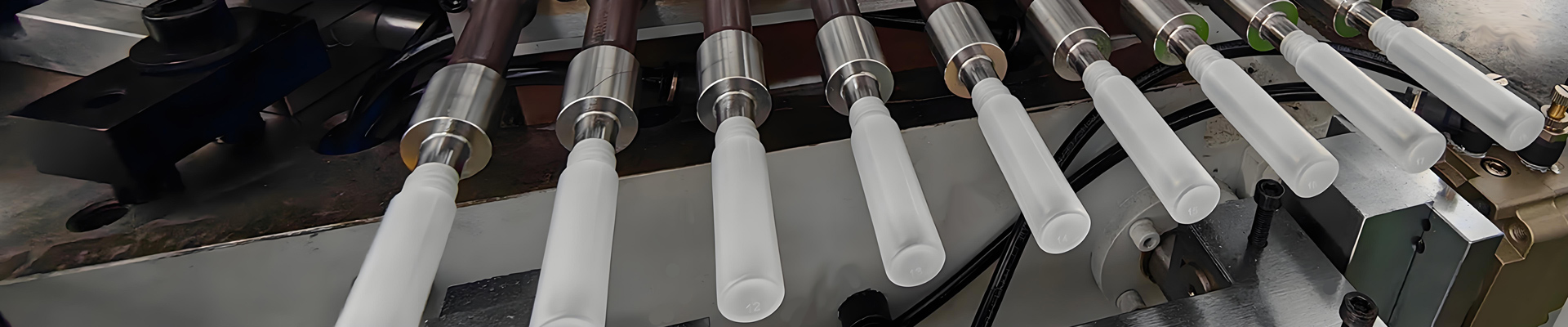
Shipping an injection blow molding machine from China is not a generic freight task. An IBM machine is a precision hollow-molding system built around a three-station, one-step process that injects a parison and then blow-molds it into pharmaceutical vials, cosmetic jars, and small precision bottles. Its weight, footprint, and height decide whether it travels in a standard box container, an open-top, a flat rack, or as breakbulk cargo. This guide explains the logistics engineering behind moving a new IBM line from a Chinese factory to a destination plant, covering container selection, crating, routing timelines, the structure of cost by Incoterms, the document set, insurance, and the receiving SOP. Aibim, a Wanplas factory, builds IBM75, IBM65, and IBM55 Hybrid Electric machines for pharmaceutical, food, beverage, and cosmetic applications, and the logistics principles below apply to machines of this class whether supplied by Aibim or by other IBM specialists such as جومار, Aoki, or Nissei ASB.
The single most important planning rule is that transportation is designed around the machine, not the other way around. Buyers who treat freight as an afterthought often discover at the port that the crated unit exceeds the container door height, or that the combined weight of machine plus mold exceeds the floor rating of the destination bay. The sections that follow convert those risks into a repeatable engineering plan. Throughout, the focus is on new-machine outbound logistics for a complete production line, not on the regulatory due diligence of second-hand equipment, which is covered in a separate article on this site.
لماذا تحدد المعاملات الفيزيائية للآلة خطة الشحن
An injection blow molding machine is defined less by its nameplate than by three transport-critical numbers: net weight, overall crated dimensions, and center of gravity. These three values drive every downstream decision about container type, lashing method, and disassembly scope. Ignoring them is the fastest route to a missed vessel, an overweight permit problem, or a crate that cannot enter the destination doorway.
For the IBM class used in pharmaceutical and cosmetic bottle production, a single machine typically weighs between 4 tons and 18 tons depending on clamping frame size, station count, and whether the hydraulic or hybrid electric version is selected. The IBM75, for example, sits at the heavier end of this band, while the IBM55 Hybrid Electric is positioned at the lighter end. Overall dimensions commonly fall in the range of 4.5 to 7.5 meters in length, 1.8 to 2.6 meters in width, and 2.2 to 3.0 meters in height when measured as the bare machine. Once the machine is mounted on a steel skid and wrapped in a protective crate, the envelope grows, and the height is the dimension that most often forces a change of container strategy.
The reason height dominates the plan is the internal clearance of a standard 40-foot high cube container. A 40HQ offers an internal dimension of roughly 12.03 meters in length, 2.35 meters in width, and 2.69 meters in height. A bare IBM machine at 2.2 to 2.4 meters tall can usually enter a 40HQ if shipped on a low skid and without a tall crate. But the moment the crated height approaches or exceeds 2.69 meters, the door opening becomes the limiting factor, and the standard box is no longer viable. At that point the logistics engineer must either choose an open-top or flat-rack container, move to breakbulk, or disassemble the tallest removable components before crating.
Disassembly for height reduction follows a predictable order. The take-out robot, the material hopper, the dehumidifying dryer, and the safety guards are the first candidates because they are bolt-on items that do not affect the structural integrity of the main frame during transport. Removing one or more of these can bring a 2.9-meter machine down to a 2.6-meter crate that fits a 40HQ. The machine base, clamping frame, and injection unit remain intact. The trade-off is reassembly labor at the destination, which is planned into the installation window rather than treated as a surprise.
مواصفات الآلة مقابل اختيار الحاوية
يربط الجدول أدناه نطاقات ماكينات IBM النموذجية باستراتيجية الحاوية الصحيحة. القيم تمثل فئة IBM ويجب تأكيدها مقابل الرسم الفعلي المعبأ في الصندوق المرفق مع كل طلب.
| Machine class / example | Net weight | Overall size (L x W x H, m) | Crated height vs 2.69 m limit | Recommended container |
|---|---|---|---|---|
| IBM55 Hybrid Electric (single unit) | 4 to 7 t | 4.5 x 1.8 x 2.2 | Below limit | 40HQ standard box |
| IBM65 standard hydraulic | 8 to 12 t | 5.5 x 2.1 x 2.5 | Below limit with low skid | 40HQ standard box |
| IBM75 with integrated robot and dryer | 13 to 18 t | 7.5 x 2.6 x 3.0 | Above limit as assembled | 40OT or 40FR after partial disassembly |
| IBM machine plus mold and spare-parts boxes | 15 to 22 t combined | multi-piece | n/a (multi-piece load) | One 40HQ plus one 40OT, or two 40HQ |
| Complete line with chiller, compressor, conveyor | 20 to 30 t combined | multi-piece, over-length item | n/a | Flat rack or breakbulk for oversize pieces |
الخلاصة العملية هي أن معظم آلات IBM المفردة تناسب حاوية 40HQ، لكن أي خط متكامل مع برج مجفف طويل أو ناقل أطول من المعتاد سينتقل نحو الحاويات المفتوحة أو المسطحة أو الشحن المتفرق. كلما عُرف هذا مبكرًا، كلما أمكن تثبيت الحجز وخطة التفكيك مبكرًا.
اختيار نوع الحاوية: 40HQ و 40OT والرف المسطح والشحن المتفرق
اختيار الحاوية هو توازن بين التكلفة وسلامة المناولة والملاءمة البعدية. لكل نوع حاوية دور واضح في لوجستيات ماكينة IBM، والاختيار الصحيح يحمي الميزانية والمعدات معًا.
حاوية عالية 40 قدمًا (40HQ)
The 40HQ is the default for machines that fit within its 2.69-meter internal height and 12.03-meter length. It is the lowest-cost standard option, it is weather-tight, and it loads from the rear doors with standard forklift and roller platform equipment. For an IBM55 or a disassembled IBM75 on a low skid, the 40HQ is usually the right answer. Its only hard limit is the door height, so the crated envelope must be confirmed against the 2.69-meter line before booking.
حاوية مفتوحة السقف 40 قدمًا (40OT)
When the crated height exceeds 2.69 meters but the cargo is still manageable from the top, a 40OT is used. The open top is covered with a tarpaulin and the crate is loaded by crane or top lifter through the roof opening. This suits a machine whose height was only modestly reduced by removing the robot and guards. The 40OT carries a premium over a 40HQ because of the specialized handling and the tarpaulin cover, but it avoids the higher cost and complexity of breakbulk.
حاوية مسطحة 40 قدمًا (40FR)
A flat rack has no sides and often no top, presenting a floor with end walls only. It is selected for over-width, over-height, or over-length pieces that cannot enter any closed box, such as a long conveyor section, a wide mold base, or a machine whose disassembly is not economical. Cargo on a flat rack must be lashed and secured to the floor with certified lashing gear, and it is exposed to weather unless shrink-wrapped and tarped. The flat rack is a higher-cost, higher-attention option reserved for pieces that genuinely cannot be boxed.
الشحن غير المعبأ (غير المعبأ / خارج الأبعاد)
Breakbulk, also called out-of-gauge or project cargo, is used when the combined dimensions or weight exceed even flat-rack limits, or when several heavy pieces travel together as a project lot. The cargo is loaded directly into the ship’s hold or onto the deck with shore cranes. Breakbulk is the most expensive and slowest routing, with the longest port stay and the most complex lashing plan, so it is the last resort rather than a first choice.
قاعدة القرار بسيطة: ضعها في 40HQ إذا كان ارتفاعها أقل من 2.69 مترًا، وانتقل إلى 40OT عندما تكون المشكلة في الارتفاع فقط، واستخدم 40FR للقطع عريضة جدًا أو طويلة جدًا، واحتفظ بالشحن غير المعبأ في حاويات للبضائع التي لا يمكن لأي حاوية حملها.
Beyond the container type, the booking must also state whether the shipment is FCL or LCL. For a complete IBM machine, FCL is strongly preferred because the heavy precision equipment is never co-loaded with unrelated cargo, the timeline is shorter, and the handling risk is lower. LCL is reasonable only when a buyer orders a single mold or a box of spare parts without the main machine, where sharing a container is more economical than paying for a whole box.
هندسة التغليف والصناديق الخشبية
التغليف في الصندوق الخشبي هو المكان الذي يتم فيه منع معظم أضرار النقل أو التسبب بها. تسافر آلة IBM عبر المحيطات وعبر المناطق الاستوائية الرطبة وعبر ساحات المحطات الوعرة، لذا فإن الصندوق هو نظام مناخي وتثبيت مصغر، وليس مجرد صندوق خشبي.
الصندوق الخشبي مقابل صندوق الخشب الرقائقي الخالي من التبخير
Two crating materials dominate. Traditional solid wood crates must comply with ISPM 15, the international standard for wood packaging that requires heat treatment or fumigation and a visible mark of compliance on every wood component. Many destination countries reject untreated wood at the border, so ISPM 15 compliance is not optional. The alternative is a plywood crate made from fumigation-free processed board that is exempt from the ISPM 15 mark in most markets because it is manufactured from glued veneers rather than solid sawn timber. Plywood crates avoid the fumigation step, reduce weight, and speed customs acceptance, which is why many exporters of precision machinery now standardize on them. The choice between the two is usually driven by destination phytosanitary rules and by whether the buyer wants to avoid any fumigation documentation risk.
حاجز الرطوبة الفراغي والمجفف
The greatest silent threat to an IBM machine during sea transit is humidity. Condensation inside a container crossing the tropics can corrode precision ground surfaces, electrical cabinets, and the tie bars. The defense is a vacuum moisture-barrier bag, typically an aluminum-foil laminate, that wraps the machine and is evacuated to remove air and humidity. Inside the bag, desiccant is placed at a calculated rate per cubic meter of enclosed volume to keep the relative humidity low for the whole voyage. A common engineering estimate is a desiccant charge sized to the enclosed volume, measured in grams per cubic meter, with the exact gram figure rising for long voyages and high-humidity lanes such as the route to Southeast Asia or South America. The desiccant quantity is documented on the packing list so the receiver knows the protection level.
الوقاية من الصدأ وحماية الداخل
Before bagging, all exposed machined surfaces, platens, tie bars, and the injection unit are coated with rust-preventive oil, and sensitive electronics are sealed in additional VCI (vapor corrosion inhibitor) film where needed. The goal is a dual layer: the chemical rust film plus the dry inert atmosphere of the vacuum bag. This combination is what lets a machine arrive after forty days at sea with bright, corrosion-free surfaces.
الربط والأرضيات والمؤشرات
Restraint inside the container is engineered, not improvised. The machine sits on a steel or timber skid sized so its center of gravity is low and central. The skid is blocked and braced against the container walls, and the machine is lashed with certified straps and secured with welded or bolted cleats rather than simple nails. The container floor has a maximum allowable point load, so load-spreading dunnage and timber sleepers are placed under the skid to distribute the weight and protect the floor. Finally, a tilt watch and a shock watch are affixed to the outside of the crate. The tilt watch turns red if the crate is tipped beyond the agreed angle during handling; the shock watch records if an impact exceeds the set g-threshold. These small devices are the buyer’s first line of evidence if a handling claim is needed.
القوالب وقطع الغيار وملحقات الخط الكامل
A shipment rarely consists of the machine alone. An injection blow molding line includes the blow mold set, a box of spare parts, and usually auxiliary equipment such as an air compressor, a water chiller, a dehumidifying dryer, and a conveyor or downstream inspection table. Each piece has its own crating and stowage logic.
صندوق القالب وصندوق قطع الغيار
The IBM blow mold and neck-ring tooling are high-value, high-precision items that travel in a dedicated steel or plywood mold box with internal foam and VCI protection. They are never crated loose inside the machine container because a shifting mold can damage both itself and the machine. A separate spare-parts box holds items such as heaters, seals, ejector components, and consumables, and is usually small enough to share a container with the machine or the mold box.
تخزين المعدات المساعدة
The air compressor, chiller, and dryer are heavy and sometimes bulky. The chiller and compressor may be crated separately and, if compact, merged into the same 40HQ as the machine when total weight and dimensions allow. The dehumidifying dryer, being tall, is often the component removed from the IBM75 to save height, then crated beside the machine in the same or a second container. Conveyors are frequently the longest single piece and are the usual trigger for a flat rack or breakbulk booking.
الحاوية الكاملة (FCL) مقابل الحاوية المجمعة (LCL) للحمولة المدمجة
When the full line ships together, one or two FCL boxes are almost always the efficient choice. The relative cost level of FCL for a complete line is Medium, while LCL for the same volume is Low per cubic meter but High in handling risk and timeline penalty, so the effective cost of LCL rises once damage and delay are counted. LCL is reserved for a small, non-urgent consignment such as a single spare-parts box sent to a customer who already has the machine running.
| Consignment piece | Typical crate | Usual container plan | Relative cost level |
|---|---|---|---|
| Main IBM machine | Plywood or wood, ISPM 15 | 40HQ / 40OT / 40FR | High |
| Blow mold set | Dedicated mold box | With machine or separate box | Medium |
| Spare-parts box | Plywood box | Merged with machine box | Low |
| Chiller / compressor | Plywood crate | Same or second 40HQ | Medium |
| Conveyor / long sections | Flat or open handling | 40FR or breakbulk | High to Very High |
الجدول الزمني الشامل والمسار الحرج
The timeline is the part of the project buyers underestimate most. A machine is not “shipped in a few weeks” — it moves through a chain of sequential phases, and the longest calendar block is almost always the ocean main leg. The critical path below assumes a new machine ordered to specification, not a stock unit.
The chain begins at contract effectiveness, when the purchase order is confirmed and the deposit clears. Manufacturing then runs for roughly 45 to 90 days depending on model and customization; the IBM75 with special mold and hybrid options sits at the longer end, the IBM55 at the shorter end. After build, the machine undergoes FAT, or factory acceptance test, for 3 to 7 days, during which the buyer or their inspector verifies cycle time, bottle quality, and safety functions such as the light curtain and the stripper-station laser sensor. Next comes disassembly and crating, 5 to 10 days, which overlaps with inland trucking to the port, 1 to 3 days. Export customs clearance and booking to meet the vessel cut-off take 3 to 7 days. The ocean main leg is the dominant block, and its length varies sharply by destination. Destination port customs clearance adds 3 to 10 days, inland delivery 1 to 7 days, and finally unloading, positioning, and installation and commissioning take 5 to 15 days.
العبور الرئيسي حسب مسار التجارة
يعطي الجدول أدناه نطاقات أيام تمثيلية للرحلة الرئيسية من موانئ الشحن الصينية الشائعة نينغبو وشنغهاي وشنتشن إلى موانئ الوجهة الرئيسية. هذه أيام إبحار وتستبعد خطوات النقل المسبق والتخليص والتسليم المذكورة أعلاه.
| Destination port | Origin (CN) | Main-leg days | Typical total logistics window |
|---|---|---|---|
| Rotterdam (Europe) | Ningbo / Shanghai | 28 to 35 | 11 to 16 weeks |
| Los Angeles (US West) | Shenzhen / Shanghai | 16 to 22 | 9 to 13 weeks |
| New York (US East) | Shanghai / Ningbo | 30 to 38 | 11 to 15 weeks |
| Dubai (Middle East) | Shenzhen / Shanghai | 18 to 24 | 10 to 14 weeks |
| Santos, Sao Paulo (البرازيل) | Shanghai / Ningbo | 35 to 45 | 12 to 17 weeks |
| Lagos (West Africa) | Shenzhen / Shanghai | 32 to 42 | 12 to 16 weeks |
| Sydney (Australia) | Shenzhen / Shanghai | 18 to 25 | 10 to 14 weeks |
| Ho Chi Minh (فيتنام) | Shenzhen / Ningbo | 5 to 8 | 8 to 11 weeks |
خطة مراحل بنمط جانت
يعرض الجدول التالي نفس المسار الحرج كجدول زمني مرحلي. تُعبر المدد كنطاقات أيام أو أسابيع بدلاً من تواريخ ثابتة، لأن التقويم المطلق يعتمد على تاريخ بدء العقد.
| Phase | Duration | Key dependency |
|---|---|---|
| Contract effectiveness | Day 0 | PO and deposit confirmed |
| Manufacturing | 45 to 90 days | Model and customization |
| FAT acceptance | 3 to 7 days | Build complete |
| Disassembly and crating | 5 to 10 days | FAT passed |
| Inland trucking to port | 1 to 3 days | Crating complete |
| Export clearance and booking to cut-off | 3 to 7 days | Cargo at port |
| Ocean main leg | 5 to 45 days by lane | Vessel sailed |
| Destination customs clearance | 3 to 10 days | Vessel arrived |
| Inland delivery | 1 to 7 days | Cleared |
| Unloading, positioning, commissioning | 5 to 15 days | On site |
A realistic planning assumption is that the machine reaches the customer floor roughly nine to sixteen weeks after contract, with the upper end applying to long lanes such as البرازيل, Lagos, or Europe during peak season. Buyers who need the machine by a fixed launch date should work backward from the commissioning date, not forward from the order date, and should build in buffer for customs and weather.
هيكل التكلفة وتقسيم المسؤولية حسب Incoterms
This section explains the structure of logistics cost and how responsibility is divided between buyer and seller under the common Incoterms. It deliberately describes only the composition of cost, the party responsible for each component, and the relative weight of each component. It does not state any freight rate, any duty rate, or any monetary amount, because those vary by lane, season, and commodity and must be quoted per shipment.
كيف تقسم شروط الإنكوترمز المسؤولية
Incoterms are the standard rules that allocate cost and risk between seller and buyer. For IBM machine exports the relevant terms are EXW, FOB, CIF, DAP, and DDP. Under EXW, the seller makes the machine available at their factory and the buyer bears every cost and risk from that point onward, including Chinese export clearance, which makes EXW unusual for export because the foreign buyer cannot easily clear goods in China. Under FOB, the seller delivers the machine on board the vessel at the Chinese port; the buyer pays the ocean freight and all downstream costs. Under CIF, the seller also pays the ocean freight and procures minimum insurance to the destination port, but the buyer still pays import duty, VAT, destination handling, and delivery. Under DAP, the seller delivers to the destination point, ready for unloading, with the buyer responsible only for import duty and taxes. Under DDP, the seller takes on everything including duty and VAT, the maximum responsibility for the supplier.
مكونات هيكل التكلفة
The logistics cost of an IBM machine is built from a fixed set of components. التغليف and crating is a Medium-weight component because a precision plywood crate with vacuum bag and desiccant is a real cost but a small share of the total. Inland trucking from factory to port is Low to Medium. Export customs clearance and documentation is Low. Ocean freight, the main leg, is the single largest component and is typically High, often representing the biggest share of the landed logistics bill. Surcharges such as BAF (bunker adjustment factor), CAF (currency adjustment factor), PSS (peak season surcharge), and general peak-season additions are Medium and rise sharply in the pre-Chinese-New-Year and autumn peak windows. Destination terminal handling charge, or THC, is Medium. The customs clearance agent fee at destination is Low. Import duty and VAT are determined by the HS classification and the destination tariff schedule and fall in a Medium to High band for markets with elevated industrial-equipment tariffs; the exact level is set by law, not by the seller. Inland delivery from port to plant is Low to Medium. Lifting and positioning at the plant is Low. Marine insurance is Low in absolute terms because it is priced as a percentage of declared cargo value rather than as a fixed sum, but it is essential.
| Cost component | EXW | FOB | CIF | DAP | DDP | Relative weight |
|---|---|---|---|---|---|---|
| التغليف and crating | Buyer | Seller | Seller | Seller | Seller | Medium |
| Inland trucking to port | Buyer | Seller | Seller | Seller | Seller | Low to Medium |
| Export clearance | Buyer | Seller | Seller | Seller | Seller | Low |
| Ocean freight (main leg) | Buyer | Buyer | Seller | Seller | Seller | High (largest share) |
| BAF / CAF / PSS surcharges | Buyer | Buyer | Seller | Seller | Seller | Medium (rises in peak) |
| Destination THC | Buyer | Buyer | Buyer | Seller | Seller | Medium |
| Import duty and VAT | Buyer | Buyer | Buyer | Buyer | Seller | Medium to High (by tariff) |
| Inland delivery to plant | Buyer | Buyer | Buyer | Seller | Seller | Low to Medium |
| Lifting and positioning | Buyer | Buyer | Buyer | Buyer | Seller | Low |
| Marine insurance | Buyer | Buyer | Seller (min) | Seller | Seller | Low (% of value) |
Reading the table, the pattern is clear: as the term moves from EXW toward DDP, more components shift to the seller, and the buyer’s controllable cost narrows to duty, VAT, and local handling. The dominant variable the buyer can influence is the ocean main leg and its surcharges, which is why locking a booking early in the season and choosing the right container type materially affects the total structure. Duty and VAT are never within the seller’s control under any term except DDP, and even then the amount is set by the destination tariff and the HS code, not negotiated.
Cost planning for an IBM machine should be expressed as a structure of responsibilities and relative weights, never as a single headline figure. The ocean main leg and surcharges are the lever; duty and VAT are fixed by law; insurance is a small percentage of declared value that should never be skipped.
قائمة مراجعة مستندات التصدير والاستيراد
The document set is what turns a physical crate into legal, customs-clearable cargo. Missing or inconsistent papers are the most common cause of hold at the destination port, and a hold converts directly into storage and demurrage cost. The checklist below is the standard set for a new IBM machine leaving China.
| Document | Purpose | Issued by |
|---|---|---|
| Commercial invoice | Declares transaction value and parties; basis for duty assessment | Seller |
| Packing list | Lists crates, weights, dimensions, desiccant charge | Seller |
| Bill of lading (B/L) | Contract of carriage and title document | Carrier / forwarder |
| Certificate of origin (CO / Form A / FTA) | Supports preferential duty under RCEP, China-ASEAN, or other FTA | Chamber of commerce / issuer |
| Fumigation / fumigation-free proof | ISPM 15 mark or plywood exemption evidence | Crating supplier / inspection |
| Container loading photos | Evidence of lashing and condition at load | Exporter / forwarder |
| الجودة certificate | Records FAT result and machine conformity | Manufacturer (Aibim) |
| CE declaration of conformity | Required for EU market access | Manufacturer |
| Pre-shipment inspection certificate | Required by some destination countries | Third-party inspector |
ملاحظات تصنيف HS
The machine is normally classified under HS 8477.30, which covers blow molding machines, or under HS 8477.10, which covers injection molding machines, depending on how the destination customs authority reads the combined injection-blow function. The chosen subheading drives the duty rate, so it must be confirmed with a licensed broker before the commercial invoice is finalized. For buyers in markets with an FTA with China, a preferential certificate of origin such as RCEP or China-ASEAN can reduce the applied duty, but only if the HS code and the origin criteria are correctly declared. Aibim, as a Wanplas factory, supplies the CE declaration of conformity for EU-bound machines and the quality certificate from factory acceptance, and the Wanplas group’s shared service commitments, including an annual free spare-parts allowance, support the after-sales side once the machine is installed.
إدارة المخاطر والتأمين البحري
يحمل الشحن البحري مخاطر يمكن إدارتها لكنها ليست صفرًا أبدًا. تعالج الخطة المنضبطة كل منها قبل إبحار السفينة وليس بعد وقوع الخسارة.
الرطوبة والتآكل
The vacuum bag and desiccant described earlier are the primary defense. The residual risk is a breach of the bag during handling, which is why the rust-preventive oil and VCI film provide a second layer. On arrival, the receiver should inspect the bag integrity before opening and should note any moisture on the packing list.
التعامل مع الصدمات والارتطام
يوفر مؤشر الميل ومؤشر الصدمة دليلاً موضوعيًا على سوء المناولة. إذا انطلق أي منهما، يصوره المستلم في مكانه ويخطر الناقل وشركة التأمين قبل توقيع استلام نظيف، لأن التوقيع على استلام نظيف يفقد الحق في المطالبة بهذا الضرر.
تغطية بحرية ICC(A)
Marine insurance for an IBM machine should be placed on Institute Cargo Clauses (A) basis, which is the widest standard cover for physical loss or damage from external causes during transit. Under CIF the seller procures only minimum cover, which may be insufficient for a high-value machine, so many buyers add their own contingency cover up to the full declared value. التأمين is priced as a percentage of declared cargo value, a small relative cost that protects against a total-loss scenario.
ازدحام الموانئ وغرامات التأخير والاحتجاز
Demurrage is the charge for using the carrier’s container inside the port beyond the free period; detention is the charge for keeping the container outside the port beyond the free period. Both accrue daily once the free time expires, and they are among the most painful hidden costs of a late clearance. The defense is to pre-clear documents, confirm the destination broker early, and know the free-time allowance before booking. Port congestion at transshipment hubs can add unscheduled days, so the timeline must include buffer.
ترحيل موسم الذروة والإبحار الفارغ
During peak windows, vessels are full and booked cargo can be “rolled” to the next sailing, delaying the shipment by a week or more. Securing a confirmed booking and a realistic cut-off date reduces rollover risk. Buyers should treat the quoted main-leg days as a planning minimum, not a guarantee, in peak season.
إعادة التوجيه الجيوسياسية
Disruptions such as diversion around the Red Sea or restrictions at the Panama Canal change the effective routing and extend transit. A shipment routed via Africa instead of Suez, or via a longer Panama alternative, gains days that must be added to the plan. These extensions are outside the seller’s or buyer’s direct control but should be anticipated in the buffer for long lanes.
إجراء التشغيل القياسي للاستلام وفتح الصندوق والقبول
الشحنة ليست مكتملة عند وصول الصندوق؛ إنها مكتملة عندما يتم قبول الماكينة وتحديد موضعها والتحقق منها. إجراء تشغيلي قياسي (SOP) واضح يحمي كلا الطرفين ويحافظ على حقوق المطالبة.
فحص فتح الصندوق والأدلة المصورة
On arrival, the receiver checks the external crate for signs of impact, water ingress, or a tripped tilt or shock watch before opening. The crate is photographed from multiple angles, the desiccant and bag integrity are recorded, and only then is the machine unpacked. Any anomaly is documented with timestamped photos before the machine is moved, because evidence gathered after movement is far weaker in a claim.
الحد الزمني لمطالبة الضرر
Carrier and insurer claims are subject to strict notification windows, commonly a few days for visible damage and a defined period for concealed damage discovered after opening. The receiver must notify the carrier and insurer within the required window and must not sign a clean delivery receipt if damage is visible. Missing the window forfeits the claim regardless of fault.
الأجزاء المفقودة وإعادة التزويد
The packing list is checked item by item against the delivered crates. If a spare-parts box or a mold component is missing, the shortage is noted on the delivery receipt and a replenishment request is raised. Because Aibim operates an annual free spare-parts allowance under the Wanplas brand policy, many routine consumable shortages are resolved through that channel without a separate charge, but the shortage must still be documented at receipt.
تجهيز الموقع قبل التسليم
The receiving plant must be ready before the truck arrives. The floor under the machine must support the combined static and dynamic load of the crated unit; for the IBM class this is typically specified in tons per square meter and confirmed from the machine layout drawing. The electrical supply must match the machine voltage and frequency, the compressed-air interface must be sized for the take-out and auxiliary load, and the cooling-water connection must meet the chiller and mold-temperature demand. A machine arriving to an unready bay causes idle crane time and storage cost, so the site-readiness checklist is part of the logistics plan, not an afterthought.
نافذة التركيب والتشغيل التجريبي
After positioning, the machine is reassembled where components were removed for height, leveled, connected to utilities, and commissioned. This typically takes 5 to 15 days including mold fitting, trial run on the target resin such as PP, PE, or PETG, and validation of bottle quality for pharmaceutical or cosmetic specs. The Wanplas group’s shared service model, including engineer support and the free spare-parts allowance, backs this phase, and the buyer should schedule production validation with the application requirements in mind, such as FDA or EU 10/2011 contact compliance for the intended bottle.
الأسئلة الشائعة
هل يمكن لآلة قولبة النفخ بالحقن القياسية أن تناسب حاوية عالية المكعب بطول 40 قدمًا؟
Most single-unit IBM machines with a net height at or below 2.69 meters can be loaded into a 40HQ container lying on a skid or in a plywood crate, provided the total crated height stays under the door opening. Machines or integrated lines whose crated height exceeds 2.69 meters require an open-top, flat-rack, or breakbulk solution, or partial disassembly of the take-out robot, hopper, dryer, or guards before crating.
ما إجمالي زمن النقل النموذجي من مصنع صيني إلى مصنع الوجهة؟
Excluding production and commissioning, the pure logistics window from truck-out at the Chinese plant to machine positioned on the customer floor typically spans roughly nine to sixteen weeks depending on trade lane, with the ocean main leg contributing the largest single block of days and destination inland delivery adding one to seven days.
من يدفع رسوم الاستيراد وضريبة القيمة المضافة في شحنة CIF؟
Under CIF the seller covers cost, insurance, and freight to the destination port, but the buyer remains responsible for import duty, VAT or GST, destination terminal handling, customs clearance, and final inland delivery. Duty and VAT are always determined by the HS classification and the destination country tariff, never by the Incoterm.
لماذا تُثبَّت مؤشرات الصدمات والإمالة على الصندوق الخشبي؟
Shock watches and tilt watches provide tamper-evident visual proof of handling conditions during the whole journey. If a tilt beyond the agreed angle or an impact above the set g-threshold is recorded, the buyer has immediate evidence to support a carrier or insurer claim before signing clean delivery.
أي أفضل لآلة IBM واحدة وقوالبها: FCL أم LCL؟
For a complete machine plus mold box and spare parts box, a full container load is almost always preferred because it avoids consolidated handling of heavy precision equipment, shortens the timeline, and lowers the relative risk of damage. LCL only makes sense when shipping a small set of spare parts or a single mold without the main machine.
ما قوة الأرضية التي يجب أن يجهزها المصنع المستلم قبل التسليم؟
The machine foundation should be designed for the combined static and dynamic load of the crated unit, typically several tons per square meter for the main frame plus the mold and auxiliary loads. The exact value depends on model and crating method and must be confirmed from the machine layout drawing before the foundation is poured.
أي رمز HS ينطبق على آلة قولبة النفخ بالحقن؟
IBM machines are normally classified under HS 8477.30 for blow molding machines or HS 8477.10 for injection molding machines depending on the dominant process and how the customs authority interprets the combined injection-blow function. The exact subheading should be confirmed with a licensed customs broker for the destination market.
كيف يؤثر إعادة التوجيه حول البحر الأحمر أو قناة بنما على الخطة؟
When vessels divert around the Red Sea via the Cape of Good Hope or face Panama Canal restrictions, the effective routing lengthens and transit days increase beyond the standard main-leg range. Buyers on long lanes should add buffer days to the timeline and confirm the actual routing at booking rather than assuming the shortest path.
الخلاصة
Moving an injection blow molding machine from China is a logistics engineering task built on three foundations: the machine’s physical envelope, the container and crating plan that protect it, and the Incoterms that divide responsibility and cost. Most single IBM units such as the Aibim IBM55 or IBM65 fit a 40HQ, while the heavier IBM75 with integrated auxiliaries moves by open-top, flat-rack, or breakbulk after targeted disassembly. The timeline is dominated by the ocean main leg, running from about five days to فيتنام up to thirty-five to forty-five days to البرازيل or Lagos, and the full logistics window is typically nine to sixteen weeks. The cost structure is best understood as a set of responsibilities and relative weights — ocean freight and its surcharges are the largest lever, duty and VAT are fixed by the HS code and destination tariff, and insurance is a small percentage of value that should never be omitted. With the right documents, including the commercial invoice, packing list, bill of lading, certificate of origin, ISPM 15 or fumigation-free proof, CE declaration, and quality certificate, plus a disciplined receiving SOP, a new IBM line arrives ready for commissioning.
For buyers standardizing on pharmaceutical, food, beverage, or cosmetic bottles, Aibim, a Wanplas factory, supplies the IBM75, IBM65, and IBM55 Hybrid Electric machines with the three-station one-step process, PREFILL hydraulic technology, CE certification, and the shared Wanplas brand commitments including an annual free spare-parts allowance and engineer support. Planning freight together with the machine order — from container choice through to floor readiness — is the most reliable way to land the equipment on time and undamaged.