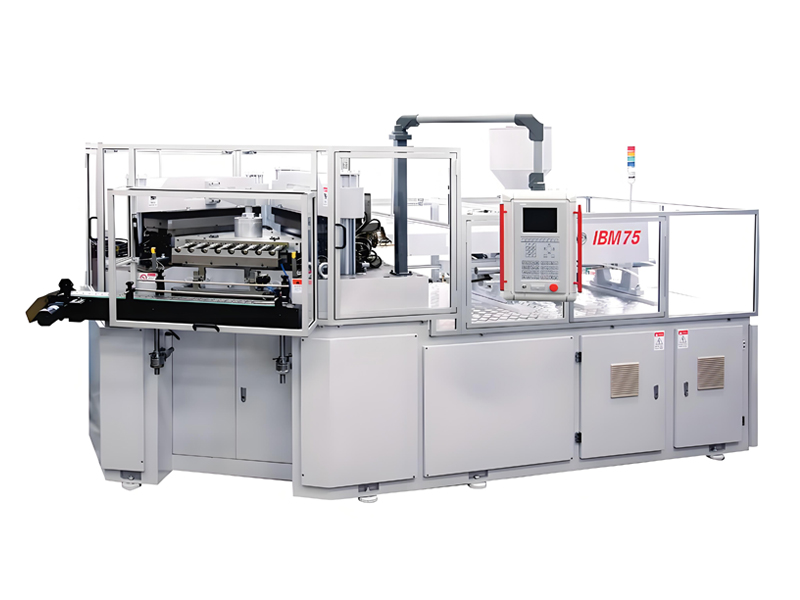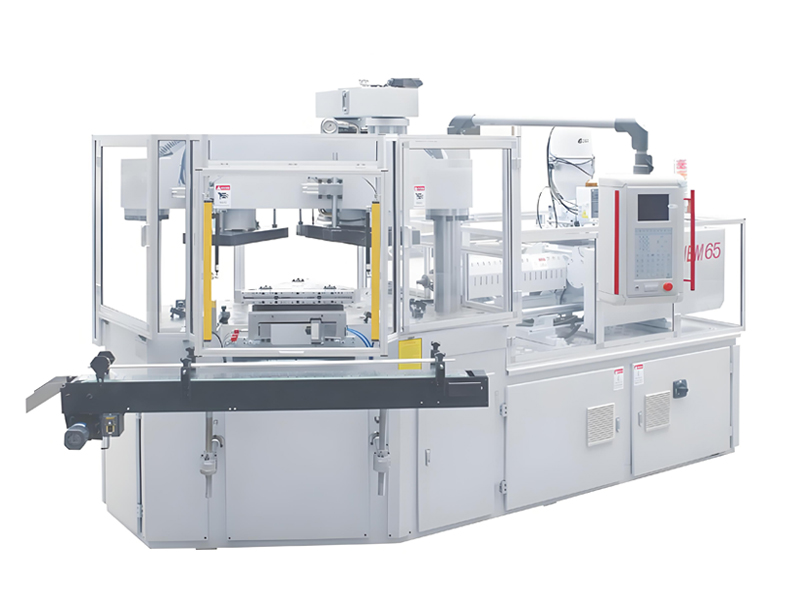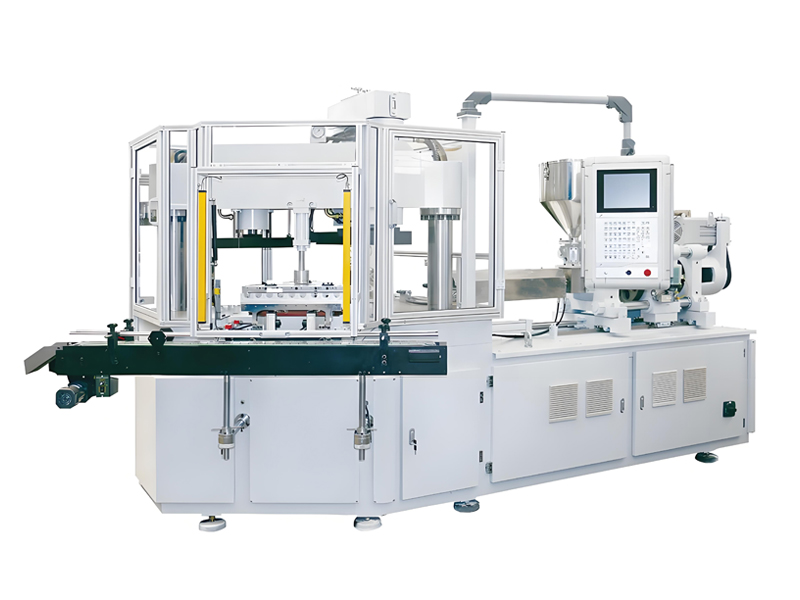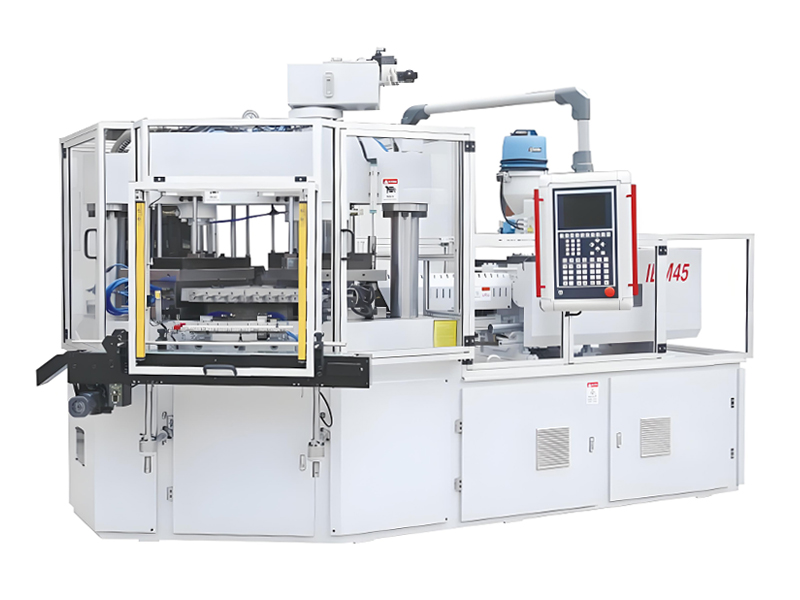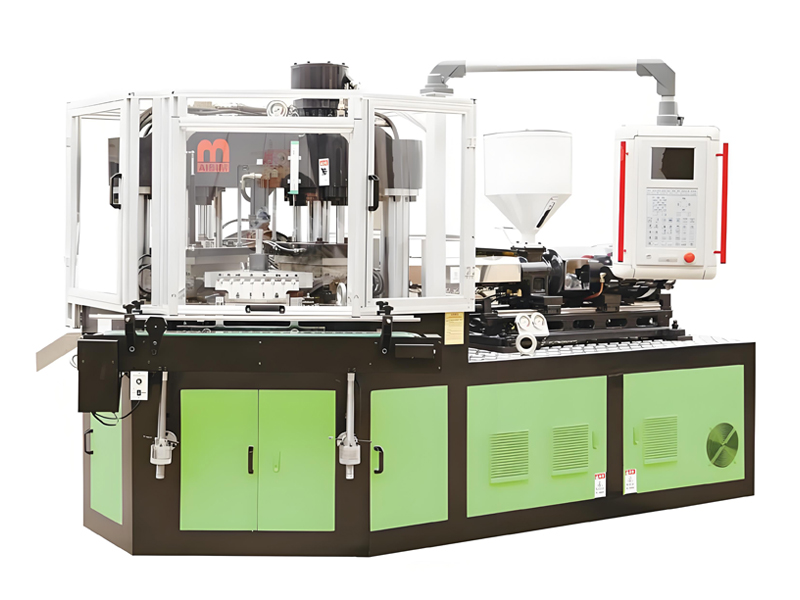
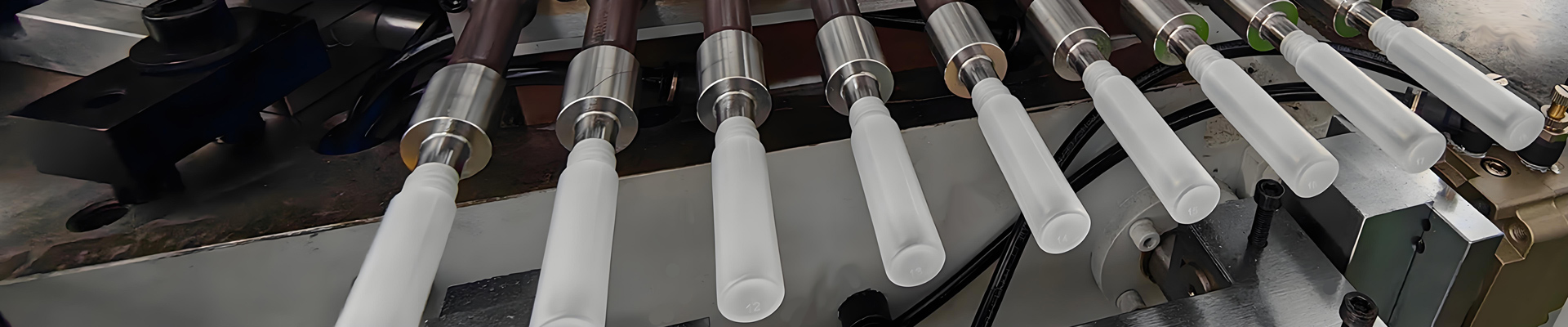
Aibim, a Wanplas factory specializing in injection blow molding (IBM) machines, builds three-station one-step equipment that turns plastic resin into precise hollow containers ranging from 3 ml to 1000 ml. At the heart of every IBM machine sits the screw barrel assembly — the rotating screw inside its closely fitted barrel — which plasticizes, homogenizes and injects the melt that becomes the parison. Understanding screw barrel material types and expected lifespan is the single most important factor in controlling spare-parts cost, downtime hours and part quality. This guide explains the steel grades, surface treatments, geometry, wear mechanisms, clearance limits and maintenance practices that determine how long a screw barrel will serve an injection blow molding machine before replacement becomes necessary.
تجميعة اللولب والأسطوانة في القولبة بالنفخ بالحقن
The screw barrel assembly is the plasticizing core of an injection blow molding machine, and its condition dictates both output stability and container quality. In Aibim’s IBM75, IBM65 and IBM55 Hybrid machines, the screw rotates inside a stationary barrel, drawing solid pellet or regrind feed from the hopper, melting it through shear and conduction, and metering a precise shot into the injection unit that forms the parison. Because the parison wall thickness and weight consistency depend directly on melt uniformity, any wear in the screw barrel quickly shows up as flash, short shots, weight drift or dimensional variation in the finished bottle.
A screw is not a simple solid rod. It is a precision-machined helical flight wrapped around a root, divided into a feed zone, a compression zone and a metering zone, often terminated by a Maddock or pineapple mixing section and a non-return valve. The barrel is a thick-walled cylinder with a hardened inner bore whose diameter must stay within a few hundredths of a millimeter of the screw flight tip. The radial gap between flight and bore — the screw-barrel clearance — is where plasticizing efficiency lives, and it is exactly where wear concentrates.
الحقن blow molding differs from extrusion in that the screw performs an intermittent, reciprocating duty rather than a continuous one. During recovery, the screw turns to build the next shot and retracts as melt accumulates ahead of the check ring; during injection, the screw acts as a ram, pushing melt through the nozzle. This start-stop thermal and mechanical cycling, combined with the high shear needed to plasticize PP, HDPE, PS, ABS, SAN, TPU, PC and PCTG, places a unique duty profile on the screw barrel that influences material selection and lifespan.
Aibim’s PREFILL technology and variable displacement pump in the hydraulic system reduce the thermal load on the melt, which indirectly protects the screw barrel by limiting degradation-driven corrosion. Still, the assembly remains a consumable: even the most advanced steel will eventually reach its wear limit. The practical question for any plant manager is not whether the screw barrel will wear, but how to choose materials and practices that maximize running hours per set while keeping the cost index reasonable.
The remainder of this article treats the screw barrel as an engineered system. We examine the underlying steel chemistry, the surface engineering that hardens the working surfaces, the geometric parameters that govern mixing and output, the four dominant wear mechanisms, the clearance numbers that trigger replacement, and the real-world lifespan you can expect when processing common resins. By the end, you will be able to specify a screw barrel for an IBM machine with confidence and build a maintenance plan that protects uptime.
شرح درجات مواد البرغي والأسطوانة
Selecting the base steel is the first decision in any screw barrel build, because the substrate determines how deeply hard surface layers can be supported and how well the part resists fatigue, torsion and thermal cycling. The plastic machinery industry has converged on a short list of proven grades, each balancing cost level, hardenability and toughness. For injection blow molding, the most common substrate choices are 38CrMoAlA nitriding steel, 42CrMo alloy steel, SKD61 hot-work tool steel and various stainless or high-speed variants, with bimetallic and powder-metallurgy options layered on top for severe duty.
38CrMoAlA is a classic nitriding-grade alloy containing chromium, molybdenum and aluminum. The aluminum forms hard aluminum nitride precipitates during nitriding, giving a surface hardness around HV 900 to 1000 while the core stays tough. It is the default for general-purpose IBM screws and barrels running clean PP, HDPE and PS, and its cost level is Low to Medium. 42CrMo is a higher-strength chromium-molybdenum steel with better core toughness and impact resistance; it is often chosen for larger screws or where torsional load is high, and it accepts nitriding or induction hardening well. SKD61, a Japanese hot-work tool steel equivalent to H13, brings superior hot hardness and resistance to thermal fatigue, making it suitable for screws running hot engineering resins such as PC and PCTG.
The barrel, by contrast, more often uses a bimetallic liner because the bore sees the most abrasive contact. A single-alloy nitrided barrel in 38CrMoAlA is acceptable for gentle duty, but once glass fiber, calcium carbonate, titanium dioxide or flame-retardant additives enter the melt, the thin nitride case is consumed quickly. That is why high-wear barrels pair a medium-carbon or alloy steel outer shell with an inner centrifugally cast or welded alloy layer — the bimetallic construction discussed in the next section.
From a durability standpoint, the steel grade sets the ceiling. A nitrided 38CrMoAlA screw may reach 15,000 to 25,000 running hours in clean resin, while the same substrate in glass-filled compound may need replacement under 8,000 hours. Upgrading the screw to a powder-metallurgy grade such as CPM 9V, or the barrel to a bimetallic liner, pushes that ceiling dramatically upward at a higher cost index.
يلخص الجدول أدناه المواد الأساسية الرئيسية وموقفها النموذجي من التكلفة والمتانة لخدمة برغي وأسطوانة IBM.
| Base Material | Typical Use | Cost Level | Relative المتانة |
|---|---|---|---|
| 38CrMoAlA (nitriding steel) | General-purpose screw and barrel, clean resins | Low / Medium | Medium |
| 42CrMo (alloy steel) | High-torque screws, larger diameters | Medium | Medium |
| SKD61 / H13 (hot-work tool steel) | Screws for PC, PCTG and high-temperature resins | Medium / High | Medium-High |
| Bimetallic liner (Fe-Cr-B / Ni-Cr-Co-WC) | Barrels for filled and corrosive compounds | High / Very High | High |
| CPM 9V (powder metallurgy) | Screws for extreme abrasive service | Very High / Premium | Very High |
Material selection should always be matched to the resin slate. A plant running only HDPE pharmaceutical bottles can stay on 38CrMoAlA economically, while a contract molder switching between glass-filled PP and flame-retardant ABS should move to bimetallic and powder-metallurgy grades to avoid repeated changeovers and downtime hours.
الأسطوانات ثنائية المعدن: بطانات Fe-Cr-B وNi-Cr-Co-WC
A bimetallic barrel is the standard answer when a single-alloy nitrided bore cannot survive the abrasive or corrosive melt stream. The construction is simple in concept but demanding in execution: a ductile steel outer shell is lined on the inside with a thick, hard alloy layer that carries the wear. Two chemistries dominate the IBM sector — an iron-based Fe-Cr-B (iron-chromium-boron) liner and a nickel-based Ni-Cr-Co-WC (nickel-chromium-cobalt-tungsten carbide) liner. Each offers a distinct balance of hardness, toughness and chemical resistance.
The Fe-Cr-B liner is produced by centrifugally casting a boron-rich iron-chromium alloy against the bore, then honing it to size. Boron forms very hard boride phases that resist abrasive particles such as calcium carbonate and talc, while chromium provides a corrosion-resistant matrix. Layer thickness is typically 1.5 to 2.0 mm, and as-cast hardness lands around HRC 58 to 62. This grade is the workhorse for filled polyolefins and moderate corrosive service, with a cost level of High.
The Ni-Cr-Co-WC liner goes further by embedding tungsten carbide particles in a nickel-chromium-cobalt matrix. Tungsten carbide is among the hardest phases available in a castable liner, pushing hardness to HRC 60 to 65 and giving outstanding resistance to glass-fiber and mineral-filled compounds. The nickel matrix also resists acidic and halogenated degradation byproducts better than iron-based liners, which matters for flame-retardant and PVC-adjacent formulations. Its cost level is Very High, but the running-hour return is substantial.
Because the liner is thick — far thicker than the 0.5 to 0.8 mm nitride case — a bimetallic barrel can be reground and relined several times before the shell is scrapped. In practice, a well-chosen bimetallic barrel in filled PP may exceed 30,000 running hours, versus under 8,000 for a comparable nitrided barrel. For Aibim IBM machines feeding glass-reinforced or calcium-filled resins, the bimetallic barrel is effectively mandatory for predictable uptime.
There are trade-offs. Bimetallic liners are more brittle than a nitrided substrate, so they demand careful thermal management: rapid cold-start or thermal shock can spawn micro-cracks at the liner-shell interface. Operators should follow a controlled heat-up ramp and avoid foreign-metal ingress, which can spall the liner. The bonding quality between liner and shell also varies by foundry, so sourcing from a qualified supplier — and verifying with an ultrasonic thickness check — protects the investment.
التوافق مع البرغي مهم. عادةً ما يُقرن البرميل ثنائي المعدن ببرغي من فولاذ الأدوات المقسى أو من تعدين المساحيق؛ تشغيل برغي نيتريد ناعم ضد بطانة كربيد التنجستن يستدعي تآكلًا من جانب واحد على الجزء الأرخص. يقارن الجدول أدناه عائلتي البطانات لخدمة IBM.
| Property | Fe-Cr-B Liner | Ni-Cr-Co-WC Liner |
|---|---|---|
| Matrix type | Iron-chromium-boron cast | Nickel-chromium-cobalt + WC |
| Hardness (HRC) | 58 to 62 | 60 to 65 |
| Layer thickness (mm) | 1.5 to 2.0 | 1.5 to 2.0 |
| Best against | Mineral fillers, mild corrosion | Glass fiber, severe abrasion, corrosion |
| Cost level | High | Very High |
لوالب ميتالورجيا المساحيق: CPM 9V والصلب عالي المقاومة للتآكل
While the barrel bore wears from the inside, the screw flight tip wears from the outside against that same bore. When the melt carries hard particles, the screw needs a matrix that holds carbide throughout its bulk rather than only at a thin surface. Powder metallurgy (PM) steels such as CPM 9V answer this need by distributing fine, uniformly spaced vanadium carbides through a high-carbon tool-steel matrix, delivering wear resistance far beyond what conventional cast or wrought steels achieve.
CPM 9V is a high-vanadium, high-carbon PM tool steel. Its name reflects roughly 9 percent vanadium, which forms extremely hard vanadium carbides that blunt abrasive glass fiber and mineral filler. Because the powder process eliminates the carbide segregation seen in conventionally cast tool steels, the screw root and flight both carry uniform hardness, typically around HRC 58 to 62 after heat treatment. This uniformity lets the screw keep its geometry deep into its service life instead of developing local grooves.
For IBM machines running glass-fiber-reinforced PP, talc-filled compounds or flame-retardant masterbatches, a CPM 9V screw paired with a bimetallic barrel is the most durable combination on the market. It is not inexpensive — the cost level reaches Very High to Premium — but the reduction in downtime hours and the extended reprocessing window often justify the spend for high-value pharmaceutical and cosmetic containers where scrap rate is the dominant cost.
Other PM and premium grades appear in specialist service. CPM 10V pushes vanadium even higher for maximum abrasion resistance, while stainless PM grades add corrosion resistance for acidic or halogenated formulations. Conventional wrought tool steels such as D2 or SKD61 remain common for moderate duty, but they lack the homogeneous carbide field of the PM family and therefore wear faster under filled resins.
A practical note: PM screws are harder to machine and repair. When a CPM 9V screw eventually wears, it is usually replaced rather than rebuilt, whereas a nitrided 38CrMoAlA screw can sometimes be re-ground and re-nitrided. The lifecycle math therefore compares a cheaper renewable part against a dearer disposable one — and for abrasive duty the disposable PM screw almost always wins on total cost per processed tonne.
Heat treatment discipline is critical. PM steels must be correctly austenitized, quenched and tempered; an undertempered screw can be brittle, while an overtempered one loses hardness. Aibim’s own CNC machining center and quality controls help ensure that replacement screws for IBM75, IBM65 and IBM55 Hybrid machines arrive at the right hardness and geometry, reducing the risk of premature field failure.
المعالجات السطحية وتقنيات التصلب
Beyond the base material, surface engineering is what actually meets the melt. The working surfaces of a screw barrel are hardened by nitriding, chrome plating, tungsten carbide spraying or a combination, each with a distinct depth, hardness and failure mode. Choosing the right surface treatment is often more decisive than the substrate choice for a given resin.
Nitriding is the most widespread treatment for 38CrMoAlA and 42CrMo. A gas or ion nitriding cycle diffuses nitrogen into the steel to form a compound layer over a diffusion zone, producing a case depth of 0.5 to 0.8 mm and a surface hardness of HV 900 to 1000. The case is thin but very hard, and because it is a diffusion layer rather than a coating, it cannot delaminate. Its weakness is thickness: once the 0.5 to 0.8 mm is worn through, the soft core is exposed and wear accelerates. Nitriding suits clean PP, HDPE and PS, where cost level is Low to Medium.
Chrome plating deposits a thin chromium layer, typically 0.02 to 0.08 mm, that improves release and gives modest corrosion resistance. It is sometimes applied to screws for sticky or corrosive resins, but its thinness limits abrasion life, and a cracked chrome layer can spall. It is best viewed as a supplementary treatment rather than a primary wear surface.
HVOF (high-velocity oxy-fuel) or supersonic spraying deposits a tungsten carbide-cobalt coating, often 0.3 to 0.6 mm thick, with hardness around HRC 65 to 70. Because the particles are fired at supersonic speed, the coating bonds densely and resists both abrasion and corrosion. It is a common refurbishment route for screws — a worn nitrided screw can be stripped, sprayed and reground to extend life at a Medium cost level.
البطانات ثنائية المعدن، التي تمت مناقشتها سابقًا، هي عمليًا “معالجة سطحية” سميكة مدمجة في جدار الأسطوانة، بسماكة 1.5 إلى 2.0 مم من سبيكة بصلابة HRC من 58 إلى 65. يقارن الجدول التالي خيارات السطح الرئيسية لخدمة أسطوانة اللولب في IBM.
| Treatment | Layer Depth (mm) | Hardness | Primary Strength |
|---|---|---|---|
| Nitriding | 0.5 to 0.8 | HV 900 to 1000 | Cost-effective, no delamination |
| Chrome plating | 0.02 to 0.08 | HV 800 to 1000 | Release, light corrosion |
| HVOF / supersonic spray | 0.3 to 0.6 | HRC 65 to 70 | Abrasion + corrosion, repairable |
| Bimetallic liner | 1.5 to 2.0 | HRC 58 to 65 | Thick, long-life barrel bore |
في الميدان، تجمع العديد من براميل البراغي المتينة لـ IBM بين المعالجات: برغي نتردة أو PM مع طلاء إصلاح HVOF، داخل برميل ثنائي المعدن. الهدف هو جعل السطحين يتآكلان بمعدل مماثل بحيث لا يتفوق أحدهما على الآخر بهامش مهدور.
هندسة اللولب: نسبة الطول إلى القطر ونسبة الضغط والمناطق
The geometry of the screw is as important as its material. Three numbers define the plasticizing behavior of an IBM screw: the length-to-diameter ratio (L/D), the compression ratio, and the relative lengths of the feed, compression and metering zones. Together they set residence time, shear rate, melt temperature and the ability to handle different resins — all of which feed back into wear and lifespan.
The L/D ratio for injection blow molding screws typically runs 18:1 to 24:1. A longer screw (higher L/D) gives more residence time and better melt homogenization, which suits heat-sensitive or difficult resins, but it also increases torque demand and the length of barrel that must stay within tolerance. Aibim’s IBM range commonly uses L/D around 20:1 to 22:1, balancing homogenization against compact machine footprint and energy use. The compression ratio — the ratio of feed-zone channel depth to metering-zone channel depth — normally sits at 2.5 to 3.5 for IBM duty.
Channel depth deserves attention because it governs shear heating. A deep feed channel and a shallow metering channel raise the compression ratio and increase shear, which helps melt stiff resins such as PC but accelerates wear in filled compounds. A shallower metering channel also improves metering accuracy, which matters for parison weight consistency. The three zones are proportioned by length: a typical split is feed 45 to 55 percent, compression 20 to 30 percent, and metering 25 to 30 percent of the flighted length, adjusted for the resin’s melting point and bulk density.
For crystalline resins like HDPE and PP, a moderate compression ratio around 3:1 with a healthy feed zone works well. For amorphous resins like PC and PS, a slightly lower compression ratio reduces overheating risk. Aibim engineers tune screw geometry per application during machine configuration, because the wrong geometry forces the operator to raise barrel temperature and back pressure, both of which shorten screw barrel life.
تتفاعل الهندسة أيضًا مع التآكل. نسبة الضغط العالية تعني أن طرف اللولب يحتك بقوة أكبر ضد التجويف، لذا يجب بناء برغي عالي الضغط في راتنج مملوء من PM أو فولاذ الأدوات، وليس من مخزون نتردة ناعم. يلخص الجدول إرشادات الهندسة للراتنجات الشائعة لـ IBM.
| Resin Family | Typical L/D | Compression Ratio | Geometry Note |
|---|---|---|---|
| PP / HDPE | 20:1 to 22:1 | 3.0 to 3.5 | Standard three-zone, deeper feed |
| PS / SAN | 20:1 to 22:1 | 2.5 to 3.0 | Lower compression to avoid overheating |
| PC / PCTG | 22:1 to 24:1 | 2.5 to 2.8 | Longer L/D for homogenization |
| Filled compounds | 20:1 to 22:1 | 2.5 to 3.0 | Shallow metering, hard screw/barrel |
اختيار الهندسة قرار مشترك مع درجة المادة. يوصي فريق التطبيقات في Aibim بتركيبات L/D وضغط محددة عند تقديم عرض لخط IBM، ونفس التوصية تحدد الفولاذ والمعالجة السطحية التي يجب أن تستخدمها أسطوانة اللولب.
أقسام الخلط وصمامات عدم الرجوع
إلى جانب المناطق الرئيسية الثلاث، تهيمن ميزتان عند طرف البرغي على جودة الصهر والتآكل في القولبة بالنفخ بالحقن: قسم الخلط وصمام عدم الرجوع (حلقة الفحص). يقع كلاهما حيث تبلغ القص والضغط ذروتهما، لذا يؤثر تصميمهما واختيار المواد بقوة على عمر البرغي والبرميل.
A mixing section homogenizes temperature and color by repeatedly splitting and rejoining the melt. The Maddock mixer — also called a fluted mixing section — uses a series of lands and channels that force the melt through restricted gaps, generating shear without excessive temperature rise. The pineapple mixer (pin mixing section) places a ring of pins on the screw root that break the melt into streams and recombine them, giving excellent dispersion for masterbatch and multi-cavity parisons. Both improve parison consistency, which lets the operator lower barrel temperature and back pressure, indirectly protecting the screw barrel.
However, mixing sections concentrate wear. The narrow gaps in a Maddock section and the pin roots in a pineapple section see high local velocity and, with filled resin, rapid abrasion. For glass-filled or calcium-filled compounds, the mixer should be cut from the same hard grade as the screw — CPM 9V or SKD61 — and the surrounding barrel bore should be bimetallic. A soft nitrided mixer in filled PP can erode within a few thousand running hours.
The non-return valve, or check ring, seals the screw tip during injection so melt does not flow backward. It is the highest-pressure, highest-velocity point in the assembly, and it is notorious for wear and contamination damage. A worn check ring leaks, raising back pressure and extending cycle time, and it produces shot-weight variation that ruins parison consistency. The ring and its seat should be built from tool steel or PM grades, and the seating surfaces inspected at every screw pull.
Sealing design also matters for lifespan. A free-flow or ball-check valve reduces restriction and is gentler on heat-sensitive resins, while a classic three-piece ring valve seals tightly but is more wear-prone. For IBM machines running PC or PCTG, where degradation must be avoided, a low-restriction valve paired with a bimetallic barrel is the durable choice. Aibim’s IBM55 Hybrid and IBM75 units use hardened check-ring assemblies as standard to keep back pressure stable across long campaigns.
باختصار، طرف اللولب هو المكان الذي تلتقي فيه جودة المواد وخطر التآكل. تحديد خلاط صلب وحلقة فحص من البداية يمنع الأسباب الأكثر شيوعًا لتقاعد أسطوانة اللولب المبكر ويبقي مؤشر تكلفة الملكية تحت السيطرة.
آليات التآكل: الكاشط والتآكلي واللاصق والتجويف
Four distinct physical mechanisms consume a screw barrel, and diagnosing which one is active tells you which material will survive. Confusing them leads to the wrong upgrade — a harder barrel that still corrodes, or a corrosion-resistant barrel that still abrades. The four mechanisms are abrasive wear, corrosive wear, adhesive wear and cavitation.
Abrasive wear is the grinding of the flight tip and bore by hard particles in the melt: glass fiber, calcium carbonate, talc, titanium dioxide, pigments and regrind fines. It produces characteristic scoring grooves and a progressive increase in clearance. It is the dominant mechanism for filled and flame-retardant compounds and is best fought with bimetallic barrels and PM screws. Abrasive wear scales with particle hardness and loading; a 30 percent glass-filled PP is dramatically harder on the screw barrel than neat PP.
Corrosive wear comes from chemically aggressive melt or its degradation byproducts — halogenated flame retardants releasing acid, PVC-adjacent formulations, certain engineering resins at high temperature, and moisture-reactive chemistry. It attacks the matrix between hard phases, undercutting the surface even where abrasion is low. Nickel-based bimetallic liners and stainless or PM screws resist it best. Corrosive wear is why a barrel that looks only mildly worn can fail by pitting and leakage.
Adhesive wear, or galling, occurs when two sliding metal surfaces momentarily weld and tear under high load and poor lubrication. In a screw barrel, this happens if the clearance closes through thermal growth or if a soft screw rubs the bore at start-up. It accelerates once initiated, producing transferred metal and heat. Correct clearance, controlled heat-up and a hard, smooth surface finish prevent it. Aibim’s PREFILL hydraulics reduce peak pressure that could otherwise drive the screw into the bore.
Cavitation is less common but real in IBM duty: local pressure drops at the check ring and mixing lands can form and collapse vapor bubbles, pitting the surface. It appears as a clustered, sponge-like erosion near the screw tip and non-return valve. Proper valve geometry and avoiding excessive back pressure reduce cavitation. The table maps mechanism to remedy.
| Mechanism | Typical Cause | Visual Sign | Best Defense |
|---|---|---|---|
| Abrasive | Glass, CaCO3, TiO2, regrind | Scoring grooves | Bimetallic + PM screw |
| Corrosive | Halogen FR, acid byproducts | Pitting, undercutting | Ni-based liner, stainless/PM |
| Adhesive | Closed clearance, cold start | Galling, transferred metal | Correct clearance, slow heat-up |
| Cavitation | Pressure drops at valve/mixer | Pitted clusters at tip | Valve geometry, lower back pressure |
معظم الأعطال الحقيقية مزيج — تآكل يقطع المادة الأساسية بحيث يعض الاحتكاك أعمق، أو احتكاك يفتح مسارات للتآكل. لهذا السبب تجمع براميل البراغي الأكثر متانة لـ IBM بين بطانة صلبة سميكة وبرغي مقاوم للتآكل، مهاجمة الآليتين في وقت واحد.
معايير الخلوص بين اللولب والأسطوانة وعتبات الاستبدال
The radial clearance between the screw flight tip and the barrel bore is the single number that decides when a screw barrel must be replaced. It is small by design — usually a fraction of the screw diameter — because plasticizing efficiency depends on the melt being squeezed and sheared through that gap rather than leaking backward. As wear grows the gap, efficiency falls and back pressure must rise to compensate.
New IBM screw barrels typically leave the factory with an initial radial clearance in the range of 0.10 to 0.20 mm, scaled to screw diameter. A small machine such as the IBM55 Hybrid may sit near 0.10 to 0.15 mm, while a larger IBM75 approaches 0.15 to 0.20 mm. This tight gap is what gives clean melt and accurate shot weight. The clearance is measured with an inside bore gauge (内径千分表) and a screw-flight gauge at multiple axial stations.
The wear limit — the point at which replacement is justified — is commonly taken as a radial clearance of 0.30 to 0.40 mm, or roughly double the initial value, whichever the machine builder specifies. Beyond this, back pressure climbs steeply and output falls. Many plants set their own action threshold at a 10 percent drop in specific output or a measurable rise in back pressure at unchanged set points, because those symptoms appear before the geometric limit is reached and directly cost scrap and energy.
Symptoms that warn of excessive clearance include: falling production rate at fixed screw speed, rising back pressure and melt temperature, increasing parison weight variation, more short shots or flash, and longer recovery time. Because reciprocating IBM duty heats and cools the screw each cycle, thermal growth can momentarily close the clearance; running with worn parts risks adhesive galling, so the threshold should be respected rather than stretched.
When the limit is reached, the barrel and screw are usually replaced as a mated set, because a new screw in a worn barrel, or vice versa, simply transfers wear to the fresh part. Aibim supplies matched screw barrel sets for IBM75, IBM65 and IBM55 Hybrid machines, and the Wanplas group’s annual free spare-parts policy helps offset scheduled replacement cost for qualified customers. The key is to plan the change during a maintenance window rather than waiting for a breakdown that costs unplanned downtime hours.
فيما يلي مرجع عملي للخلوص لتخطيط استبدال برميل اللولب في IBM.
| Condition | Radial Clearance (mm) | Action |
|---|---|---|
| New / as-built | 0.10 to 0.20 | In service, no action |
| Mid-life | 0.20 to 0.30 | Monitor, trend output |
| Wear limit | 0.30 to 0.40 | Schedule replacement |
| Beyond limit | Above 0.40 | Replace immediately |
كيف يؤثر اختيار الراتنج على عمر الخدمة
No single lifespan figure applies to an IBM screw barrel, because the resin slate dominates wear. The same nitrided 38CrMoAlA assembly can last five times longer on clean HDPE than on glass-filled PP. Understanding how each common IBM resin behaves lets you forecast replacement intervals and choose materials accordingly.
PP and HDPE are the gentlest mainstream resins. They are low-abrasion, mildly corrosive and processed at moderate temperature, so a nitrided screw barrel can exceed 30,000 running hours. LDPE and LLDPE are similarly kind, though LLDPE’s slightly higher melt strength calls for sound temperature control. PS و SAN are also gentle but more heat-sensitive, so avoiding overheating protects both resin and screw; lifespan is comparable to polyolefins.
PET is unusual for IBM because it is hygroscopic and processed hot and dry; while not highly abrasive, its high melt temperature and hydrolysis risk mean the screw should be dry-run capable and corrosion-aware, and the check ring must seal tightly to avoid degradation. PC and PCTG run even hotter and are prone to thermal degradation if residence time is long, so a longer L/D with gentle compression and a hard, polished screw surface is preferred; lifespan is good if degradation is controlled, but a degraded PC batch can aggressively attack the screw.
Filled compounds are the lifespan killers. Glass-fiber-reinforced PP or ABS introduces hard fibers that abrade the bore and flight relentlessly; expect a nitrided assembly to need replacement under 8,000 running hours, while a bimetallic-plus-PM set can pass 25,000 hours. Calcium-carbonate-filled (chalk-filled) resins are less sharp than glass but still abrasive and can also promote corrosion from additives; they demand bimetallic barrels. Flame-retardant formulations, especially halogen-based, release corrosive acids at processing temperature and require nickel-based liners and corrosion-resistant screws regardless of their low abrasiveness.
The practical rule: match the screw barrel to your worst weekly resin, not your average one. A plant that runs 80 percent HDPE and 20 percent glass-filled masterbatch should still specify a bimetallic barrel, because the 20 percent dictates the wear rate. Aibim’s processable material list — PE, PP, PS, ABS, SAN, TPU, PC, PCTG — spans gentle to demanding, and the screw barrel specification should follow the most aggressive item in the list.
العمر المتوقع حسب ساعات التشغيل والأطنان المعالجة
Translating material and resin into numbers, the expected lifespan of an IBM screw barrel is best expressed in two equivalent units: running hours and processed tonnes. Running hours capture duty intensity; processed tonnes capture throughput regardless of speed. Both are useful for planning spare parts and budgeting the cost index of ownership.
For clean PP or HDPE on a nitrided 38CrMoAlA screw barrel, expect 25,000 to 40,000 running hours, corresponding to roughly 20,000 to 35,000 processed tonnes before the wear limit. For PS و SAN the range is similar, perhaps 10 percent lower due to heat sensitivity. These are the longest-lived configurations and suit high-volume pharmaceutical and cosmetic bottle lines where the resin is stable.
لـ PC وPCTG على برغي فولاذ أدوات أو PM مع برميل ثنائي المعدن، يبلغ العمر الافتراضي حوالي 15,000 إلى 30,000 ساعة تشغيل، أو 12,000 إلى 25,000 طن، بافتراض تجفيف جيد وتحكم في درجة الحرارة. أحداث التحلل يمكن أن تقطع هذا بشكل حاد، لذا فإن انضباط العملية مهم بقدر أهمية المادة هنا.
For filled and flame-retardant compounds, the numbers fall. A nitrided assembly in glass-filled PP may manage only 5,000 to 8,000 running hours (4,000 to 7,000 tonnes), while a bimetallic barrel with a CPM 9V screw typically reaches 20,000 to 35,000 running hours (15,000 to 30,000 tonnes). Calcium-filled and flame-retardant service sits between, closer to the lower end without proper liners. The table summarizes expected ranges.
| Resin / Build | Running Hours | Processed Tonnes |
|---|---|---|
| PP/HDPE, nitrided | 25,000 to 40,000 | 20,000 to 35,000 |
| PS/SAN, nitrided | 22,000 to 35,000 | 18,000 to 30,000 |
| PC/PCTG, bimetallic + PM | 15,000 to 30,000 | 12,000 to 25,000 |
| Glass-filled, nitrided | 5,000 to 8,000 | 4,000 to 7,000 |
| Glass-filled, bimetallic + PM | 20,000 to 35,000 | 15,000 to 30,000 |
These figures assume good housekeeping: dry resin, clean regrind, controlled heat-up, and on-time inspection. They are typical ranges rather than guarantees, and actual life varies with screw speed, back pressure and ambient conditions. Still, they are a sound basis for forecasting the replacement cost index and minimizing unplanned downtime hours.
الصيانة اليومية وتنظيف الإيقاف والفحص
أطول عمر للبرغي والبرميل يُكتسب في الروتين، وليس في المواصفات. برنامج الصيانة المنضبط يضاعف العمر الافتراضي الواقعي مقارنة بالإهمال، ومعظمه منخفض التكلفة. الركائز الثلاث هي العناية اليومية وتنظيف الإيقاف الصحيح والفحص الدوري بالأدوات الصحيحة.
Daily care starts with resin hygiene. Dry hygroscopic resins such as PET and PC to the specified moisture level; moisture drives hydrolysis and corrosive wear. Keep regrind clean and free of foreign metal — a single nut or staple can spall a bimetallic liner. Run a controlled heat-up ramp rather than a fast start, so the screw and barrel expand evenly and never gall. Keep back pressure and screw speed within the machine’s recommended window; pushing either to mask worn parts only accelerates failure.
Shutdown purging is critical when changing resins or stopping for extended periods. Purge the barrel with a compatible cleaning compound or a benign resin such as HDPE to expel degraded material, especially after PC, PCTG or flame-retardant runs where residual melt would corrode or carbonize. Never leave heat-sensitive resin sitting in a hot barrel over a shutdown; a proper purge and cool-down prevents the baked-on carbon that later abrades the screw on restart. Aibim’s SD-card parameter storage makes it easy to reload the correct purge and heat-up profile across machines.
Inspection instruments turn guesswork into data. An inside bore gauge (内径千分表) measures barrel inner diameter at several axial stations to track wear directly, while an ultrasonic thickness gauge (超声测厚) reads remaining liner thickness without destructive measurement. Combined with back-pressure and output trending, these methods flag wear long before a failure. A practical schedule is a bore-gauge check at every screw pull and an ultrasonic scan every 3,000 to 5,000 running hours for aggressive service.
Finally, keep records. Logging running hours, tonnes, resin, back pressure and measured clearance per machine builds a wear curve unique to your plant, letting you predict the next replacement and avoid emergency orders. The Wanplas brand’s shared quality standards and open-factory policy support this discipline, and Aibim’s CE-certified IBM machines include the digital safety and monitoring features that make trend tracking straightforward.
من خلال الجمع بين المادة الصحيحة — 38CrMoAlA للخدمة الخفيفة، والثنائية المعدن وCPM 9V للخدمة القاسية — مع التنظيف والقياس المنضبط، تقدم أسطوانة اللولب من IBM عمرها المتوقع بالكامل وتحافظ على تكلفة الطن المعالج عند أدنى مستوياتها.
الأسئلة الشائعة
ما أفضل مادة لبرميل اللولب في آلة قولبة النفخ بالحقن؟
For general-purpose PP, HDPE and PS processing, a nitrided 38CrMoAlA screw with a bimetallic barrel offers the best balance of cost and durability. For glass-filled, calcium-filled, flame-retardant or highly corrosive resins, a bimetallic Fe-Cr-B or Ni-Cr-Co-WC barrel with a CPM 9V or tool-steel screw is strongly recommended to avoid premature wear and unplanned downtime hours.
كم تدوم أسطوانة اللولب في آلة IBM؟
Lifespan ranges from roughly 8,000 running hours with aggressive filled compounds to more than 40,000 running hours with clean unfilled PP or HDPE. In tonnage terms, a nitrided assembly typically processes 10,000 to 30,000 tonnes before reaching its wear limit, while a bimetallic assembly can exceed 60,000 tonnes depending on resin and maintenance.
ما الخلوص بين اللولب والأسطوانة الذي يستدعي الاستبدال؟
Most IBM machines leave the factory with an initial radial clearance of 0.10 to 0.20 mm. A common replacement threshold is when the clearance reaches 0.30 to 0.40 mm, or when output drops by more than 10 percent and back pressure rises noticeably at unchanged set points. Replacing as a mated set during a planned window avoids galling and breakdown.
كيف يمكنني اكتشاف تآكل برميل اللولب دون تفكيك الآلة؟
Use an inside bore gauge (内径千分表) to measure barrel inner diameter at several axial positions, and an ultrasonic thickness gauge (超声测厚) to track liner thickness loss. Combined with back-pressure and output trending, these methods flag wear long before a failure occurs and let you forecast the replacement interval.
هل تدوم المعالجة بالنتريد أم البطانة ثنائية المعدن أطول؟
Bimetallic linings generally outlast nitrided barrels by a wide margin in abrasive or corrosive service because the alloy layer (1.5 to 2.0 mm, HRC 58 to 65) is far thicker and harder than a nitride case (0.5 to 0.8 mm, HV 900 to 1000). For clean resins, nitriding remains the cost-effective choice with a Low to Medium cost level.
أي الراتنجات هي الأكثر إجهاداً للولب والأسطوانة؟
المركبات المقواة بالألياف الزجاجية والمركبات المملوءة بكربونات الكالسيوم وتركيبات مثبطات اللهب وبعض الراتنجات الهندسية مثل PC تسبب أسرع تآكل كاشط وتآكلي. PP النظيف وHDPE وPS هي الألطف على مجموعة البرغي والبرميل وتوفر أطول فترات خدمة.
هل يمكن إصلاح أسطوانة اللولب (Screw Barrel) المتآكلة بدلاً من استبدالها؟
Often yes. A nitrided screw can be re-ground and re-nitrided, and a screw can be restored by HVOF supersonic tungsten-carbide spraying; a bimetallic barrel can be relined while the shell is reused. Once wear passes the 0.30 to 0.40 mm clearance limit, however, full replacement of the mated set is the reliable option for consistent parison quality.
الخلاصة
The screw barrel is the consumable heart of every injection blow molding machine, and its material choice, surface treatment and maintenance discipline together decide the cost per processed tonne. For gentle resins such as PP, HDPE and PS, a nitrided 38CrMoAlA screw barrel delivers 25,000 to 40,000 running hours at a Low to Medium cost level. For demanding service — glass-filled, calcium-filled, flame-retardant or corrosive compounds — a bimetallic Fe-Cr-B or Ni-Cr-Co-WC barrel paired with a CPM 9V or SKD61 screw is the durable, if higher-cost, path that protects uptime.
Geometry, wear mechanism awareness and clearance monitoring complete the picture: keep L/D at 18:1 to 24:1, compression at 2.5 to 3.5, watch the 0.10 to 0.20 mm initial clearance against the 0.30 to 0.40 mm wear limit, and inspect with an inside bore gauge and ultrasonic thickness gauge. Aibim, a Wanplas factory, applies these principles across its IBM75, IBM65 and IBM55 Hybrid machines, and the broader Wanplas brand’s shared quality standards and spare-parts support help plants keep screw barrel life — and profitability — at their best. Specifying the right screw barrel up front, then maintaining it well, is the simplest way to lower the lifetime cost index of any IBM line.