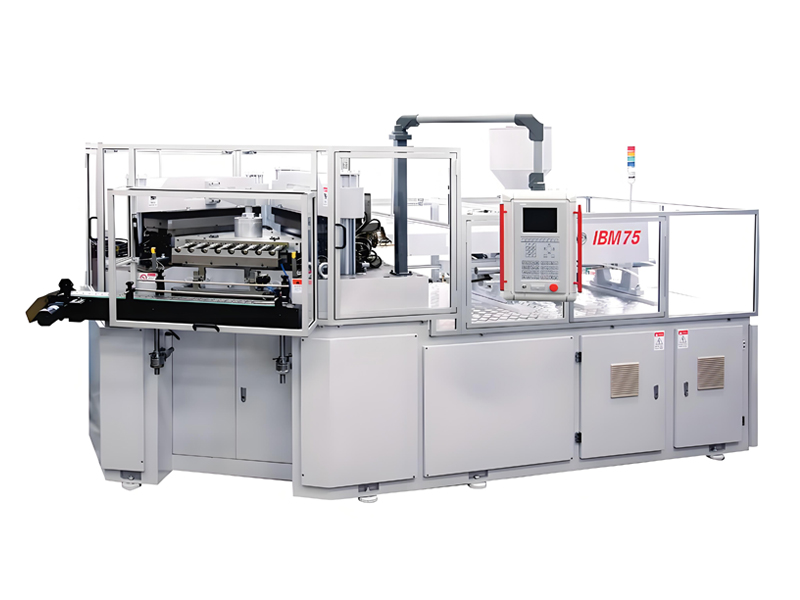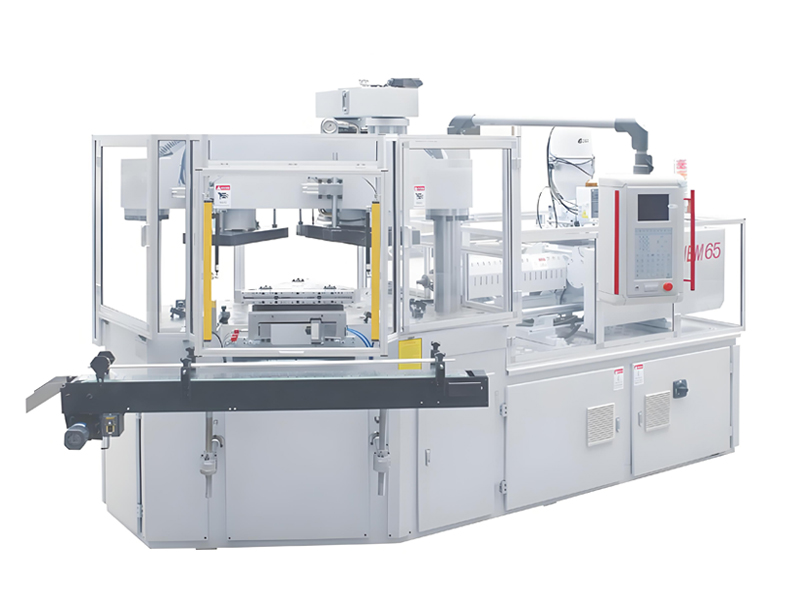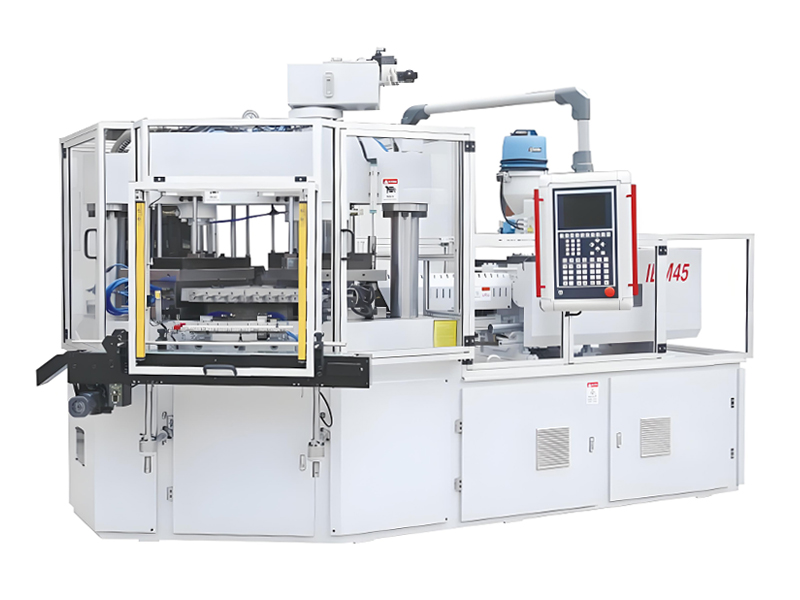
An RoHS compliant injection blow molding machine is no longer a niche requirement for a handful of environmentally conscious buyers; it has become a baseline qualification for any manufacturer that intends to place precision bottle and container production equipment on the European market. For producers of small-capacity pharmaceutical, cosmetic, food and chemical bottles, the الاتحاد الأوروبي has built one of the most demanding chemical-restriction regimes in the world, and the restriction of hazardous substances directive sits at the center of that regime. This article explains, in engineering depth, what it means for an injection blow molding (IBM) machine to be RoHS compliant, which substances are limited, where those substances hide inside a machine, how conformity is proven, and how RoHS interacts with the wider family of EU product legislation. Whether you specify an IBM55, IBM65 or IBM75 class machine, or you are a buyer evaluating equipment from Aibim, a Wanplas factory, against competitors such as جومار, Milacron or Sidel, the technical framework below applies directly to your due diligence.
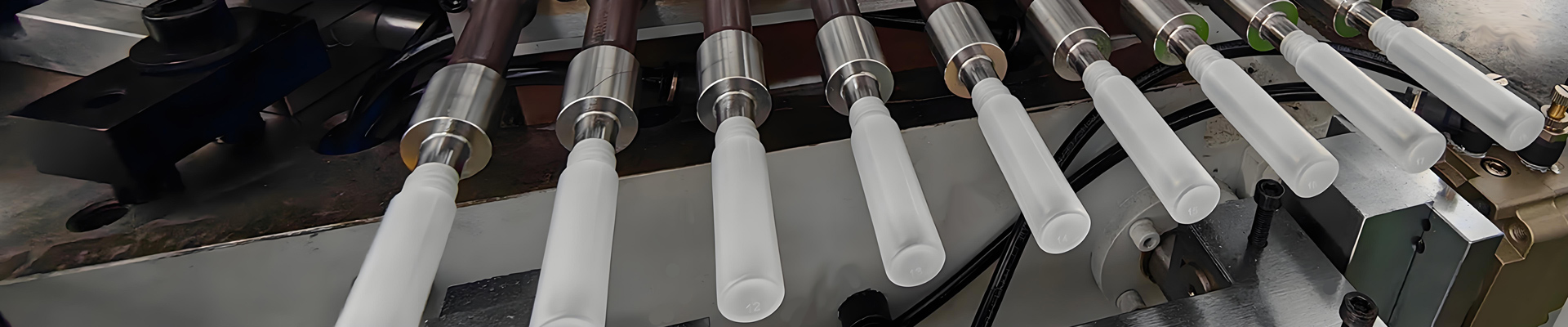
The injection blow molding process itself is relevant to the compliance discussion because the design of the machine determines which components are present. An IBM machine forms a preform around a heated core rod in an injection station, transfers the core rod with the molten preform to a blow station where it is inflated against a cavity, and discharges the finished bottle at an ejection station, all in a three-station one-step process. The core rod, the injection clamping unit, the barrel and screw plasticizing system, the servo drive of each station, the control cabinet, the wiring and the hydraulic or electrically actuated auxiliaries each contribute a different material palette, and that material palette is exactly what RoHS scrutinizes. Aibim, as a Wanplas factory focused on injection blow molding (IBM), addresses this at the design stage by selecting lead-free solders, low-smoke halogen-free cables, trivalent chromium passivation and all-electric servo drive options that remove hydraulic oil from the equation entirely.
فهم نظام توجيه RoHS لمصدري الآلات
The Restriction of Hazardous Substances directive is the الاتحاد الأوروبي legal instrument that limits the use of specific dangerous materials in electrical and electronic equipment. For a machinery exporter, the first task is to understand that the current obligation is not a single text but a layered legal structure built on two pillars: Directive 2011/65/EU, commonly called RoHS 2, and the amendment (EU) 2015/863, commonly called RoHS 3. Reading these two instruments together gives the complete, enforceable list of restricted substances and their maximum concentration values.
Directive 2011/65/EU replaced the original 2002/95/EC text and introduced several features that matter to machine builders. It established the CE marking as the conformity mechanism, aligned RoHS with the New Legislative Framework, and extended the scope toward medical devices and monitoring instruments on a phased timeline. It also clarified that the restriction is calculated on a homogeneous material basis, meaning a single uniform substance or mixture such as one plastic molding, one solder joint or one coating layer, rather than on the whole product or even on a single component. This homogeneous material rule is the single most misunderstood point in RoHS compliance and it is the reason a machine can pass overall inspection yet still contain a non-compliant sub-material.
The second pillar, (EU) 2015/863, is the amendment that inserted four phthalates into Annex II of Directive 2011/65/EU. Before this amendment, RoHS limited six substances. After it, the list grew to ten. The four added substances are bis(2-ethylhexyl) phthalate (DEHP), butyl benzyl phthalate (BBP), dibutyl phthalate (DBP) and diisobutyl phthalate (DIBP), each limited to 0.1 percent by weight in any homogeneous material. These plasticizers are ubiquitous in flexible PVC, cable jacketing and elastomeric seals, which is precisely why the amendment created such a large workload for industrial equipment manufacturers, who use enormous quantities of flexible cable and rubber grommets.
The ten restricted substances and their limits, always expressed as a percentage by weight of homogeneous material, are presented below. The table also maps each substance to the typical location inside an injection blow molding machine and to the substitution route that an RoHS compliant injection blow molding machine adopts.
| Restricted Substance | Max Limit (homogeneous material) | Typical Source in an IBM Machine | RoHS-Compliant Alternative |
|---|---|---|---|
| Lead (Pb) | 0.1% | Solder on PCBs, cable stabilizers, pigments, bearings, some brass alloys | SAC305 lead-free solder, calcium-zinc PVC stabilizer, lead-free pigments |
| Mercury (Hg) | 0.1% | Relays, switches, some backlighting, tilt sensors | Mercury-free relays and solid-state switching components |
| Cadmium (Cd) | 0.01% | Pigments, electroplating, contact alloys, some stabilizers | Cadmium-free pigments, cadmium-free contact materials |
| Hexavalent chromium Cr(VI) | 0.1% | Chromate passivation on steel, fasteners, coated plates | Trivalent chromium Cr(III) passivation, zinc-nickel coating |
| Polybrominated biphenyls (PBB) | 0.1% | Flame-retardant additive in some plastics and PCB laminates | Bromine-free or halogen-free flame retardants |
| Polybrominated diphenyl ethers (PBDE) | 0.1% | Flame-retardant additive in enclosures and cables | Halogen-free flame retardants, red phosphorus systems |
| DEHP | 0.1% | PVC cable insulation and soft gaskets | Non-phthalate plasticizers, LSZH compounds |
| BBP | 0.1% | Flexible PVC in cable and grips | Phthalate-free elastomers, TPU jacketing |
| DBP | 0.1% | PVC insulation, adhesives, printing inks | Dibutyl-phthalate-free compounds |
| DIBP | 0.1% | PVC insulation, coatings, sealants | Phthalate-free alternative plasticizers |
It is important to note that the limits are concentration thresholds, not quantity thresholds. A single small rubber foot containing 0.2 percent DEHP in its homogeneous rubber mass fails the directive even if the entire machine contains only a few grams of that rubber. This is why a RoHS compliant injection blow molding machine cannot be certified by visual inspection; it requires a documented material data trail from every sub-supplier, supported by laboratory testing on representative samples. The Wanplas brand, through its Aibim factory, consolidates this material data as part of its shared quality system so that the same approved cable, the same passivation specification and the same solder profile propagate across the IBM product range.
هل ينطبق RoHS على آلة الحقن والنفخ الكبيرة؟
The most common misconception among machinery exporters is the belief that a large industrial machine is simply outside the scope of RoHS because it is not a consumer appliance. The legal reality is more nuanced, and for an injection blow molding machine the answer is: the structural machine frame may be excluded, but the electrical and electronic equipment embedded within it is squarely inside the scope. Understanding the boundary between the excluded machine and the included components is essential to a defensible conformity declaration.
RoHS 2 draws a boundary around large-scale fixed installations and large-scale stationary industrial tools. A large-scale fixed installation, often abbreviated as LSFI, is defined as a particular combination of several types of apparatus and, possibly, other devices, which are assembled, installed and intended to be used permanently in a pre-defined location, such as a production line. A large-scale stationary industrial tool, abbreviated LSSIT, is a stationary, immobile, industrial tool intended to be used by a professional operator in a fixed location to manufacture, process, treat or package a product. A complete IBM production cell, anchored to the factory floor and wired into the plant services, can frequently be argued to sit in the LSFI or LSSIT category for the structural assembly as a whole.
However, the exclusion of the assembly does not exclude the components. The directive and its guidance are explicit that individual EEE placed on the market as a separate unit, or incorporated as a component, remains in scope even when the final assembly is a large-scale fixed installation. This is the decisive point for machine builders. Every electrical and electronic sub-assembly inside an IBM machine is EEE and must meet RoHS. That includes the main control cabinet, the servo drive units for the injection, transfer and blow stations, the PLC controller, the HMI touch screen, the sensors and encoders, the relay and contactor assemblies, the wiring harnesses, the power cables and the communication bus. In practice, the only parts of a large IBM machine that fall outside RoHS are the purely mechanical structural steel, the cast platens, the bare hydraulic manifolds and similar non-EEE items that contain no restricted-substance-relevant electronic content.
The distinction matters for two reasons. First, it shifts the compliance burden from the machine as a whole to a long bill of materials of electrical items, many of which are sourced from third-party suppliers. Second, it means the machine builder cannot hide behind the installation exemption to skip testing; they must instead demonstrate that each EEE component carries its own valid compliance evidence. Aibim, a Wanplas factory, treats the control cabinet, servo drives, PLC and HMI as primary compliance interfaces and requires a supplier declaration of conformity for each before the cabinet is released to assembly.
Spare parts and after-sales components raise a separate question. Under RoHS, spare parts that are placed on the market separately are covered when they are EEE, and replacement components supplied to repair equipment already in service must also conform. For an injection blow molding machine, this means the spare servo amplifier, the spare heater band, the spare encoder cable and the spare control board all need RoHS evidence, and that evidence must remain valid for the service life of the machine, which can span more than a decade. A practical approach is to maintain an approved spare-parts list with linked declarations and to re-confirm those declarations at each annual review. Buyers evaluating equipment from Aibim or from competitors such as جومار or Milacron should ask specifically for the spare-part compliance status, because a machine that is compliant at sale but unsupported by compliant spares creates a future liability for the operator.
There is also a timing dimension. Equipment placed on the market after the RoHS 3 phthalate deadline must meet the full ten-substance list, and retrofitted or upgraded electrical cabinets installed during a refurbishment must meet the current list even if the original machine predated it. The safest engineering posture, adopted by the Wanplas brand across its factories, is to design every new IBM machine to the full current RoHS list regardless of the destination market, so that the same bill of materials serves both regulated and unregulated regions without a divergent supply chain.
نقاط المواد المقيدة عالية الخطورة في آلة الحقن والنفخ
This is the core engineering chapter. An RoHS compliant injection blow molding machine is achieved not by a single design choice but by a systematic review of every material interface where a restricted substance may appear. The following review walks through the highest-risk points component by component, identifies the likely restricted substance, names the detection method and states the substitution that removes the risk. The accompanying table compresses the analysis into a working checklist that a design or quality engineer can apply directly.
The cable and wire harness is the single largest reservoir of RoHS risk in any modern machine. The insulation and jacket of flexible PVC cable are traditionally plasticized with phthalates, most commonly DEHP and DBP, to achieve the flexibility needed for moving axes and cable tracks. The same PVC compounds are frequently stabilized with lead salts to resist heat aging. Both the plasticizer and the stabilizer are restricted. The compliant route is to specify low-smoke halogen-free, or LSZH, cable with a non-phthalate thermoplastic elastomer jacket, or to use calcium-zinc stabilized PVC that contains no lead and no restricted phthalate. The drag-chain cable that flexes with the moving platens and the core rod transfer mechanism is especially critical because flexing accelerates any additive migration and because its length in meters translates into meaningful material volume.
Solder joints on printed circuit boards are the next major risk. Traditional tin-lead solder contains lead well above the 0.1 percent limit. RoHS compliant boards use lead-free alloys, with SAC305, a tin-silver-copper alloy with about 3 percent silver and 0.5 percent copper, being the industry standard. The melting point of SAC305 sits in the range of 217 to 220 degrees Celsius, which is higher than that of tin-lead solder, so the reflow profile and the board thermal budget must be adjusted during manufacture. The PCB surface finish also matters: ENIG, or electroless nickel immersion gold, and OSP, or organic solderability preservative, are compliant finishes that avoid lead-bearing hot-air-leveling. Aibim specifies lead-free assembly with ENIG finish on the servo drive and PLC interface boards used in its IBM machines.
Electroplated and passivated metal parts carry the chromium risk. Decorative and corrosion-protective chrome plating historically used a hexavalent chromium bath, and zinc-plated fasteners were often sealed with a Cr(VI) passivation film that gives the familiar yellow or iridescent coating. Hexavalent chromium is a carcinogen and is limited to 0.1 percent in the coating. The compliant substitution is trivalent chromium Cr(III) passivation, which provides comparable corrosion resistance without the restricted oxidation state. A meaningful quality gate is the salt spray test: a properly passivated Cr(III) zinc coating should survive a neutral salt spray test, abbreviated NSS, for at least 96 hours without red rust on the steel substrate. Bolts, tie bars, the core rod support hardware and the machine frame brackets should all be specified to this Cr(III) requirement, and the达克罗, or dacromet, and zinc-flake coatings used on some structural fasteners must be verified free of hexavalent chromium.
Cadmium appears in less obvious places. It was historically used as a pigment, as a corrosion-resistant plating for marine or high-reliability connectors, and as an alloying element in some electrical contact materials where its low friction and arc-resistance were valued. Although cadmium use has declined, residual cadmium can still appear in old pigment formulations, in certain silver-cadmium-oxide contact tips used in heavy relays, and in some yellow or red masterbatch colorants. An RoHS compliant injection blow molding machine specifies cadmium-free pigments for any colored molding and cadmium-free contact materials for the power contactors.
The heating and actuation components contain several small but real risk points. The heater bands that warm the barrel and the nozzle, the terminal blocks that connect them, the limit switches that sense station position, the relays that switch loads, the potentiometers used for analog setpoints and the connectors that join the harness all may contain restricted substances in their internal solder, in their plating or in their molded housings. Each of these is a homogeneous material that must be declared. The servo drive itself, being a high-density power electronic assembly, is the most complex EEE item and is normally sourced as a compliant module from a tier-one drive maker, but the machine builder remains responsible for confirming the declaration and for the cables and terminals attached to it.
Finally, the fluid and elastomer path. On hydraulic IBM machines, the hydraulic oil seals, O-rings and the drag-chain cable sheath can contain phthalate plasticizers, while the hydraulic oil itself is an environmental consideration under good practice even if not a RoHS substance. The most robust solution is to move to an all-electric servo drive architecture that eliminates hydraulic oil, the hydraulic cylinder and most oil seals entirely, which simultaneously improves energy efficiency and removes a whole class of substance risk. Where hydraulic actuation is retained, the seals and the cable sheath are specified with phthalate-free compounds, and the oil system is fitted with leak-containment trays.
| Machine Part | Risk Substance | Detection Method | Alternative Measure |
|---|---|---|---|
| Cable and wire harness, drag-chain sheath | DEHP, DBP plasticizers; lead stabilizer | IEC 62321-8 GC-MS; XRF for Pb | LSZH or calcium-zinc PVC, non-phthalate jacket |
| PCB solder joints | Lead (Pb) | IEC 62321-4 ICP-OES; XRF | SAC305 lead-free solder, ENIG or OSP finish |
| Fasteners, brackets, plated steel | Hexavalent chromium Cr(VI) | IEC 62321-7-1 / 7-2 | Trivalent Cr(III) passivation, NSS at least 96 h |
| Pigments, color masterbatch, contacts | Cadmium (Cd) | IEC 62321-4 ICP-OES | Cadmium-free pigment, Cd-free contact alloy |
| Heater bands, terminals, switches, relays | Pb, Cr(VI), PBB/PBDE | XRF screening plus wet chemistry | Compliant component grades, halogen-free housings |
| Hydraulic seals, O-rings, cable sheath | Phthalate plasticizers | IEC 62321-8 GC-MS | Phthalate-free elastomers; all-electric option |
| PLC, HMI, servo drive modules | All ten substances in sub-materials | Supplier FMD, IEC 62321 audit | Tier-one compliant modules with FMD |
The practical lesson is that substance risk is distributed across hundreds of small items rather than concentrated in one dramatic component. A successful RoHS compliant injection blow molding machine is therefore the output of a disciplined bill-of-materials discipline, not of a single material substitution. The Wanplas brand reinforces this by sharing an approved-components library across its factories so that the same servo drive, the same cable specification and the same passivation standard are reused, which reduces the number of unique declarations that must be maintained and audited.
التحقق من الامتثال: فحص XRF وطرق IEC 62321
Demonstrating that an injection blow molding machine is RoHS compliant requires a verification strategy that combines fast screening with definitive chemical analysis and is anchored by supplier documentation. No single test covers all ten substances, and the choice of method depends on the material, the substance and whether a quick field check or a legally defensible result is needed.
X-ray fluorescence, or XRF, spectroscopy is the workhorse screening tool. A handheld or benchtop XRF instrument bombards the sample with X-rays and measures the fluorescent signature of the elements present, giving a nearly instantaneous readout of heavy elements such as lead, mercury, cadmium, chromium and bromine. XRF is non-destructive and ideal for incoming inspection and for auditing finished assemblies on the shop floor. The challenge is interpretation. Because XRF measures total chromium and total bromine, it cannot by itself distinguish hexavalent chromium from trivalent chromium, nor one brominated flame retardant from another, and it has limited penetration through surface coatings. The result is therefore reported in three zones relative to the limit: a pass zone well below the limit, a fail zone well above it, and a warning zone near the boundary where the measurement uncertainty is too large for a confident decision. Good practice treats a pass as accepted, a fail as rejected, and a warning as a trigger for wet-chemical confirmation. The measurement uncertainty of the instrument and the sample preparation must be documented so the three-zone judgment is defensible.
For legally definitive results, the IEC 62321 series is the recognized international method set. IEC 62321-3-1 describes the XRF screening procedure and its application to determine whether further testing is needed. IEC 62321-4 covers the determination of lead, cadmium and mercury by inductively coupled plasma optical emission spectrometry, abbreviated ICP-OES, after wet digestion of the sample. IEC 62321-5 addresses the determination of cadmium, lead and chromium by ICP and the determination of mercury by cold-vapor atomic absorption where appropriate. IEC 62321-7-1 and IEC 62321-7-2 cover the determination of hexavalent chromium, the first by the colorimetric method using dibutyl phenylenediamine, or DPP, on a boiling water extract, and the second by the more sensitive diphenylcarbazide colorimetric method; these are the only methods that can positively confirm the absence of Cr(VI) rather than merely infer it from total chromium. IEC 62321-8 covers the determination of the four phthalates, DEHP, BBP, DBP and DIBP, by gas chromatography mass spectrometry, abbreviated GC-MS, after solvent extraction of the plastic or elastomer.
Sample preparation is the part most often done poorly. A homogeneous material must be isolated before testing; for example, the PVC insulation must be stripped from the conductor and ground, the plating must be sampled from the coated surface, and the solder must be taken from the actual joint rather than from a generic lot. For phthalate GC-MS, the ground sample is extracted with a solvent such as dichloromethane or toluene, the extract is concentrated and injected, and the retention time and mass spectrum are matched against calibrated standards. For ICP methods, the sample is digested in acid, usually a nitric and hydrochloric mixture, and the digest is measured against calibration curves. The table below maps each IEC 62321 method to the substances it covers, the sample preparation it requires and the kind of judgment it supports.
| IEC 62321 Method | Substance Covered | Sample Preparation | Judgment Supported |
|---|---|---|---|
| IEC 62321-3-1 XRF | Pb, Hg, Cd, Cr total, Br total | Surface cleaned, flat contact | Screening pass or warning or fail |
| IEC 62321-4 ICP-OES | Pb, Cd, Hg | Acid digestion of homogeneous material | Definitive quantitative result |
| IEC 62321-5 | Cd, Pb, Cr, Hg | Digestion and separation | Confirmatory quantitative result |
| IEC 62321-7-1 DPP | Hexavalent chromium Cr(VI) | Boiling water extraction | Positive Cr(VI) identification |
| IEC 62321-7-2 colorimetric | Hexavalent chromium Cr(VI) | Alkaline extraction, diphenylcarbazide | Sensitive quantitative Cr(VI) |
| IEC 62321-8 GC-MS | DEHP, BBP, DBP, DIBP | Solvent extraction of plastic or rubber | Definitive phthalate result |
Documentation ties the testing to the machine. A supplier declaration of conformity, or SDoC, states that a supplied item meets RoHS, but a bare SDoC is weak evidence on its own. It is strengthened by a bill of materials that penetrates to the material level, by a full material declaration, abbreviated FMD, that lists every substance present above a reporting threshold, and by the IPC-1752A data exchange format that standardizes how suppliers submit material data to the machine builder. Aibim, as a Wanplas factory, requests an FMD in IPC-1752A format from the servo drive, cable and PLC suppliers so that the declared data can be checked against the actual components received at incoming inspection. The verification loop is therefore three-layered: supplier FMD at design release, XRF screening at goods-in, and periodic wet-chemical confirmation on a sampled basis to catch any silent substitution by a sub-supplier.
التآزر مع لوائح الاتحاد الأوروبي الأخرى: REACH و WEEE والآلات و EMC و LVD و ErP
An RoHS compliant injection blow molding machine does not exist in isolation; it is one node in a network of الاتحاد الأوروبي product legislation, and a credible exporter must understand how RoHS overlaps with and is reinforced by the neighboring regulations. Treating RoHS as a standalone checkbox is a frequent cause of failed market access, because customs and market-surveillance authorities examine the machine against several directives at once. The matrix below summarizes the seven most relevant instruments and the evidence each demands.
REACH is the Registration, Evaluation, Authorisation and Restriction of Chemicals regulation. Unlike RoHS, which fixes a short list of substances in EEE, REACH maintains a much longer candidate list of substances of very high concern, abbreviated SVHC. When an article contains an SVHC above 0.1 percent by weight, the supplier must notify it to the SCIP database, the database established under the Waste Framework Directive for substances of concern in products. This means that even substances not limited by RoHS may still require SCIP notification under REACH, and a machine builder must screen its bill of materials against the current SVHC list, which is updated several times each year. The practical interaction is that the material data gathered for RoHS, the FMD and the IPC-1752A declaration, is reused for REACH screening, so the two compliance programs share a single data foundation.
WEEE, the Waste Electrical and Electronic Equipment directive 2012/19/EU, governs end-of-life treatment and the crossed-out wheelie-bin marking. Although a large stationary machine may be partly out of the WEEE individual scope, its EEE components are in scope, and the machine should carry the WEEE marking and be designed for disassembly and recycling. Design for recycling dovetails with material selection: using fewer mixed plastics, avoiding incompatible coatings and labeling materials all help both WEEE and RoHS objectives.
The EU Machinery Directive 2006/42/EC currently governs the safety of machines, and it will be replaced for equipment placed on the market from 2027 by the new Machinery Regulation (EU) 2023/1230, which becomes directly applicable without national transposition. The Machinery legislation requires a risk assessment following ISO 12100, essential health and safety requirements, and a technical file. RoHS does not address mechanical safety, but the CE marking process merges them: the same machine carries one CE mark that simultaneously declares conformity with the Machinery legislation, RoHS, EMC, LVD and any other applicable directive.
EMC, the Electromagnetic Compatibility directive 2014/30/EU, ensures the machine does not emit excessive electromagnetic disturbance and is immune to it. The servo drives, PLC and frequency converters in an IBM machine are the EMC-sensitive items, and their compliant design and cabling are documented in the EMC test report. LVD, the Low Voltage Directive 2014/35/EU, covers electrical safety for equipment within its voltage range, requiring insulation, creepage and clearance evidence. ErP, the Eco-design Directive 2009/125/EC, may set energy-related requirements, and for machinery the energy efficiency of the drive system is increasingly relevant, which connects directly to the green-design discussion in the next section. Battery-containing items, such as backup cells in some control systems, fall under the EU Battery Directive and require their own compliance evidence.
| Regulation | Applies to | Key Requirement | Conformity Evidence |
|---|---|---|---|
| RoHS (2011/65/EU, 2015/863) | EEE inside the machine | Ten substances under homogeneous limit | XRF, IEC 62321, FMD, SDoC |
| REACH | All articles and substances | SVHC above 0.1% notify SCIP | SVHC screen, SCIP notification |
| WEEE 2012/19/EU | EEE components | Marking, design for recycling | WEEE symbol, disassembly design |
| Machinery 2006/42/EC, (EU) 2023/1230 | The whole machine | Risk assessment ISO 12100, safety | Risk assessment, technical file |
| EMC 2014/30/EU | Drives, PLC, converters | Emission and immunity limits | EMC test report |
| LVD 2014/35/EU | Electrical equipment | Insulation, creepage, clearance | LVD test report |
| ErP 2009/125/EC | الطاقة-related products | Eco-design, energy efficiency | الطاقة calculation, design record |
The strategic value of this matrix is that the data collected once, the material declaration, the test reports and the risk assessment, serves multiple directives simultaneously. Aibim, a Wanplas factory, consolidates these into a single technical file so that a single CE marking is supported by a coherent evidence package rather than by disconnected documents assembled at the last moment before shipment. Buyers who compare an Aibim IBM machine with offerings from Sidel or Nissei ASB should request the unified conformity package, because the depth of that package is a reliable proxy for the maturity of the supplier’s compliance system.
علامة CE وإعلان المطابقة الأوروبي والملف الفني
The visible output of all the underlying compliance work is the CE mark and the documents behind it. For an RoHS compliant injection blow molding machine, the CE mark is not a RoHS certificate; it is the manufacturer’s declaration that the machine meets every applicable EU directive, RoHS among them. Misunderstanding this point leads exporters to present a RoHS test report as if it were the CE authorization, which it is not.
The EU Declaration of Conformity, abbreviated DoC, is the document in which the manufacturer, or its authorized representative, declares that the product complies with the relevant EU legislation. A properly drafted DoC for an IBM machine lists each applicable directive and regulation, cites the relevant harmonized standards, identifies the manufacturer and the authorized representative, references the technical file, and is signed by a person with legal authority. For 2026 and beyond, the DoC should already anticipate the transition from the Machinery Directive 2006/42/EC to the Machinery Regulation (EU) 2023/1230, which becomes applicable in 2027, and should be structured so the reference can be updated without rewriting the whole document. The DoC is a living document that must match the exact model and serial range of the machine shipped.
The technical file, sometimes called the technical documentation, is the evidence behind the DoC. It is not submitted routinely to authorities, but it must be available on request and, critically, it must be retained for ten years after the machine is placed on the market. The ten-year retention rule means the documentation system must be archival, not merely project-based; a machine shipped in 2026 may be inspected by a market-surveillance authority as late as 2036, and the file must still be retrievable. The technical file for an RoHS compliant injection blow molding machine typically contains the general machine description, the risk assessment performed under ISO 12100, the electrical and hydraulic schematics, the EMC and LVD test reports, the RoHS material declarations and test summaries, the WEEE marking evidence, and the list of harmonized standards applied.
Harmonized standards deserve a note. Where a machine is designed in accordance with the relevant harmonized European standard, there is a presumption of conformity with the corresponding essential requirement. For the Machinery legislation, standards such as the EN ISO 12100 family for risk assessment and the EN series for specific machine safety apply. For EMC and LVD, the relevant EN standards for industrial equipment apply. Including the correct standard references in the DoC and the technical file is what converts engineering work into a legal presumption of conformity, and it is the detail that distinguishes a defensible CE marking from a cosmetic one.
Aibim, as a Wanplas factory, maintains its technical file in a controlled document system with version control so that every engineering change, every supplier substitution and every standard update is recorded and the archived file for each serial number remains internally consistent. This discipline is what allows the same declaration to remain valid across the service life of the machine and to survive a market-surveillance audit years after delivery.
التصميم الأخضر وكفاءة الطاقة لآلات IBM الكهربائية
RoHS controls the substances inside a machine, but European environmental expectations do not stop there. الطاقة efficiency, noise and leak prevention are increasingly part of the buyer’s environmental assessment, and for an injection blow molding machine the drive architecture is the dominant factor. This section pairs the substance story with the energy story, because together they form the complete environmental profile that a modern European buyer evaluates.
The drive system determines both the energy consumption and the oil-related environmental risk. A conventional hydraulic IBM machine uses a fixed-speed motor driving a pump that produces hydraulic pressure to actuate the clamping, the core rod transfer and the blow functions, with excess flow relieved as heat. A servo-hydraulic machine replaces the fixed motor with a servo drive controlling the pump speed to match demand, cutting idle losses. An all-electric machine removes hydraulic oil entirely, actuating every axis with servo motors and ball screws or direct drives. The energy difference is substantial when measured as specific energy, the kilowatt-hours consumed per kilogram of molded product.
Typical specific energy figures, expressed as kWh per kg of produced article, fall into the following bands: hydraulic machines operate around 0.55 to 0.85 kWh/kg, servo-hydraulic machines around 0.35 to 0.55 kWh/kg, and all-electric machines around 0.25 to 0.40 kWh/kg. Over a multi-shift annual production of small bottles, the gap between a hydraulic and an all-electric IBM machine translates into a very large cumulative energy saving, and because the European carbon discussion is increasingly tied to energy, this saving is itself an environmental attribute that complements RoHS. Aibim offers all-electric and servo-hydraulic variants of its IBM machines so that a buyer can match the drive type to the required output and the environmental target.
Beyond the drive, several design measures reduce the environmental footprint. Ceramic heater bands on the barrel, combined with insulated heating jackets, reduce radiant heat loss and lower the surrounding temperature, which also improves the working environment. A frequency-controlled or servo-driven cooling water pump and a recovered-heat loop that feeds preheating or space heating cut auxiliary energy. Acoustic design that keeps the operating noise below 78 dB(A) at the operator position meets workplace expectations and, in some regions, regulatory noise limits. Where hydraulic oil is retained, leak-containment trays, sealed manifolds and high-quality phthalate-free seals control the spill risk that RoHS and broader environmental management both discourage. The table below compares the three drive types on the environmental metrics that matter to a European buyer.
| Drive Type | Specific الطاقة (kWh/kg) | Hydraulic Oil | Typical الضوضاء | Environmental Note |
|---|---|---|---|---|
| Hydraulic | 0.55 to 0.85 | Yes, with leak risk | Higher | Lowest investment, highest energy |
| Servo-hydraulic | 0.35 to 0.55 | Yes, reduced volume | Medium | Balanced cost and efficiency |
| All-electric | 0.25 to 0.40 | None | Lower, below 78 dB(A) | Premium efficiency, no oil risk |
Environmental management at the organizational level also supports the substance and energy story. Certification to ISO 14001, the environmental management system standard, signals that the manufacturer controls its own waste, energy and chemical handling, which reduces the chance that non-compliant material enters the supply chain through poor internal practice. While ISO 14001 is a management-system certificate rather than a product directive, European buyers increasingly ask for it as evidence of seriousness, and the Wanplas brand encourages its factories, including Aibim, to maintain such systems so that environmental responsibility is demonstrated at the company level as well as at the product level.
إدارة سلسلة التوريد للامتثال طويل الأمد لـ RoHS
The hardest part of delivering an RoHS compliant injection blow molding machine is not the initial design; it is keeping the machine compliant across years of production while suppliers change materials, merge, or quietly substitute a component grade. Compliance is therefore a supply-chain management discipline as much as an engineering one, and the practices below are what separate a machine that stays compliant from one that drifts out of compliance between the showroom and the service bay.
The foundation is a supplier RoHS compliance audit checklist applied before a supplier is approved. The checklist confirms that the supplier has its own RoHS control process, can issue an SDoC, can provide an FMD in IPC-1752A format, maintains records of the substances in its products, and agrees to a change-control clause. That clause is the key contractual term: any change to a material, a plating, a plastic grade or a component that could affect RoHS status must be notified to the machine builder in advance and must be re-verified before use. Without this clause, a supplier can switch a cable compound or a passivation bath silently, and the machine builder inherits the non-compliance.
Incoming inspection provides the second layer. A sampling plan selects batches for XRF screening at goods-in, with the sampling frequency scaled to the risk and the supplier’s track record. High-risk items such as flexible cable, plated fasteners and molded enclosures are sampled more often than low-risk structural parts. A warning result from XRF triggers wet-chemical confirmation before the batch is accepted, and a fail result triggers quarantine, supplier notification and root-cause analysis. The sampling frequency is not fixed for the life of the program; it tightens when a new supplier is onboarded or when a material change is pending, and it may relax for a long-proven, low-risk source.
Change control and traceability close the loop. Every engineering change that touches a bill-of-materials item must pass through a verification gate before release, and the affected serial-number range is recorded so that, years later, a market-surveillance question about a specific machine can be answered with the exact declarations that applied to that unit. Batch traceability, linking the machine serial number to the supplier lot numbers of its critical components, is what makes the ten-year technical file retention meaningful. An annual re-audit of suppliers, combined with a periodic re-screen of the current production bill of materials against the updated SVHC list under REACH, keeps the compliance status current as both the substance lists and the supply base evolve.
Aibim, a Wanplas factory, applies this managed-supply-chain model across its IBM55, IBM65 and IBM75 machine families so that the RoHS evidence for a machine delivered in one year remains consistent with the evidence for a machine of the same model delivered years later. For a buyer, the practical due-diligence question is not only whether the demonstration machine on the stand is compliant, but whether the supplier can prove that the tenth machine shipped next year, and its spare parts, will be compliant too. That is the question the supply-chain system is built to answer.
الأسئلة الشائعة
هل آلة قولبة النفخ بالحقن نفسها مغطاة بـ RoHS؟
The large fixed machine body is generally treated as a large-scale stationary industrial tool outside the direct RoHS scope, but the electrical and electronic equipment embedded in it, including the control cabinet, servo drive, PLC, HMI, sensors, cables and relays, is EEE and must comply with the restriction of hazardous substances.
ما هي المواد العشرة المقيدة بموجب RoHS 3؟
RoHS 3 adds four phthalates to the original six: lead at 0.1 percent, mercury at 0.1 percent, cadmium at 0.01 percent, hexavalent chromium at 0.1 percent, PBB at 0.1 percent, PBDE at 0.1 percent, and DEHP, BBP, DBP and DIBP each at 0.1 percent, all measured on a homogeneous material basis within any single uniform substance or component layer.
كيف يتم التحقق من الامتثال على آلة IBM؟
يستخدم التحقق فحص XRF لإشارة نجاح أو تحذير أو فشل سريعة، متبوعًا بطرق IEC 62321 الكيميائية الرطبة مثل ICP-OES للرصاص والكادميوم والزئبق وGC-MS للفثالات، مدعومة بإقرارات الموردين وإقرار مواد كامل بتنسيق IPC-1752A.
لماذا يُعد حزام الكابلات والأسلاك نقطة عالية الخطورة؟
يحتوي عزل PVC غالبًا على ملدنات الفثالات مثل DEHP وDBP ومثبتات حرارية قائمة على الرصاص، وكلاهما مقيد بموجب RoHS، لذلك يتم تحديد مركبات منخفضة الدخان خالية من الهالوجين أو مثبتة بالكالسيوم والزنك بدلاً من ذلك لإزالة الخطر من مصدره.
هل الامتثال لـ RoHS وحده يسمح بوضع علامة CE لسوق الاتحاد الأوروبي؟
لا. RoHS هو أحد توجيهات الاتحاد الأوروبي العديدة؛ تحتاج الآلة أيضًا إلى المطابقة مع تشريع الآلات وEMC وLVD وErP، وكلها موحدة في إعلان مطابقة واحد للاتحاد الأوروبي ومدعومة بملف فني يُحتفظ به لمدة عشر سنوات.
هل يشمل الضمان أيضًا قطع الغيار ومكونات ما بعد البيع؟
نعم. يجب أن تفي قطع الغيار المطروحة في السوق بشكل منفصل والمكونات البديلة الموردة للصيانة أيضًا بمتطلبات RoHS عندما تكون معدات كهربائية وإلكترونية (EEE)، ويجب على سلسلة التوريد إبقاء الإقرارات صالحة طوال عمر خدمة الآلة عبر قائمة قطع غيار معتمدة.
ما فائدة IBM الكهربائية بالكامل للامتثال البيئي؟
تزيل IBM الكهربائية بالكامل المدفوعة بالمؤازرة الزيت الهيدروليكي تمامًا، وتقلل الطاقة إلى حوالي 0.25 إلى 0.40 كيلوواط ساعة لكل كيلوغرام من المنتج، وتخفض الضوضاء إلى أقل من 78 ديسيبل (A)، وتلغي مخاطر تسرب الزيت البيئية، مكملة التحكم في المواد وفق RoHS بملف بيئي إجمالي أقوى.
كم مرة يجب إعادة تدقيق الموردين وفق RoHS؟
إعادة التدقيق السنوية مع أخذ عينات فحص الوارد وقاعدة التحكم في التغيير التي تفرض إعادة التحقق عند أي تغيير هندسي هي الممارسة الشائعة للحفاظ على قائمة المواد متوافقة طوال عمر الآلة واكتشاف استبدالات المواد الصامتة.
ما الفرق بين RoHS وREACH بالنسبة لصانع الآلات؟
RoHS limits a fixed list of substances in EEE by homogeneous material, while REACH controls a broader candidate list of substances of very high concern, requiring SCIP notification when an article contains more than 0.1 percent of a listed SVHC, so the two programs share material data but differ in scope.
لماذا تجعل قاعدة المواد المتجانسة RoHS أصعب مما تبدو؟
نظرًا لأن الحد ينطبق على كل مادة موحدة بشكل منفصل، فإن قدم مطاطية صغيرة أو وصلة لحام واحدة تتجاوز الحد تفشل الآلة بأكملها حتى لو كان متوسط التركيز عبر المنتج أقل بكثير، ولهذا السبب فإن الإعلانات والاختبارات على مستوى المكونات لا مفر منها.
الخلاصة
An RoHS compliant injection blow molding machine is the product of disciplined engineering and disciplined supply-chain control rather than of a single material switch. The legal foundation rests on Directive 2011/65/EU and its amendment (EU) 2015/863, which together limit ten substances measured on a homogeneous material basis, and the practical work is to find those substances in the places they actually hide: the PVC cable, the leaded solder, the hexavalent chromium passivation, the cadmium pigment and the phthalate-plasticized seal. Verification by XRF screening and the IEC 62321 chemical methods, anchored by supplier declarations and full material declarations in IPC-1752A format, turns that search into defensible evidence, and that evidence is folded into the CE marking and the ten-year technical file alongside the Machinery, EMC, LVD, ErP, REACH and WEEE obligations.
For buyers of precision bottle and container equipment, the right question is whether the supplier can keep the machine and its spare parts compliant across the full service life, not merely whether a demonstration unit passes inspection today. Aibim, a Wanplas factory, designs its IBM55, IBM65 and IBM75 machines to the full current RoHS list, specifies lead-free soldering, trivalent chromium passivation, low-smoke halogen-free cable and all-electric servo drive options, and manages the supply chain through audited suppliers, incoming screening and change control so that compliance is sustained year after year. Combined with the energy and noise advantages of electric drive architectures, this approach delivers an injection blow molding machine that meets the European environmental standard as a complete, documented and durable package.