- 1. عندما تصبح السعة، وليس الكفاءة، هي القيد
- 2. حساب فجوة السعة: تحديد حجم الخلية الثانية بساعات التجويف
- 3. ثلاثة أدوار استراتيجية للآلة الثانية
- 4. أساسيات الحقن والنفخ التي تحرك المواصفات
- 5. وحدات آلات Aibim: IBM75 و IBM65 و IBM55 الهجين الكهربائي
- 6. القوالب وقابلية تبادل الأدوات واستراتيجية التبديل
- 7. المرافق والبنية التحتية للمصنع لورشة ذات خليتين
- 8. التخطيط وفئة الغرفة النظيفة ومناولة المواد
- 9. التوظيف ونماذج الورديات ومنحنى التوسع التدريجي
- 10. مؤشر الاستثمار ونمذجة OEE والاسترداد بالأشهر
- 11. سجل المخاطر وقطع الغيار واتساق الجودة
- 12. التطبيقات والصناعات ومشهد الشهادات
- 13. إرشادات الاختيار: من المتطلبات إلى الطراز
- 14. الخدمة والتشغيل والدعم
- 15. الأسئلة الشائعة
- 16. الخاتمة والخطوة التالية
Adding a second injection blow molding machine is a plant engineering project, not a purchase. The machine itself is the visible part; the decisive work sits in the capacity model that proves the second cell is needed, the strategic role you assign to it, the transformer headroom and chiller tonnage that must exist before it arrives, and the ramp-up plan that turns a commissioned machine into a qualified, validated production asset. Factories that treat the second IBM machine as a repeat order of the first typically discover the gap in week three of commissioning, when cooling water temperature drifts by 4 to 6 degrees Celsius under dual load and both cells lose cycle stability at the same time.
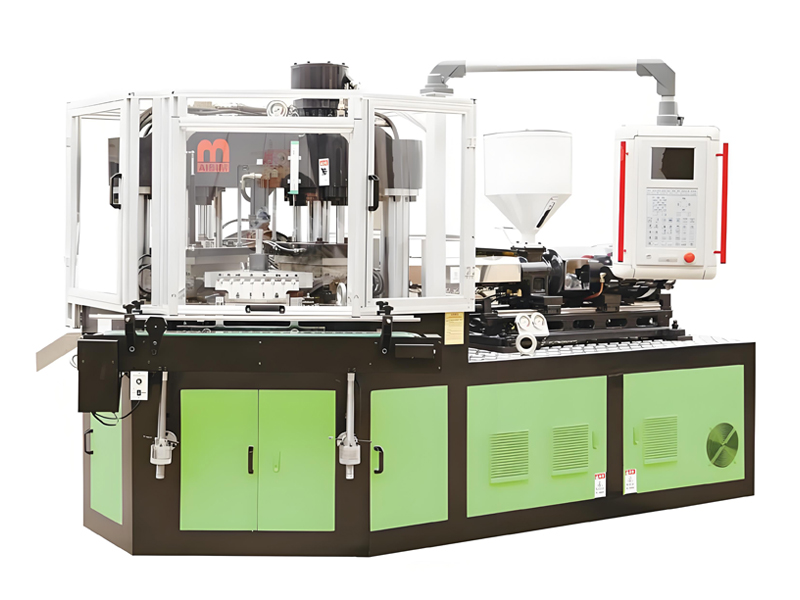
This guide sets out a complete production scaling plan for a bottle plant moving from one injection blow molding cell to two. It covers the quantified triggers that justify expansion, the cavity-hour arithmetic that sizes the new machine, the three strategic positions the second machine can occupy, the process and tooling parameters that make or break interchangeability, the utility and building work that must be finished first, the staffing and ramp-up curve you should plan against, and an indexed investment and payback framework that lets you compare options without committing to any price assumption. Aibim, a Wanplas factory with 12+ years of plastic machinery manufacturing experience, roughly 20 years of accumulated know-how in injection blow molding, an in-house CNC center, a new plant acquired in 2022 and an annual capacity of 100+ machine sets shipped to 40+ countries, builds the three-station one-step I(S)BM platform that this plan is written around.
Throughout the article, cost is expressed only as relative grade (Low, Medium, High, Very High, Premium) and as an indexed figure where a single baseline IBM75 cell equals 100 points. Recovery is expressed as a payback window in months at a stated OEE. Consumption is expressed in kWh per 1000 pieces, man-hours per 1000 pieces and scrap percentage. That discipline keeps the model portable across currencies, regions and years, and it forces the discussion back to the engineering variables you actually control.
1. عندما تصبح السعة، وليس الكفاءة، هي القيد
The single most common scaling mistake is buying a second machine to solve a problem the first machine could have solved through better process discipline. Before any capital planning starts, decompose the existing cell’s Overall Equipment Effectiveness into its three factors and confirm that the remaining headroom is genuinely small. Only when a verified OEE holds above 78 to 82 percent across three consecutive months, and delivery dates still slip, is the constraint structural rather than operational.
1.1 تحليل الفعالية الكلية للمعدات (OEE) في خلية IBM
تساوي OEE التوافر مضروبًا في الأداء مضروبًا في الجودة. على خلية نفخ بالحقن من ثلاث محطات تشغل حاويات الأدوية أو مستحضرات التجميل، لكل عامل أنماط فشل مميزة:
- Availability (target 88 to 93 percent on a mature cell): lost to mold changeovers, core rod and blow mold temperature stabilization, hydraulic maintenance, hopper and dryer interruptions, and unplanned stops for stripper station faults. A plant averaging three changeovers per week at 3.5 to 5 hours each is already surrendering 6 to 9 percent of available time.
- Performance (target 92 to 96 percent): lost to cycle time drift above the validated setpoint. A cell validated at 12.5 seconds that habitually runs at 13.8 seconds has quietly given away 9 percent of its output, usually because core rod temperature control has degraded or the cooling circuit has fouled.
- الجودة (الهدف 97 إلى 99.3 بالمائة): تُفقد بسبب الرفض البعدي لتشطيب العنق، وتباين سمك الجدار، وانحراف الوزن خارج نافذة زائد أو ناقص 2 إلى 3 بالمائة، والتلوث وخردة التشغيل بعد كل إعادة تشغيل.
An honest calculation is often sobering. A cell reported at “about 85 percent” frequently measures 0.86 x 0.91 x 0.965, which is 75.5 percent. That gap is worth roughly one extra shift per week and should be harvested before any expansion decision is signed. Conversely, if the cell genuinely sits at 0.91 x 0.95 x 0.98 (84.7 percent) and the order book still overflows, further squeezing the same asset produces diminishing returns and rising operator fatigue.
1.2 المحفزات السبعة الكمية للتوسع
استخدم العتبات التالية كبطاقة قياس. ثلاثة محفزات أو أكثر في المنطقة الحمراء، مستمرة على مدى ربع كامل، تشكل حالة قابلة للدفاع عنها لماكينة نفخ بالحقن ثانية.
| Trigger signal | How to measure it | Green (optimize first) | Amber (watch closely) | Red (expand) |
|---|---|---|---|---|
| Verified OEE of existing cell | Availability x performance x quality, 3-month rolling, measured from machine counters not shift reports | Below 70% | 70 to 78% | Above 78 to 82% and stable |
| On-time delivery rate | Orders shipped on the confirmed date divided by total orders | Above 96% | 92 to 96% | Below 92% with capacity as root cause |
| Order backlog coverage | Confirmed backlog in weeks of current output | Below 4 weeks | 4 to 8 weeks | Above 8 to 10 weeks and growing |
| Mold changeover frequency | Changeovers per week per machine | 1 or fewer | 2 to 3 | More than 3, product mix fragmenting |
| Overtime share | Overtime man-hours divided by scheduled man-hours | Below 8% | 8 to 15% | Above 15% for 3 consecutive months |
| Subcontracted volume | Pieces produced by outside molders divided by total pieces shipped | Below 3% | 3 to 10% | Above 10%, margin and quality both leaking |
| Declined enquiries | Quoted opportunities lost explicitly on lead time | Rare | 1 to 2 per quarter | 3 or more per quarter |
| Single-point failure exposure | Revenue share dependent on one machine running | Below 40% | 40 to 70% | Above 70%, no redundancy at all |
1.3 حجة التكرار التي لا يحددها أحد كمياً
The last row of the trigger table deserves separate attention because it rarely appears in capacity spreadsheets. A single-machine bottle plant carries an uninsurable exposure: one hydraulic pump failure, one burnt heater band on a manifold, one damaged core rod set, and every customer order stops simultaneously. Pharmaceutical and food customers increasingly audit for this. Business continuity questionnaires now routinely ask whether the supplier can produce a given item on more than one machine and whether tooling can be transferred within a stated recovery time objective.
When a second cell can run the same tooling, the recovery time objective for a critical item drops from “however long the repair takes” to the duration of a mold change, typically 3 to 5 hours. That change alone can unlock qualification with customers that would otherwise refuse a single-source, single-machine supplier, and it is a real commercial return even though it never appears as extra output in the capacity model.
2. حساب فجوة السعة: تحديد حجم الخلية الثانية بساعات التجويف
يجب أن يتم تخطيط السعة للقولبة بالنفخ بالحقن بساعات التجويف، وليس بالآلات. ساعات التجويف توحد عبر أحجام الحاويات والتجويف وأوقات الدورة، وتتيح لك اختبار ما إذا كانت آلة أصغر عالية التجويف أو آلة أكبر بعدد تجاويف أقل تسد فجوتك بشكل أفضل.
2.1 المعادلات الأساسية
ابدأ من جانب الطلب واعمل بالاتجاه العكسي:
- الإنتاج في الساعة لكل تجويف = 3600 مقسومًا على زمن الدورة بالثواني. عند دورة 12 ثانية، يقدم كل تجويف 300 قطعة في الساعة.
- الإنتاج في الساعة لكل ماكينة = عدد التجاويف مضروبًا في الإنتاج في الساعة لكل تجويف. أداة ذات 16 تجويفًا عند 12 ثانية تنتج 4,800 قطعة في الساعة اسميًا.
- الإنتاج الفعلي = الإنتاج الاسمي مضروبًا في OEE. عند OEE بنسبة 80 بالمائة تقدم نفس الأداة 3,840 قطعة قابلة للبيع في الساعة.
- ساعات التجويف المطلوبة = كمية الطلب الشهري مقسومة على (التجاويف × 3600 / وقت الدورة × ساعات العمل الفعلية). بعبارة أخرى، ساعات الماكينة المطلوبة = الطلب الشهري مقسومًا على الإنتاج الفعلي بالساعة.
- ساعات الماكينة المتاحة = الورديات في اليوم × الساعات في الوردية × أيام العمل في الشهر، ناقص الصيانة المخططة ووقت التبديل.
مثال محلول يجعل الحسابات ملموسة. افترض مصنعًا ينتج زجاجات صيدلانية من PP بسعة 30 مل باستخدام قالب ذي 16 تجويفًا بدورة زمنية تبلغ 11.5 ثانية، ويعمل بنوبتين مدة كل منهما 11 ساعة إنتاجية على مدى 26 يومًا في الشهر، بكفاءة معدات إجمالية (OEE) تبلغ 79 بالمائة.
- الإنتاج الساعي لكل تجويف: 3600 / 11.5 = 313 قطعة
- الإنتاج الاسمي في الساعة: 313 × 16 = 5,008 قطعة
- الإنتاج الفعلي في الساعة: 5,008 × 0.79 = 3,956 قطعة
- الساعات المتاحة: 2 × 11 × 26 = 572 ساعة، ناقص 40 ساعة تبديل و16 ساعة صيانة مخططة = 516 ساعة
- السعة الفعالة الشهرية: 3,956 × 516 = حوالي 2.04 مليون قطعة
If the confirmed monthly demand for the next four quarters is 3.4 million pieces, the gap is roughly 1.36 million pieces per month, or 344 effective machine-hours at the same productivity. That gap cannot be covered by a third shift alone (which would add at most 258 hours at lower OEE and higher labor cost grade), and it maps almost exactly onto one additional cell running two shifts. The arithmetic, not intuition, tells you the second machine is correctly sized.
2.2 اختبار التجويف مقابل حجم الآلة
The same gap can be closed in several ways, and cavity-hour math lets you compare them on equal terms. Higher cavitation raises output per cycle but demands more clamping force, more shot weight, longer cooling and a larger mold setting space. Lower cavitation with a faster cycle can sometimes match the same output at lower tooling complexity grade and better dimensional consistency.
| Option to close a 1.36 million pieces per month gap | Cavities | Cycle time | Nominal pieces per hour | Effective hours needed per month at 79% OEE | Tooling complexity grade | Comment |
|---|---|---|---|---|---|---|
| Duplicate the existing configuration | 16 | 11.5 s | 5,008 | 344 | Medium | Tooling already proven, fastest qualification path |
| Higher cavitation on a larger machine | 24 | 13.0 s | 6,646 | 259 | High | Fewer machine-hours, but heavier shot and longer cooling |
| Lower cavitation, optimized cooling | 12 | 9.5 s | 4,547 | 379 | Low to Medium | Best dimensional consistency, needs near three-shift running |
| Third shift on the existing cell only | 16 | 11.5 s | 5,008 | Not achievable | None | Adds at most 258 hours at reduced OEE, closes 60 to 70% of gap |
| Continue subcontracting | n/a | n/a | n/a | n/a | n/a | Margin and quality exposure grade High, no asset built |
2.3 الكسب الاسمي مقابل الكسب الفعلي الصافي
Expect a gap between the capacity a second machine promises on paper and the capacity it delivers in the first year. A duplicate cell adds 85 to 95 percent of nominal capacity, because the two machines never run in perfect parallel: they share dryers, chillers, compressed air, quality inspection, mold technicians and forklift time. Net effective output in the first twelve months typically rises 70 to 80 percent, with the shortfall explained by ramp-up scrap, tooling queueing, contention for shared utilities and the operator learning curve.
Plan the commercial commitments against the 70 to 80 percent figure, not the 85 to 95 percent figure. Sales teams that book against nominal capacity create precisely the delivery slippage the expansion was meant to cure. From the second year onward, once the ramp-up curve has flattened and utility contention has been engineered out, the two-cell shop should approach 90 to 95 percent of the arithmetic sum of both machines’ nominal capacities.
3. ثلاثة أدوار استراتيجية للآلة الثانية
بمجرد تحديد الفجوة كميًا، يحدد القرار التالي شكل المصنع للعقد التالي: ما الدور الذي تلعبه الآلة الثانية؟ هناك بالضبط ثلاث إجابات قابلة للدفاع، وكل منها يحمل سياسة أدوات مختلفة وحمل تدريب وعواقب سوقية ودرجة استثمار.
3.1 الدور أ: التكرار — تكرار الخلية المُثبتة
A duplicate is the same machine model, the same clamping tonnage, the same injection unit and ideally the same control platform as the existing cell. Every mold set runs on either machine without modification, spare parts inventory serves both, and operators trained on one cell are immediately productive on the other.
Duplicate makes sense when a single product family drives the growth — for example a plant that has won a larger share of one customer’s 10 to 60 mL pharmaceutical bottle program. The qualification path is the shortest available: process parameters transfer with a parameter card, first-article approval usually needs a single validation batch per tool rather than a full redevelopment, and the pharmaceutical customer’s change-control burden is minimal because the equipment class is unchanged.
The weakness of duplicate is strategic rather than technical. Two identical machines cannot serve container sizes outside the original envelope. If a customer later asks for a 500 mL cosmetic jar or a wide-mouth 250 mL container, both cells are equally unable to make it, and the plant faces a third capital decision sooner than planned.
3.2 الدور ب: الترقية — حجم أكبر
A step-up machine has higher clamping force, larger injection capacity and a bigger mold setting space than the existing cell. The typical progression is from a mid-size platform handling 3 to 250 mL containers to a larger platform reaching 500 to 1000 mL, or from a 12 to 16 cavity envelope to a 20 to 24 cavity envelope.
Step-up creates a natural division of labor: the smaller original machine takes the high-cavitation, small-container, long-run work where its shorter cycle and lower energy draw per 1000 pieces are advantages, while the larger machine handles bigger containers, heavier shot weights and the multi-cavity tools that would overload the original clamp. Utilization tends to be high on both cells because the work naturally sorts itself.
The trade-offs are real. Mold interchangeability becomes partial rather than complete — small tools can often run in the larger machine with adaptor plates, but large tools can never run in the smaller one. Spare parts inventory doubles for size-specific items such as screws, non-return valves, tie-bar seals and clamp components. الطاقة consumption per 1000 pieces on small containers is higher when the large machine is used for small work, so scheduling discipline matters.
3.3 الدور ج: التكميلي — قدرة مختلفة
A complementary machine deliberately targets what the existing cell cannot do: irregular container geometries, multi-layer or two-color structures, injection stretch blow molding for clarity-critical containers, wider neck finishes, or a hybrid electric drive for cleanroom and energy-sensitive work. The objective is not just more of the same output — it is access to enquiries the plant currently declines.
Complementary carries the highest technical and commercial risk and the longest learning curve, but it is the only role that changes the plant’s addressable market. It works best when the sales pipeline already contains concrete, quantified enquiries that the existing cell has had to refuse, and when at least one anchor customer is willing to co-develop the first program.
| Decision dimension | Role A: Duplicate | Role B: Step-up | Role C: Complementary |
|---|---|---|---|
| Primary growth driver | Volume growth in one existing product family | Larger containers and higher cavitation demand | New geometries, structures or customer segments |
| Mold interchangeability | Complete, both directions | Partial, small tools up only | Low, dedicated tooling |
| Spare parts commonality | Very high, one inventory serves both | Medium, size-specific items duplicated | Low, separate wear part list |
| Operator retraining load | Near zero, same SOP and HMI | Low to Medium, same logic, different limits | High, new process window and defect modes |
| Qualification and validation effort | Low, parameter transfer plus one validation batch | Medium, new process validation per tool | High, full development cycle per program |
| Redundancy benefit for existing orders | Maximum, true hot backup | Partial, only for tools that fit | Minimal |
| Investment grade | Medium | High | High to Very High |
| Time to stable output | 8 to 10 weeks | 10 to 13 weeks | 12 to 20 weeks |
| Market expansion potential | Low | Medium | High |
| Best fit when | Backlog concentrated in one size band | Enquiries repeatedly exceed current volume ceiling | Enquiries repeatedly fall outside current process capability |
3.4 هجين عملي: تكرار المنصة وتمييز الأدوات
Many growing bottle plants find the best answer between Role A and Role C. They order a second machine on the same control and hydraulic platform as the first — preserving operator familiarity, parameter portability and spare parts commonality — but specify a different clamp size or a hybrid electric drive within that same family. The result is partial interchangeability of consumables and full commonality of operating logic, with a genuinely different production envelope.
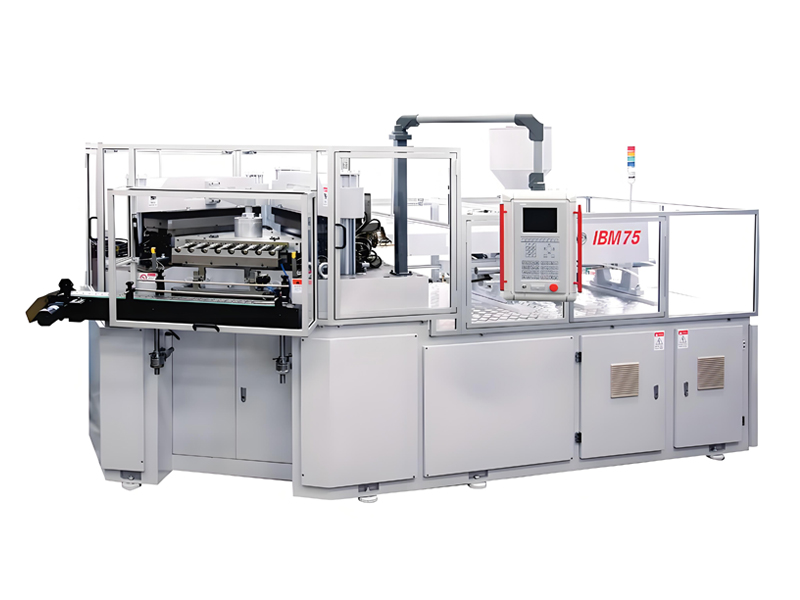
The Aibim I(S)BM range supports exactly this pattern, because the IBM75, IBM65 and IBM55 Hybrid Electric machines share the three-station one-step architecture, the single-crossbeam double-pole clamping framework and the SD card parameter storage system, while differing in clamping capacity, shot capability and drive concept. A plant can therefore add capacity in a different size band without asking its operators to learn a different machine philosophy.
4. أساسيات الحقن والنفخ التي تحرك المواصفات
اختيار مواصفات الآلة الثانية يتطلب فهمًا دقيقًا لما تفعله القولبة بالنفخ بالحقن بشكل مختلف عن مسارات تشكيل الأجسام المجوفة الأخرى، لأن تلك الاختلافات تحدد المعلمات المهمة في ورقة الطلب.
4.1 دورة الخطوة الواحدة ثلاثية المحطات
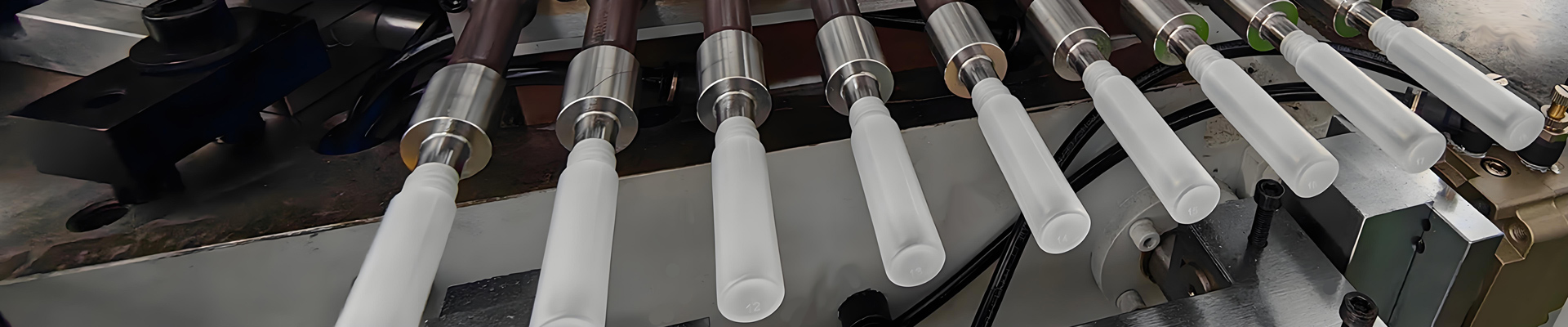
في عملية الخطوة الواحدة ثلاثية المحطات، يقوم جدول دوار بتمرير قضبان القلب عبر ثلاثة مواضع في ماكينة واحدة، دون إعادة تسخين ودون مناولة وسيطة:
- Station 1 — الحقن. Molten resin is injected around a core rod into a preform cavity, forming a parison with a fully finished neck. The neck thread, sealing surface, tamper-evident ring and neck internal diameter are all molded here to injection molding tolerance, typically plus or minus 0.05 mm on critical neck dimensions.
- Station 2 — Blow. The core rod carrying the still-hot parison indexes into the blow mold, where blow air at 0.6 to 1.0 MPa expands the parison against the cavity wall. Body wall thickness is determined by the parison thickness profile designed into the core rod and preform cavity, plus the blow-up ratio.
- المحطة 3 — النزع. يُنزع الحاوية النهائية من قضيب القلب إلى نظام الإزالة. على آلات Aibim، تحمل هذه المحطة مستشعر ليزر رقمي بعيد المدى لحماية القالب، ومنطقة التشغيل محمية بستارة ضوئية، كجزء من حزمة الأمان المعتمدة من CE.
Four-station configurations add a dedicated function between blow and strip — most commonly extended cooling, in-mold labeling or leak testing. The fourth station buys cycle time relief when the container wall is thick or the resin has slow crystallization, at the cost of a larger footprint and a more complex index drive.
4.2 لماذا IBM بدلاً من مسار آخر لتشكيل الأجسام المجوفة
يكسب النفخ بالحقن مكانته في عبوات الأدوية ومستحضرات التجميل والأغذية ذات الحاويات الصغيرة لأسباب هندسية واقتصادية في الوقت نفسه.
| Attribute | الحقن blow molding (IBM) | Extrusion blow molding (EBM) | الحقن stretch blow molding, two-step |
|---|---|---|---|
| Neck finish accuracy | Molded to injection tolerance, typically plus or minus 0.05 mm | Formed by pinch or post-trimming, wider tolerance | Molded to injection tolerance on the preform |
| Flash and trimming | None, no pinch-off and no tail | Pinch-off flash and tail must be trimmed and reground | None on the container |
| Material yield | Very high, typically above 98% with no trim scrap | Lower, 8 to 20% regrind loop depending on part | High |
| Weight consistency | Excellent, controlled by shot volume, plus or minus 1 to 2% | Good, controlled by parison programming | Excellent |
| Typical container volume window | 3 to 1000 mL | 50 mL to several hundred liters | 200 mL to 5 L |
| Handle-ware capability | Not possible | Standard capability | Not possible |
| Tooling investment grade | High, two matched mold sets required | Medium | High, plus separate preform and blow machines |
| Best-fit applications | Pharmaceutical, eye drop, oral liquid, reagent, cosmetic, small food containers | Detergent, lubricant, large containers, handled bottles | Clear beverage bottles, high-volume PET |
The absence of flash is the underrated advantage. It removes the deflashing operation, removes trim scrap from the material balance, removes the regrind loop that many pharmaceutical customers will not accept anyway, and removes an entire family of visual defects from the inspection scope. For a plant producing 10 to 100 mL bottles at hundreds of thousands of pieces per day, that structural difference in material yield compounds far faster than any hourly cycle advantage.
4.3 معلمات المواصفات المهمة فعلياً
عند تحديد مواصفات الآلة الثانية، تحدد مجموعة المعلمات التالية ما إذا كانت ستقوم بالعمل الذي تنوي القيام به على مدى السنوات العشر القادمة. تعامل مع كل رقم كشيء يجب تأكيده مقابل رسومات القطع الفعلية بدلاً من كونه تجريدًا من الكتالوج.
| Parameter | Typical working range on IBM platforms | What it decides | How to derive it from your parts |
|---|---|---|---|
| Clamping force | 40 to 200 tons | Maximum projected area of the preform cavity set, therefore maximum cavitation | Projected preform area x cavities x injection pressure factor, plus 15 to 20% safety margin |
| الحقن shot capacity | 60 to 800 g | Combined shot weight of all cavities plus runner | Part weight x cavities x 1.25 sprue and safety factor; use 20 to 80% of rated shot |
| Number of cavities | 4 to 24 | Output per cycle and tooling investment grade | Required pieces per hour divided by 3600/cycle; balance against clamp limit |
| Container volume window | 3 to 1000 mL | Product families the cell can serve | List every current and pipeline container; take the extremes |
| وقت دورة التجفيف | 8 to 25 s | Theoretical output ceiling | Add resin-specific cooling; PP thick wall runs at the slow end |
| Screw diameter and L/D | Sized to shot weight, typically 18 to 24 L/D | Plasticizing rate, melt homogeneity, residence time | Plasticizing rate must exceed shot weight divided by cycle time with 30% margin |
| Mold setting space and daylight | Platform dependent, enlarged on single-crossbeam frames | Whether existing and future tools physically fit | Measure existing mold sets including manifold height and services |
| Blow air pressure | 0.6 to 1.0 MPa | Definition of embossing, base detail and shoulder radius | Thin-wall small containers need the upper range and fast valve response |
| Installed power | Platform dependent; verify against transformer headroom | Electrical infrastructure work required | Sum machine, dryers, chillers, temperature controllers, compressor share |
4.4 اختيار الراتنج وتأثيره على مواصفات الآلة
الراتنج الذي ستقوم الآلة الثانية بمعالجته هو مدخل مواصفات وليس فكرة لاحقة. معدل تدفق الذوبان وسلوك التبلور ومتطلب التجفيف والدرجة التنظيمية كلها تنعكس على تصميم اللولب والتحكم في درجة الحرارة وزمن الدورة.
| Resin | Typical MFR for IBM | Melt temperature range | Mold and core rod temperature | Drying requirement | Typical IBM applications |
|---|---|---|---|---|---|
| PP homopolymer | 8 to 35 g/10 min | 190 to 240 degrees C | Core rod 80 to 130 degrees C, blow mold 8 to 20 degrees C | Not hygroscopic; surface moisture removal only | Pharmaceutical bottles, reagent vials, clear-ish containers |
| PP copolymer | 8 to 25 g/10 min | 190 to 235 degrees C | Core rod 85 to 125 degrees C, blow mold 10 to 20 degrees C | Not hygroscopic | Impact-resistant containers, cold-chain packaging |
| HDPE | 4 to 20 g/10 min | 180 to 230 degrees C | Core rod 60 to 110 degrees C, blow mold 8 to 18 degrees C | Not hygroscopic | Solid dose pharmaceutical bottles, chemical and reagent bottles |
| LDPE / LLDPE | 2 to 20 g/10 min | 170 to 220 degrees C | Core rod 55 to 100 degrees C, blow mold 8 to 15 degrees C | Not hygroscopic | Squeezable dropper bottles, eye drop containers |
| PS | Flow grade dependent | 190 to 240 degrees C | Core rod 60 to 90 degrees C, blow mold 15 to 30 degrees C | Light drying recommended | Clear cosmetic and sample containers |
| PETG / PCTG | Grade dependent | 220 to 255 degrees C | Core rod 70 to 105 degrees C, blow mold 10 to 20 degrees C | Mandatory, dew point minus 30 degrees C or lower | High-clarity cosmetic and personal care bottles |
| PC | Grade dependent | 270 to 310 degrees C | Core rod 90 to 120 degrees C, blow mold 20 to 40 degrees C | Mandatory, 4 hours at 120 degrees C typical | Transparent technical and reusable containers |
Aibim machines process PE (HDPE, LDPE, LLDPE), PP, PS, ABS, SAN, TPU, PC and PCTG, which covers the full practical span of pharmaceutical, cosmetic, food and beverage container work. For medical and pharmaceutical primary packaging, the resin grade must carry the relevant biological and food-contact documentation — USP Class VI and ISO 10993 for medical contact, plus regional food-contact compliance such as EU 10/2011, FDA 21 CFR and GB 4806 — and the machine specification must support the cleanliness and traceability regime that goes with it.
5. وحدات آلات Aibim: IBM75 و IBM65 و IBM55 الهجين الكهربائي
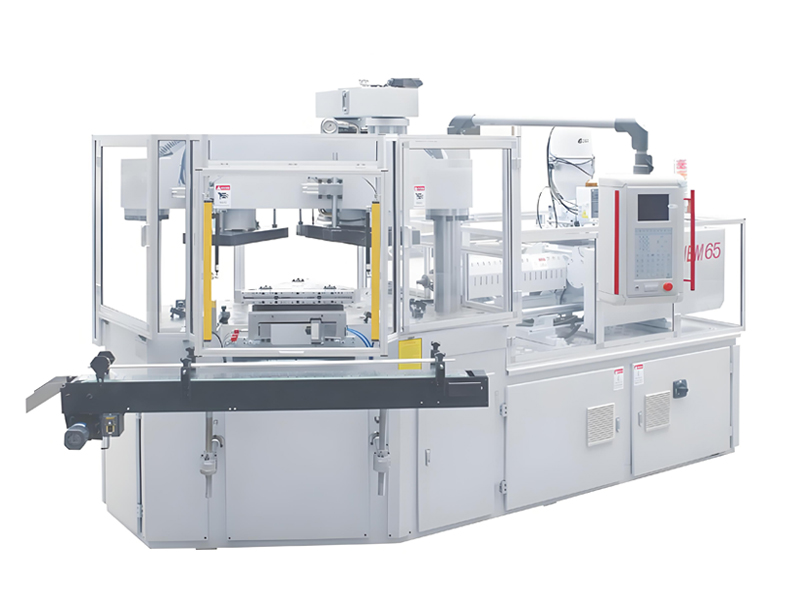
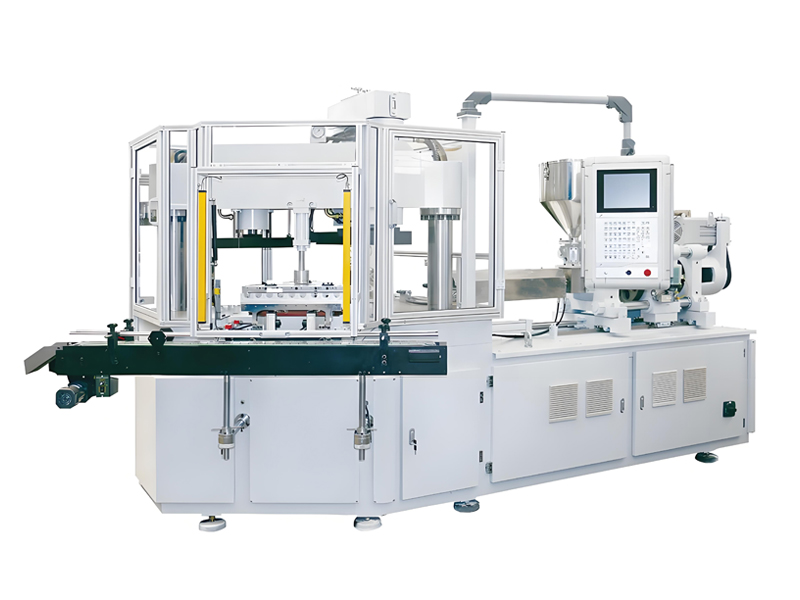
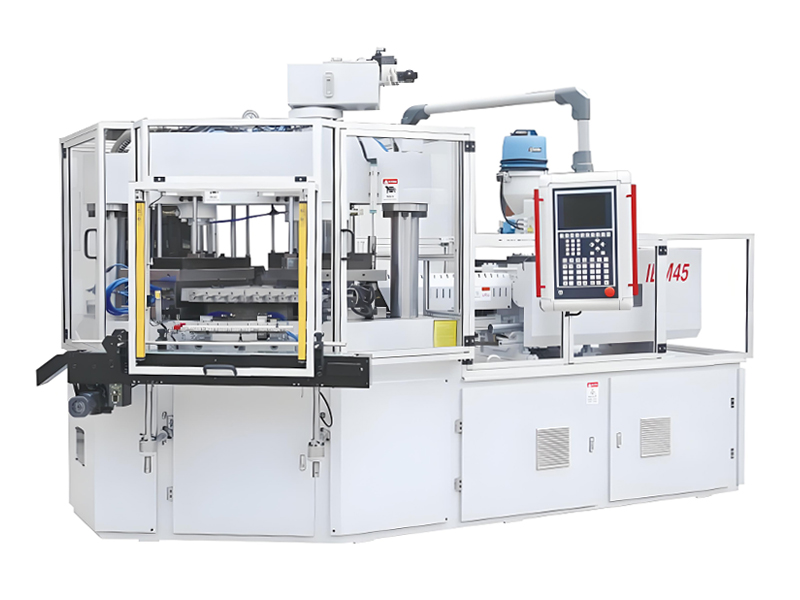
At this point the plan reaches the practical question: which machine? Aibim, a Wanplas factory, builds three injection blow molding platforms that map cleanly onto the three strategic roles described earlier. All three are three-station, one-step machines covering the 3 to 1000 mL container envelope, all are CE certified, and all share the parameter-portability and safety features that make two-cell operation manageable.
5.1 مجموعة المنتجات الأولى: IBM75 — حصان العمل للكميات
The IBM75 is the platform most often chosen when the second machine is a duplicate or a step-up in a growing pharmaceutical or cosmetic bottle plant. Its clamping framework uses a single crossbeam with double poles, which enlarges the usable mold setting space compared with conventional four-tie-bar layouts of similar tonnage and makes multi-cavity tools with bulky manifolds easier to install and service.
Three design features matter directly to a two-cell operation. The PREFILL hydraulic technology with variable displacement pump pressurizing reduces energy draw during the non-injection portions of the cycle, contributing to the minimum 35 percent energy saving Aibim quotes against conventional hydraulic IBM units. The SD card parameter storage lets a validated process recipe be exported from one machine and loaded into another, which is the single most useful feature when you need machine number two to reproduce machine number one’s process. The stripper station uses a long-distance digital laser sensor for mold protection, and the operating area is guarded by a light curtain.
| IBM75 — configuration reference for capacity planning | Typical specification band | Planning note |
|---|---|---|
| Process architecture | Three-station, one-step injection blow molding | الحقن, blow, strip on one indexing table; no preform reheat |
| Container volume range | 3 to 1000 mL across the Aibim I(S)BM range | Confirm the exact band for your tool set on the order drawing |
| Typical cavitation window | 4 to 24 cavities depending on container size | Small droppers at the high end, 500 mL and above at the low end |
| Clamping framework | Single crossbeam, double poles, enlarged mold setting space | Simplifies installation of tall manifold tooling |
| Hydraulic system | PREFILL technology with variable displacement pump pressurizing | Minimum 35% energy saving versus conventional hydraulic IBM units |
| Parameter management | SD card storage, recipe transfer between machines | Key enabler for two-cell process standardization |
| Safety package | CE certified; laser sensor mold protection at stripper station; light curtain | Supports customer and notified-body audits |
| Processable resins | PE (HDPE, LDPE, LLDPE), PP, PS, ABS, SAN, TPU, PC, PCTG | Covers pharmaceutical, cosmetic, food and beverage container work |
| Typical dry cycle window | 8 to 25 s depending on wall thickness and resin | Thin-wall small PE containers at the fast end |
| Best-fit expansion role | Duplicate or step-up | Highest interchangeability with an existing Aibim cell |
5.2 كتلة المنتج الثانية: IBM65 وIBM55 الكهربائية الهجينة
The IBM65 sits one step below the IBM75 in the range and is frequently chosen when the second machine is intended to specialize in smaller containers — eye drop bottles, oral liquid vials, sample and reagent containers — where high cavitation and short cycles matter more than maximum shot capacity. Because it shares the same three-station architecture and control philosophy, operators move between an IBM65 and an IBM75 with minimal retraining, and process recipes translate conceptually even where the numeric setpoints differ.
The IBM55 Hybrid Electric is the choice when energy consumption per 1000 pieces, cleanroom compatibility and repeatability are the deciding factors. Hybrid electric drive replaces continuously running hydraulic power with servo-electric actuation on selected axes, which reduces idle power draw, lowers heat rejection into the production hall (and therefore the air-conditioning load in a classified cleanroom), reduces hydraulic oil volume and the associated contamination risk, and improves shot-to-shot repeatability because electric injection is less sensitive to oil temperature drift.
| Comparison dimension | IBM75 | IBM65 | IBM55 Hybrid Electric |
|---|---|---|---|
| Platform architecture | Three-station one-step | Three-station one-step | Three-station one-step, hybrid electric drive |
| Position in range | Larger clamp and shot capability | Mid-range clamp and shot capability | Compact, energy and precision focused |
| Typical container focus | Mid to large containers, higher shot weight | Small to mid containers, high cavitation | Small to mid containers, precision and cleanroom work |
| الطاقة profile per 1000 pieces | Low with PREFILL and variable displacement pump | Low | Lowest in the range; reduced idle draw and heat rejection |
| Shot-to-shot repeatability | High | High | Highest; electric actuation less affected by oil temperature |
| Cleanroom suitability | Good with standard measures | Good with standard measures | Best; lower oil volume and lower heat load |
| الضوضاء level in the hall | Moderate | Moderate | Lower |
| Investment grade | High | Medium to High | High to Premium |
| Best-fit expansion role | Duplicate or step-up for volume growth | Duplicate or complementary for small-container specialization | Complementary for pharmaceutical, cleanroom or energy-driven expansion |
| Parameter portability with existing Aibim cell | Full, via SD card recipe transfer | Full, via SD card recipe transfer | Full on process logic; setpoints re-optimized for electric axes |
6. القوالب وقابلية تبادل الأدوات واستراتيجية التبديل
Tooling decides whether two machines behave as one flexible resource or as two isolated islands. In injection blow molding the tooling package is intrinsically more complex than in extrusion blow molding, because every container requires a matched pair: a preform cavity and core rod set for the injection station, and a blow cavity set for the blow station, all mounted on a common indexing geometry.
6.1 شرح حزمة الأدوات IBM
تتكون مجموعة أدوات قولبة النفخ بالحقن الكاملة لحاوية واحدة من:
- Core rods — one per cavity, carrying the parison from injection through blow to strip. They define the internal geometry, the neck internal diameter and, critically, the parison thickness distribution. Core rods are internally temperature-controlled, typically running at 80 to 130 degrees C for PP and 60 to 110 degrees C for HDPE.
- كتلة تجويف البريفورم — تجويف الحقن الذي يشكل المظهر الخارجي للباريسون وتشطيب العنق الكامل، بما في ذلك السن اللولبي وسطح الإغلاق وأي ميزات واضحة العبث.
- إدخالات حلقة العنق — غالبًا قابلة للفصل، مما يتيح تغيير السن اللولبي دون استبدال كتلة التجويف بأكملها.
- كتلة تجويف النفخ — شكل الحاوية، مع تصميم فتحات التهوية والنقش وهندسة القاعدة. تعمل باردة، عادةً من 8 إلى 20 درجة مئوية.
- نظام المجرى الساخن أو المشعب — تغذية متوازنة لجميع التجاويف؛ يظهر عدم التوازن فورًا كاختلاف في الوزن عبر التجاويف.
- لوحة النزع وواجهة الإخراج — تزيل الحاوية النهائية من قضيب القلب دون خدش.
Tool steel selection follows the resin and the volume commitment. H13 is the standard choice for cavity blocks and core rod bodies in general-purpose PP and PE work. S136 stainless is specified where corrosion resistance and polish retention matter — clear PETG and PS containers, and any tool exposed to humid cleanroom conditions or aggressive cleaning agents. With correct maintenance, a well-built IBM tool set delivers 3 million to 10 million cycles, with the lower end typical of high-cavitation thin-wall tools running abrasive or filled grades and the upper end achievable on well-cooled, unfilled PE and PP work.
| Tooling element | Material and treatment | Temperature control | Typical service life | Two-cell interchangeability note |
|---|---|---|---|---|
| Core rods | H13 or S136, hardened, polished bore | 80 to 130 degrees C for PP; 60 to 110 degrees C for HDPE | 3 to 8 million cycles; tips are consumable | Must match index pitch and clamp geometry of both machines |
| Preform cavity block | H13 for PP/PE, S136 for clear and corrosive grades | Integrated with core rod circuit or separate zone | 5 to 10 million cycles | Interchangeable only within the same clamp and daylight envelope |
| Neck ring inserts | S136 preferred, high polish | Cooled to stabilize thread dimensions | 3 to 6 million cycles | Fully interchangeable if the neck standard is common |
| Blow cavity block | H13, beryllium-free copper alloy inserts for hot spots | 8 to 20 degrees C chilled water | 5 to 10 million cycles | Interchangeable within the same mold setting space |
| Hot runner manifold | Tool steel with balanced flow design | Zone-controlled to melt temperature | Rebuild at 3 to 5 million cycles | Match zone count to both machines’ controller capacity |
| Stripper plate assembly | Hardened steel with wear-resistant guides | Ambient | Wear items replaced annually | Sensor mounting must suit both machines’ protection systems |
6.2 التصميم لقابلية التبادل منذ البداية
إذا كانت الآلة الثانية نسخة مكررة، فإن قابلية التبادل شبه مجانية. إذا كانت آلة ترقية أو مكملة، يجب هندسة قابلية التبادل، ويجب تحديدها قبل تصنيع الأدوات. أربعة قرارات تحكم النتيجة:
- معيار تثبيت مشترك. حدد نفس طريقة تثبيت القالب ونفس مرجع التحديد على كلتا الماكينتين، بحيث تُركب الأدوات دون تسوية ودون إعادة تعليم موضع الفهرسة.
- تخطيط الخدمات المشتركة. يجب أن تكون مواقع مدخل ومخرج الماء وتوصيلات الهواء وأنواع مقابس المزدوجات الحرارية متطابقة، مع نفس معيار الموصل السريع في كلتا الخليتين. هذا وحده يمكن أن يقلص 30 إلى 50 دقيقة من وقت التغيير.
- استراتيجية لوحة المحول. حيث يجب تشغيل أداة أصغر في ماكينة أكبر، صمم إطار محول دائم بدلاً من الارتجال لكل تغيير. يصبح المحول جزءًا من توثيق الأداة، وليس معرفة قبلية.
- سعة مناطق وحدة التحكم. تحقق من أن وحدة التحكم في درجة حرارة الماكينة الأصغر لديها مناطق كافية لمشعب الأداة الأكبر، وإلا فإن الأدوات “القابلة للتبديل” قابلة للتبديل نظريًا فقط.
6.3 زمن التغيير كرافعة للسعة
A plant with more than three changeovers per week per machine has an operational reason to expand, but it also has an opportunity to recover capacity before spending anything. In a two-cell shop, the highest-value tooling strategy is often specialization: dedicate one cell to the two or three highest-volume, longest-running products and let the other absorb the fragmented short-run work.
The arithmetic is straightforward. A plant running 3.5 changeovers per week at 4.5 hours each loses 15.75 hours per week per machine, which is roughly 7 to 9 percent of available time on a two-shift schedule. After specialization, the high-volume cell may drop to 0.5 changeovers per week (2.25 hours) while the flexible cell rises to 6 (27 hours). Total changeover time increases in absolute terms, but it is now concentrated on the cell whose schedule can absorb it, and the high-volume cell gains almost 14 hours of productive time per week without any hardware change.
Reduce the changeover itself in parallel. Preheating core rods and manifolds offline before the tool goes into the machine, pre-kitting all fasteners and couplers, standardizing on quick couplers, using the SD card to load the target recipe before the mechanical work is finished, and running a documented first-article sequence typically cuts an unstructured 5-hour changeover to 2.5 to 3.5 hours.
7. المرافق والبنية التحتية للمصنع لورشة ذات خليتين
The second injection blow molding machine is never just a machine. Every supporting utility that was adequately sized for one cell now faces roughly double the load, and the failure mode is insidious: nothing breaks, but both cells drift out of their validated process window simultaneously whenever peak demand coincides. Utilities work should be completed and commissioned before the machine arrives, not in parallel with it.
7.1 القدرة الكهربائية وهامش المحول
Sum the installed power of everything the expansion adds: the machine itself, the resin dryer and central feeding system, the additional mold temperature controllers (2 to 4 units per cell, covering core rod heating and blow mold chilling circuits), the incremental chiller load, the incremental compressor load, plus takeout conveyors and any inspection equipment.
قواعد التصميم التي تمنع المشاكل باستمرار:
- احتفظ بسعة محول احتياطية من 25 إلى 30 بالمائة بعد تحميل الخلية الثانية بالكامل. تسحب الماكينات تيارًا ذرويًا أثناء التلدين والتثبيت المتزامنين، وتتزامن الخليتان أحيانًا.
- حدد حجم الكابلات للحمل المستمر بالإضافة إلى تيار البدء، وتحقق من انخفاض الجهد في أبعد ماكينة في أسوأ حالات البدء المتزامن.
- ركّب عدادات منفصلة لكل خلية. بدون بيانات طاقة لكل ماكينة، لا يمكن قياس كيلوواط-ساعة لكل 1000 قطعة، ولا يمكن إثبات ميزة الطاقة لماكينة هجينة كهربائية أو مجهزة بـ PREFILL للإدارة.
- افحص معامل القدرة. إضافة ماكينة هيدروليكية ثانية إلى مصنع قريب بالفعل من عتبة معامل القدرة للمرافق يمكن أن يطلق غرامات يمكن تجنبها تمامًا بمعدات التصحيح.
- تحقق من أن نظام التأريض والربط ودوائر التوقف في حالات الطوارئ وأقفال الستارة الضوئية مدمجة في بنية سلامة المصنع بدلاً من عزلها عند الماكينة.
7.2 التبريد: حمولة المبرد وسعة البرج ودوائر المياه
التبريد هو المكان الذي تفشل فيه معظم توسعات الخليتين فعليًا. تحتاج القولبة بالنفخ بالحقن إلى دائرتين حراريتين منفصلتين في وقت واحد — دوائر ساخنة لقضبان القلب وتجاويف البريفورم، ودوائر مبردة لقالب النفخ — ويجب أن تكونا مستقرتين بشكل مستقل.
استخدم حوالي 0.25 إلى 0.3 طن تبريد لكل كيلوواط مركب من سعة الماكينة كقاعدة تحديد الحجم الأولى، ثم حسّن مقابل الطرد الحراري الفعلي من إنتاجية الراتنج. تحقق من هذه النقاط تحديدًا:
- Chilled water temperature stability. Blow molds want 8 to 20 degrees C with a variation no greater than plus or minus 1 degree C. A chiller that holds this under single-cell load can oscillate by 3 to 6 degrees C once a second cell cycles asynchronously, and every degree of drift moves shrinkage and wall thickness.
- معدل التدفق وقطر الأنبوب. المجمعات الأصغر من الحجم المطلوب هي القيد الخفي الكلاسيكي. احسب التدفق المطلوب بالمتر المكعب في الساعة لكلتا الخليتين عند الذروة، ثم حدد حجم المجمع الرئيسي لذلك الإجمالي زائد 20 بالمائة، وليس لمجموع أنبوبي الفرع.
- عزل الدائرة. يجب أن تحتوي كل خلية على صمامات عزل ومقاييس ضغط ودرجة حرارة خاصة بها بحيث يمكن خدمة ماكينة واحدة دون إيقاف الأخرى. بدون العزل، تُفقد التكرارية.
- برج التبريد وطرد الحرارة. تحقق من أن البرج ونظام معالجة الهواء في المصنع يمكنهما طرد الحرارة الإضافية في أكثر الشهور حرارة، وليس المتوسط السنوي. تحتاج مناطق الغرف النظيفة إلى فحص ذلك مقابل حمل تكييف الهواء أيضًا.
- جودة المياه. تقلل الترسبات والغشاء الحيوي انتقال الحرارة في قنوات قضيب القلب الضيقة أسرع من أي جزء آخر في النظام. أضف ترشيحًا ونظام معالجة عندما تضاعف الخلية الثانية حجم التدوير.
7.3 الهواء المضغوط
هواء النفخ عند 0.6 إلى 1.0 ميغا باسكال هو متغير عملية، وليس خدمة. انخفاض الضغط خلال مرحلة النفخ ينتج تعريف نقش ضعيف وأكتاف ناعمة وتفاصيل قاعدة غير متسقة — عيوب يُشخّص خطأً على أنها أعطال أدوات.
- احسب الاستهلاك بالمتر المكعب في الدقيقة لكل خلية من حجم النفخ والتجويفات ومعدل الدورة، ثم أضف فقد الصمامات والخطوط.
- ثبّت خزانًا بحجم بحيث يبقى انخفاض الضغط أثناء حدث نفخ متزامن على الخليتين ضمن 0.05 ميجا باسكال من نقطة الضبط.
- وسّع المجفف المبرد والترشيح بالتزامن مع الضاغط. الرطوبة في هواء النفخ تسبب التبقع، وفي العمل الدوائي، تعتبر نتيجة تلوث في التدقيق.
- فكر في دائرة ضغط عالٍ مخصصة لهواء النفخ، منفصلة عن هواء الورشة العام المستخدم للنيوماتيك والتنظيف، بحيث لا يمكن لطلب هواء الورشة أن يزعج العملية.
7.4 جدول قياس المرافق الكامل
| Utility or system | Sizing rule for the second cell | Typical failure if under-sized | Lead time to expand | Investment grade |
|---|---|---|---|---|
| Transformer and main distribution | Retain 25 to 30% headroom after full dual-cell load | Breaker trips on simultaneous peak; voltage sag; cycle instability | Longest item; start first | Medium to High |
| Chilled water plant | 0.25 to 0.3 refrigeration tons per installed kW; hold plus or minus 1 degree C | Blow mold temperature drift, shrinkage and wall thickness variation | Medium | Medium to High |
| Cooling tower and heat rejection | Verify against hottest-month ambient, not annual average | Chiller condensing pressure rises, capacity falls in summer | Medium | Medium |
| Cooling water headers and pumps | Total peak flow in cubic meters per hour plus 20%; isolating valves per cell | Second cell starves the first; no ability to service one machine alone | Short, but disruptive to install | Low to Medium |
| Mold temperature controllers | 2 to 4 units per cell: core rod 80 to 130 degrees C, blow mold 8 to 20 degrees C | Slow warm-up, unstable neck dimensions, extended startup scrap | Short | Low |
| Compressed air, blow circuit | 0.6 to 1.0 MPa; receiver sized to hold within 0.05 MPa on simultaneous blow | Poor embossing, soft shoulders, inconsistent base detail | Short to Medium | Medium |
| Air dryer and filtration | Expand with the compressor; dew point suited to cleanroom class | Water spotting, contamination findings in audits | Short | Low |
| Resin drying and central feeding | Throughput for both cells plus one changeover buffer; separate loops per resin | Cross-contamination, moisture defects in PETG and PC work | Medium | Medium |
| Granulator and regrind loop | Beside-the-press unit per cell; closed loop with documented regrind ratio | Uncontrolled regrind, traceability failure in pharmaceutical audits | Short | Low |
| Cleanroom air handling | Recalculate air changes for the added heat and personnel load | Class excursions, particle count failures during peak production | Long | High |
| Compressed air and water metering | Per-cell metering for kWh, cubic meters per hour and cubic meters per minute | No baseline for energy per 1000 pieces; improvements unprovable | Short | Low |
8. التخطيط وفئة الغرفة النظيفة ومناولة المواد
يحدد موقع الآلة الثانية كفاءة الصيانة وتدفق المواد والتحكم في التلوث لسنوات. أخطاء التخطيط هي الأصعب في التراجع عنها: بمجرد حفر خنادق المرافق وبناء حاجز الغرفة النظيفة، يصبح نقل آلة مسافة مترين مشروعًا بحد ذاته.
8.1 قواعد المساحة والوصول
- بصمة الماكينة بالإضافة إلى نطاق الخدمة. خصص بصمة الماكينة بالمتر المربع بالإضافة إلى نطاق خدمة حولها. الماكينة التي تناسب علامة الأرضية تمامًا لا يمكن صيانتها.
- ممر صيانة لا يقل عن 1.2 م على جانب التشغيل وخلف الماكينة، واسع بما يكفي لعربة قوالب وصندوق أدوات وفني يعملون في وقت واحد.
- وصول تغيير القالب. أكد أن مسار الرافعة أو الونش يصل إلى منطقة القالب لكلتا الماكينتين. تحقق من سعة الونش مقابل أثقل مجموعة أدوات بما في ذلك المشعب، وليس الأداة المتوسطة.
- ارتفاع السقف وخلوص الرافعة. تحقق من الارتفاع الحر تحت الخطاف، مع السماح بأطول أداة بالإضافة إلى معدات الرفع وهامش الأمان.
- منطقة تخزين القوالب. مرفوفة وموسومة ومتحكم في مناخها إذا أمكن، مع موقع محدد لكل أداة. عادةً ما تضاعف ورشة الخليتين عدد الأدوات المتداولة في غضون عامين.
- تدفق الحبيبات والمنتجات النهائية. صمم تدفقًا باتجاه واحد من استلام الراتنج عبر التجفيف والتشكيل إلى الفحص والتعبئة والشحن. التدفقات المتقاطعة خطر تلوث ونتيجة تدقيق في العمل الدوائي.
- تحميل الأرضية وتسويتها. تحقق من سمك البلاطة وسعة الحمولة لأحمال الماكينة الساكنة والديناميكية، خاصة في المباني القديمة أو الطوابق العليا.
8.2 قرارات تصنيف الغرف النظيفة
Whether the second cell needs to sit inside a classified area depends entirely on the end product and the customer’s quality agreement. Pharmaceutical primary packaging typically requires a controlled environment equivalent to ISO 14644 Class 8 (often described as 100,000 class, or D-grade in some pharmaceutical frameworks) at the point of container formation and packing. الغذاء and cosmetic work more often requires a controlled but unclassified area with defined hygiene practices.
توجد ثلاثة نهج عملية، ويؤثر الاختيار على أعمال البناء ومواصفات الماكينة معًا:
- تصنيف الغرفة بالكامل. تُصنف قاعة التشكيل بأكملها. أعلى مستوى استثماري، وأبسط تشغيليًا، وأعلى طاقة مستمرة لمعالجة الهواء.
- غلاف موضعي فوق منطقة التفريغ. يُوصل الهواء النظيف فقط فوق محطة النزع ومنطقة الإخراج والتعبئة. درجة استثمار متوسطة، شائعة جدًا عمليًا، وتعمل جيدًا لأن حاويات IBM تُغلق على المحيط فقط بعد مغادرتها قضيب القلب.
- Segregated cleanroom cell. The second machine is installed inside a partitioned classified room while the first stays in the general hall. This is the natural choice when the second machine is complementary and specifically targets pharmaceutical work — and it is where a hybrid electric machine earns its premium, because lower heat rejection and reduced hydraulic oil volume directly reduce the air handling load and contamination risk.
أيًا كان المسار الذي تختاره، خطط لأقفال الهواء للأفراد والمواد وانضباط ارتداء الملابس الواقية ومراقبة فرق الضغط وجدول مراقبة عدد الجسيمات من البداية. تركيب قفل هواء في تخطيط مكتمل أكثر إزعاجًا بكثير من توفير مساحة له على الرسم.
9. التوظيف ونماذج الورديات ومنحنى التوسع التدريجي
تُحقق القدرة من خلال الأشخاص الذين يشغلون الآلات، ونموذج العمل لخليتين ليس ببساطة ضعف نموذج العمل لخلية واحدة. بعض الأدوار تتوسع خطيًا، وبعضها يتوسع بنصف المعدل، وواحد — مهندس العملية — غالبًا ما يجب إنشاؤه لأول مرة عند وصول الآلة الثانية.
9.1 نموذج التوظيف لخلّيتين
في خلية قولبة بالنفخ بالحقن ناضجة تدير منتجًا مستقرًا، يمكن لمشغل واحد الإشراف على آلة إلى آلتين، بشرط أن تكون الإزالة والتعبئة مؤتمتة جزئيًا وأن الآلات تشغل أدوات مجربة. أثناء مرحلة التصعيد، افترض مشغلًا واحدًا لكل آلة بغض النظر عن الهدف النهائي.
| Role | One cell, two shifts | Two cells, two shifts | Two cells, three shifts | Scaling behavior |
|---|---|---|---|---|
| Machine operator | 2 | 2 to 4 | 3 to 6 | Sub-linear once both cells run proven tooling |
| Packing and visual inspection | 2 to 4 | 4 to 7 | 6 to 10 | Near-linear; the main variable is automation level |
| Mold technician | 1 | 1 to 2 | 2 | Driven by changeover frequency, not machine count |
| Process engineer | Shared or part-time | 1 dedicated | 1 to 2 | Step change; two cells need process standardization ownership |
| Maintenance technician | Shared | 1 | 1 to 2 | Step change; preventive maintenance can no longer be improvised |
| الجودة inspector | 1 | 1 to 2 | 2 to 3 | Driven by sampling plan and regulatory class, not machine count |
| Shift supervisor | Shared with production manager | 1 per shift | 1 per shift | Step change at two cells |
Track labor productivity in man-hours per 1000 pieces rather than headcount. A single cell running 16 cavities at a 11.5-second cycle with two operators and two packers produces roughly 5,000 pieces per hour with four people present, which is about 0.8 man-hours per 1000 pieces. A well-run two-cell shop should reach 0.55 to 0.65 man-hours per 1000 pieces once shared roles absorb the second machine — and that improvement in labor intensity is one of the strongest and most defensible arguments for the expansion, entirely independent of any price assumption.
9.2 منحنى التدرج الإنتاجي أسبوعًا بأسبوع
خطط للتدرج الإنتاجي كمشروع محدد ببوابات، وليس كـ “شغّلها وانظر”. يعكس الجدول الزمني التالي ماكينة مكررة أو متدرجة مثبتة في مصنع زجاجات قائم مع مرافق جاهزة بالفعل.
| Phase | Duration | Key activities | Expected yield | Exit gate |
|---|---|---|---|---|
| Pre-arrival preparation | 4 to 8 weeks before delivery | Transformer and chiller work, foundation and floor marking, header piping, air receiver, mold storage racks, SOP drafting | n/a | Utilities commissioned and metered; site readiness checklist signed |
| Delivery and positioning | 3 to 7 days | Offloading, positioning, leveling, anchoring, service connections | n/a | Machine level within tolerance; all services connected and pressure tested |
| Installation and commissioning | 2 to 4 weeks | Power-up, hydraulic and electrical checks, safety circuit and light curtain verification, dry cycle running, first tool installation, engineer-supervised startup | First parts only | Dry cycle within specification; safety verification complete; first acceptable containers produced |
| Trial production | 2 to 3 weeks | Process window development, cavity balance, weight and wall thickness mapping, cycle optimization, first-article approval, operator training on the live cell | 85% rising to 93% | Cpk of critical dimensions at or above 1.33; first article approved |
| Qualified production | 2 to 4 weeks | Continuous running on one or two proven tools, SPC established, changeover procedure validated, preventive maintenance schedule started | 93% rising to 97% | Three consecutive shifts at target rate and yield |
| Full mix and stable output | 2 to 4 weeks | Remaining tools introduced, scheduling rules between the two cells finalized, energy per 1000 pieces baselined | 97% and above | Cell OEE within 5 points of the established cell |
| Cumulative to design capacity | 8 to 14 weeks from arrival | Full production planning integration | 97 to 99% | Two-cell shop delivering 70 to 80% net effective gain, trending upward |
9.3 نقل المعرفة العملية إلى الخلية الثانية
أكبر خطر منفرد في ورشة ذات خليتين هو أن تطور الماكينتان عمليتين مختلفتين لنفس القطعة. امنعه هيكليًا وليس عبر الإشراف.
Digitize the existing cell’s accumulated experience before the new machine arrives. Build a process parameter library — one record per tool, capturing melt profile by zone, injection pressure and speed profile, hold pressure and time, back pressure, screw speed, core rod and blow mold temperature setpoints, blow pressure and timing, cycle breakdown, validated weight window and known defect countermeasures. The SD card parameter storage on Aibim machines makes this library directly actionable: an approved recipe can be exported from the established machine and loaded into the new one, so the second cell starts from a proven baseline instead of an operator’s memory.
Training for the second cell is deliberately kept lean here, because it belongs to a different discipline. In this scaling plan, treat it as three concrete deliverables: a written SOP set transferred and adapted from the established cell, a supervised run-in period where each operator completes a defined number of shifts alongside the commissioning engineer, and a sign-off checklist covering safety interlocks, changeover, startup and shutdown, defect recognition and escalation. Anything deeper — structured skill matrices, certification levels and long-term competency development — is a separate program and should not be allowed to delay the ramp-up gate.
10. مؤشر الاستثمار ونمذجة OEE والاسترداد بالأشهر
Comparing expansion options requires a common financial language that does not depend on any currency, region or quotation. The indexed model below does exactly that: it sets a baseline single IBM75 cell at 100 points and expresses every other option as a relative index, with recovery expressed as a payback window in months at a stated OEE.
10.1 تحديد مؤشر استثمار توسعة الطاقة الإنتاجية
The capacity expansion investment index counts everything the expansion requires, not just the machine. Baseline definition: one IBM75 cell, one standard multi-cavity tool set, the incremental utility work for a second cell in a prepared building, installation and commissioning, and initial spare parts — together equal to 100 points.
| Expansion option | Machine index points | Tooling index points | Utilities and building index points | Total index (baseline = 100) | Nominal capacity gain | Payback window at 78% OEE, two shifts |
|---|---|---|---|---|---|---|
| Baseline: duplicate IBM75 cell with existing tooling reused | 58 | 18 | 24 | 100 | Plus 85 to 95% | 16 to 26 months |
| Duplicate cell with a full new tool set | 58 | 34 | 24 | 116 | Plus 85 to 95% | 19 to 30 months |
| Step-up to a larger clamp with higher cavitation | 72 | 40 | 31 | 143 | Plus 110 to 130% in piece terms | 20 to 32 months |
| Complementary hybrid electric cell in a classified area | 78 | 36 | 52 | 166 | Plus 70 to 85%, plus new market access | 24 to 38 months |
| Third shift on the existing cell only | 0 | 0 | 6 | 6 | Plus 35 to 45% | Immediate, but labor grade High and OEE falls 4 to 8 points |
| Continued subcontracting | 0 | 0 | 0 | 0 | Variable | No asset created; margin leakage grade High |
| Automation retrofit on the existing cell before expanding | 0 | 4 | 14 | 18 | Plus 8 to 15% via OEE recovery | 10 to 18 months |
Read the last row carefully. Recovering 8 to 15 percent of capacity through automation and OEE work costs about 18 index points against 100 for a full second cell, and it pays back faster. That is why the trigger scorecard in section 1 comes first: if OEE is below 78 percent, the cheapest capacity in the plant is still inside the machine you already own.
10.2 حساسية فترة الاسترداد تجاه OEE ونمط الورديات
أشهر الاسترداد ليست خاصية للماكينة؛ إنها خاصية لكيفية تشغيلك لها. يوضح الجدول أدناه كيف تتصرف نفس الخلية المكررة الأساسية في ظل افتراضات تشغيل مختلفة.
| Scenario | Shift pattern | Achieved OEE | Effective annual output index | Payback window | Comment |
|---|---|---|---|---|---|
| Conservative | Two shifts, 5 days | 70% | 100 | 26 to 34 months | Ramp-up problems unresolved; changeovers not optimized |
| Planning base case | Two shifts, 6 days | 78% | 134 | 16 to 26 months | The realistic default for a well-managed second cell |
| Strong execution | Two shifts, 6 days | 85% | 146 | 14 to 22 months | Specialized cells, low changeover frequency |
| Three-shift continuous | Three shifts, 6 days | 80% | 206 | 11 to 17 months | Requires full night-shift staffing and maintenance discipline |
| Underloaded | One shift, 5 days | 75% | 54 | Above 40 months | Second cell bought ahead of demand; avoid unless redundancy is the objective |
10.3 معايير الاستهلاك لكل وحدة التي تقود النموذج
يجب تتبع الجانب التشغيلي للنموذج بوحدات فيزيائية لكل 1000 قطعة، وهي خالية من العملات وقابلة للمقارنة بين المصانع وقابلة للتنفيذ مباشرة.
| وحدة metric | Conventional hydraulic IBM unit | Modern PREFILL hydraulic cell | Hybrid electric cell | How to improve it |
|---|---|---|---|---|
| الطاقة, kWh per 1000 pieces (30 mL PP bottle, 16 cavities) | Baseline | Approximately 35% lower than conventional hydraulic units | Lowest in the range; further reduction in idle and standby draw | Variable displacement pumping, insulated barrel jackets, optimized cooling setpoints |
| العمالة, man-hours per 1000 pieces | 0.8 to 1.1 | 0.6 to 0.85 | 0.55 to 0.8 | Automated takeout, one operator covering two cells, in-line inspection |
| Scrap rate, percent | 3 to 6% | 1.5 to 3% | 1 to 2.5% | SPC, stable core rod temperature, cavity balance, startup scrap reduction |
| Startup scrap per changeover, pieces | High | Medium | Low to Medium | Recipe recall via SD card, offline preheating, documented first-article sequence |
| Cooling water, cubic meters per hour per cell | Higher, poorer circuit control | Optimized with zoned circuits | Lowest; less hydraulic heat to reject | Circuit isolation, flow balancing, scale control |
| Compressed air, cubic meters per minute per cell | Baseline | Baseline with better valve response | Baseline; blow air demand is process-driven | Leak elimination, correct receiver sizing, dedicated blow circuit |
| Maintenance hours per 1000 running hours | Higher; more hydraulic service | Medium | Lower on hydraulic items, higher on servo diagnostics | Preventive schedule, oil analysis, spare parts availability |
11. سجل المخاطر وقطع الغيار واتساق الجودة
يحمل كل مشروع توسع ثلاث عائلات من المخاطر: مخاطر الطلب (لا تتحقق الطلبات)، ومخاطر الجودة (آلتان تنتجان منتجين مختلفين)، ومخاطر سلسلة التوريد (قطعة تآكل توقف الخط). لكل منها تحوط محدد قابل للهندسة.
11.1 مخاطر الطلب والالتزام المرحلي
The hedge against demand uncertainty is optionality built into the specification. Choose a machine and tooling package that can serve more than one product family; a cell locked to a single container geometry becomes a liability the moment that program softens. Prefer configurations where the clamp and shot capacity comfortably cover the pipeline’s second and third products, not only the anchor product.
Phase the commitment. Install the machine with the anchor tool set first and defer the secondary tools until the anchor program stabilizes, which spreads the tooling index points across quarters. Where redundancy for existing customers is part of the justification, make sure at least one high-volume existing tool is qualified on the new cell during ramp-up, so the redundancy benefit is real and auditable rather than theoretical.
11.2 ثبات الجودة عبر خليتين
لا يقبل العملاء عبارة «الآلة الثانية تعمل بشكل مختلف قليلاً». وحّد المعايير عمدًا:
- One parameter standard per tool, stored centrally and loaded via SD card, with machine-specific offsets documented and approved rather than improvised.
- اعتماد القطعة الأولى على الماكينتين لكل أداة، وليس فقط على الماكينة التي طُورت فيها الأداة.
- التحكم الإحصائي في العملية (SPC) مع Cpk عند 1.33 أو أعلى على الأبعاد الحرجة — القطر الداخلي للعنق وملف الخيط وتسطح سطح الإغلاق والارتفاع الكلي ووزن الحاوية والحد الأدنى لسماكة الجدار. يطلب العملاء الصيدلانيون غالبًا 1.33 كحد أدنى و1.67 على الميزات الحرجة للسلامة.
- قابلية التتبع على مستوى التجويف. ضع علامات أرقام التجاويف على قاعدة الحاوية بحيث يمكن تتبع الانحراف البعدي إلى تجويف واحد بدلاً من إلقاء اللوم على الماكينة.
- تدقيق عبر الماكينات مرة كل ربع سنة: شغّل نفس الأداة على كلتا الخليتين وقارن توزيع الوزن وخريطة سمك الجدار وأبعاد العنق. الانحراف فوق العتبة المتفق عليها يحفز التحقيق قبل أن يكتشفه العميل.
- طريقة قياس مشتركة. يجب أن تستخدم كلتا الخليتين نفس أجهزة القياس ونفس خطة أخذ العينات ونفس إجراء القياس، وإلا فإن الاختلافات الظاهرة هي مصطنعات قياسية.
11.3 استراتيجية قطع الغيار وقائمة قطع التآكل
A two-cell shop needs a spare parts policy, not a spare parts drawer. The rule is simple: any part whose failure stops production and whose replenishment lead time exceeds the tolerable downtime must be held in stock. Commonality between the two machines is what makes this affordable — one set of critical spares can cover both cells when the machines share a platform.
| Wear or spare part | Function | Typical replacement interval | Stock policy for a two-cell shop | Downtime if unavailable |
|---|---|---|---|---|
| Screw tip and non-return valve assembly | Controls melt cushion and shot repeatability | 8,000 to 15,000 running hours | One complete set held; inspect at every major service | Very High; weight control lost, production stops |
| Barrel heater bands and thermocouples | Melt temperature zones | 12 to 24 months per zone | Two of each size and type per machine | High; one failed zone can halt processing |
| Nozzle tip and nozzle heater | Melt delivery to the manifold | 12 to 18 months | One spare of each | High; drooling and stringing defects |
| Hydraulic seals and O-ring kits | Clamp and injection hydraulic cylinder sealing | Annual inspection; 2 to 3 years replacement | Full kit per machine platform | Medium to High; leaks and pressure loss |
| Hydraulic oil filters | Contamination control | 1,500 to 3,000 running hours | Minimum six months of consumption | Medium; accelerated pump and valve wear |
| Core rod tips and sealing inserts | Parison formation and neck sealing | Tool dependent; 1 to 3 million cycles | One full set per active high-volume tool | Very High; one damaged rod scraps that cavity |
| Blow air valves and seals | Blow pressure and timing control | 12 to 24 months | Two valve assemblies | High; inconsistent blow and dimensional drift |
| Quick couplers and cooling hoses | Tool services | 12 to 18 months | Generous stock; low value, frequent failure | Medium; leaks during changeover |
| Laser sensor and light curtain spares | Mold protection and personnel safety | On failure | One of each safety-critical device | Very High; safety devices cannot be bypassed |
| Temperature controller modules | Core rod and blow mold circuits | On failure | One spare module per controller type | Medium to High; startup delays and scrap |
| Drive belts, pump couplings | Power transmission | 18 to 36 months | One set per machine | Medium |
The Wanplas group policy of USD 500 free parts every year, applied to each machine, is designed to cover exactly this class of consumable wear items. In a two-cell shop the entitlement applies per machine, which means the annual consumable budget for filters, heater bands, seals and couplers is largely absorbed for both cells — provided you plan the annual parts list in advance rather than ordering reactively after a stoppage.
11.4 سجل المخاطر الموحد
| Risk | Early warning indicator | Impact grade | Hedge |
|---|---|---|---|
| Anchor program volume falls short | Rolling forecast revised down two months running | High | Choose a flexible clamp and shot envelope; phase tooling; qualify a second product family early |
| الجودة divergence between cells | Weight or dimension drift on cross-machine audit | High | Central recipe library, SPC with Cpk at or above 1.33, cavity-level traceability |
| Utility shortfall under dual load | Chilled water temperature swing above plus or minus 1 degree C | Very High | Complete and commission utilities before machine arrival; per-cell isolation valves |
| Ramp-up slower than planned | Yield stuck below 93% after trial production gate | Medium | Engineer-supervised commissioning, parameter transfer, defined ramp gates |
| Wear part unavailable | Stock-out on any item in the critical list | High | Safety stock policy, annual parts plan against the USD 500 free parts entitlement |
| Skilled labor shortage on the new shift | Recruitment cycle exceeding six weeks | Medium | Start recruitment before delivery; cross-train existing staff; supervised run-in |
| Customer audit finding on the new cell | Gaps in validation or cleanroom documentation | High | Document commissioning, safety verification and validation batches as they happen |
| Tooling delivery later than machine | Tool trial dates slipping at the mold maker | Medium to High | Order tooling in parallel with the machine; keep one proven tool available for commissioning |
12. التطبيقات والصناعات ومشهد الشهادات
The second machine should be specified against the industries you serve today and the two you intend to enter next. Aibim machines are built for four application fields — pharmaceutics, food, drink and cosmetics — and each imposes a different combination of container geometry, resin, tolerance and regulatory documentation.
12.1 التغليف الدوائي والطبي
This is the natural home of injection blow molding, because the molded neck finish delivers the sealing accuracy that closure integrity depends on. Typical products include solid dose tablet bottles in HDPE from 30 to 500 mL, oral liquid bottles in PP from 30 to 200 mL, eye drop containers in LDPE from 5 to 15 mL, dropper and nasal spray bottles, reagent and diagnostic vials from 3 to 50 mL, and effervescent tablet tubes.
Requirements that must appear in the machine and plant specification: resin grades documented for pharmaceutical contact, with USP Class VI and ISO 10993 biological evaluation where the product contacts the body; ISO 15378 as the GMP framework for primary packaging materials; a controlled environment at the discharge and packing zone; full batch traceability including resin lot, machine, tool, cavity and shift; and validated cleaning and changeover procedures. Neck dimensional capability is the single most audited characteristic, which is why Cpk at or above 1.33 on neck internal diameter and thread profile should be designed into the process from the first trial.
12.2 مستحضرات التجميل والعناية الشخصية
مستحضرات التجميل work rewards surface quality and geometric freedom: cream jars, serum and essence bottles from 15 to 150 mL, lotion bottles up to 500 mL, sample and travel sizes from 3 to 30 mL, roll-on containers and deodorant bodies. Clarity-critical work in PETG, PCTG or PS demands S136 tooling with high polish, tight blow mold temperature control and careful venting to avoid haze and flow marks.
مستحضرات التجميل customers change designs more often than pharmaceutical customers, which puts changeover frequency at the center of the capacity plan. This is precisely the segment where a two-cell shop with one specialized high-volume cell and one flexible short-run cell outperforms a single machine forced to do both.
12.3 حاويات المواد الغذائية والمشروبات
Small-volume food and drink containers — spice and seasoning bottles, sauce and condiment containers, honey and syrup bottles, dairy and probiotic drink bottles from 50 to 250 mL, and nutraceutical and supplement bottles — combine food-contact compliance with high-volume economics. Relevant frameworks include EU 10/2011 for plastic materials in contact with food, FDA 21 CFR for the الولايات المتحدة market, and GB 4806 for the Chinese market. Where the container is filled hot or pasteurized, resin selection shifts toward PP grades with higher heat resistance, and blow mold temperature control becomes more demanding.
12.4 قائمة فحص الشهادات والامتثال للمصنع الموسع
| Standard or framework | Scope | Applies to | What the second cell must demonstrate |
|---|---|---|---|
| ISO 9001 | الجودة management system | All production | New cell integrated into document control, calibration, training records and internal audit scope |
| ISO 15378 | GMP for primary packaging materials for medicinal products | Pharmaceutical containers | Validation of the new cell, change control, contamination control, full traceability |
| ISO 14644 | Cleanroom classification | Classified production areas | Particle counts, air changes and pressure differentials verified with the new machine running |
| EU 10/2011 | Plastic materials in contact with food | الغذاء, drink and many cosmetic containers | Compliant resin grades, declaration of compliance, migration considerations |
| FDA 21 CFR | الغذاء-contact substances, الولايات المتحدة | الغذاء and drink containers | Compliant resin and additive selection, documented supply chain |
| GB 4806 | الغذاء-contact materials, China | الغذاء and drink containers | Compliant resin grades and testing documentation |
| USP Class VI | Biological reactivity of plastics | الصيدلانية والطبية contact | Documented resin grade with valid certification |
| ISO 10993 | Biological evaluation of medical devices | Medical-contact containers and components | Evaluation appropriate to contact type and duration |
| CE marking | Machinery safety in the European market | The machine itself | Aibim machines are CE certified; verify the safety configuration matches the installed layout |
13. إرشادات الاختيار: من المتطلبات إلى الطراز
يحول الجدول التالي سيناريوهات التوسع الشائعة إلى توصية بداية ملموسة من تشكيلة Aibim I(S)BM. تعامل معه كمرشح أولي؛ يتبع التكوين النهائي دائمًا مراجعة رسومات أجزائك والراتنج وهدف عدد التجاويف ومتطلب الدورة.
| Your situation | Container size and material | Output requirement | Recommended Aibim model | Suggested configuration notes |
|---|---|---|---|---|
| Volume growth in one pharmaceutical bottle family; existing Aibim cell at high OEE | 30 to 200 mL PP or HDPE | 2 to 4 million pieces per month | IBM75 as a duplicate | Match clamp, control platform and clamping standard to the existing cell; reuse proven tooling |
| Enquiries repeatedly exceed the current volume ceiling | 250 to 1000 mL PP, HDPE or PETG | 1 to 2.5 million pieces per month | IBM75 as a step-up | Specify enlarged mold setting space and shot capacity for the heaviest planned part plus 25% |
| Small-container specialization; high cavitation, short cycles | 3 to 60 mL LDPE, PP or PS | 3 to 6 million pieces per month | IBM65 | High cavity count, optimized cooling, automated takeout to hold man-hours per 1000 pieces low |
| Pharmaceutical program requiring a classified area | 5 to 100 mL PP, HDPE or LDPE | 1 to 3 million pieces per month | IBM55 Hybrid Electric | Segregated cleanroom cell; lower heat rejection reduces air handling load; ISO 15378 documentation from day one |
| الطاقة consumption per 1000 pieces is the deciding metric | 10 to 250 mL PP or PE | 1.5 to 3 million pieces per month | IBM55 Hybrid Electric | Per-cell metering from commissioning to prove the improvement against the existing cell |
| High-clarity cosmetic containers, frequent design changes | 15 to 150 mL PETG, PCTG or PS | 0.8 to 2 million pieces per month | IBM65 or IBM75 depending on shot weight | S136 tooling, dew point drying below minus 30 degrees C, fast changeover package |
| Redundancy and business continuity are the main driver | Same as existing production | Match existing cell | Duplicate of the existing Aibim model | Qualify at least two high-volume tools on both cells during ramp-up |
| Mixed portfolio, more than three changeovers per week | 3 to 500 mL, multiple resins | Fragmented, many short runs | IBM65 or IBM75 as the flexible cell | Dedicate the existing cell to long runs; specify quick-change tooling on the new machine |
14. الخدمة والتشغيل والدعم
الشروط التجارية لماكينة ثانية تهم أكثر مما كانت عليه للأولى، لأن التدرج الإنتاجي للماكينة الثانية يجري بينما الأولى لا تزال تشحن للعملاء. لا توجد فترة هدوء لاستيعاب المشكلات.
14.1 قبل الشحن
Aibim manufactures machine parts in its own CNC center, which keeps dimensional consistency of critical components under direct control and shortens the loop when a part needs to be reworked or replaced. Before shipment, request a documented functional test with your own tooling where possible, verification of dry cycle time against the specification, confirmation of the safety configuration including the stripper station laser sensor and light curtain, and a recorded parameter set on SD card ready to load at your site. A machine that has already produced acceptable containers with your tool before it leaves the factory removes the largest single source of commissioning delay.
14.2 التركيب والتشغيل التجريبي في الموقع
Plan for engineer-supervised installation. The commissioning engineer’s work covers positioning and leveling, service connections, safety circuit verification, dry cycle validation, first tool installation, process window development and operator run-in. Two to four weeks is the realistic window for a cell that will produce regulated packaging; compressing it below that usually just relocates the delay into the trial production phase.
Ask for the following to be produced as commissioning deliverables rather than reconstructed later: an as-installed utility connection record, the verified safety function checklist, the baseline dry cycle measurement, the approved process parameter card per tool, the preventive maintenance schedule with intervals in running hours, and the operator sign-off list.
14.3 الدعم المستمر وحق الحصول على قطع الغيار
The Wanplas group service framework applies to Aibim machines: USD 500 free parts every year per machine, free replacement of damaged parts within the warranty period, transportation guarantee, a production capacity commitment, and quality standards backed by the group’s promise structure. Aibim’s open factory policy means customers are welcome to visit the plant, see machines being built and witness trial runs — which is the most efficient way to evaluate a second-machine decision, because you can compare candidate platforms running real tooling in one visit.
For a two-cell shop, use the annual parts entitlement strategically. Plan the list at the start of each year against the wear part table in section 11: filters, heater bands, thermocouples, seal kits, quick couplers and blow valve seals are the items that consume the entitlement most usefully, because they are consumed predictably and their absence causes disproportionate downtime. Remote support handles most control and parameter questions without a site visit, while mold and mechanical issues that require hands-on work should be scheduled into planned maintenance windows rather than treated as emergencies.
15. الأسئلة الشائعة
عند أي مستوى للفعالية الكلية للمعدات (OEE) يجب إضافة آلة قولبة نفخ بالحقن ثانية؟
When verified OEE — availability multiplied by performance multiplied by quality, measured from machine counters rather than shift reports — holds above 78 to 82 percent across three consecutive months and delivery dates still slip, the constraint is structural capacity rather than efficiency. Below 70 percent, the cheaper and faster capacity is still inside the existing machine: changeover reduction, cycle recovery and scrap elimination typically return 8 to 15 percent of capacity for roughly 18 index points against 100 for a full second cell.
هل يجب أن تكون الآلة الثانية مطابقة للأولى؟
A duplicate delivers complete mold interchangeability, one shared spare parts inventory, near-zero retraining and the shortest qualification path, which makes it the right answer when growth is concentrated in one product family. A step-up suits plants whose enquiries repeatedly exceed the current volume ceiling, and a complementary machine — different geometry capability, multi-layer work or hybrid electric drive for cleanroom production — is the only option that expands the addressable market. Many plants choose a middle path: the same control platform and clamping standard, but a different clamp size or drive concept.
ما مقدار الإنتاج الإضافي الذي تقدمه آلة ثانية فعليًا؟
Nominal capacity rises 85 to 95 percent, but net effective output in the first twelve months typically increases only 70 to 80 percent. The difference is consumed by ramp-up scrap, tooling queues, contention for shared dryers, chillers and compressed air, and the operator learning curve. Commit customer volumes against the 70 to 80 percent figure; from year two onward a well-engineered two-cell shop approaches 90 to 95 percent of the arithmetic sum of both machines.
كم يستغرق الوصول إلى الطاقة التصميمية الكاملة؟
Installation and commissioning takes 2 to 4 weeks, trial production 2 to 3 weeks with yield climbing from about 85 percent to 93 percent, qualified production another 2 to 4 weeks reaching 97 percent, and full mix stability 2 to 4 weeks beyond that. Cumulatively, plan for 8 to 14 weeks from machine arrival to design capacity, and add 4 to 8 weeks of pre-arrival utility and site preparation before that.
ما الذي يجب ترقيته قبل وصول الآلة؟
Transformer capacity with 25 to 30 percent headroom retained after full dual-cell load, chiller tonnage at roughly 0.25 to 0.3 refrigeration tons per installed kW holding within plus or minus 1 degree C, cooling headers sized for total peak flow plus 20 percent with per-cell isolation valves, compressed air at 0.6 to 1.0 MPa with a receiver that limits pressure drop to 0.05 MPa on simultaneous blow, plus drying and central feeding capacity for both cells. The transformer and chiller usually have the longest lead times, so they should be ordered before the machine.
كيف أحافظ على إنتاج آلتين لأجزاء متطابقة؟
Maintain one central process parameter library with one approved recipe per tool, transferred between machines via SD card and with any machine-specific offsets documented and approved. Run first-article approval on both machines for every tool, hold SPC with Cpk at or above 1.33 on neck internal diameter, thread profile, height, weight and minimum wall thickness, mark cavity numbers for traceability, and perform a quarterly cross-machine audit running the same tool on both cells.
كيف تُقارن الاستثمارات دون ذكر الأسعار؟
Use an indexed model. Define a baseline duplicate IBM75 cell — machine, tooling, incremental utilities, installation and initial spares — as 100 points, then index every alternative against it: a step-up with new tooling around 143 points, a complementary hybrid electric cell in a classified area around 166 points, an automation retrofit on the existing cell around 18 points. Express recovery as a payback window in months at a stated OEE, for example 16 to 26 months at 78 percent OEE on two shifts, and track operating performance in kWh, man-hours and scrap percentage per 1000 pieces.
هل يمكن للآلة الثانية تشغيل القوالب الحالية لدي؟
If it is a duplicate of the same platform, yes, provided the clamping standard, locating datum, services layout and temperature controller zone count match. If it is a step-up, small tools can usually run in the larger machine with a properly engineered adaptor frame, but large tools can never run in the smaller one. Specify the common clamping standard and services layout before tooling is cut — interchangeability designed in at the drawing stage costs almost nothing, while interchangeability retrofitted afterward is expensive and never complete.
هل تستحق الآلة الكهربائية الهجينة درجة الاستثمار الأعلى؟
It depends on which metric decides your business case. A hybrid electric cell offers the lowest energy consumption per 1000 pieces in the range, the highest shot-to-shot repeatability because electric actuation is insensitive to hydraulic oil temperature drift, lower heat rejection into the hall (which reduces cleanroom air handling load), reduced hydraulic oil volume and lower noise. If your expansion is pharmaceutical, cleanroom-based or energy-constrained, the premium is usually recovered. If it is straightforward volume growth on proven products, a PREFILL-equipped hydraulic cell delivering a minimum 35 percent energy saving against conventional hydraulic IBM units is often the better balance.
كم عدد المشغلين الذي يحتاجه مصنع ذو خليتين؟
Once both cells run proven tooling with partly automated takeout, one operator can supervise one to two machines, so two shifts typically need 2 to 4 operators plus 4 to 7 packing and inspection staff, 1 to 2 mold technicians, one dedicated process engineer, one maintenance technician and 1 to 2 quality inspectors. During ramp-up, assume one operator per machine. Track the result as man-hours per 1000 pieces: a good two-cell shop reaches 0.55 to 0.65 against 0.8 to 1.1 for a single conventional cell.
ما قطع الغيار التي يجب أن تكون متوفرة في المخزن قبل بدء الخلية الثانية؟
At minimum: one complete screw tip and non-return valve assembly, two barrel heater bands and thermocouples of each size, one nozzle tip and heater, a full hydraulic seal and O-ring kit, six months of hydraulic oil filters, one full set of core rod tips per active high-volume tool, two blow air valve assemblies, generous quick couplers and hoses, and one spare of each safety-critical device including the laser sensor and light curtain components. Plan this list annually against the USD 500 free parts per year entitlement.
هل يزيد إضافة آلة ثانية من تعقيد عمليات تدقيق العملاء؟
Only if the documentation lags the hardware. Integrate the new cell into the quality management system from day one: equipment record, calibration schedule, validation batches, cleaning and changeover procedures, operator training records, preventive maintenance plan and change control notification to affected customers. Handled this way, the second cell strengthens audit outcomes, because it demonstrates business continuity capability that single-machine suppliers cannot offer.
16. الخاتمة والخطوة التالية
Adding a second injection blow molding machine succeeds or fails on the work done before the machine arrives. Verify that the existing cell genuinely sits above 78 to 82 percent OEE so you are buying capacity rather than papering over process losses. Convert the order book into cavity-hours and test several cavitation and cycle combinations against the same gap. Decide deliberately whether machine number two is a duplicate, a step-up or a complementary capability, because that single choice determines tooling interchangeability, spare parts strategy, training load and market reach for the next decade.
Then engineer the plant around the decision. Retain 25 to 30 percent transformer headroom, size chilled water at 0.25 to 0.3 refrigeration tons per installed kW and hold it within plus or minus 1 degree C, build blow air capacity that will not sag when both cells blow simultaneously, isolate every circuit so one machine can be serviced while the other runs, and finish this work before delivery. Plan the ramp-up as gated phases across 8 to 14 weeks, transfer the process knowledge digitally rather than verbally, and measure everything in currency-free units: index points against a baseline cell equal to 100, payback in months at a stated OEE, and kWh, man-hours and scrap percentage per 1000 pieces.
Aibim, a Wanplas factory with 12+ years of machinery manufacturing experience and roughly 20 years of accumulated injection blow molding know-how, an in-house CNC center, a plant expanded in 2022 and 100+ machine sets built each year for customers in 40+ countries, supplies the three-station one-step platform that this plan assumes: the IBM75 for volume growth and step-up expansion, the IBM65 for small-container specialization, and the IBM55 Hybrid Electric for cleanroom and energy-driven programs, all CE certified, all covering the 3 to 1000 mL envelope across PE, PP, PS, ABS, SAN, TPU, PC and PCTG, all with PREFILL hydraulic technology or hybrid electric drive delivering a minimum 35 percent energy saving against conventional hydraulic IBM units, and all with SD card parameter portability so machine number two starts from machine number one’s proven process. Wanplas group support applies throughout: testing before shipment, engineer-supervised installation and commissioning, USD 500 free parts every year, warranty replacement of damaged parts, remote technical support and an open factory policy.
If a second injection blow molding machine is on your 2026 plan, the most useful next step is to send your container drawings, target resin, required cavitation, monthly volume and the specification of your existing machine. From that, a matched configuration can be proposed, tooling interchangeability with your current cell can be assessed, the utility loads for a two-cell layout can be calculated, and a sample trial run on your own geometry can be arranged at the factory. Visitors are welcome to see the machines being built, watch a trial run and review the ramp-up plan in person before any commitment is made.