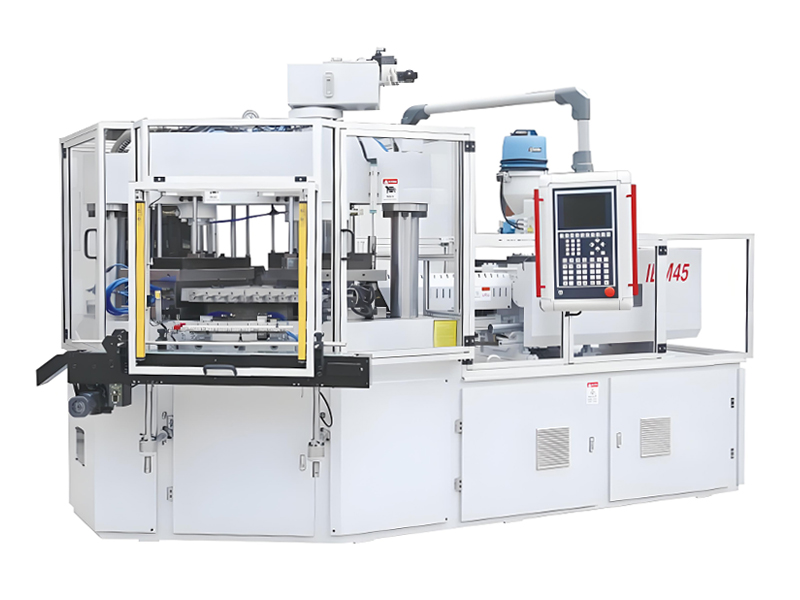

Importing an IBM machine into the Middle East fails far more often on paperwork than on engineering. The injection blow molding machine itself is a mature, well understood piece of equipment, and a competent builder can deliver a machine that runs pharmaceutical bottles to a repeatable neck tolerance anywhere in the world. What derails projects is the compliance layer wrapped around the shipment: a Saudi consignment that arrives at Jeddah without a Shipment Certificate, an Egyptian order stopped because the manufacturing plant was never entered into the GOEIC register, a الكويتi clearance stalled because no pre-shipment inspection was arranged, or a Saudi installation that underperforms because nobody told the factory that the country runs at 60 Hz. Each of these is entirely preventable, and each of them costs far more than the effort of preventing it.
This guide is written for buyers, importers, project managers and export sales engineers who are moving an injection blow molding machine, or a complete small bottle production cell, into Saudi Arabia, the wider Gulf Cooperation Council, the Levant, تركيا, العراق or North Africa. It covers the machine technology briefly enough to establish what is actually being certified, then goes deep on the Saudi SASO and SABER framework, maps the conformity assessment systems of twelve regional markets against each other, and finishes with the practical logistics: container selection, port choice, Red Sea routing risk, Incoterms, the documentation pack, electrical adaptation and after-sales support. Where cost matters, this article uses relative tiers and index points rather than currency figures, because freight rates, certification fees and demurrage charges move constantly and any figure quoted today is misleading tomorrow.
Aibim, a Wanplas factory specializing in injection blow molding machines, has shipped IBM equipment into more than forty countries, and a meaningful share of that experience sits in the Gulf and North Africa. The observations below reflect that project history, cross-checked against the published requirements of the relevant national conformity bodies. Regulations in this region change frequently, so every requirement described here should be re-verified against the current published rules before a letter of credit is opened or a vessel is booked.
آلة IBM نفسها: ما الذي تشهد عليه فعليًا
An injection blow molding machine is a three-station, one-step hollow molding machine, and understanding that architecture matters for certification because it determines the machine footprint, the installed power, the safety guarding scope and the material contact declarations you will be asked to produce. Unlike extrusion blow molding, which extrudes a parison and pinches it, injection blow molding first injection molds a parison onto a core rod, then transfers that core rod to a blow station where air expands the parison against the blow mold, and finally indexes to a stripper station where the finished bottle is ejected. The three stations sit on a rotating table that indexes 120 degrees per step, so all three operations happen simultaneously on different core rods.
لماذا يغيّر مبدأ المحطات الثلاث المنتج
The commercial consequence of that architecture is that the bottle neck is injection molded, not blown. The neck finish, including the thread profile, the sealing surface and the tamper evident bead, is formed at injection pressure inside a steel cavity, which is why injection blow molding routinely holds neck thread accuracy in the order of plus or minus 0.05 mm. There is no pinch-off, so there is no flash and no trimming operation, no scrap grinding loop, and no deflashing labor. For a pharmaceutical customer filling a syrup bottle that must seal against an aluminium pilfer-proof cap or a child resistant closure, that dimensional discipline is the entire reason to choose the process.
Typical process envelopes for the machine class most commonly exported to the Middle East are a bottle volume range of about 5 to 500 mL, clamping force from 30 to 120 tonnes, and hourly output from roughly 1,200 to 4,800 pieces per hour depending on cavitation, wall thickness and resin. A three cavity tool on a 55 tonne machine producing a 30 mL polypropylene pharmaceutical bottle sits near the middle of that band. Aibim builds its IBM55 hybrid electric, IBM65 and IBM75 machines around this envelope, with a single crossbeam, double pole clamping frame that enlarges the usable mould setting space, and a hydraulic system using variable displacement pump pressurizing together with the factory’s PREFILL circuit to cut energy consumption by at least 35 percent against a conventional fixed pump design.
قولبة النفخ بالحقن مقابل قولبة النفخ بالبثق وقولبة النفخ بالسحب بالحقن
يقارن المشترون في المنطقة بشكل روتيني ثلاث عمليات قبل الالتزام برأس المال، ويجب حسم المقارنة قبل بدء أعمال الشهادات لأن فئة الآلة تحدد مسار التوثيق. يلخص الجدول أدناه الاختلافات العملية.
| Attribute | الحقن النفخ (IBM) | Extrusion النفخ (EBM) | الحقن Stretch النفخ (ISBM) |
|---|---|---|---|
| Parison formation | الحقن molded onto core rod | Extruded tube, pinched by mold | الحقن molded preform, reheated and stretched |
| Typical volume range | 5 to 500 mL (up to 1,000 mL) | 50 mL to 1,000 L | 100 mL to 20 L |
| Flash and trimming | None | Pinch-off flash, requires deflashing | None |
| Neck thread accuracy | Approx. plus or minus 0.05 mm | Approx. plus or minus 0.15 to 0.30 mm | Approx. plus or minus 0.05 mm |
| Weight consistency | Very high, gravimetrically stable | Moderate, parison programming dependent | Very high |
| Handle capability | No integral handle | Integral handle possible | No integral handle |
| Main resins | PP, HDPE, LDPE, PS, PETG, PC, SAN, ABS, TPU | HDPE, PP, PVC, PC, EVOH multilayer | PET, PETG, PP, PLA |
| Tooling cost tier | High | Medium | High |
| Best fit | Small pharmaceutical, cosmetic and diagnostic bottles | Household, lubricant, agrochemical, large containers | Carbonated and still beverage bottles |
ما الذي ينتجه مشترو الشرق الأوسط فعليًا على هذه الآلات
Application mix in the region is dominated by three clusters. The first is pharmaceutical and nutraceutical packaging: syrup bottles, dropper bottles, eye and ear drop containers and tablet vials, produced mainly in polypropylene random copolymer for clarity and steam sterilisation tolerance, and in high density polyethylene where opacity and chemical resistance matter more than transparency. Saudi Arabia, the الإمارات العربية المتحدة, Jordan and Egypt all host substantial generic pharmaceutical manufacturing, and local packaging supply is actively encouraged by industrial localisation policy.
The second cluster is perfume, cosmetics and personal care. The Gulf perfume market is unusually large relative to population, and injection blow molding is a natural fit for thick-walled, high gloss small bottles in PETG and polycarbonate where a crystal-clear finish and a precise neck for a crimp collar are required. The third cluster is food, dairy and condiment packaging in high density polyethylene, including small format drinking yoghurt bottles, sauce and vinegar containers and single-serve juice bottles.
الامتثال للحلال ودستور الأدوية وملامسة المواد
Two compliance layers sit on top of the machine itself and are frequently overlooked at the quotation stage. The first is Halal packaging compliance. For a bottle destined for Halal certified pharmaceutical or food content, the packaging supply chain must demonstrate that no animal-derived processing aids were used. In practice this means confirming that mould release agents, slip additives and any stearate-based lubricants in the resin masterbatch are of plant or synthetic origin rather than tallow derived, and that machine lubricants in contact-risk positions are food grade. A written declaration from the resin and additive suppliers, retained with the batch record, is what auditors ask to see.
The second layer is pharmacopoeia and biocompatibility evidence for medical and pharmaceutical packaging. Buyers serving regulated pharmaceutical customers will ask for resin documentation aligned with USP Class VI for plastic materials, ISO 10993 biological evaluation where the container has patient contact, and European Pharmacopoeia chapter 3.1.3 for polyolefins used in containers for parenteral and ophthalmic preparations. These are material and finished-container level obligations, not machine level obligations, but the machine builder is normally asked to supply supporting evidence on contact surfaces, the absence of silicone-based lubricants in the melt path, and cleanroom compatibility of the machine construction. Separately, GSO standards adopted across the Gulf govern the finished packaging article, and the importer, not the machine builder, holds that obligation.
السعودية: SASO و SABER ومسار الشهادتين
Saudi Arabia is the largest single machinery market in the Gulf and it has the most structured conformity assessment regime in the region, so it deserves the deepest treatment. The controlling authority is SASO, the Saudi Standards, Metrology and الجودة Organization. Since 2019 SASO has administered product conformity through SABER, an online platform that replaced the previous paper Certificate of Conformity system issued by inspection companies at origin. The practical consequence is that conformity is no longer something an exporter arranges quietly with a testing house before the vessel sails; it is a registered, auditable transaction between a Saudi legal entity, an accredited Conformity Assessment Body and the SASO platform.
Everything about a Saudi shipment flows from one rule: without a valid Shipment Certificate on SABER, the consignment cannot be cleared through customs. There is no discretionary exception for capital equipment, no grace period for first-time importers, and no way to regularise the situation quickly once the container is already sitting on the quay at Jeddah or Dammam. Storage and demurrage exposure in that situation escalates from a Medium tier cost in the first days to a Very High tier within a few weeks, and in extreme cases the goods are re-exported at the seller’s expense.
كيف تعمل طريقة الخطوتين: شهادة المنتج ثم شهادة الشحن
SABER operates a two-tier structure. The first tier is the Product Certificate, usually written PC. This is a product-level approval, valid for one year, issued by a Conformity Assessment Body that SASO has authorised. The Product Certificate confirms that a defined product model, described by its HS code, brand, model designation and technical characteristics, conforms to the applicable Saudi requirements. It is issued once and then reused for every subsequent shipment of that same model during its validity period.
The second tier is the Shipment Certificate, usually written SC. This is a consignment-level document issued against a specific commercial invoice and bill of lading. It cannot exist without a valid Product Certificate behind it, and it is issued for each individual shipment. Once the Product Certificate is in place and the shipment documents are uploaded, the Shipment Certificate is typically issued within one to three working days, which is fast enough to run in parallel with ocean transit but not fast enough to rescue a container that has already arrived.
The account holder throughout is the Saudi importer. SABER authenticates against a valid Commercial Registration number, commonly abbreviated CR, and a Saudi VAT registration. A foreign machine builder cannot open its own SABER account and cannot self-certify. This single structural fact has downstream consequences for Incoterms, discussed later, and it is the reason a genuine DDP offer into Saudi Arabia is usually undeliverable.
| Stage | Product Certificate (PC) | Shipment Certificate (SC) |
|---|---|---|
| Level | Product model level | Individual consignment level |
| Issued by | SASO-authorised Conformity Assessment Body | Same or another authorised body via SABER |
| Validity | One year from issue | Single shipment only |
| Typical lead time | Several working days to a few weeks, driven by test report completeness | One to three working days once PC exists |
| Technical file | Required: general arrangement drawing, electrical schematic, bill of critical components | Not resubmitted |
| Test reports | Required from an ISO 17025 accredited laboratory | Not resubmitted |
| CE and IEC evidence | احصل على عرض أسعارed as supporting evidence, not as a substitute | Not applicable |
| Product photographs | Required, including full machine and guarding | Loading and packing photographs advisable |
| Nameplate | Legible photograph showing model, serial, voltage, frequency, power, year | Must match invoice description |
| Manual | Operation and safety manual in Arabic and English | Ships with the machine |
| Commercial documents | HS code and importer CR | Commercial invoice, packing list, bill of lading |
| Consequence if missing | No SC can be issued | No customs clearance, demurrage exposure Very High |
المنظم مقابل غير المنظم: مكان الآلات الصناعية
SABER classifies products as regulated or non-regulated. A regulated product falls within the scope of a published Saudi Technical Regulation and requires a Product Certificate issued after a formal conformity assessment, usually supported by third party testing. A non-regulated product is one for which no specific Technical Regulation applies; it still must be registered on SABER and it still requires a Shipment Certificate, but the Product Certificate can be obtained through a simplified self-declaration route supported by the manufacturer’s technical documentation.
A complete industrial production machine such as an injection blow molding machine is normally handled as non-regulated. That is a lighter obligation, not an exemption, and importers get into trouble precisely because the word non-regulated is misread as meaning nothing is required. Registration and the Shipment Certificate remain compulsory. Additionally, if the shipment includes separately invoiced ancillary items, those items may carry their own classification. A packaged chiller, an air compressor, a low voltage control cabinet supplied as a separate line item, or electrical accessories can each be pulled into a regulated category even though the main machine is not. The safest practice is to run the HS code of every line on the invoice through the SABER classification before the invoice is finalised, not after.
إثباتات السلامة الكهربائية والتوافق الكهرومغناطيسي
Even when the machine is non-regulated, the technical file that supports the Product Certificate is expected to demonstrate electrical safety on a recognised basis. The evidence set that Conformity Assessment Bodies accept most readily for plastics machinery is built on the international standards already used for CE marking, which means the exporter is usually not doing new work, only repackaging existing work. IEC 60204-1 covers the electrical equipment of machines and is the core document for a production machine’s control cabinet, protective bonding, emergency stop circuits and conductor identification. Electromagnetic compatibility is addressed through IEC 61000-6-2 for immunity in industrial environments and IEC 61000-6-4 for emissions in industrial environments. Where a separate measurement or control instrument is supplied, SASO IEC 61010 for electrical equipment for measurement, control and laboratory use may be cited.
SASO participates in the IECEE arrangement, which means CB scheme test reports and their associated national differences are recognised as valid technical evidence. A machine builder that already holds CB test reports for the main electrical components, together with a CE declaration referencing the machinery and electromagnetic compatibility directives, will find the Saudi file assembles quickly. What causes delay is a technical file where the electrical schematic does not match the physical cabinet, where component certificates have expired, or where the declared rated power on the nameplate contradicts the figure on the schematic.
ربط اللوائح الفنية ووضع العلامات على الطاقة
Three Saudi Technical Regulations come up in machinery conversations and each has a different relevance. The Low Voltage Electrical Equipment and Appliances Technical Regulation covers electrical equipment within defined voltage bands, and it is the regulation that most often captures separately supplied electrical ancillaries even when the parent machine is out of scope. A Machinery Technical Regulation has been progressively developed and phased in by SASO, following the general architecture of international machinery safety law, and its scope should be re-checked at the time of each shipment because implementation has advanced in stages rather than all at once. The SASO الطاقة Label regime applies to specified consumer and building service appliances such as air conditioners, refrigerators and washing machines, and it does not apply to industrial production machinery, but it does need to be confirmed for any packaged air conditioning or refrigeration unit that ships alongside the machine as a separate item.
العلامات باللغة العربية: المتطلب الذي يقلل الجميع من شأنه
Arabic language obligations in Saudi Arabia extend beyond a courtesy translation. Three elements matter for a production machine. First, the machine nameplate should carry the essential ratings in a form intelligible to a local inspector, and bilingual Arabic and English nameplates are strongly advised even where a strict legal requirement is arguable. Second, safety warnings and hazard pictograms on the machine, particularly around the clamping area, the hot melt path, the hydraulic accumulator and the electrical cabinet, should be bilingual; pictograms alone are considered adequate by some inspectors but bilingual text removes the argument. Third, the operation and maintenance manual should be supplied in Arabic and English. This last item is the one that most often trips up a first shipment, because translating a two hundred page technical manual takes weeks and is invariably left to the last moment.
There is a quality dimension here too. A machine-translated Arabic manual full of mistranslated technical terms is worse than useless in a dispute, because it becomes evidence that the operator was not properly instructed. Terminology such as clamping force, parison, core rod, blow pin, ejection and cycle time has settled Arabic equivalents in the regional plastics industry, and a translator with plastics machinery experience should be used. Aibim supplies bilingual documentation packs with its machines for exactly this reason, and the annual complimentary spare parts allowance offered across the Wanplas brand includes replacement of damaged safety labels and nameplates within the warranty period.
الشهادات عبر اثني عشر سوقًا في الشرق الأوسط وشمال أفريقيا
Outside Saudi Arabia the region fragments into a dozen distinct conformity regimes, and the differences are large enough that a compliance plan built for one country will not transfer to its neighbour. Some markets operate a national platform closely modelled on SABER, some rely on pre-shipment inspection at origin by an appointed inspection body, some require the exporting factory itself to be registered before any goods move, and a few operate essentially on documentation review at the border. The section below walks through each market, and the comparison table that follows condenses the whole picture into one view.
الإمارات العربية المتحدة
The Emirates operate the Emirates Conformity Assessment Scheme, known as ECAS, administered under the industry and advanced technology ministry that absorbed the former standards authority ESMA. المنتجات within regulated categories carry the Emirates الجودة Mark, abbreviated EQM, which is a higher tier scheme involving factory assessment as well as product testing. Industrial production machinery generally sits outside the mandatory ECAS product categories, but registration obligations attach to electrical ancillaries and to any item that the buyer intends to resell rather than install. Dubai Municipality imposes additional requirements on certain product families entering the emirate, and building services equipment installed as part of a factory fit-out can attract municipal approval independently of federal rules.
The Emirates offer something no other market in the region does: genuinely frictionless free zone handling. Jebel Ali Free Zone and Dubai Airport Free Zone allow goods to be landed, stored, unpacked, re-packed and re-exported without entering the customs territory of the Emirates, which makes Dubai the natural regional consolidation point for machinery, tooling and spare parts. A machine destined for Riyadh, Baghdad or Muscat can be landed at Jebel Ali, held in bond, and moved onward when the destination paperwork is complete. That single option removes most of the timing risk from a difficult certification market.
قطر
قطر’s standards function operates through the قطر General Organization for Standards and Metrology, together with the قطر Conformity Scheme. The scheme requires conformity assessment for defined product categories and normally involves an appointed inspection body performing verification at origin, with inspection companies such as the major international testing and certification houses acting as the operational arm. For capital machinery the practical path is documentation review plus, where applicable, a pre-shipment inspection producing a certificate that is presented at the border with the commercial documents. قطر has been steadily formalising its conformity requirements, so the applicable product list should be confirmed close to shipment.
الكويت
الكويت operates the الكويت Conformity Assurance Scheme, abbreviated KUCAS, and it is among the more procedurally demanding regimes in the Gulf for machinery. KUCAS requires a Technical Inspection Report, abbreviated TIR, issued by an appointed inspection body against the applicable standards, and a Certificate of Conformity issued on the basis of that report. The appointed bodies operate under a Pre-Inspection Agent arrangement, and the inspection normally takes place at the point of manufacture before the goods are shipped. The critical planning point is that a الكويتi pre-shipment inspection must be scheduled while the machine is still assembled and powered at the factory. Once the machine is crated, an inspector cannot verify guarding, emergency stop function or nameplate data, and the inspection has to be repeated at destination at considerably greater cost.
عُمان
عُمان’s conformity requirements are administered through the ministry responsible for commerce, industry and investment promotion, and عُمان adopts GSO standards extensively rather than maintaining a large body of unique national requirements. Product registration obligations apply mainly to consumer goods, and industrial machinery is typically cleared on documentation. عُمان’s practical attraction is geographic: Salalah and Sohar sit outside the Strait of Hormuz, which gives them a strategic advantage during periods of Gulf shipping disruption, and Sohar has become an established industrial gateway with good onward road links.
البحرين
البحرين works through its standards and metrology directorate and, like عُمان, leans heavily on unified GSO standards rather than a parallel national scheme. The regime is comparatively light for capital equipment. البحرين’s causeway connection to the Saudi Eastern Province means that machinery landed in البحرين sometimes moves onward by road into Saudi Arabia, but importers should be aware that such a movement triggers the full Saudi requirement set at the land border, including the SABER Shipment Certificate.
مصر: أصعب سوق للنجاح فيه
Egypt is where more machinery shipments go wrong than anywhere else in the region, and there are two independent reasons for that. The first is factory registration with GOEIC, the General Organization for Export and Import Control. Under the Egyptian factory registration regime introduced by ministerial decree and subsequently updated, the manufacturing plant producing the goods must itself be entered in the GOEIC register before those goods can be imported into Egypt. This is a plant-level registration, not a product-level approval, and it requires the exporting factory to submit corporate documents, quality management system certification, product scope and evidence of manufacturing capability, generally legalised through the Egyptian consular channel. Processing takes months rather than weeks. If the factory is not registered when the goods arrive, the shipment can be refused entry and returned at the exporter’s risk and cost. No amount of local relationship management fixes this after the fact.
The second reason is the ACID number. Egypt operates advance cargo information declaration through the Nafeza single window, and every shipment must obtain an ACID number before the vessel sails from the port of loading. The importer initiates the declaration, the exporter is linked into it, and the ACID number must then appear on the commercial invoice, the packing list and the bill of lading. A shipment that leaves origin without a valid ACID number is not merely delayed; it is non-compliant at the point of departure and correcting it requires document amendments that carriers charge for and that consume days. Indicative import duty on capital machinery falls in a low band of roughly 2 to 5 percent, with value added tax at 14 percent, though machinery imported for approved industrial investment projects may qualify for relief; both figures should be verified against the current tariff schedule and the specific HS classification.
تركيا
تركيا is inside a customs union with the الاتحاد الأوروبي for industrial goods, and the practical consequence is that CE marking is mandatory rather than optional. A machine entering تركيا must carry CE marking with a declaration of conformity referencing the machinery safety and electromagnetic compatibility legislation, and the technical file must be available on request. National marking through the Turkish standards institute may additionally apply to specific product families. Import controls are administered through TAREKS, the risk-based electronic control system operated by the trade ministry, which screens shipments and either releases them or refers them for physical inspection. تركيا is therefore an easy market for a builder who already holds a complete CE technical file and a difficult one for a builder who does not.
العراق
العراق requires a Certificate of Conformity for imported goods under a mandatory conformity assessment programme associated with the Central Organization for Standardization and الجودة Control, operated through appointed international inspection companies. The programme involves pre-shipment inspection at origin covering product conformity, quantity and, in many cases, valuation. Shipments arriving without the certificate face rejection or heavy penalty. The pre-shipment inspection must be booked in advance, and as with الكويت it needs to happen while the machine is accessible and functional at the factory. Umm Qasr is the main seaport; a significant share of machinery for العراق nonetheless arrives overland through Jordan, تركيا or الكويت, and the transit route affects which documents are needed.
الأردن ولبنان وإسرائيل
Jordan’s standards and metrology organization administers conformity requirements and applies GSO and international standards for most industrial categories, with registration obligations concentrated on regulated consumer goods. Aqaba is the port of entry and also functions as a special economic zone with its own facilitation regime. Lebanon’s standards institution maintains national standards and applies documentary conformity checks at import; the practical constraint in Lebanon is banking and foreign exchange rather than technical conformity. Israel applies mandatory standards administered by its standards institute, with a formal approval route for regulated products and mutual recognition of certain international test reports; industrial machinery is generally cleared on the basis of international standard compliance evidence, but the applicable mandatory standard list should be checked because it is more extensive than in most Gulf states.
| Country | Scheme name | Platform or system | Pre-shipment inspection | Indicative duty on machinery | VAT or equivalent | Arabic requirement | Typical processing time |
|---|---|---|---|---|---|---|---|
| Saudi Arabia | SASO conformity, SALEEM framework | SABER (PC then SC) | Not routinely, document based | 0 to 5 percent | 15 percent | Strong: nameplate, warnings, manual | PC days to weeks, SC 1 to 3 days |
| الإمارات العربية المتحدة | ECAS, EQM for higher tier | Ministry registration portal | Not routinely | 0 to 5 percent | 5 percent | Moderate: labels and safety text | Days to a few weeks |
| قطر | قطر Conformity Scheme | QGOSM administered | Often, via appointed body | 0 to 5 percent | Not currently applied | Moderate | One to three weeks |
| الكويت | KUCAS with TIR and CoC | Appointed PAI bodies | Yes, at origin, mandatory in scope | 0 to 5 percent | Not currently applied | Moderate | Two to four weeks |
| عُمان | National registration, GSO adoption | MoCIIP systems | Rarely for machinery | 0 to 5 percent | 5 percent | Moderate | Days to two weeks |
| البحرين | BSMD, GSO unified standards | National customs systems | Rarely for machinery | 0 to 5 percent | 10 percent | Moderate | Days to two weeks |
| Egypt | GOEIC factory registration | Nafeza single window with ACID | Yes, inspection on arrival plus origin checks | 2 to 5 percent | 14 percent | Strong: Arabic documentation expected | Factory registration months |
| تركيا | CE mandatory, national mark where applicable | TAREKS risk-based control | Risk-based referral only | Low, origin dependent | 20 percent | Turkish language, not Arabic | Days if CE file is complete |
| العراق | Mandatory CoC programme | COSQC with appointed inspectors | Yes, mandatory at origin | Variable, commonly low for machinery | Sales tax regime, no standard VAT | Strong | Two to four weeks |
| Jordan | JSMO conformity requirements | National customs and JSMO | Selective | 0 to 5 percent typical for machinery | 16 percent | Moderate | One to two weeks |
| Lebanon | LIBNOR standards, documentary check | Customs documentary review | Rarely | Low for capital goods | 11 percent | Moderate, French or Arabic common | Days to two weeks |
| Israel | SII mandatory standards | Standards institute approval route | Selective | Generally nil on machinery | Around 17 to 18 percent | Hebrew, not Arabic | One to three weeks |
علامة G-Mark لدول الخليج واللوائح الفنية لـ GSO
The G-Mark is the conformity marking of the Gulf Standardization Organization, and it is one of the most frequently misunderstood elements of Middle East compliance. GSO develops unified technical regulations and standards that member states adopt into national law, and where a GSO technical regulation is in force the corresponding products must bear the G-Mark and be supported by a declaration of conformity and, depending on the risk category, a certificate from a notified body.
The scope, however, is limited to specified product families. The principal mandatory categories are low voltage electrical equipment within defined voltage bands, toys, and personal protective equipment. A complete industrial production machine sold to a manufacturing plant is not, as a general rule, within the mandatory G-Mark scope. That does not mean the question goes away. Purchasing departments and tender committees across the Gulf routinely include a line asking for G-Mark certification because their template was written for a different product class, and a supplier who answers with a flat refusal loses the tender to one who answers with an explanation.
The correct commercial response is a short written scope statement that does three things. It states which GSO technical regulations exist and which product categories they cover. It explains why a complete production machine falls outside the mandatory scope while individual low voltage electrical components inside it may be individually certified. And it lists the electrical safety and electromagnetic compatibility evidence that is actually held, such as IEC 60204-1 conformity, IEC 61000-6-2 and IEC 61000-6-4 test reports, CB scheme reports for major components and a CE declaration of conformity. Supplied as a one page annexe to the quotation, that statement removes the objection permanently, and it is far more persuasive than a certificate that does not exist for the category in question.
حلول الشحن: أبعاد المعدات واختيار الحاويات
Container selection for an injection blow molding machine is decided by height first, weight second and length third. Most IBM machines in the small bottle class fit comfortably inside a standard box, and the mistake that generates unnecessary cost is booking out of gauge equipment for a machine that would have fitted in a high cube, or the reverse, discovering at the loading dock that the crated machine is 60 mm too tall for the container that has already been positioned.
الأبعاد والأوزان النموذجية
A 30 tonne clamping force injection blow molding machine occupies roughly 4.5 by 1.6 by 2.2 metres and weighs approximately 5 to 8 tonnes bare. A 55 to 75 tonne machine grows to roughly 5.2 by 1.8 by 2.4 metres at 9 to 13 tonnes, and a 90 to 120 tonne machine can reach 6.5 by 2.0 by 2.6 metres at 14 to 20 tonnes. Those figures are for the machine alone. A working production cell also needs a chiller, a dehumidifying dryer, a hopper loader, an air compressor with receiver and dryer, a mould set, and a starter package of spare parts and tools. As a planning rule, ancillary equipment adds 30 to 60 percent to the shipped volume of the machine and 20 to 40 percent to the shipped weight, and moulds are dense enough that a set of three tools can add a tonne on its own.
Crating adds height and length. A machine crated in a plywood-clad timber case typically gains 100 to 200 mm in each dimension, and the base skid adds another 100 to 150 mm of floor height. That skid height is exactly what pushes a 2.55 metre crated machine past the 2.69 metre internal height of a 40 ft high cube once the loading tolerance is respected. Measure the crated dimension, not the machine dimension, before booking.
| Container type | Internal L x W x H (m) | Nominal payload | Suitable for | Freight cost tier | Selection trigger |
|---|---|---|---|---|---|
| 20 ft general purpose | 5.90 x 2.35 x 2.39 | Around 28 tonnes | Single 30 to 55 T machine, moulds, spares | Baseline, 100 index points | Machine under 5.7 m long and 2.25 m crated height |
| 40 ft general purpose | 12.03 x 2.35 x 2.39 | Around 26 to 28 tonnes | Machine plus chiller, dryer, compressor | Approx. 130 to 160 index points | Volume driven, crated height still under 2.25 m |
| 40 ft high cube | 12.03 x 2.35 x 2.69 | Around 26 to 28 tonnes | Complete production cell, most common choice | Approx. 135 to 170 index points | Crated height between 2.25 and 2.55 m |
| 45 ft high cube | 13.55 x 2.35 x 2.69 | Around 27 tonnes | Two machines or one machine with extensive ancillaries | Approx. 150 to 190 index points | Length constrained, not available on every service |
| 40 ft open top | 12.03 x 2.35 x 2.33 with removable roof | Around 26 tonnes | Over-height machine loaded by crane from above | Approx. 180 to 250 index points plus out of gauge charge | Crated height above 2.6 m or top loading required |
| 40 ft flat rack | 12.06 x 2.40 open sides | Around 30 to 40 tonnes | Very heavy or wide items, large mould bases | Approx. 200 to 300 index points plus out of gauge charge | Width above 2.3 m or weight above box limit |
| Break bulk or roll-on | Not applicable | Project cargo | Full turnkey line shipped as one project | Premium tier, quoted per project | Multiple over-dimensional pieces on one booking |
ممارسات التعبئة لوجهات الخليج
Two environmental factors shape packing for this region. The first is humidity and salt during the sea leg, particularly on a Cape of Good Hope routing where the voyage is long and crosses several climate zones. Machined surfaces, tie bars, core rods and mould cavities should be protected with a vapour corrosion inhibitor film or coated with a rust preventive compound, and the control cabinet should carry desiccant with a humidity indicator card. The second factor is heat at destination. Containers standing on a terminal apron in Jeddah or Dammam in summer reach internal temperatures that soften some packing materials and can degrade elastomeric seals; polyurethane hoses, seal kits and any electronics shipped loose should be packed in the cooler central mass of the load rather than against the container walls or roof.
Wooden packaging must carry ISPM 15 treatment marking. This is not optional and it is enforced across the region. The marking must be legible on at least two opposing faces of every wooden crate, pallet and dunnage piece, and it must show the country code, the producer code and the treatment code. A shipment with unmarked wood is subject to fumigation at destination, re-packing, or in some jurisdictions destruction of the packaging, and every one of those outcomes delays the container and generates storage charges. Plywood and processed wood panels are generally exempt, but the solid timber skid under the machine never is.
الموانئ وطرق الشحن وخطة الطوارئ للبحر الأحمر
Port selection in the Middle East is a strategic decision, not an administrative one, because the region has two separate maritime approaches and they behave very differently. Saudi Arabia straddles both, with Jeddah on the Red Sea and Dammam on the Arabian Gulf, and the choice between them changes transit time, congestion exposure and inland trucking distance for the same cargo.
| Port | Country and coast | Serves | Routing exposure | Notes for machinery cargo |
|---|---|---|---|---|
| Jeddah Islamic Port | Saudi Arabia, Red Sea west coast | Jeddah, Makkah, Madinah, western region | Red Sea, Bab el-Mandeb transit | Largest Saudi container gateway, exposed to Red Sea routing disruption |
| King Abdullah Port | Saudi Arabia, Red Sea | Western region, transshipment | Red Sea | Modern facility, good handling for out of gauge units |
| King Abdulaziz Port Dammam | Saudi Arabia, Arabian Gulf east coast | Eastern Province, Jubail, onward to Riyadh | Strait of Hormuz | Preferred alternative when Red Sea routing is disrupted |
| Riyadh Dry Port | Saudi Arabia, inland | Central region, Riyadh industrial cities | Rail from Dammam | Customs clearance inland, reduces coastal congestion exposure |
| Jebel Ali | الإمارات العربية المتحدة, Arabian Gulf | Emirates plus regional transshipment | Strait of Hormuz | Largest regional hub, free zone bonded storage, best onward options |
| Khalifa Port | الإمارات العربية المتحدة, Arabian Gulf | Abu Dhabi industrial zones | Strait of Hormuz | Strong project cargo handling |
| Hamad Port | قطر, Arabian Gulf | Doha and قطرi industrial areas | Strait of Hormuz | Direct calls available, otherwise transship at Jebel Ali or Salalah |
| Shuwaikh and Shuaiba | الكويت, Arabian Gulf | الكويت City and southern industrial zone | Strait of Hormuz | Shuaiba better suited to heavy and industrial cargo |
| Sohar and Salalah | عُمان, Gulf of عُمان and Arabian Sea | عُمان plus regional transshipment | Outside Strait of Hormuz | Strategic value during Gulf disruption, Salalah is a major hub |
| Alexandria and Ain Sokhna | Egypt, Mediterranean and Red Sea | Delta industrial belt and Suez economic zone | Mediterranean or Red Sea | Sokhna suits Asia routings, Alexandria suits European feeder |
| Umm Qasr | العراق, Arabian Gulf | Basra and southern العراق | Strait of Hormuz | Draft and congestion constraints, overland alternatives common |
| Aqaba | Jordan, Red Sea | Jordan plus overland to العراق | Red Sea | Special economic zone facilitation available |
مشكلة البحر الأحمر وكيفية التخطيط لتجنبها
Security conditions in the southern Red Sea have periodically pushed carriers to avoid the Bab el-Mandeb strait and route Asia to Europe and Asia to Red Sea services around the Cape of Good Hope instead. For cargo bound for Jeddah, King Abdullah Port, Aqaba or Ain Sokhna, the practical effects are consistent. Transit time increases by roughly 10 to 14 days. Schedule reliability deteriorates, so the arrival window widens and berthing slots shift. Carriers apply additional surcharges associated with emergency routing and war risk, and marine insurers apply an additional war risk premium for transits in the affected zone. This article deliberately does not quote figures for those surcharges because they are revised frequently and vary by carrier and by service.
Three mitigation strategies work in practice. The first and simplest is to shift the port of discharge from the Red Sea coast to the Gulf coast. A machine destined for Riyadh can be discharged at Dammam and moved inland by road or by rail to Riyadh Dry Port, avoiding the Red Sea entirely at the cost of a longer domestic leg. The second is transshipment through Jebel Ali. Landing the machine in Dubai, holding it in the free zone if the destination paperwork is not ready, and then moving it by road to Riyadh over a distance of approximately 1,300 km is a well-established corridor with reliable heavy transport operators and predictable border formalities at the Al Batha crossing. The third is contractual: build the routing risk into the sales contract explicitly, with a delivery window rather than a fixed date, a defined mechanism for allocating surcharges between buyer and seller, and a force majeure clause that actually names routing disruption rather than relying on a generic formula.
الشحن الجوي والسكك الحديدية والنقل الداخلي
Air freight is not a realistic option for a complete injection blow molding machine. The volumetric weight of a crated machine makes the cost tier Premium by a wide margin, and the crated height frequently exceeds the door dimensions of the freighter types available on the relevant routes. Air freight is, however, entirely appropriate for two categories: moulds, and critical spare parts. A three cavity IBM mould set can be air freighted when a customer needs to launch a new bottle format quickly, and an urgent servo drive or seal kit reaching a stopped production line by air pays for itself within a shift.
Rail matters mainly inside Saudi Arabia, where the land bridge between Dammam and Riyadh Dry Port allows containers to move inland under customs control and be cleared at the inland facility. Regionally, rail connectivity is expanding but road remains the backbone for cross-border machinery movement. Inland transport of an over-dimensional crate requires a permit in every country in the region. The permit process covers route survey, escort requirements and time-of-day restrictions, and in the Gulf it also has a seasonal dimension because some authorities restrict heavy movements during peak summer daytime hours. Allow one to two weeks for a permit on a genuinely over-dimensional load, and confirm the height clearance of every bridge and pipe rack on the final industrial estate approach, which is where over-height loads most often get stuck.
شروط التسليم الدولية وحزمة المستندات
Incoterms allocate cost and risk, but in the Middle East they also allocate something more important: the legal ability to clear customs. That is the point most sales contracts get wrong. A term that works perfectly for a shipment to Rotterdam can be structurally impossible for a shipment to Riyadh, because Saudi clearance requires an importer of record holding a local Commercial Registration, and the SABER Shipment Certificate is issued against that entity. If the exporter has promised delivered duty paid terms without a local entity, the exporter has promised something it cannot perform.
| Term | Seller responsibility ends | Export clearance | Main carriage | Import clearance and duty | Middle East suitability |
|---|---|---|---|---|---|
| EXW | At the factory gate | Buyer | Buyer | Buyer | Workable only for experienced buyers with an origin forwarder; risky for first-time importers |
| FOB | On board at port of loading | Seller | Buyer | Buyer | Very common and generally the cleanest split for machinery |
| CFR | On board, freight prepaid to destination port | Seller | Seller | Buyer | Good where the buyer wants a single freight figure but arranges its own cover |
| CIF | On board, freight and insurance prepaid | Seller | Seller | Buyer | Most common for Gulf machinery contracts; insurance level must be specified |
| DAP | At the named destination, not unloaded, duty unpaid | Seller | Seller | Buyer | Suitable where the buyer’s site is inland and the seller controls trucking |
| DDP | At the named destination, duty and tax paid | Seller | Seller | Seller | Not recommended for Saudi Arabia and problematic in Egypt and العراق; requires a local importer of record |
لماذا تفشل شروط التسليم DDP في السعودية
The mechanics deserve spelling out because buyers frequently push for delivered duty paid terms as a way of transferring administrative burden. In Saudi Arabia the importer of record must hold a Commercial Registration and be registered for value added tax. Customs declarations, the SABER registration and the Shipment Certificate all reference that entity. A Chinese, European or Turkish machine builder without a Saudi subsidiary cannot occupy that position. What actually happens in practice when a supplier accepts DDP is that the supplier’s forwarder finds a local company willing to act as importer of record for a fee, which introduces a third party into the chain who owns the customs record for equipment it will never see. If a post-clearance audit arises, the buyer discovers its machine was imported by an unrelated company, and reclaiming input value added tax becomes difficult or impossible.
The sound structure is CIF or DAP with a named local importer of record who is the buyer itself. Before contract signature, the seller should obtain from the buyer a copy of the Commercial Registration, the VAT registration number, confirmation of an active SABER account, and the name and contact details of the customs broker who will handle the clearance. Those four items should be treated as conditions precedent, in the same way a letter of credit is. Collecting them at order confirmation costs nothing; collecting them after the vessel sails is where projects lose weeks.
حزمة الوثائق
تحتوي حزمة التوثيق الكاملة للشرق الأوسط لشحنة ماكينات على ما يلي، ولكل بند نمط فشل مرتبط به.
- Commercial invoice. Must state the HS code, the country of origin, the Incoterm and place, and a description that matches the nameplate and the packing list word for word. For an injection blow molding machine the classification normally falls under the blow molding machinery heading, and an ancillary chiller or compressor carries a different code. Where an ACID number applies, it must appear on the face of the invoice.
- قائمة التعبئة. حالة بحالة، مع الوزن الإجمالي والصافي والأبعاد والعلامات. تعتمد مناولة المحطة وأي فحص على دقة هذا؛ يمكن أن يؤدي التناقض بين الوزن المعلن والفعلي إلى نزاع كتلة إجمالية موثقة قبل تحميل الحاوية حتى.
- بوليصة الشحن. يجب أن يتطابق المستلم وطرف الإخطار تمامًا مع المستورد المسجل. يتجنب الإفراج التلكسي أو البوليصة السريعة الموقف الكلاسيكي حيث تصل الحاوية قبل المستندات الأصلية، وهو أمر ممكن تمامًا في مسار خليجي قصير.
- Certificate of origin. Issued by the competent authority or chamber of commerce at origin. Several markets in the region require chamber certification followed by consular legalisation through the destination country’s embassy, and Egypt and العراق are the strictest on this point. Legalisation takes days and cannot be rushed at the last moment.
- شهادة شحن SABER للسعودية، أو شهادة المطابقة المكافئة أو تقرير الفحص الفني أو دليل التسجيل الوطني لسوق الوجهة.
- وثيقة أو شهادة تأمين عندما يكون الشرط CIF، مع تسمية البضاعة والرحلة والمبلغ المؤمن عليه والشروط.
- دليل ISPM 15. العلامة نفسها على الخشب هي الدليل الأساسي؛ بعض الوجهات تطلب بالإضافة إلى ذلك إعلان تغليف يؤكد أن جميع عبوات الخشب معالجة وموسومة، أو أنه لا يتم استخدام أي عبوات خشبية.
- صور التحميل والتعبئة. ليست مستندًا قانونيًا، لكنها أهم قطعة أدلة عند نشوء مطالبة تلف. صوّر الآلة داخل الصندوق، والصندوق محملاً، والربط، وأبواب الحاوية قبل الختم، مع رقم الختم واضحًا.
التأمين البحري للمسارات الإقليمية
Cargo insurance for a machine moving into the Middle East should be written on all risks conditions, conventionally the Institute Cargo Clauses A wording, covering warehouse to warehouse rather than port to port. Two extensions matter specifically for this region. War risk cover is essential on any routing that transits the Red Sea, the Gulf of Aden or the Strait of Hormuz, and it is normally written as a separate section with its own premium and its own cancellation provisions, meaning underwriters can withdraw or reprice it at short notice on named routes. Strikes, riots and civil commotion cover should also be included given regional volatility.
Buyers should read the exclusions carefully rather than assuming the policy does what its name suggests. Standard all risks wordings exclude inherent vice, ordinary wear, insufficiency of packing, and delay, and that last exclusion matters enormously on a Cape routing: financial loss caused purely by late arrival is not recoverable under a cargo policy no matter how long the delay. Rust and oxidation caused by inadequate protective packing is also commonly excluded or heavily restricted, which is precisely why the vapour corrosion inhibitor packing described earlier is not merely good practice but a condition of recovery. Sum insured should be the invoice value plus freight plus a customary uplift to cover incidental costs, and for machinery it is worth confirming that the policy responds on a repair or replacement basis rather than a depreciated value basis.
التركيب وتردد الطاقة وواقع ما بعد البيع
The commissioning phase is where the technical and administrative threads finally converge, and it is also where the most avoidable performance problem in the entire region occurs: supply frequency. Saudi Arabia operates at 60 Hz. Almost every other market in the Middle East and North Africa operates at 50 Hz, as does most of Asia. A machine built for 50 Hz and installed in Riyadh will run, but it will not run correctly.
لماذا يغيّر تردد 60 هرتز سلوك الآلة
An asynchronous motor’s synchronous speed is proportional to supply frequency. A four pole motor that turns at approximately 1,500 rpm on 50 Hz turns at approximately 1,800 rpm on 60 Hz, a 20 percent increase. On a hydraulic injection blow molding machine that drives the main pump 20 percent faster, which raises flow by 20 percent and increases the power drawn at a given pressure. Clamping and injection movements accelerate, the machine’s timing profile shifts, and the shot profile that was validated at the factory no longer reproduces the same part. The chilled water pump and the chiller compressor are equally affected, so cooling capacity and refrigerant circuit behaviour change at the same time. Heater bands are resistive and are unaffected by frequency, but the temperature control loop now sits on a machine whose cycle time has moved, so the melt residence time and the barrel temperature profile both need re-tuning.
The fix is not difficult, but it must be applied before manufacture. Motors should be specified for the destination frequency and voltage, variable frequency drives configured with the correct base frequency and motor parameters, control transformers wound for the destination supply, and cooling equipment selected against 60 Hz performance curves rather than 50 Hz curves. Where a variable frequency drive controls the main pump motor, much of the adaptation can be handled in the drive configuration, which is one of the reasons hybrid and servo-driven machines travel better than fixed-pump hydraulic machines. The information the machine builder needs is simple: rated voltage, number of phases, frequency, neutral and earthing arrangement, and the available short circuit level at the connection point.
| Market | Typical industrial supply | Frequency | Adaptation required | Risk if ignored |
|---|---|---|---|---|
| Saudi Arabia | 380 to 400 V three phase | 60 Hz | Motors, VFD parameters, chiller selection, cycle re-tuning | High: output drift, temperature control instability, motor overload |
| الإمارات العربية المتحدة | 400 V three phase | 50 Hz | Standard specification | Low |
| قطر | 415 V three phase | 50 Hz | Confirm transformer tap and control voltage | Low to medium |
| الكويت | 415 V three phase | 50 Hz | Confirm transformer tap and control voltage | Low to medium |
| عُمان | 415 V three phase | 50 Hz | Confirm transformer tap | Low to medium |
| البحرين | 400 V three phase | 50 Hz | Standard specification | Low |
| Egypt | 380 V three phase | 50 Hz | Standard specification, check supply stability | Medium: voltage dips common, stabiliser advisable |
| العراق | 400 V three phase | 50 Hz | Standard specification plus generator compatibility | High: frequent grid interruption, generator sizing critical |
| تركيا | 400 V three phase | 50 Hz | Standard specification, CE compliant cabinet | Low |
| Jordan | 400 V three phase | 50 Hz | Standard specification | Low |
| Lebanon | 400 V three phase | 50 Hz | Generator operation must be assumed | High: unstable supply, protection settings critical |
| Israel | 400 V three phase | 50 Hz | Standard specification | Low |
إدخال المهندسين إلى البلاد
Commissioning requires a service engineer on site for a period typically measured in one to three weeks for a single machine, longer for a multi-machine cell with automation. Visa arrangements differ by country and by duration. Saudi Arabia distinguishes between a business visit visa, appropriate for short technical visits and negotiations, and a temporary work visit visa, which is the correct category when the engineer will perform physical installation work; using the wrong category creates real legal exposure for both the engineer and the inviting company. The Emirates operate a mission visa designed precisely for short-term technical assignments sponsored by a local entity. Egypt, Jordan and عُمان have their own business visit routes, and العراق typically requires an invitation letter and sponsorship from the local partner.
Saudi localisation policy, administered through the Nitaqat framework, sets targets for the proportion of Saudi nationals in a company’s workforce. It does not prevent a foreign engineer from visiting to commission a machine, but it does shape the economics of any long-term resident technical presence, and it is a strong argument for building local capability rather than planning on permanent expatriate coverage. In practice the best-performing installations in the region are those where the supplier trains two or three of the customer’s own technicians thoroughly during commissioning, leaves a well-organised documentation set, and supports them remotely thereafter.
الدعم عن بُعد واستراتيجية قطع الغيار
Remote diagnostics has changed the service model materially. A machine with a network-connected controller allows the builder’s engineer to view alarm history, axis positions, temperature profiles and cycle timing from the factory, which resolves a large share of faults without travel. Augmented reality assisted support, where a local technician wears or holds a camera and the remote engineer annotates the live view, works well for mechanical tasks such as changing a check ring or setting a blow pin. Both approaches depend on the customer permitting a network connection, which in pharmaceutical plants requires an agreed information security arrangement, so this should be negotiated at contract stage rather than during a breakdown.
The spare parts list that should ship with every machine into this region is short and specific. It comprises the screw tip and check ring assembly, at least one complete set of blow pins for the running mould, a full set of heater bands for the barrel and nozzle, a hydraulic seal kit, spare thermocouples and proximity switches, a spare servo driver or main drive module for machines where that component has a long replenishment lead time, hydraulic and cooling filters, and the specific o-rings and back-up rings used in the core rod sealing system. Those items cover the overwhelming majority of unplanned stoppages in the first two years. The Wanplas brand supports its factories, including Aibim, with an annual complimentary spare parts allowance and free replacement of parts that fail within warranty, and holding that allowance as a stocked kit at the customer’s site rather than drawing it reactively is the better strategy in a region where air freight lead times can stretch during peak seasons and public holidays.
For customers operating multiple plants across the Gulf, a bonded regional spare parts store in Jebel Ali Free Zone is worth considering. Parts can be held in the free zone without entering the customs territory, drawn down as needed and shipped to Saudi Arabia, عُمان, قطر or العراق within days rather than weeks. Several established machinery agents in Dubai offer this as a service, and the arrangement pairs naturally with a local commissioning and service partner. Aibim works with regional partners on this basis, and buyers evaluating suppliers should ask specifically what the realistic parts response time is to their site, not what the supplier’s headline service promise says.
قائمة المزالق: تسع طرق تفشل بها شحنات الشرق الأوسط
Every failure described below has happened repeatedly to competent companies. None of them is exotic. They persist because each one sits in the gap between two parties who each assume the other is handling it, and because the consequences appear only after the machine has left the factory, at which point the cheapest solution is no longer available.
| Pitfall | Where it bites | Consequence and cost tier | Preventive action | When to act |
|---|---|---|---|---|
| No SABER Shipment Certificate at arrival | Saudi Arabia | Container held, storage and demurrage escalate from Medium to Very High | Confirm importer SABER account and Product Certificate before booking the vessel | At order confirmation |
| Product Certificate expired, no renewal | Saudi Arabia, repeat orders | Shipment Certificate cannot be issued for follow-on shipments, High | Diarise the one-year expiry and renew before the next order ships | Two months before expiry |
| Exporting factory not registered with GOEIC | Egypt | Entry refused, goods returned at exporter’s risk, Very High | Complete factory registration before quoting, allow months not weeks | Before the first Egyptian quotation |
| ACID number not obtained before sailing | Egypt | Non-compliant shipment, document amendment fees, High | Importer raises the Nafeza declaration and passes the ACID number to the exporter pre-loading | Before the shipping instruction is filed |
| 60 Hz supply not declared to the machine builder | Saudi Arabia | Output drift, temperature instability, motor overload, retrofit cost High | Capture voltage, phases, frequency and earthing in the technical order form | At contract technical clarification |
| Certificate of origin not consular legalised | Egypt, العراق, some Gulf cases | Clearance blocked pending legalisation, Medium to High | Confirm the exact legalisation chain required and start it with the shipping documents | Two to three weeks before arrival |
| Wooden crates without ISPM 15 marking | All markets | Fumigation, repacking or packaging destruction plus delay, Medium | Use a certified treatment provider and photograph the marks on every case | At packing |
| DDP promised without a local importer of record | Saudi Arabia, Egypt, العراق | Seller cannot clear, contract breach exposure, High | Sell CIF or DAP and name the buyer as importer of record | At contract drafting |
| Red Sea rerouting not communicated to the buyer | Jeddah, Aqaba, Sokhna | Missed delivery date, penalty exposure, relationship damage, Medium to High | Quote a delivery window, name routing disruption in the contract, notify immediately when a carrier reroutes | At quotation and again at booking |
| Pre-shipment inspection booked after crating | الكويت, العراق, قطر | Inspection repeated at destination or refused, High | Schedule the origin inspection while the machine is assembled and powered | Two weeks before packing |
النمط الأساسي
Look across those ten rows and a single pattern emerges: every one of them is a timing failure rather than a knowledge failure. The information needed to avoid each problem is publicly available and none of it is technically difficult. What fails is sequencing. Certification work is treated as a shipping task rather than an order-entry task, so it starts when the machine is finished instead of when the contract is signed. The remedy is procedural. Build a compliance checklist into the order acknowledgement, assign each line to a named person on either the buyer’s or the seller’s side, and review it at the same meeting where production progress is reviewed. A machine builder that runs this discipline will out-deliver a technically superior competitor that does not.
جدول زمني واقعي للمشروع
For a first shipment into Saudi Arabia, a workable sequence looks like this. At contract signature, collect the importer’s Commercial Registration, VAT number and SABER account confirmation, and record the destination electrical supply. In the first weeks of manufacture, assemble the technical file, compile or refresh the electrical test reports, and begin the Arabic translation of the operation manual. Around the mid-point of manufacture, submit the Product Certificate application to the Conformity Assessment Body so it is issued well before completion. On completion, run the factory acceptance test, take nameplate and machine photographs for the file, and hold any required pre-shipment inspection before crating. At booking, issue the commercial documents, obtain the Shipment Certificate against the invoice and bill of lading, and confirm the routing. That sequence puts every document in place before the container leaves, which is the only condition under which a Middle East shipment is genuinely low risk.
الأسئلة الشائعة
هل أحتاج إلى شهادة SASO لآلة قولبة النفخ بالحقن المشحونة إلى السعودية؟
Yes. Every consignment entering Saudi Arabia requires a Shipment Certificate issued through the SABER platform, whether or not the product falls under a specific Technical Regulation. An injection blow molding machine is normally treated as non-regulated, which means the Product Certificate behind the Shipment Certificate can be obtained through a simplified self-declaration route supported by the manufacturer’s technical file. Non-regulated does not mean exempt: registration on SABER and a valid Shipment Certificate remain mandatory for customs clearance, and separately invoiced electrical ancillaries may be classified differently from the main machine.
من المسؤول عن تسجيل SABER، المصدر أم المستورد؟
The SABER account belongs to the Saudi importer, because the platform authenticates against a Commercial Registration number and a Saudi VAT registration. A foreign machine builder cannot open its own account or self-certify. The exporter’s role is to supply the technical file, the electrical test reports, the nameplate photographs, product images and the bilingual manual, while the importer uploads the data and engages the Conformity Assessment Body. Treat the importer’s SABER readiness as a condition precedent in the sales contract rather than an administrative detail to be resolved later.
لماذا يُعد تردد 60 هرتز في المملكة العربية السعودية مشكلة لآلة IBM المستوردة؟
Saudi Arabia operates at 60 Hz while most of Asia and the rest of the Middle East operate at 50 Hz. A four pole motor that turns at about 1,500 rpm on 50 Hz turns at about 1,800 rpm on 60 Hz, so hydraulic pump flow rises by roughly 20 percent, movements accelerate, and the validated shot profile no longer reproduces the same bottle. Chilled water pumps and chiller compressors are affected in the same way, so cooling capacity shifts at the same time as cycle timing. Motors, variable frequency drives, control transformers and cooling equipment must all be specified for 60 Hz before the machine is built.
هل يمكن شحن آلة قولبة النفخ بالحقن في حاوية قياسية بطول 40 قدمًا؟
Usually yes. A 30 to 55 tonne clamping force machine is roughly 4.5 to 5.2 metres long, 1.6 to 1.8 metres wide and 2.2 to 2.4 metres high, weighing 5 to 13 tonnes, so it fits inside a 40 ft high cube along with the chiller, dryer, compressor and a mould set. The decisive dimension is crated height including the skid, which typically adds 200 to 350 mm to the bare machine height. Once the crated height exceeds about 2.55 metres, an open top or flat rack becomes necessary and out of gauge surcharges apply, moving the freight cost tier from roughly 135 to 170 index points up to 180 to 300 index points against a 20 ft baseline of 100.
ما أكبر فخ امتثال عند تصدير الآلات إلى مصر؟
Factory registration with GOEIC. Under the Egyptian factory registration regime, the manufacturing plant itself must be entered in the register before its goods can be imported, and this is a plant-level requirement rather than a product approval. Registration requires legalised corporate documents, quality management certification and evidence of manufacturing capability, and it takes months. If the factory is not registered when the goods arrive, the shipment can be refused and returned at the exporter’s cost. The second trap is the ACID number under the Nafeza single window, which must be issued before the vessel sails and must appear on the invoice, packing list and bill of lading.
هل DDP مصطلح إنكوتيرمز واقعي لآلة تُباع إلى المملكة العربية السعودية؟
Generally no. Saudi clearance requires an importer of record holding a Commercial Registration and a VAT registration, and the SABER Shipment Certificate is issued against that entity. A foreign supplier without a Saudi subsidiary cannot occupy that role, so a delivered duty paid undertaking is not something it can actually perform. Suppliers who accept DDP anyway typically rely on a third party acting as importer of record, which leaves the buyer’s machine recorded against an unrelated company and complicates input tax recovery. CIF or DAP with the buyer named as importer of record is the sound structure.
كيف يؤثر خطر مسار البحر الأحمر على وقت التسليم إلى جدة؟
When carriers avoid the Bab el-Mandeb strait and route around the Cape of Good Hope, transit time to Red Sea ports typically increases by about 10 to 14 days and schedule reliability deteriorates. Emergency routing and war risk surcharges apply, and marine war risk premiums for the affected zone rise. Three mitigations work: discharge at Dammam on the Gulf coast instead of Jeddah, transship through Jebel Ali and move the machine by road to Riyadh over approximately 1,300 km, or contract on a delivery window with an explicit routing disruption clause rather than a fixed date.
هل تحتاج الآلة الصناعية إلى علامة GCC G-Mark؟
The G-Mark applies to product families covered by specific GSO technical regulations, principally low voltage electrical equipment, toys and personal protective equipment. A complete industrial production machine normally falls outside the mandatory scope, although individual low voltage components inside it may carry their own certification. Because tender templates often request G-Mark regardless of category, the practical answer is a one page written scope statement listing the applicable GSO regulations, explaining the boundary, and setting out the electrical safety and electromagnetic compatibility evidence actually held, such as IEC 60204-1 conformity and IEC 61000-6-2 and IEC 61000-6-4 test reports.
ما اعتبارات الحلال المطبقة على إنتاج الزجاجات الصيدلانية والغذائية؟
Halal compliance for packaging focuses on the absence of animal-derived inputs anywhere in the contact chain. In practice this means confirming that mould release agents, slip additives and stearate-based lubricants in the resin or masterbatch are of plant or synthetic origin rather than tallow derived, and that machine lubricants near contact surfaces are food grade. Written declarations from resin and additive suppliers, retained with the production batch record, are what auditors look for. This sits alongside, not instead of, pharmacopoeia evidence such as USP Class VI, ISO 10993 biological evaluation and European Pharmacopoeia chapter 3.1.3 for polyolefin containers.
كم من الوقت يجب التخطيط لأول مشروع آلات في الشرق الأوسط؟
Plan the compliance track in parallel with manufacture rather than after it. For Saudi Arabia, the Product Certificate should be applied for around the mid-point of manufacture so it exists before the machine is finished, and the Shipment Certificate then issues within one to three working days of the commercial documents. For markets requiring pre-shipment inspection such as الكويت and العراق, book the origin inspection about two weeks before packing while the machine is still assembled and powered. For Egypt, the GOEIC factory registration must be complete before the first quotation, because it is measured in months. Ocean transit itself is the predictable part; the paperwork is what determines the delivery date.
الخلاصة
Importing an IBM machine into the Middle East is a manageable, repeatable process for anyone who treats compliance as part of the order rather than part of the shipment. The technical questions are the easy ones: a three-station injection blow molding machine producing 5 to 500 mL bottles at 1,200 to 4,800 pieces per hour with plus or minus 0.05 mm neck accuracy is well-understood equipment, and the specification conversation with a competent builder such as Aibim, جومار, Nissei ASB or Uniloy takes days, not months. The hard questions are procedural, and they cluster in four places: the SABER registration and its two-certificate structure in Saudi Arabia, the country-by-country divergence in conformity schemes across the Gulf and North Africa, the routing and container decisions that determine whether the machine arrives on time and undamaged, and the electrical and after-sales adaptation that determines whether it performs once installed.
If a single action had to be prioritised, it would be this: at order confirmation, collect the importer’s Commercial Registration, VAT number, SABER account status and destination electrical supply data, and confirm in writing which party owns each line of the documentation pack. Everything else follows from that. The second priority is to declare the destination frequency to the machine builder in the technical order form, because 60 Hz in Saudi Arabia is the one variable that is expensive to fix after delivery and free to fix before it. The third is to plan the routing with an explicit Red Sea contingency, whether that means discharging at Dammam, transshipping through Jebel Ali, or simply contracting on a delivery window instead of a date.
Aibim, a Wanplas factory, has built injection blow molding machines and moulds for more than a decade with its own CNC machining centre and an annual capacity of over one hundred machines, exporting into more than forty countries under the Wanplas brand commitment to warm global customers with China plastic machinery. That experience is available to buyers as more than hardware: bilingual documentation packs, technical files structured for SABER and other regional conformity routes, 60 Hz specification as a standard option, packing engineered for long sea voyages, and an annual complimentary spare parts allowance backed by warranty replacement. For a project team planning a small bottle line anywhere between Casablanca and Muscat, the right first conversation is not about clamping force. It is about which certificate has to exist before the vessel sails, and who is responsible for making it exist.