Table of Contents
- Introduction: Why One-Step IBM Fits Small Bottles (3ml to 100ml)
- What Is One-Step Injection Blow Molding (Three-Station Process)?
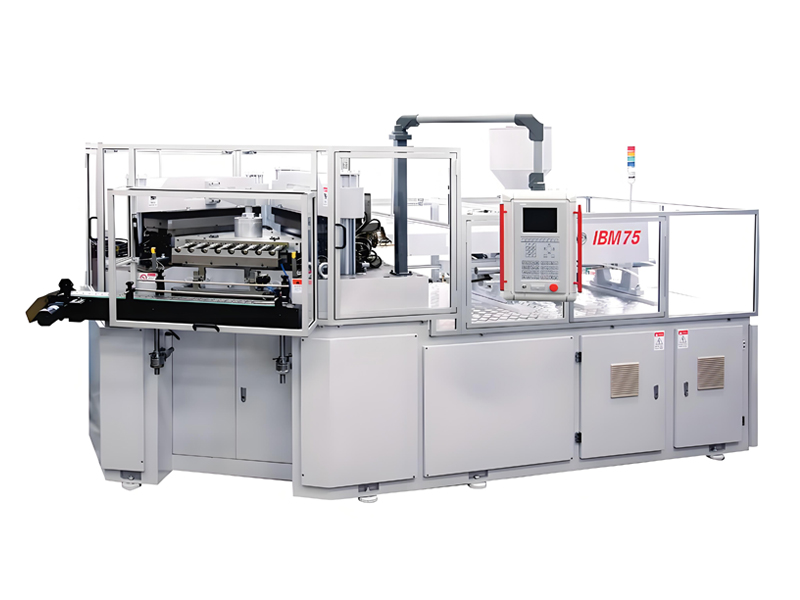
- The IBM75: Heavy-Duty One-Step Platform for 3ml to 1000ml
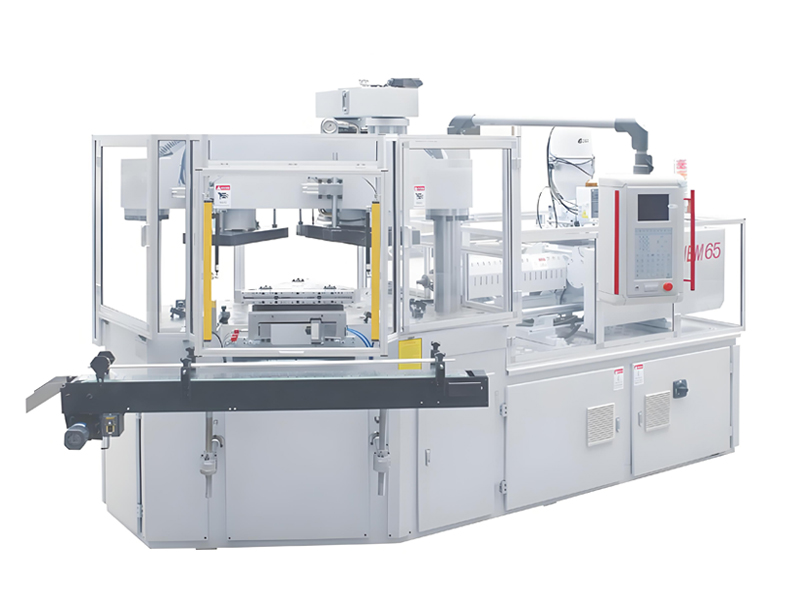
- The IBM65: Mid-Range Precision for Small Bottles
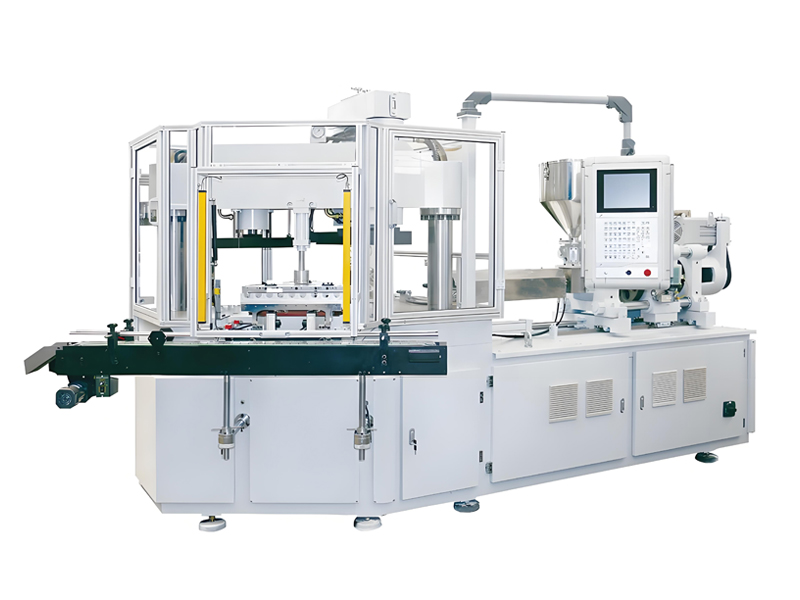
- The IBM55 Hybrid Electric: Energy-Saving Micro-Bottle Specialist
- One-Step vs Two-Step: Advantages for Small Bottles
- Material Options for Pharma, Food and Cosmetic Small Bottles
- Application Fields: Where Small IBM Bottles Are Used
- How to Select the Right IBM Model for Your Bottle Volume
- Quality, Precision and Neck-Finish Control for Micro Bottles
- Energy Saving and Smart Control Systems
- Service, Support and the Open-Factory Policy
- Frequently Asked Questions
- Conclusion
Introduction: Why One-Step IBM Fits Small Bottles (3ml to 100ml)
Aibim, a Wanplas factory, is a specialist in injection (stretch) blow molding machines, with more than 12 years of focused experience in this hollow-molding technology and machines running in over 40 countries. The Aibim product family covers bottles from 3ml to 1000ml, and the small-bottle segment of 3ml to 100ml is where one-step injection blow molding (IBM) delivers its clearest advantages. Small containers such as pharmaceutical droppers, unit-dose vials, cosmetic sample pots, oral-care dispensers and food-condiment mini bottles demand tight neck threads, clean flash-free bodies and consistent wall distribution that larger, less precise processes struggle to hold at scale.
This article explains how the Aibim three-station, one-step IBM process produces small bottles from 3ml to 100ml with high repeatability, and how the real Aibim machine models IBM75, IBM65 and IBM55 Hybrid Electric are configured for this work. You will learn the step-by-step process, the material choices for pharmaceutical, food, drink and cosmetic applications, the quality and energy-saving features built into the platform, and a practical selection table that maps bottle volume to the correct Aibim model and resin. By the end, you should be able to specify a production solution with confidence and request a tailored configuration from the factory.
One-step IBM is the right lens for small bottles because the parison and the finished bottle are created in a single, enclosed, three-station cycle. There is no separate preform stage, no reheating oven and no manual transfer that can introduce contamination or dimensional drift. For bottles measured in single-digit or low-double-digit milliliters, that integrated control is the difference between a clean, thread-true container and a scrap-heavy, inconsistent one. The remainder of this guide walks through the technology, the machines, the materials and the buying decision in depth.
What Is One-Step Injection Blow Molding (Three-Station Process)?
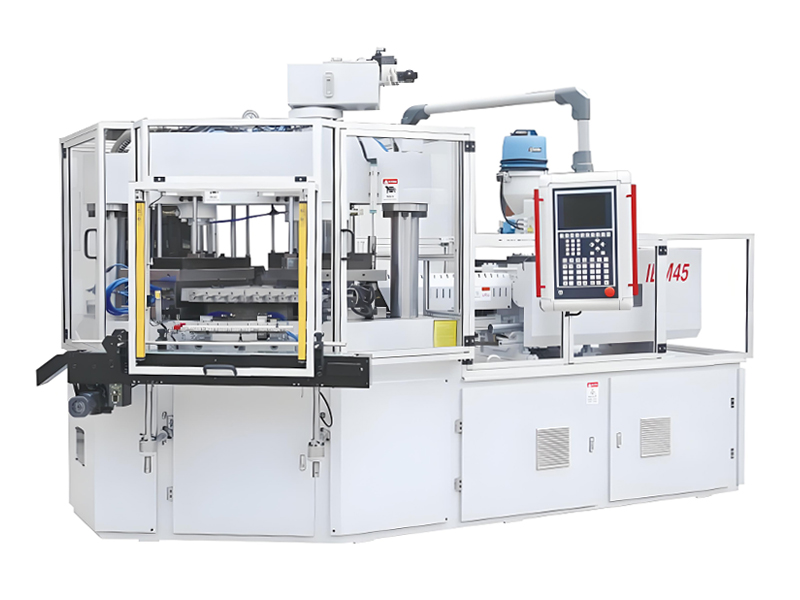
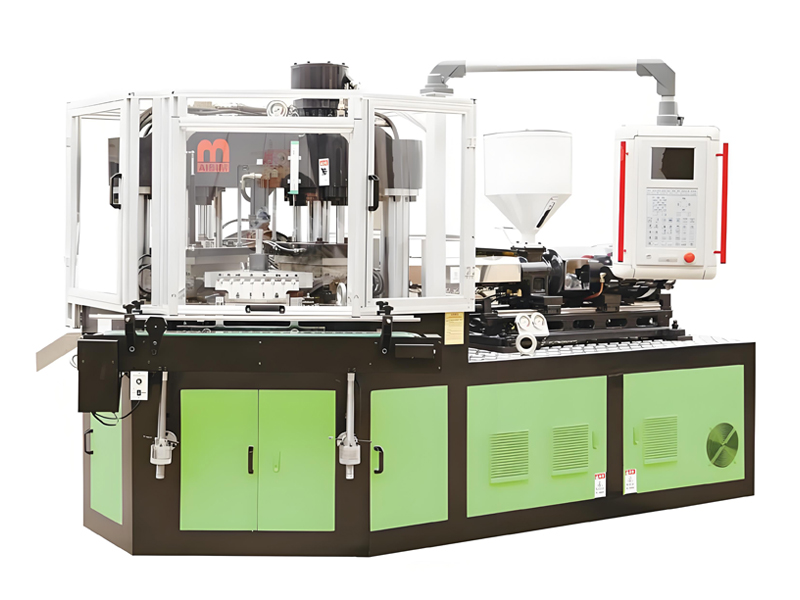
One-step injection blow molding is a fully integrated hollow-molding process in which a plastic parison is injected, transferred and blown into the final bottle within a single machine and a single cycle, without removing the part from the machine between stages. Aibim machines use a three-station, one-step layout: an injection station, a blow station and an ejection (stripper) station, arranged around a rotating core-rod or transfer system.
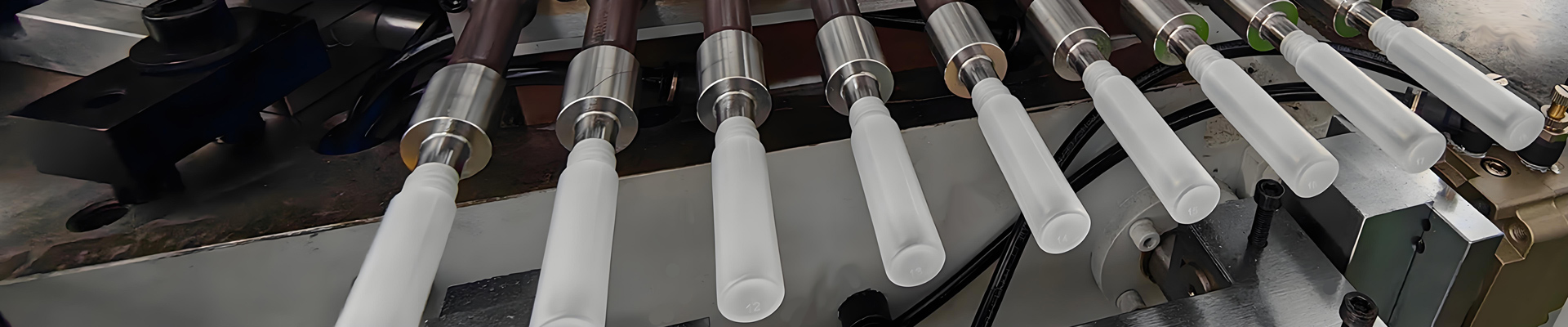
The three stations operate as follows. At the injection station, molten resin from the plasticizing barrel is injected around a core rod to form a precisely dimensioned parison whose open end already carries the finished bottle neck and thread. At the blow station, the heated parison on the core rod is transferred into the blow mold, where compressed air expands it against the cooled cavity wall to set the bottle body, base and sidewall. At the ejection station, the finished bottle is stripped from the core rod and discharged, while the core rod returns to the injection station for the next cycle. Because the neck is molded by injection rather than cut, trimmed or blown, it carries sharp, repeatable threads and a clean sealing surface.
The one-step designation matters for small bottles specifically. In a two-step process the parison is first molded as a preform, cooled, stored, reheated in an oven and then blown. Each handoff adds thermal history, handling and tolerance risk. For a 5ml dropper bottle or a 15ml cosmetic vial, that extra variability shows up directly as off-spec necks, thin spots and higher reject rates. One-step IBM keeps the parison at the correct temperature and orientation from injection to blow, which is why it dominates precision small-container production for pharmaceuticals and cosmetics.
Aibim frames this as a three-station, one-step hollow molding machine. The clamping framework uses a single crossbeam with double poles, which enlarges the mold setting space and makes tool changes straightforward even when cavity counts grow. The hydraulic system uses PREFILL technology with a variable displacement pump for pressurizing, which reduces energy draw during clamp open and close. These structural and hydraulic choices are what allow the same platform to serve both micro bottles and larger containers without compromising small-part precision.
Injection blow molding combines injection molding and blow molding: plastic raw material is first made into a parison through injection, then the parison is blown into the desired plastic product through blow molding, in a three-station, one-step process.
The core-rod transfer between stations is the mechanical heart of the one-step cycle. After injection, the core rod carrying the hot parison indexes to the blow station without the part leaving its supporting mandrel, so the parison wall temperature and orientation are preserved exactly. This is why the blow stage can begin immediately at the optimal stretch temperature rather than after a reheating ramp. The third station then strips the cooled bottle and returns the core rod for the next injection, giving a continuous, balanced rhythm in which the three stations work in parallel rather than sequentially waiting on one another.
Temperature control is equally decisive for small bottles. Because the parison is thin and the bottle is small, even a few degrees of drift changes wall distribution and neck set. Aibim manages this with zoned barrel temperature control, a tuned cooling circuit in the blow mold, and stabilized core-rod temperature so that consecutive shots stay within a tight band. The result is a process window that operators can hold shift after shift, which is the foundation of the low scrap rates that make one-step IBM economical for 3ml to 100ml production.
The IBM75: Heavy-Duty One-Step Platform for 3ml to 1000ml
The IBM75 is the largest and most capable model in the Aibim lineup, built on a 75-ton clamping platform that spans the full 3ml to 1000ml bottle range while remaining well suited to high-cavitation runs of small 3ml to 100ml bottles. For producers who want one machine that can make a 100ml cosmetic bottle today and a 500ml pharmaceutical container tomorrow, the IBM75 offers the broadest flexibility in the family.
Its heavier clamping frame and larger platen accommodate multi-cavity molds for micro bottles, so a single IBM75 can output a high number of 10ml or 30ml units per cycle. The machine carries the full Aibim feature set: PREFILL hydraulics with a variable displacement pump, SD card parameter storage, CE-certified safety with a long-distance digital laser sensor at the stripper station and a light curtain for personal safety, and the single-crossbeam double-pole clamping framework. The values below are representative Aibim configurations; exact figures are confirmed against the customer bottle drawing and chosen resin.
| Parameter | IBM75 (representative) | Notes for 3ml to 100ml bottles |
|---|---|---|
| Process type | Three-station, one-step IBM | Injection parison to blow to eject in a single cycle |
| Injection clamping force | 75 tons (approx. 750 kN) | Stable neck molding for precise threads |
| Blow clamping force | 75 tons (approx. 750 kN) | Supports multi-cavity small-bottle molds |
| Bottle volume range | 3ml to 1000ml | Small-bottle focus: 3ml to 100ml |
| Typical cavities (small bottles) | Up to 12 cavities | Depends on bottle shape and resin |
| Shot volume (PS) | approx. 350 cm³ | Sized for multi-cavity micro runs |
| Plasticizing capacity | approx. 70 kg/h | Steady melt supply for high cavitation |
| Screw diameter | 40 mm | Standard Aibim plasticizing unit |
| Hydraulic pump motor | 15 kW | PREFILL + variable displacement pump |
| Barrel heating power | approx. 10 kW | Zoned temperature control |
| Machine weight | approx. 5.5 t | Heavy frame for repeatability |
| Footprint (L x W x H) | approx. 4.2 x 1.6 x 2.2 m | Plan layout before installation |
| Energy saving | min. 35% vs conventional hydraulic | PREFILL technology benefit |
| Certification | CE certified | Laser sensor + light curtain safety |
The IBM75 is the natural choice when a producer needs both small bottles and larger containers on one platform, or when maximum cavities per cycle are required for a high-volume 3ml to 100ml product such as a diagnostic reagent vial or a mass-market cosmetic sample.
The IBM65: Mid-Range Precision for Small Bottles
The IBM65 sits in the middle of the Aibim range and is purpose-built for the core small-bottle window of 3ml to 100ml, with headroom up to about 500ml. It pairs a 65-ton clamping platform with the same three-station one-step architecture, making it the workhorse for cosmetic droppers, pharmaceutical vials, food-condiment mini bottles and drink shot containers where precision and uptime matter more than maximum platen size.
Compared with the IBM75, the IBM65 occupies a smaller footprint and draws less installed power while preserving the neck-precision and flash-free benefits that define one-step IBM. It is the recommended default for most dedicated small-bottle lines because it balances cavitation, floor space and energy use. The representative specifications below are validated with the customer drawing and resin before order confirmation.
| Parameter | IBM65 (representative) | Notes for 3ml to 100ml bottles |
|---|---|---|
| Process type | Three-station, one-step IBM | Single-cycle parison to bottle |
| Injection clamping force | 65 tons (approx. 650 kN) | Consistent neck and thread quality |
| Blow clamping force | 65 tons (approx. 650 kN) | Good for medium cavitation |
| Bottle volume range | 3ml to 500ml | Small-bottle focus: 3ml to 100ml |
| Typical cavities (small bottles) | Up to 10 cavities | Balanced output and tooling cost |
| Shot volume (PS) | approx. 280 cm³ | Matched to small-bottle cavitation |
| Plasticizing capacity | approx. 60 kg/h | Stable melt for steady cycles |
| Screw diameter | 38 mm | Standard Aibim plasticizing unit |
| Hydraulic pump motor | 11 kW | PREFILL + variable displacement pump |
| Barrel heating power | approx. 8.5 kW | Zoned temperature control |
| Machine weight | approx. 4.8 t | Compact yet rigid frame |
| Footprint (L x W x H) | approx. 3.9 x 1.5 x 2.1 m | Easier line integration |
| Energy saving | min. 35% vs conventional hydraulic | PREFILL technology benefit |
| Certification | CE certified | Laser sensor + light curtain safety |
For a dedicated small-bottle plant, the IBM65 is often the most cost-efficient entry because it delivers full one-step precision without paying for platen capacity that a 3ml to 100ml product never needs.
The IBM55 Hybrid Electric: Energy-Saving Micro-Bottle Specialist
The IBM55 Hybrid Electric is the smallest and most energy-conscious model in the Aibim range, engineered for micro bottles from 3ml up to about 250ml, with the 3ml to 100ml window as its sweet spot. The hybrid electric design combines servo-driven efficiency with the proven Aibim three-station one-step process, making it ideal for laboratories, pilot lines, premium cosmetic sampling and pharmaceutical unit-dose production where power draw and clean operation are priorities.
Because micro bottles use very little material per shot, the IBM55 Hybrid shines on energy and cleanroom-friendly operation. It still carries PREFILL-based hydraulics where needed, SD card recipe storage, CE safety and the single-crossbeam double-pole clamping framework, but with a smaller installed motor and tighter thermal control suited to thin-wall, low-gram-weight parts. Representative values below are confirmed with the customer drawing and resin.
| Parameter | IBM55 Hybrid (representative) | Notes for 3ml to 100ml bottles |
|---|---|---|
| Process type | Three-station, one-step IBM (hybrid electric) | Servo-assisted efficiency |
| Injection clamping force | 55 tons (approx. 550 kN) | Fine control for micro necks |
| Blow clamping force | 55 tons (approx. 550 kN) | Suitable for low cavitation |
| Bottle volume range | 3ml to 250ml | Small-bottle focus: 3ml to 100ml |
| Typical cavities (small bottles) | Up to 8 cavities | Optimized for micro parts |
| Shot volume (PS) | approx. 200 cm³ | Low gram weight per cycle |
| Plasticizing capacity | approx. 45 kg/h | Enough for micro-bottle runs |
| Screw diameter | 32 mm | Precise metering for small shots |
| Drive motor | approx. 7.5 kW (hybrid) | Lower installed power |
| Barrel heating power | approx. 7 kW | Tight zoned control |
| Machine weight | approx. 4.0 t | Compact footprint |
| Footprint (L x W x H) | approx. 3.6 x 1.4 x 2.0 m | Fits labs and pilot rooms |
| Energy saving | min. 35% vs conventional hydraulic | Hybrid adds further savings |
| Certification | CE certified | Laser sensor + light curtain safety |
The IBM55 Hybrid Electric is the recommended starting point for companies moving from manual or two-step small-bottle production into automated one-step IBM, or for brands that need a precise, low-energy machine for premium micro packaging.
One-Step vs Two-Step: Advantages for Small Bottles
The clearest way to justify one-step IBM for 3ml to 100ml bottles is to compare it directly with the two-step alternative. In two-step blow molding, a preform is injection molded, fully cooled, stored, then reheated and blown in a separate machine. For large carbonated bottles that logistics model is efficient; for tiny pharmaceutical and cosmetic bottles it introduces avoidable risk.
One-step IBM keeps the parison on the core rod at the correct temperature from injection through blow, which protects neck geometry and wall uniformity. There is no flash because the parison is sized to the cavity, and there is no preform scrap or reheat energy. The enclosed single machine also reduces human contact, an important factor for sterile or clean pharma and cosmetic filling. The table below summarizes the comparison on the factors that matter most for small bottles.
| Factor | One-Step IBM (Aibim) | Two-Step Process |
|---|---|---|
| Neck and thread precision | Excellent; neck molded by injection | Good; neck set at preform stage, reheated |
| Flash and scrap | Minimal; no preform, no gate scrap | Preform sprue and reheat losses |
| Thermal history | Single controlled thermal cycle | Two thermal cycles with storage between |
| Contamination risk | Low; enclosed single machine | Higher; preform handling and storage |
| Floor space | One integrated machine | Preform machine plus reheating blow machine |
| Energy use | Lower; no reheat oven, 35% saving vs conventional hydraulic | Higher; reheating oven required |
| Best fit | 3ml to 100ml pharma, cosmetic, food, drink | Larger volumes and some PET applications |
| Changeover | Mold and recipe change on one platform | Two machines to coordinate |
For the small-bottle producer, the practical conclusion is straightforward: one-step IBM trades the preform logistics of two-step for tighter quality and lower operating cost per good bottle. The savings compound at high cavitation, where scrap reduction and energy efficiency directly improve margin on every 5ml or 30ml unit shipped.
Material Options for Pharma, Food and Cosmetic Small Bottles
Aibim IBM machines process a broad resin set: PE (HDPE, LDPE, LLDPE), PP, PS, ABS, SAN, TPU, PC and PCTG. The right choice depends on the product inside the bottle, the required clarity, the barrier and the regulatory posture of the application. For 3ml to 100ml containers, material selection is as important as machine selection because the wall is thin and the neck must seal reliably.
PP and HDPE dominate pharmaceutical droppers and vials because they are chemically tolerant, easy to seal and available in grades suited to medical and food contact. PCTG and SAN are favored for clear cosmetic bottles where sparkle and gloss matter, while PC serves premium transparent containers with higher heat resistance. PS is common for low-cost single-use sampling, and TPU is used where flexibility or soft-touch properties are needed. The table below maps each resin to its small-bottle role.
| Material | Key properties | Small-bottle use (3ml to 100ml) | Typical sector |
|---|---|---|---|
| HDPE | Good chemical resistance, opaque, tough | Dropper bottles, tablet vials, sample jars | Pharmaceutical, cosmetic |
| LDPE / LLDPE | Flexible, soft, squeezable | Eye drops, soft dispensers, mini squeeze bottles | Pharmaceutical, personal care |
| PP | Heat tolerant, low extractables, recyclable | Unit-dose vials, oral-care dispensers, food mini pots | Pharmaceutical, food, drink |
| PS | Stiff, clear or opaque, low cost | Single-use sampling, promotional mini bottles | Cosmetic, promotional |
| ABS | Rigid, impact resistant, glossy | Sturdy cosmetic jars, cap-integrated bodies | Cosmetic |
| SAN | Clear, rigid, glossy, chemical stable | Clear cosmetic sample bottles, display vials | Cosmetic |
| TPU | Flexible, soft-touch, abrasion resistant | Soft dispensers, squeezable applicators | Cosmetic, personal care |
| PC | Transparent, high heat resistance, strong | Premium transparent vials, reusable mini bottles | Cosmetic, premium drink |
| PCTG | Clear, tough, BPA-free, glossy | Premium clear cosmetic and pharma sampling bottles | Cosmetic, pharmaceutical |
All of these resins run on the same Aibim platform; the difference is in barrel temperature profile, cooling time and mold surface finish. Aibim configures the plasticizing unit and cycle parameters per resin so that clarity, warpage and neck quality are held within spec for the chosen bottle. Regulatory posture also guides selection: food and pharmaceutical contact grades should meet the relevant food-contact and medical reference standards such as FDA, EU 10/2011 and ISO 10993 depending on market, and Aibim can advise on resin families and grades that suit those expectations. Buyers should still validate the final bottle and resin combination with their own compliance testing, but the broad material set means the same machine can serve both a cosmetic PCTG serum and a pharmaceutical HDPE dropper without hardware change.
Application Fields: Where Small IBM Bottles Are Used
The Aibim one-step IBM platform serves four core application fields: pharmaceutics, food, drink and cosmetic. Within the 3ml to 100ml range, each field has distinct bottle shapes and quality expectations that the three-station process is well equipped to meet.
In pharmaceutics, small IBM bottles appear as dropper bottles for eye and ear preparations, oral-dose vials, diagnostic reagent tubes and single-use sample containers. The enclosed one-step cycle limits contamination, and the injected neck guarantees a leak-tight seal with standard dropper caps. In food, the same machines produce mini sauce and condiment bottles, honey and jam sample pots, and portion-control dispensers where tamper-evident, flash-free necks are required. In drink, 3ml to 100ml shot bottles and sampler mini bottles benefit from consistent wall thickness and clean appearance. In cosmetic, the segment is broad: serums, essences, travel-size shampoos, perfume samples, foundation mini pots and promotional giveaway bottles all rely on the clarity and precision that one-step IBM delivers.
Because Aibim machines handle PE, PP, PS, ABS, SAN, TPU, PC and PCTG, a single production cell can serve multiple of these fields with a mold and recipe change rather than a new machine. That flexibility is especially valuable for contract packers and private-label brands that run many small SKUs. The neck precision and absence of flash also reduce downstream leakage complaints, which protects brand reputation in pharmaceutical and cosmetic markets where a single faulty seal is costly.
Within each field the bottle economics differ. Pharmaceutical and diagnostic bottles are usually lower volume but higher margin and higher quality expectation, so neck accuracy and clean handling dominate the buying decision. Cosmetic bottles are often higher volume with strong emphasis on visual clarity and gloss, so material choice and surface finish lead. Food and drink mini bottles sit between, balancing cost, barrier and tamper evidence. The Aibim platform serves all four from one technology base, which lets a growing brand add fields without relearning a process or reinvesting in unrelated equipment.
How to Select the Right IBM Model for Your Bottle Volume
Selecting the correct Aibim model starts with the bottle volume, then layers in cavitation, resin and output target. For the 3ml to 100ml small-bottle segment, the IBM55 Hybrid, IBM65 and IBM75 each cover the range, but they differ in scalability, footprint and energy profile. The guidance below maps common small-bottle volumes to a recommended Aibim platform and resin.
| Bottle volume | Recommended Aibim model | Recommended material | Why this combination |
|---|---|---|---|
| 3ml to 15ml (micro) | IBM55 Hybrid Electric | PP, HDPE, PCTG | Micro shots, low energy, precise necks |
| 10ml to 30ml | IBM55 Hybrid or IBM65 | PP, HDPE, SAN, PCTG | Flexibility between pilot and volume runs |
| 30ml to 60ml | IBM65 | HDPE, PP, PCTG, PC | Balanced cavitation and floor space |
| 60ml to 100ml | IBM65 or IBM75 | HDPE, PP, PS, SAN, PC | Higher cavitation on IBM75 if needed |
| Multi-SKU 3ml to 100ml | IBM65 (primary) + IBM75 (scale) | Mixed per SKU | One workhorse plus one scalable platform |
| 3ml to 100ml plus larger | IBM75 | Full Aibim resin set | Single machine covers small and up to 1000ml |
As a rule, start with the smallest platform that meets your cavitation target. A 30ml bottle at 8 cavities fits comfortably on the IBM65; if future volume pushes cavitation higher, the IBM75 absorbs the growth without a process change. The IBM55 Hybrid is the smart choice when energy, clean operation or a smaller footprint outweighs maximum output, which is common for pharmaceutical unit-dose and premium cosmetic sampling.
When estimating cavitation, remember that smaller bottles allow more cavities but also demand more precise shot metering, so the screw size and plasticizing capacity of the chosen model must match the combined gram weight of all cavities. A 10ml bottle at 12 cavities may use less total resin than a single 500ml bottle, yet it requires the machine to meter twelve tiny shots consistently. Aibim sizes the plasticizing unit and shot volume to the cavitation plan, and the representative specification tables above show the headroom each model offers for multi-cavity small-bottle tooling.
Quality, Precision and Neck-Finish Control for Micro Bottles
For bottles under 100ml, the neck finish is the most quality-critical feature. It must accept a dropper, cap, pump or sprayer with a leak-tight seal, and it must repeat identically across millions of cycles. One-step IBM produces the neck by injection onto the core rod, so thread form, sealing land and internal bore are set with injection-molding accuracy rather than being blown or cut.
Aibim reinforces this precision with a rigid single-crossbeam double-pole clamping framework that holds the mold square and stable, and with enlarged mold setting space that simplifies multi-cavity tooling. Because there is no flash, there is no trimming operation to introduce particles or dimensional variation, and because the parison is sized to the cavity, wall thickness is uniform around the body and base. For pharmaceutical and cosmetic customers, this translates into fewer leaks, fewer cap-fit complaints and cleaner filling lines.
Process control supports the mechanical design. Zoned barrel temperature control and consistent plasticizing keep melt quality steady, while SD card recipe storage lets an operator load a validated parameter set for a given bottle and resin in seconds, then replicate it exactly on another machine. That repeatability is what lets a brand run the same 15ml serum bottle on two lines or two sites with identical neck and wall results. Quality control staff can lock a recipe and audit it, which is valuable under medical and cosmetic quality systems.
Another precision advantage is scrap reduction. In two-step processes, preform sprue and reheat losses create material waste before the bottle even exists. One-step IBM eliminates the preform entirely, so nearly all resin entering the machine becomes a finished bottle. For a 5ml bottle where gram weight is tiny but volume is huge, even a one-percent scrap reduction is a meaningful annual material saving.
Leak and seal verification is the final link in micro-bottle quality. Because the neck is injection molded, standard cap torque and seal tests pass more reliably, and automated inline inspection can confirm thread presence and bottle integrity at speed. Aibim machines support this by holding the neck dimension so tightly that downstream inspection becomes a confirmation rather than a salvage operation. For pharmaceutical and cosmetic lines, that shift from reactive sorting to confident pass reduces labor at the inspection bench and lowers the risk of a defective unit reaching the patient or the consumer.
Energy Saving and Smart Control Systems
Aibim IBM machines are engineered to reduce operating cost, not just capital cost. The headline figure is a minimum 35 percent energy saving compared with conventional hydraulic machines, achieved through PREFILL technology combined with a variable displacement pump in the hydraulic system. During clamp open, close and holding phases, the pump displaces only the oil actually needed, avoiding the continuous full-flow losses of a fixed pump.
The IBM55 Hybrid Electric extends this further with servo-assisted drives that trim energy during non-pressing phases, which matters most for micro bottles where cycle energy per part is a larger share of total cost. Lower energy use also means less heat in the production room, smaller cooling loads and a quieter, more comfortable operator environment, all of which support clean pharmaceutical and cosmetic production.
Smart control features make the energy and quality benefits repeatable. SD card parameter storage lets recipes move between machines without manual re-entry and re-tuning. The CE-certified safety package includes a long-distance digital laser sensor at the stripper station to confirm mold safety before motion, and a light curtain to protect personnel at the open side. Together, these systems reduce setup error, protect operators and keep the machine running at its validated efficiency rather than drifting as settings are hand-adjusted.
Aibim IBM machines save a minimum of 35 percent of energy consumption versus conventional hydraulic machines, using unique PREFILL technology and a variable displacement pump pressurizing system in the hydraulic circuit.
The business case for this saving is strongest on continuous small-bottle lines. A 3ml to 100ml production cell often runs multiple shifts, so the 35 percent reduction compounds across thousands of operating hours each year. Lower energy also reduces the cooling and ventilation load of the room, which can defer or shrink auxiliary investment in chillers and air handling. For contract manufacturers quoting per-bottle conversion cost, the predictable, lower utility draw makes one-step IBM easier to price and protects margin when resin and power costs move.
Service, Support and the Open-Factory Policy
Aibim is a Wanplas factory, and it shares the Wanplas brand service commitments that protect the buyer after the machine ships. The most concrete of these is the spare-parts policy: Aibim provides USD 500 free parts per year, with free replacement of damaged parts within the warranty period. This removes the surprise cost of wear items and keeps lines running.
Beyond parts, Aibim supports the full lifecycle of the production cell. Machines are tested before shipment, then installed and commissioned by engineers who verify cycle, cavitation and bottle quality on site. Operators receive training on setup, recipe management and routine maintenance, and remote support is available for PLC and process questions after handover. Because Aibim operates its own CNC center for machine parts and molds, replacements and custom tooling are sourced quickly and matched to the original build.
The open-factory policy welcomes customers to visit the plant, audit the production process and run sample trials on their own bottle drawing before committing. For a small-bottle program where neck precision and material behavior are decisive, a hands-on trial on the actual IBM55, IBM65 or IBM75 is the surest way to de-risk the purchase. Wanplas, as the parent brand, backs these promises across its network of specialized factories, so the buyer engages a stable, established group rather than a single isolated workshop.
Training is structured so that the customer team owns the machine after handover rather than depending on the supplier for every adjustment. Operators learn recipe loading from the SD card, cavity balancing, mold change and the daily maintenance points that keep the three-station cycle stable. Maintenance staff learn hydraulic and servo basics, sensor checks and the spare-parts list covered by the USD 500 free parts per year allowance. This knowledge transfer turns the Aibim machine from a black box into a managed asset, which is what sustains quality and uptime long after the commissioning engineer has left the site.
Frequently Asked Questions
What bottle sizes can Aibim one-step IBM machines produce?
Aibim one-step injection blow molding machines cover a bottle range from 3ml up to 1000ml across the IBM55 Hybrid, IBM65 and IBM75 models. For the small-bottle segment of 3ml to 100ml, the IBM55 Hybrid and IBM65 are the primary choices, while the IBM75 serves both small and larger containers within the same platform.
Why is one-step IBM better than two-step for small bottles?
One-step IBM forms the parison and blows the bottle in a single, enclosed three-station cycle with no intermediate handling. For small bottles this yields tighter neck-thread precision, no flash, minimal scrap and better hygiene for pharmaceutical and cosmetic applications where seal integrity is critical.
Which materials are supported for pharma and cosmetic small bottles?
The Aibim IBM series processes PE (HDPE, LDPE, LLDPE), PP, PS, ABS, SAN, TPU, PC and PCTG. PP and HDPE are common for pharmaceutical droppers and vials; PCTG and SAN are favored for clear cosmetic bottles; PC suits premium transparent containers that need higher heat resistance.
How much energy does the Aibim IBM series save?
Aibim IBM machines use PREFILL technology with a variable displacement pump and save a minimum of 35 percent of energy consumption compared with conventional hydraulic machines. The IBM55 Hybrid Electric adds servo-driven efficiency for micro-bottle production, lowering per-part energy further.
Are Aibim IBM machines certified for safety and quality?
Yes. Aibim IBM machines are CE certified, featuring a long-distance digital laser sensor at the stripper station for mold safety and a light curtain for personal safety. SD card parameter storage allows fast, consistent recipe transfer between machines for repeatable quality.
How do I choose the right IBM model for my bottle volume?
Match the bottle volume and cavity count to the platform: 3ml to 30ml micro bottles suit the IBM55 Hybrid; 30ml to 100ml small bottles suit the IBM65; the IBM75 covers 3ml to 100ml and larger up to 1000ml when higher cavitation or bigger parts are needed. Start with the smallest platform that meets your output target.
What after-sales support does Aibim provide?
As a Wanplas factory, Aibim provides USD 500 free parts per year, warranty replacement of damaged parts, pre-shipment testing, engineer installation and commissioning, operator training, remote support, and an open-factory policy for customer visits and sample trials on the actual machine.
Can Aibim customize molds and machine configuration for my bottle?
Yes. Aibim operates its own CNC center for machine parts and mold manufacturing, and configures clamping force, cavitation, screw size and voltage to the customer bottle drawing. The enlarged mold setting space on the single-crossbeam double-pole clamping framework supports flexible multi-cavity tooling.
Conclusion
One-step injection blow molding is the most effective route to high-precision small bottles in the 3ml to 100ml range, and Aibim, a Wanplas factory, delivers that process through a coherent three-station platform spanning the IBM55 Hybrid Electric, IBM65 and IBM75. Each model carries the same core advantages: injected neck precision, no flash, minimal scrap, PREFILL energy saving of at least 35 percent, CE-certified safety, SD card recipe control and a rigid single-crossbeam double-pole clamping framework.
For pharmaceutical droppers and vials, cosmetic sampling and serums, food mini portions and drink shots, the Aibim IBM series offers a material set from HDPE and PP through PCTG and PC, with selection guided by bottle volume and cavitation rather than by brand comparison. The platform protects quality where it matters most, at the neck and the seal, while keeping operating cost low through integrated energy and scrap savings.
If you are planning or upgrading a small-bottle line, share your bottle drawing, target volume and resin with Aibim to receive a tailored configuration, a factory audit invitation and a sample trial on the matching IBM model. Working directly with a Wanplas factory gives you validated one-step IBM technology, USD 500 free parts per year and full engineering support from trial run through production.
The decision to standardize on one-step IBM is ultimately a decision about consistency at scale. Small bottles leave no room for sloppy necks or uneven walls because the entire product is small and every gram matters; the Aibim three-station platform is built precisely for that discipline. Whether the priority is the energy-light IBM55 Hybrid for micro doses, the balanced IBM65 for high-volume cosmetic and pharma runs, or the versatile IBM75 that grows with the business, the technology, the material range and the Wanplas-backed service model stay constant. That continuity is what lets a brand launch a 5ml serum today and a 100ml lotion tomorrow on the same trusted process.