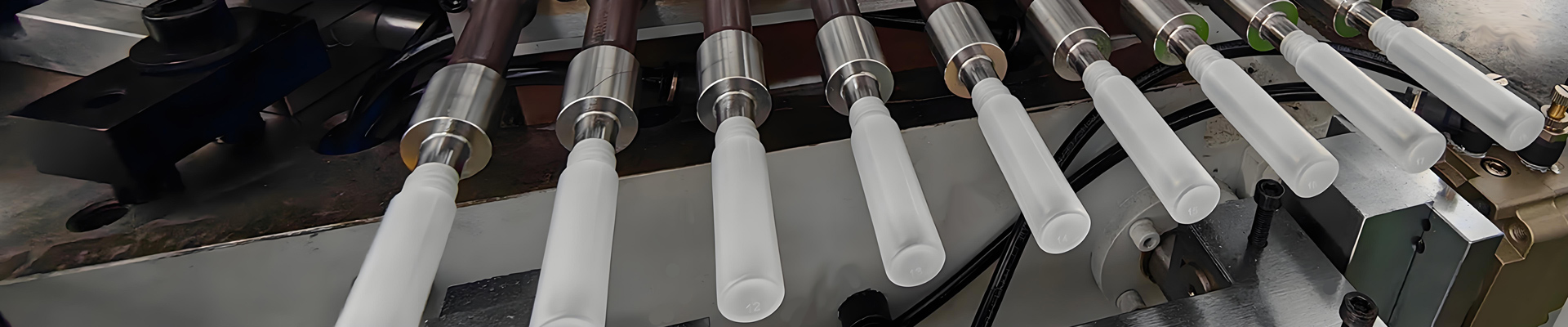
Injection blow molding (IBM) produces bottles in a single, closed, three-station process: the polymer is plasticized and injected into a preform cavity around a core rod, the hot preform is transferred to the blow station, and low-pressure air expands it against a cooled blow mold before the finished bottle is ejected. Because the bottle never leaves the machine as a separate parison and never requires a trim scrap, IBM delivers excellent finish accuracy, uniform wall distribution, and a clean neck that needs no secondary cutting. That precision is exactly why quality inspection standards for injection blow molded bottles must be strict, documented, and repeatable. This article gives a complete in-line testing checklist together with the off-line verification plan, the dimensional tolerance framework, the statistical process control rules, the inspection gates, and a twelve-item defect root-cause matrix that quality teams can adopt directly on the production floor.
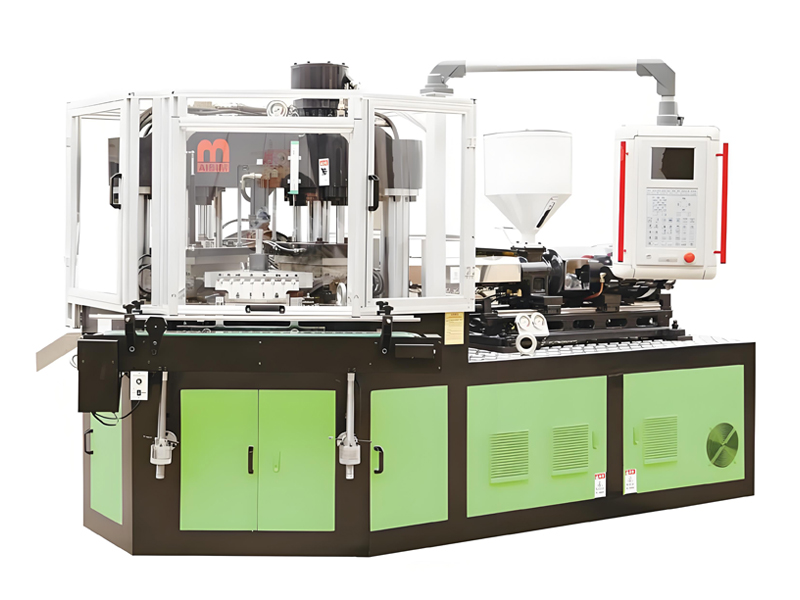
Aibim, a Wanplas factory, specializes in injection blow molding machines and has more than twelve years of experience in plastic machine manufacturing, with twenty years of accumulated know-how in the IBM process itself. The factory serves more than forty countries, runs its own CNC machining center for machine parts, and operates a new production base purchased in 2022 with an annual capacity above one hundred lines. Aibim builds the IBM75, IBM65, and IBM55 Hybrid Electric series for bottles from 3 milliliters up to 1000 milliliters in materials including HDPE, LDPE, LLDPE, PP, PS, ABS, SAN, TPU, PC, and PCTG. The guidance below reflects the quality architecture designed into those machines and the inspection discipline expected by pharmaceutical, food, and cosmetic customers.
Whether you run a cleanroom pharmaceutical line or a high-volume cosmetic line, the objective is the same: detect deviation early, contain nonconforming product, and prove consistency with data. The checklist in this article is written so it can be printed as a work instruction, loaded into a quality management system, or used to train new inspectors. Read it with your own product specification in hand, then adapt the limits to your bottle, your closure, and your regulatory class.
Quality System Framework for IBM Bottles
A credible inspection standard starts with a quality gate at every transformation step, not a single final check. In injection blow molding the material changes state four times: solid pellet to melt in the barrel, melt to solid preform in the injection cavity, hot preform to expanded bottle in the blow mold, and finished bottle to packaged goods after ejection. Each transition is a point where a defect can be created, so each transition needs a defined quality gate. The framework below organizes inspection into seven sequential gates from raw material to packaged product.
The first gate is raw material verification. Resin is confirmed by certificate of analysis, lot number, and a drying check where the material demands it. The second gate is preform injection quality, measured by melt temperature, injection and holding pressure profile, and preform shot weight. The third gate is blow molding quality, measured by blow air pressure, mold temperature, and mold-closing repeatability. The fourth gate is post-demold verification, where every cavity’s bottle is weighed and visually inspected. The fifth gate is in-line automated inspection covering finish, flash, color spot, and seal face. The sixth gate is off-line laboratory sampling for properties that cannot be checked at line speed. The seventh and final gate is packaging and label verification before the carton is sealed.
This gate model is powerful because it localizes responsibility. When a wall-thickness defect appears, the gate log tells you whether the preform weight, the blow pressure, or the mold temperature was out of band at the moment of manufacture. Instead of guessing, the team isolates the station, reviews the parameter trend, and corrects the root cause. The rest of this article expands each gate into a concrete checklist, with special depth on the in-line testing points that deliver the highest defect-catch value per inspection hour.
A quality system for IBM bottles is only as strong as its earliest gate. The cheapest place to catch a defect is before the polymer is locked into a bottle, which is why preform weight and melt temperature control deserve the tightest limits.
Critical-to-Quality (CTQ) Characteristics Checklist
Before writing inspection points, a team must agree on what counts as quality. Critical-to-quality characteristics are the measurable attributes that, if out of specification, make the bottle unfit for its intended use. For injection blow molded bottles these group into four families: appearance, dimension, function, and hygiene. Each family has its own test method, acceptance limit, and inspection frequency. The table below is the master CTQ list and should be the backbone of the inspection plan.
| CTQ Family | Characteristic | Typical Method | Key Acceptance Note |
|---|---|---|---|
| Appearance | Flash, burr | Vision system, tactile check | No detectable fin on finish or parting line |
| Appearance | Sink mark, silver streak, gas mark, white stress | Visual standard, lighting booth | Within approved appearance limit sample |
| Dimension | Finish inside diameter, outside diameter | Bore gauge, projector | Inside coordinated tolerance band with closure |
| Dimension | Thread, shoulder height, body diameter, bottle height, wall thickness distribution | CMM, projector, wall gauge | Dimensional tolerance per drawing, wall min at thinnest zone |
| Function | Sealing, torque, top load, drop, internal pressure, chemical resistance | Leak tester, torque tester, compression, drop rig | No leak at test pressure, torque in cap spec, no fracture in drop |
| Hygiene | Particulates, visible foreign object, residue | Black-light, visual, extractables | Zero visible foreign object for pharma and food grade |
Appearance defects are the most frequent reason for cosmetic rejects but rarely the most dangerous. Functional and hygiene defects are lower in frequency yet higher in consequence, so they earn tighter sampling and harder limits. The inspection plan later in this article assigns each CTQ to either a 100 percent in-line check or a sampled off-line check, and the split depends exactly on this risk ranking. A team should review the CTQ list at every annual specification renewal and whenever a new closure, material, or market is introduced.
In-Line Testing Checklist by Process Stage
The in-line testing checklist is the core of this article because it runs automatically, at line speed, on every shift, and it prevents the largest volume of scrap. The principle is simple: measure the process variable that creates the defect, not only the defect itself. When preform weight is controlled by a closed loop, wall thickness and bottle weight follow. When blow pressure is stable, finish and body geometry stay consistent. Below, the checklist is organized by the three working stations of the IBM machine plus the post-demold checkpoint.
Injection Stage In-Line Checks
At the injection station the polymer is plasticized in the barrel and injected to form the preform on the core rod. The dominant quality variables here are thermal and pressure stability. Melt temperature is monitored by the barrel zone controllers and by a melt-temperature probe where fitted; the acceptance band is material-specific, typically a narrow window such as plus or minus three degrees Celsius around the set point for clarity grades. Injection pressure and holding pressure are recorded per cycle by the machine controller, and any cycle outside the profile envelope is flagged. The single most important in-line check at this stage is preform weight, measured by an automatic scale at a defined frequency; the reading feeds a closed-loop correction so that shot size returns to target without operator intervention, with the control tolerance held around the plus or minus 0.5 percent level.
Blow Stage In-Line Checks
At the blow station the preform is expanded by low-pressure air. The critical variables are blow air pressure, blow mold temperature, and mold-closing repeatability. Blow pressure is logged and alarmed; a drop below set point produces short bottles, thin walls, or incomplete finish definition. Blow mold temperature is monitored by the mold-temperature controller on each zone, because a warm mold slows cooling and enlarges the bottle, while a cold mold risks stress whitening. Mold-closing repeatability is guaranteed mechanically by the clamping framework and confirmed by the position sensor; on Aibim machines the single-crossbeam, double-pole clamping structure keeps the mold closing position stable run after run, which protects finish concentricity.
Post-Demold In-Line Checks
After ejection, three automated checks should run before the bottle leaves the machine. First, automatic weighing of every cavity’s bottle confirms that no cavity is over- or under-filling. Second, a vision inspection station checks the finish for flash, the body for color spots and short fill, and the overall shape for deformation. Third, an optical seal-face inspection verifies that the top seating surface is flat, free of damage, and free of particulate. These three checks together catch the majority of line defects without slowing the cycle, because they run in parallel with part handling.
100 Percent and Sampled Decision
Some features are inspected at 100 percent by the automated stations, and some are sampled using an acceptance quality limit plan. The table below maps each in-line point to its method, acceptance, frequency, and the action taken on failure. The AQL level named in the table is a text reference to the sampling discipline and should be set by the product risk class.
| Process Stage | Check Point | Method | Acceptance | Frequency | On-Fail Action |
|---|---|---|---|---|---|
| Injection | Melt temperature | Barrel zone controller, probe | Within plus or minus 3 degrees C of set point | Continuous | Alarm, hold station, review profile |
| Injection | Injection and holding pressure | Controller curve log | Inside profile envelope | Per cycle log | Flag cycle, quarantine associated cavity |
| Injection | Preform weight | Auto scale, closed-loop feedback | Plus or minus 0.5 percent of target | Every cavity, periodic weigh | Auto-correct, trend alert if drift |
| Blow | Blow air pressure | Pressure sensor and regulator | At set point per bottle spec | Continuous | Alarm, isolate lot, re-blow check |
| Blow | Blow mold temperature | Mold-temperature controller zones | Within zone window | Continuous | Adjust cooling, slow cycle if needed |
| Blow | Mold-closing repeatability | Position sensor, clamp framework | Repeat within machine spec | Per cycle | Stop, inspect clamp, requalify |
| Post-demold | Per-cavity bottle weight | Automatic checkweigher | Within weight spec | 100 percent | Reject bottle, mark cavity |
| Post-demold | Finish flash, body spot, short fill | Automated vision inspection station | No flash, no spot, full fill | 100 percent | Reject, trend by cavity |
| Post-demold | Seal-face optical check | Optical seal-face inspection | Flat, clean, undamaged | 100 percent or per AQL | Reject, review mold cleaning |
The frequency column deserves attention. Continuous and 100 percent checks are automated and do not depend on operator discipline, which is exactly why they are preferred for high-consequence defects. Sampled checks, even when well designed, only estimate the lot quality and must be tightened for pharmaceutical and food grades. A practical rule: if a defect can be detected automatically at line speed, make it 100 percent; reserve sampling for tests that are destructive, slow, or require a laboratory instrument.
Off-Line Laboratory Testing Checklist
In-line inspection controls the process, but it cannot measure every property. Off-line laboratory testing validates the underlying quality that vision and weight cannot see: the wall-thickness distribution inside the bottle, the internal stress level, the chemical migration path, and the microbial state of a pharmaceutical bottle. The laboratory checklist should be scheduled by frequency (first article, per lot, per shift, or per material change) and recorded in the batch record.
Dimensional verification uses a coordinate measuring machine or a profile projector to confirm finish inside diameter, outside diameter, thread form, shoulder height, body diameter, and bottle height against the drawing. Wall thickness is measured two ways: a slice-and-weigh method for average wall and an ultrasonic or magnetic gauge for local distribution, with special attention to the thinnest zone at the heel and the finish transition. Sealing is confirmed by a negative-pressure or positive-pressure leak tester on a capped bottle, torque by a bottle-cap torque tester, and top load by an axial compression rig. Drop testing simulates distribution handling, internal pressure testing confirms the bottle survives carbonated or pressurized contents, and stress whitening is evaluated by a solvent-immersion method that reveals oriented or over-stressed regions.
For contact-grade bottles, two further laboratory paths apply. Light transmittance and haze describe optical clarity for display cosmetics and pharmaceutical visibility. Migration and extractables are assessed along the regulatory path of FDA for the United States market and EU 10/2011 for the European market, using simulated food or pharmaceutical contact media and analytical measurement. Microbial testing applies to pharmaceutical-grade bottles and confirms the absence of objectionable organisms under a GMP-aligned protocol. The table summarizes the off-line plan.
| Test | Instrument | What It Confirms | Typical Frequency |
|---|---|---|---|
| Dimensions | CMM, profile projector | Drawing compliance | First article, per lot |
| Wall thickness | Slice-weigh, ultrasonic gauge | Distribution, thinnest zone | Per lot, per mold change |
| Leak and seal | Negative or positive pressure tester | No leak at test pressure | Per lot, sampled |
| Torque | Cap torque tester | Within closure spec | Per lot, sampled |
| Top load | Axial compression rig | No collapse at rated load | Per lot, sampled |
| Drop | Drop test rig | No fracture or leak | Per lot, sampled |
| Internal pressure | Pressure chamber | No burst at rated pressure | Per material change |
| Stress whitening | Solvent-immersion method | No excessive stress crack | Per material or mold change |
| Optical clarity | Haze and transmittance meter | Clarity within grade | Per lot, sampled |
| Migration, extractables | Analytical lab per FDA, EU 10/2011 | Below regulatory limit | Per material approval |
| Microbial | Pharma-grade lab, GMP protocol | Within microbiological limit | Per lot, pharma grade |
Dimensional Tolerances and Bottle-Finish Fit
The bottle finish is the most dimensionally critical feature because it interfaces with the closure. IBM is valued precisely because the finish is molded, not cut, so its geometry replicates from cavity to cavity with high repeatability. The finish is described by inside diameter, outside diameter, thread form and pitch, and the flat seal seat at the top. These are checked against the bottle-finish standard that the cap supplier uses, so the bottle and closure are validated as a pair rather than separately.
A coordinated tolerance band is the practical tool. The bottle finish is held to a tight dimensional tolerance, and the cap is held to a matching tolerance, so that across the full production lot the assembled torque and leak performance stay inside specification. The seal-face flatness is especially important: any dent, particulate, or flash on the seat compromises the barrier even when the thread is perfect. Finish concentricity, protected by stable mold closing, keeps the thread uniform around the circle.
| Dimension | Measured By | Why It Matters | Control Approach |
|---|---|---|---|
| Finish inside diameter | Bore gauge | Closure fit and seal | Tight band, 100 percent vision |
| Finish outside diameter | Micrometer, projector | Cap skirt engagement | Per-lot CMM check |
| Thread form and pitch | Thread gauge, projector | Torque consistency | Go/no-go gauge per lot |
| Seal-face flatness | Optical seat inspection | Leak-tight barrier | 100 percent optical check |
| Shoulder height, body diameter, bottle height | CMM, caliper | Filling line and label fit | Per-lot measurement |
| Wall thickness distribution | Ultrasonic, slice-weigh | Drop, pressure, weight | Min wall per drawing |
When a new cap is sourced or a new mold is cut, the bottle and closure should be qualified together with a torque-and-leak confirmation on at least one full production lot before commercial release. This single step prevents the most common field complaint in IBM bottles: a cap that passes on the bench but leaks on the filling line because the finish tolerance was validated in isolation.
Statistical Process Control for IBM Lines
Inspection tells you what happened; statistical process control tells you what is about to happen. SPC applies control charts to the variables measured in-line, most importantly preform weight, finish inside diameter, and seal-face flatness. The X-bar and R chart pair is the standard: the X-bar chart tracks the average of each subgroup, and the R chart tracks the range within the subgroup, revealing both shift and variation.
The capability index Cpk quantifies whether the process spread fits inside the specification. A Cpk of 1.33 or higher is the usual target for critical-to-quality characteristics, meaning the process is centered and the natural variation leaves comfortable margin to the limit. A Cpk between 1.0 and 1.33 signals a marginal process that needs improvement, and a Cpk below 1.0 means the process is not capable and must be corrected before continued running. Control limits are computed from the process itself, not copied from the specification, which is why a stable process with a wide spec can still be incapable if its own variation is too large.
| SPC Element | Applied To | Decision Rule | Response |
|---|---|---|---|
| X-bar and R chart | Preform weight, finish ID | Point outside limit, run of 7 | Investigate, adjust, quarantine |
| Cpk review | All CTQ characteristics | Below 1.33 | Improvement plan, tighter check |
| Trend alert | Melt temp, blow pressure | Drift toward warning limit | Pre-emptive parameter review |
| Abnormal response | Any out-of-control signal | Confirmed non-random | Escalate, stop, isolate lot |
The abnormal response flow is what makes SPC useful rather than decorative. When a signal is confirmed non-random, the line does not simply continue while someone files a report. The response escalates through three levels: operator adjustment for a minor drift, supervisor intervention and lot quarantine for a confirmed shift, and production stop with isolation of all bottles made since the last good subgroup when the defect is critical. This discipline converts a chart into a quality gate.
First Article, Patrol, Last-Piece, and Changeover Gates
Four human inspection gates complement the automated ones. They are timed to the start, middle, and end of a production run and to every changeover. The first article inspection qualifies the very first bottles of a run against the full CTQ list before serial production is released. Patrol inspection repeats a reduced check at a set interval during the run to catch slow drift. Last-piece inspection qualifies the final bottles and confirms the run ended in control. Changeover confirmation requalifies the line after a mold, material, or color change so a new setup is never assumed good.
| Gate | When | Checks | Pass Condition |
|---|---|---|---|
| First Article (FAI) | Start of run | Full CTQ, dimensions, leak, torque | All within spec, signed record |
| Patrol | Every set interval | Weight, finish, appearance, SPC | No trend beyond warning |
| Last Piece | End of run | CTQ sample, compare to FAI | Run ended in control |
| Changeover Confirmation | After mold, material, color change | Full CTQ on new setup | Requalified before serial run |
These gates are cheap insurance. The first article catches a wrong mold setting before thousands of bottles are made. The patrol catches a slowly warming mold before the whole shift drifts. The last piece protects the next run by confirming the machine was still capable at shutdown. The changeover confirmation is the most often skipped and the most costly when omitted, because a color or material change that was never requalified can silently produce nonconforming bottles for hours.
Common Defects and Root-Cause Matrix
No inspection plan is complete without a defect library. The matrix below lists twelve common injection blow molded bottle defects, each with its observable symptom, the most likely root cause, the immediate corrective action, and the preventive measure that stops recurrence. Quality teams should post this matrix at the line and train inspectors to name the defect before they dispose of the bottle.
| Defect | Symptom | Root Cause | Corrective Action | Prevention |
|---|---|---|---|---|
| Sink mark | Depression on thick section | Insufficient holding pressure or cooling | Raise holding pressure, extend cool | Optimize gate and cooling design |
| Flash | Fin on parting line or finish | Mold clamp not fully closed, worn seal | Verify clamp, clean parting line | Maintain clamp framework, PM schedule |
| Silver streak | Silver lines on surface | Moisture or trapped gas in melt | Dry material, raise back pressure | Controlled drying, vent check |
| Gas mark | Cloudy or burnt patch | Trapped gas, overheat | Adjust vent, lower melt temp | Optimize injection speed profile |
| White stress (stress whitening) | White area under stress | Over-oriented or over-cooled | Warm mold, reduce blow speed | Balance orientation and cooling |
| Finish deformation | Out-of-round or skewed neck | Core rod temp, eject timing | Adjust core temp, eject delay | Stable core temperature control |
| Uneven wall thickness | Thin side, heavy side | Preform temp uneven, blow offset | Balance preform heat, center blow | Uniform preform heating, mold align |
| Short fill (缺料) | Incomplete bottle | Low shot, low blow pressure | Raise shot, restore blow pressure | Closed-loop weight control |
| Black spot | Dark speck in wall | Degraded material, contaminated regrind | Purge barrel, reject contaminated lot | Material QC, clean barrel changeover |
| Mold parting line | Visible seam on body | Mold mismatch or worn edge | Clean, realign, or refurbish mold | Mold maintenance plan |
| Missing thread (螺纹缺料) | Broken or shallow thread | Incomplete preform or mold damage | Inspect cavity, adjust injection | Cavity inspection at changeover |
| Top white (顶白) | Whitening at bottle top | Excessive ejection force or stress | Reduce eject force, adjust timing | Optimize eject profile, polish core |
This matrix is a living document. As new materials or molds enter production, the team should add rows with verified root causes rather than generic guesses. The value is not the table itself but the discipline of naming the defect, recording the cause, and closing the loop with a preventive action that is checked at the next audit.
Batch Record and Traceability
Traceability turns a quality system from a snapshot into a history. Every production lot must carry a production batch number, and that number must link to the mold cavity identity, the raw material lot number, and the archived process parameters for the run. When a complaint arrives months later, the batch record lets the team reconstruct exactly what was made, on which cavity, from which resin, under which settings.
A practical traceability structure records, per lot: production date and shift, machine serial and cavity numbers, material type and supplier lot, color masterbatch lot, machine parameter file name, in-line inspection results, off-line test results, and the disposition of any nonconforming bottles. On Aibim machines the SD-card recipe storage makes parameter archiving straightforward, because the exact process file used for a lot can be saved and reloaded for an identical repeat run or a complaint investigation. The batch record should be retained for the regulatory period applicable to the product class, and pharmaceutical grades require the longest retention.
Cleanliness and Hygiene for Pharmaceutical and Food Grades
For pharmaceutical and food contact bottles, cleanliness is a quality characteristic equal to dimension and function. The production environment is classified to a controlled grade appropriate to the product risk, with higher grades reserved for sterile or sensitive contact items. The mold is cleaned on a documented schedule, because residue on the cavity transfers directly to the bottle finish and body. Particulate control covers the air, the cooling water, the compressed air used for blowing, and the handling surfaces, since a single fiber or metal fragment on a seal face can breach a pharmaceutical barrier.
The GMP-aligned path governs documentation, personnel hygiene, cleaning validation, and change control for pharmaceutical bottles. Visible foreign-object inspection under appropriate lighting, coupled with the in-line optical seal-face check, forms the last line of defense before packaging. Material approval follows the contact-regulation route, with FDA for the United States and EU 10/2011 for Europe as the recognized frameworks, and the migration and extractables testing is performed by an analytical laboratory before a new material is released for production. Cosmetic bottles share the same structural discipline but apply lighter documentation depth, focusing on appearance, torque, and leak.
Personnel Qualification and Training
A checklist is only as reliable as the person executing it. Quality teams should maintain a skill matrix for every inspector, listing which tests they are qualified to perform and when that qualification expires. New inspectors are trained against the standard, shadow a qualified inspector, then sign off on a supervised first article before working independently. The inspection SOP is a controlled document: it is versioned, distributed, and reviewed at least annually or after any significant process change.
Retained samples are another quiet safeguard. A small number of bottles from each lot are kept as reference samples for a defined period, so that a field complaint can be compared against the as-made product rather than memory. Training should also cover how to react to an SPC signal, how to quarantine a lot, and how to escalate a critical defect, because the fastest way to lose a quality system is to have the right chart and the wrong reflex when it alarms.
Aibim IBM Machine Series for Quality-Consistent Production
The inspection standard above is most effective when the machine itself is built to hold the process stable. Aibim designs its IBM series around three quality-consistency features. First, the single-crossbeam, double-pole clamping framework with enlarged mold setting space gives high mold-closing repeatability, which protects finish concentricity and wall symmetry. Second, multi-zone barrel and mold temperature control keeps the melt and the blow mold within tight windows so that every preform and bottle is made under the same thermal condition. Third, servo-driven plasticizing and injection with closed-loop control hold shot weight variation around the plus or minus 0.5 percent level, directly stabilizing bottle weight and wall distribution. The PREFILL hydraulic technology smooths clamp motion, and the SD-card recipe storage lets one validated process file be reused across machines and lots without re-tuning drift.
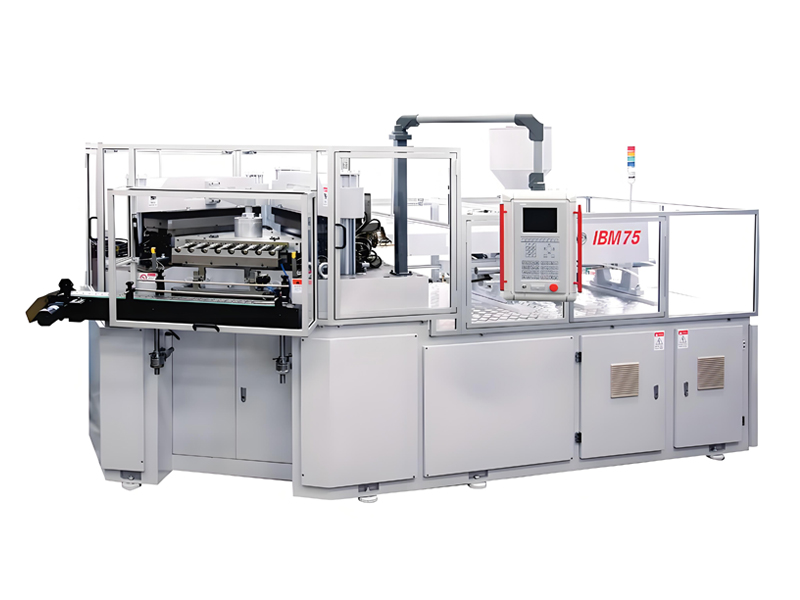
Aibim IBM75 Injection Blow Molding Machine
The IBM75 is the flagship for bottles from 30 to 1000 milliliters and suits higher clamping-force requirements, larger molds, and multi-cavity layouts for personal-care and pharmaceutical containers. Its wider platen and stable clamp make it a strong choice for bottles that demand precise finish geometry and consistent wall distribution.
| Specification | Aibim IBM75 |
|---|---|
| Clamping force | 75 ton (about 735 kN) |
| Screw diameter | 50 mm |
| Theoretical shot size (PS) | 350 g |
| Max mold cavities | Up to 12, depends on bottle size |
| Applicable bottle volume | 30 to 1000 ml |
| Installed power | 30 kW |
| Theoretical output | Up to about 3000 PCS/H by cavity and cycle |
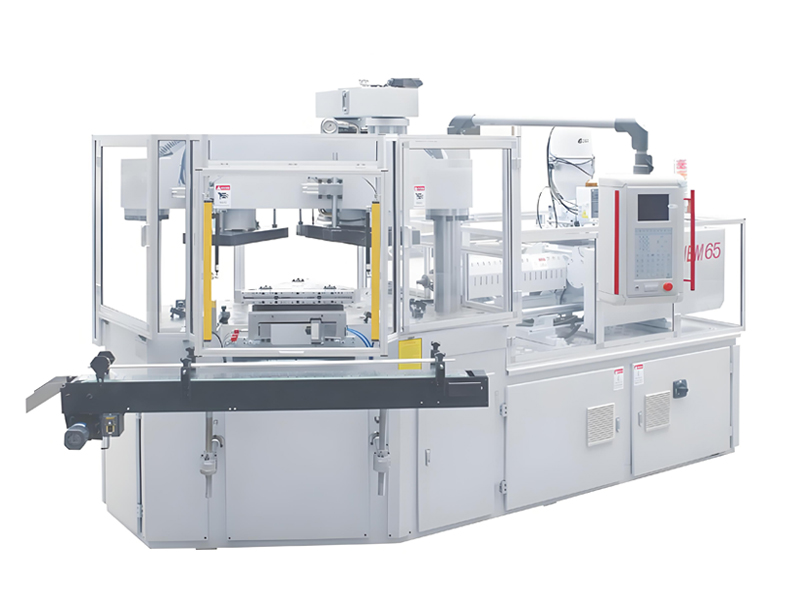
Aibim IBM65 Injection Blow Molding Machine
The IBM65 covers 10 to 500 milliliter bottles and is a versatile mid-range platform for cosmetic essences, oral syrup bottles, and daily-chemical containers. It balances cavity count and floor-space efficiency for medium-volume lines.
| Specification | Aibim IBM65 |
|---|---|
| Clamping force | 65 ton (about 637 kN) |
| Screw diameter | 45 mm |
| Theoretical shot size (PS) | 250 g |
| Max mold cavities | Up to 10, depends on bottle size |
| Applicable bottle volume | 10 to 500 ml |
| Installed power | 25 kW |
| Theoretical output | Up to about 2500 PCS/H by cavity and cycle |
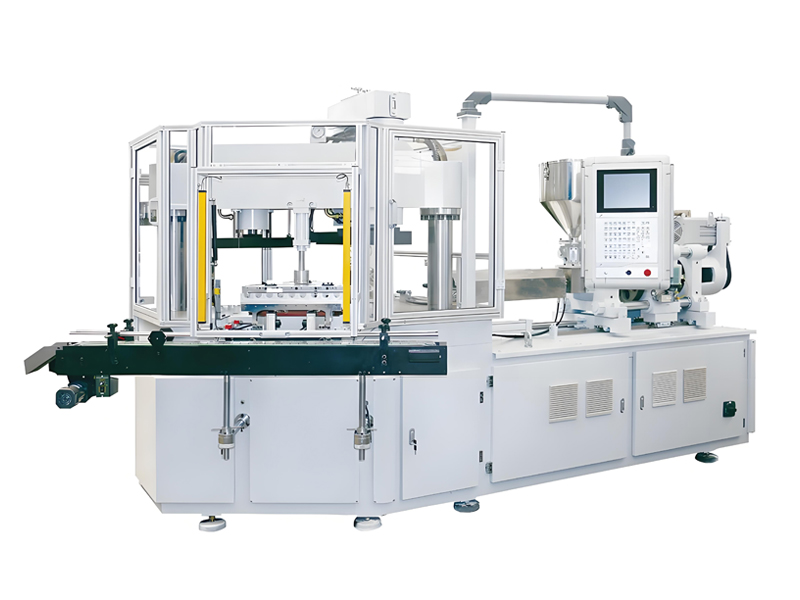
Aibim IBM55 Hybrid Electric Injection Blow Molding Machine
The IBM55 Hybrid Electric is built for small bottles from 3 to 300 milliliters where energy use, clean operation, and fine shot control matter most. The hybrid electric servo drive lowers installed power while keeping the precise injection control that small pharmaceutical and cosmetic bottles require.
| Specification | Aibim IBM55 Hybrid |
|---|---|
| Clamping force | 55 ton (about 539 kN) |
| Screw diameter | 40 mm |
| Theoretical shot size (PS) | 180 g |
| Max mold cavities | Up to 8, depends on bottle size |
| Applicable bottle volume | 3 to 300 ml |
| Installed power | 18 kW (hybrid electric servo) |
| Theoretical output | Up to about 2000 PCS/H by cavity and cycle |
All three series are built in Aibim’s own CNC machining center and share the same quality architecture, so the inspection standard in this article applies uniformly across the lineup. The machines also carry CE-aligned safety features including a stripper station with a long-distance digital laser sensor for mold safety and a light curtain for personal safety, which protect both the operator and the consistency of the molding cycle.
Application Industries and End Products
Aibim IBM machines serve pharmaceutical, food, drink, and cosmetic markets, and the inspection standard scales to each. In pharmaceuticals the end products are medical bottles, oral syrup bottles, and dropper containers where finish accuracy and hygiene dominate. In food and drink the bottles include sauce and seasoning containers and single-serve dairy or beverage packs where leak performance and migration compliance matter. In cosmetics and daily chemicals the end products are essence bottles, lotion bottles, and decorative containers where appearance, torque, and gloss are decisive.
The same machine often serves adjacent products by swapping the mold and reloading the validated recipe. A pharmaceutical dropper bottle and a cosmetic serum bottle may share the IBM55 Hybrid platform; the difference is the inspection stringency, the material approval, and the documentation depth rather than the machine itself. This flexibility is why a single documented quality system, adapted by risk class, serves the whole product portfolio.
Model Selection Recommendation
The table below maps a typical customer requirement to the recommended Aibim model. The recommendation balances bottle volume, required output, and material, and assumes multi-cavity molds sized to the bottle. Exact cavity count and output are confirmed during configuration, because wall thickness, color, and closure all influence cycle time.
| Bottle Volume | Target Output (PCS/H) | Typical Material | Recommended Model |
|---|---|---|---|
| 3 to 50 ml | Up to 2000 | PP, PS, SAN | Aibim IBM55 Hybrid |
| 10 to 300 ml | Up to 2500 | PP, PS, ABS, SAN | Aibim IBM65 |
| 30 to 1000 ml | Up to 3000 | HDPE, PP, PC, PCTG | Aibim IBM75 |
| Pharma dropper 5 to 30 ml | Clarity grade | PS, SAN | Aibim IBM55 Hybrid or IBM65 |
| Cosmetic essence 50 to 200 ml | Up to 2500 | PETG, PP, ABS | Aibim IBM65 |
| Oral syrup 50 to 150 ml | Pharma grade | HDPE, PP | Aibim IBM75 or IBM65 |
| Food seasoning 100 to 500 ml | Up to 3000 | PP, HDPE | Aibim IBM75 |
Service and Support
A quality standard is only sustainable when the machine builder stands behind it. Aibim tests every machine before shipment, runs it through a qualification cycle, and confirms the inspection functions operate as specified. On-site installation and commissioning bring the line to validated production, and operator and quality training equip the customer team to run the checklist in this article. Like all Wanplas factories, Aibim honors the group’s USD 500 free parts per year policy, backs damaged parts within warranty, and offers remote monitoring of PLC data so that process drift can be analyzed from the service center.
The open-factory policy welcomes customer audit and sample trial runs, letting a buyer verify the machine and the bottle quality before and after purchase. For pharmaceutical and food projects, Aibim supports material approval documentation along the FDA and EU 10/2011 routes and assists with the validation records needed for a GMP-aligned startup. The combination of a stable machine platform and a documented inspection standard is what lets a bottling operation move from trial samples to commercial consistency with confidence.
Frequently Asked Questions
What is the difference between in-line and off-line inspection for IBM bottles?
In-line inspection runs automatically on the machine during production and catches per-cavity, per-bottle defects such as flash, short fill, color spot, and seal-face damage at line speed. Off-line laboratory inspection validates the underlying properties that in-line vision cannot measure, including wall-thickness distribution, internal stress, chemical migration, and microbial cleanliness. Both are required: in-line controls the process in real time, off-line verifies the standard.
How tight should preform weight control be on an injection blow molding line?
Aibim machines use a closed-loop servo plasticizing and injection system that holds shot weight variation at roughly the plus or minus 0.5 percent level. This directly stabilizes bottle weight, wall-thickness distribution, and fill-volume compliance. A daily weight-trend chart should stay inside the control limits, and any shift beyond the warning limit triggers parameter review before scrap accumulates.
Which Aibim model fits small pharmaceutical dropper bottles?
For 3 to 50 milliliter clarity-grade bottles in PP, PS, or SAN, the Aibim IBM55 Hybrid Electric or the IBM65 is the typical choice, offering clean cavity layouts for small finishes and stable shot control. The IBM55 Hybrid is preferred when energy use and cleanroom integration matter, while the IBM65 supports a wider cavity count for higher output.
What Cpk target should an IBM quality system aim for?
A capable process is generally defined at Cpk of 1.33 or higher for critical-to-quality characteristics such as finish inside diameter, thread major diameter, and seal-face flatness. Cpk between 1.0 and 1.33 means the process is marginal and needs attention; below 1.0 the process is not capable and must be corrected before continued running.
How are bottle-finish dimensions verified against caps?
Finish dimensions such as inside diameter, outside diameter, thread pitch, and seal-face flatness are measured on a profile projector or coordinate measuring machine against the bottle-finish standard used by the cap supplier. A coordinated tolerance band is agreed between bottle and closure so the assembled torque and leak performance stay inside specification across the full production lot.
What sampling plan is recommended for final release?
An acceptance quality limit plan is applied to off-line attributes such as appearance, torque, and leak. The acceptance quality limit level is selected by risk class: pharmaceutical and sterile contact bottles use a tighter acceptance quality limit than general cosmetic bottles. In-line automated inspection runs at 100 percent on defined features, while destructive and slow tests are sampled per the agreed acceptance quality limit plan.
How does Aibim support quality after machine delivery?
Every machine is tested before shipment, installed and commissioned on site, and backed by operator and quality training. The Wanplas group policy provides USD 500 free parts per year, remote monitoring of PLC data, and an open-factory policy that welcomes customer audit and sample trial runs before and after purchase.
Can one inspection checklist cover both pharmaceutical and cosmetic IBM bottles?
The structural checklist is shared, but the acceptance stringency differs by contact risk. Pharmaceutical and food bottles add particulate, visible foreign-object, microbial, and migration controls under GMP-aligned discipline, while cosmetic bottles focus on appearance, torque, and leak. The same in-line stations are used; only the limits, sampling, and documentation depth change.
Conclusion
Quality in injection blow molded bottles is designed at the machine, controlled at the gate, and proven by the record. This article presented a complete quality inspection standard built on a seven-gate framework, a critical-to-quality checklist, a detailed in-line testing checklist by process stage, an off-line laboratory plan, a dimensional tolerance and finish-fit method, statistical process control rules with a Cpk target of 1.33 or higher, the four inspection gates of first article, patrol, last piece, and changeover, a twelve-item defect root-cause matrix, and the traceability, hygiene, and training discipline that hold it all together.
Aibim, a Wanplas factory with more than twelve years in plastic machine manufacturing and twenty years in the IBM process, builds the IBM75, IBM65, and IBM55 Hybrid Electric series to the same quality architecture: stable clamping, multi-zone temperature control, closed-loop servo injection, and reusable recipe storage. Paired with the inspection standard above, these machines let pharmaceutical, food, drink, and cosmetic producers move from first sample to consistent commercial output with confidence.
If you are specifying a new IBM line or upgrading an existing one, share your bottle volume, target output, material, and closure requirement with the Aibim team. They will recommend the right model, run a sample trial on the matching mold, and walk your quality team through the in-line testing checklist so the line is documented and capable from the first production shift. You are also welcome to visit the factory, audit the process, and qualify the bottle quality on site before making a commitment.