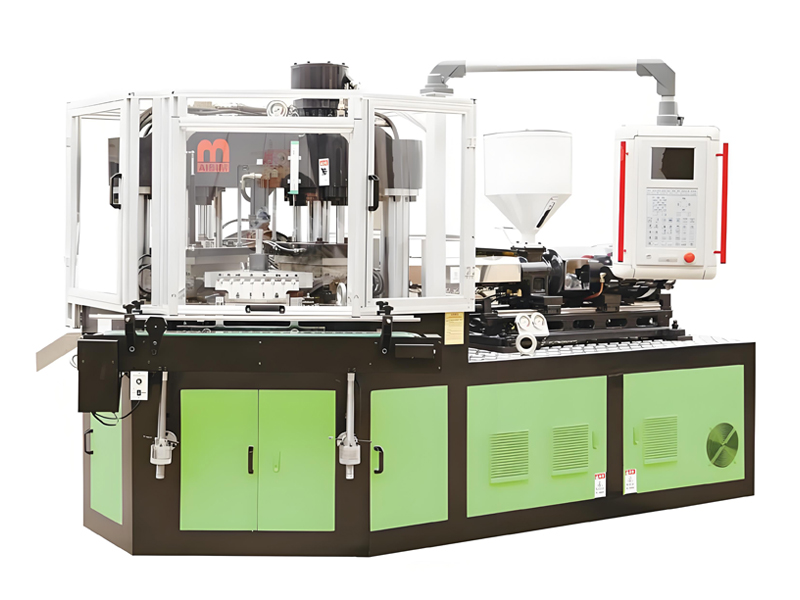
Choosing between a custom mold and a standard mold for an injection blow molding (IBM) machine is one of the first and most consequential decisions a bottle manufacturer makes, yet it is often decided on price alone. That is a mistake. The mold is the true heart of an IBM line: the machine provides the stations, the core rods, and the pressurizing system, but the mold defines the bottle’s shape, neck accuracy, wall uniformity, and how quickly you can bring a product to market. This comparison breaks down cost, lead time, and flexibility for both mold types so you can match the tool to your business stage, volume, and brand ambition.
The short version is that a standard mold gets you into production faster and cheaper but locks you into someone else’s bottle geometry, while a custom mold costs more and takes longer but gives you a unique, optimized container and full design control. The right answer depends on whether you are validating a concept, filling an existing specification, or building a proprietary brand. Across the IBM field — from Aibim, a Wanplas factory, to established builders such as Milacron, Jomar, Bekum, and Techne — the same trade-off applies, because the mold decision is governed by physics and tooling economics, not by brand.
Understanding Molds in Injection Blow Molding
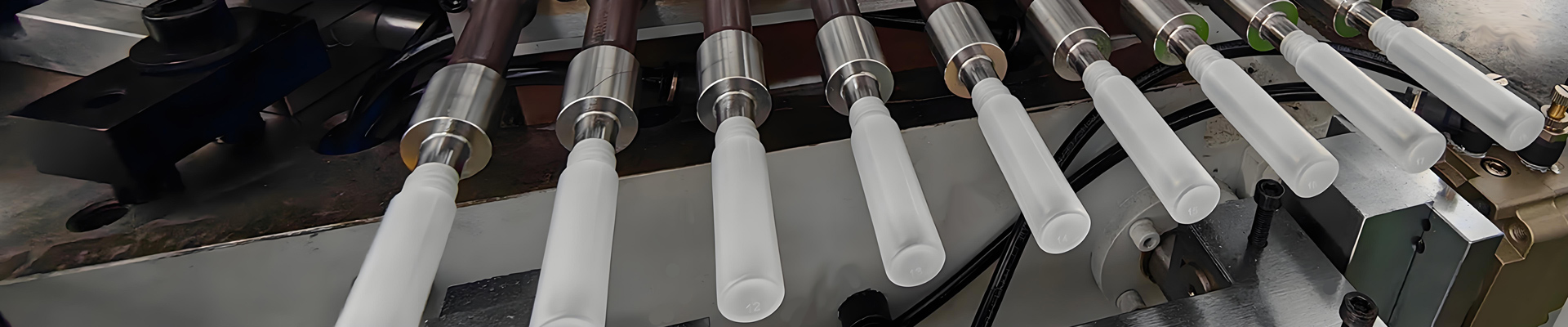
In an IBM machine, the mold set is actually three coordinated tools that work together across the three stations: the injection (parison) mold that forms the preform around the core rod, the blow mold that shapes the final bottle, and the stripper that removes the finished part. All three must be designed as a system so the parison wall, blow air path, and ejection geometry line up. When we speak of a “standard” or “custom” mold, we usually mean the parison and blow cavities as a matched pair built for a specific bottle.
The mold is where bottle quality is locked in. Neck thread pitch, the land finish, the gate vestige, wall thickness distribution, and the surface texture of the bottle are all determined by how the mold is cut and cooled. Even a perfect machine cannot fix a mold that was designed for the wrong resin shrinkage or an incompatible neck standard. This is why mold selection deserves as much engineering attention as the machine itself, and why the comparison below weighs more than purchase price.
For an IBM bottle business, the mold also defines your changeover behavior. Because Aibim machines store process recipes on an SD card, switching bottles is mostly a mechanical mold swap plus a recipe load; the speed and cost of that swap depend heavily on whether the mold is a catalog standard or a bespoke tool with its own fixtures and documentation. A startup that expects several product variants should think about mold flexibility from the very first purchase.
What Is a Standard (Catalog) Mold for IBM Machines
A standard mold, sometimes called a catalog or stock mold, is a pre-designed tool that a supplier keeps in its library for common bottle shapes — a round cosmetic jar, a cylindrical dropper bottle, a small pharmaceutical vial, or a standard narrow-neck container. The geometry is fixed, the core-rod size is fixed, and the neck finish follows a common standard rather than your proprietary thread. You are essentially buying capacity on a tool that already exists.
The main advantage is immediacy. Because the mold is already machined, the supplier only needs to fit it to your specific machine model, verify cooling and ejection, and tune the process. There is no design cycle, no sample iteration loop, and no waiting for raw steel to be cut. For a startup that needs bottles next month, not next quarter, this is decisive.
The limitation is uniformity. A standard mold was optimized for a generic resin and a generic neck, not for your exact polypropylene grade or your brand’s closure. You may need to accept a neck that is “close enough” to your cap rather than a perfect match, and you cannot differentiate the bottle on shelf through shape. For contract filling, private-label, or internal packaging where the bottle is a container rather than a brand asset, this is usually acceptable and often ideal.
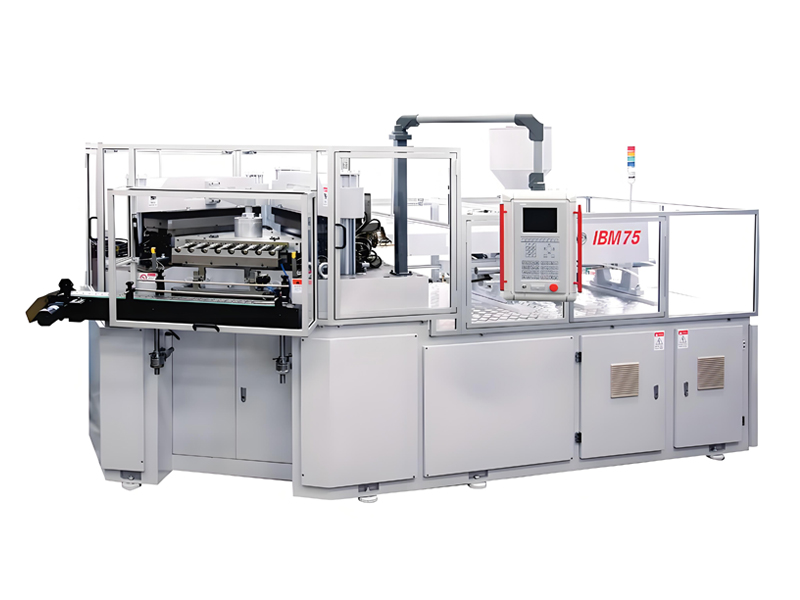
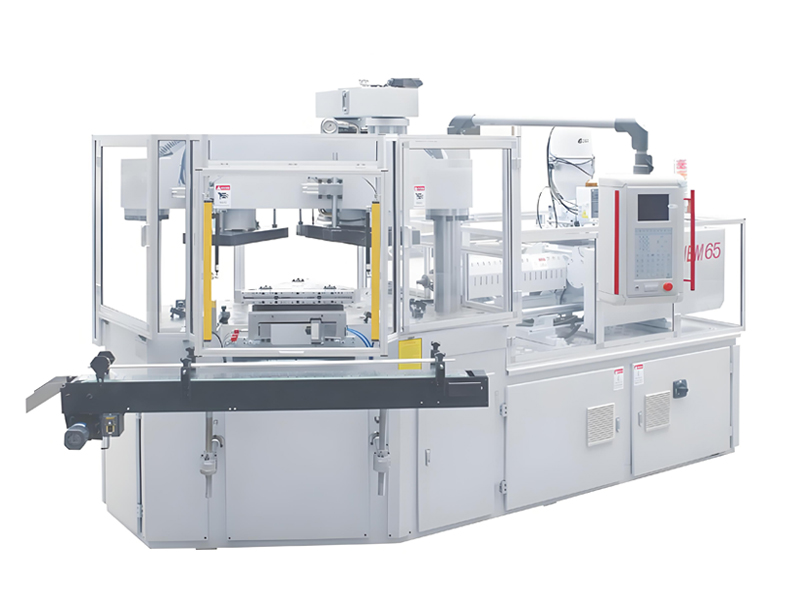
Standard molds are also typically built to fit a range of machines, which can mean compromise in station pitch or cooling efficiency on your specific model. When sourcing a standard mold, confirm it is compatible with your Aibim IBM55, IBM65, or IBM75 station geometry; a mold cut for another brand’s pitch will not index correctly and would require rework that erodes the cost saving.
What Is a Custom Mold for IBM Machines
A custom mold is designed from a blank for your exact bottle: your volume, your neck finish, your resin, your wall targets, and your surface detail. The toolmaker starts from your drawing or sample, runs a mold-flow and shrinkage analysis, cuts the cavities in hardened steel, builds the cooling channels for balanced temperature, and then samples the tool on a real machine until the bottles meet specification. Aibim, a Wanplas factory, performs this work in its own CNC centre, which keeps design, machining, and correction under one roof.
The defining benefit is fit. A custom mold is cut for your resin’s actual shrinkage, so the neck lands where your closure expects it and the wall is uniform where it matters for drop resistance or squeeze feel. You can specify a patented shape, an embossed logo, a measuring graduation, or a tamper-evident feature that a standard tool simply cannot provide. For a brand-building business, that uniqueness is the point.
The cost of that fit is time and money. Custom tooling goes through design approval, first-cut sampling, correction loops, and final validation before it is production-ready. Each iteration consumes machine time, resin, and engineering hours. The mold steel grade and cavity count also push cost up: a multi-cavity hardened tool for high volume is a substantial capital item in its own right, though its per-bottle amortization falls as volume rises.
Custom molds also carry responsibility. You own the design intent, so changes after sampling — a different cap, a thicker wall, a new label panel — mean re-cutting steel. Good suppliers mitigate this with modular inserts for minor changes, but a shape change is rarely cheap. The trade-off is acceptable when the bottle is a long-lived, high-volume product, and risky when the design is still in flux.
Head-to-Head Comparison: Custom vs Standard
The table below summarizes the core differences across the dimensions that matter to a bottle manufacturer. Cost and lead time use relative labels so the comparison holds across currencies and regions; the qualitative columns explain the “why” behind each label.
| Dimension | Standard Mold | Custom Mold |
|---|---|---|
| Initial cost | Low | High |
| Lead time | Low | High |
| Design flexibility | Low | Very High |
| Fit to your resin | Medium | Very High |
| Neck accuracy | Medium | High |
| Brand differentiation | Low | Very High |
| Revision after sampling | Very Low | Medium |
| Per-bottle amortization at volume | Medium | High |
Read the table as a balance sheet. Standard molds win on the two things that kill a startup — cash out now and time to first sale. Custom molds win on the two things that build a durable business — product fit and brand uniqueness. The skill is deciding which side your current situation sits on, and being honest about whether your bottle design is stable enough to justify the custom investment.
Cost Detail
On a relative scale, a standard mold is Low cost because the engineering is amortized across every other buyer of that catalog shape. A custom mold is High cost because you pay for design, simulation, first-article sampling, and a dedicated steel tool. Multi-cavity custom tools push further toward Very High, while a single-cavity prototype custom mold can be brought down toward Medium, which is the sensible bridge for a startup testing the water.
Flexibility Detail
Flexibility cuts both ways. A standard mold gives you no shape flexibility but maximum “swap to another standard bottle” flexibility — you can keep several catalog molds and switch as orders dictate. A custom mold gives total shape flexibility but locks you to that one design until you pay for changes. For a business with many small, varying orders, the catalog library approach can actually be more flexible in practice than one bespoke tool.
Cost Comparison Using Relative Tiers
Because absolute tooling prices vary with steel grade, cavity count, and destination, the most useful way to compare is by relative tier. The table below maps typical mold scenarios to the standard labels used across this comparison.
| Mold Scenario | Relative Cost | Best Stage |
|---|---|---|
| Single standard catalog mold, 1–2 cavities | Low | Concept validation |
| Single-cavity custom prototype mold | Medium | Market test of a unique shape |
| Multi-cavity custom production mold | High | Stable, growing volume |
| Multi-cavity hardened custom, complex features | Very High | High-volume brand production |
| Premium hardened tool, hot runner, full automation | Premium | Mass production, max uptime |
The total cost of mold ownership also includes maintenance, periodic refurbishment, and spare core rods or blow halves for fast repair. A custom mold’s higher upfront cost is usually recovered through lower per-bottle amortization once volume passes a threshold, while a standard mold stays cheap but never delivers the unit economics of a high-cavity dedicated tool. The crossover point depends on annual volume and cavity count, which is why forecasting demand honestly matters more than the headline mold price.
Lead Time Comparison
Lead time is where standard molds are hardest to beat. A catalog mold that is already cut and validated can often be fitted and shipped within a few weeks, because the only work is machine-specific adaptation and process tuning. For a business racing a product launch or a seasonal order, that window can be the difference between capturing and missing the opportunity.
A custom mold follows a longer path: design and approval, steel procurement, rough and finish machining, heat treatment, polishing, cooling and ejection build, then sampling and correction. Realistically this spans from several weeks for a simple single-cavity tool to one or two months for a multi-cavity production mold, and longer still if multiple correction loops are needed or the resin proves difficult. Because Aibim runs its own CNC centre, in-house custom molds avoid the queue and communication lag of an outside tool shop, but the physics of cutting and proving steel remains.
The lead-time risk with custom molds is not the machining but the iteration. A first sample that misses the neck spec by a fraction triggers a correction cycle that can add weeks. Mitigate this by locking the resin, the cap, and the drawing before cutting steel, and by asking the supplier to run a shrinkage simulation up front. A standard mold sidesteps this entirely because its geometry is already proven.
Flexibility and Design Freedom
Design freedom is the clearest dividing line. With a custom mold you control the full envelope: overall shape, neck standard (or proprietary thread), wall schedule, label panel, embossing, measuring marks, and tamper features. You can design a bottle that stacks, ships, and dispenses exactly as your product needs, and that looks unmistakably like your brand on the shelf. For premium cosmetics, nutraceuticals, and pharmaceutical lines where the container is part of the value proposition, this freedom is worth the premium.
A standard mold offers none of that shape freedom but provides a different kind of flexibility: a library of off-the-shelf bottles you can rotate through as orders change. A contract packer or private-label supplier can keep several catalog molds and serve many clients from one machine, which is a powerful operational flexibility that a single bespoke tool cannot match. The question is whether your business competes on unique design or on responsiveness and breadth.
There is also regulatory flexibility. Bottles for food and pharma must satisfy contact rules such as FDA in the United States and EU 10/2011 in Europe, and a custom mold can be cut to a neck and material combination already qualified for those markets. A standard mold may or may not match the exact neck your certified closure requires, so verify compatibility rather than assume.
Advantages of Standard Molds
- Low upfront cost — you share the tooling engineering with every other buyer of that shape.
- Short lead time — often a few weeks because the mold is already machined.
- Lower risk — the geometry is proven, so first-article surprises are rare.
- Broad availability — many suppliers, including Aibim, a Wanplas factory, can supply catalog shapes.
- Easy to add variants — keep several catalog molds and switch as orders dictate.
- Simpler spare strategy — a standard tool is easier to replace or duplicate.
For a startup validating demand, a standard mold is the rational default. It preserves cash, shortens the path to revenue, and leaves the door open to commission a custom tool once the market has spoken. The only real penalty is that your bottle looks like everyone else’s — acceptable when the product inside, not the container, is the differentiator.
Advantages of Custom Molds
- Exact fit to your resin — cut for your material’s shrinkage and wall targets.
- Superior neck accuracy — threads and lands match your closure precisely.
- Brand differentiation — a unique shape becomes a shelf asset.
- Feature integration — embossing, graduations, tamper evidence built in.
- Better per-bottle economics at volume — multi-cavity tools amortize fast.
- Process stability — balanced cooling yields consistent cycles.
A custom mold is the right call when the bottle is a long-lived, high-volume, brand-defining product and the design is stable. The higher cost and longer lead time are investments that pay back through differentiation and unit economics. Suppliers such as Milacron, Jomar, Bekum, and Techne all offer custom IBM tooling, and Aibim’s in-house CNC capability makes it a strong option for buyers who want mold and machine sourced and validated together.
When to Choose Standard vs Custom
Choose a standard mold when: you are validating a new product, your volume is uncertain, your bottle is a container rather than a brand asset, you must hit a near-term launch date, or you run many small varied orders across catalog shapes. In all of these, speed and low cash outlay outweigh uniqueness.
Choose a custom mold when: the bottle is central to your brand, you have a stable design and proven demand, you need a specific neck or closure interface, you require features a catalog tool cannot provide, or your forecast volume justifies a multi-cavity dedicated tool. Here the fit, quality, and differentiation justify the wait and the spend.
A practical hybrid path works well for many startups: begin with a standard or single-cavity custom prototype mold to prove the market, then graduate to a multi-cavity custom production mold once volume justifies it. This stages the capital and de-risks the design before committing to a Very High or Premium tool. The machine — an Aibim IBM55, IBM65, or IBM75 — stays the same; only the mold evolves, which is exactly the flexibility the IBM platform is built to provide.
Mold Maintenance, Lifespan and Total Cost
Whichever mold you choose, its lifespan and upkeep shape the true cost. A hardened steel IBM mold, run with clean resin and a maintained cooling circuit, delivers many millions of cycles; the limiting factors are wear at the stripper edge, corrosion from aggressive additives, and thermal fatigue in cooling channels. Routine care — regular cleaning, vent checks, torque checks on the mounting, and periodic refurbishment of the stripper and neck lands — protects that life.
Because Aibim machines the mold in its own CNC centre, replacement of worn cavity halves, core rods, or stripper plates is faster and better documented than with a tool sourced from an unknown shop. Keeping a spare core rod or blow half on the shelf turns a potential multi-day stoppage into a same-shift swap. The Wanplas brand’s annual free spare-parts support further cushions a small operation against unexpected downtime.
Total mold cost, then, is not the purchase price but the purchase price spread over the bottles it makes, plus maintenance and the opportunity cost of any design limitation. A cheap standard mold that cannot hold your neck spec may cost more in rejects and rework than a custom mold would have. Evaluate molds on landed cost per good bottle, not on the quotation alone.
Frequently Asked Questions
Can a standard mold be modified later into a custom shape?
Rarely. A standard catalog mold is cut for a fixed cavity geometry, and the steel removal needed to change a bottle shape is usually uneconomic. If your design will likely evolve, commission a custom mold with modifiable inserts, or treat the standard mold as disposable once volumes justify a dedicated tool.
How many cavities should a startup mold have?
For a first IBM bottle, a single or two-cavity custom mold is usually enough to validate the market. Add cavities as volume grows; the machine platen and plasticizing capacity set the maximum. More cavities raise mold cost and require a steadier process, so match cavity count to proven demand.
Does mold choice affect bottle quality or only cost?
Both. A standard mold may not match your resin’s shrinkage or your neck specification exactly, causing dimensional drift. A custom mold is cut for your exact bottle and material, giving tighter necks and uniform walls. Quality and cost are linked through how well the tool fits the product.
Which mold type is faster to get running?
A standard catalog mold, because it is already machined and only needs fitting to your machine and resin. A custom mold must be designed, sampled, and corrected first. If speed to market matters more than a unique shape, the standard route wins on lead time.
Are IBM molds interchangeable between brands of machine?
Not directly. Each machine has its own station pitch, core-rod diameter, and platen mounting. A mold built for one brand rarely drops into another without rework. When buying a mold, confirm it is built to your specific Aibim model’s station and platen geometry.
How long does a well-made IBM mold last?
With proper maintenance and a clean resin stream, a hardened steel IBM mold runs for many millions of cycles. Life depends on steel grade, cooling design, and how aggressively the bottle is stripped. Aibim’s in-house CNC control helps keep replacement parts and refurbishment fast.
Should a startup buy the mold from the machine supplier?
Often yes, because the supplier knows the station geometry and can validate the mold on the actual machine. Aibim, a Wanplas factory, machines molds in its own CNC centre, which aligns mold and machine and shortens lead time compared with separate sourcing.
What hidden costs appear with custom molds?
Sampling iterations, resin for trials, design changes after a sample, and insert upgrades for wear. These are usually modest but should be budgeted. A standard mold avoids most of them at the cost of a fixed shape you cannot change.
Conclusion
The custom mold versus standard mold decision for an IBM machine is not about which is “better” in the abstract — it is about which fits your stage, volume certainty, and brand intent. A standard mold is the low-cost, fast-to-market choice that keeps cash free and risk low, ideal for validation and private-label work. A custom mold is the higher-cost, longer-lead choice that delivers exact fit, neck accuracy, and shelf differentiation, ideal for stable, high-volume, brand-defining products.
For most new bottle businesses, the smart path is staged: start with a standard or single-cavity prototype mold, prove the market, then graduate to a multi-cavity custom tool on the same Aibim IBM55, IBM65, or IBM75 platform. Because Aibim is a Wanplas factory with its own CNC centre, the mold and machine are designed and validated as one system, shortening lead time and simplifying support. Match the tool to the strategy, budget for total landed cost per good bottle, and the mold decision becomes a growth lever rather than a stumbling block.