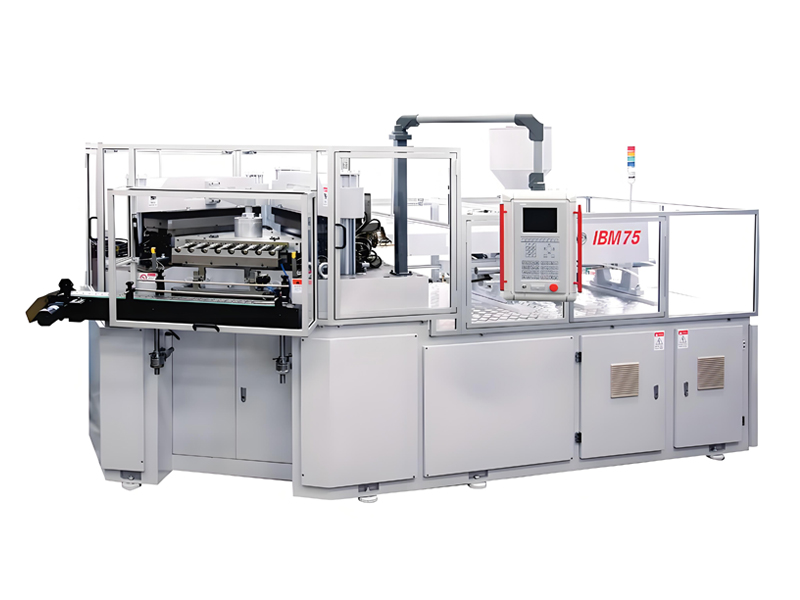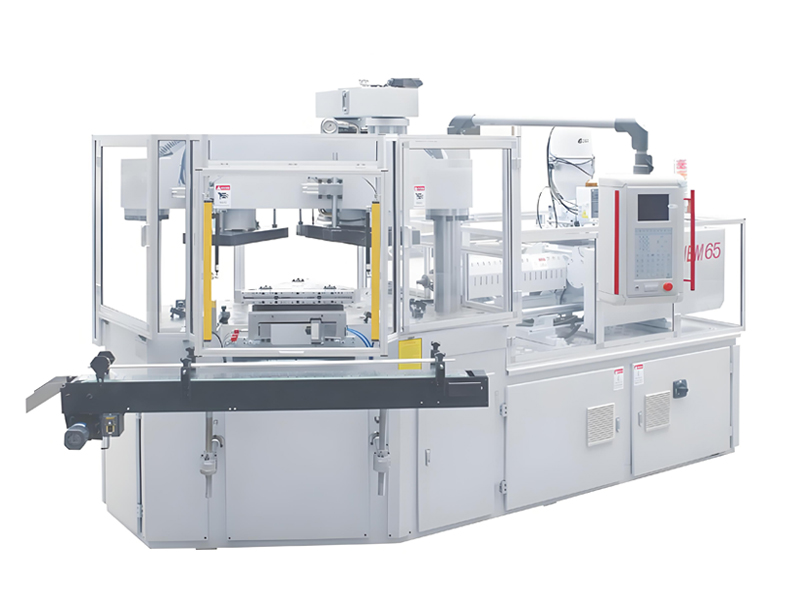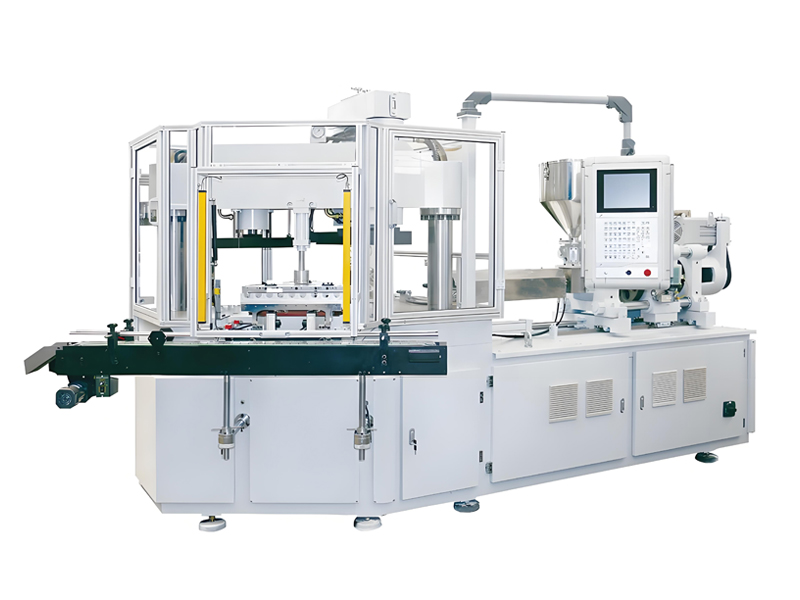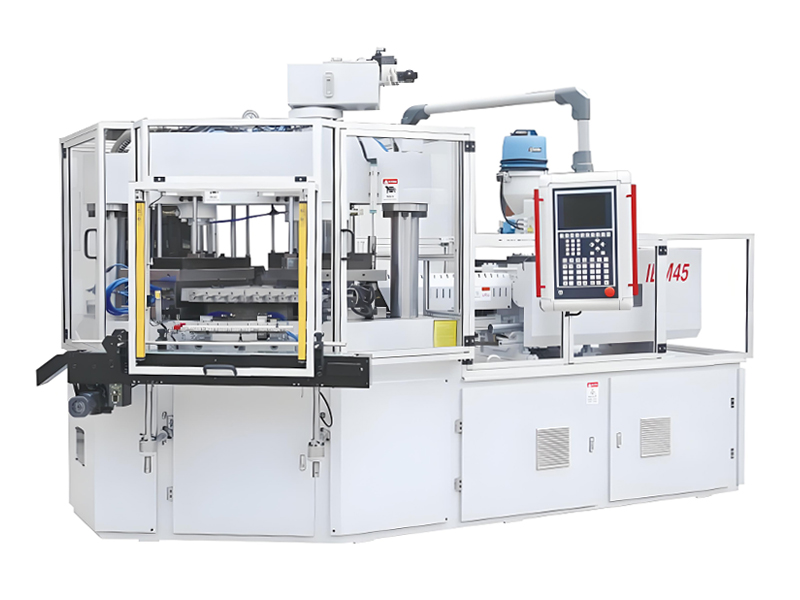
Choosing between one-step and two-step injection blow molding often decides whether a bottle line is lean or wasteful, fast or bottlenecked. As pharmaceutical, food, drink, and cosmetic brands push for tighter neck tolerances, cleaner containers, and lower unit cost, the architecture of the molding process moves from a technical detail to a board-level decision. One-step injection blow molding forms the parison and blows the bottle inside a single integrated machine, while two-step injection blow molding separates preform production from the blowing stage, usually with reheating in between. Aibim, a Wanplas factory, builds its reputation on the three-station one-step method across the IBM75, IBM65, and IBM55 Hybrid electric models for containers from 3ml to 1000ml. This article gives a full comparison of efficiency and cost between the two routes, covering process flow, mold structure, cycle time, energy, part quality, material range, and the selection logic that should guide a 2026 buying decision.
What Is One-Step Injection Blow Molding?
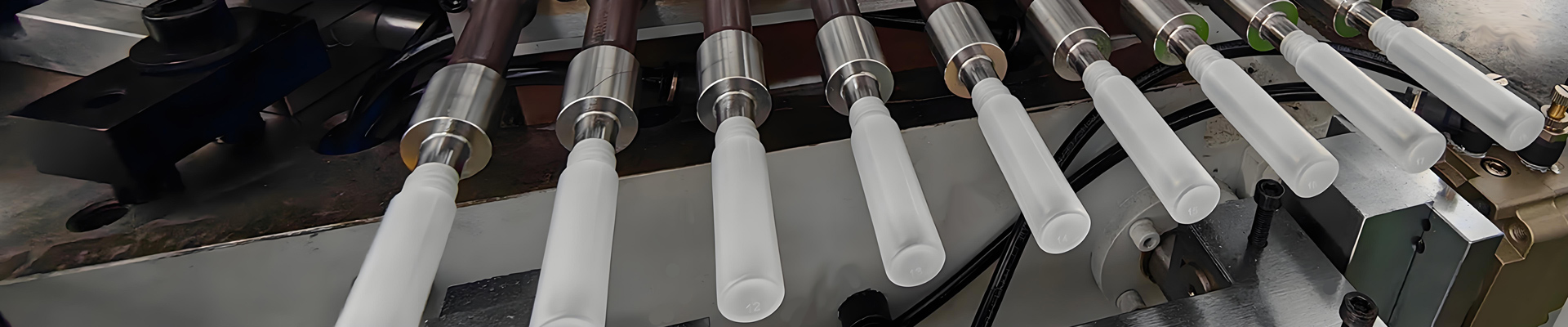
One-step injection blow molding is a fully integrated hollow-molding process in which the plastic parison is injected, conditioned, blown into the bottle, and ejected without ever leaving the machine or passing through a separate reheating oven. The defining trait is continuity: the same core rod carries the parison from the injection cavity to the blow cavity while the material stays hot and ready to stretch. There is no cold preform, no warehouse, and no second machine.
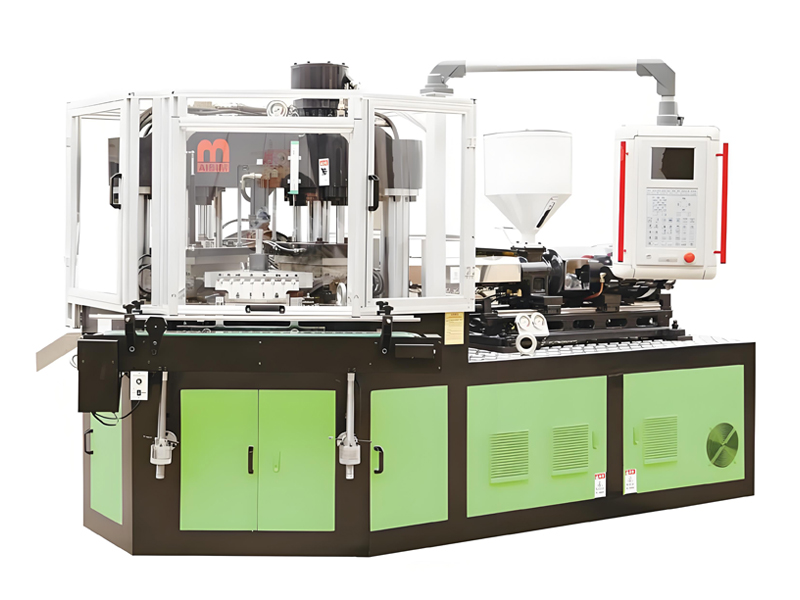
Aibim’s one-step machines use a three-station, one-step layout. At station one, a heated, precisely metered shot is injected around a core rod to form the parison with the finished neck and thread already molded. At station two, the core rod with its still-warm parison indexes into the blow mold, where compressed air expands the parison against the cooled cavity wall to form the bottle. At station three, the finished container is stripped from the core rod and discharged. All three actions overlap in time, so one machine is simultaneously injecting, blowing, and stripping.
The neck and thread are produced by injection rather than by cutting or blowing, which is why one-step IBM delivers a clean, flash-free finish with accurate thread geometry. Because the parison is blown while still hot from injection, no separate oven is needed, and the thermal history of the part is controlled in a single, repeatable cycle. Aibim runs this method on the IBM75 and IBM65 with its PREFILL hydraulic system and on the IBM55 Hybrid electric machine, covering PE, PP, PS, ABS, SAN, TPU, PC, and PCTG for pharmaceutical, food, drink, and cosmetic containers.
From a production-engineering view, one-step IBM is a closed thermal loop. The parison never drops below its useful forming temperature, so energy that would be spent reheating a cold preform is simply not spent. The trade-off is that the entire bottle program lives on one machine, and the clamp, injection, and blow stations must be balanced so none starves another. Aibim addresses this with a single-crossbeam, double-pole clamping framework and enlarged mold-setting space, giving room to tune station timing without mechanical compromise. The result is a process where cycle speed is set by the slowest station, not by a reheating queue.
This single-machine concentration also simplifies documentation for regulated production. When a quality auditor asks where a defect could enter, the answer in one-step IBM is “inside one validated loop,” whereas two-step must account for preform storage conditions, transport hygiene, and reheat consistency as separate risk points. For pharmaceutical and cosmetic producers operating under documented quality systems, fewer interfaces mean fewer standard operating procedures, fewer in-process checks, and a shorter path to a clean audit. Aibim reinforces this with its SD-card parameter storage, so the exact recipe that passed validation can be reloaded identically on any machine in the fleet, keeping the documented process and the running process identical.
What Is Two-Step Injection Blow Molding?
Two-step injection blow molding splits the operation into two physically separate stages. In step one, preforms are injection molded, usually with a finished neck and thread, then cooled, ejected, and either stored or shipped. In step two, those cold preforms are reheated in an oven and then blown or stretch-blown into the final bottle, often on a different machine located elsewhere. The word “two-step” refers to the break between preform making and bottle forming.
The most familiar two-step route is reheat stretch blow molding for PET, where preforms are made in large injection cavities, conditioned in a temperature-controlled environment, and later fed into a blow machine with infrared ovens that bring each preform back to its stretch temperature before biaxial orientation. This separation is deliberate: it lets a brand make millions of preforms in one place, store or transport them, and blow them close to the filler on another continent. It also lets blow capacity be scaled independently of injection capacity.
Two-step brings flexibility that one-step cannot match in one respect: the preform is a storable, shippable, tradeable intermediate. A buyer can source preforms from a specialist and run only the blowing stage, or buffer preform inventory to smooth demand spikes. The cost is that every preform must be reheated from cold, handled, oriented, and transported—each step consumes energy, floor space, labor, and introduces a contamination and handling-defect opportunity that one-step avoids.
Two-step is not a single technology but a family. Some two-step lines keep both stages under one roof and feed preforms directly from a buffer, minimizing handling. Others separate them by continents. The further the steps are separated, the more the advantages of decoupling appear, but so do the costs of reheating, logistics, and quality control. When comparing with one-step IBM, the meaningful question is how much decoupling the product actually needs.
Head-to-Head Comparison
The table below sets the two routes side by side on the attributes that most affect efficiency and cost. Read it as a starting point; the sections after it explain each row in detail.
Comparison Matrix: One-Step vs Two-Step IBM
| Attribute | One-Step IBM (Aibim three-station) | Two-Step (preform + reheat blow) |
|---|---|---|
| Process integration | Single machine, fully integrated | Two machines or two sites, separated |
| Preform reheating | Not required | Required (oven energy) |
| Neck and thread quality | Injected, very high precision | Injected then handled; high but more variable |
| Contamination risk | Low (no open preform handling) | Higher (storage and transport) |
| Material range | PE, PP, PS, ABS, SAN, TPU, PC, PCTG | Optimized for PET, some PEN |
| Labor per bottle | Low | Medium to High |
| Footprint | Compact, single unit | Larger, multiple stations |
| Capacity scaling | Balanced by station timing | Injection and blow scale independently |
| Typical energy profile | Lower (no reheat) | Higher (reheat plus handling) |
| Best container size | 3ml to 1000ml precision bottles | Mostly larger PET bottles and jars |
Performance. One-step wins on consistency because the parison is blown at a controlled, uniform temperature straight from injection. Two-step depends on an oven to re-establish a temperature profile across a cold preform, which is repeatable for PET but adds a variable that must be tightly managed. For small, high-value containers where a single out-of-spec neck means a scrapped batch, the one-step loop is hard to beat.
Energy efficiency. Removing the reheat oven is the single biggest efficiency lever. Aibim’s PREFILL hydraulic system compounds this by using a variable-displacement pump and prefill valve that build clamp pressure efficiently, cutting total energy consumption by at least thirty-five percent versus a fixed pump. Two-step pays the reheat energy on every bottle plus the handling energy of moving preforms between stages.
Maintenance requirements. One-step concentrates maintenance on one machine with integrated controls; Aibim stores tuned parameters on an SD card so a replacement or cloned machine resumes the same behavior. Two-step spreads maintenance across injection and blow equipment plus ovens and conveyors, widening the skill set and spare-parts list. Both routes need mold care, but two-step has more subsystems that can fail independently.
Production speed. One-step overlaps injecting, blowing, and stripping, so effective output is governed by balanced station timing rather than a serial queue. Two-step can reach very high volumes by running many blow cavities in parallel, especially for PET, but only because it invests in separate, duplicated capacity. Speed per square meter of floor favors one-step; absolute peak volume at scale can favor a heavily duplicated two-step blow hall.
Material versatility. One-step IBM is naturally material-agnostic within the thermoplastic family because there is no preform storage constraint and no reheat window tuned to one resin. Aibim processes PE, PP, PS, ABS, SAN, TPU, PC, and PCTG. Two-step reheat blow is engineered around PET’s crystallization and stretch behavior, making it excellent for oriented PET but less natural for heat-sensitive non-PET resins that dislike the reheat profile.
Part quality. Both can deliver excellent bottles, but the failure modes differ. One-step defects come from the single integrated process and are caught quickly by Aibim’s closed-loop control and CE-certified safety sensing at the stripper station. Two-step defects can enter at injection, storage, transport, or reheat, so quality systems must watch more interfaces. For pharmaceutical and cosmetic finishes, one-step’s fewer interfaces is a strong argument.
Throughput and OEE Considerations
Overall equipment effectiveness ties the efficiency story together. Because one-step IBM runs injecting, blowing, and stripping in parallel on one frame, its availability and performance losses are concentrated in a single monitored system, which Aibim’s SD-card parameter logging and CE-certified sensors make straightforward to track. Two-step spreads OEE across injection and blow lines, so a stoppage in either halves or quarters output until buffers empty. For a plant measured on bottles per labor hour, the one-step concentration of loss is easier to manage and improve, and the absence of a reheat oven removes a common two-step bottleneck that silently caps throughput during warm-up and zone tuning.
Process Flow and Mold Structure Differences
The mold structure reveals why the two routes behave differently. In one-step IBM, the core rod is the hero: it receives the injected parison, carries it to the blow station, and releases the finished bottle. The injection mold, blow mold, and stripper are arranged around the rotating or indexing core-rod carrier, and all three molds share the same thermal and mechanical frame. Aibim’s single-crossbeam, double-pole clamping framework keeps these molds aligned under repeated cycling.
In two-step, the injection mold makes only the preform, complete with neck and thread, and then that preform is a free part. The blow mold receives a reheated preform seated on a blow pin or mandrel, not a core rod fresh from injection. The blow machine’s mold is optimized for orientation and expansion rather than for receiving a just-injected parison. The structural consequence is two separate, independently tuned mold sets plus an oven and a transfer system between them.
The table below summarizes the structural difference in plain terms.
Mold and Flow Structure Comparison
| Element | One-Step IBM | Two-Step |
|---|---|---|
| Core rod function | Carries parison from injection to blow | Split: injection core then separate blow mandrel |
| Mold sets per line | One integrated frame (3 stations) | Two independent mold sets plus oven |
| Thermal path | Continuous, no cool-down | Cool then reheat |
| Intermediate part | None (in-machine only) | Cold preform (storable) |
| Changeover complexity | Single SD-card parameter set | Two machines plus oven profile |
| Alignment risk | Low (shared frame) | Medium (separate stations) |
The practical implication is that one-step is easier to validate for regulated industries. With fewer interfaces, a quality engineer validates one machine and one thermal loop. Two-step requires validating the preform spec, the storage condition, the transport hygiene, and the reheat profile—four interfaces instead of one. Aibim’s one-step design, backed by the Wanplas brand’s quality standards, suits pharmaceutical and cosmetic producers who must document every step between resin and bottle.
Cycle Time and Output Analysis
Cycle time in one-step IBM is set by the longest of the three overlapping station times. Because injection, blow, and strip run concurrently, a well-balanced machine does not add them serially. Aibim tunes station timing within the enlarged mold-setting space so that bottle size changes do not force a full rebalance. The cycle is largely thermal: the parison must be at the right temperature and the blow cavity must cool the part enough to release cleanly.
In two-step, cycle time is the sum of preform injection (which can be batched at high cavity count), plus reheat dwell, plus blow time, plus all handling. The reheat oven is a queue: preforms travel through heating zones and must reach a narrow temperature window before blowing. That queue is where two-step lines gain volume—by widening the oven and multiplying blow cavities—but it is also where energy and floor space cost accrue.
For a mid-volume precision bottle program, one-step usually delivers more bottles per operator hour because there is no preform logistics. For a mega-volume PET water-bottle program, two-step can out-produce by sheer duplication of blow cavities, but only with a much larger plant and more labor. The choice is therefore less about which is “faster” in isolation and more about which matches the volume tier and container type.
Aibim’s energy advantage also shows in cycle economics. With at least thirty-five percent lower energy consumption from the PREFILL system and no reheat oven, the cost per bottle falls as volume rises, and the saving compounds across multiple shifts. Two-step’s reheat energy is a fixed tax on every unit, independent of how well the rest of the line runs.
Operationally, the shorter one-step cycle also shortens the feedback loop for improvement. When an engineer changes a mold temperature or transfer timing, the effect appears on the next bottles rather than after a preform has cooled, been stored, and later reheated. That tight loop supports continuous tuning, faster trial of a new container, and quicker reaction to a resin-lot change. Combined with predictive maintenance signaled by Aibim’s servo and sensor data, the line spends more time producing saleable bottles and less time waiting on a downstream stage that is not yet ready to receive preforms.
Material Compatibility: PP, PE, PET and Beyond
Material behavior is where the two routes diverge most sharply. One-step IBM molds the parison and blows it while hot, so it suits a wide band of resins without needing a reheat window tuned to a single polymer. Aibim’s range processes PE in its HDPE, LDPE, and LLDPE forms, PP, PS, ABS, SAN, TPU, PC, and PCTG. This breadth matters for producers who run dropper bottles in PP, cosmetic jars in PCTG, or pharmaceutical containers in HDPE on the same platform.
Two-step reheat blow is dominated by PET because PET’s ability to be oriented by biaxial stretching—and thus gain strength and clarity—depends on reheating a preform into its narrow stretch window. The same reheat logic works for some PEN and copolymers, but resins that do not stretch-orient well, or that are heat-sensitive, are poor fits. Running PP or HDPE through a PET-style two-step reheat line is possible in special cases but loses the natural advantage of one-step for those materials.
The table below maps common resins to the better-suited route.
Material Suitability by Route
| Resin | One-Step IBM | Two-Step Reheat | Notes |
|---|---|---|---|
| HDPE / LDPE / LLDPE | Excellent | Limited | One-step avoids reheat brittleness |
| PP | Excellent | Limited | Common in pharma droppers via one-step |
| PS | Excellent | Limited | Clarity and stiffness favor one-step |
| ABS / SAN | Good | Rare | Engineering look without orientation |
| PC / PCTG | Good | Possible | Premium clarity cosmetic jars |
| PET | Possible | Excellent | Two-step wins on oriented bottles |
| TPU | Good | Rare | Flexible specialty containers |
The conclusion for material planning is clear: if your portfolio is PET-water-bottle-heavy, two-step reheat is purpose-built. If your portfolio is pharmaceutical, food, drink, and cosmetic containers in PE, PP, PS, or specialty resins, one-step IBM covers more of it on one machine. Aibim’s material flexibility across the IBM75, IBM65, and IBM55 Hybrid electric is a core reason buyers consolidate onto the Wanplas group’s IBM line.
Advantages of One-Step IBM
One-step IBM earns its place through a cluster of linked advantages rather than a single feature.
- Eliminated reheat energy. No oven means no per-bottle reheating tax, and Aibim’s PREFILL hydraulics cut consumption by at least thirty-five percent more.
- Superior neck and thread. Injection-molded necks are flash-free and dimensionally stable, critical for tamper-evident pharmaceutical and cosmetic closures.
- Lower contamination risk. The parison never sits in a warehouse or travels between buildings, supporting clean-room and GMP-minded production.
- Compact footprint. One integrated machine replaces an injection hall, a preform store, and a blow hall.
- Lower labor. With no preform handling, counting, or transport, fewer operators manage more output.
- Simpler validation. One thermal loop and one machine are easier to document and audit than a multi-interface two-step chain.
- Fast changeover. Aibim’s SD-card parameter storage reloads a tuned recipe onto any machine in the fleet.
For producers whose value sits in precision, hygiene, and resin variety—exactly the pharmaceutical, food, drink, and cosmetic segments Aibim serves—these advantages usually outweigh the decoupling benefit that two-step provides.
The operational simplicity should not be understated. A one-step line needs one operator mindset, one spare-parts list, and one commissioning procedure, which reduces training time and the chance of a mis-set parameter between stages. When a plant runs several Aibim IBM75, IBM65, or IBM55 Hybrid electric machines, the SD-card recipe system lets a proven setting propagate across the floor in minutes, so a best-practice developed on one machine becomes the fleet standard the same day. That repeatability is what turns a good single machine into a dependable production cell, and it is why many contract packers standardize on one-step IBM for their precision bottle work.
Advantages of Two-Step
Two-step is not obsolete; it solves problems one-step deliberately does not.
- Preform as inventory. Preforms are storable and shippable, letting a brand buffer demand swings and locate blowing near the filler.
- Independent scaling. Injection and blow capacity grow on separate budgets and timelines, useful when blow demand outpaces preform need.
- Sourcing flexibility. A buyer can purchase preforms from a specialist and run only blowing, lowering entry cost.
- Peak PET volume. Multi-cavity reheat blow lines reach very high outputs for oriented PET bottles and jars.
- Geographic separation. Preforms made in one region can be blown close to market, cutting finished-goods freight.
These advantages matter most for high-volume PET packaging where orientation, clarity, and carbon-footprint-of-freight dominate the business case. They matter less for precision small bottles where one-step’s hygiene and neck quality lead.
When to Choose One-Step vs Two-Step
The decision should follow the product, not the fashion. Use the guide below as a first filter, then validate against your volume tier and resin mix.
Selection Decision Guide
| If your priority is… | Choose | Reason |
|---|---|---|
| Neck precision, tamper-evidence, clean finish | One-step IBM | Injected neck, no handling |
| Pharma or cosmetic hygiene | One-step IBM | Fewer contamination interfaces |
| Resin variety (PE, PP, PS, PC, PCTG) | One-step IBM | No reheat window constraint |
| Very high-volume oriented PET | Two-step reheat | Multi-cavity blow scale |
| Preform sourcing or shipping | Two-step | Preform is storable intermediate |
| Independent blow scaling | Two-step | Stages scale separately |
| Minimal footprint and labor | One-step IBM | Single integrated machine |
A useful rule of thumb: if your containers are in the 3ml to 1000ml range and made from non-PET or specialty resins for pharmaceutical, food, drink, or cosmetic use, one-step IBM—such as Aibim’s IBM75, IBM65, or IBM55 Hybrid electric—is the efficient default. If you are blowing millions of oriented PET bottles and need to decouple preform making from blowing, two-step is the engineered answer.
Cost Comparison
Cost must be read as total cost of ownership, not just the sticker price. The table below uses qualitative cost labels because absolute figures shift with configuration, region, and resin; the relative ranking is what guides a buying decision.
Relative Cost Profile
| Cost element | One-Step IBM (Aibim) | Two-Step |
|---|---|---|
| Machine acquisition | Medium to High | High to Very High (two machines + oven) |
| Floor space and building | Low | Medium to High |
| Energy per bottle | Low | Medium to High (reheat) |
| Labor per bottle | Low | Medium to High |
| Preform logistics | None | Medium to High |
| Maintenance spread | Low (one machine) | Medium (multiple systems) |
| Changeover cost | Low (SD-card recipe) | Medium |
On a per-finished-bottle basis, one-step IBM is generally the lower-cost route for precision containers because it removes reheating, handling, and logistics. Two-step’s higher acquisition and operating cost is justified only when the decoupling benefits—preform inventory, independent scaling, or separated geography—directly serve the business model. Aibim’s PREFILL hydraulics and the IBM55 Hybrid electric further lower the one-step operating cost, and the Wanplas brand’s annual free spare-parts support helps control lifetime cost.
Frequently Asked Questions
Which is cheaper to run, one-step or two-step IBM?
One-step IBM is usually cheaper per finished bottle because it removes the preform reheating step and eliminates separate preform handling, storage, and transfer labor. Two-step wins only when preform making and blowing must scale independently or when preforms are sourced externally.
Is one-step IBM always better for quality?
For neck finish precision, cosmetic appearance, and contamination control, one-step is generally superior because the parison goes straight from injection to blow with no intermediate handling. Two-step can match function but adds handling steps that raise defect risk.
Can Aibim machines run both one-step and two-step processes?
Aibim specializes in three-station one-step injection blow molding on the IBM75, IBM65, and IBM55 Hybrid electric models. Two-step reheat processes belong to separate blow equipment; Aibim focuses its engineering on the integrated one-step method for 3ml to 1000ml containers.
Which materials work in one-step vs two-step?
One-step IBM handles PE, PP, PS, ABS, SAN, TPU, PC, and PCTG without preform storage constraints. Two-step reheat stretch blow is optimized for PET and some PEN, where oriented stretching is needed; it is less natural for heat-sensitive non-PET resins.
When should a buyer choose two-step over one-step?
Choose two-step when you need to ship or buy preforms separately, when blow capacity must scale independently of injection, or when producing very high volumes of oriented PET bottles where preform inventory buffering improves line flexibility.
How does Wanplas support Aibim IBM buyers?
Wanplas, the parent brand, backs Aibim with shared quality standards, annual free spare-parts support, and an open-factory policy. Aibim itself brings more than twelve years of plastic machine experience and serves more than forty countries from its 2022-purchased factory.
Does one-step IBM suit pharmaceutical production?
Yes. The injected neck, flash-free finish, and minimal handling interfaces make one-step IBM strongly suited to pharmaceutical containers, where dimensional accuracy and hygiene documentation are priorities. Aibim’s CE-certified safety systems and Wanplas quality standards support validated production.
Conclusion
One-step and two-step injection blow molding are not rivals so much as tools for different jobs. One-step IBM—exemplified by Aibim’s three-station machines for 3ml to 1000ml containers—wins on energy, hygiene, neck precision, footprint, and per-bottle cost for pharmaceutical, food, drink, and cosmetic bottles in PE, PP, PS, and specialty resins. Two-step reheat wins when oriented PET volume is huge and preform decoupling, inventory, or geographic separation drives the business case. For most precision-bottle buyers, the efficient default is one-step, and Aibim’s PREFILL hydraulic IBM75 and IBM65 plus the IBM55 Hybrid electric deliver that efficiency with the backing of the Wanplas brand’s quality and service promises. The right move is to match the process architecture to your resin mix and volume tier first, then select the machine that expresses that architecture with the lowest total cost of ownership.