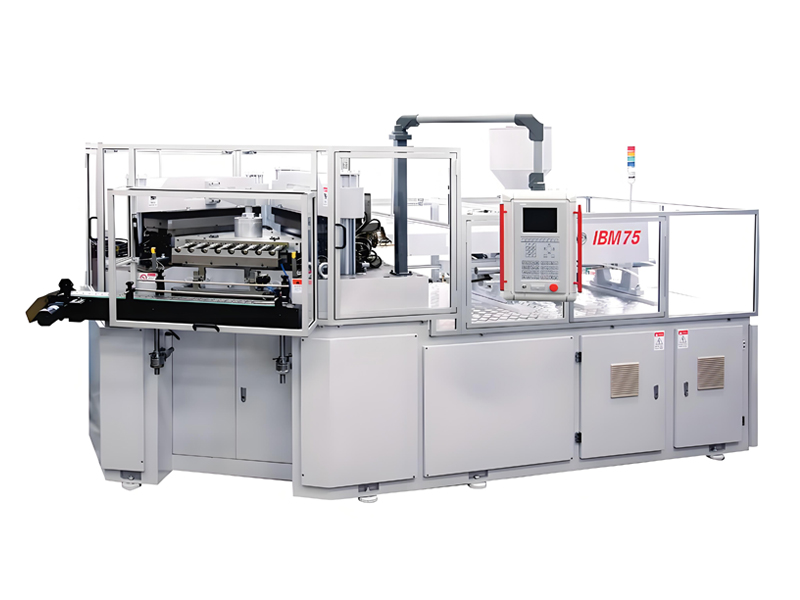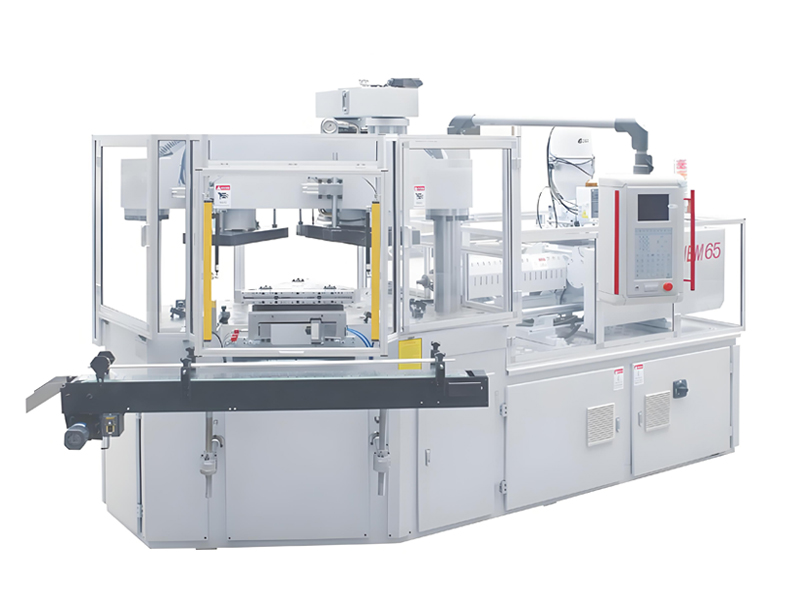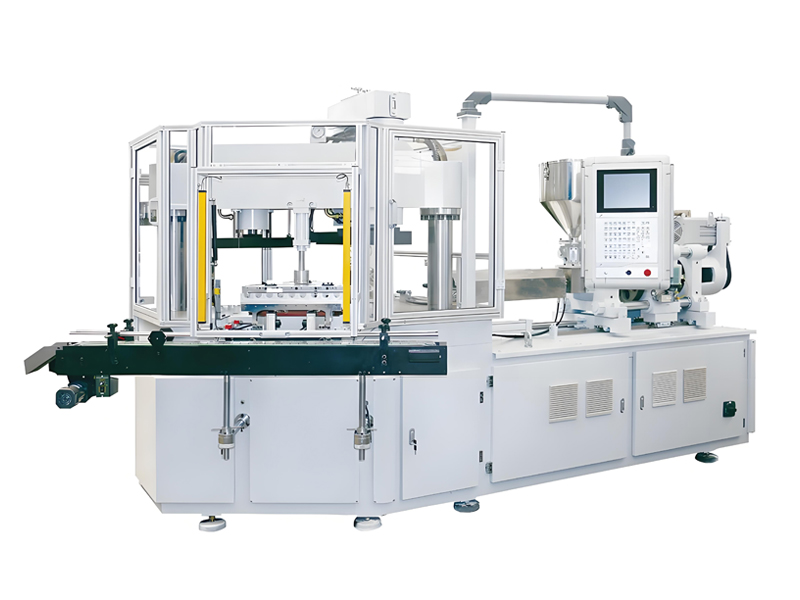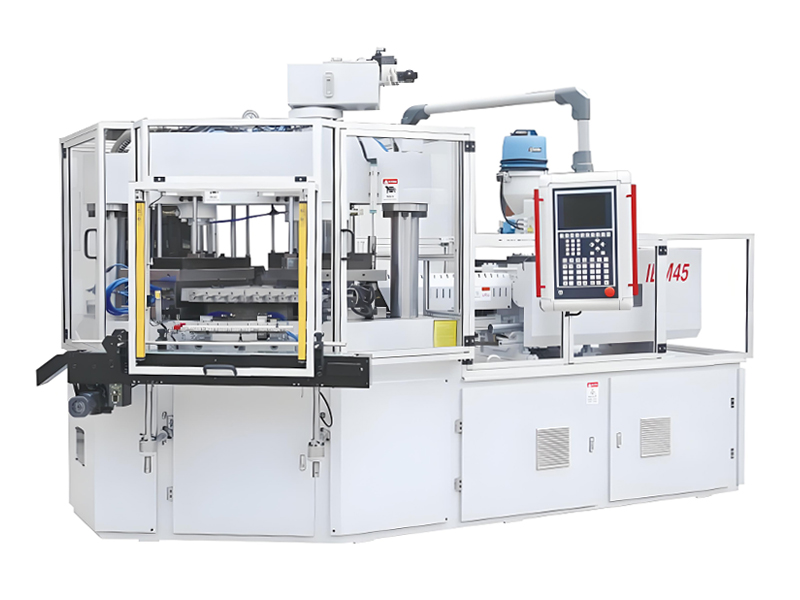
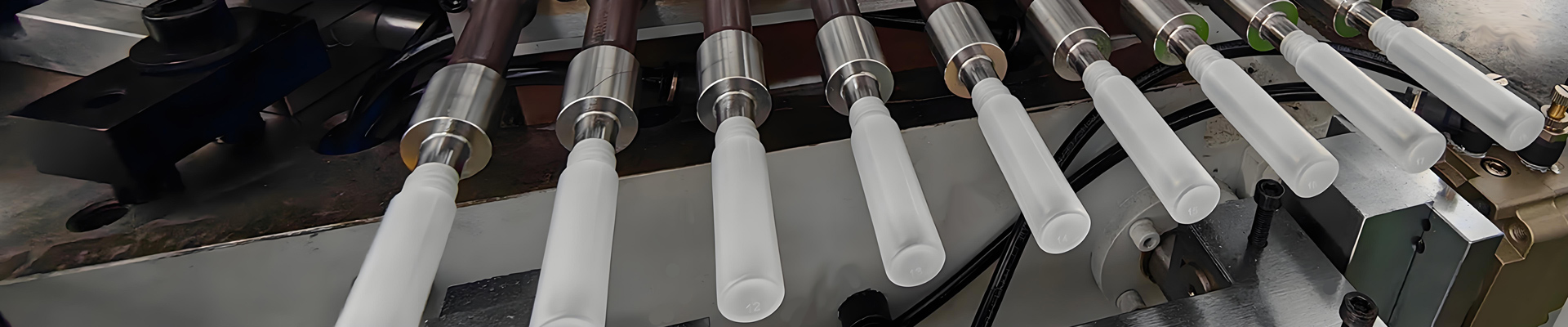
Importing an injection blow molding machine into South America is rarely lost on the factory floor — it is lost at the border. The equipment itself is a mature technology: a three-station, one-step machine that injects a parison onto a core rod, transfers it to a blow station, and strips a finished neck-accurate container in a single continuous cycle. What varies wildly across the continent is the paperwork, the tariff nomenclature, the machine safety regime, and the foreign exchange rules that decide whether your machine sits on a quay for four days or four months. A buyer in Santiago can clear a 40-foot container in seventy-two hours. A buyer in São Paulo working with the same supplier, the same HS heading and the same commercial invoice can spend ninety days assembling an import licence, a technical safety dossier and a capital goods tariff exemption before the vessel is even booked.
This guide is written for procurement managers, plant engineers and freight forwarders who are moving injection blow molding equipment — and the molds, chillers, dryers and take-out robots that travel with it — from China to Brazil, Argentina, Chile, Peru, Colombia, Ecuador, Uruguay and Bolivia. It covers HS classification down to the eight-digit MERCOSUR and Andean Community levels, the full Brazilian import chain from RADAR registration through NR-12 machine safety acceptance, the currency-control realities of Argentina, the document package that every consignment needs, packing and lashing specifications for a machine that can weigh more than twenty tonnes, Incoterms allocation, customs valuation exposure, technician visas, and a realistic master timeline. Aibim, a Wanplas factory that has specialized in injection (stretch) blow molding machines and molds for more than twelve years and now ships to more than forty countries, has compiled these notes from repeated shipments into the region. Wanplas, the parent brand, coordinates export documentation across all of its factories, and the practices below reflect what actually clears customs rather than what the regulation text alone suggests.
Why South America Punishes Improvisation
South America is not one import market; it is at least three regulatory blocs plus a handful of national exceptions, and an injection blow molding machine touches all of the sensitive categories at once. It is capital equipment, so it attracts capital goods regimes and tariff exemption mechanisms. It contains a hydraulic power unit, a heated barrel, a clamping unit with high stored energy, and a moving mold — so it attracts machine safety regulation. It is often destined for pharmaceutical or food-contact bottle production, so the end user may be subject to sanitary registration. It is heavy and oversized, so it attracts special transport permits. And because it is usually the single largest capital line item a small or mid-size bottle maker will buy in a decade, its declared value attracts customs valuation scrutiny.
The three blocs matter because they determine the tariff nomenclature you must quote. MERCOSUR members — Brazil, Argentina, Uruguay, Paraguay, and Bolivia in its accession process — use the Nomenclatura Comum do Mercosul, or NCM, an eight-digit code built on the six-digit Harmonized System. The Andean Community — Colombia, Ecuador, Peru and Bolivia — uses NANDINA, also an eight-digit extension of the same six-digit base. Chile is outside both and applies its own national tariff schedule with a broadly uniform ad valorem duty and an extensive free trade agreement network. Bolivia’s dual membership is a recurring source of confusion for exporters who assume one code fits every destination in the region.
The practical consequence is that the first six digits of your HS code are stable worldwide, but digits seven and eight — which decide the duty rate, whether an import licence is required, and whether the goods fall inside a capital goods exemption list — change by destination. A commercial invoice that quotes only a six-digit code forces the local broker to guess, and a broker’s guess is where classification disputes begin.
The Four Failure Modes That Cost the Most Time
Across dozens of machine shipments into the region, the same four failure modes recur. First, misclassification: declaring the complete injection blow molding machine under the injection molding heading because the machine visibly injects, which pulls it into a different duty line and, in Brazil, out of the exemption list the buyer applied for. Second, incomplete import licensing: applying for a Brazilian import licence after the vessel has sailed, which converts a routine approval into a penalty situation. Third, machine safety non-conformity, overwhelmingly a Brazilian issue, where a machine arrives without the guarding, interlocking and Portuguese-language documentation that the national standard requires, and the buyer cannot legally energize it. Fourth, foreign exchange bottlenecks, overwhelmingly an Argentine issue, where the goods clear physically but the seller cannot be paid on the agreed schedule.
None of these are technical problems with the machine. All four are solvable before the purchase order is signed, and all four become expensive after the container is loaded. The rest of this guide is organized around closing them.
Country-by-Country Import Map: Eight Destinations
Before drilling into any single market, it helps to see the eight destinations side by side. The table below summarizes the customs authority, the electronic single window, the tariff nomenclature, whether a pre-shipment import licence or registration is typically needed for capital equipment, and the single hurdle that most often delays an injection blow molding machine in that country.
| Country | Customs Authority / Single Window | Nomenclature | Pre-Shipment Licence / Registration | Dominant Delay Driver |
|---|---|---|---|---|
| Brazil | Receita Federal / SISCOMEX, migrating to DUIMP under Portal Unico | NCM (MERCOSUR, 8 digits) | Yes — LI import licence for most capital goods, plus RADAR habilitation | NR-12 machine safety dossier and licence approval cycle |
| Argentina | Aduana (DGA) / SIRA and SEDI declarations | NCM (MERCOSUR, 8 digits) | Yes — import declaration approval before shipment | Foreign exchange access queue for the outbound payment |
| Chile | Servicio Nacional de Aduanas (SNA) | Chilean national tariff (8 digits) | No general licence for capital goods | Inland haulage permits to inland regions |
| Peru | SUNAT / VUCE | NANDINA (Andean, 8 digits) | No licence; importer tax status matters | Advance tax collection on first-time importers |
| Colombia | DIAN / VUCE | NANDINA (Andean, 8 digits) | Yes — Registro de Importacion for capital goods | Registration amendment cycles when specifications change |
| Ecuador | SENAE / ECUAPASS | NANDINA (Andean, 8 digits) | Importer registration in ECUAPASS; INEN conformity where applicable | Technical regulation scoping and electrical component evidence |
| Uruguay | Direccion Nacional de Aduanas / VUCE | NCM (MERCOSUR, 8 digits) | Generally no licence for capital goods | Low volume of specialist brokers familiar with the heading |
| Bolivia | Aduana Nacional de Bolivia | NANDINA base, MERCOSUR accession in progress | Importer registration; pre-shipment inspection may apply | Landlocked transit through Chilean or Peruvian ports |
Two patterns emerge immediately. The Pacific coast markets — Chile, Peru and to a lesser degree Ecuador — are procedurally lighter and reward speed. The Atlantic MERCOSUR markets — Brazil and Argentina — are procedurally heavy and reward preparation. Bolivia is a logistics problem more than a documentation problem, because every container arrives overland after discharge at Arica, Iquique or Matarani, and the transit documentation must be correct in two jurisdictions.
HS Classification for Machines, Molds and Spare Parts
Classification is the single highest-leverage decision in the whole import file, because it drives the duty rate, the licensing requirement, the eligibility for capital goods exemptions and the risk of a post-clearance audit. For an injection blow molding machine the correct six-digit anchor is 8477.30, the subheading for blow molding machines within heading 8477, which covers machinery for working rubber or plastics or for the manufacture of products from these materials. That is true even though the machine performs an injection step first, because the finished article is produced by blowing, and the essential character of the machine is that of a blow molding machine.
Buyers frequently push back on this, reasoning that a machine with a reciprocating screw, a barrel, a clamping unit and a shot volume must belong under 8477.10, the subheading for injection molding machines. That reasoning is understandable but wrong for a complete one-step injection blow molding machine, and adopting it creates a mismatch between what is declared and what is inspected. If a customs officer opens the container and sees three stations, core rods and blow molds, and the declaration says injection molding machine, the file becomes a classification dispute rather than a routine clearance.
| Item Shipped | HS Subheading | Classification Logic | Common Error |
|---|---|---|---|
| Complete injection blow molding machine (IBM55, IBM65, IBM75) | 8477.30 | Blow molding machines; essential character is blowing the final container | Declared as 8477.10 because an injection unit is present |
| Stand-alone injection molding machine for closures or handles | 8477.10 | Injection molding machines, including compression types | Bundled into the blow machine line item to simplify the invoice |
| Dehumidifying dryer, chiller, mold temperature controller, hopper loader | Own headings apply; several fall outside 8477 entirely | Refrigeration and air treatment equipment classify by function, not by the line they serve | Declaring all auxiliaries as 8477.90 parts |
| Machine parts: platens, tie bars, core rod holders, clamping components | 8477.90 | Parts of machinery of heading 8477, not classified elsewhere | Using 8477.90 for items with their own heading, such as bearings or pumps |
| Injection blow molds, preform molds, blow molds, core rod sets | 8480.71 | Molds for rubber or plastics, injection or compression types | Declaring molds under the machine heading to obtain the machine duty rate |
| Electrical items: servo drive, PLC, temperature controller, contactor | Chapter 85 headings apply | Goods with a specific heading are excluded from the parts provision | Sweeping spare electricals into 8477.90 in a spare parts shipment |
| Take-out robot or leak tester supplied with the line | Own heading unless presented as an integral functional unit | Functional unit rules can group them if mechanically and electrically integrated | Assuming any accessory travelling with the machine inherits the machine code |
The Spare Parts Classification Principle
Spare parts are where most post-clearance audits start, because exporters batch dozens of dissimilar items onto one invoice line. The governing principle is simple to state and easy to violate: a part that has its own specific heading in the tariff is classified there, regardless of what machine it belongs to. A hydraulic seal kit, a proportional valve, a heater band, a thermocouple, a servo motor and a linear guide are all goods with their own homes in the tariff. Only parts that are solely or principally used with heading 8477 machinery and have no more specific heading fall under 8477.90.
The practical discipline is to build a permanent spare parts master list for each machine model, with a fixed HS code, a fixed description in English and Spanish or Portuguese, and a fixed unit of measure. Every subsequent shipment reuses that master list. This eliminates the single most common cause of clearance delay on warranty and consumable shipments, which is that the same physical item is declared under three different codes on three different occasions and the customs system flags the inconsistency.
NCM Versus NANDINA: Where the Eight-Digit Codes Diverge
Both NCM and NANDINA are built on the same six-digit Harmonized System base, and for 8477.30 the six digits are identical everywhere. Divergence happens at digits seven and eight, where each bloc opens national or bloc-level subdivisions for specific machine types, degrees of automation, or capacity bands. The consequences of getting the last two digits wrong are more serious than most exporters expect.
| Aspect | NCM (Brazil, Argentina, Uruguay, Paraguay) | NANDINA (Colombia, Ecuador, Peru, Bolivia) |
|---|---|---|
| Structure | 6-digit HS plus 2 MERCOSUR digits, harmonized across the bloc | 6-digit HS plus 2 Andean digits, harmonized across the bloc |
| National extensions | Brazil adds statistical attributes in the newer declaration system | Colombia and Ecuador add national digits beyond eight for some lines |
| Capital goods treatment | Common External Tariff with capital goods lists and national exception mechanisms | Andean Common Tariff with national capital goods deferral or exemption schemes |
| Licence linkage | The NCM code determines whether an import licence is triggered automatically | The NANDINA code determines whether a registration or technical permit applies |
| Consequence of an eight-digit error | Licence mismatch, loss of exemption eligibility, reclassification with retroactive assessment and fines | Loss of preferential origin treatment, re-declaration, storage accrual during correction |
| Correction path | Amendment of the declaration, sometimes requiring a technical opinion or binding ruling | Rectification request through the single window, with duty recalculation |
The mitigation is straightforward and costs nothing: ask the buyer’s licensed broker to confirm the eight-digit code in writing before the proforma invoice is finalized, and print that exact code on the commercial invoice, the packing list and the certificate of origin. Where the value is high and the buyer intends to apply for a tariff exemption, a binding classification ruling from the destination customs administration is worth the lead time it consumes. In Brazil, an unfavourable reclassification after an Ex-Tarifario application has been granted can invalidate the entire benefit.
Brazil Part 1: SISCOMEX, RADAR, LI, DI and DUIMP
Brazil is the largest market for injection blow molding equipment in South America and the most demanding to enter. Its pharmaceutical, personal care and dairy packaging sectors are exactly the applications where injection blow molding wins over extrusion blow molding: small containers from a few millilitres to around one litre, precise neck finish without post-trimming, no flash, no pinch-off scrap, and tight weight control. Aibim’s product range from 3 ml to 1000 ml maps directly onto Brazilian demand for pharmaceutical vials, syrup bottles, cosmetic jars and small chemical containers. Getting the machine into the country, however, requires clearing four distinct administrative layers.
Layer One: RADAR Habilitation
No Brazilian entity can import anything without being habilitated in the RADAR system, which is the importer authorization register administered by the federal tax authority. RADAR is not a formality; it sets a ceiling on how much the importer may bring in, and that ceiling is derived from the company’s demonstrated financial capacity. A bottle maker that has only ever bought resin domestically may discover, weeks before its machine ships, that its RADAR tier does not permit an import of that size.
| RADAR Tier | Typical Profile | Import Ceiling Concept | Suitability for a Complete IBM Line |
|---|---|---|---|
| Expresso | Newly registered companies, simplified tax regimes, occasional importers | Lowest ceiling, granted almost automatically with minimal documentation | Usually insufficient for a complete machine plus molds and auxiliaries |
| Limitado | Established operating companies with a tax and payment history | Intermediate ceiling based on demonstrated financial capacity over a rolling period | Adequate for one mid-size machine if the ceiling is verified in advance |
| Ilimitado | Larger importers with substantial equity, tax compliance and audited accounts | No practical ceiling for normal commercial operations | Suitable for multi-machine projects and turnkey lines |
The action item for the exporter is to ask one question during the quotation stage: which RADAR tier does the buyer hold, and has the buyer confirmed with its accountant that the tier covers the customs value of this shipment plus freight and insurance? If the answer is uncertain, the buyer should begin a tier upgrade request in parallel with machine production, because a tier review can take several weeks and requires supporting financial documentation.
Layer Two: The LI Import Licence
Brazil operates a licensing regime layered on top of the tariff. Many goods clear automatically, but capital goods in heading 8477 commonly require a Licenca de Importacao, or LI, issued before shipment. The LI is not a customs declaration; it is an administrative authorization reviewed by a designated anuente, the government body responsible for that product category. For industrial machinery this review considers the technical description, the NCM code, the declared value, the country of origin and, where an exemption is claimed, the consistency with the exemption grant.
Two rules govern LI handling and both are frequently broken. First, for capital goods the licence must ordinarily be obtained before shipment, not before arrival. Requesting an LI after the bill of lading has been issued moves the file into a post-shipment licensing exception, which is slower, discretionary and may carry a penalty. Second, the LI must match the shipment exactly. If the machine model, serial number, quantity, NCM code or value on the LI differs from the invoice, the declaration will not register cleanly and an amendment cycle begins.
Realistic planning assumption: allow fifteen to forty-five days for an LI covering a plastics machinery import, measured from the moment the buyer’s broker submits a complete application. Applications that are incomplete, that carry an ambiguous technical description, or that arrive during a review backlog take longer. This is why the machine’s final technical specification — model, cavity count, clamping force, shot capacity, installed power, dimensions and net weight — must be frozen early. Every specification change after LI submission restarts the clock.
Layer Three: The DI Declaration and the Move to DUIMP
Once the goods arrive and are unloaded, the importer registers a Declaracao de Importacao, or DI, in SISCOMEX. Registration triggers the calculation and debit of federal taxes and assigns the file to a clearance channel. Green means release without documentary or physical review. Yellow means documentary review. Red means physical inspection in addition to document review. Grey means a valuation investigation, which is the slowest outcome and is discussed later in this guide.
Brazil is progressively replacing the DI with the DUIMP, the single import declaration processed through the Portal Unico single window. DUIMP consolidates licensing, declaration and control data into one electronic file and relies on a product catalogue in which each item is registered once with its attributes and reused across shipments. For a machinery importer this is genuinely helpful: registering the injection blow molding machine and its spare parts in the catalogue once means subsequent warranty and consumable shipments inherit consistent attributes and codes. The transition has been phased by product family, so the practical instruction is to ask the broker which regime applies to the specific NCM code on the date of shipment, and to prepare the product catalogue entries during machine production rather than after arrival.
| Clearance Channel | What Happens | Typical Added Time | How to Reduce the Probability |
|---|---|---|---|
| Green | Automatic release after tax debit | None | Consistent importer history, clean document set, stable classification |
| Yellow | Document review by an auditor | Two to seven working days | Complete technical datasheet, legible invoice, matching LI |
| Red | Physical inspection plus document review | Five to fifteen working days | Photographic packing record, clear crate marking, accessible nameplate |
| Grey | Valuation investigation on suspicion of price irregularity | Weeks to months | Declare the true transaction value, retain payment evidence and the signed contract |
One packing decision materially reduces red channel pain. If the machine nameplate, showing manufacturer, model, serial number, year of manufacture, installed power and net weight, is positioned so that it can be photographed without dismantling the crate, an inspection that would otherwise require full unpacking can often be satisfied by opening one access panel. Aibim marks crate faces with the nameplate location and includes an external document pouch with the packing list and technical datasheet on every machine crate destined for Brazil.
Brazil Part 2: The Ex-Tarifario Capital Goods Mechanism
Ex-Tarifario is Brazil’s mechanism for temporarily reducing the import duty on capital goods and information technology equipment that have no equivalent domestic production. It exists because the country wants factories to modernize, and it recognizes that levying a full common external tariff on machinery that no Brazilian manufacturer builds simply taxes industrial investment. For an imported injection blow molding machine, it is the single largest lever on landed cost that the buyer controls, and it is chronically underused because buyers discover it too late.
The logic of the application is a negative proof: the applicant must demonstrate that no machine with equivalent technical characteristics is manufactured in Brazil. The argument is therefore built on specificity. A generic request covering “blow molding machine” invites a domestic manufacturer to object that it produces blow molding machines. A request that describes a three-station, one-step injection blow molding machine with a specified clamping force, a specified number of cavities, a defined shot capacity, a hybrid servo-hydraulic drive with variable displacement pump control, and a container range from a few millilitres up to one litre with injection-formed neck finish, is far harder to contest.
What the Application Requires
- A precise technical description of the machine, in Portuguese, written at engineering rather than marketing level.
- The proposed NCM code, which must be the same code that will later appear on the licence and the declaration.
- Manufacturer catalogues, general arrangement drawings and a full technical datasheet showing dimensions, weights, installed power, clamping force, shot capacity, dry cycle time and cavity configuration.
- A justification of the industrial purpose: which products will be made, in which sector, with what capacity effect and what technological gain over the equipment being replaced.
- A statement of the absence of equivalent national production, supported by technical differentiation rather than by price arguments.
- Applicant identification, tax registration and, in many cases, evidence of the investment project.
The process then runs through a public consultation phase in which domestic manufacturers may object, followed by technical analysis and a published decision. Realistic planning horizon: several months from submission to publication, with the outcome applying from the date of publication rather than retroactively to earlier shipments. That single sentence is the reason most Ex-Tarifario opportunities are lost. A buyer who signs a contract in January, ships in May and discovers the mechanism in June has forfeited it for that machine.
| Stage | Responsible Party | Input Needed from the Machine Supplier | Relative Effort |
|---|---|---|---|
| Pre-assessment of eligibility | Importer with a specialist consultant | Preliminary datasheet and NCM opinion | Low |
| Technical dossier preparation | Consultant with supplier engineering support | Drawings, full specification, photographs, process description | High |
| Submission and formal admission | Importer | Confirmation that the description matches the machine to be built | Low |
| Public consultation and objections | Government, open to domestic industry | Rebuttal data on technical differentiation if challenged | Medium |
| Technical analysis and decision | Government | Clarifications on request | Low |
| Publication and use in the declaration | Importer and broker | Serial number and invoice consistent with the published description | Medium |
Three practical warnings apply. The benefit attaches to the published technical description, so if the machine actually delivered differs from the description — a different cavity count, a different clamping force, an added stretch station — the benefit may not apply. The benefit reduces the import duty layer only; the other tax layers described below continue to apply on their own bases. And the exemption is time-limited, so a buyer planning a second machine two or three years later must check whether the grant is still in force.
Brazil Part 3: NR-12 Machine Safety Compliance
If there is one section of this guide to read twice, it is this one. NR-12 is the Brazilian regulatory standard on safety in work with machinery and equipment, and it is the largest single barrier to importing production machinery into Brazil. It is not a customs requirement in the narrow sense — a machine can physically clear customs without an NR-12 dossier — but it is a labor inspection requirement, and the consequences of ignoring it are severe: the labor inspectorate can interdict a non-conforming machine, meaning it is legally sealed and may not be operated until it is brought into conformity. A machine that has cleared customs, been transported inland, been positioned on its foundation and then interdicted is the worst possible outcome, because the cost of retrofitting guarding and control architecture in the field is far higher than building it correctly in the factory.
The responsibility for conformity sits with the employer operating the machine, which means the Brazilian buyer. But the buyer cannot achieve conformity without the manufacturer, because the safety-related parts of the control system must be designed in, not bolted on. Exporters who treat NR-12 as “the customer’s problem” lose repeat business in Brazil.
What NR-12 Actually Demands from an Injection Blow Molding Machine
An injection blow molding machine has three hazard zones that inspectors examine first: the clamping unit, where the mold closes with high force; the injection unit, with a hot barrel, hot nozzle and pressurized melt; and the transfer and stripping stations, where core rods carrying hot parisons and preforms rotate between stations. Each zone requires a defined combination of fixed guarding, movable interlocked guarding, and safety-related control functions.
| Requirement Area | What Must Be Provided | Typical Evidence in the Dossier | Best Point of Execution |
|---|---|---|---|
| Fixed and movable guarding | Full enclosure of the clamping area, barrel shrouding, guarded transfer zone, guards that cannot be removed without tools | Guard drawings, materials, opening dimensions, safety distance calculation | Factory, before shipment |
| Dual-channel interlocking | Two independent channels with cross-monitoring on every movable guard protecting a hazard zone | Circuit diagrams, switch datasheets, safety relay or safety PLC configuration | Factory, before shipment |
| Performance level of safety functions | Each safety function assessed and implemented to the required performance level per ISO 13849-1 | Risk assessment, required performance level determination, achieved performance level calculation per function | Factory design stage |
| Emergency stop | Accessible from every operating position, latching, requiring deliberate reset, not a substitute for guarding | Layout drawing showing device positions and reach distances | Factory, before shipment |
| Safety distances and reach | Guard openings and light curtain positions calculated against reach over, under, around and through | Calculation sheets referencing the applicable ISO safety distance standards | Factory design stage |
| Energy isolation and residual energy | Lockable main disconnect, hydraulic pressure relief, means to secure gravity-loaded elements | Isolation procedure, hydraulic schematic showing relief and blocking devices | Factory, before shipment |
| Portuguese documentation | Operation, maintenance and safety manual in Brazilian Portuguese, plus warning signage and nameplate text | Printed and electronic manual, pictogram schedule, label drawings | Factory, before shipment |
| Technical report with professional registration | A conformity report issued by a legally qualified engineer, accompanied by a registered technical responsibility annotation filed with the regional engineering council | Signed report plus the ART registration number issued through CREA | Brazil, before commissioning |
| On-site acceptance and validation | Functional testing of every safety function in the installed condition, with stopping performance verified | Validation checklist, test records, photographs, operator training record | Buyer site, at commissioning |
The ART and CREA Requirement Explained
Brazilian practice requires that engineering work carrying professional liability be formally attributed to a registered professional. The instrument is the ART, a technical responsibility annotation registered with CREA, the regional council of engineering and agronomy. For machine safety this means the NR-12 conformity report is not valid simply because an engineer signed it; the engineer must be registered with CREA and must file an ART covering that specific service for that specific machine. Buyers sometimes receive a safety report from an overseas consultancy and assume it satisfies the requirement. It does not. An overseas assessment is useful supporting evidence, but the operative document is the locally registered report.
The efficient sequence is therefore: the manufacturer designs and builds to the required performance levels and supplies the complete technical file including risk assessment, circuit diagrams and calculation sheets; the buyer engages a CREA-registered safety engineer during machine production, not after arrival; that engineer reviews the manufacturer’s file remotely and flags gaps while they are still cheap to close; and the same engineer performs the on-site validation at commissioning and files the ART. Aibim’s machines are supplied with CE-oriented safety architecture as standard, including a light curtain protecting the operator position and a long-distance digital laser sensor at the stripper station for mold protection, which gives the Brazilian safety engineer a coherent starting point rather than a machine that must be re-engineered.
Where NR-12 Retrofits Go Wrong in the Field
Field retrofits fail for predictable reasons. Adding an interlocked gate to a machine whose control system has no safety-rated inputs means installing an external safety relay and re-routing motor and valve control through it, which requires modifying the original electrical panel and voids any warranty claim on the control system. Fitting a light curtain without recalculating the safety distance against the machine’s actual stopping time produces a guard that is technically present and functionally useless — an inspector who measures the stopping performance will note the deficiency. Translating a manual into Portuguese by machine translation produces documentation that a Portuguese-speaking inspector will read with visible skepticism. And retrofitting guarding to a machine already bolted to its foundation with utilities connected means working around obstructions that would not exist on a factory floor in Zhangjiagang.
Brazil Part 4: Tax Layers, Calculation Sequence and INMETRO
Brazilian import taxation is not a single rate but a stack of levies applied in sequence, each with its own base. Understanding the sequence matters more than memorizing rates, because the sequence is what makes the cumulative burden larger than a naive reading of the tariff suggests, and because tariff reductions such as Ex-Tarifario affect only one layer while cascading through the bases of the others.
| Order | Levy | Nature | Base Concept | Recoverable by the Buyer? |
|---|---|---|---|---|
| 1 | II — import duty | Federal customs duty under the common external tariff | Customs value determined under the WTO valuation rules | No — a true cost; this is the layer Ex-Tarifario targets |
| 2 | IPI — industrial products tax | Federal excise on industrialized goods | Customs value plus the import duty | Often creditable for an industrial taxpayer |
| 3 | PIS-Import and COFINS-Import | Federal social contributions on imports | Customs value, with statutory adjustments | Often creditable under the non-cumulative regime |
| 4 | ICMS | State-level value added tax, rate and incentives vary by state | Customs value plus all preceding federal levies plus clearance charges, calculated on a gross-up basis | Often creditable; some states offer capital goods deferral |
| 5 | AFRMM | Merchant marine renewal surcharge on ocean freight | Ocean freight cost, not the goods value | No, though exemptions exist for certain regimes and regions |
| 6 | Clearance and handling charges | Port, terminal, storage, broker, system fees | Commercial tariffs of each service provider | Generally deductible as business expense |
Two features of this stack drive planning decisions. First, because the ICMS base includes the federal levies and is grossed up, a reduction in the import duty layer produces a saving larger than the duty reduction alone — the benefit cascades. Second, because AFRMM is levied on ocean freight rather than on goods value, the choice of Incoterm and the freight arrangement has a direct tax consequence, which is one more reason to think carefully about who buys the freight.
State-level incentives deserve attention. Several Brazilian states operate capital goods programs that defer or reduce ICMS on machinery acquired for productive investment, sometimes conditioned on the machine remaining in the state and in service for a defined period. Because these are state programs, the same machine can carry a materially different effective burden depending on where the buyer’s plant is located and where the goods are cleared. This is a question for the buyer’s tax advisor, but the exporter should know that it exists, because it explains why a Brazilian buyer may insist on clearing at a particular port that is not the nearest one.
INMETRO and Electrical Component Conformity
INMETRO is the Brazilian national metrology and conformity assessment body, and it administers mandatory certification for products on defined lists. Industrial production machinery of this type is not generally on the mandatory certification list as a complete machine, which surprises importers who expect a machine-level certificate. What does attract attention is the electrical content: certain components and assemblies — cables, plugs, some switchgear, and equipment intended for particular environments — fall within scope depending on their nature and use.
The practical guidance is threefold. Confirm scope early with the buyer’s compliance advisor rather than assuming either that everything is certified or that nothing is required. Where components within scope are used, specify certified variants during machine build rather than substituting them in Brazil, because substitution after arrival means opening a panel that the NR-12 engineer has already assessed. And align the electrical design with the local supply from the start: Brazilian industrial supply is commonly three-phase at 380 V or 440 V at 60 Hz depending on region and utility, and building the machine for the correct voltage and frequency avoids a transformer that adds cost, footprint and a further conformity question.
Argentina, Chile and Peru
After Brazil, these three markets represent the widest spread of import difficulty on the continent: Argentina is the hardest for reasons that have nothing to do with technical compliance, Chile is the easiest, and Peru sits comfortably in between.
Argentina: The Payment Is Harder Than the Clearance
Argentine customs procedure for capital goods is not unusually complex. What is unusual is the interaction between the import declaration system and access to foreign currency. Argentina has operated successive import declaration regimes — the SIRA system and its associated SEDI declaration for services, preceded by earlier regimes with different acronyms — whose common feature is that an importer must obtain approval of an import declaration before shipment, and that approval interacts with the schedule on which the central bank permits the importer to buy foreign currency to pay the supplier.
For a machinery exporter this reorders the commercial risk. The goods may arrive, clear and be installed while a portion of the purchase price remains unpaid because the importer cannot yet access currency. Exporters who treat an Argentine order like any other order and ship against a modest deposit can find themselves financing the transaction for months.
- Structure payment terms around the currency access reality. A higher advance payment proportion, payment against documents, or an irrevocable letter of credit confirmed by a bank outside Argentina all shift risk away from the exporter.
- Verify declaration approval before production release. Do not cut steel until the importer shows the approved declaration covering the correct tariff code, quantity and value.
- Capital goods regimes exist and matter. Argentina has historically applied preferential treatment to capital goods that are not produced domestically, together with amortization and value-added tax treatment favourable to productive investment. The importer’s tax advisor should assess these before the contract is signed, because eligibility can depend on how the goods are declared.
- The sworn declaration for services is a separate file. Where the contract includes commissioning, training, engineering or technology transfer paid separately, those cross-border service payments follow a different declaration path from the goods. Bundling services into the goods invoice to avoid this creates a valuation problem instead.
- Allow for administrative change. Argentine import regimes have been replaced repeatedly. Any acronym in a contract signed today may be obsolete before the goods ship, so the contract should reference the obligation — obtaining all import authorizations and currency approvals — rather than the name of a specific system.
Chile: The Continental Benchmark for Simplicity
Chile is the market against which the others should be measured. The Servicio Nacional de Aduanas operates a comparatively transparent regime, capital equipment does not require a general import licence, a low uniform ad valorem duty applies to most goods before preferential agreements are considered, and value added tax is charged on import and is recoverable by a registered taxpayer in the normal way. A licensed customs broker is required above a value threshold, which for a machine is always the case, but broker involvement in Chile is a routine service rather than a negotiation.
Chile’s most useful feature for a Chinese exporter is the free trade agreement between China and Chile. Where the goods qualify under the agreement’s origin rules and a valid certificate of origin accompanies the shipment, preferential duty treatment can bring the applicable duty to zero for eligible lines. The obligations that come with it are administrative rather than technical: the certificate must be issued by an authorized body, must describe the goods consistently with the invoice, must show the correct tariff classification, and must be presented within the validity period. A certificate that describes “plastic machinery” when the invoice describes an injection blow molding machine with a specific model number is a certificate that will be questioned.
The real Chilean challenge is geography. The country is more than four thousand kilometers long and much of its industry sits away from the main container ports of San Antonio and Valparaiso. Moving a machine crate weighing well over ten tonnes to a plant in the north or the far south involves oversize road transport permits, escort requirements on some routes, and scheduling around the mining sector’s own heavy haulage demand.
Peru: Straightforward Customs, Attentive Tax Administration
Peru’s SUNAT combines the tax and customs administrations in one authority, which has a direct consequence: your import file and your tax file are the same file. Clearance for capital goods is procedurally simple and there is no general import licence for machinery. The features that catch importers out are fiscal rather than procedural.
The first is the advance collection mechanism applied to imports, under which a percentage of the import value is collected at clearance as a prepayment against the importer’s future tax liability. It is creditable, not a permanent cost, but it consumes working capital at exactly the moment the buyer has just paid the balance on a machine. The rate applied depends on the importer’s classification and history, and first-time importers are typically assessed at the higher end. Buyers importing their first machine should budget for this and should not be surprised by it at the port.
The second is the value added tax charged on import, again recoverable by a registered taxpayer but payable up front. The third is the free trade agreement between China and Peru, which like the Chilean agreement can deliver preferential duty treatment on eligible lines when the certificate of origin is correct and consistent. Peru’s main port, Callao, is well served by direct services from Chinese ports, and inland movement to Lima’s industrial districts is short, which makes Peru one of the faster destinations from vessel discharge to machine on foundation.
Colombia, Ecuador, Uruguay and Bolivia
These four markets are smaller in volume but not smaller in complexity, and each has one distinctive requirement that catches first-time exporters.
Colombia: The Import Registration Requirement
Colombia processes foreign trade through the VUCE single window, with customs administered by DIAN. For most consumer goods, importation is free and requires only a declaration. For capital goods and for goods subject to permits from other agencies, a Registro de Importacion must be filed and approved through VUCE before shipment. Machinery in heading 8477 commonly falls into the registration category, and the registration must describe the goods with the correct NANDINA code, quantity, value and origin.
The distinctive Colombian risk is the amendment cycle. A registration that has been approved describes a specific machine. If the final machine differs — an extra cavity, a different auxiliary package, a revised value after a change order — the registration must be amended before the goods arrive, and amendments take their own review time. The mitigation is contractual: freeze the technical scope and the commercial value before the registration is filed, and handle any subsequent change order as a separate transaction with its own registration.
Where the end user makes pharmaceutical or food-contact packaging, a second agency enters the picture. INVIMA is the Colombian national institute for food and drug surveillance, and it regulates the products and the manufacturing establishments rather than the machinery that makes them. A machine importer does not need INVIMA approval to import an injection blow molding machine. However, the buyer producing pharmaceutical containers will need INVIMA registration for its products and its facility, and the sanitary requirements it must satisfy will drive machine specification decisions: cleanroom-compatible installation, stainless or coated surfaces in the product zone, filtered blowing air, traceable food-grade lubricants, and documentation of materials in contact with the container. It is far cheaper to specify these at order stage than to modify a machine after a sanitary audit.
Ecuador: ECUAPASS and Technical Regulation Scoping
Ecuador’s SENAE administers customs through the ECUAPASS electronic platform, in which the importer must be registered before it can transmit a declaration. The Ecuadorian specificity is INEN, the national standardization service, which issues technical regulations covering defined product categories. Where a technical regulation applies, the importer must obtain a certificate of conformity, and the certificate must be issued or recognized by an accredited body.
Complete industrial production machinery of this type is generally not the primary target of these regulations, which focus more heavily on consumer goods, electrical appliances and construction products. But the boundary is not always obvious, and the electrical content of a machine can bring specific components into scope. The correct approach is to obtain a written scoping opinion from the buyer’s broker against the exact NANDINA code before shipment. A shipment that arrives without a conformity certificate that was in fact required will sit in the port while the certificate is obtained retroactively, if that is even permitted.
Ecuador also has a free trade agreement with China, which can reduce duty on eligible lines with a valid certificate of origin. As always, the origin document must be consistent with everything else in the file.
Uruguay: Simple Rules, Thin Specialist Capacity
Uruguay applies the MERCOSUR common external tariff and the NCM nomenclature, uses a single window for trade documentation, and does not generally require an import licence for capital equipment. Montevideo is an efficient port and Uruguay’s free zone regime is genuinely useful for regional distribution, including for holding spare parts stock serving several countries.
The practical challenge is scale. Uruguay is a small market, and the population of customs brokers with direct experience of plastics processing machinery is correspondingly small. A broker who has never cleared a blow molding machine will classify conservatively, ask for more documentation than strictly necessary, and take longer over the file. The mitigation is to supply an unusually complete technical package — a full datasheet, a general arrangement drawing, a photograph of the assembled machine at the factory, and a plain-language description of what the machine does and how it works — so that the broker and the customs officer can satisfy themselves quickly.
Bolivia: A Logistics Problem With a Customs Wrapper
Bolivia has no seacoast, so every container arrives through a neighbouring country: typically Arica or Iquique in Chile, or Matarani or Ilo in Peru, then overland to Santa Cruz, Cochabamba or El Alto. The customs file therefore has two parts, an international transit document covering the movement through the transit country and the Bolivian import declaration itself, and errors in the first part strand the cargo in a country where nobody has budgeted for storage.
Three consequences follow for machine shipments. Transit time is longer and less predictable, because road conditions, altitude and border crossing queues all add variability on top of the ocean leg. Oversize and heavy loads face genuine constraints on mountain routes, so the decision about whether to split the machine into transportable modules is more consequential than in coastal markets. And pre-shipment inspection or verification requirements may apply depending on the goods and the importer’s status, which must be confirmed before shipment because an inspection that should have happened at origin cannot be recreated at destination.
For Bolivia, packing strategy is the main lever. A machine shipped as a base unit plus separately crated guards, hopper, dryer, chiller and control cabinet is far easier to move over the Andes than a single monolithic crate, and Aibim routinely prepares modular packing lists with clearly marked reassembly sequence for landlocked destinations.
The Universal Document Package
Every South American clearance rests on the same core document set, and the quality of that set determines whether the file moves through a green channel or into review. The recurring theme is consistency: the same model designation, the same serial number, the same tariff code, the same value and the same package count on every document.
| Document | Mandatory Content for a Machine Shipment | Issued By | Most Common Defect |
|---|---|---|---|
| Commercial invoice | Full machine description, model, serial number, cavity count, tariff code to eight digits, unit and total value, Incoterm and named place, currency, origin, payment terms | Exporter | Generic description such as “plastic machine”; missing serial number |
| Packing list | Case-by-case contents, gross and net weight, dimensions per package, marks and numbers, total package count | Exporter | Package count not matching the bill of lading |
| Bill of lading | Consignee and notify party per the buyer’s instruction, freight terms, package count, weights, container and seal numbers | Carrier or forwarder | Consignee name not exactly matching the importer’s registered name |
| Certificate of origin | Correct form for the applicable agreement, description matching the invoice, tariff code, origin criterion, authorized signature | Authorized issuing body in China | Wrong certificate form; description inconsistent with the invoice |
| Insurance certificate | Cover consistent with the Incoterm, insured value, coverage scope, claims agent in the destination country | Insurer or broker | No local claims agent, making survey and claim slow |
| Technical datasheet and drawings | Clamping force, shot capacity, cavity configuration, installed power, dimensions, weights, utility requirements, general arrangement | Manufacturer | Marketing brochure supplied instead of an engineering datasheet |
| Operation and maintenance manual | Portuguese for Brazil, Spanish elsewhere; safety chapter, maintenance schedule, electrical and hydraulic schematics, parts catalogue | Manufacturer | English-only manual; machine-translated text |
| CE declaration or third-party inspection certificate | Declaration of conformity referencing the applied standards, or an inspection body certificate | Manufacturer or inspection body | Declaration listing standards the machine was not actually assessed against |
| Pre-shipment inspection report | Quantity, quality, marking, packing verification and loading supervision by an inspection body such as SGS or BV | Inspection body | Booked too late to witness the machine running before dismantling |
| ISPM 15 treatment marking | Stamp on each wooden package showing country code, producer code and treatment method | Certified packing supplier | Stamp applied to only some packages, or illegible after transit |
Certificates of Origin and Free Trade Agreements
China has free trade agreements in force with Chile, Peru and Ecuador. Where the goods meet the origin rules of the relevant agreement, a correctly issued preferential certificate of origin can reduce or eliminate the import duty on qualifying lines — a benefit that costs the exporter only the administrative effort of obtaining the correct document. For the MERCOSUR members and Colombia, no such bilateral agreement applies to Chinese origin goods, so a non-preferential certificate of origin is used for administrative purposes without conferring a duty benefit.
Three disciplines make preferential claims work. Apply for the correct certificate form for the specific agreement, since forms are not interchangeable. Make the goods description on the certificate match the invoice word for word, including the model designation. And check the validity period and the direct consignment rules, because a shipment that transships through a third country without proper documentation of the transit can lose its preferential status.
Pre-Shipment Inspection: Timing Is Everything
A pre-shipment inspection by an independent body serves the buyer, the buyer’s bank and often the destination customs administration. For an injection blow molding machine, the inspection is most valuable when it is scheduled to coincide with the factory acceptance test, before the machine is dismantled for packing. At that moment the inspector can witness the machine producing sample containers, verify cycle time and weight consistency, confirm the nameplate data, check that the safety devices function, count and verify the spare parts, and then supervise packing and container loading.
An inspection booked after packing can only verify crate markings and count packages, which is a fraction of the value. Buyers financing a machine under a letter of credit should ensure the credit’s inspection clause is drafted so that the certificate can be issued at the correct moment rather than forcing the inspection into a window that defeats its purpose.
Packing, Lashing and Ocean Freight
An injection blow molding machine is heavy, tall and unforgiving of poor packing. Depending on model, cavity count and auxiliary scope, a machine in the four to sixteen cavity range typically presents a shipping problem in the range of six to twenty-two tonnes and five to nine meters of length once the base frame, clamping unit, injection unit, hydraulic power pack and control cabinet are accounted for. The packing decision is therefore the first freight decision, and it should be taken at contract stage, not at the loading dock.
| Shipping Configuration | When It Applies | Advantages | Drawbacks | Relative Freight Cost |
|---|---|---|---|---|
| Single 40-foot high cube, machine partially dismantled | Small and mid-size machines where the base unit fits within door height after removing guards, hopper and cabinet | Lowest freight cost, sealed protection, standard handling at every port | Reassembly labor at site; careful marking required | Low |
| Two 40-foot containers, machine plus auxiliaries and molds | Complete lines with dryer, chiller, compressor, molds and spare parts | Everything arrives together; simple documentation | Two units to clear and to haul inland | Medium |
| Flat rack | Base unit exceeds container internal width or cannot be dismantled without breaking calibrated assemblies | Accommodates over-width and over-height; machine ships more intact | Weather exposure requires full shrink wrapping; higher handling charges; limited equipment availability on some routes | High |
| Open top | Over-height only, within standard width, needing crane loading from above | Top loading avoids dragging; container walls give lateral protection | Tarpaulin is not watertight; out-of-gauge surcharge applies | High |
| Break bulk | Very large multi-machine projects or destinations without container service | No dimensional limit | Infrequent sailings, more handling, higher damage exposure | Very High |
Wood Packaging and ISPM 15
Every South American destination enforces ISPM 15, the international standard for phytosanitary measures governing wood packaging material in international trade. Solid wood crates, skids, pallets, dunnage and bracing must be either heat treated or fumigated by an approved facility and must carry the compliance mark showing the country code, the producer’s unique code and the treatment abbreviation. The mark must appear on at least two opposite faces of each package and must remain legible after transit.
Non-compliance is expensive and slow. The typical outcome is that the consignment is held, and the importer must choose between re-treatment at destination, repacking in compliant material, or re-export. All three happen while the container accrues demurrage and the terminal accrues storage. The failure is almost always partial rather than total: the main machine crate is properly marked, but a small crate of spare parts assembled at the last minute uses untreated dunnage. The discipline is to source all wood packaging from a single certified supplier and to include a marking verification step in the pre-shipment inspection scope.
Corrosion Protection for a Thirty-Day Ocean Crossing
The voyage from a Chinese port to the east coast of South America crosses the equator twice and subjects the cargo to repeated condensation cycles inside a steel box. Machined surfaces, tie bars, platen faces, guide rails, mold cavities and core rods are all at risk. A protection package that has performed reliably on this route combines several measures.
- Volatile corrosion inhibitor film. Bright machined surfaces and the mold set are wrapped in VCI film, which releases an inhibitor vapour that forms a protective molecular layer on ferrous surfaces within the sealed enclosure.
- Rust preventive coating. A removable film-forming rust preventive is applied to exposed machined surfaces before wrapping, with the removal solvent and procedure documented in the unpacking instructions.
- Desiccant sized to enclosed volume. Desiccant quantity is calculated from the sealed volume and the expected transit duration rather than estimated. Sizing by rule of thumb rather than by volume is the most common reason a shipment arrives with condensation staining despite having desiccant inside.
- Sealed barrier bag. The mold set and the control cabinet are packed in heat-sealed aluminum-laminate barrier bags with humidity indicator cards visible from outside, so the buyer can verify the barrier’s integrity before unpacking.
- Container floor protection. Kraft or plastic sheeting under the crates prevents moisture wicking from timber container flooring.
Marking, Slinging and Lashing
The physical marking on the crate is the interface between your engineering intent and a crane operator who has never seen this machine before. Each package should carry, in indelible weatherproof marking: gross and net weight, external dimensions, center of gravity position marked on all four sides, designated sling points, designated forklift pockets, “this way up” and “keep dry” pictograms, the consignee mark and case number, and the ISPM 15 stamp.
Center of gravity marking deserves emphasis because an injection blow molding machine is not symmetric. The clamping unit and the hydraulic power pack concentrate mass at one end while the injection unit and the control cabinet distribute it differently. A crate lifted on the assumption of a central center of gravity will tilt, and a tilting twelve-tonne crate on a quay is a safety incident, not just a cargo care issue. Lashing inside the container should restrain the load in all directions with the crate bolted or blocked to the container floor rather than relying on strapping alone, because a machine that shifts during a heavy-weather crossing can damage both itself and the container.
Incoterms 2020 Selection and the DDP Trap
The Incoterm chosen for a machine sale allocates cost, risk and — critically — administrative obligation. For South American destinations the administrative obligation matters more than the freight cost, because the party responsible for import clearance must be legally capable of performing it in that country.
| Term | Export Clearance | Main Carriage | Marine Insurance | Import Clearance and Duties | Risk Transfer Point | Suitability for South America |
|---|---|---|---|---|---|---|
| EXW | Buyer | Buyer | Buyer | Buyer | At the seller’s works | Rarely suitable; buyer must handle Chinese export formalities |
| FOB | Seller | Buyer | Buyer | Buyer | On board at the origin port | Excellent when the buyer has a strong forwarder and wants freight control |
| CFR | Seller | Seller | Buyer | Buyer | On board at the origin port | Workable, but leaves an insurance gap if the buyer forgets to cover |
| CIF | Seller | Seller | Seller, minimum cover unless upgraded | Buyer | On board at the origin port | The regional default; specify all-risks cover rather than the minimum |
| DAP | Seller | Seller | Seller in practice | Buyer | At the named destination place, ready for unloading | Good compromise; seller controls logistics, buyer keeps clearance |
| DDP | Seller | Seller | Seller | Seller | At the named destination place | Generally inadvisable across the region |
Why DDP Is Rarely the Right Answer in South America
DDP looks attractive to a buyer because it converts a complex import into a single delivered price. It is nonetheless a poor fit for this region, for five structural reasons.
- The importer of record must usually be a locally registered entity. In Brazil the importer must hold a local tax registration and RADAR habilitation. A foreign seller without a Brazilian legal entity cannot simply act as importer, so DDP would require a nominated local importer, which reintroduces the complexity DDP was supposed to remove.
- Recoverable taxes are lost. Value added taxes and several federal contributions are creditable to a registered industrial buyer. If the seller pays them as part of a DDP price, the buyer loses the credit and the effective cost rises even though the invoice looks simpler.
- The tax burden is not fully predictable at quotation stage. State-level rates, incentive regimes and the outcome of a tariff exemption application can change the final tax figure. A seller who quotes DDP is absorbing that variance blind.
- Compliance liability stays with the local operator anyway. Machine safety conformity in Brazil is an employer obligation. A DDP delivery does not transfer NR-12 responsibility to the seller, so the term creates a false impression of turnkey compliance.
- Dispute resolution is worse. If a classification challenge or valuation query arises, the party best placed to respond is the local importer with the local broker relationship, not an exporter thirteen time zones away.
The recommended default for most machine sales into the region is CIF to the named destination port with all-risks marine cover, or DAP to the buyer’s plant where the seller has a reliable destination agent. Both keep the buyer as importer of record, preserve tax recoverability and place the clearance in the hands of the party legally equipped to perform it.
Customs Valuation, Royalties and Under-Invoicing Risk
All South American customs administrations apply the WTO Customs Valuation Agreement, under which the primary method is the transaction value: the price actually paid or payable for the goods when sold for export, adjusted for specified additions. The alternative methods — identical goods, similar goods, deductive, computed and fallback — apply only when transaction value is rejected. For machinery imports the practical questions are always the same: is the declared price credible, and what must be added to it?
| Cost Element | Included in Customs Value? | Condition or Nuance |
|---|---|---|
| Machine price per the contract | Yes | The base transaction value |
| Molds supplied with the machine | Yes, as a separate tariff line | Molds have their own heading and their own duty treatment |
| Molds supplied free of charge by the buyer to the seller | Yes, as an assist | Goods and services supplied free or at reduced cost for use in production are added to the value |
| International freight and insurance | Yes in most of the region | Most countries here value on a CIF basis |
| Export packing | Yes | Packing costs and containers integral to the goods are part of the value |
| Royalties and licence fees | Sometimes | Added where they relate to the imported goods and are a condition of sale; a licence relating to the buyer’s own product design usually is not |
| Installation, commissioning and training performed after import | No, if separately identified | Post-importation activity charges are excluded when distinguished in the contract and invoice |
| Engineering and design performed in the importing country | No | Work undertaken in the country of importation is excluded from assists |
| Warranty spare parts shipped later at no charge | Yes, at a declared value | Free-of-charge goods still require a value for customs purposes |
The Real Cost of Under-Invoicing
Buyers occasionally ask a supplier to issue an invoice below the contract price to reduce the tax base. The arithmetic looks appealing and the consequences are severe. Customs administrations across the region maintain reference value databases for capital goods and compare declared unit values against them. A blow molding machine declared at a fraction of the range seen for comparable equipment triggers a valuation channel, and in Brazil the grey channel investigation can run for months while the machine sits in a bonded area accruing storage.
Beyond the delay, the downstream damage is structural. The insured value follows the declared value, so a machine damaged in transit is compensated at the understated figure. The asset is booked at the understated value, reducing the depreciation the buyer can claim and often exceeding the tax saving over the machine’s life. Any tariff exemption granted on the basis of a technical and commercial dossier becomes vulnerable if the values in the dossier and the declaration diverge. Bank financing becomes difficult because the invoice does not support the loan amount. And the payment trail — a contract, an advance payment, a balance payment — does not reconcile with the declared value, which is exactly what an auditor looks for.
The correct posture is simple: declare the true transaction value, keep the signed contract, the proforma invoice, the bank payment advices and the correspondence, and let legitimate mechanisms such as Ex-Tarifario, free trade agreement preferences and state capital goods incentives do the work of reducing the burden.
Commissioning Engineers, Visas and Local Service
A machine that clears customs but cannot be commissioned is not an asset. Planning the movement of technicians deserves the same attention as planning the movement of the machine, and it is routinely left to the last minute.
| Destination | Typical Route for a Commissioning Engineer | Documents the Buyer Must Provide | Lead Time to Plan |
|---|---|---|---|
| Brazil | Temporary technical work authorization, commonly referred to as the VITEM II category for technical assistance under a contract | Invitation letter, technical assistance contract or purchase contract, company registration documents, responsibility statement | Long — begin at least two to three months before travel |
| Argentina | Business or technical visa depending on duration and remuneration source | Invitation letter, contract copy, itinerary and accommodation details | Medium |
| Chile, Peru, Colombia, Ecuador | Business visa categories; requirements vary and change, so confirm currency of the rules for each trip | Invitation letter, proof of the commercial relationship, return ticket, insurance | Medium |
| Uruguay, Bolivia | Business visa; Bolivia may require additional consular steps | Invitation letter, contract, financial means evidence | Medium to Long |
The distinction that matters is between a business visit and technical work. Attending a meeting, inspecting a site or negotiating a contract is a business activity. Installing, aligning, wiring, commissioning and training operators on a production machine is technical work, and entering on the wrong category to perform it exposes both the engineer and the buyer to penalties. Brazil is the strictest on this point, which is why the technical assistance route exists and why it must be supported by a contract that describes the technical assistance.
Realistic Commissioning Duration
For a single injection blow molding machine with its molds and basic auxiliaries, plan on mechanical installation and levelling, utility connection, dry-cycle verification, safety function validation, first article production, process window optimization and operator training. In practice this occupies one to two weeks on site for a straightforward installation with a prepared foundation and utilities in place, extending to three or four weeks where the buyer is new to the process, where multiple mold sets must be qualified, or where the safety validation requires remedial work.
Two preparation items shorten the visit more than anything else. The buyer should complete civil works, power supply, chilled water and compressed air before the engineer arrives, verified against the manufacturer’s installation drawing. And the buyer should nominate the operators and maintenance technicians who will be trained, so that training happens with the people who will run the machine rather than with whoever is available on the day.
Building a Local Service Footprint
Distance is the enemy of uptime. Sensible practice for the region combines a local agent or service partner able to reach the plant within a working day, a consignment or buyer-held stock of fast-moving spare parts sized to the criticality of the machine in the buyer’s production plan, and remote diagnostic access so that control and process issues can be triaged from China before anyone books a flight. Wanplas factories operate a shared after-sales framework across the group, including an annual free spare parts allowance and free replacement of parts that fail within the warranty period, and Aibim supplies parameter portability through SD card storage so that a proven process setting can be transferred between machines without re-teaching.
The spare parts stocking decision should be made by consequence, not by price. Items whose failure stops production and which have long replenishment lead times belong on the shelf regardless of unit cost. Items that are cheap but universally available locally do not.
| Spare Part Category | Production Impact if Unavailable | Local Availability in South America | Recommended Stocking Priority |
|---|---|---|---|
| Core rods and neck ring inserts | Line stopped or cavities blanked off | None; must come from the mold maker | Very High |
| Heater bands and thermocouples | Line stopped until replaced | Partial, but dimensions and ratings vary | High |
| Hydraulic seal kits and proportional valves | Line stopped or running degraded | Good for common brands | Medium |
| Safety devices: light curtain, interlock switches, safety relay | Machine may not be operated legally | Available but often with a different model reference | High |
| Servo drive and control boards | Line stopped, long replenishment | Limited; configuration must match | High |
| Filters, hoses, standard fasteners | Minor | Widely available | Low |
Warranty Parts, Re-Export and Temporary Admission
Warranty logistics are the part of the project that nobody plans and everybody eventually needs. Three scenarios recur, and each has a customs treatment that must be chosen deliberately.
Free-of-charge warranty replacement parts. A part fails within warranty and the manufacturer ships a replacement at no commercial charge. Customs still requires a value: the invoice should state the goods value for customs purposes only, note that no payment is due, and reference the warranty clause of the original contract and the original import declaration number. Duties and taxes generally still apply on that value, which surprises buyers who assume free goods are free to import. Building the expectation into the contract avoids an argument at the worst possible moment.
Return of a defective part for analysis or repair. Exporting a failed component back to China is an export from the buyer’s country and later a re-import if it is repaired and returned. Handled casually, the returning repaired part is treated as a new import and taxed in full. Handled properly under an outward processing or temporary export regime, only the repair value and the associated freight form the base. The prerequisite is registering the outbound movement under the correct regime at the time of export, which cannot be done retroactively.
Temporary admission of tooling or test equipment. Where a service engineer brings specialized alignment tooling, a calibration instrument or a diagnostic laptop, temporary admission regimes exist in every country in the region that allow the equipment to enter without definitive payment of duties on condition that it leaves within a defined period. A guarantee is normally required. Carrying professional test equipment in personal baggage without declaring it is a common practice and a genuine risk, because equipment detained at the airport is equipment not available at the plant.
A related point applies to the machine itself in a small number of cases. Where equipment enters for a defined project, a trade fair or a trial and will leave again, temporary admission with suspension of duties may be available. This is not the normal route for a purchased production machine, but it is worth knowing for demonstration units and for machines moved between plants in a group.
Master Timeline: Inquiry to First Commercial Bottle
The total elapsed time from first inquiry to a machine producing saleable containers in South America typically runs four to eight months. The spread is explained almost entirely by destination and by how early the administrative work starts. A Chilean or Peruvian project running in parallel can reach the low end of that range. A Brazilian project with an Ex-Tarifario application and a thorough NR-12 program sits at the high end, and a Brazilian project that starts its licensing after production is complete exceeds it.
| Phase | Typical Duration | Runs in Parallel With | Critical Output |
|---|---|---|---|
| Inquiry, specification and sample container review | 2 to 6 weeks | Broker classification opinion | Frozen technical specification and confirmed eight-digit tariff code |
| Contract signature and advance payment | 1 to 3 weeks | RADAR verification in Brazil; currency planning in Argentina | Production slot released |
| Tariff exemption application where used | Several months from submission to publication | Machine and mold manufacturing | Government grant, once in force, covering the exact machine description |
| Machine and mold manufacturing | 8 to 16 weeks depending on model and mold complexity | Licensing, safety engineering, buyer civil works | Machine ready for factory acceptance test |
| Import licence or registration | Brazil 15 to 45 days; Colombia shorter; Chile, Peru and Uruguay generally not required | Manufacturing | Approved licence matching the invoice exactly |
| Factory acceptance test and pre-shipment inspection | 3 to 7 days | Document preparation | Signed acceptance protocol, sample containers, inspection certificate |
| Packing, booking and loading | 1 to 2 weeks | Certificate of origin issuance | Container loaded, bill of lading issued |
| Ocean transit from China | 25 to 40 days depending on coast, service and transshipment | Pre-clearance document review, safety engineer file review | Vessel arrival |
| Customs clearance | 3 to 15 days; longer for red or grey channel outcomes | Inland transport booking | Release order and duty payment receipt |
| Inland transport and rigging | 2 days to 2 weeks depending on distance and permits | Foundation and utility final checks | Machine positioned on its foundation |
| Installation, commissioning and training | 1 to 4 weeks | Safety validation and technical report filing in Brazil | First commercial production and signed site acceptance |
The single most valuable planning insight in this table is that the licensing and exemption phases overlap with manufacturing rather than following it. A buyer who waits for the factory acceptance test before starting the licence application adds the entire licensing duration to the end of the project. A buyer who submits the licence in week three of an eight-week build has the approval in hand before the container is booked.
Risk Register and Relative Effort Grading
The following register covers the failure modes that actually occur on machinery shipments into the region, with the early warning signal that precedes each and the mitigation that closes it.
| Risk | Where It Bites Hardest | Early Warning Signal | Mitigation | Residual Impact |
|---|---|---|---|---|
| Classification dispute at the eight-digit level | Brazil, Colombia | Broker unwilling to confirm the code in writing | Written broker opinion at quotation; binding ruling for high-value shipments; identical code on all documents | Medium |
| Import licence rejected or amended | Brazil, Argentina, Colombia | Specification or value changed after submission | Freeze scope before filing; treat change orders as separate transactions; submit early in the build | High |
| Machine interdicted for safety non-conformity | Brazil | No CREA-registered engineer engaged before arrival; no risk assessment in the technical file | Contractual safety scope; factory-built guarding and dual-channel interlocks; Portuguese manual; ART filed at commissioning | Very High |
| Currency access delay on the outbound payment | Argentina | Buyer cannot show an approved import declaration before production release | Higher advance proportion; confirmed letter of credit; production milestones tied to payment milestones | Very High |
| Port congestion or labor stoppage | Whole region, seasonally variable | Carrier and terminal notices, rising dwell times | Schedule buffer; alternate port option in the contract; avoid arrival immediately before long holiday periods | Medium |
| Oversize inland transport permit refused or delayed | Chile, Bolivia, interior Brazil | Route survey not completed before shipment | Route survey at contract stage; modular packing to stay within standard limits; permits applied for before vessel arrival | High |
| Wood packaging rejected under ISPM 15 | Whole region | Mixed sourcing of crates and dunnage; last-minute spare parts crate | Single certified packing supplier; marking verified in the pre-shipment inspection scope | Medium |
| Valuation investigation | Brazil, Argentina | Declared unit value below the reference range for comparable machinery | Declare the true transaction value; retain contract and payment evidence; document any legitimate discount | Very High |
| Commissioning engineer unable to enter or to work legally | Brazil above all | Visa process started after the vessel sails | Start the authorization two to three months ahead; issue the invitation letter at contract stage; keep a second engineer as backup | High |
Relative Effort and Cost Grading by Destination
The table below grades each destination on the effort and relative cost of the import process itself, independent of the machine price. The grades are comparative within the region and are intended for project planning rather than for budgeting.
| Destination | Documentation Effort | Compliance Engineering Effort | Relative Clearance Cost Level | Timeline Risk |
|---|---|---|---|---|
| Brazil | Very High | Premium | Very High | Very High |
| Argentina | High | Medium | High | Very High |
| Chile | Low | Low | Low | Low |
| Peru | Low | Low | Medium | Low |
| Colombia | Medium | Medium | Medium | Medium |
| Ecuador | Medium | Medium | Medium | Medium |
| Uruguay | Low | Low | Low | Medium |
| Bolivia | Medium | Low | High | High |
Frequently Asked Questions
What is the correct HS code for an injection blow molding machine?
The six-digit anchor is 8477.30, the subheading for blow molding machines. This applies to a complete three-station, one-step injection blow molding machine even though the process begins with an injection step, because the essential character of the machine is the production of hollow articles by blowing. Molds classify separately under 8480.71, and machine parts without a more specific heading fall under 8477.90. The last two digits of the eight-digit NCM or NANDINA code must be confirmed with a licensed broker in the destination country before the invoice is issued.
Do I need an import licence to bring a blow molding machine into Brazil?
In most cases yes. Capital goods in heading 8477 commonly require a Licenca de Importacao issued before shipment, and the licence must match the invoice exactly in model, quantity, value and tariff code. Allow fifteen to forty-five days from the submission of a complete application, and submit while the machine is still in production so that the approval is in hand before the container is booked. Requesting the licence after the bill of lading has been issued converts a routine approval into an exception procedure.
What exactly is NR-12 and does it apply to imported machines?
NR-12 is the Brazilian regulatory standard on safety in work with machinery and equipment. It applies to every machine in operation in a Brazilian workplace regardless of origin, and it is enforced by the labor inspectorate, not by customs. The employer is legally responsible, but conformity depends on how the machine was designed: guarding, dual-channel interlocking, safety functions implemented to the required performance level per ISO 13849-1, emergency stops, correctly calculated safety distances, energy isolation, and a complete manual in Brazilian Portuguese. A conformity report from a CREA-registered engineer with a filed ART is the operative document.
Can NR-12 compliance be handled after the machine arrives in Brazil?
Technically yes, practically it is the expensive path. Retrofitting guarding and safety-rated control architecture in the field costs several times what the same work costs in the manufacturer’s factory, delays commissioning, and exposes the buyer to interdiction if a labor inspection occurs first. The efficient approach is to specify the safety scope contractually, have the manufacturer build to the required performance levels and supply the full technical file, and engage the Brazilian safety engineer during production so gaps are found while they are still cheap to close.
How long does an Ex-Tarifario application take and is it worth pursuing?
Plan on several months from submission to publication, and note that the benefit applies from publication rather than retroactively. It is worth pursuing whenever the machine has no equivalent Brazilian production and the project timeline can accommodate it, because the import duty reduction cascades through the bases of the downstream tax layers and therefore delivers more than the headline duty saving. The application must be started at contract signature at the latest; discovering it after shipment means forfeiting it for that machine.
Why is Argentina considered the most difficult market despite straightforward customs rules?
Because the constraint is currency rather than customs. Argentine importers must obtain approval of an import declaration before shipment, and that approval interacts with the schedule on which they may access foreign exchange to pay the supplier. Goods can clear and be installed while payment remains outstanding. Exporters manage this with a higher advance payment proportion, a letter of credit confirmed outside Argentina, and by refusing to release production until the approved declaration is in hand.
Should I ship an injection blow molding machine in a container or on a flat rack?
Use a 40-foot high cube container whenever the base unit fits after removing guards, hopper, control cabinet and any over-height assemblies, because it is the cheapest and best protected option and standard handling is available at every port. Move to a flat rack or open top only when the base unit genuinely exceeds internal width or cannot be dismantled without breaking calibrated assemblies. Machines in the four to sixteen cavity class typically present six to twenty-two tonnes and five to nine meters of length, and most of that range can be containerized with sensible modular packing.
Why should I avoid DDP terms for South American shipments?
Because the importer of record generally must be a locally registered entity with the appropriate tax registration, which a foreign machine supplier does not have. DDP also causes the buyer to lose recoverable value added tax and federal contribution credits, forces the seller to absorb unpredictable state-level tax variance, does not transfer machine safety liability, and puts dispute handling in the hands of the party furthest from the customs office. CIF with all-risks cover, or DAP to the plant, keeps the buyer as importer of record and preserves tax recovery.
Do free trade agreements reduce duty on Chinese machinery in South America?
China has free trade agreements in force with Chile, Peru and Ecuador, and eligible goods accompanied by a correctly issued preferential certificate of origin can receive reduced or zero duty on qualifying lines. No such bilateral preference applies to Chinese origin goods entering Brazil, Argentina, Uruguay or Colombia, where a non-preferential certificate of origin is used for administrative purposes only. In all cases the certificate description must match the commercial invoice word for word, including model designation and tariff code.
What happens if wood packaging fails ISPM 15 inspection?
The consignment is held while the importer chooses between re-treatment at destination, repacking in compliant material, or re-export, and demurrage and storage accrue throughout. The failure is usually partial rather than total: the main machine crate is correctly stamped while a last-minute spare parts crate uses untreated dunnage. Source all crates, skids, pallets and bracing from a single certified supplier, require the mark on at least two opposite faces of every package, and include marking verification in the pre-shipment inspection scope.
How much spare parts inventory should I hold locally?
Stock by consequence rather than by unit price. Core rods, neck ring inserts, heater bands, thermocouples, safety devices and control electronics stop production and have long replenishment lead times from China, so they belong on the shelf. Hydraulic seals and valves from mainstream brands are often available regionally. Filters, hoses and standard fasteners rarely justify stocking. Pair the inventory with remote diagnostic access so that a fault can be identified before a part is dispatched, and keep the same fixed HS codes and descriptions on every parts shipment so that clearance is routine.
Can a technician enter on a business visa to commission the machine?
Attending meetings and inspecting a site is business activity; installing, wiring, commissioning and training operators is technical work, and the two are treated differently. Brazil is the strictest, using a temporary technical assistance authorization supported by an invitation letter and the technical assistance or purchase contract, and it needs two to three months of lead time. Other markets in the region are generally lighter but requirements change, so confirm the current rules for each trip rather than reusing last year’s assumption.
Conclusion
Importing an injection blow molding machine into South America is a project management exercise disguised as a purchase. The equipment decision — cavity count, clamping force, container range, drive configuration, mold design — is usually settled in a few weeks of technical discussion. The import decision takes months, spans several government agencies, and rewards the buyer who starts it on the day the contract is signed rather than the day the vessel sails.
The pattern that emerges across all eight markets is consistent. Classification precision at the eight-digit level protects everything downstream, because the tariff code drives the licence, the exemption, the preference and the audit risk. Preparation beats reaction: an import licence submitted in week three of manufacturing costs nothing extra, while the same licence submitted after the factory acceptance test adds its full duration to the project. Compliance built in the factory is cheaper than compliance retrofitted on the shop floor, which is the whole lesson of NR-12. Honest valuation is not only lawful but commercially superior, because the legitimate mechanisms — capital goods exemptions, free trade agreement preferences, state incentives, recoverable taxes — deliver more benefit than under-invoicing ever could, without the tail risk. And the party with the local registration, the local broker and the local engineer should be the one holding the clearance obligation, which is why CIF and DAP outperform DDP across the region.
Aibim, a Wanplas factory with more than twelve years of dedicated experience in injection blow molding machines and molds, an in-house CNC center, a factory expanded in 2022 to more than one hundred lines of annual capacity, and installations in over forty countries, builds the IBM55 hybrid electric, IBM65 and IBM75 machines for container ranges from 3 ml to 1000 ml in PE, PP, PS, ABS, SAN, TPU, PC and PCTG. The machines are supplied with CE-oriented safety architecture including a light curtain at the operating position and a long-distance digital laser sensor for mold protection at the stripper station, with PREFILL and variable displacement pump technology in the hydraulic system delivering a minimum thirty-five percent reduction in energy consumption, and with SD card parameter portability that lets a proven process setting move between machines. For South American projects, Aibim prepares the export documentation package, the technical dossier used in tariff exemption applications, the modular packing plan for landlocked and mountainous destinations, and the safety file that a Brazilian CREA-registered engineer needs to complete a conformity report. Wanplas, the parent brand, extends the same after-sales framework across all of its factories, including an annual free spare parts allowance, free replacement of parts failing within warranty, and an open factory policy for buyers who want to witness the factory acceptance test in person before their machine is packed.
Bring the customs conversation forward to the specification stage. Ask the broker for the eight-digit code before the proforma invoice. Ask the safety engineer for a gap review before the machine is painted. Ask the forwarder for a route survey before the crate is built. Those three conversations, held early, are what separate a four-month project from an eight-month one.