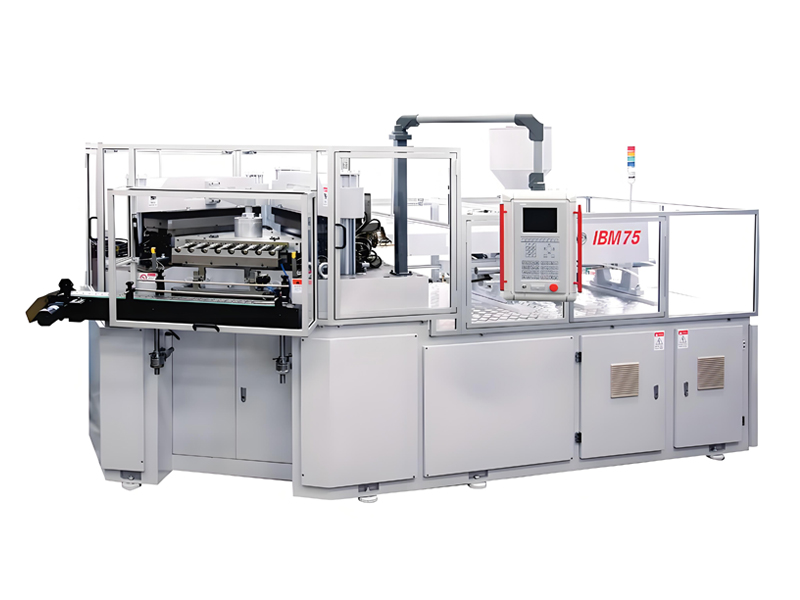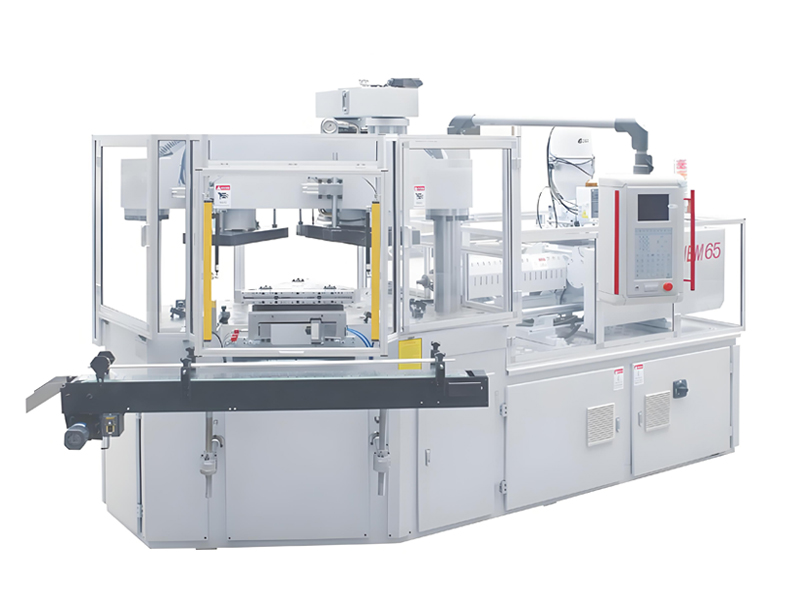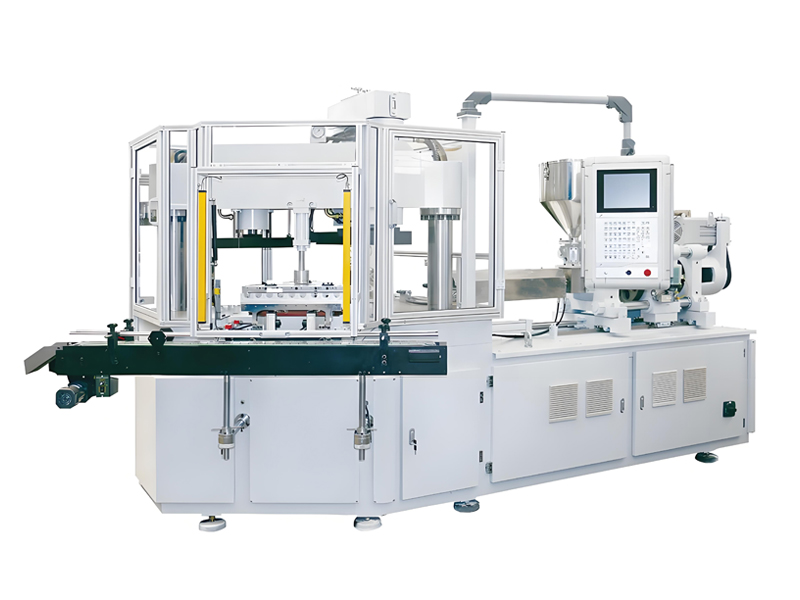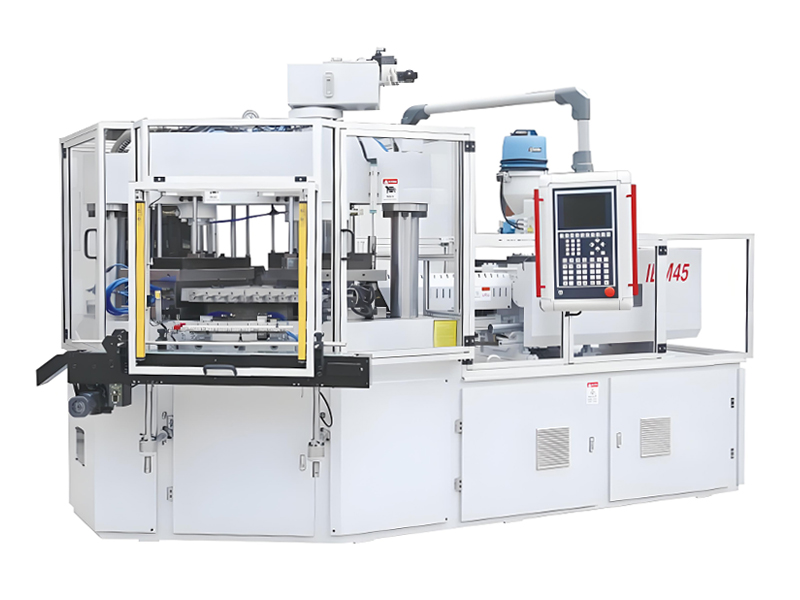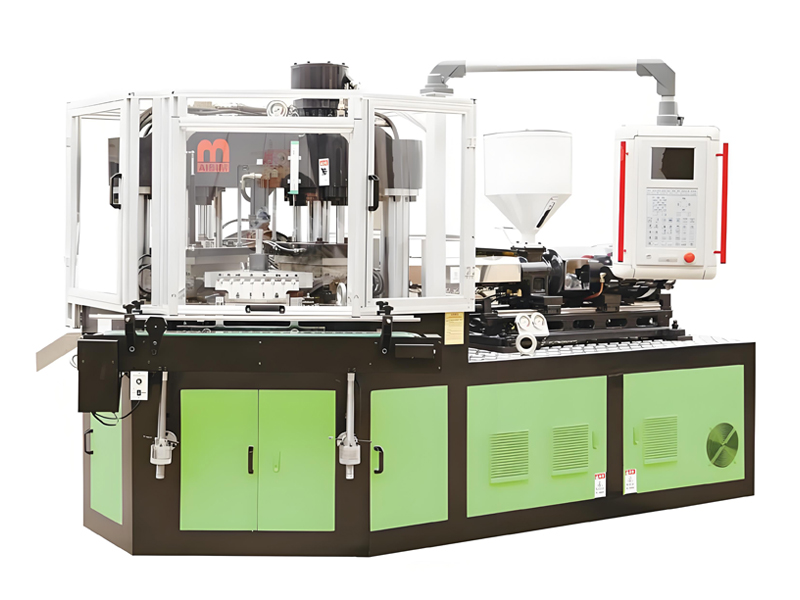
A YUKEN hydraulic valve is the precision gatekeeper of every movement inside an injection blow molding machine, controlling the clamp force that shapes the parison, the injection pressure that fills the mold cavity, and the transfer timing that turns molten polymer into a seamless pharmaceutical, cosmetic, or food container. For operators running an IBM75, IBM65, or IBM55 Hybrid machine, the difference between a stable wall thickness and a batch of rejected bottles often comes down to the condition of a single proportional valve. Aibim, a Wanplas factory with more than twelve years of experience in injection blow molding, builds its three-station one-step IBM lines around YUKEN hydraulic proportionals combined with proprietary PREFILL technology and a variable displacement pump pressurizing system, which together cut energy consumption by at least thirty-five percent versus conventional fixed-pump machines. This article explains how the YUKEN valve family functions inside an IBM machine, why original spare parts matter, how oil cleanliness and seal aging drive failure modes, and how a plant can set a preventive maintenance plan that keeps the hydraulic system inside its design window. By the end you will understand which valves to stock, which NAS contamination grade to hold, and how to verify authenticity before a valve ever reaches your manifold.
Why YUKEN Hydraulics Power Aibim IBM Machines
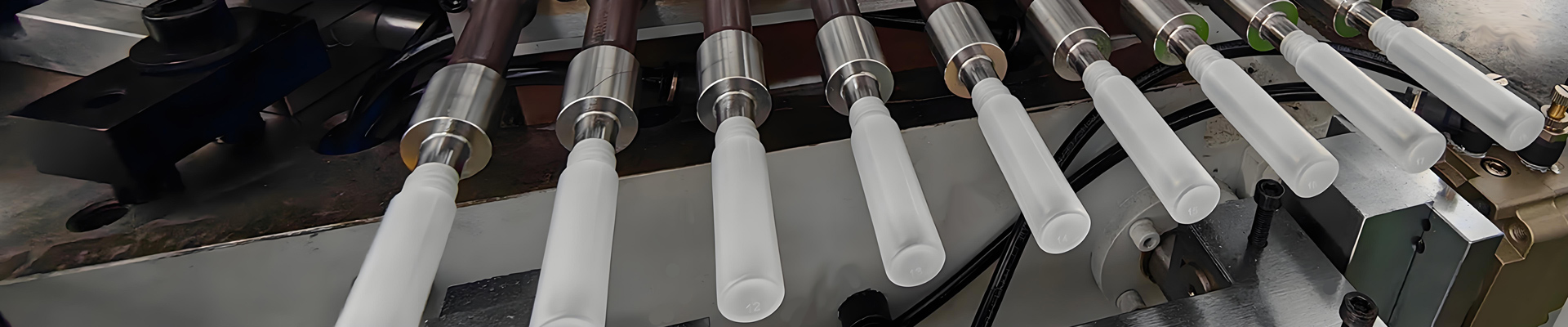
An injection blow molding machine is a three-station, one-step hollow molding system where polymer is plasticized and injected to form a parison on a core rod, the core rod is indexed to the blow station where the parison is inflated against a chilled mold, and then indexed again to the ejection station where the finished container is stripped. Each transfer, each clamp stroke, and each injection stroke is driven hydraulically, and the quality of the bottle depends on the repeatability of those strokes far more than on raw force. Aibim specifies YUKEN proportionals because the brand delivers predictable flow gain, tight spool overlap tolerance, and a response curve that holds steady across millions of cycles, which is exactly what a medical bottle line running twenty-four hours a day demands.
The hydraulic architecture in Aibim IBM machines combines a variable displacement pump with PREFILL technology. Instead of a fixed-volume pump that always pushes maximum flow and dumps the excess over a relief valve as heat, the variable displacement pump pressurizes only the flow actually demanded by the current stroke. A YUKEN proportional pressure valve sets the system pressure, and YUKEN proportional flow valves meter the speed of clamp open, clamp close, core-rod transfer, and injection forward. The result is lower average oil temperature, smaller cooling load, and the documented energy saving of at least thirty-five percent. For a plant calculating total cost of ownership, that saving moves the hydraulic power unit from a High operating-cost item toward a Medium one across the machine lifetime.
From the Wanplas brand perspective, standardizing on a globally supported hydraulic brand such as YUKEN means that every factory in the group, from Aibim’s IBM lines to the extrusion and recycling lines built by sister factories, can share spare-parts logic, training, and supplier traceability. Aibim’s own CNC center machines the structural parts, but the proportional and servo valves are procured as original components so that warranty, CE conformity, and food-contact safety requirements stay intact.
YUKEN Valve Family Used in Injection Blow Molding
The hydraulic circuit of an IBM machine is a layered network of directional, pressure, and flow functions, and YUKEN supplies a matching family of cartridges, sandwich plates, and stack valves. Understanding the role of each member helps a maintenance planner decide what to keep on the shelf and what to order against lead time. The table below maps the typical YUKEN components found on an Aibim IBM line to their function and relative cost tier.
| YUKEN Component | Function in IBM Machine | Typical Circuit Role | Relative Cost Tier |
|---|---|---|---|
| DSHG Series Directional Valve | Controls clamp open/close and core-rod station transfer | Solenoid-operated 4/3 way | Medium |
| EFBG Series Proportional Flow Valve | Meters clamp and injection stroke speed | Flow command from PLC | High |
| EBG Series Proportional Pressure Valve | Sets injection and clamp holding pressure | Pressure command from PLC | High |
| Electro-Hydraulic Servo Valve | Closed-loop injection speed and position control | Servo-driven metering | Very High |
| PREFILL (Pilot Check) Valve | Fast clamp close with low pump flow | Aibim PREFILL technology | Medium |
| Relief and Pressure Cut-off Valve | System over-pressure protection | Safety limiting | Low |
The directional valve is the workhorse that switches oil paths; the proportional flow and pressure valves are the fine instruments that give the machine its soft, controlled motion; the servo valve, where fitted, closes the loop on injection; and the relief valve is the last line of defense. Each carries a different cost tier, and each fails in a different way, which is why a maintenance budget should treat them as separate line items rather than one generic “hydraulics” category.
Proportional and Servo Valves: Pressure and Flow Control
A proportional valve differs from a simple on/off solenoid valve because its spool position is proportional to the command signal from the PLC. A YUKEN EBG proportional pressure valve, for example, converts a 0 to 10 volt or 4 to 20 milliamp signal into a corresponding pilot pressure that shifts the main stage, so the clamp can ramp up to holding pressure gradually instead of slamming. That ramp protects the mold, reduces shock, and keeps the parison dimensions stable. The EFBG proportional flow valve performs the same trick for speed: the core-rod transfer can accelerate smoothly, dwell, and decelerate without overshoot.
On Aibim IBM55 Hybrid and the higher-tonnage IBM75, a closed-loop servo valve may be used for the injection axis because the wall-thickness uniformity of a 3 ml dropper tip or a 1000 ml wide-mouth jar is sensitive to injection velocity profile. The servo valve reads a position or speed transducer and corrects flow dozens of times per second. This is where oil cleanliness becomes non-negotiable: a servo valve with a ten-micron metering edge will clog or stick if the oil carries abrasive particles, while a proportional valve with a coarser edge is more forgiving but still degrades. The practical rule is to size the filtration to the tightest valve in the circuit, which usually means a return-line filter of ten microns absolute and a pressure-line filter of five to ten microns.
Pressure and flow are coupled in every stroke. If the proportional pressure valve is set too high, the pump works against a higher load and oil temperature rises; if the flow valve is too restrictive, cycle time lengthens and output drops. Aibim’s parameter storage on an SD card lets an engineer record the exact proportional gain and command curve that produced a good bottle, then reload it on a sister machine, which is a measurable benefit when a plant runs several IBM lines in parallel and wants identical parison weight.
Directional Valves and PREFILL Technology
Directional valves decide where oil goes, not how much. The DSHG series on an Aibim IBM machine is a solenoid-operated 4/3 way valve, meaning it can send pump flow to the clamp cylinder cap side, to the rod side, or hold center depending on the energized coil. Because clamp close is a long, low-force travel and clamp lock is a short, high-force travel, Aibim uses PREFILL technology so that during the fast-close phase the clamp cylinder fills from the tank through a large pilot check, and only the final lock stroke draws metered pump flow. The variable displacement pump therefore stays at a small displacement during most of the stroke and only builds pressure at the end, which is the core of the energy saving.
A directional valve failure usually shows as a stuck or slow stroke, a cylinder that will not hold position, or a coil that burns out. The solenoid coil on a YUKEN directional valve runs warm in normal operation, but a coil that is too hot to touch indicates either a stuck spool requiring higher current or a supply voltage outside the rated band. Because the three-station transfer on an IBM machine is timed to fractions of a second, a slow directional valve directly reduces beats per minute and can cause the core rod to arrive at the blow station before the mold is fully closed, risking mold damage. Replacing a tired directional valve at the planned interval is therefore a Medium-cost preventive action that protects the entire molding cycle.
PREFILL valves deserve their own inspection because their pilot check poppet seats under both flow and pressure. If the poppet seat scores, the clamp will drift down under holding pressure and the parison wall will thin on one side. A periodic poppet-seat inspection, combined with the seal replacement discussed below, keeps the PREFILL function crisp.
Hydraulic Oil Management: Temperature and NAS Contamination Grade
Hydraulic oil is the transmission medium, the lubricant, and the coolant of the IBM machine all at once, so its physical state governs valve life. Two parameters dominate: temperature and solid contamination. Aibim’s energy-optimized hydraulics keep the average oil temperature lower than a fixed-pump machine, but the target band is still 45 to 55 degrees Celsius. Above 60 degrees Celsius, the oil oxidizes faster, the viscosity drops, and seal compounds such as NBR begin to harden; below 35 degrees Celsius, viscosity is too high, the pump starves, and the proportional valves respond sluggishly.
Contamination is measured by the NAS 1638 scale, which counts particles of defined sizes per one hundred millilitres of oil. The finer the valve, the cleaner the oil must be. The table below gives the practical cleanliness targets for an IBM hydraulic circuit and the action triggered at each grade.
| NAS 1638 Grade | 5 to 15 micron particles per 100 ml | Suitability for IBM proportional/servo valves | Action |
|---|---|---|---|
| NAS 6 | 640 to 1,300 | Ideal for servo valves | Maintain, monitor quarterly |
| NAS 7 | 1,300 to 2,500 | Acceptable for proportionals | Routine, change filter element |
| NAS 8 | 2,500 to 5,000 | Alarm threshold | Offline filtration, patch test |
| NAS 9 | 5,000 to 10,000 | Unsafe for servo valves | Full oil change, flush manifold |
| NAS 10 plus | Above 10,000 | Valve failure imminent | Stop machine, rebuild circuit |
A NAS patch test is a fifteen-minute field method: draw a sample, filter it through a membrane, and count the dark spots under a comparator. Plants that run an offline filtration cart can recover from NAS 9 to NAS 7 within a shift without dropping the oil, which is far cheaper than a Premium emergency manifold rebuild. Water content is the silent partner to particle count; free water above a few hundred parts per million accelerates rust on spool lands and promotes varnish, so a breather with a desiccant and a periodic water test belong in the same oil plan.
Seal Aging and Valve Failure Diagnosis
Hydraulic seals in an IBM machine sit in three zones: the pump and motor shaft seals, the clamp and core-rod cylinder seals, and the internal seals of the valves themselves. Seal compounds age primarily through heat, pressure cycling, and chemical attack by the oil additive package. NBR, the common black nitrile seal, is economical and oil-resistant but loses elasticity above roughly 100 degrees Celsius and stiffens in cold; FKM, often brown or green, tolerates higher temperature and many additives but costs more; polyurethane, used on rod seals, gives excellent wear resistance but is sensitive to hydrolysis in wet oil.
The earliest sign of seal aging is weeping, a film of oil at a cylinder rod or valve body that the operator wipes daily but that returns. Weeping is not cosmetic; it is lost volumetric efficiency. As the seal hardens, internal leakage rises, the proportional pressure valve must command higher current to hold clamp force, oil temperature climbs, and the cycle enters a slow thermal spiral. The diagnostic path below maps symptoms to likely causes and the valve or seal to inspect first.
| Symptom | Likely Root Cause | First Component to Inspect | Typical Cost Tier |
|---|---|---|---|
| Clamp pressure drifts after warm-up | Leaking proportional relief or pump compensator | EBG pressure valve, pump compensator | High |
| Slow core-rod transfer | Sticky directional spool or low flow command | DSHG directional valve | Medium |
| Oil weeping at cylinder rod | Aged rod seal, hardened NBR | Clamp cylinder rod seal set | Medium |
| Injection velocity oscillates | Contaminated servo valve spool | Servo valve, oil NAS grade | Very High |
| Burnt solenoid smell | Stuck spool forcing coil current | Directional valve coil and spool | Medium |
When a servo or proportional valve is diagnosed as contaminated, do not immediately scrap it. Many YUKEN valves can be ultrasonically cleaned and re-lapped at a specialist bench, restoring them to original spool clearance for a fraction of the Premium cost of a new manifold assembly. The decisive factor is whether the spool land is scored; light varnish cleans, deep scoring condemns.
Original versus Compatible Spare Parts and Authenticity
The market for “equivalent” hydraulic valves is large, and a compatible valve can be tempting because its purchase price sits one or two tiers lower than an original YUKEN unit. The risk is in the details that the IBM process cares about: spool overlap, flow gain linearity, hysteresis, and response time. A directional valve that switches a fraction of a second late changes the core-rod transfer timing; a proportional valve whose gain curve is shifted changes the injection velocity profile and therefore the parison weight. On a medical or cosmetic bottle line where wall thickness is a quality gate, that shift turns into scrap.
Authenticity verification starts before installation. A genuine YUKEN valve carries a laser-etched model and serial plate with the correct font and a traceable batch code, an anodized body with consistent surface finish, a coil label in the standard format, and a solenoid connector keyway that matches the harness. Aibim, as a Wanplas factory, supplies original YUKEN spares with documentation that ties the batch to the machine serial number, which matters for CE conformity and for food-contact lines that must demonstrate traceable component sourcing. The comparison below weighs the two routes on factors that affect a plant beyond first price.
| Factor | Original YUKEN Spare | Unverified Compatible Valve |
|---|---|---|
| Spool gain consistency | Tight, documented | Variable between batches |
| Traceability to machine | Yes, via Aibim | Usually no |
| Warranty coverage | Covered under Wanplas policy | Not covered |
| Parison quality risk | Low | Medium to High |
| Relative purchase cost | High to Very High | Low to Medium |
The practical compromise many plants adopt is to fit original valves on the axes that define part quality, the injection and clamp proportionals, and to keep a verified compatible directional valve only as a short-term emergency bridge while the original is in transit, never as a permanent solution on a validated line.
Preventive Maintenance Schedule and Replacement Intervals
A preventive plan converts unpredictable Premium downtime into scheduled Medium-cost interventions. The schedule below is tuned to an IBM machine running two shifts; single-shift plants can extend intervals, and continuous three-shift plants should compress them. The guiding principle is to replace seals and filters on a calendar, and to test valves on a condition basis using pressure and NAS data rather than waiting for a failure.
| Interval | Task | Target | Cost Tier |
|---|---|---|---|
| Daily | Check oil level, note weeping, log temperature | Temp 45 to 55 C, no weep | Low |
| Every 2,000 hours | Replace return and pressure filter elements | Hold NAS 7 to 8 | Low |
| Every 4,000 hours | NAS patch test, inspect PREFILL poppet | Confirm NAS 7, seat clean | Medium |
| Every 6,000 to 8,000 hours | Replace cylinder rod and piston seal sets | Stop weeping, restore volume | Medium |
| Every 12,000 hours | Bench-test proportional and servo valves | Confirm gain and response | High |
| Every 20,000 hours | Full oil change, flush, refill with certified oil | Reset NAS to 6 to 7 | Medium |
The Wanplas brand backs its factories with a shared service promise that includes a fixed annual allowance of free spare parts and warranty replacement of defective components, which lets a plant absorb the Medium-tier seal and filter costs within the group policy while reserving cash for the High or Very High proportional and servo valve purchases. Because Aibim runs its own CNC center and keeps original YUKEN spares on hand, lead time for a documented original valve is typically shorter than sourcing through an open market reseller.
Hydraulic Power Unit Layout and Pump Sizing
The hydraulic power unit on an Aibim IBM machine is a tuned subsystem rather than a generic pump and tank, and its sizing decides whether the YUKEN valves ever see stable pressure. The reservoir volume is typically sized to give the oil a dwell time long enough for entrained air to rise and for heat to spread, commonly around eight to twelve times the per-minute pump flow. Too small a tank means the oil cycles through the valves before air separates, which shows up as spongy clamp motion and a pressure trace that never settles. The variable displacement pump is selected so its maximum displacement covers the peak combined flow of clamp close, injection forward, and core-rod transfer without calling the relief valve into action; because Aibim’s PREFILL technology supplies most of the clamp-close volume from the tank, the pump displacement can be smaller than on a fixed-pump design, which is the root of the thirty-five percent energy saving.
The motor that drives the pump is matched to the pressure times flow power at the duty point, not to the peak nameplate of a fixed pump, so it runs cooler and draws less current. Cooling is the silent constraint: an air-blast heat exchanger sized for the rejected heat keeps oil in the 45 to 55 degrees Celsius band even in a warm hall. Undersized cooling forces the oil toward 60 degrees Celsius, and from there seal aging and varnish formation accelerate, which is why the cooling fan and its filter belong on the same preventive list as the valves. A plant extending an IBM line with extra molds should re-check the power unit balance, because a heavier clamp or a faster cycle raises peak flow and can push the original pump past its efficient window.
The manifold that mounts the YUKEN valves also deserves design respect. A manifold with sharp internal corners and oversized drillings traps pressure pulses that the proportional valves then have to fight; Aibim’s own CNC center machines the manifolds to a profile that damps those pulses, protecting spool seating. When a plant adds a valve for a new function, the manifold modification should keep the same port sizing and seat geometry, otherwise the new valve’s response will not match the bench-tested original and the parison weight will drift. A balanced power unit, correctly sized pump, and damped manifold are what let the YUKEN proportional and servo valves deliver the repeatable motion that defines bottle quality, and neglecting any one of them silently erodes the others.
Commissioning a Replacement Valve and First-Article Validation
Replacing a YUKEN valve is completed only when the machine proves it, not when the bolt is tight. The commissioning sequence starts with a cold oil flush through the new valve using a portable cart so that any debris from the manifold is not driven into the fresh spool. With the machine de-energized and the hydraulic pressure relieved, the valve is bolted, the solenoid connector is seated, and the coil resistance is checked against the nameplate to confirm the correct voltage band before power is applied. This simple resistance check catches a wrong-coil valve before it is energized, which protects both the valve and the PLC output that drives it.
The process recipe, including the proportional gain and the injection velocity curve, is reloaded from the SD card so the new valve sees the same command profile the old one did. Aibim stores this recipe per machine, which removes guesswork: the engineer does not re-tune from a blank page. The first step under power is a manual jog of the affected axis with the guard open and the stroke shortened, watching the pressure trace on the HMI for overshoot or hesitation. Only after the trace is clean does the machine run a slow automatic cycle with a single cavity, then a full tool. Rushing this staged start-up is the usual reason a “repaired” machine faults again within the hour.
First-article validation closes the loop. The first bottles from the re-commissioned line are weighed, sectioned, and checked for wall-thickness uniformity against the control limit, because a valve that passes a pressure test can still shift the parison weight if its gain is slightly off. Documenting the before-and-after weight distribution is what turns a parts swap into a validated maintenance event, and that record supports both the quality system for pharmaceutical or food contact parts and any warranty claim on the original spare. Plants that skip this step often find the defect only after a pallet of off-weight bottles is already packed, which is a Premium-cost mistake avoided by a Medium-cost validation routine. Treating commissioning and validation as mandatory, not optional, is the discipline that keeps an IBM line’s hydraulic system trustworthy across its full service life.
Frequently Asked Questions
Can I replace a YUKEN valve with a non-original compatible valve on my IBM machine?
A non-original valve may physically fit the manifold but often diverges in spool overlap, flow gain, and response time. On an injection blow molding machine the parison wall thickness depends on repeatable clamp and injection pressure, so original YUKEN spares are recommended to protect part quality and warranty.
What NAS contamination grade should the IBM hydraulic oil maintain?
Servo and proportional valves with fine metering edges should be supplied with oil cleaned to NAS 1638 class 7 or finer, with class 8 as the alarm threshold. Electro-hydraulic servo valves with tighter tolerance may require NAS class 6. An offline filtration cart and periodic patch test protect the spools.
How often should hydraulic seals be replaced preventively?
Rod and piston seals on the IBM clamp and core-rod cylinders should be inspected every 4,000 operating hours and replaced at the 6,000 to 8,000 hour interval as a set, because aged NBR or PU loses elasticity and begins weeping before a sudden failure occurs.
Why does my injection blow molding machine show pressure drift after warm-up?
Pressure drift after warm-up usually points to a leaking proportional relief valve, a worn pump compensator, or thermal expansion changing spool clearance. Confirm oil temperature is held at 45 to 55 degrees Celsius, then check the relief valve seating and pump compensator spring for fatigue.
How can I verify a YUKEN valve is genuine?
Check the laser-etched model and serial plate, the anodized surface finish, the coil label format, and the solenoid connector keyway. Genuine units carry the YUKEN nameplate with correct font and a traceable batch code; order through Aibim as a Wanplas factory to receive documented original spares.
What is the relative cost tier of YUKEN original hydraulic spares?
Directional solenoid valves sit at Medium cost tier, proportional pressure and flow valves at High, electro-hydraulic servo valves at Very High, and complete manifold assemblies at Premium. Preventive replacement of low-cost seals at Medium tier avoids Premium emergency downtime repairs.
Conclusion
A YUKEN hydraulic valve is not a commodity fitting on an injection blow molding machine; it is the device that translates a PLC command into the precise clamp and injection motion that defines bottle quality. Aibim, a Wanplas factory, builds its IBM75, IBM65, and IBM55 Hybrid lines around YUKEN proportional and servo valves paired with PREFILL technology and a variable displacement pump, a combination that saves at least thirty-five percent hydraulic energy while holding the repeatability that pharmaceutical, cosmetic, and food containers demand. Keeping those valves healthy means holding oil at 45 to 55 degrees Celsius, holding NAS 1638 cleanliness at class 7 or finer, replacing seals on a scheduled basis, and choosing original documented spares over unverified compatibles on the quality-critical axes. Plants that follow the preventive schedule in this guide convert unpredictable Premium downtime into planned Medium-cost service, and they can lean on the Wanplas group spare-parts policy to keep the hydraulic system inside its design window for the full life of the machine.