PCTG, a high-performance amorphous copolyester material widely adopted in premium packaging, medical devices, cosmetic containers, and consumer transparent products, stands out for its exceptional transparency, outstanding chemical resistance, excellent low-temperature toughness, and zero bisphenol A composition. Compared with conventional PET and PETG materials, PCTG features higher thermal stability, better stress cracking resistance, and superior surface gloss, making it the preferred raw material for high-end transparent plastic products in 2026. However, PCTG has a narrow processing temperature window and sensitive molding parameter requirements, which makes it highly dependent on professional and precise molding equipment.
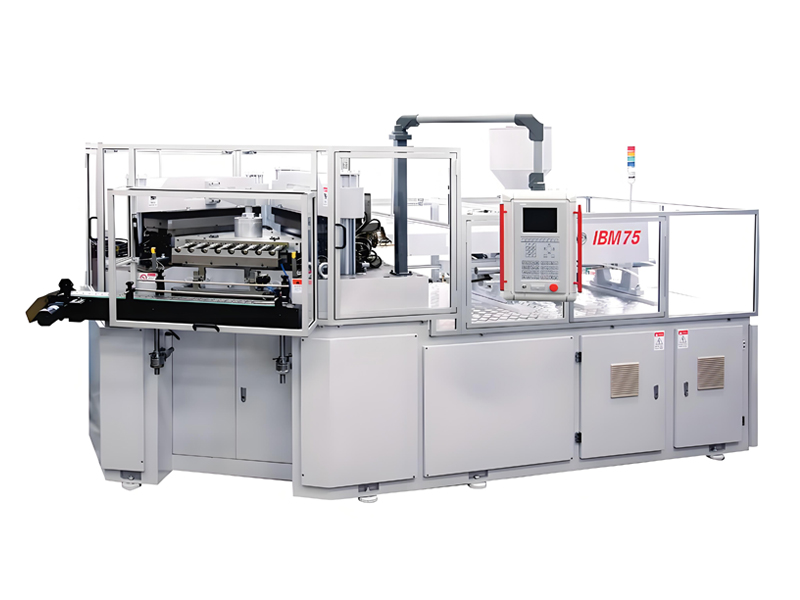
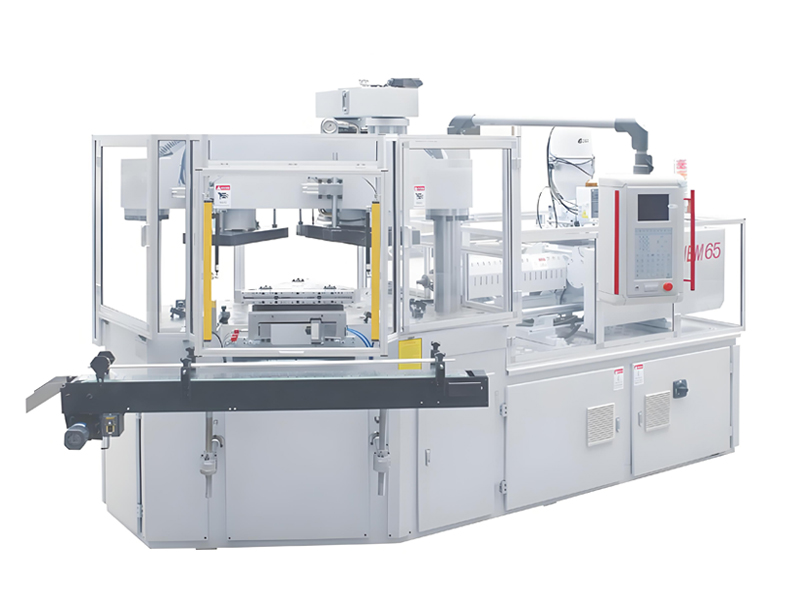
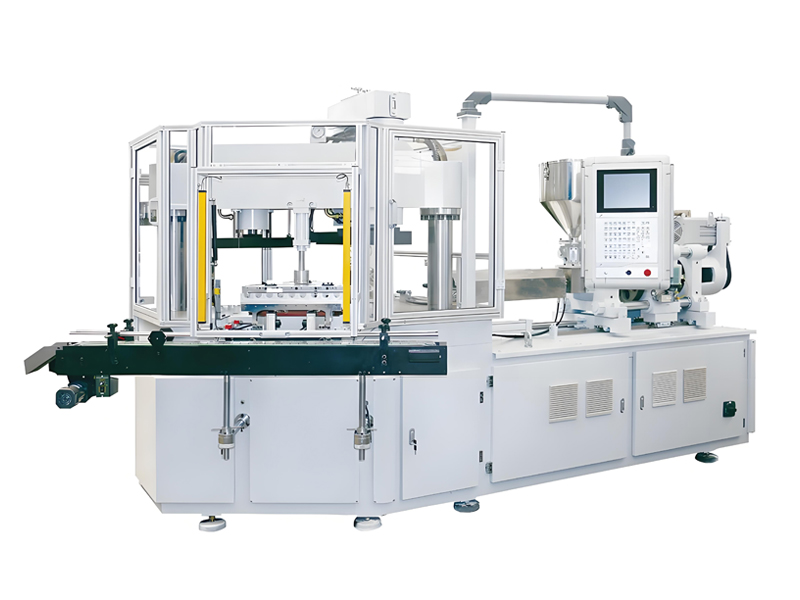
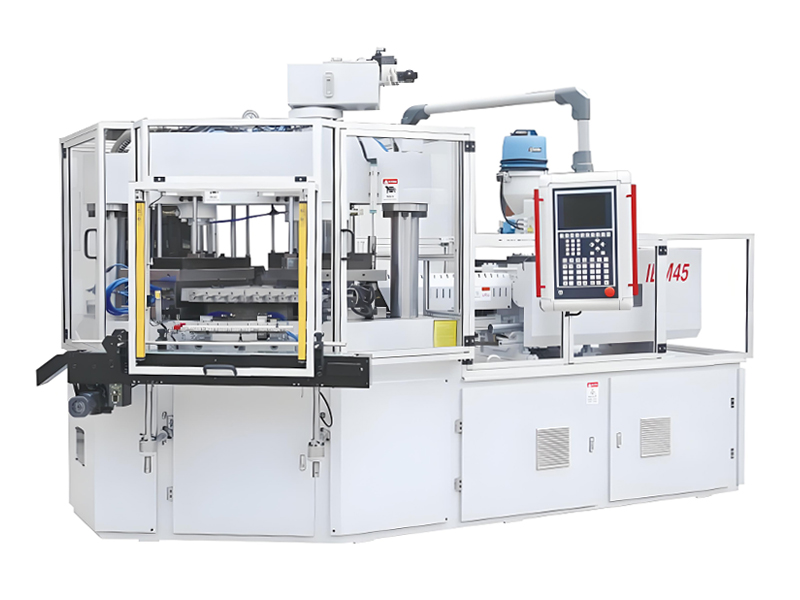
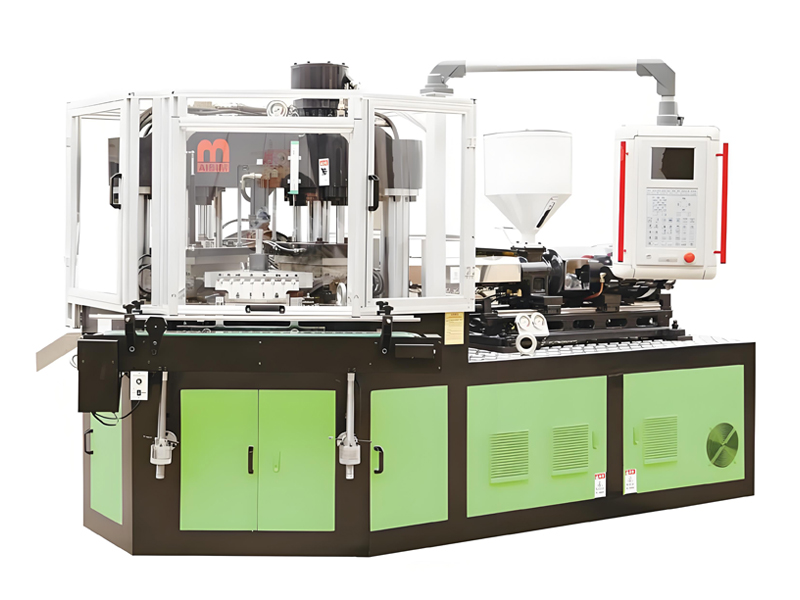
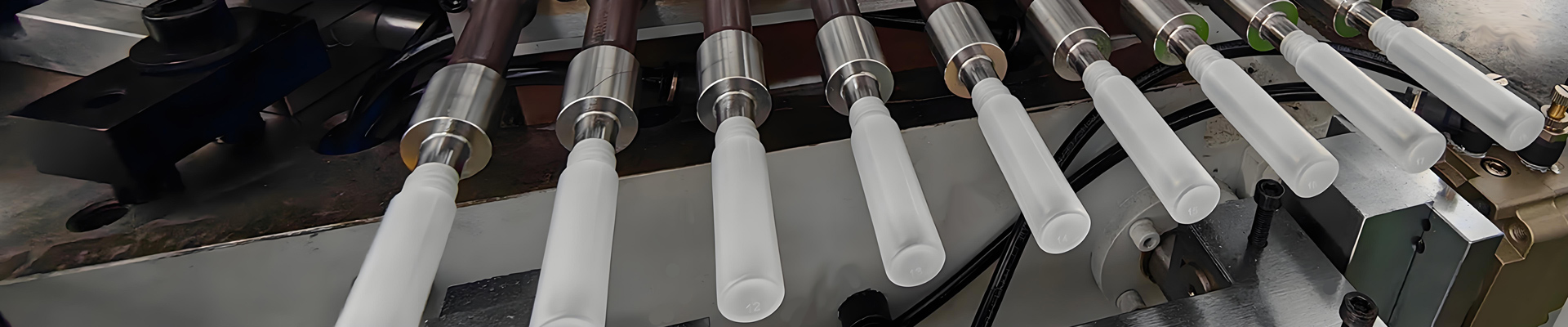
The Injection Blow Molding Machine is the most suitable equipment for mass production of high-precision PCTG containers, integrating injection parison forming and blow molding shaping in one automated process. Different from traditional two-step extrusion blow molding equipment, the injection blow molding process completes parison injection, mold clamping, stretching blowing, and finished product demolding in a single machine cycle, effectively avoiding secondary parison contamination, parison sagging, and wall thickness inconsistency, which perfectly matches the high-precision molding demands of PCTG materials. As a professional manufacturer of high-precision injection blow molding equipment, AiBiM independently develops and optimizes dedicated Injection Blow Molding Machine configurations for PCTG processing, solving common production defects such as yellowing, fogging, uneven wall thickness, and internal stress cracking in PCTG products.
Improper temperature and parameter settings are the primary causes of low yield, unstable product quality, and increased production costs in PCTG injection blow molding production. Unreasonable barrel temperature leads to material degradation and yellowing, inappropriate mold temperature causes surface fog and internal residual stress, and mismatched blowing pressure and speed result in deformed products and uneven wall thickness. This article comprehensively elaborates on the material processing characteristics of PCTG, core temperature parameter settings, injection and blowing process parameters, common defect troubleshooting, equipment configuration matching, and production cost analysis when processing PCTG on an Injection Blow Molding Machine. It provides systematic and actionable parameter guidelines for factories engaged in high-end PCTG transparent product production, helping enterprises stabilize product quality, improve production efficiency, and reduce comprehensive production costs.
1. Basic Processing Characteristics of PCTG Materials for Injection Blow Molding
1.1 Physical and Molding Properties of PCTG
PCTG is a modified copolyester material formed by copolymerization of cyclohexane dimethanol and terephthalic acid, belonging to non-crystalline plastic materials. It has ultra-high light transmittance of over 90%, equivalent to glass transparency, and maintains excellent clarity without crystallization and whitening during the blow molding process. In terms of mechanical properties, PCTG has strong impact resistance, low-temperature toughness, and anti-stress cracking ability, which can effectively avoid product cracking during transportation and daily use. In terms of chemical performance, PCTG resists erosion of daily cosmetics, alcohol, oil, and weak acid and alkali solutions, making it widely used in cosmetic packaging, medical sterile containers, and food-grade transparent packaging.
In terms of molding characteristics, PCTG has a narrow thermal processing window and high temperature sensitivity. The material is prone to thermal degradation, molecular chain fracture, and yellowing when the processing temperature exceeds the safe range. When the temperature is too low, the material plasticization is insufficient, resulting in poor fluidity, incomplete mold filling, and obvious welding lines on the product surface. In addition, PCTG has fast cooling speed and large shrinkage fluctuation, requiring precise mold temperature control and cooling cycle parameter adjustment to avoid residual internal stress and subsequent product deformation.
1.2 Differences Between PCTG and Ordinary PETG/PET Blow Molding Processing
Compared with ordinary PET and PETG materials commonly used in injection blow molding, PCTG has stricter processing requirements. PET materials have strong crystallization tendency, and products are prone to whitening and fogging after blow molding, with poor low-temperature toughness. PETG has a wider processing temperature range but weaker chemical resistance and thermal stability than PCTG. PCTG abandons the crystallization defect of PET and enhances the molecular structure stability of PETG, achieving comprehensive improvements in transparency, weather resistance, and chemical resistance.
In terms of equipment adaptation and parameter settings, PET and PETG can adapt to general injection blow molding equipment and have loose temperature parameter tolerance. While PCTG must adopt high-precision temperature-controlled Injection Blow Molding Machine, requiring segmented precise temperature control, stable pressure output, and accurate cycle time matching. Ordinary general-purpose equipment cannot meet the precise parameter adjustment demands of PCTG processing, which will lead to a large number of defective products and increased production loss costs.
1.3 Key Processing Challenges of PCTG on Injection Blow Molding Machine
The main technical challenges in PCTG injection blow molding production include narrow temperature processing window, easy thermal degradation and yellowing, high requirement for plasticization uniformity, sensitive internal stress generation, and strict surface smoothness standards. The material stays in the barrel for too long, or local overheating will cause molecular degradation, resulting in reduced product transparency and yellow surface. Insufficient plasticization leads to poor melt fluidity, incomplete product molding, and obvious surface defects. Unreasonable cooling parameters will cause residual internal stress inside the product, resulting in later warping deformation and stress cracking.
In addition, PCTG products are mostly used in high-end scenes with ultra-high appearance requirements, requiring no scratches, no fogging, no flow marks, and uniform wall thickness on the surface. This puts forward higher requirements for the parameter stability, mold precision, and operation stability of the Injection Blow Molding Machine, making precise parameter setting the core key to qualified PCTG product production.
2. Overall Parameter Setting Framework for PCTG Injection Blow Molding
The complete processing parameter system of PCTG on an Injection Blow Molding Machine covers four core modules: barrel segmented temperature parameters, nozzle temperature parameters, mold temperature and cooling parameters, and injection and blowing dynamic parameters. All parameters are mutually matched and restricted, and any single parameter deviation will affect the overall molding quality. Different from conventional plastic processing, PCTG molding parameters need to follow the principles of low-temperature plasticization, short stay time, stable pressure molding, and uniform slow cooling to ensure material performance stability and product appearance quality.
AiBiM Injection Blow Molding Machine is pre-calibrated with professional PCTG molding parameter templates. The equipment adopts independent multi-stage temperature control system, high-precision pressure servo system, and intelligent cycle time locking function, which can realize one-click calling of PCTG optimal parameters, effectively avoiding product quality problems caused by manual parameter debugging errors, and greatly improving production stability and yield.
3. Optimal Temperature Parameter Settings for PCTG Processing
3.1 Barrel Segmented Precise Temperature Settings
Barrel temperature is the most critical parameter affecting PCTG melt plasticization quality and thermal stability. PCTG adopts segmented gradient temperature setting, which is divided into feeding section, compression section, metering section, and nozzle front section. The temperature increases gradually from the feeding end to the nozzle end to ensure gradual melting of raw materials, avoid local overheating and material degradation, and ensure uniform melt fluidity.
The optimal temperature range of the feeding section is 230℃ to 240℃. The main function of this section is to preheat and soften PCTG particles. Too low temperature will result in unsoftened particles, increased screw load, and insufficient subsequent plasticization. Too high temperature will cause early melting of surface particles, material bonding, and material blocking in the feeding section, affecting continuous feeding stability.
The compression section is the core plasticization area of PCTG materials, with the optimal temperature set at 240℃ to 250℃. In this section, solid particles are completely melted and uniformly plasticized under screw shearing and heating. The temperature must be strictly controlled within the safe range to avoid thermal degradation caused by excessive temperature and poor fluidity caused by insufficient temperature. The AiBiM Injection Blow Molding Machine adopts independent temperature control for each section, with temperature control accuracy up to ±1℃, ensuring stable and consistent plasticization effect of PCTG melt.
The metering section temperature is set at 245℃ to 255℃, which further homogenizes the melt temperature and ensures stable melt output and uniform viscosity. This section maintains stable pressure storage to provide consistent melt dosage for subsequent injection parison, avoiding parison thickness deviation caused by uneven melt viscosity.
The overall melt temperature of PCTG is strictly controlled between 230℃ and 260℃, and the material residence time in the barrel must be controlled within 5 minutes. Excessively long residence time will cause irreversible degradation of PCTG molecular chains, resulting in yellowing, decreased transparency, and reduced mechanical properties of finished products. For intermittent production and shutdown, it is necessary to lower the barrel temperature in time and clean the residual materials to avoid high-temperature carbonization of residual PCTG materials.
3.2 Nozzle Optimal Temperature Setting
The nozzle temperature directly affects the injection parison surface smoothness and melt fluidity. The optimal nozzle temperature for PCTG processing is set at 235℃ to 245℃, which is 5℃ to 10℃ lower than the metering section temperature. This temperature difference setting can effectively prevent melt wire drawing and overflow at the nozzle, avoid material waste and parison head defects, and ensure smooth and uniform injection of PCTG melt.
If the nozzle temperature is too high, the melt fluidity is too strong, which is easy to cause wire drawing and excess material residue at the nozzle, resulting in burrs and defects on the surface of the parison and finished product. If the nozzle temperature is too low, the melt viscosity increases, the injection resistance increases, the parison filling is incomplete, and the surface is prone to shrinkage marks and pits. The AiBiM Injection Blow Molding Machine is equipped with an independent nozzle constant-temperature control module, which can lock the nozzle temperature for a long time and avoid temperature drift during long-term continuous production.
3.3 Mold Temperature and Cooling System Parameter Settings
Mold temperature is a key parameter that determines the transparency, internal stress, and dimensional stability of PCTG finished products. PCTG is suitable for low-temperature rapid cooling molding, and the optimal mold temperature range is 15℃ to 30℃. It is necessary to match a special freezing water circulating cooling system to maintain constant low-temperature mold temperature. Low-temperature molding can quickly fix the product shape, inhibit the generation of internal residual stress, and ensure ultra-high surface transparency and smoothness of PCTG products.
When the mold temperature is higher than 35℃, the product cooling speed is slow, the surface is prone to fogging and dimness, and the internal stress is large, which is easy to cause product warping and stress cracking in the later stage. When the mold temperature is lower than 10℃, the cooling speed is too fast, the melt shrinkage is uneven, and the product is prone to micro-deformation and dimensional deviation.
The cooling cycle time is matched with the product wall thickness. For conventional thin-walled PCTG cosmetic bottles and small transparent containers with a wall thickness of 1mm to 2mm, the optimal cooling time is 8 to 12 seconds. For thick-walled products with a wall thickness of more than 2mm, the cooling time is appropriately extended to 12 to 18 seconds to ensure complete and uniform cooling of the product inside and outside, eliminate residual stress, and stabilize product dimensional accuracy.
4. Core Dynamic Process Parameter Settings for PCTG Injection Blow Molding
4.1 Injection Pressure and Speed Parameters
Injection pressure and speed determine the filling uniformity and parison wall thickness consistency of PCTG melt. The optimal injection pressure for PCTG processing is controlled at 55 to 75 bar. Moderate injection pressure can ensure that the melt fills the parison mold stably and completely, avoiding incomplete filling and parison defects caused by insufficient pressure, and preventing excessive pressure from causing melt overflow and excessive flash.
The injection speed adopts medium and stable speed setting, with the optimal speed range of 35% to 50% of the equipment rated speed. Too fast injection speed will cause strong shear heat generation of PCTG melt, local overheating and degradation, resulting in yellowing and surface streaks of the product. Too slow speed will lead to melt temperature drop during filling, poor fluidity, uneven parison wall thickness, and reduced production efficiency.
The AiBiM Injection Blow Molding Machine adopts segmented adjustable injection pressure and speed, which can dynamically match different PCTG product specifications and wall thickness requirements, realizing stable filling of melt and consistent parison quality in each cycle.
4.2 Blow Pressure and Blow Time Parameters
Blow molding parameters directly affect the molding fullness, wall thickness uniformity, and surface flatness of PCTG finished products. The optimal blowing pressure for PCTG transparent products is 0.35 to 0.5 MPa. Stable and moderate air pressure can make the PCTG parison evenly fit the mold cavity, ensure smooth and flat product surface, and uniform wall thickness of each part of the bottle body.
Insufficient blowing pressure will result in incomplete product molding, concave bottle body, uneven wall thickness, and low product roundness. Excessive blowing pressure will cause excessive stretching of local thin-wall areas, resulting in ultra-thin local bottle body, reduced pressure resistance, and even burst bottles during molding.
The optimal blowing time is 3 to 6 seconds. Sufficient blowing time ensures that the product is fully shaped and attached to the mold cavity, eliminating surface wrinkles and deformation. Cooperated with low-temperature mold cooling, it realizes rapid shaping and fixed size of PCTG products, ensuring high dimensional accuracy of finished products.
4.3 Cycle Time and Parameter Matching Settings
The total cycle time of PCTG injection blow molding is comprehensively determined by injection time, blowing time, cooling time, and mold opening and closing time. The optimal cycle time for conventional small and medium-sized PCTG transparent containers is 18 to 25 seconds per cycle. The AiBiM Injection Blow Molding Machine realizes intelligent cycle parameter locking, which can automatically match the optimal cycle rhythm according to product specifications, ensuring stable production efficiency while ensuring product quality.
In actual production, the cycle time should not be blindly shortened for high output. Excessively fast cycle will lead to insufficient cooling and incomplete shaping of PCTG products, resulting in unstable product size and easy deformation after demolding. Reasonable cycle parameter matching is the key balance point between product yield and production efficiency.
5. Common PCTG Defects and Parameter Adjustment Solutions
5.1 Product Yellowing and Transparency Reduction
Product yellowing and decreased transparency are the most common defects in PCTG processing, mainly caused by excessive processing temperature, too long material residence time, and excessive shear heat. The targeted adjustment scheme is to appropriately reduce the barrel compression section and metering section temperature by 5℃ to 10℃, shorten the material residence time in the barrel to less than 5 minutes, and reduce the injection speed to avoid excessive shear heat generation. Regularly clean the barrel and nozzle residual carbonized materials to prevent material pollution and yellowing.
5.2 Surface Fogging and Dim Surface
PCTG product surface fogging is mainly caused by high mold temperature and insufficient cooling efficiency. The solution is to reduce the mold temperature to 15℃ to 25℃, turn on the freezing water circulating cooling system to stabilize low-temperature molding, and appropriately extend the cooling time to ensure rapid and uniform cooling of the product surface. Avoid high-temperature molding and slow cooling, which lead to molecular relaxation and surface fogging.
5.3 Uneven Wall Thickness and Bottle Body Deformation
Uneven wall thickness is caused by unstable injection pressure, unreasonable parison temperature distribution, and mismatched blowing pressure. It is necessary to calibrate the injection pressure stability, optimize the barrel segmented temperature gradient to ensure uniform parison temperature, and adjust the blowing pressure to a stable range of 0.35 to 0.5 MPa. For deformed products, extend the cooling shaping time to eliminate internal stress and stabilize product shape.
5.4 Internal Stress Cracking of Finished Products
Internal stress cracking occurs after PCTG products are used for a period of time, which is caused by unreasonable cooling parameters and residual internal stress. The fundamental solution is to adopt low-temperature slow cooling molding, optimize the mold cooling water circuit layout to ensure uniform cooling inside and outside the product, and avoid excessive temperature difference shrinkage stress. Match AiBiM high-precision parameter locking function to stabilize long-term production parameters and eliminate batch stress defects.
6. AiBiM Injection Blow Molding Machine Configuration Matching for PCTG Production
6.1 Professional Equipment Structural Advantages for PCTG Processing
Ordinary low-precision injection blow molding machines cannot meet the strict parameter stability requirements of PCTG processing, which is prone to parameter drift, temperature deviation, and pressure fluctuation during long-term production, resulting in unstable product quality. AiBiM professional Injection Blow Molding Machine is specially optimized for high-performance transparent materials such as PCTG and PETG, adopting multi-stage independent precise temperature control system, high-precision servo pressure stabilization system, and closed-loop intelligent parameter locking technology.
The equipment barrel and screw are made of high-precision anti-corrosion and wear-resistant materials, with uniform heating and stable plasticization effect, which can avoid local overheating degradation of PCTG materials. The servo constant-pressure blowing system ensures long-term stable blowing pressure without fluctuation, ensuring consistent wall thickness and appearance quality of each batch of PCTG products. The intelligent PLC control system stores dedicated PCTG parameter formulas, realizing one-click switching and zero-debugging production, greatly reducing manual debugging errors and defective product rate.
6.2 Equipment Price and Production Cost Budget Analysis
The procurement cost of professional PCTG-grade Injection Blow Molding Machine is higher than that of ordinary general-purpose models due to high-precision configuration and dedicated process optimization. In 2026, the FOB price of AiBiM standard Injection Blow Molding Machine suitable for mass production of PCTG small and medium-sized transparent containers is 32,000 to 39,000 US dollars. This model is equipped with full independent temperature control, servo pressure stabilization system, and intelligent parameter storage function, fully meeting the high-precision parameter adjustment demands of PCTG processing.
The upgraded high-precision customized model for high-end ultra-thin PCTG products and medical-grade PCTG containers has a price of 40,000 to 46,000 US dollars, with higher temperature control accuracy and pressure stability, suitable for high-standard and high-value-added PCTG product production. The equipment has a service life of more than 10 years, with low daily failure rate and long-term stable precision, and the average daily depreciation cost is controlled at 9 to 12 US dollars, with low long-term fixed investment amortization.
In terms of daily operating costs, the AiBiM energy-saving servo system reduces idle energy consumption by more than 22% compared with ordinary equipment. The precise parameter control reduces the PCTG defective rate to below 0.8%, greatly reducing raw material waste and rework costs. The comprehensive daily operating cost including water, electricity, maintenance and wearing parts is 35 to 48 US dollars, with extremely low comprehensive production cost and prominent cost performance advantage in long-term mass production.
6.3 Auxiliary Equipment Matching Configuration and Cost Budget
PCTG injection blow molding production needs to be matched with professional auxiliary equipment to ensure parameter stability and product quality, including freezing water low-temperature cooling system, raw material dehumidification and drying machine, and precise air pressure stabilization device. The total one-time procurement cost of supporting auxiliary equipment is 9,500 to 12,800 US dollars. The freezing water cooling system ensures stable low-temperature mold temperature, the dehumidification dryer removes material moisture to avoid product silver lines and bubbles, and the air pressure stabilization device eliminates blowing pressure fluctuation, providing guarantee for high-quality PCTG molding.
7. PCTG Production Parameter Standard Operation and Maintenance Specifications
7.1 Pre-Production Parameter Debugging Standard Process
Before formal PCTG mass production, complete standardized parameter preheating and debugging. First, heat the barrel in sections according to the optimal temperature range, and keep warm for 20 to 30 minutes after reaching the set temperature to ensure uniform temperature of each section. Clean the residual materials in the barrel to avoid mixing different materials affecting product quality. Then turn on the freezing water cooling system to stabilize the mold temperature at 15℃ to 30℃, and calibrate the injection pressure and blowing pressure parameters.
After parameter calibration, conduct trial production of 20 to 50 sample products, inspect product transparency, surface smoothness, wall thickness uniformity and dimensional accuracy, fine-tune individual parameters according to the actual molding effect, and lock all parameters after the product reaches the qualified standard before starting continuous mass production.
7.2 Daily Production Parameter Stability Maintenance
During long-term continuous production, regularly check the temperature control accuracy, pressure stability and cycle time consistency of the Injection Blow Molding Machine every 2 hours. Avoid parameter drift caused by equipment heating and long-term operation. Regularly check the drying effect of PCTG raw materials to prevent moisture from affecting product appearance. Keep the equipment operating environment temperature stable at 18℃ to 28℃, avoid excessive ambient temperature affecting mold cooling effect and product molding quality.
7.3 Shutdown and Material Replacement Parameter Management
When shutting down or replacing materials after PCTG production, it is necessary to lower the barrel temperature to below 200℃ in time to avoid long-term high-temperature retention and carbonization of residual PCTG materials. Clean the barrel and nozzle thoroughly to prevent residual degraded materials from affecting subsequent production. Record the optimal PCTG parameter formula for one-click calling in the next production, reducing repeated debugging time and material waste.
8. Production Efficiency and Yield Improvement Strategies Based on Optimal Parameters
Scientific and accurate temperature and parameter settings are the core foundation to improve the yield and production efficiency of PCTG injection blow molding products. By adopting the optimal segmented temperature parameters, stable pressure settings and reasonable cycle time matching summarized in this article, the PCTG product qualification rate can be increased from the industry average of 92% to more than 99.2%. The ultra-low defective rate greatly reduces raw material waste and rework labor costs, directly improving the comprehensive profit margin of PCTG product production.
The intelligent parameter locking function of AiBiM Injection Blow Molding Machine realizes zero-difference repeated production, ensuring consistent quality of each batch of products, improving customer order satisfaction and product market competitiveness. The optimized low-temperature and short-residence processing parameters protect the physical and chemical properties of PCTG materials to the greatest extent, ensuring that the finished products have excellent transparency, toughness and chemical resistance, meeting the high-standard requirements of high-end cosmetic packaging, medical containers and premium consumer products.
9. Conclusion
PCTG high-performance transparent material has strict processing parameter requirements due to its narrow thermal processing window and temperature-sensitive characteristics. The precise matching of temperature parameters, injection and blowing dynamic parameters, and cooling cycle parameters of the Injection Blow Molding Machine directly determines the finished product quality, yield and production cost of PCTG products. Scientific segmented barrel temperature, stable low mold temperature, moderate injection and blowing pressure, and reasonable cycle time are the core optimal parameter combinations for PCTG injection blow molding processing.
As professional high-precision molding equipment for high-performance transparent materials, AiBiM Injection Blow Molding Machine is optimized and configured for PCTG processing characteristics, with accurate temperature control, stable pressure output and intelligent parameter management functions. It can perfectly adapt to the optimal parameter settings of PCTG production, effectively solve common product defects, reduce comprehensive production costs, and improve product quality and production efficiency. For enterprises engaged in mass production of high-end PCTG transparent containers, standardized parameter matching and professional equipment configuration are the key to stable operation and long-term profit improvement.