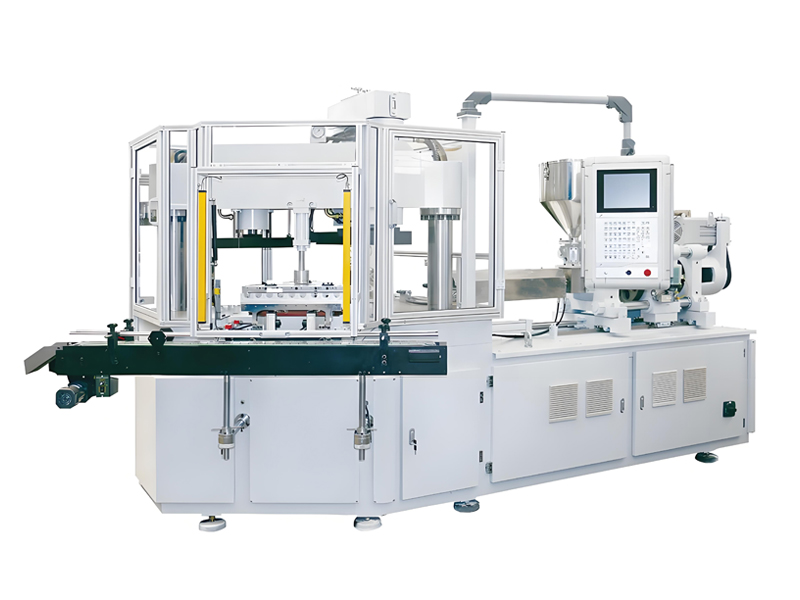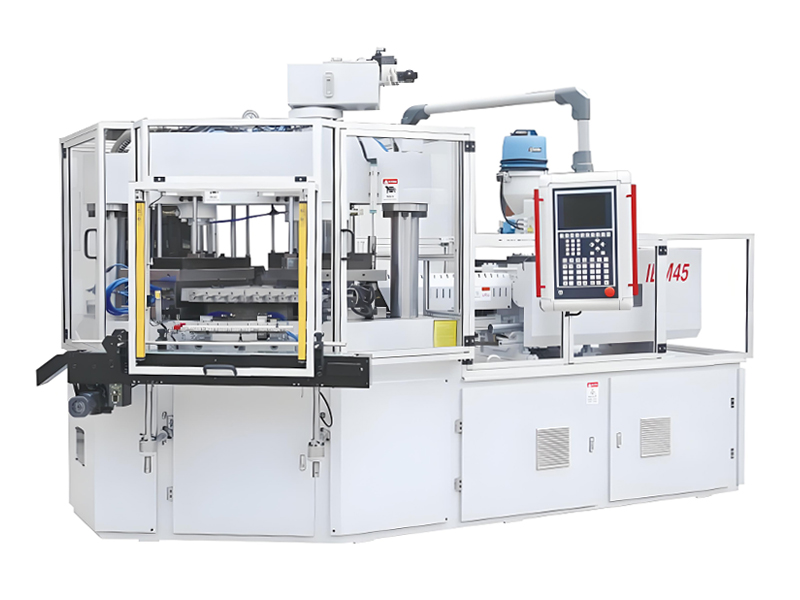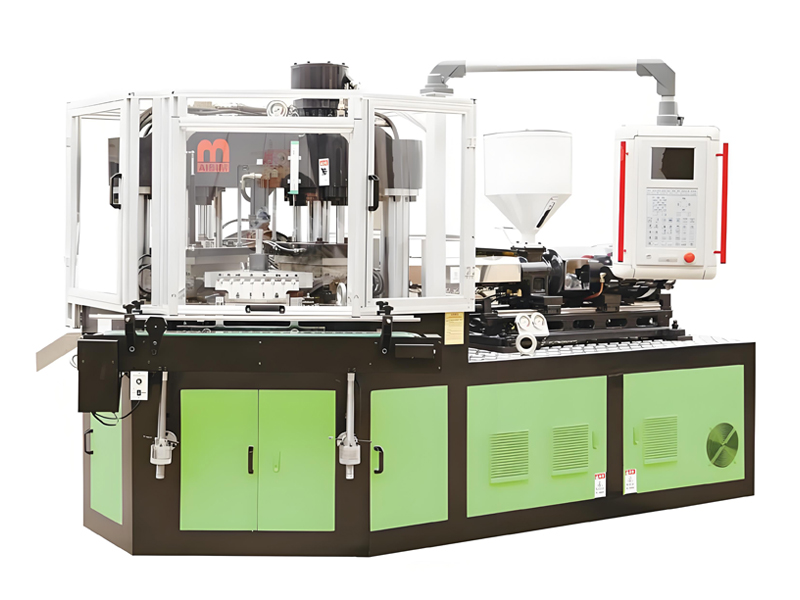
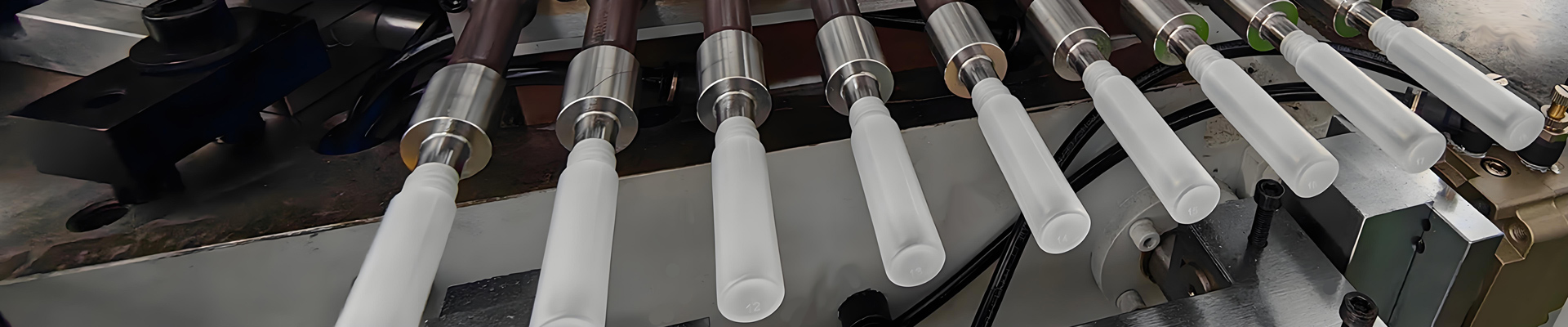
Injection blow molding technology has become the mainstream precision manufacturing process for small and medium-sized hollow plastic containers in pharmaceutical packaging, cosmetic packaging, food packaging and daily chemical industries. Different from traditional extrusion blow molding, injection blow molding integrates precise injection parison forming, rotary mold positioning and high-precision blow molding shaping, featuring high dimensional accuracy, no waste edge, smooth product surface and stable batch consistency. It is the preferred production process for high-end transparent and high-precision plastic containers.
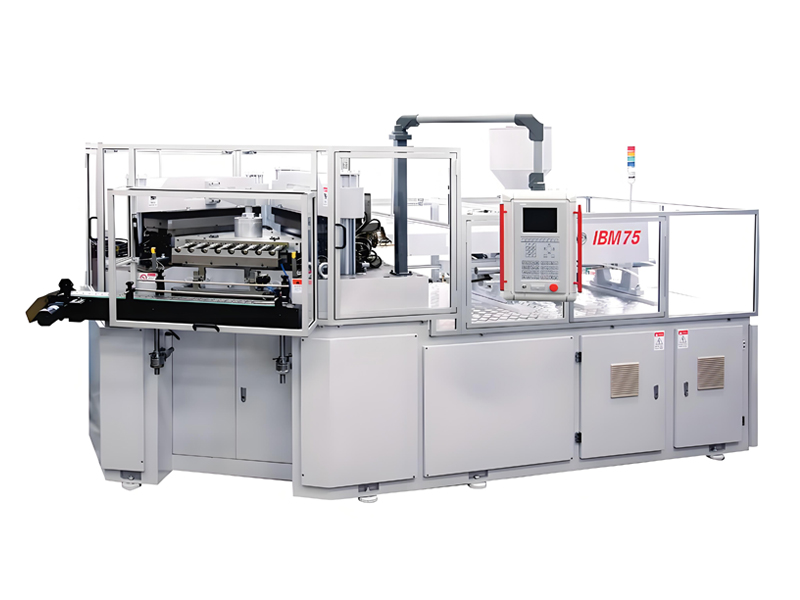
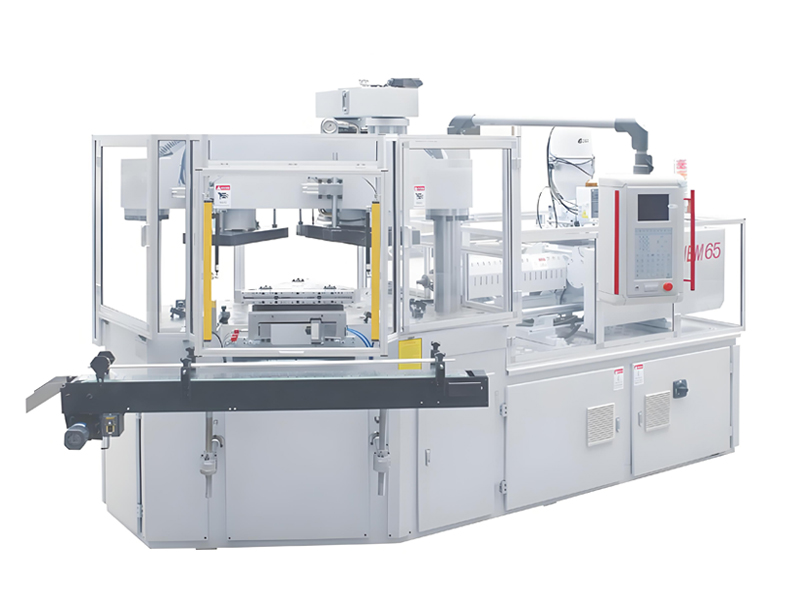
As core mainstream models of AiBiM injection blow molding machine series, IBM65 and IBM75 injection blow molding machines cover the mainstream production specifications of small and medium-sized precision hollow containers. Many container manufacturing enterprises face confusion in model selection during production line upgrading and new project construction. Choosing a suitable injection blow molding machine model directly affects production efficiency, product qualification rate, long-term operation cost and enterprise profit margin.
This comprehensive selection guide takes IBM65 and IBM75 injection blow molding machines as the core research objects, systematically compares their structural parameters, production capacity, applicable product specifications, material adaptability, operational performance and comprehensive investment cost. It summarizes targeted selection suggestions for different production scales, product types and budget conditions, helping enterprises accurately match equipment and production lines, avoid over-investment or insufficient production capacity, and maximize production benefits.
1. Overview of AiBiM IBM65 and IBM75 Injection Blow Molding Machine
AiBiM is a professional manufacturer focusing on the R&D, design and production of high-precision injection blow molding machines. The independently developed IBM series injection blow molding machines have stable performance, high molding precision and wide application range, and are widely recognized in the global precision plastic container manufacturing industry. IBM65 and IBM75 are two classic universal models of the series, positioned in small and medium precision container production scenarios respectively, covering most mainstream packaging container production needs in the market.
Both models adopt the mature three-station rotary injection blow molding process, integrating injection parison, blow molding shaping and demolding functions in one automatic cycle. The whole machine realizes full-automatic unmanned production, with no material waste, smooth product surface without burrs, and stable batch quality. They are suitable for mass production of PP, PE, PETG and other plastic precision hollow containers, and are widely used in pharmaceutical bottles, cosmetic bottles, food packaging bottles and daily chemical fine packaging products.
The core difference between the two models lies in molding stroke, mold installation size, production capacity and applicable product volume range. IBM65 is a compact high-cost-performance model for small precision containers, while IBM75 is an upgraded medium-sized model with larger molding space and higher production flexibility, adapting to medium-sized container production and multi-specification flexible production needs.
1.1 Core Design Advantages of AiBiM Injection Blow Molding Machine
All AiBiM injection blow molding machines adopt integrated rigid frame structure, high-precision servo transmission system and full PLC intelligent control system. Compared with traditional blow molding equipment, they have outstanding advantages in molding precision, operation stability and automation level. The three-station rotary design realizes seamless cycle switching of parison injection, blow molding and finished product demolding, greatly improving production efficiency while ensuring consistent product molding parameters.
The equipment is equipped with independent zoned precise temperature control system and high-stability hydraulic pressure control system, which can accurately match the processing parameters of different plastic materials. The customized injection plasticizing screw ensures uniform melt plasticization and stable parison quality, effectively avoiding common defects such as uneven wall thickness, product deformation and surface spots of precision containers.
2. Core Parameter Comparison Between IBM65 and IBM75 Injection Blow Molding Machine
Model parameter is the core basis for equipment selection. The differences in mechanical structure, molding parameters and operating indicators between IBM65 and IBM75 directly determine their applicable product ranges and production efficiency. The following is a comprehensive and detailed parameter comparison of the two models, covering molding specifications, power configuration, production capacity and equipment size.
2.1 Molding Stroke & Product Volume Range
The IBM65 injection blow molding machine is designed for small precision hollow containers, with a maximum mold opening stroke of 650mm and a maximum applicable product volume of 300ml. It is mainly suitable for ultra-small and small precision bottles below 300ml, including pharmaceutical oral liquid bottles, eye drop bottles, cosmetic essence bottles, perfume small bottles and mini food packaging bottles. The compact molding stroke ensures high positioning accuracy of small molds and stable molding precision of tiny containers.
The IBM75 injection blow molding machine is an upgraded version with expanded molding space, with a maximum mold opening stroke of 750mm and a maximum applicable product volume of 500ml. On the basis of covering all production specifications of IBM65 small containers, it supports the production of medium-sized precision containers from 300ml to 500ml, expanding the product coverage range. The larger molding stroke reserves sufficient installation space for multi-cavity molds and special-shaped container molds, with stronger production flexibility.
2.2 Mold Configuration & Cavity Quantity Adaptability
In terms of mold adaptability, the IBM65 model supports 4-cavity to 8-cavity standard small container molds, with compact mold installation space, high mold matching precision and fast mold switching speed. It is very suitable for standardized mass production of single-specification small bottles, with high mold clamping stability and low mold vibration during high-speed operation, ensuring ultra-high dimensional accuracy of small precision products.
The IBM75 model has a larger mold installation base and stronger bearing capacity, supporting 6-cavity to 12-cavity mold configuration. It can not only adapt to high-efficiency mass production of small containers, but also meet the production needs of medium-sized containers with larger volume and special-shaped structures. The optimized mold locking structure improves the bearing capacity of large molds, effectively avoiding mold displacement and product flash during high-load production.
2.3 Production Efficiency & Hourly Output
For standardized 10ml-100ml small precision bottles, the IBM65 injection blow molding machine has a stable molding cycle of 12-15 seconds, with an hourly output of 1800-2400 pieces. The compact structural design reduces equipment operation resistance, with faster response speed and higher continuous operation stability, showing excellent efficiency advantages in single-specification mass production.
The IBM75 model has a slightly longer molding cycle of 14-18 seconds for small bottles due to its larger molding space. However, benefiting from the support of more mold cavities, its comprehensive hourly output can reach 2200-2800 pieces, with higher overall production capacity. For 300ml-500ml medium-sized bottles that cannot be produced by IBM65, IBM75 can achieve stable mass production with an hourly output of 800-1200 pieces, filling the production gap of medium-sized precision containers.
2.4 Power Configuration & Energy Consumption
The IBM65 model is equipped with a 22KW servo motor and matched low-power hydraulic system, with low unit energy consumption. Under full-load continuous production, the average hourly power consumption is 18-20 degrees, which is very energy-saving for long-term mass production of small products. The compact power configuration reduces invalid energy loss and realizes low-cost operation.
The IBM75 model adopts an upgraded 26KW high-response servo motor and enhanced hydraulic power system to meet the power demand of large-stroke molding and multi-cavity mold operation. The average hourly power consumption is 22-25 degrees. Although the single-hour energy consumption is slightly higher than that of IBM65, its higher single-line output reduces the unit product energy consumption by about 8%, showing better energy-saving advantages in large-batch production.
2.5 Equipment Size & Floor Space
The overall size of IBM65 injection blow molding machine is 4200mm*2800mm*3200mm, with a compact floor space, which is suitable for factories with limited workshop area. The lightweight structural design does not require special foundation reinforcement, reducing factory transformation investment.
The overall size of IBM75 model is 4800mm*3000mm*3400mm, with a slightly larger floor space and higher overall equipment weight, requiring conventional standard workshop foundation. The expanded structural size brings higher production flexibility and equipment stability, suitable for standardized large-scale production workshops.
3. Applicable Production Scenarios & Product Adaptability Comparison
The essential difference between IBM65 and IBM75 injection blow molding machines lies in product and scenario adaptability. Accurate matching of equipment and production products is the key to improving production efficiency and reducing defective rates. This chapter compares the applicable product types, production batch characteristics and industry scenarios of the two models in detail.
3.1 IBM65 Typical Applicable Scenarios & Products
The IBM65 model is specially optimized for small-volume high-precision container production, focusing on ultra-precision and high-standard small packaging products with strict requirements on dimensional tolerance, wall thickness uniformity and surface finish. Its core applicable product volume range is 5ml-300ml, covering high-end precision packaging fields with small product specifications and large market demand.
In the pharmaceutical industry, IBM65 is widely used for the production of medical eye drop bottles, oral liquid bottles, medicinal spray bottles and pharmaceutical packaging accessory bottles. These pharmaceutical containers require zero burrs, uniform wall thickness and stable sealing performance, and the high-precision molding capability of IBM65 fully meets pharmaceutical grade production standards.
In the cosmetic and daily chemical industry, it is suitable for mini cosmetic bottles, essence sample bottles, perfume trial bottles and small hand sanitizer bottles. For small-batch and multi-specification sample bottle production and large-batch standardized small bottle mass production, IBM65 can maintain stable production efficiency and low defective rate.
In terms of production characteristics, IBM65 is more suitable for fixed-specification long-term mass production. It has the advantages of fast startup stability, low operation failure rate and low unit production cost, and is the best choice for enterprises focusing on single or few types of small precision container production.
3.2 IBM75 Typical Applicable Scenarios & Products
The IBM75 model has wider product coverage, compatible with all small container products applicable to IBM65, and supports medium-sized precision container production of 300ml-500ml. It is a multi-functional flexible production equipment suitable for mixed production of multiple specifications and multiple product types.
In the food and beverage industry, IBM75 is suitable for the production of 300ml-500ml transparent beverage bottles, yogurt packaging bottles, condiment packaging bottles and health product packaging bottles. These medium-sized food containers require high transparency and structural stability, and the enhanced molding system of IBM75 ensures no internal bubbles and uniform wall thickness of products.
In the daily chemical industry, it can produce medium-sized facial cleanser bottles, body lotion bottles and household disinfectant bottles, meeting the medium-capacity packaging needs of daily consumer goods. For special-shaped medium-sized containers with complex structures, the large molding stroke and flexible mold configuration of IBM75 can realize stable molding, which cannot be completed by IBM65 compact equipment.
In terms of production characteristics, IBM75 is suitable for enterprises with diverse product specifications, frequent product switching and mixed production of small and medium-sized containers. Its strong compatibility and flexible mold adaptability can meet the differentiated production needs of multiple orders and improve the comprehensive utilization rate of equipment.
4. Operational Stability & Production Quality Performance Comparison
Production stability and finished product quality are core indicators to measure the performance of injection blow molding machines. Both IBM65 and IBM75 adopt AiBiM’s mature precision control technology, but there are subtle differences in long-term operation stability, product molding accuracy and defective rate due to structural differences.
4.1 Molding Precision & Product Consistency
The IBM65 compact structure has small mechanical operation clearance and high rotary positioning accuracy. For small containers below 300ml, the product dimensional tolerance can be controlled within ±0.02mm, and the wall thickness uniformity error is less than 0.01mm. The batch product consistency is extremely high, which fully meets the ultra-high precision requirements of pharmaceutical and high-end cosmetic packaging.
The IBM75 model has a slightly larger mechanical operation clearance due to its larger molding stroke, with a dimensional tolerance of ±0.03mm and wall thickness error of 0.015mm for small products. Although the precision is slightly lower than IBM65, it still meets the industrial high-precision standard. For medium-sized containers of 300ml-500ml, IBM75 has absolute precision advantages, with stable overall structural molding and no local thickness deviation or deformation defects.
4.2 Long-Term Continuous Operation Stability
The IBM65 model has low operation load and small mechanical wear during long-term continuous production of small products. The failure rate of continuous 24-hour production is lower than 0.8%, and the equipment can maintain stable parameter output for a long time without precision drift. It is very suitable for long-term uninterrupted mass production of fixed specifications.
The IBM75 model adopts upgraded reinforced structural parts and high-load transmission components, with stronger overall rigidity and load resistance. When switching between small and medium-sized products frequently, the equipment structure is stable without vibration deviation. The long-term comprehensive failure rate is 1.0%, which is slightly higher than IBM65, but it can adapt to complex and changeable production conditions and has stronger production adaptability.
4.3 Product Defective Rate Performance
When producing matching small-specification products, the defective rate of IBM65 is stably controlled below 0.6%, with extremely low material waste and high production yield. When producing medium-sized products beyond its capacity, the defective rate will rise sharply and even fail to complete molding production.
The IBM75 model has a defective rate below 0.7% for small products and below 0.9% for medium-sized products. The overall yield is stable in the full specification range, with no obvious performance fluctuation, and the comprehensive production qualification rate is higher in multi-specification mixed production scenarios.
5. Equipment Price & Full-Cycle Operation Cost-Benefit Analysis
Equipment procurement cost and long-term operation cost are important factors for enterprise model selection. Combined with the official pricing standard of AiBiM equipment and actual industrial production data, this chapter conducts a detailed price comparison and full-cycle cost-benefit analysis of IBM65 and IBM75 models to provide accurate investment reference for enterprises.
5.1 Procurement Price Comparison
The FOB procurement price of AiBiM IBM65 injection blow molding machine is 32,000 US dollars to 36,000 US dollars. As a compact high-cost-performance model, it has low initial investment, simple configuration and complete functions, which is very suitable for start-up enterprises and small-scale production lines with limited budget and single product specification.
The FOB procurement price of IBM75 injection blow molding machine is 38,000 US dollars to 43,000 US dollars. Compared with IBM65, the investment cost is increased by about 6,000-7,000 US dollars. The price difference comes from the upgraded molding structure, expanded mold adaptability, higher power configuration and stronger production flexibility of the equipment.
5.2 Daily Operation & Maintenance Cost Comparison
In terms of energy consumption cost, the annual average power consumption of IBM65 single equipment is about 158,000 degrees under full-load continuous production, with an annual electricity cost of about 12,600 US dollars. The annual power consumption of IBM75 is about 190,000 degrees, with an annual electricity cost of about 15,200 US dollars, with an annual energy consumption difference of about 2,600 US dollars.
In terms of maintenance cost, the structure of IBM65 is simple with fewer vulnerable parts. The annual comprehensive maintenance cost including lubrication, accessory replacement and precision calibration is controlled within 1,800 US dollars. The structure of IBM75 is relatively complex with more functional components, and the annual maintenance cost is about 2,500 US dollars, an increase of 700 US dollars compared with IBM65.
In terms of labor cost, both models support full-automatic unmanned production, and a single production line only needs one operator for daily monitoring, with no difference in labor cost. In terms of material cost, IBM65 has a lower defective rate in small product production, saving about 3,000 US dollars in raw material waste every year compared with IBM75.
5.3 Comprehensive Investment Payback & Profit Analysis
For enterprises focusing on fixed small-specification product mass production, IBM65 has lower initial investment and lower daily operation cost, with a comprehensive investment payback period of 3-4 months. The long-term stable low-cost operation can continuously improve enterprise profit margins, with prominent cost-performance advantages.
For enterprises with diverse product specifications and medium and high-end multi-specification container production needs, although the initial investment and daily operation cost of IBM75 are slightly higher, its multi-product compatible production capability avoids the need to purchase multiple sets of equipment. The comprehensive equipment utilization rate is increased by more than 30%, and the annual comprehensive profit increase brought by flexible production is far higher than the increased operation cost. The investment payback period is 4-5 months, and the long-term comprehensive benefit is better.
6. Scientific Model Selection Guidelines for Different Production Lines
Combined with the parameter differences, scenario adaptability and cost performance of IBM65 and IBM75 injection blow molding machines, this chapter summarizes targeted selection suggestions for different enterprise scales, product types, production modes and budget conditions, helping enterprises complete accurate model matching.
6.1 Choose IBM65 If You Meet the Following Conditions
First, the enterprise’s main products are small precision containers below 300ml, including pharmaceutical bottles, cosmetic sample bottles and mini daily chemical bottles, with no medium-sized container production demand. Second, the production line is positioned in fixed-specification mass production with single product type and stable long-term orders. Third, the workshop area is limited, and the enterprise has a limited initial equipment procurement budget and pursues ultra-high cost performance. Fourth, the enterprise has high requirements for product precision and batch consistency, focusing on reducing defective rate and material waste.
For small and medium-sized enterprises focusing on segmented small high-precision packaging markets, IBM65 is the most cost-effective and stable equipment choice, which can fully meet production needs and avoid excessive investment waste.
6.2 Choose IBM75 If You Meet the Following Conditions
First, the enterprise has mixed production needs of small and medium-sized precision containers, with product specifications covering 5ml-500ml. Second, the product orders are diverse with frequent specification switching, requiring equipment with strong production flexibility and multi-mold adaptability. Third, the enterprise has medium and long-term capacity expansion plans and needs to reserve production space for new medium-sized container products. Fourth, the workshop space is sufficient, and the enterprise pursues high equipment utilization rate and comprehensive production capacity, focusing on long-term comprehensive benefits rather than short-term low investment.
For medium and large-sized container manufacturing enterprises with diversified product lines and scalable production needs, IBM75’s multi-functional flexible production capability can fully meet the comprehensive production layout needs and support enterprises’ long-term market expansion.
7. AiBiM Brand After-Sales Service & Technical Support
As a professional supplier of high-precision injection blow molding machines, AiBiM has mature technical accumulation and perfect service system in the field of injection blow molding. Both IBM65 and IBM75 series equipment are factory-standard mature models, with stable performance and wide market verification.
AiBiM provides one-stop full-cycle services including pre-sales production scheme customization, model selection guidance, mold matching optimization, on-site installation and commissioning, production parameter debugging and professional technical training. According to customers’ product characteristics and production scale, professional engineers provide targeted equipment selection suggestions and process parameter optimization schemes to ensure that the equipment exerts the best production performance.
All AiBiM injection blow molding machines enjoy a two-year full-machine free warranty and 24-hour remote technical support. In case of equipment operation failure and production process problems, the technical team can quickly respond and provide solutions to minimize production downtime losses. Long-term spare parts supply and equipment upgrading services ensure the long-term stable operation of customer production lines.
8. Conclusion
IBM65 and IBM75 injection blow molding machines are both high-quality precision production equipment launched by AiBiM, with their own unique advantages and applicable scenarios. There is no absolute distinction between good and bad models, only the most suitable choice for enterprise production lines.
IBM65 is a compact high-cost-performance model, focusing on small precision container mass production, with low investment, low operation cost, high precision and stable performance, which is the preferred equipment for single-specification high-precision small bottle production lines. IBM75 is a flexible multi-functional upgraded model, with wider product coverage, stronger mold adaptability and higher comprehensive production capacity, suitable for multi-specification mixed production and scalable production lines.
Enterprises need to comprehensively select equipment according to their own product specifications, production modes, workshop conditions and budget plans. Reasonable model matching can effectively improve production efficiency, reduce comprehensive production costs, stabilize product quality, and finally enhance the core market competitiveness of enterprises in the precision plastic container manufacturing industry.