Understanding the Global Injection Blow Molding Machine Market
The injection blow molding machine industry has undergone significant transformation over the past decade, with Chinese manufacturers emerging as formidable competitors to established global brands. The market for injection blow molding machines is projected to reach $5.8 billion by 2027, growing at a compound annual growth rate of 5.2 percent. This growth is driven by increasing demand from packaging, pharmaceutical, automotive, and consumer goods sectors worldwide. Historically, European and American manufacturers dominated the high-end market, but Chinese injection blow molding machines have gained substantial market share through technological advancements, competitive pricing strategies, and improved quality standards.
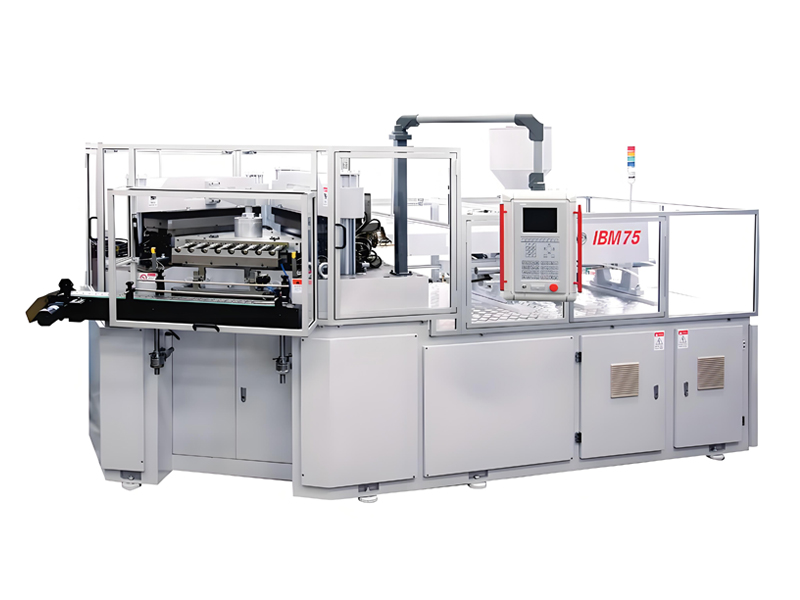
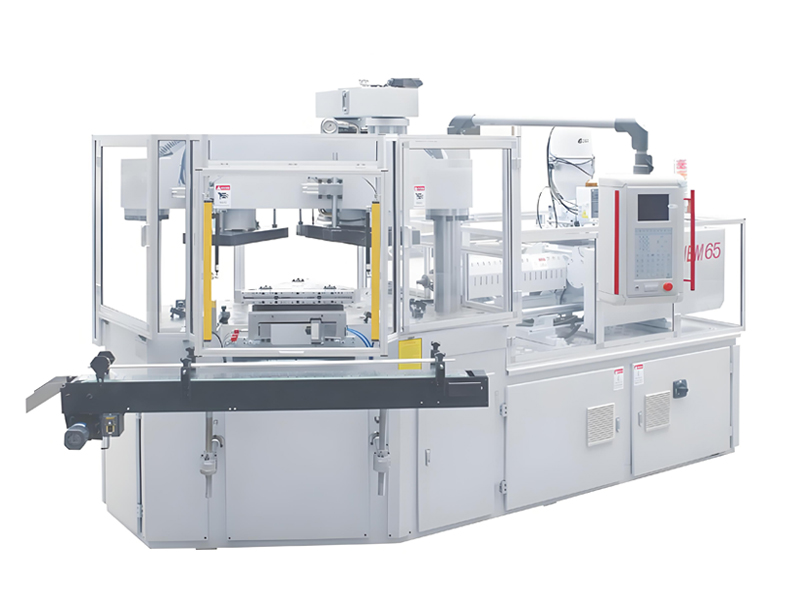
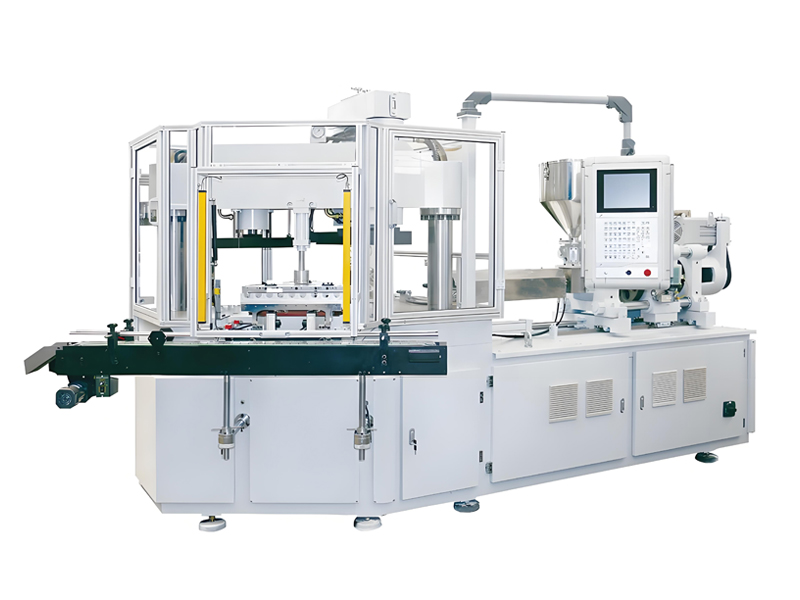
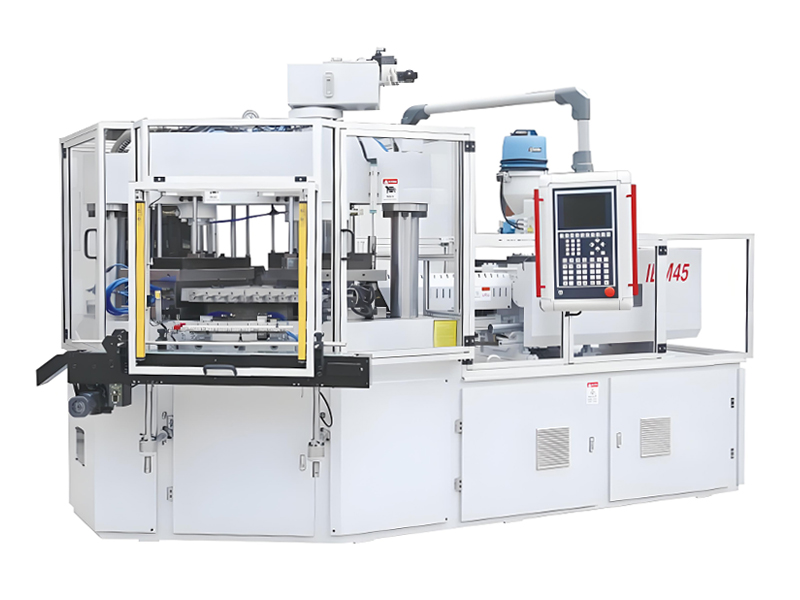
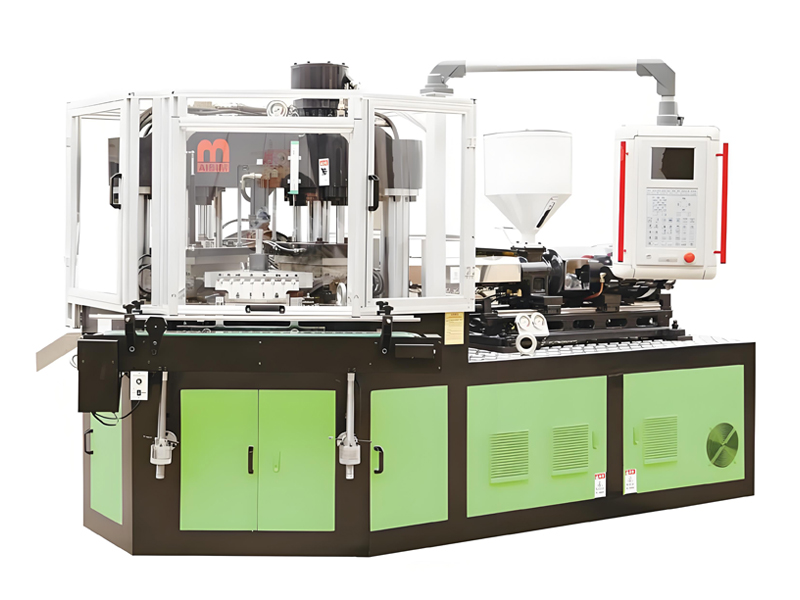
AiBiM injection blow molding machines represent the new generation of Chinese manufacturing excellence, combining advanced technology with cost-effective solutions. Unlike traditional perceptions of Chinese equipment, AiBiM machines incorporate cutting-edge features previously found only in premium European brands, including precision control systems, energy-efficient operations, and versatile material compatibility. The typical price point for AiBiM injection blow molding machines ranges from $45,000 to $350,000, representing approximately 40 to 60 percent of the cost of comparable Western machines from brands like Uniloy, Bekum, or Kautex, which typically price their equipment between $80,000 and $600,000 for similar capabilities.
The injection blow molding process itself offers distinct advantages over extrusion blow molding for certain applications, particularly for small to medium-sized containers requiring precise dimensions and uniform wall thickness. Injection blow molding machines produce superior finish quality, tighter tolerances, and better control over neck finishes, making them ideal for pharmaceutical packaging, cosmetic containers, and precision industrial components. This versatility has contributed to the growing demand for injection blow molding technology, creating opportunities for manufacturers offering competitive alternatives to traditional premium-priced equipment.
Price Comparison: Chinese Machines vs Global Brands
A detailed analysis of injection blow molding machine pricing reveals significant cost advantages for Chinese manufacturers while maintaining comparable technical specifications. The price disparity stems from several factors including lower labor costs, efficient supply chain management, and streamlined manufacturing processes. However, the gap is narrowing as Chinese manufacturers invest heavily in research, development, and quality control systems.
Entry-level injection blow molding machines from AiBiM, suitable for small-scale production of containers up to 500 milliliters, are priced between $45,000 and $80,000. Equivalent machines from European manufacturers typically cost $85,000 to $150,000. This represents a savings of 40 to 47 percent, enabling small and medium-sized enterprises to access modern injection blow molding technology without substantial capital investment. For example, an AiBiM IBM-150 model producing 150-milliliter bottles costs approximately $52,000, while a comparable machine from a premium European brand would cost approximately $95,000, creating a savings of $43,000 or 45 percent.
Mid-range machines, designed for production volumes of 2,000 to 5,000 units per hour with mold capabilities for multiple cavities, show even greater value. AiBiM’s IBM-300 series, capable of producing 300-milliliter to 1-liter containers in multi-cavity configurations, ranges from $80,000 to $180,000. Comparable equipment from global brands costs between $150,000 and $320,000. This translates to savings of $70,000 to $140,000 per machine, representing 40 to 47 percent cost reduction. For a manufacturer operating five machines, this represents total capital equipment savings of $350,000 to $700,000.
High-capacity injection blow molding machines, suitable for large-scale production exceeding 10,000 units per hour with advanced automation features, demonstrate the most significant value proposition. AiBiM’s premium IBM-HD series, featuring all-electric drives, advanced control systems, and complete automation capabilities, ranges from $200,000 to $350,000. Similar machines from global brands are priced between $400,000 and $600,000. The savings of $200,000 to $250,000 per machine represents a 50 to 58 percent cost reduction, enabling rapid return on investment through reduced capital requirements and lower financing costs.
When considering total cost of ownership, including maintenance, energy consumption, and spare parts, Chinese machines continue to offer advantages. Annual maintenance costs for AiBiM machines average $3,000 to $8,000, compared to $8,000 to $20,000 for premium brands. Energy efficiency has improved dramatically in recent years, with modern Chinese injection blow molding machines consuming 20 to 30 percent less energy than previous generations and matching the efficiency of Western equipment. Spare parts availability and pricing also favor Chinese manufacturers, with typical parts costing 30 to 50 percent less than equivalent components from global brands.
Technical Specifications and Performance Capabilities
The perception that Chinese injection blow molding machines offer lower technical specifications than global brands is outdated and inaccurate. Modern AiBiM machines incorporate advanced engineering and precision manufacturing techniques that deliver performance comparable to or exceeding premium equipment in many applications. The technical sophistication gap has virtually disappeared in recent years as Chinese manufacturers invested billions in research and development.
Clamping force, a critical specification for injection blow molding machines, ranges from 30 tons to 350 tons across AiBiM’s product line. The IBM-120 entry-level model provides 30 tons of clamping force, adequate for small containers up to 200 milliliters. Mid-range models like the IBM-300 offer 80 to 150 tons of clamping force for containers up to 2 liters. The high-capacity IBM-HD-600 delivers up to 350 tons of clamping force, enabling production of large containers up to 5 liters with precision wall thickness control. These clamping force specifications directly compete with Western machines at similar capacity levels.
Shot capacity, another crucial specification, varies from 20 to 350 grams across AiBiM’s product range. The entry-level machines handle shots up to 50 grams, suitable for small containers and caps. Mid-range machines offer shot capacities of 50 to 150 grams, accommodating medium-sized containers and multiple-cavity molds. The high-end IBM-HD series handles shots up to 350 grams, enabling production of large containers or multi-cavity molds for smaller containers. Shot size accuracy is maintained within plus or minus 0.5 percent, matching the precision of premium equipment.
Mold capability and cavity configurations demonstrate significant flexibility. AiBiM machines support single-cavity molds for prototyping and small production runs, through to 8, 12, or even 16-cavity molds for high-volume production. Quick mold change systems reduce changeover times to under 15 minutes for experienced operators, minimizing production downtime. Mold sizes accommodated range from 150mm by 150mm to 600mm by 600mm, providing flexibility for various container sizes and geometries.
Control systems represent another area where Chinese machines have achieved parity with global brands. AiBiM machines feature PLC-based control systems with touchscreen interfaces ranging from 10 to 21 inches. Advanced features include automatic parison programming, cavity pressure monitoring, real-time production tracking, and energy consumption monitoring. These systems provide the same level of automation and process control found in premium equipment, enabling precise quality control and production optimization. The latest models incorporate Industry 4.0 capabilities including remote monitoring, predictive maintenance alerts, and integration with factory management systems.
Material compatibility has expanded significantly, with modern AiBiM injection blow molding machines processing a wide range of engineering plastics including HDPE, LDPE, PP, PET, PC, PVC, and various specialty compounds. The machines accommodate material temperatures up to 320 degrees Celsius, enabling processing of high-temperature engineering plastics. Multi-material capabilities are available on premium models, allowing co-injection and multi-layer molding for specialized applications requiring barrier properties or aesthetic combinations.
Energy Efficiency and Operating Costs
Energy consumption represents a significant operational cost for injection blow molding, and recent advancements in Chinese manufacturing have produced machines that match or exceed the energy efficiency of global brands. AiBiM has invested heavily in developing energy-efficient technologies that reduce operating costs while maintaining production capacity and quality standards.
Traditional hydraulic injection blow molding machines consume 50 to 120 kilowatt-hours depending on size and configuration. AiBiM has introduced servo-driven hydraulic systems that reduce energy consumption by 25 to 40 percent compared to conventional hydraulic machines. For example, an IBM-300 model with servo-hydraulic technology consumes approximately 65 kilowatt-hours during operation, compared to 100 kilowatt-hours for conventional hydraulic systems, representing annual energy savings of $20,000 to $30,000 assuming continuous operation at typical industrial electricity rates.
All-electric injection blow molding machines represent the next generation of energy efficiency, eliminating hydraulic systems entirely and using electric servo motors for all movements. AiBiM’s all-electric models consume 30 to 50 percent less energy than hydraulic equivalents. An all-electric IBM-HD-400 consumes approximately 45 kilowatt-hours during operation, compared to 80 kilowatt-hours for hydraulic machines of similar capacity, representing annual energy savings of $25,000 to $40,000 for continuous operation. While all-electric machines have higher initial costs, typically 20 to 30 percent more than hydraulic models, the energy savings provide return on investment within 2 to 3 years for high-utilization applications.
Additional energy-saving features include variable frequency drives, energy recovery systems, and optimized heating zones. Variable frequency drives reduce motor speed during non-critical phases of the molding cycle, saving 10 to 15 percent in energy consumption. Energy recovery systems capture and reuse energy from decelerating motors and cooling processes, providing additional savings of 5 to 10 percent. Optimized heating zones reduce heat loss and improve temperature uniformity, saving 5 to 8 percent in heating energy while improving product quality through consistent processing conditions.
Operating costs extend beyond energy consumption to include maintenance, labor, and consumables. AiBiM machines are designed for reliability with maintenance intervals extended to 5,000 to 8,000 operating hours between major services, compared to 3,000 to 5,000 hours for older equipment. Average annual maintenance costs for AiBiM machines range from $3,000 to $8,000 depending on size and utilization, compared to $8,000 to $20,000 for premium brands. Labor requirements have been reduced through automation features that allow one operator to monitor multiple machines, potentially reducing labor costs by 30 to 50 percent compared to older equipment requiring individual operators per machine.
Material utilization efficiency directly impacts production costs, and AiBiM machines incorporate advanced features to minimize material waste. Precision control systems maintain consistent shot sizes and parison programming, reducing scrap rates to under 1 percent for well-established processes compared to 3 to 5 percent for older equipment. Quick change systems and efficient mold change procedures reduce startup waste during product changeovers. Material savings of 2 to 4 percent on high-volume production can represent annual savings of $10,000 to $100,000 depending on material costs and production volumes.
Quality Control and Certification Standards
Quality concerns that historically affected Chinese manufacturing have been systematically addressed through implementation of international quality standards and advanced quality control systems. AiBiM injection blow molding machines are manufactured under ISO 9001:2015 quality management systems, ensuring consistent quality from raw materials through final assembly and testing. The company has obtained CE certification for the European market, demonstrating compliance with essential health, safety, and environmental protection requirements.
The manufacturing facility utilizes advanced quality control equipment including coordinate measuring machines, surface roughness testers, and precision calibration instruments. Critical components undergo 100 percent inspection for dimensional accuracy, material quality, and functional performance. Each completed machine undergoes comprehensive testing including clamping force verification, shot size accuracy tests, pressure testing, and full production cycles with customer molds where possible. This rigorous quality control ensures machines meet or exceed performance specifications before delivery.
Customer-specific testing and validation protocols accommodate industry-specific requirements. Pharmaceutical customers require equipment validation under GMP guidelines, including qualification documentation, process validation, and calibration certificates. AiBiM provides comprehensive documentation packages including IQ/OQ/PQ protocols to support regulatory compliance. Food packaging customers require compliance with FDA and EU food contact regulations, and AiBiM machines are designed with food-grade materials and sanitary construction to meet these requirements.
Warranty terms reflect confidence in quality and reliability. AiBiM offers comprehensive warranties including 12 to 24 months coverage on mechanical components, 6 to 12 months on electrical components, and 12 months on major assemblies. Extended warranty options are available for additional cost, typically 8 to 12 percent of machine purchase price. Warranty response times are specified in service level agreements, with remote diagnostic response within 24 hours and on-site service within 48 to 72 hours for critical production issues.
Quality consistency is maintained through standardized manufacturing processes and comprehensive supplier qualification programs. Critical components are sourced from premium suppliers meeting international standards, with supplier audits conducted annually. Manufacturing processes are documented and controlled to ensure repeatability, and continuous improvement programs identify and address quality issues systematically. Customer feedback is actively solicited and incorporated into product improvements, with formal customer satisfaction surveys conducted quarterly and comprehensive annual reviews for key accounts.
After-Sales Service and Technical Support
After-sales support represents a critical consideration for equipment procurement decisions, and Chinese manufacturers have significantly improved service capabilities to compete with global brands. AiBiM has established a comprehensive service network providing support throughout equipment lifecycle, from installation through decommissioning and eventual replacement.
Installation and commissioning services are included with machine purchases, with AiBiM technicians providing on-site installation supervision, system calibration, and operator training. Typical installation timelines range from 3 to 10 days depending on machine complexity and site preparation. Comprehensive training programs cover machine operation, routine maintenance, troubleshooting, and safety procedures. Training durations range from 2 to 5 days and can accommodate up to 8 participants. Installation and training costs are typically included in machine purchase prices, though travel and accommodation expenses for AiBiM technicians may be charged separately based on distance from service centers.
Technical support is available through multiple channels including telephone support, email support, and remote diagnostic capabilities. Standard support hours are Monday through Friday, 8:00 AM to 6:00 PM local time across major time zones, with emergency support available 24/7 for critical production issues. Remote diagnostic capabilities enable technicians to access machine control systems securely, diagnose issues, and provide solutions without requiring on-site visits. Remote support resolves approximately 40 to 60 percent of technical issues without on-site intervention, reducing downtime and service costs.
The spare parts network has been significantly expanded to ensure rapid availability of components worldwide. Major spare parts warehouses are strategically located in China, Europe, and North America, with additional regional distribution centers planned for Southeast Asia and South America. Common spare parts including seals, belts, filters, and electrical components are stocked locally for immediate delivery, typically within 24 to 48 hours. Major components such as barrels, screws, and drive motors are available within 5 to 10 business days. Spare parts pricing is competitive, typically 30 to 50 percent lower than equivalent components from global brands. Inventory management programs are available for high-volume customers, including consignment stocking and automatic replenishment systems.
Preventive maintenance programs help avoid unplanned downtime and extend equipment life. AiBiM offers structured maintenance programs including basic inspections every 2,000 operating hours, comprehensive maintenance every 8,000 hours, and major overhauls every 24,000 to 40,000 hours depending on application. Preventive maintenance contracts typically cost 5 to 8 percent of machine purchase price annually and include scheduled inspections, calibration verification, minor component replacements, and detailed maintenance reports. The investment in preventive maintenance provides return through reduced unplanned downtime, with typical reductions of 40 to 60 percent compared to reactive maintenance approaches.
Training programs extend beyond initial installation to include ongoing skill development for operators and maintenance personnel. Advanced training programs cover specialized topics including process optimization, troubleshooting advanced systems, mold design considerations, and material processing techniques. Training can be conducted on-site, at AiBiM facilities, or through virtual training platforms. Comprehensive training packages cost $3,000 to $12,000 per participant and include training materials, hands-on practice, and certification. Well-trained operators typically reduce scrap rates by 15 to 30 percent and improve overall production efficiency by 10 to 20 percent compared to untrained operators.
Automation and Industry 4.0 Integration
Modern manufacturing increasingly requires integrated automation and connectivity, and Chinese injection blow molding machines have rapidly adopted Industry 4.0 technologies to match or exceed capabilities offered by global brands. AiBiM machines incorporate advanced automation features and connectivity options that enable integration into smart manufacturing environments and data-driven production optimization.
Robotic automation options for part removal, inspection, and packaging reduce labor requirements and improve consistency. Standard robotic cells integrate seamlessly with AiBiM machines, providing reliable pick-and-place operations at cycle rates matching production speeds. Robotic systems typically cost $25,000 to $80,000 depending on complexity and payload requirements, including grippers, safety systems, and programming. The return on investment for robotic automation typically ranges from 1 to 3 years based on labor cost savings, quality improvements, and reduced reject rates. Robotic systems also improve workplace safety by removing operators from potentially hazardous environments.
In-line inspection systems automatically detect and reject defective parts, preventing downstream processing errors and ensuring product quality. Vision systems, leak testing equipment, and dimension verification systems can be integrated with machine controls to provide real-time quality monitoring. Inspection systems typically cost $15,000 to $50,000 depending on inspection requirements and throughput. Automatic rejection systems eliminate manual sorting requirements and prevent defective parts from reaching packaging operations. Quality monitoring data provides insights for process optimization and continuous improvement, potentially reducing scrap rates by 30 to 50 percent compared to manual quality control.
Energy monitoring systems track electricity, compressed air, and water consumption, providing data for cost reduction initiatives and sustainability reporting. Real-time energy monitoring enables identification of energy waste and optimization opportunities, typically reducing energy consumption by 10 to 20 percent. Energy monitoring systems cost $5,000 to $15,000 including sensors, data acquisition equipment, and reporting software. The return on investment is typically less than 1 year based on energy savings, particularly in regions with high electricity costs or energy-intensive production operations.
Data analytics and production management systems capture comprehensive production data including cycle times, reject rates, energy consumption, and equipment performance. This data enables predictive maintenance, production optimization, and performance benchmarking. Advanced analytics identify patterns and correlations that human operators might miss, providing insights for continuous improvement. Data management systems typically cost $10,000 to $30,000 including software, installation, and training. The value of improved decision-making and optimization capabilities typically provides return on investment within 6 to 18 months depending on production complexity and improvement opportunities.
Remote monitoring capabilities enable plant managers and service providers to monitor machine performance from anywhere with internet connectivity. Secure cloud-based platforms provide real-time data access, alerts, and reporting without requiring on-site presence. Remote monitoring reduces response times for technical issues by enabling diagnosis and preliminary troubleshooting before technician dispatch. Remote monitoring systems cost $3,000 to $8,000 per machine annually, with discounts for fleet-wide implementations. The reduction in unplanned downtime typically provides return on investment of 200 to 400 percent annually through reduced production losses.
Customer Success Stories and Return on Investment
Numerous customers worldwide have successfully transitioned from premium global brands to AiBiM injection blow molding machines, achieving significant cost savings while maintaining or improving quality and performance. These success stories demonstrate the value proposition of Chinese injection blow molding equipment across various industries and applications.
A European cosmetics manufacturer replaced six aging injection blow molding machines from a premium European brand with AiBiM machines for production of 50-milliliter to 200-milliliter cosmetic containers. The total investment of $750,000 for six AiBiM machines represented a 55 percent cost saving compared to the $1.7 million quote for comparable equipment from the European brand. Energy consumption decreased by 35 percent through servo-hydraulic technology, saving $80,000 annually in electricity costs. Maintenance costs decreased from $90,000 to $25,000 annually, saving $65,000. The total annual operating cost savings of $145,000 combined with the capital equipment savings of $950,000 resulted in total five-year savings exceeding $1.5 million. Product quality maintained previous standards with reject rates under 0.5 percent, matching the performance of the replaced premium equipment.
A North American pharmaceutical packaging company implemented AiBiM machines for production of 100-milliliter to 500-milliliter pharmaceutical containers requiring GMP compliance. The company purchased four AiBiM machines for $680,000, compared to $1.4 million for equipment from a global pharmaceutical equipment manufacturer. Regulatory compliance requirements were fully met through comprehensive validation documentation and GMP-compliant machine design. Production capacity increased by 20 percent through improved uptime and faster cycle times. Annual operating cost savings of $120,000 from reduced energy consumption and maintenance costs provided a 17.6 percent annual return on the capital investment. Five-year total savings exceeded $1.2 million while maintaining full regulatory compliance and product quality standards.
A Latin American beverage producer deployed AiBiM machines for small-capacity plastic bottle production for water and soft drinks. The purchase of three AiBiM machines for $420,000 represented a 50 percent cost saving compared to $840,000 for equipment from a North American manufacturer. Production efficiency improved by 15 percent through faster cycle times and reduced changeover times. Energy savings of 25 percent reduced annual electricity costs by $30,000. The lower initial investment enabled purchase of additional production capacity, increasing total output by 40 percent without exceeding the original budget. The company recovered the entire equipment investment within 18 months through operating cost savings and increased production capacity, with five-year total savings exceeding $800,000.
An African household goods manufacturer implemented AiBiM injection blow molding machines for production of detergent bottles, household chemical containers, and consumer product packaging. The investment of $550,000 for five machines represented a 60 percent cost saving compared to $1.4 million for equipment from European manufacturers. The lower capital cost enabled implementation of advanced features including automation and quality inspection systems that would have exceeded the budget with premium equipment. Production efficiency improved by 25 percent, scrap rates decreased by 40 percent, and labor requirements decreased by 30 percent through automation. Total annual savings of $150,000 combined with the $850,000 capital equipment savings resulted in five-year total savings exceeding $1.5 million while improving product quality and market competitiveness.
Future Outlook and Technology Development
Chinese injection blow molding machine manufacturers continue to invest heavily in research and development, with technology roadmaps focusing on advanced materials processing, increased automation, enhanced energy efficiency, and smart manufacturing integration. These investments ensure that Chinese equipment will remain competitive with or surpass global brands in technical sophistication and performance capabilities.
Material processing capabilities are expanding to accommodate emerging materials including bio-based plastics, recycled materials, and advanced engineering plastics. AiBiM machines are being optimized for processing materials with higher melt temperatures, varying viscosities, and challenging rheological properties. Machine designs are incorporating improved screw geometries, advanced temperature control systems, and specialized surface treatments to accommodate diverse material requirements. This material versatility positions Chinese equipment for emerging applications in sustainable packaging and advanced industrial components.
Automation developments focus on complete cell integration including molding, inspection, decorating, and packaging in fully automated cells. Collaborative robots enable safe human-robot interaction for complex tasks requiring human dexterity combined with robotic consistency. Machine learning algorithms optimize process parameters automatically, adapting to material variations and environmental conditions. These automation developments reduce labor requirements by 50 to 70 percent compared to manual operations while improving quality consistency and production flexibility.
Energy efficiency improvements continue through advanced drive technologies, heat recovery systems, and process optimization. All-electric machine capabilities are expanding to larger machine sizes and higher production capacities. Heat recovery systems capture and reuse waste heat for building heating, material drying, or other processes, further reducing net energy consumption. Advanced control algorithms optimize energy use throughout the molding cycle, minimizing consumption during non-critical phases. These developments target 50 to 70 percent reduction in energy consumption compared to conventional hydraulic machines, providing substantial operating cost savings and environmental benefits.
Smart manufacturing integration is accelerating through standard communication protocols, cloud-based data platforms, and artificial intelligence for process optimization. Digital twin technology enables virtual commissioning and predictive maintenance, reducing implementation time and preventing unplanned downtime. Blockchain technology for supply chain transparency and product traceability is being integrated for pharmaceutical and food packaging applications. These smart manufacturing capabilities enable Chinese injection blow molding machines to compete at the forefront of Industry 4.0 implementations, providing data-driven insights and optimization opportunities that were previously available only with premium equipment.
Conclusion
Chinese injection blow molding machines have evolved from low-cost alternatives to sophisticated manufacturing solutions that compete effectively with global brands across virtually all performance metrics. AiBiM injection blow molding machines represent this evolution, offering advanced technology, competitive pricing, and comprehensive support that deliver exceptional value for manufacturers worldwide. The price advantage of 40 to 60 percent compared to global brands, combined with equivalent or superior technical specifications, energy efficiency, and quality capabilities, provides compelling value for manufacturers seeking cost-effective solutions without compromising performance.
The total cost of ownership advantages extend beyond initial purchase price to include lower maintenance costs, reduced energy consumption, and improved spare parts availability. Customer success stories across multiple industries demonstrate consistent achievement of significant capital and operating cost savings while maintaining or improving product quality and production efficiency. The rapid advancement of Chinese technology ensures that these advantages will continue and potentially expand as manufacturers invest in next-generation capabilities.
For manufacturers considering new injection blow molding equipment or replacement of aging machinery, Chinese equipment represented by brands like AiBiM deserves serious evaluation alongside traditional premium brands. The combination of competitive pricing, proven performance, comprehensive service, and ongoing technology development provides a compelling value proposition that enables manufacturers to reduce capital investment and operating costs while maintaining production capabilities and quality standards. As the global manufacturing landscape continues to evolve, Chinese injection blow molding machines are positioned to capture increasing market share through sustained value delivery and technological advancement.