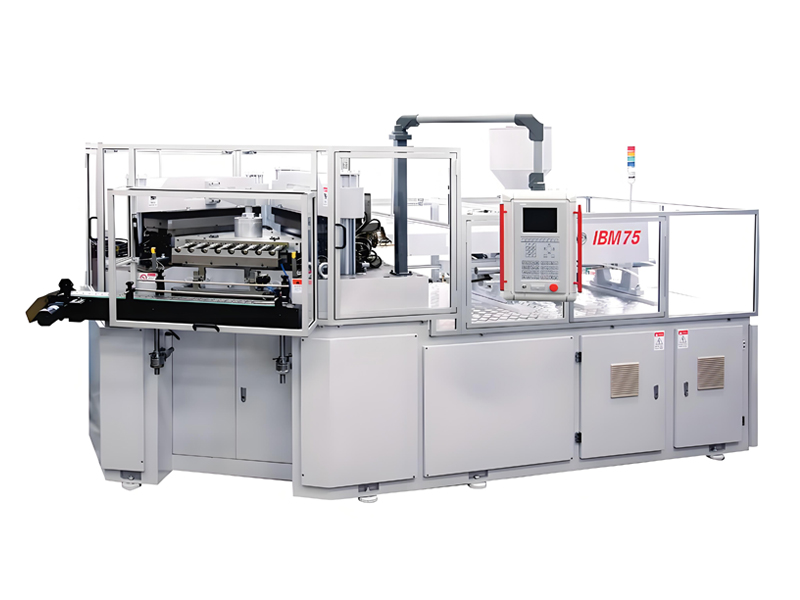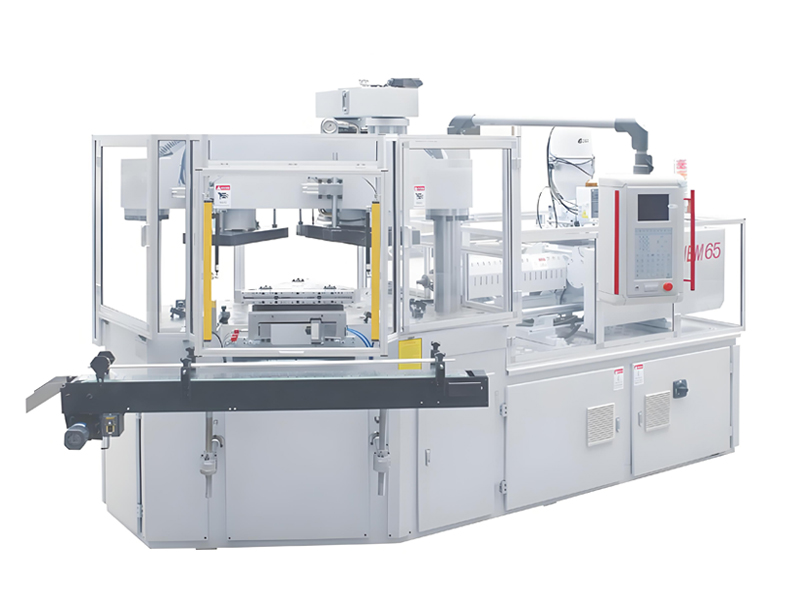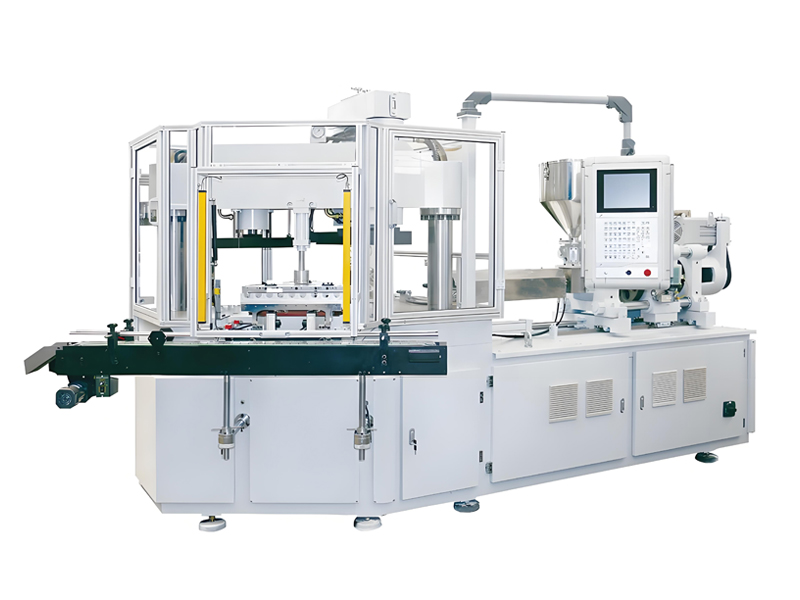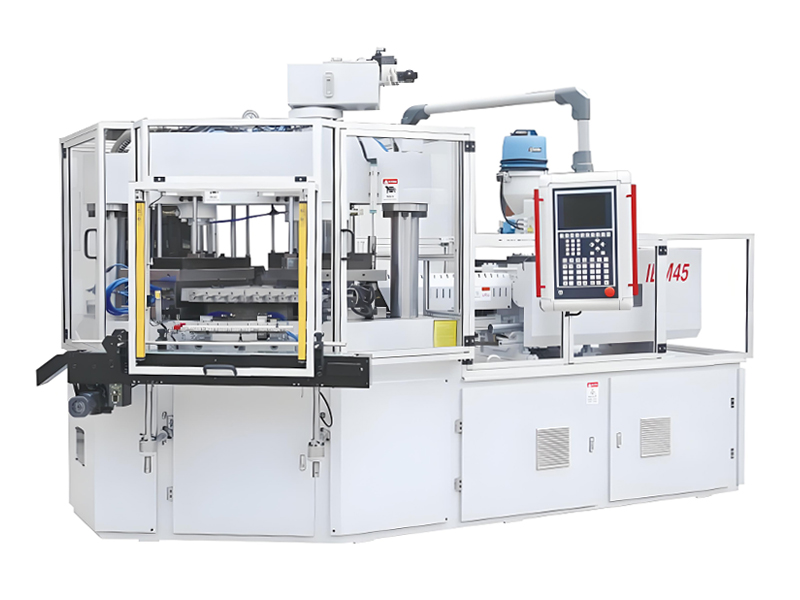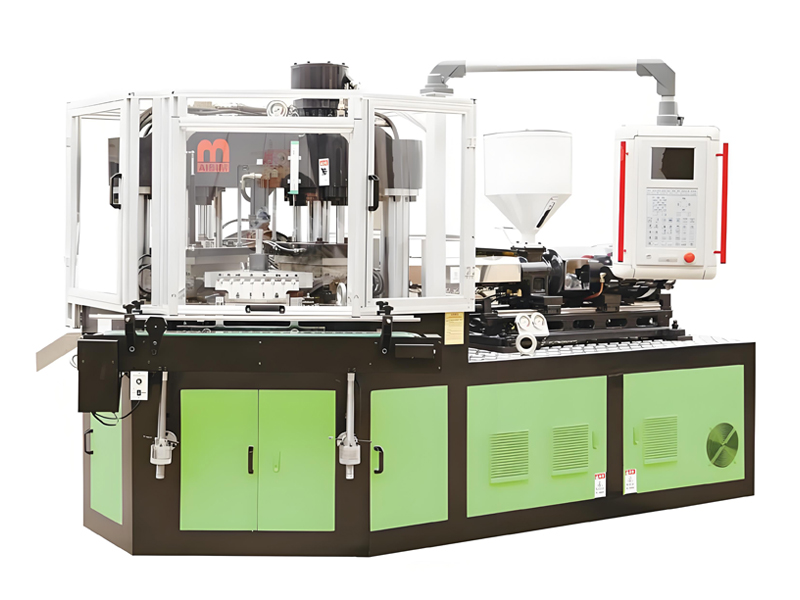
In the high-stakes world of mass-produced plastic packaging, speed is everything. For large-scale manufacturers producing millions of bottles daily, the cooling system is the bottleneck that determines the maximum cycle rate. While air-cooled systems offer energy savings, Water-Cooled Injection Blow Molding Machines remain the gold standard for high-speed, heavy-duty applications. The superior thermal conductivity of water allows for rapid heat extraction from the mold and the hydraulic system, enabling shorter cycle times and higher productivity. This article delves into the engineering behind water-cooled systems, their advantages for mass production, and the cost-benefit analysis of investing in a high-performance cooling infrastructure, featuring insights from AiBiM’s heavy-duty machine lines. The ability to produce a bottle in 3 seconds versus 5 seconds can double the output of a factory line, making water-cooling an essential technology for market leaders.
The Physics of Rapid Cooling and Heat Transfer
The fundamental reason water-cooled machines dominate mass production is the physical property of water. Water has a specific heat capacity of approximately 4.18 kJ/kg·K, which is significantly higher than air (about 1.0 kJ/kg·K). Furthermore, water’s thermal conductivity is about 0.6 W/m·K compared to air’s 0.025 W/m·K. This means water can absorb and transport heat roughly 25 times more efficiently than air. In an Injection Blow Molding Machine, the mold must be cooled from around 150 degrees Celsius (for PET) down to below 80 degrees Celsius in a matter of seconds to allow the bottle to solidify enough for ejection. Water circulating through closely spaced channels in the mold steel can achieve this rapid quenching. Air, due to its low density and heat capacity, would require massive airflow and large pressure drops to achieve the same cooling rate, often resulting in uneven cooling (hot spots) and longer cycle times. For a 4-cavity machine running at 2,500 bottles per hour, the cycle time might be 5.7 seconds. In this short window, water cooling is the only method reliable enough to ensure consistent bottle dimensions and optical clarity. AiBiM’s water-cooled machines utilize turbulent flow design in the mold cooling channels to maximize the heat transfer coefficient, ensuring that even the deepest corners of complex bottle geometries are cooled effectively. The use of baffles and bubblers in the mold directs water to specific areas that need more cooling, a level of precision that air cooling cannot match.
Hydraulic System Stability and Thermal Management
Beyond the mold, the hydraulic system generates immense heat due to high-pressure oil being forced through valves and actuators at high frequency. In a mass production environment, the hydraulic oil can reach temperatures of 70 to 80 degrees Celsius within an hour of operation. At these temperatures, the oil viscosity drops, leading to internal leakage in pumps and valves, reduced pressure holding capability, and accelerated seal wear. A water-cooled oil cooler (heat exchanger) maintains the oil temperature at a constant 45 to 55 degrees Celsius, regardless of the ambient temperature or production load. This thermal stability is critical for maintaining consistent clamping force and injection speed. If the oil heats up, the machine might slow down automatically to protect itself, or worse, produce parts with flash due to reduced clamping force. Water-cooled systems provide a “thermal flywheel” effect, absorbing heat spikes during the injection phase and dissipating them continuously. AiBiM uses shell-and-tube or plate-type heat exchangers made of stainless steel or titanium to resist corrosion. These units are sized with a safety factor of 1.5 to 2.0, meaning they can handle heat loads 50% higher than the machine’s maximum rating, ensuring the hydraulic system never becomes the limiting factor in production speed. The cost of a robust hydraulic cooling system adds about $3,000 to $5,000 to the machine price but prevents costly downtime due to hydraulic failure. The water-cooled system also protects the servo motors and inverters, which are sensitive to heat, extending their lifespan significantly.
Cycle Time Optimization and Economic Impact of Speed
The primary economic driver for a water-cooled machine is the reduction in cycle time, which directly translates to higher output. Let’s analyze a scenario: A beverage company needs to produce 2 million 500ml bottles per day.
- Scenario A (Air-Cooled): Cycle time = 7.0 seconds. Output = 1,028 bottles/hour. Running 24 hours = 24,672 bottles. Need 81 machines or lines.
- Scenario B (Water-Cooled High Speed): Cycle time = 5.0 seconds. Output = 2,880 bottles/hour. Running 20 hours (allowing for maintenance) = 57,600 bottles. Need 35 machines or lines.
While the per-machine cost of the water-cooled line is higher (e.g., $120,000 vs $90,000 for air-cooled), the total capital expenditure for the factory is significantly lower because fewer machines are needed (35 vs 81). Fewer machines mean less floor space, fewer operators, and lower maintenance overhead.
Capital Cost Comparison:
Air-Cooled Line: 81 units x $90,000 = $7,290,000.
Water-Cooled Line: 35 units x $120,000 = $4,200,000.
Savings: $3,090,000.
Even after factoring in the cost of chillers and cooling towers ($20,000 per line), the water-cooled solution is vastly more economical for mass production. The ROI on the premium paid for the water-cooled machine is realized through the reduced number of units required. AiBiM’s “Turbo” series of water-cooled machines are specifically designed for these high-speed applications, featuring servo-driven high-speed clamping and optimized cooling circuits that can shave 0.5 to 1.0 seconds off the cycle compared to standard models. For a factory producing at this scale, a 0.1-second reduction in cycle time can mean an additional 100,000 bottles per month, worth $5,000 to $10,000 in revenue depending on the bottle price. The ability to meet tight delivery deadlines is a competitive advantage that air-cooled machines often cannot match, especially in peak seasons.
Chiller Technology, Water Management, and Cost of Ownership
A water-cooled Injection Blow Molding Machine is only as good as its chiller. The chiller’s job is to remove the heat absorbed by the water and reject it to the environment. For mass production, large centrifugal or screw chillers are used. These are expensive pieces of equipment, often costing $15,000 to $40,000 each. However, modern chillers are highly efficient. AiBiM integrates the chiller control with the machine’s PLC. The chiller only runs when the machine is running, and its setpoint adjusts based on the actual mold temperature sensors, not just a fixed timer. This “on-demand” cooling saves significant electricity. Furthermore, closed-loop water systems are essential for mass production to prevent scale buildup and corrosion. The water is treated with inhibitors and circulated continuously. The cost of water treatment is minimal (chemicals and filter changes) compared to the cost of downtime due to a blocked cooling channel. For factories in areas with water scarcity, a cooling tower can be used to recycle the water, consuming only the evaporation loss (typically 1% to 2% of volume per cycle). The initial investment in a cooling tower and water treatment plant is high (around $30,000 to $50,000 for a central system), but it is a one-time infrastructure cost that supports multiple machines. AiBiM provides engineering support for designing these central utility systems, ensuring the pumps and piping are sized correctly to maintain flow rates and pressure drops within acceptable limits. Proper water management is not just an environmental concern; it is a production reliability imperative. A single blocked water channel can cause a mold to overheat, leading to thousands of defective bottles and hours of downtime to clean the mold.
Heavy-Duty Construction for 24/7 Operation and Durability
Mass production implies 24/7 operation, often 365 days a year. A water-cooled Injection Blow Molding Machine must be built like a tank. The frame is typically welded steel with heavy ribbing to resist torsional stress from high-speed clamping. The mold clamping mechanism (toggle or hydraulic) must handle millions of cycles without fatigue. Water-cooled machines often use larger diameter tie bars and thicker platens than their air-cooled counterparts to maintain parallelism under thermal load. The screw and barrel in a high-speed machine are usually made of premium bimetallic material (like 38CrMoAlA with a nitrided surface) to resist abrasion from high throughput and high shear rates. The injection unit must have a high torque motor to plasticize the material quickly. AiBiM’s heavy-duty water-cooled models feature injection motors rated at 45kW to 75kW, capable of delivering high plasticizing rates (e.g., 150 kg/h for PET). The cost of this heavy-duty construction is reflected in the price. A machine rated for 24/7 operation might cost 30% more than a “light duty” machine rated for 16 hours. However, the cost of a catastrophic failure in a 24/7 line (lost production, missed shipments, penalty clauses) can be $50,000 per day. Investing in a robust machine is cheap insurance. The maintenance schedule for these machines is rigorous, with daily checks on water filters, weekly oil analysis, and monthly inspection of the toggle pins or hydraulic seals. The predictability of a well-maintained water-cooled machine allows for precise production planning, which is essential for supply chain management in mass production environments. The machine’s structure is often stress-relieved through annealing to prevent warping over years of thermal cycling.
Quality Consistency in High-Volume Production and Defect Prevention
One of the hidden benefits of water cooling is quality consistency. In high-volume production, even a 1-degree variation in mold temperature can affect the bottle’s weight distribution and wall thickness. Water, with its high heat capacity, acts as a buffer, smoothing out temperature fluctuations. The temperature control unit (TCU) for the mold can maintain precision within plus or minus 0.5 degrees Celsius. This precision ensures that bottle number 1 is identical to bottle number 1,000,000. This is critical for filling lines, where variations in bottle neck finish or weight can cause jams in the capping or labeling machinery. A mass production facility cannot afford to have a filling line stop because of bad bottles. Therefore, the premium paid for a water-cooled system with a precision TCU is justified by the stability of the downstream process. AiBiM machines come equipped with mold temperature controllers that use PID (Proportional-Integral-Derivative) algorithms to anticipate heat loads. For example, when the injection unit dumps hot plastic into the mold, the TCU instantly increases water flow to compensate for the heat spike, preventing the mold surface temperature from rising. This proactive control is impossible with air cooling due to the lag in thermal response. The result is higher yield (less scrap) and consistent optical quality (clarity), which are key selling points for premium beverage brands. The cost of scrap in a mass production line can be substantial; reducing scrap from 2% to 0.5% saves thousands of dollars per day in raw material costs alone. The ability to guarantee consistent quality is often a contractual requirement for suppliers to major retailers like Walmart or Tesco.
Total Cost of Ownership (TCO) Analysis for Mass Production
When evaluating a water-cooled Injection Blow Molding Machine for mass production, the TCO analysis must look beyond the purchase price.
- Purchase Price: $120,000 (High-end Water-Cooled Model).
- Installation & Infrastructure (Chiller, Tower, Piping): $30,000.
- Annual Energy Cost (Machine + Chiller): Based on 20 hours/day, 300 days/year. Machine power 50kW, Chiller power 20kW. Total 70kW. 70 * 20 * 300 = 420,000 kWh. At $0.10/kWh = $42,000/year.
- Annual Maintenance: $5,000 (Hydraulic oil, filters, seals).
- Annual Water Cost: $2,000 (Treatment and top-up).
- Total Annual Operating Cost: $49,000.
Production Output: 2,000 bottles/hour * 20 hours * 300 days = 12,000,000 bottles/year.
Cost per Bottle (Operating): $49,000 / 12,000,000 = $0.004 per bottle.
While the water-cooled system has a higher absolute energy cost, its cost-per-unit is lower due to higher throughput. The capital cost of the infrastructure ($30,000) is amortized over 10 years ($3,000/year), which is negligible per bottle. The key financial metric is the “Cash Flow per Machine.” A water-cooled machine generating 12 million bottles/year at a net margin of $0.01 per bottle generates $120,000 profit annually. The machine pays for itself in just over a year. AiBiM’s water-cooled machines are built for this ROI. They offer financing options and lease-to-own programs to help large manufacturers manage the upfront infrastructure costs. The decision to choose water-cooling is not just technical; it is a strategic financial decision based on production volume targets. For any facility planning to produce more than 500,000 bottles per day, water-cooling is the only economically viable option. The premium paid for the water-cooled machine is essentially an investment in production capacity and speed.