Introduction
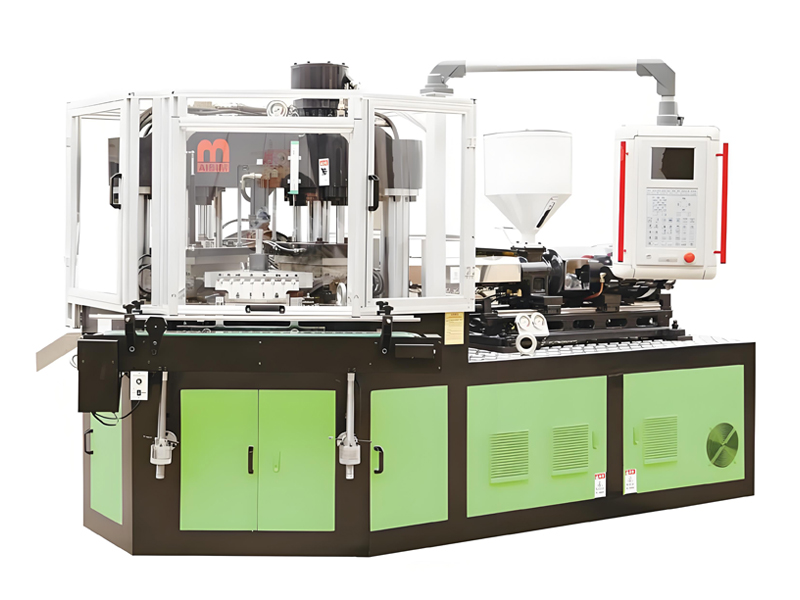
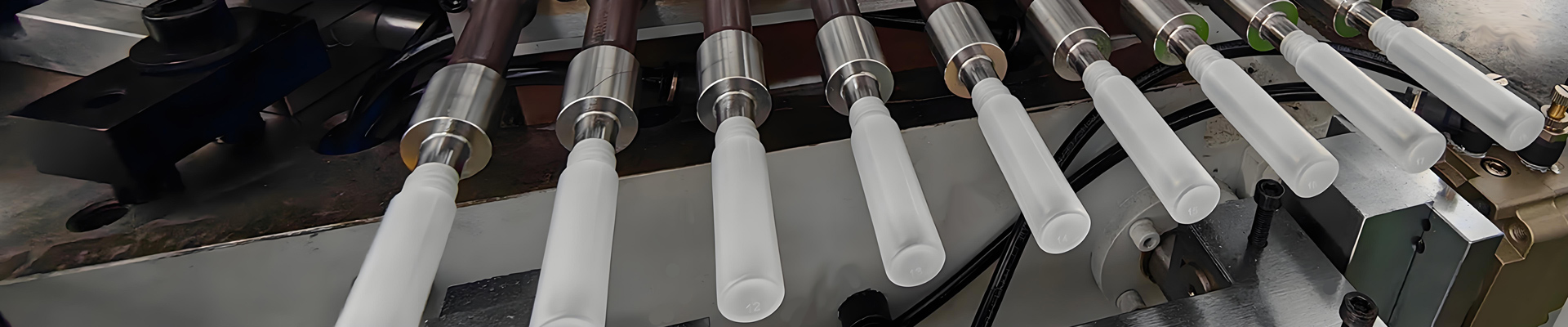
Household plastic containers represent one of the most significant market segments in the plastic packaging industry, encompassing a diverse range of products including food storage containers, beverage bottles, cosmetic containers, pharmaceutical packaging, and general storage solutions. The production of these containers requires specialized equipment capable of delivering consistent quality, high production efficiency, and cost-effective operation. Injection blow molding machines have emerged as the preferred technology for household plastic container production due to their ability to produce containers with precise neck finishes, consistent wall thickness distribution, and excellent surface quality. AiBiM China has established itself as a leading manufacturer of injection blow molding machines specifically designed for household container applications, offering a comprehensive range of models that address diverse production requirements while maintaining competitive pricing and operational efficiency.
The global market for household plastic containers continues to expand driven by increasing urbanization, changing consumer lifestyles, and growing demand for convenient packaging solutions. Manufacturers must navigate competitive market conditions while maintaining product quality, controlling production costs, and meeting evolving regulatory requirements. AiBiM injection blow molding machines provide the technology foundation that enables manufacturers to compete effectively in this demanding market segment. These machines combine advanced engineering with practical operational features to deliver reliable performance across various household container applications including food containers ranging from 100ml to 5 liters capacity, beverage bottles from 50ml to 2 liters, cosmetic containers with complex geometries, and pharmaceutical containers requiring precise dimensional accuracy and clean manufacturing environments.
Selection of the appropriate injection blow molding machine model represents a critical decision that significantly impacts production capabilities, operational costs, and long-term profitability. Understanding the technical specifications, performance characteristics, and cost considerations of different machine models enables manufacturers to make informed investment decisions that align with their specific production requirements and business objectives. AiBiM offers a comprehensive portfolio of injection blow molding machines covering different production capacities, cavity configurations, automation levels, and price points to serve diverse customer needs ranging from small workshops to large-scale manufacturing facilities.
Machine Classification and Production Capacity
Injection blow molding machines for household plastic containers are classified based on multiple parameters including clamp force, shot volume, cavity configuration, and production capacity. Understanding these classification categories helps manufacturers identify appropriate equipment for their specific production requirements and enables accurate comparison between different machine models and manufacturers.
Clamp force represents one of the fundamental specifications determining machine capability and directly influences the maximum container size and wall thickness that can be produced. For household container applications, clamp forces typically range from 15 tons to 200 tons depending on the machine model and intended applications. Small container machines with clamp forces of 15 to 40 tons are suitable for producing small containers such as cosmetic bottles, pharmaceutical containers, and small food containers typically under 500ml capacity. These machines feature compact footprints suitable for limited factory space and offer economical operation for lower volume production. Medium-sized machines with clamp forces of 50 to 100 tons serve as the most versatile category for household container production, capable of manufacturing containers from 500ml to 2 liters including food storage containers, beverage bottles, and various household product containers. Large container machines with clamp forces exceeding 100 tons are designed for production of larger containers up to 5 liters or more, including bulk food containers, household chemical containers, and larger beverage bottles. AiBiM offers comprehensive clamp force options to match diverse production requirements.
Shot volume specification determines the maximum plastic material that can be injected per cycle, directly influencing the maximum container size and wall thickness that can be produced. Shot volumes for household container machines typically range from 50 cubic centimeters to 2000 cubic centimeters depending on machine size and configuration. Machines with shot volumes of 50 to 150 cubic centimeters are optimized for small containers with thin walls, offering rapid cycle times and excellent material efficiency. These machines are ideal for high-volume production of small cosmetic bottles, pharmaceutical containers, and condiment bottles where speed and material efficiency are critical considerations. Medium shot volume machines with capacities of 200 to 800 cubic centimeters provide flexibility for producing medium-sized containers with various wall thickness requirements. These machines represent the most commonly used category for household container production, capable of manufacturing a wide range of products including food containers, beverage bottles, and household product containers. Large shot volume machines with capacities exceeding 1000 cubic centimeters are designed for production of larger containers with thick walls, including bulk storage containers, large beverage bottles, and heavy-duty household chemical containers. AiBiM’s shot volume configurations are optimized to provide material efficiency while ensuring adequate material fill for consistent container quality.
Cavity configuration refers to the number of container molds that can be operated simultaneously on a single machine, directly determining production capacity and operational efficiency. Single cavity machines are suitable for prototype development, small batch production, or manufacturing of large containers where mold size limits multiple cavities. These machines offer flexibility for frequent product changes and are ideal for manufacturers with diverse product portfolios requiring frequent changeovers. Two cavity machines provide a balance between production capacity and flexibility, enabling production of medium to large containers at moderate volumes while maintaining reasonable changeover times. Four cavity and multi-cavity machines are designed for high-volume production of small to medium containers where maximizing production efficiency is the primary consideration. These machines deliver substantial production capacity but involve higher mold costs and longer changeover times. AiBiM offers cavity configurations ranging from single to eight cavities, with custom configurations available for specific production requirements. The selection of appropriate cavity configuration depends on production volume requirements, product diversity, and changeover frequency considerations.
Production capacity varies significantly based on machine configuration, container size, and cycle time requirements. For small containers with cycle times of 8 to 12 seconds, four-cavity machines can achieve production rates of 1200 to 1800 containers per hour, or approximately 10,000 to 15,000 containers per eight-hour shift assuming 85 percent machine uptime. Medium-sized containers with cycle times of 15 to 25 seconds on two-cavity machines typically achieve production rates of 480 to 960 containers per hour, or approximately 3,800 to 7,700 containers per shift. Large containers with cycle times of 30 to 50 seconds on single-cavity machines typically produce 72 to 120 containers per hour, or approximately 575 to 960 containers per shift. AiBiM injection blow molding machines are designed to deliver consistent cycle times and high uptime through robust construction, advanced control systems, and reliable component selection. Production capacity should be evaluated based on realistic cycle times including maintenance, changeovers, and minor stoppages rather than theoretical maximum performance.
AiBiM Top Machine Models for Household Containers
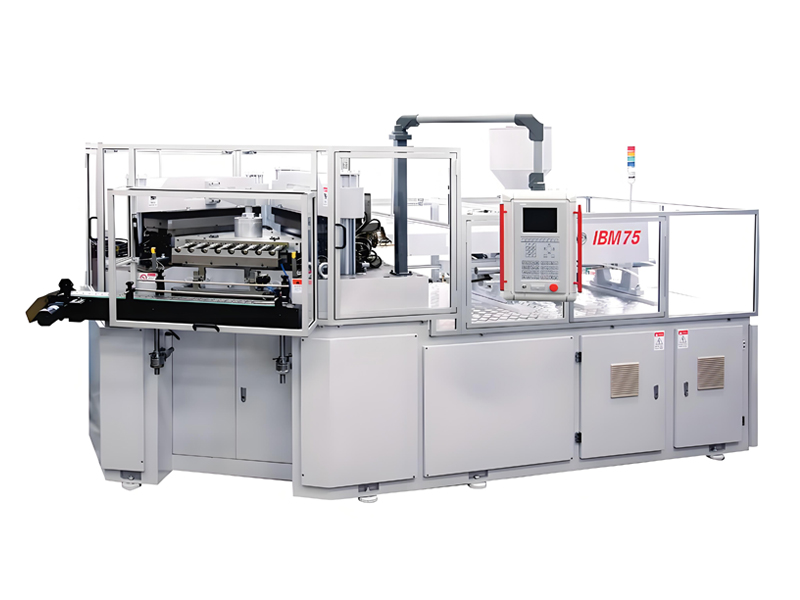
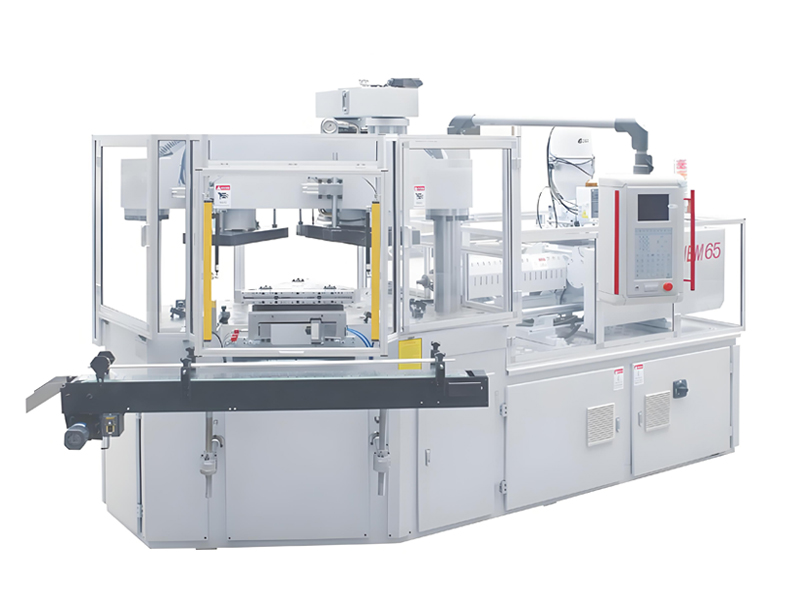
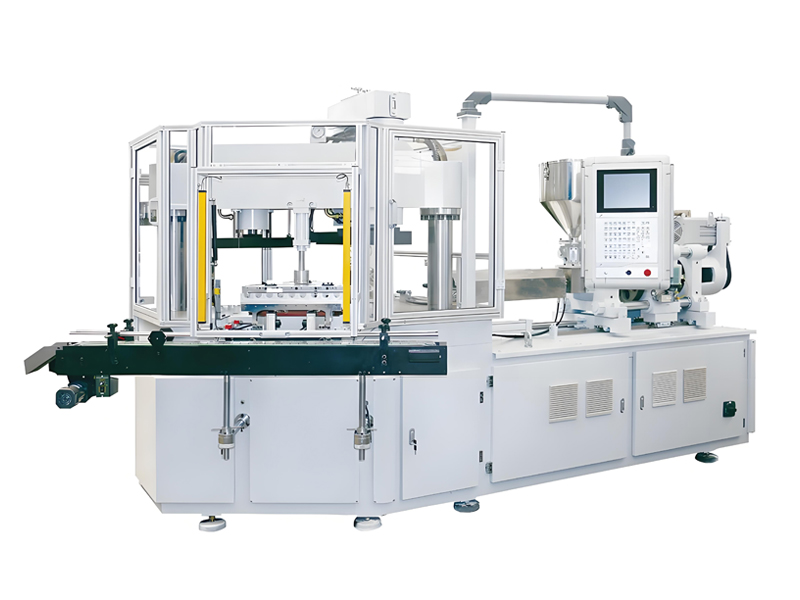
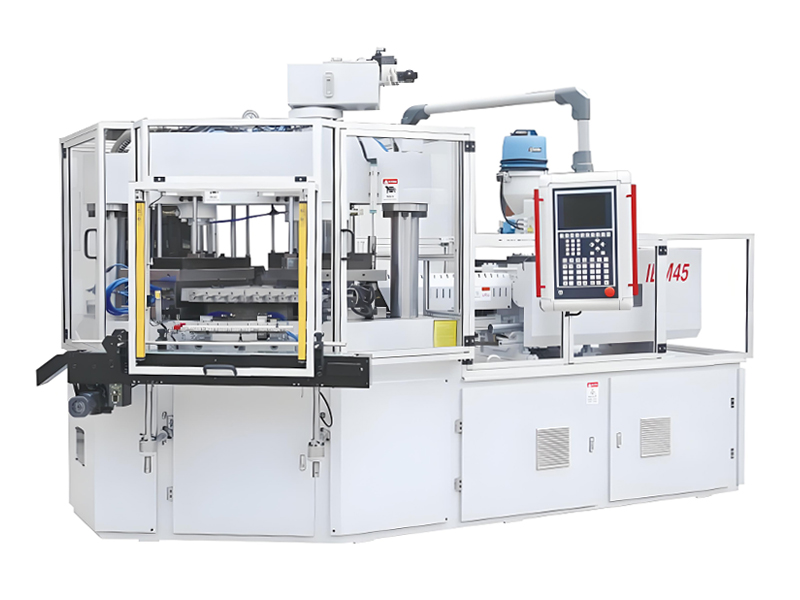
AiBiM China has developed a comprehensive portfolio of injection blow molding machines specifically engineered for household plastic container production. These models incorporate advanced technology while maintaining competitive pricing and operational efficiency. Understanding the characteristics and capabilities of each model enables manufacturers to select equipment that optimally matches their production requirements and budget constraints.
The AiBiM IB-150 model represents an entry-level injection blow molding machine designed for small to medium container production with emphasis on affordability and ease of operation. This machine features a clamp force of 25 tons, shot volume of 120 cubic centimeters, and is typically configured with one or two cavities. The IB-150 is ideal for manufacturers requiring cost-effective production of small containers such as cosmetic bottles, pharmaceutical containers, and small food containers up to 500ml capacity. Technical specifications include maximum mold opening stroke of 200mm, ejector stroke of 80mm, and tie bar spacing of 280mm by 280mm. The machine requires electrical power of 22kW and operates on standard three-phase 380V 50Hz electrical supply. The IB-150 incorporates basic automation features including automatic product ejection and mold temperature control. This model is particularly well-suited for startup operations, small workshops, and manufacturers requiring flexible production of diverse container types. The IB-150 represents excellent value with a typical price range of USD 35,000 to USD 45,000 including basic mold and installation support, making it an accessible entry point for manufacturers entering the household container market.
The AiBiM IB-300 model serves as a mid-range solution offering balanced capabilities for diverse household container applications. This machine features a clamp force of 50 tons, shot volume of 350 cubic centimeters, and supports cavity configurations of one, two, or four cavities depending on container size and production requirements. The IB-300 is optimized for production of medium-sized containers including food storage containers from 500ml to 2 liters, beverage bottles, and various household product containers. Technical specifications include maximum mold opening stroke of 300mm, ejector stroke of 100mm, and tie bar spacing of 360mm by 360mm. The machine requires electrical power of 35kW and incorporates enhanced control systems with touchscreen interface and production monitoring capabilities. The IB-300 includes automation features such as automatic mold temperature control, automatic product ejection, and optional take-out robots for automated product handling. This model represents the most commonly used configuration for household container production due to its versatility and balance of capability with cost. The IB-300 typically ranges in price from USD 55,000 to USD 75,000 depending on cavity configuration and automation level, providing excellent value for manufacturers requiring reliable production of diverse household container types.
The AiBiM IB-600 model represents a high-performance injection blow molding machine designed for high-volume production of small to medium containers. This machine features a clamp force of 80 tons, shot volume of 800 cubic centimeters, and typically operates with four to six cavities for maximum production efficiency. The IB-600 is ideal for manufacturers requiring high-volume production of food containers, beverage bottles, and other household products where production speed and operational efficiency are primary considerations. Technical specifications include maximum mold opening stroke of 400mm, ejector stroke of 150mm, and tie bar spacing of 450mm by 450mm. The machine requires electrical power of 55kW and incorporates advanced control systems with comprehensive production monitoring, recipe management, and quality control features. The IB-600 includes extensive automation capabilities including automatic take-out robots, conveyor systems, integrated quality inspection, and mold temperature control systems. This model delivers high production capacity with cycle times optimized for efficiency while maintaining consistent product quality. The IB-600 typically ranges in price from USD 95,000 to USD 130,000 depending on configuration and automation level, representing substantial investment for high-volume production operations but offering excellent return on investment through productivity gains and operational efficiency.
The AiBiM IB-1200 model represents the flagship offering for large container production and high-precision applications. This machine features a clamp force of 120 tons, shot volume of 1800 cubic centimeters, and supports cavity configurations from one to four cavities depending on container size requirements. The IB-1200 is designed for production of large containers up to 5 liters capacity, precision pharmaceutical containers requiring exact dimensional accuracy, and applications where exceptional product quality is mandatory. Technical specifications include maximum mold opening stroke of 500mm, ejector stroke of 200mm, and tie bar spacing of 550mm by 550mm. The machine requires electrical power of 75kW and incorporates the most advanced control systems available from AiBiM, including fully integrated automation, comprehensive quality monitoring, and connectivity to factory management systems. The IB-1200 includes complete automation packages with multi-axis robots, conveyor systems, inspection systems, and packaging integration. This model represents the highest level of capability available from AiBiM and is typically used by established manufacturers requiring production excellence for premium products or large-scale operations. The IB-1200 typically ranges in price from USD 160,000 to USD 220,000 depending on configuration, representing a significant investment but providing unmatched capability for demanding applications.
Technical Features and Technology
Modern injection blow molding machines incorporate numerous technical features that directly impact production efficiency, product quality, and operational reliability. Understanding these technical capabilities enables manufacturers to evaluate equipment comprehensively and select machines that provide optimal performance for their specific applications. AiBiM injection blow molding machines incorporate advanced technology while maintaining operational simplicity and cost-effectiveness.
Precision injection systems ensure consistent material delivery and accurate cavity fill, which directly affects product quality and material efficiency. AiBiM machines feature precision screw and barrel assemblies manufactured from high-grade alloy steels with optimal L/D ratios for different material types. The injection units incorporate servo-driven systems that provide precise control of injection speed, pressure, and position with accuracy within 0.1mm. Advanced pressure control during the injection process ensures proper cavity fill without overpacking that could cause flash or underfilling that could result in incomplete containers. The injection systems support multi-stage injection profiles enabling optimization for different container geometries and wall thickness requirements. Material selection and screw geometry are optimized for common household container materials including HDPE, PP, PET, and PS. The precision injection systems enable consistent product quality while minimizing material waste through accurate control of shot volume and pressure parameters.
Mold temperature control systems play a critical role in product quality, dimensional stability, and cycle time optimization. AiBiM injection blow molding machines feature independent temperature control zones for injection molds, typically with 4 to 8 zones depending on machine size and mold complexity. Temperature control accuracy within plus or minus 1 degree Celsius ensures consistent product quality and dimensional accuracy. The systems utilize advanced PID control algorithms that maintain stable temperatures even during rapid cycling and ambient temperature variations. Water-based cooling systems provide efficient heat removal from molds, enabling shorter cycle times and higher production efficiency. The mold temperature control systems support different temperature zones on the same mold, enabling optimization for containers with complex geometries or varying wall thickness requirements. Consistent mold temperature control ensures uniform crystallinity in crystalline materials like PET, proper crystallinity control affects product clarity and mechanical properties, and appropriate cooling rates that prevent warpage or shrinkage problems.
Clamping systems provide the force necessary to maintain mold closure during injection and blowing processes while enabling precise control of mold opening and closing sequences. AiBiM machines feature robust clamping systems with hydraulic or electric actuation depending on model and application requirements. Hydraulic clamping systems provide smooth force application and excellent overload protection, making them ideal for applications with large shot volumes or thick-walled containers. Electric clamping systems offer energy efficiency and precise position control, making them suitable for applications requiring clean operation or where energy costs are a significant concern. The clamping systems incorporate precision position feedback with accuracy within 0.1mm, enabling precise control of mold position throughout the cycle. Clamp force monitoring provides real-time feedback on actual clamping force, enabling process optimization and protection against overclamping that could damage molds. The systems support programmable mold closing profiles, enabling optimization for different mold types and production requirements.
Control systems provide the interface between operators and machine, enabling precise control of all process parameters and monitoring of machine performance. AiBiM injection blow molding machines feature advanced PLC-based control systems with intuitive touchscreen interfaces ranging from 7 inch to 15 inch depending on machine model. The control systems provide comprehensive functionality including process parameter control, recipe management for different products, production monitoring and reporting, alarm and diagnostic systems, and optional connectivity to factory management systems. The user interfaces are designed for ease of operation with logical menu structures, graphical displays of process parameters, and multi-language support for international users. Advanced control features include parison programming for precise wall thickness control, closed-loop process control that automatically adjusts parameters to maintain consistent product quality, and data logging capabilities for quality documentation and process optimization. The control systems support remote monitoring and diagnostic capabilities through optional network connections, enabling technical support access and production monitoring from remote locations.
Production Cost and Investment Analysis
Investment in injection blow molding machines for household container production represents substantial capital commitment that requires comprehensive cost analysis to ensure favorable returns on investment. Understanding the complete cost structure including equipment purchase, operational expenses, and productivity impacts enables informed investment decisions. AiBiM offers competitive pricing while maintaining quality and reliability, providing excellent value for household container manufacturers.
Equipment purchase pricing for injection blow molding machines varies significantly based on machine size, configuration, and included automation. The AiBiM IB-150 entry-level model typically ranges in price from USD 35,000 to USD 45,000 including basic mold configuration and installation support. This price includes the machine with basic control system, single cavity mold for typical small container, operator training, and installation supervision. Additional costs for the IB-150 configuration typically include spare parts package of USD 2,000 to USD 3,000, shipping costs of USD 3,000 to USD 5,000 depending on destination, and local installation costs of USD 2,000 to USD 4,000. Total initial investment for the IB-150 typically ranges from USD 42,000 to USD 57,000 depending on specific configuration and location.
The AiBiM IB-300 mid-range model typically ranges in price from USD 55,000 to USD 75,000 depending on cavity configuration and automation level. Base price includes the machine with enhanced control system, standard two-cavity mold configuration, basic automation features, and installation support. Additional costs for the IB-300 configuration typically include mold costs for additional cavities or different container types ranging from USD 5,000 to USD 15,000 per mold, automation upgrades such as take-out robots costing USD 8,000 to USD 15,000, spare parts package of USD 3,000 to USD 5,000, shipping costs of USD 5,000 to USD 8,000, and local installation costs of USD 3,000 to USD 6,000. Total initial investment for the IB-300 typically ranges from USD 76,000 to USD 124,000 depending on configuration and automation level.
The AiBiM IB-600 high-performance model typically ranges in price from USD 95,000 to USD 130,000 depending on configuration. Base price includes the machine with advanced control system, standard four-cavity mold configuration, extensive automation, and comprehensive support. Additional costs for the IB-600 configuration typically include mold costs for specialized applications ranging from USD 10,000 to USD 25,000 per mold, additional automation such as inspection systems costing USD 10,000 to USD 25,000, spare parts package of USD 5,000 to USD 8,000, shipping costs of USD 8,000 to USD 12,000, and local installation costs of USD 5,000 to USD 10,000. Total initial investment for the IB-600 typically ranges from USD 133,000 to USD 210,000 depending on configuration and automation requirements.
The AiBiM IB-1200 flagship model typically ranges in price from USD 160,000 to USD 220,000 depending on configuration. Base price includes the machine with most advanced control system available, mold configuration, complete automation package, and premium support services. Additional costs for the IB-1200 configuration typically include specialized molds ranging from USD 15,000 to USD 35,000 per mold, additional automation and integration costing USD 15,000 to USD 35,000, spare parts package of USD 8,000 to USD 12,000, shipping costs of USD 12,000 to USD 18,000, and local installation costs of USD 8,000 to USD 15,000. Total initial investment for the IB-1200 typically ranges from USD 218,000 to USD 335,000 depending on configuration and automation requirements.
Operational cost analysis should consider material consumption, energy requirements, labor needs, and maintenance expenses. Material costs typically represent 40 to 60 percent of total production costs depending on container size and material type. For HDPE material costing approximately USD 1.40 per kilogram, a 500ml food container weighing 30 grams would have material cost of approximately USD 0.042 per container. Energy consumption varies based on machine size and operating parameters, with typical electricity costs ranging from USD 0.50 to USD 2.00 per thousand containers depending on size and cycle time. Labor costs depend on automation level and production volume, with highly automated lines requiring minimal operator oversight while less automated machines may require one or more operators per machine. Maintenance costs typically range from 2 to 5 percent of equipment purchase price annually, including regular maintenance, component replacement, and occasional major overhauls. AiBiM machines are designed for reliability and long service life, helping reduce maintenance costs compared to lower-quality alternatives.
Return on investment analysis should project net returns over equipment lifespan, typically 10 to 15 years with proper maintenance. For example, an IB-300 machine producing 500ml food containers at 600 containers per hour, operating 5000 hours annually, would produce 3 million containers annually. At a gross profit of USD 0.08 per container, annual gross profit would be USD 240,000. Subtracting annual operating costs of USD 80,000 including material, energy, labor, and maintenance leaves net annual profit of USD 160,000. Assuming total investment of USD 100,000, the payback period would be approximately 7.5 months. This analysis demonstrates excellent return potential for properly configured and operated injection blow molding equipment for household container production.
Application Specific Considerations
Household plastic containers encompass diverse applications with specific technical requirements and market characteristics. Understanding application-specific considerations helps manufacturers optimize equipment selection and production processes for maximum competitiveness in their target markets. AiBiM injection blow molding machines provide the flexibility and capabilities to address diverse household container applications while maintaining cost-effectiveness.
Food container production requires compliance with food contact regulations and attention to container properties that affect food safety and shelf life. Materials must be approved for food contact according to relevant regulations including FDA CFR 21 in the United States, EU Regulation No 10/2011 in Europe, and various national standards in other markets. AiBiM machines are designed to facilitate compliance with food contact requirements through sanitary construction, material handling systems that prevent contamination, and temperature control capabilities that ensure consistent processing. Food containers often require specific properties including good barrier properties for product preservation, appropriate stiffness for handling and storage, and compatibility with various sterilization methods for applications requiring extended shelf life. The machines support production of containers with thin walls for cost efficiency while maintaining sufficient stiffness for stacking and handling. Production of food containers typically requires clean manufacturing environments, and AiBiM offers optional enclosure packages to facilitate compliance with food production facility standards.
Beverage bottle production presents specific challenges related to neck finish precision, clarity requirements, and compatibility with filling operations. Beverage bottles require precise neck finishes to ensure proper sealing and compatibility with caps and dispensing systems. AiBiM injection blow molding machines provide the precision necessary to produce neck finishes with tight dimensional tolerances. Clarity requirements for many beverage bottles demand excellent material processing control to achieve optical clarity while maintaining strength characteristics. For PET beverage bottles, the machines incorporate precise temperature control to achieve proper crystallinity that affects both clarity and mechanical properties. Compatibility with high-speed filling operations requires containers with consistent dimensions and minimal variation. AiBiM machines deliver consistent cycle times and product quality enabling integration with high-speed filling lines. Carbonated beverage bottles require specific considerations including burst strength and gas barrier properties, which are achieved through appropriate material selection and process control supported by AiBiM machine capabilities.
Cosmetic container production often involves complex geometries, multiple components, and aesthetic requirements that demand precision and design flexibility. Cosmetic containers may require complex mold geometries including undercuts, multiple cavities in single products, and integrated caps or dispensing systems. AiBiM injection blow molding machines support complex mold designs through precision control systems and appropriate clamp force capabilities. Aesthetic considerations including surface finish, color consistency, and absence of visual defects are critical for cosmetic containers. The machines provide consistent processing conditions that ensure surface quality and color uniformity. Small lot sizes and frequent product changes are common in cosmetic container production due to seasonal product variations and marketing requirements. AiBiM machines feature rapid changeover capabilities and recipe management systems that support efficient production of diverse product portfolios. The precision control systems enable production of containers with tight wall thickness tolerances that affect product appearance and consumer perception.
Pharmaceutical container production represents the most demanding segment of household container applications with strict regulatory requirements and quality expectations. Pharmaceutical containers must comply with Good Manufacturing Practices (GMP) and various pharmacopeial standards including USP, EP, and JP depending on target market. AiBiM offers specialized machine configurations designed for pharmaceutical production including sanitary construction, cleanroom compatibility, and extensive documentation capabilities. Dimensional accuracy is critical for pharmaceutical containers to ensure proper fit with dispensing systems and accurate dosing. The precision control systems enable production of containers with dimensional tolerances within plus or minus 0.1mm depending on container size. Clean manufacturing requirements demand equipment that prevents contamination and facilitates cleaning and sterilization. AiBiM machines for pharmaceutical applications feature sanitary design with smooth surfaces, minimized crevices, and materials compatible with pharmaceutical production environments. Documentation requirements are extensive for pharmaceutical container production, and AiBiM machines provide data logging capabilities that support comprehensive documentation of processing conditions for regulatory compliance.
Automation and Production Efficiency
Automation capabilities significantly impact production efficiency, labor requirements, and total cost of ownership for injection blow molding operations. AiBiM offers various automation options that enable manufacturers to optimize their production processes based on volume requirements, labor costs, and competitive considerations.
Automatic product ejection systems represent basic automation that significantly reduces operator intervention and enables consistent product handling. Standard on most AiBiM machines, automatic ejection systems remove containers from molds after the cycle completes and convey them to collection areas or downstream equipment. This automation reduces operator requirements from potentially multiple operators per machine to single operator oversight of multiple machines. Automatic ejection systems also reduce the potential for product damage that can occur with manual handling and improve workplace safety by reducing operator interaction with machine cycles. The systems are configurable for different container types and can be integrated with conveyors, inspection stations, or packaging equipment to create streamlined production lines.
Take-out robots represent the next level of automation, providing more sophisticated product handling capabilities than basic ejection systems. AiBiM offers various take-out robot configurations ranging from simple two-axis robots for basic container removal to sophisticated six-axis robots capable of complex manipulation and placement operations. Take-out robots enable more gentle product handling than ejection systems, reducing the risk of damage that could affect product quality. The robots can perform secondary operations such as container orientation, labeling application, or placement directly into packaging. Investment in take-out robots typically ranges from USD 8,000 to USD 25,000 depending on configuration and capabilities. The robots can be integrated with vision inspection systems to automatically remove defective products from the production stream. Take-out robots also enable higher production speeds by reducing the time required for mold opening and product removal cycles.
Integrated inspection systems provide automated quality assurance that reduces manual inspection requirements while improving quality consistency. AiBiM offers various inspection capabilities including vision systems for dimensional inspection, leak testing systems for container integrity, and wall thickness measurement systems. Vision inspection systems use cameras and image analysis software to detect dimensional defects, surface flaws, or foreign material contamination. These systems typically cost USD 12,000 to USD 30,000 depending on inspection complexity and required detection capabilities. Leak testing systems automatically test containers for integrity using pressure decay or tracer gas methods, with costs ranging from USD 15,000 to USD 35,000 depending on container size and testing requirements. Integrated inspection systems enable 100 percent inspection rather than sampling inspections that may miss defects, providing comprehensive quality assurance while reducing manual inspection labor requirements.
Conveyor and packaging systems create complete automated production lines that require minimal operator intervention beyond initial setup and material loading. AiBiM offers integration support for various conveyor types, accumulation tables, and packaging equipment to create seamless production lines. Conveyor systems cost USD 5,000 to USD 20,000 depending on length, configuration, and required capacity. Packaging systems including automatic boxing, palletizing, or shrink wrapping capabilities cost USD 15,000 to USD 50,000 depending on packaging requirements and production volume. Complete line integration requires careful planning of layout, timing, and control systems but provides maximum labor reduction and production efficiency. Fully automated lines can operate 24 hours per day with minimal staffing, providing excellent return on investment through productivity gains and labor cost reduction.
Machine Selection Guidelines
Selecting the appropriate injection blow molding machine requires systematic evaluation of multiple factors beyond just initial purchase price. Manufacturers must consider their production requirements, market conditions, financial constraints, and long-term business objectives when making equipment investment decisions. AiBiM provides comprehensive support for machine selection through technical consultation, application engineering, and financial analysis to help customers make informed decisions.
Production volume requirements represent the primary factor influencing machine selection. Manufacturers should develop realistic production forecasts covering both current requirements and anticipated growth over the equipment’s operational life. For annual production below 500,000 containers, entry-level machines like the IB-150 with appropriate cavity configuration typically provide adequate capacity while minimizing capital investment. For production between 500,000 and 5 million containers annually, mid-range machines like the IB-300 or IB-600 provide appropriate capacity with good balance between investment and capability. For production exceeding 5 million containers annually, high-performance machines like the IB-600 or IB-1200 with multiple cavities deliver the production capacity necessary for competitive operations. Production forecasts should consider market growth opportunities and product mix changes that may increase capacity requirements over time. Selecting machines with slightly higher capacity than current requirements provides flexibility for growth and may provide more cost-effective operation than running smaller machines at maximum capacity.
Container size and diversity requirements significantly influence machine selection. Manufacturers producing a limited range of similar-sized containers can optimize their equipment for that size range, potentially achieving higher efficiency through specialized configuration. Manufacturers producing diverse container sizes may benefit from more versatile machines that can handle various sizes, though this may involve some efficiency compromises compared to specialized equipment. Container size determines appropriate clamp force, shot volume, and mold configuration. Small containers enable high cavity configurations that maximize production efficiency, while large containers typically require single or dual-cavity molds. Manufacturers should analyze their product portfolio to determine optimal machine configuration, potentially investing in multiple machines sized for different product ranges rather than single general-purpose machines if production volumes justify the investment.
Quality requirements and regulatory considerations influence machine selection through required precision, documentation capabilities, and sanitary design features. Manufacturers producing containers for regulated markets such as pharmaceutical or food applications should select machines with appropriate capabilities including precise control systems, data logging functionality, and sanitary construction. Premium applications with stringent quality requirements may justify investment in higher-priced machines with advanced control capabilities even if production volumes would otherwise justify smaller equipment. Manufacturers serving less regulated markets with moderate quality requirements can optimize cost-effectiveness by selecting machines with basic features while ensuring adequate quality for their applications. Understanding customer requirements and regulatory obligations helps manufacturers make appropriate investments in machine capabilities without overinvesting in unnecessary features.
Financial considerations including available capital, expected return on investment, and cost of capital influence machine selection decisions. Manufacturers should develop comprehensive financial models projecting equipment costs, operating expenses, revenue generation, and profitability over the equipment’s operational life. These models should include sensitivity analyses for different production volumes, selling prices, and operating costs to understand investment risks and opportunities. Lease financing options may enable acquisition of higher-capability equipment than would be possible with cash purchases, though total costs are typically higher. Manufacturers should consider total cost of ownership including purchase price, operating costs, maintenance, and expected residual value rather than focusing solely on initial purchase price. AiBiM provides financing options and financial modeling support to help customers make informed investment decisions based on complete cost-benefit analysis.
Maintenance and Operational Support
Equipment maintenance and operational support significantly impact machine uptime, product quality consistency, and total cost of ownership. AiBiM provides comprehensive support programs designed to maximize equipment performance throughout its operational life while controlling maintenance costs.
Preventive maintenance programs represent proactive approaches to equipment maintenance that aim to prevent failures through regularly scheduled inspections and component replacements. AiBiM recommends preventive maintenance schedules based on operating hours and component life expectancies. Typical preventive maintenance activities include regular lubrication of moving parts, inspection and replacement of wear components such as seals and bearings, calibration of control systems, and inspection of electrical connections and components. Preventive maintenance costs typically range from 2 to 3 percent of equipment purchase price annually for well-maintained machines. AiBiM provides detailed maintenance schedules and procedures in comprehensive operation and maintenance manuals. Customers establishing preventive maintenance programs typically experience higher machine availability and lower total maintenance costs compared to reactive approaches that wait for failures to occur.
Spare parts availability and rapid parts supply are critical for minimizing downtime when failures occur. AiBiM maintains extensive spare parts inventory at manufacturing facilities and regional distribution centers to ensure rapid parts availability. Critical spare parts commonly kept by customers include electrical components, hydraulic or mechanical seals, control system components, and mold components. AiBiM recommends customers maintain spare parts kits including components with known wear characteristics and those with long lead times for replacement. Spare parts investment typically ranges from 5 to 10 percent of equipment purchase price for comprehensive coverage. AiBiM offers spare parts packages customized for specific machine models and applications to help customers optimize their spare parts inventory. Rapid parts delivery and well-planned spare parts inventory significantly reduce downtime impact when failures occur.
Technical support services provide assistance for operational problems, process optimization, and equipment upgrades. AiBiM provides technical support through various channels including telephone support, email support, remote diagnostic capabilities, and on-site service when required. Technical support staff are trained on all AiBiM machine models and applications, providing customers with expert assistance for operational challenges. Remote diagnostic capabilities enable AiBiM support personnel to access machine control systems and operational data to diagnose problems without travel to customer facilities, significantly reducing response times and costs. AiBiM offers various support packages including prepaid support hours, response time guarantees, and preventive maintenance visits. Customers with comprehensive support agreements typically experience faster problem resolution and better equipment performance than those relying on ad-hoc support services.
Operator and maintenance training ensures that personnel have the knowledge and skills necessary for optimal equipment operation and maintenance. AiBiM provides training programs customized for different personnel groups including operators, maintenance technicians, and process engineers. Operator training focuses on machine operation fundamentals, parameter adjustment, basic troubleshooting, and quality monitoring. Maintenance training covers system architecture, component identification, preventive maintenance procedures, and troubleshooting techniques. Process engineering training addresses process optimization, material science, and quality improvement methodologies. Training can be conducted at AiBiM facilities for hands-on experience with training equipment, or at customer facilities using their actual production equipment for more relevant training experience. Comprehensive training programs ensure that personnel can extract maximum value from equipment investments and avoid problems caused by improper operation or maintenance practices.
Conclusion
Injection blow molding machines represent essential equipment for household plastic container production, enabling manufacturers to produce high-quality containers efficiently and cost-effectively. AiBiM China offers a comprehensive portfolio of machines ranging from entry-level models for startup operations to high-performance machines for large-scale production, providing solutions for diverse production requirements and budget constraints. The combination of advanced technology, competitive pricing, and comprehensive support makes AiBiM injection blow molding machines excellent choices for manufacturers seeking to establish or expand their household container production capabilities.
Investment in injection blow molding equipment requires careful analysis of production requirements, financial considerations, and long-term business objectives. AiBiM provides extensive support throughout the machine selection process, including technical consultation, application engineering, and financial analysis to help customers make informed investment decisions. The various machine models offer different combinations of capability, capacity, and cost, enabling manufacturers to select equipment optimally matched to their specific requirements.
For manufacturers seeking to enter or expand in the household plastic container market, AiBiM injection blow molding machines provide the technology foundation for competitive production operations. The machines combine advanced capabilities with operational simplicity, cost-effectiveness, and long-term reliability. By implementing appropriate automation, establishing comprehensive maintenance programs, and leveraging AiBiM’s support services, manufacturers can achieve production excellence and build sustainable competitive advantages in dynamic household container markets.